
Ultimate Landlord Guide
The complete guide for new and seasoned landlords – responsibilities, templates, laws, taxes and best practices.


(No Ratings Yet)
Landlord Responsibilities (Nationwide Overview)
Federal requirements
As a landlord, you must comply with numerous federal laws that apply regardless of your property’s location. The Fair Housing Act prohibits discrimination based on race, color, national origin, religion, sex, familial status, or disability at every stage of the rental process—from advertising and tenant screening to lease terms and eviction. Violations can result in substantial fines and lawsuits, making it critical to establish consistent, objective screening criteria and treat all applicants equally. Beyond anti-discrimination laws, federal lead-based paint disclosure requirements mandate that landlords of pre-1978 housing provide specific disclosure forms, educational pamphlets, and allow inspection opportunities before lease signing. Additional federal requirements may include compliance with the Americans with Disabilities Act for certain properties, adherence to the Service Members Civil Relief Act for military tenants, and following Federal Trade Commission guidelines when conducting background checks under the Fair Credit Reporting Act.
Health & safety obligations
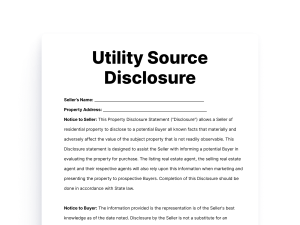
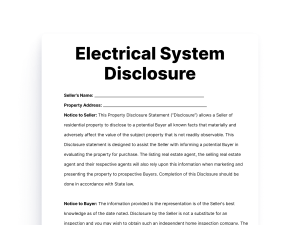
Landlords bear fundamental responsibility for maintaining rental properties in safe, habitable condition throughout the tenancy. This includes ensuring basic utilities function properly, maintaining structural integrity, providing adequate heating and weatherproofing, addressing water leaks and moisture issues promptly, and keeping common areas secure and well-lit. You must install and maintain working smoke detectors and, in many jurisdictions, carbon monoxide detectors in appropriate locations. Rental units must meet local building codes and health standards, with properly functioning plumbing, electrical systems, and sanitation facilities. When tenants report health or safety hazards—from broken locks to gas leaks to pest infestations—landlords typically have specific timeframes within which repairs must be completed, with shorter windows for emergency situations. Failure to maintain habitable conditions can result in tenant withholding of rent, repair-and-deduct actions, constructive eviction claims, or municipal code violations with associated fines.
Notice requirements
Proper notice is the foundation of lawful landlord-tenant communication and a prerequisite for most legal actions. Notice requirements vary significantly by state and by the type of action you’re taking, but common scenarios include providing advance notice before entering a tenant’s unit for inspections or repairs (typically 24-48 hours), giving written notice before increasing rent or modifying lease terms, and serving legally compliant notices before initiating eviction proceedings. Month-to-month tenancies generally require 30 to 60 days’ notice for termination without cause, while fixed-term leases may require 30 to 90 days’ notice of non-renewal depending on your jurisdiction. Payment default notices, lease violation notices, and eviction notices must follow strict formatting, delivery method, and timeline requirements that vary by state. Using incorrect notice periods or improper service methods can invalidate your notice entirely and delay legal proceedings by weeks or months while you start the process over.
Eviction standards
Eviction is a legal process that allows landlords to regain possession of their property when tenants violate lease terms or fail to vacate after proper notice. While specific procedures vary dramatically by jurisdiction, evictions generally follow a similar pattern: the landlord serves appropriate written notice giving the tenant an opportunity to cure the violation or vacate, files a court action if the tenant doesn’t comply, attends a hearing where both parties present evidence, and obtains a judgment and writ of possession if successful. Common grounds for eviction include nonpayment of rent, lease violations, property damage, illegal activity, or expiration of the lease term without renewal. However, landlords must never resort to “self-help” eviction tactics like changing locks, removing belongings, shutting off utilities, or physically removing tenants—these actions are illegal in all states and expose you to substantial liability. The eviction process timeline can range from three weeks in landlord-friendly states to six months or longer in tenant-protective jurisdictions, and you may need to factor in additional time for appeals or emergency stays.
Getting Started as a Landlord
Choosing the right property
Your success as a landlord begins with selecting the right investment property. Consider location factors like employment opportunities, school districts, crime rates, and proximity to amenities that attract quality tenants. Analyze local rental market conditions including average rents, vacancy rates, and tenant demand to ensure positive cash flow potential. Property type matters significantly—single-family homes often attract longer-term tenants and appreciate well, while multi-family units provide diversification and economies of scale for maintenance and management. Evaluate the property’s condition honestly, accounting for immediate repairs and anticipated capital improvements in your financial projections. Consider whether the property fits your management style: are you prepared for the hands-on involvement required by a fixer-upper, or does a newer, low-maintenance property better match your available time and skills?
Use our Simplified Property Management for FREE to evaluate potential investments systematically, comparing multiple properties against your financial goals and management capacity
Beyond the physical property, research local landlord-tenant laws thoroughly before purchasing. Some jurisdictions impose strict rent control limits, mandatory lease renewal requirements, or tenant-friendly eviction procedures that can dramatically impact your ability to manage the property profitably. Understand local occupancy standards, required disclosures, and inspection requirements. Calculate all costs accurately, including mortgage payments, property taxes, insurance, maintenance reserves, property management fees if applicable, and vacancy allowances. Many new landlords underestimate expenses and overestimate rental income, leading to negative cash flow and financial stress.
Review our Landlord-Tenant law guides to understand the regulatory environment in your target market
Rental strategies (long-term vs. mid-term vs. short-term)
Long-term rentals, typically defined as lease terms of one year or longer, offer stability and predictability with lower turnover costs, reduced marketing needs, and consistent monthly income. These traditional rentals work well for residential properties in established neighborhoods and generally face fewer regulatory restrictions than short-term options. Long-term tenants handle their own utilities, furnish their own space, and maintain day-to-day property upkeep, reducing your operational involvement. However, long-term leases also mean locked-in rental rates that can’t be adjusted quickly when market conditions change, and problem tenants may require lengthy eviction processes before you can regain possession.
Our Residential Lease Agreement Template includes all essential provisions for long-term tenancies, while our state eviction procedure guides help you understand the timeline and process should tenant problems arise.
Mid-term rentals, ranging from one to twelve months, have gained popularity for housing traveling professionals, relocating families, and corporate assignments. These furnished rentals command premium rates compared to traditional long-term leases while avoiding the intensive management and regulatory challenges of short-term vacation rentals. Mid-term strategies work particularly well near hospitals, universities, corporate campuses, and military bases where temporary housing demand exists year-round.
Consider our Month-to-Month Lease Template designed specifically for mid-term rental arrangements.
Short-term rentals through platforms like Airbnb and VRBO can generate significantly higher revenue in tourist destinations or business travel markets, but require substantially more management time, face increasing regulatory restrictions in many cities, and involve higher operational costs for cleaning, restocking, and guest communication. Evaluate which strategy aligns with your property’s location, your available time, local regulations, and your risk tolerance before committing to a rental approach.
Our Short-Term Rental Agreement Template covers short-term bookings, while our prorated rent calculator helps you determine optimal pricing for any rental strategy you choose.
Insurance Types
Standard homeowners insurance doesn’t provide adequate coverage for rental properties, making specialized landlord insurance essential for protecting your investment. Landlord policies, also called dwelling fire policies, cover property damage from covered perils, loss of rental income during repairs, and liability protection when tenants or guests are injured on your property. These policies typically offer replacement cost or actual cash value coverage for the dwelling, other structures, and landlord-owned appliances and furnishings. Unlike homeowner policies, landlord insurance doesn’t cover tenants’ personal belongings—they need their own renters insurance for that protection.
Download our Renters Insurance Requirement Addendum to include mandatory or recommended renters insurance provisions in your lease agreements.
Consider umbrella liability insurance once your net worth or rental portfolio reaches a level where the standard $1-2 million liability limits on landlord policies seem insufficient. Umbrella policies provide additional liability coverage that kicks in after your underlying policy limits are exhausted, protecting your personal assets in catastrophic claim situations. Many experienced landlords also establish limited liability companies (LLCs) to hold rental properties, creating legal separation between personal assets and investment property liabilities. While LLC structures offer liability protection and potential tax benefits, they also involve formation costs, annual fees, and ongoing compliance requirements. Consult with insurance professionals and attorneys in your state to determine the right combination of coverage and legal structure for your specific situation and risk exposure. This overview provides general information only and shouldn’t substitute for professional legal or financial advice tailored to your circumstances.
Setting up banking + accounting
Successful landlords maintain strict separation between personal and rental property finances from day one. Open dedicated business checking and savings accounts exclusively for rental income and expenses, making tax preparation, bookkeeping, and financial analysis far simpler. Deposit all rent payments directly into your rental account and pay all property-related expenses from this account, creating a clear financial trail that substantiates tax deductions and simplifies audits. Consider establishing a separate savings account as a reserve fund for unexpected repairs, vacancy periods, and capital improvements—many experts recommend maintaining reserves equal to six months of rental income or at least $1,000 per door.
Download our Rent Receipt Template to document every payment from day one, and use our Security Deposit Receipt Template to properly record and disclose all deposits collected.
Implement a systematic accounting approach from your first rental transaction. Whether you use property management software, accounting applications like QuickBooks, or detailed spreadsheets, consistently track all income sources (rent, late fees, parking fees, pet rent) and categorize expenses properly (repairs, maintenance, property management, insurance, taxes, utilities, advertising, legal fees, and professional services). Our property income and expense tracker, rent payment ledger, and monthly owner’s statement template provide comprehensive systems for organizing your financial records from your first rental transaction.
Retain all receipts, invoices, and documentation for at least seven years to support tax deductions if questioned. Distinguish between repairs that are immediately deductible expenses and capital improvements that must be depreciated over time. Review our landlord tax deductions guide to understand which expenses qualify for immediate deduction versus depreciation, and download our annual tax preparation checklist to organize documentation throughout the year.
Consider working with a CPA who specializes in rental property taxation, especially as your portfolio grows, to ensure you’re maximizing available deductions while maintaining compliance with IRS regulations.
Essential Resources for New Landlords
Starting your landlord journey with the right systems and documentation sets you up for long-term success.
- Financial templates: Rent receipts, payment ledgers, expense trackers, and owner’s statements
- Property setup tools: Inspection checklists, maintenance schedules, and property information sheets
- Tenant management forms: Applications, screening checklists, and move-in documentation
- Legal compliance guides: State-specific landlord-tenant laws and required disclosures
Marketing Your Rental Property
How to write a listing
An effective rental listing balances comprehensive property information with engaging marketing copy that attracts qualified tenants while filtering out poor fits. Start with a clear, attention-grabbing headline that highlights your property’s best features—location, updated amenities, or exceptional value. In the description, lead with the most compelling selling points: modern kitchens, recent renovations, in-unit laundry, parking availability, pet-friendly policies, or proximity to public transportation and employers. Be specific rather than vague: instead of “spacious kitchen,” describe “chef’s kitchen with granite countertops, stainless steel appliances, and breakfast bar seating.”
Use our Rental Listing Template to ensure you include all essential property details while maintaining compelling marketing language that attracts quality tenants.
Provide all essential information tenants need to self-qualify: exact number of bedrooms and bathrooms, square footage if available, monthly rent amount, security deposit, utility responsibilities, lease term, move-in date, pet policies with associated fees, parking details, and application requirements. Include neighborhood information highlighting nearby schools, shopping, restaurants, parks, and transportation options. Be transparent about any limitations or quirks—disclosing these upfront saves everyone time by preventing applications from tenants whose needs don’t match your property. Download our Fair Housing compliant listing guide and rental listing checklist to ensure your advertisements include all necessary information while avoiding prohibited language that could trigger discrimination claims.
Always ensure your listing language complies with Fair Housing laws by avoiding any references to protected classes or discriminatory preferences. Never indicate preferences related to race, religion, family status, disability, or other protected characteristics, and use objective property descriptions and qualification criteria only.
Our rental property description templates provide pre-written, legally compliant language highlighting common property features without Fair Housing violations.
Photography guidelines
Professional-quality photos can double your response rate and reduce vacancy time significantly. Before photographing, ensure the property is completely clean, decluttered, and staged attractively—this means removing personal items, organizing closets, cleaning windows, and making beds with fresh linens. Take photos during daytime with natural light streaming in, opening curtains and blinds to brighten rooms. Turn on all lights to supplement natural lighting and eliminate dark corners. Shoot from room corners using a wide-angle lens to capture as much space as possible, and take photos at waist height for the most flattering perspective.
Download our Property Photography Checklist to ensure you capture every essential shot and angle that maximizes your listing’s appeal.
Capture 20-30 high-quality images covering every room from multiple angles, including overview shots and detail photos of attractive features like updated fixtures, hardwood floors, or custom tile work. Don’t forget exterior photos showing curb appeal, landscaping, parking areas, and any amenities like pools, patios, or storage sheds. Consider including neighborhood shots of nearby parks, shopping, or attractive streetscapes. Avoid using flash photography which creates harsh shadows and an amateur appearance. If photography isn’t your strength, hiring a professional real estate photographer for $100-200 can dramatically improve your listing’s performance and attract higher-quality tenants willing to pay premium rents.
Once you have professional photos, use our Rental Listing Optimization Guide to learn which images to feature first and how to sequence photos for maximum impact on listing platforms.
Best listing websites
Maximize your property’s exposure by listing on multiple high-traffic rental platforms simultaneously. Zillow Rentals, Apartments.com, and Rent.com attract millions of monthly searches and should be your primary listing destinations. Facebook Marketplace has become increasingly important for rental listings, particularly for single-family homes and individual units where landlords interact directly with tenants.
Use our Multi-Platform Listing Distribution Guide to efficiently post your property across all major rental sites simultaneously, maximizing exposure while minimizing duplicate effort.
Consider posting on specialized platforms that match your property type: Furnished Finder for mid-term rentals to traveling professionals, Corporate Housing by Owner for business travelers, and local university housing boards for student-targeted properties. Many metropolitan areas have dominant local listing sites that renters in your market check first—research your specific area to identify these regional players. Don’t overlook the value of old-fashioned yard signs, particularly for properties in high-traffic locations where potential tenants actively drive neighborhoods looking for vacancies. Each listing should link back to your property management website where you can capture leads, provide additional information, and enable online applications, creating a marketing funnel that converts prospects into qualified tenants efficiently.
Our Rental Property Landing Page Template helps you create a dedicated page for each property with photo galleries, detailed information, and integrated Online Rental Application Forms that streamline the inquiry-to-application process.
Screening funnels
An effective screening funnel qualifies prospects systematically while respecting Fair Housing requirements and making efficient use of your time. Begin with comprehensive listings that clearly communicate property features, rental terms, and basic qualification standards—this initial filter discourages unqualified applicants from contacting you. When prospects inquire, provide a pre-screening questionnaire covering income level, employment status, rental history, and any potential red flags before scheduling property showings. Download our Tenant pre-qualification questionnaire to standardize your initial screening conversations and quickly identify applicants worth scheduling for property tours.
This saves time by preventing tours with applicants who don’t meet your basic standards. Use our Property Showing Checklist to prepare for tours professionally and collect essential information from every prospect who visits your rental.
During or immediately after property tours, provide rental applications to interested, qualified prospects using our Comprehensive Rental Application Template that collects all information needed for thorough background and credit screening. Make the application process straightforward with clear instructions, required documentation lists, and transparent timelines for decisions. Collect application fees that cover your actual screening costs for credit reports and background checks. Process applications in the order received using consistent, objective criteria applied equally to all applicants. Our Tenant Screening Checklist and Rental Application Evaluation Scorecard ensure
you apply the same standards to every applicant, protecting you from Fair Housing discrimination claims. Promptly communicate with all applicants about their status, providing adverse action notices to rejected applicants as required by the Fair Credit Reporting Act. Use our Tenant approval letter template, Tenant rejection letter template, and Adverse action notice template to communicate professionally with all applicants while maintaining FCRA compliance.
This systematic approach protects you legally while efficiently identifying the best tenant for your property. Access our Complete tenant screening guide for detailed instructions on evaluating credit reports, conducting background checks, verifying employment and income, and making final selection decisions that comply with all federal and state fair housing requirements.
Tenant Screening & Fair Housing Compliance
Credit checks
Credit reports provide critical insight into applicants’ financial responsibility and ability to pay rent consistently. Most landlords require minimum credit scores between 580 and 650, though standards vary by market competitiveness and property quality. More important than the score itself is understanding the credit report’s contents: look for patterns of on-time payments, particularly for rent and utilities in previous residences. Red flags include recent evictions, collections from previous landlords, high debt-to-income ratios that leave little room for rent payments, and multiple accounts in collections or charged off status.
Use our Credit Report Evaluation Guide to understand what each section of a credit report means and how to identify legitimate concerns versus acceptable credit histories.
Obtain credit reports through tenant screening services that comply with Fair Credit Reporting Act requirements. Our FCRA Compliance Checklist ensures you follow all federal requirements when conducting background and credit checks, avoiding costly violations. You must get written authorization from applicants before pulling credit reports, charge no more than actual costs, and provide adverse action notices if you deny an application based partially or entirely on credit information.
Download our Tenant Screening Authorization Form and Adverse Action Notice Template to maintain FCRA compliance throughout your screening process.
Don’t dismiss applicants solely on credit scores without considering context—medical collections, identity theft, or financial hardships from job loss may not predict future rent payment behavior. Some excellent tenants have lower credit scores due to limited credit history, student loans, or past financial challenges they’ve since overcome. Consider the complete picture including income stability, rental references, and explanations for negative credit items when making decisions. Our Tenant Credit Evaluation Scorecard helps you weigh multiple factors consistently, creating defensible screening decisions that consider context beyond raw credit scores.
Criminal background guidance
Criminal background checks help landlords assess safety risks, but you must conduct them carefully within Fair Housing boundaries. The Department of Housing and Urban Development guidance states that blanket policies rejecting all applicants with any criminal history may violate Fair Housing Act because they disproportionately impact protected classes. Instead, evaluate criminal history considering the nature and severity of the offense, how long ago it occurred, and its relevance to tenancy and neighbor safety.
Use our Criminal Background Screening Guide and Individualized Assessment Worksheet to document your evaluation process and demonstrate HUD-compliant decision-making if challenged.
Focus criminal screening on serious offenses like violent crimes, sexual offenses, significant property crimes, or drug manufacturing—behaviors that pose direct threats to other residents’ safety. Many landlords use lookback periods of five to seven years, recognizing that older convictions have less predictive value for current behavior. Consider evidence of rehabilitation including completed sentences, education, stable employment, and positive rental references since the conviction.
Our Criminal History Evaluation Form provides a structured framework for assessing rehabilitation evidence and documenting individualized screening decisions.
Document your reasoning for any denial based on criminal history, demonstrating you conducted individualized assessment rather than applying blanket bans. Be aware that some states and localities have “ban the box” laws limiting when and how you can inquire about criminal history, and federal public housing assistance recipients receive additional protections regarding criminal screening.
Check our State-specific Criminal Screening Requirements to understand limitations and requirements in your jurisdiction before requesting criminal background information.
Avoiding discrimination violations
Fair Housing law prohibits discrimination based on seven protected classes: race, color, national origin, religion, sex, familial status, and disability. Many states and cities add additional protected classes such as source of income, sexual orientation, gender identity, marital status, age, or military status. Violations can occur at any rental stage—advertising language suggesting preferences for particular groups, asking prohibited questions during screening, applying different qualification standards to different applicants, or providing different lease terms based on protected characteristics.
Download our Fair Housing compliance checklist to audit your rental process from advertising through lease signing, identifying potential discrimination risks before they become violations.
Protect yourself by establishing objective, written screening criteria before marketing your property and applying them consistently to every applicant.
Never ask questions about family planning, marital status, religious practices, national origin, or disabilities during the application process. Avoid subjective standards like “good neighborhood fit” or “professional tenants only” which can mask discriminatory intent. Make reasonable accommodations for disabled applicants including allowing service or assistance animals despite no-pet policies, permitting minor modifications at tenant expense, and adjusting application procedures when disabilities affect the process. Document all application decisions with legitimate business reasons, and maintain all applications and supporting documentation for at least three years. If accused of discrimination, your consistent application of objective criteria provides your strongest defense.
Access our Fair Housing defense documentation guide to learn what records prove non-discriminatory practices and how to organize evidence if discrimination claims arise.
Income and employment verification
Income verification confirms applicants can afford your rent and other housing expenses without financial strain. Most landlords require gross monthly income at least 2.5 to 3 times monthly rent—for example, a $1,500 apartment requires $3,750 to $4,500 monthly income or $45,000 to $54,000 annually. Request recent pay stubs covering at least one month, previous year’s tax returns for self-employed applicants, offer letters for applicants starting new jobs, or benefits statements for those on fixed incomes like Social Security or disability.
Use our Income Verification Checklist and Employment Verification Form to systematically confirm income claims and document your verification efforts.
Contact employers directly to verify employment, position, income, and employment dates, getting permission from applicants first. Our Employer Verification Phone Script and Employment Verification Letter Template streamline the confirmation process professionally.
Watch for red flags like income that seems barely sufficient when combined with known debts, employment gaps without reasonable explanation, or frequent job changes suggesting instability. For self-employed applicants, tax returns provide the most reliable income documentation—bank statements alone can be misleading and are easier to fabricate.
Download our Self-employed Income Analysis Worksheet to evaluate tax returns correctly, calculating actual income available for rent after business expenses and deductions.
Accept alternative income sources like child support, alimony, investment income, or public assistance equally to employment income, as Fair Housing laws prohibit discrimination based on lawful income source in many jurisdictions. Some applicants may have co-signers or guarantors to meet income requirements—verify their income and creditworthiness using the same standards applied to primary applicants.
Use our Guarantor/co-signer Agreement Template and Guarantor Application form to properly document these arrangements and ensure co-signers understand their legal obligations.
Security Deposits
What security deposits can legally cover
Security deposits protect landlords against financial losses when tenants fail to fulfill lease obligations. In most jurisdictions, you can deduct from security deposits for unpaid rent, costs to repair damage beyond normal wear and tear, cleaning necessary to return the unit to move-in condition, and in some states, other financial obligations specified in the lease such as unpaid utilities or late fees. Understanding the distinction between normal wear and tear versus actual damage is critical—normal wear includes faded paint, worn carpet in high-traffic areas, minor scuffs on walls, and hardware that wears out from regular use. These are considered landlord responsibilities that cannot be charged to security deposits.
Damage that exceeds normal wear includes holes in walls beyond small nail holes, carpet stains or burns, broken fixtures or appliances, damaged doors or cabinets, broken windows, missing items like blinds or light fixtures, and excessive filth requiring professional cleaning beyond routine move-out cleaning. Document property condition meticulously at move-in with photos, videos, and detailed checklists signed by tenants.
Document property condition meticulously at move-in with photos, videos, and our Comprehensive Move-in Inspection Checklist signed by tenants to establish baseline property condition.
At move-out, conduct another thorough inspection using our Move-out Inspection Form to document any damage, compare it to move-in condition captured on your Move-In Checklist, and photograph everything systematically.
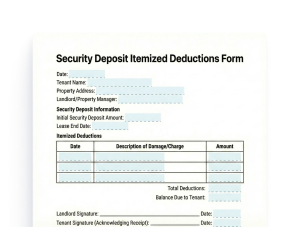
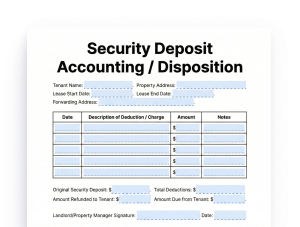
Provide itemized deduction statements to tenants within required timeframes using our Security Deposit Itemized Deduction Template that includes space for receipts or estimates for repairs, contractor invoices, or actual costs incurred. Never use security deposits for general property upgrades, improvements you’d make anyway between tenants, or damage that existed before the tenancy began.
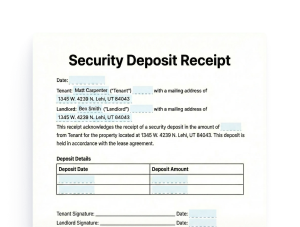
Issue our Security Deposit Receipt Template immediately upon collecting deposits, clearly documenting the amount received, how it will be held, and the conditions for return as required by state law.”
State-by-state maximums
Security deposit limits vary dramatically by state, with some imposing no restrictions while others cap deposits at one or two months’ rent. States like California, Maryland, and Massachusetts generally limit deposits to no more than one or two months’ rent, though limits may increase for furnished units or when tenants have pets. Other states like New York regulate deposits differently depending on building size or rent-stabilized status. Some jurisdictions allow additional pet deposits or fees but cap total deposits including all fees and advance rent payments.
Check your specific state’s statutes carefully because “security deposit” definitions vary—some states include last month’s rent, non-refundable fees, or pet deposits in their maximum limits, while others treat these as separate charges. A few states prohibit non-refundable fees entirely, requiring all money collected to be refundable security deposits unless used for legitimate deductions. Violating your state’s maximum deposit limit can result in penalties, mandatory refunds of excess amounts, and awards of attorney’s fees to tenants who sue. Stay informed about any legislative changes to deposit laws in your state, as these regulations occasionally change and you may need to adjust your practices for new leases.
Our state landlord-tenant law hubs are updated regularly to reflect legislative changes affecting security deposits and other rental requirements.”
Security Deposit Maximums by State
| STATE | SECURITY DEPOSIT MAXIMUM | STATUTE |
| Alabama | 1x monthly rent | Ala. Code § 35-9A-201(a) |
| Alaska | 2x monthly rent. If rent exceeds $2,000/month it can be more. | Alaska Stat. § 34.03.070(a) |
| Arizona | 1.5x monthly rent | Ariz. Rev. Stat. § 33-1321(a) |
| Arkansas | 2x monthly rent | Ark. Code § 18-16-304 |
| California | 1x monthly rent. If agreement term is 6+ months an advance payment of 6x monthly rate minimum is allowed. Add’tnl amounts are allowed based on agreement amongst parties of upgrades, furnishings, etc. | Cal. Civ. Code § 1950.5(c) |
| Colorado | 2x monthly rent | Colo. Rev. Stat. § 38-12-102.5 |
| Connecticut | 2x monthly rent if tenant is under 62 years of age. If tenant is 62+ years old 1x month rent is the maximum. | Conn. Gen. Stat. § 47a-21(b) |
| Delaware | 1x monthly rent where the tenancy is a minimum of 1 year. If the unit is furnished, then the aforementioned does not apply. | 25 Del. Code § 5514(a) |
| Florida | No maximum | Fla. Stat. § 83.49 |
| Georgia | 2x monthly rent maximum | Ga. Code § 44-7-30.1 |
| Hawaii | 1x monthly rent maximum + any amount agreed to by both parties for damages caused by pets. | HRS § 521-44(b) |
| Idaho | No statute | |
| Illinois | No state-wide statute. | |
| Indiana | No statute. Usually it’s 1x monthly rent | |
| Iowa | 2x monthly rent | Iowa Code § 562A.12 |
| Kansas | 1x monthly rent | K.S.A. § 58-2550 |
| Kentucky | No maximum. Usually it’s 1-2x monthly rent. | |
| Louisiana | No maximum. 1-2x monthly rent is common in other states. | |
| Maine | 2x monthly rent | 14 M.R.S. § 6032 |
| Maryland | 1x monthly rent. Certain circumstances allow 2x monthly rent, like if the tenant qualifies for utility assistance through the Dept of Human Services. | Md. Code, Real Prop. § 8-203(b)(1)(2) |
| Massachusetts | 1x monthly rent | MGL c.186 § 15B |
| Michigan | 1.5x monthly rent | MCL § 554.602 |
| Minnesota | No statute. Common practice is 1-1.5x monthly rent | |
| Mississippi | No statute. Common practice is anywhere between 1-2x monthly rent. | |
| Missouri | 2x monthly rent | Mo. Rev. Stat. § 535.300 |
| Montana | No maximum. Common practice is 1-2x monthly rent | |
| Nebraska | 1x monthly rent | Neb. Rev. Stat. § 76-1416 |
| Nevada | 3x monthly rent | NRS § 118A.242 |
| New Hampshire | 1x monthly rent | RSA § 540-A:6 |
| New Jersey | Landlords cannot charge more than 1.5X one month’s rent for a security deposit. The amount collected annually as additional security cannot be greater than 10 percent of the current security deposit. | N.J.S.A. § 46:8-21.2 |
| New Mexico | Landlords or owners are permitted to demand a reasonable deposit from the tenant to recover damages, if any, caused to the premises by the tenant during his term of residency. | NMSA § 47-8-18 |
| New York | No deposit should exceed one month’s rent. | NY Gen. Oblig. Law § 7-108 |
| North Carolina | Security deposits can not exceed an amount equal to two weeks’ rent if a tenancy is week to week, one and one-half months’ rent if a tenancy is month-to-month, and two months’ rent for lease terms greater than month-to-month. | N.C.G.S. § 42-51 |
| North Dakota | Landlords are permitted to require up to one (1) months’ rent as a security deposit unless certain tenant circumstances apply. | N.D.C.C. § 47-16-07.1 |
| Ohio | No statute. | |
| Oklahoma | No statute. | |
| Oregon | No limit | ORS § 90.300 |
| Pennsylvania | Landlords may require a sum not in excess of two months’ rent to be deposited in escrow for the payment of damages to the leasehold premises and/or default in rent thereof during the first year of any lease. See statute for second and subsequent years. | 68 P.S. § 250.511a |
| Rhode Island | Cannot exceed one (1) month’s rent | R.I. Gen. Laws § 34-18-19 |
| South Carolina | No statute. | |
| South Dakota | Any deposit of money intended to ensure the performance of a residential rental agreement, or any portion of it, is considered a security deposit. A landlord (lessor) may not require or accept a security deposit, under any name, that exceeds the value of one month’s rent. A higher deposit may be agreed upon if special conditions exist that could jeopardize the maintenance of the premises. | S.D. Codified Laws § 43-32-6.1 |
| Tennessee | No designated maximum security deposit. | Tenn. Code § 66-28-301 |
| Texas | No statute. | |
| Utah | Utah does not limit the amount a landlord can charge a renter for a security deposit. | Utah Code § 57-17-3 |
| Vermont | No statute. | |
| Virginia | No interest is required. Prior to 2015, it was four percentage points annually below the FDR (Federal Discount Rate) | Va. Code § 55.1-1226 |
| Washington | No statute. | |
| West Virginia | Landlords are allowed to collect a security deposit equal to a maximum of two months’ rent at the time of signing the lease agreement. | W. Va. Code § 37-6A-2 |
| Wisconsin | There is no statutory cap on the amount a landlord may charge for a security deposit on residential leases. Landlords have the flexibility to set the security deposit amount at their discretion. | Wis. Admin. Code ATCP § ATCP 134.06 |
| Wyoming | No statute |
Interest requirements
Some states mandate that landlords pay interest on security deposits, treating these funds as belonging to tenants rather than landlord assets available for general use. Requirements vary widely—some states like Connecticut and New York require interest regardless of deposit amount, while others like New Hampshire and Iowa only require interest if deposits exceed certain thresholds or are held for minimum time periods. Interest rates may be tied to state formulas, specific percentage requirements, or actual rates earned if deposits are held in interest-bearing accounts.
Security Deposit Interest
| STATE | SECURITY DEPOSIT INTEREST | STATUTE |
| Alabama | No statute | |
| Alaska | No statute | |
| Arizona | No statute | |
| Arkansas | No statute | |
| California | No state-wide statute. However, certain city laws require landlords to pay interest on security deposits collected. | |
| Colorado | No statute | |
| Connecticut | Any accrued interest must be paid to tenant at termination of tenancy. Interest rate must be average rate paid by insured commercial banks. | Conn. Gen. Stat. § 47a-21(i) |
| Delaware | No statute | |
| Florida | Security deposit can be placed in a non-interest bearing account. If placed in interest-bearing account, the tenant receives 75% of the avg interest rate. | Fla. Stat. § 83.49(1)(b) |
| Georgia | No statute | |
| Hawaii | Not required to be paid by landlord | Hawaii Residential Landlord-Tenant Code (Questions and Answers, Deposits) Pg. 29 1st Question |
| Idaho | No statute | |
| Illinois | If a landlord owns 25 or more units in a single building or complex of buildings on a contiguous parcel they must pay interest to the lessee. Local ordinances may differ. | 765 ILCS 715/1 |
| Indiana | No statute | |
| Iowa | Interest earned from a security deposit account is the landlord’s property for the 5 years of tenancy. | Iowa Code § 562A.12(2) |
| Kansas | No statute | |
| Kentucky | No statute | |
| Louisiana | No statute | |
| Maine | No statute | |
| Maryland | Due to the tenant within 45 days of termination of tenancy. | Md. Code, Real Prop. § 8-203(e) |
| Massachusetts | 5% or any interest amount paid by the bank must be paid to the tenant for leases that are a minimum of 1 year. The interest must be paid each year of tenancy. | Mass. Gen. Laws ch. 186 § 15B |
| Michigan | No statute | |
| Minnesota | 1% annually computed from the first day of the month following the deposit payment until it’s returned. | Minn. Stat. § 504B.178(Subd.2.) |
| Mississippi | No statute | |
| Missouri | Any interest earned is property of the landlord | Mo. Rev. Stat. § 535.300(2) |
| Montana | No statute | |
| Nebraska | No statute | |
| Nevada | No statute | |
| New Hampshire | If deposit is held for a minimum of 1 year, interest must be paid to the tenant at the rate set by the bank or institution. | N.H. Rev. Stat. § 540-A:6(IV) |
| New Jersey | Interest on deposit or pre-paid rent is required. It remains the financial property of the tenant and shall be paid to the tenant in cash, or credited toward rent due, on the renewal or anniversary of tenant’s lease or, if notified in writing before the anniversary, on January 31st of the calendar year. | N.J. Stat. § 46:8-19 |
| New Mexico | If the landlord demands or receives a deposit in an amount greater than one month’s rent, the landlord shall be required to pay to the resident annually an interest equal to the interest permitted to savings and loan associations in the state by the federal home loan bank board on such deposit. | N.M. Stat. § 47-8-18 |
| New York | For rental properties containing six or more family dwelling units, the landlords receiving security deposits are required to deposit them in an interest bearing account in a banking organization within the state. The account shall earn interest at a rate which shall be the prevailing rate earned by other such deposits made with banking organizations in such area. | N.Y. Gen. Oblig. Law § 7-103 |
| North Carolina | No statute | |
| North Dakota | The security deposit money must be deposited in a federally insured interest-bearing savings or checking account for the benefit of the tenant. The security deposit and any interest accruing on the deposit must be paid to the lessee upon termination of a lease, minus any withholdings due to tenant non-compliance of the rental agreement. Interest is not required for leases less than nine (9) months. | N.D. Cent. Code § 47-16-07.1 |
| Ohio | Security deposits exceeding fifty dollars or one month’s rent, whichever is greater, will accrue interest on the excess at a rate of five percent (5%) per year, provided the tenant occupies the premises for six months or more. Interest will be calculated and paid annually by the landlord to the tenant. | Ohio Rev. Code § 5321.16 |
| Oklahoma | Interest is not required to be paid stemming from the deposit. | Okla. Stat. tit. 41 § 115 |
| Oregon | No statute | |
| Pennsylvania | Landlords are entitled to receive as administrative expenses – sum equal to one per cent per annum upon the security deposit, which shall be in lieu of all other administrative and custodial expenses. | 68 P.S. § 250.511(b) |
| Rhode Island | No statute | |
| South Carolina | No statute | |
| South Dakota | No statute | |
| Tennessee | No statute | |
| Texas | No statute | |
| Utah | No statute | |
| Vermont | There is no statewide statute specifying interest accrued by a security deposit, though towns and municipalities in Vermont are allowed to adopt ordinances authorizing the interest payments. | Vt. Stat. tit. 9 § 4461(g) |
| Virginia | No statute | |
| Washington | The landlord is entitled to receipt of interest paid on trust account deposits, unless otherwise agreed to by both parties in writing. | Wash. Rev. Code § 59.18.270 |
| West Virginia | No statute | |
| Wisconsin | No statute | |
| Wyoming | No statute |
Landlords in states with interest requirements must typically provide annual interest statements to tenants, showing deposits held and interest accrued. Interest may need to be paid annually, offset against rent, or returned with the deposit at move-out, depending on state law. Some jurisdictions require deposits to be held in separate, specific account types—never commingled with operating funds or personal money. Failing to pay required interest can result in penalties, forfeiture of the right to retain any portion of the deposit for damages, and potential multiplication of damages in lawsuits. Even if your state doesn’t require interest payments, clearly disclosing whether interest will be paid and at what rate in the lease agreement prevents misunderstandings and demonstrates professionalism.
Deposit return timelines
States impose strict deadlines for returning security deposits after tenants vacate, typically ranging from 14 to 60 days depending on jurisdiction. These timelines usually begin when the tenant surrenders possession and returns keys, not when the lease term ends. Missing your state’s deadline can trigger significant penalties including forfeiture of all deductions, mandatory return of the full deposit, multiplication of damages by two or three times the deposit amount, and payment of the tenant’s attorney’s fees if they sue successfully.
Deadline for Returning Security Deposit
| STATE | DEADLINE FOR RETURNING SECURITY DEPOSIT | STATUTE |
| Alabama | Within 60 days of the termination of tenancy. | Ala. Code § 35-9A-201(b) |
| Alaska | 14 days after termination of tenancy if there are no deductions. 30 days if there are deductions. | Alaska Stat. § 34.03.070(g) |
| Arizona | Within 14 days of the termination of tenancy excluding weekends and legal holidays. | Ariz. Rev. Stat. § 33-1321(d) |
| Arkansas | Within 60 days of the termination of tenancy. Landlord must mail via first class to last known address with any payment. | Ark. Code § 18-16-305(a)(1) |
| California | 21 days after tenant vacates property. | Cal. Civ. Code § 1950.5(g) |
| Colorado | 1 Month. Not to exceed 60 days | Colo. Rev. Stat. § 38-12-103(1) |
| Connecticut | Within 21 days after termination of tenancy. | Conn. Gen. Stat. § 47a-21(d) |
| Delaware | Within 20 days of the lease terminating | 25 Del. C. § 5514(e) |
| Florida | 15 days if there are no deductions. If something is being deducted, landlord must notify tenant within 30 days of rental agreement termination. | Fla. Stat. § 83.49(3) |
| Georgia | 30-days. If any deductions will be taken from the deposit, the landlord must provide written statement with reasons for retaining the amount. | O.C.G.A. § 44-7-34 |
| Hawaii | Within 14 days after termination of tenancy. | Haw. Rev. Stat. § 521-44(c) |
| Idaho | 21 days if no time frame is specified in the agreement. Can be up to 30. | Idaho Code § 6-321 |
| Illinois | 30 days | 765 ILCS 710/1 |
| Indiana | 45 days after lease termination. | Ind. Code § 32-31-3-12 |
| Iowa | 30 days | Iowa Code § 562A.12(3) |
| Kansas | 14 days but no longer than 30 days. | Kan. Stat. § 58-2550(b) |
| Kentucky | 30 days with deductions. 60 days without deductions. | Ky. Rev. Stat. § 383.580 |
| Louisiana | 1 month | La. Stat. tit. 9 § 3251 |
| Maine | 30 days with a written lease agreement. 21 days for a tenancy at will. | 14 M.R.S. § 6033(2) |
| Maryland | Within 45 days after termination of tenancy. | Md. Code, Real Prop. § 8-203(e) |
| Massachusetts | Within 30 days after termination of tenancy. | Mass. Gen. Laws ch. 186 § 15B(4) |
| Michigan | Within 30 days after termination of tenancy. | Mich. Comp. Laws § 554.610 |
| Minnesota | 3 weeks after termination of tenancy or within 5 days of when the tenant leaves arising from legal condemnation. | Minn. Stat. § 504B.178(Subd. 3.)(a)(1)(2) |
| Mississippi | Within 45 days of tenancy terminating. | Miss. Code § 89-8-21 |
| Missouri | Within 30 days after termination of tenancy. | Mo. Rev. Stat. § 535.300(3) |
| Montana | 30-days | Mont. Code § 70-25-202 |
| Nebraska | Within 14 days after termination of tenancy. | Neb. Rev. Stat. § 76-1416 |
| Nevada | Within 30 days after termination of tenancy. | Nev. Rev. Stat. § 118A.242 |
| New Hampshire | Within 30 days after termination of tenancy. | N.H. Rev. Stat. § 540-A:7 |
| New Jersey | Landlords are required to return security deposits plus any interest earned during the term within thirty (30) days of the lease termination. See statute for provisions relating to certain situations that may affect the return deadline. | N.J. Stat. § 46:8-21.1 |
| New Mexico | Landlords are required to return security deposits to the tenant within thirty (30) days from the lease termination date, minus any withholdings. | N.M. Stat. § 47-8-18(C) |
| New York | Landlords must return security deposits to tenants no latger than 14 days after the lease termination and tenant move out. | N.Y. Gen. Oblig. Law § 7-108(1-a)(e) |
| North Carolina | Deposits must be returned within 30 days of lease termination, unless landlord requires additional time to access damages due to tenant non-compliance of lease. An interim notice of an additional 30-day notice must be provided to the tenant, not to exceed 60 days. | N.C. Gen. Stat. § 42-52 |
| North Dakota | Landlords have 30 days to return the remaining security deposit (plus interest) within 30 days of the termination of the rental agreement. | N.D. Cent. Code § 47-16-07.1 |
| Ohio | The security deposit, minus any deductions for tenant non-compliance must be returned to the tenant within thirty days after termination of the rental agreement and delivery of possession. | Ohio Rev. Code § 5321.16(B) |
| Oklahoma | Security deposit must be returned within 45 days from the lease termination date and move out. Tenants must request in writing within six (6) months of move-out that the deposit be returned, otherwise the deposit can be kept by the landlord. | 41 O.S. § 115(B) |
| Oregon | Within 31 days after termination of tenancy. | Or. Rev. Stat. § 90.300(12) |
| Pennsylvania | The security deposit must be returned within 30 days of the termination of the lease or upon release and acceptance of the dwelling unit, whichever comes first. | 68 P.S. § 250.512 |
| Rhode Island | The landlord is required to deliver the itemized notice, along with the amount of the security deposit owed to the tenant, within twenty (20) days following the later of the termination of the tenancy, the delivery of possession of the dwelling unit, or the tenant providing the landlord with a forwarding address for the purpose of receiving the security deposit. | R.I. Gen. Laws § 34-18-19 |
| South Carolina | Deposits must be returned within 30 days after the termination of the tenancy and the delivery of possession and demand from the tenant, whichever is later. | S.C. Code § 27-40-410 |
| South Dakota | Every lessor will return the security deposit to the tenant, or furnish to the tenant, a written statement showing the specific reason for the withholding of the deposit or any portion thereof within two weeks after the termination of the tenancy and receipt of the tenant’s mailing address or delivery instructions. | S.D. Codified Laws § 43-32-24 |
| Tennessee | A landlord must return the security deposit within 30 days after the tenant vacated the premises. | Tenn. Code § 66-28-301 |
| Texas | The landlord must refund a security deposit to the tenant on or before the 30th day following the date the tenant surrenders the premises. | Tex. Prop. Code § 92.103 |
| Utah | The landlord must return the security deposit no later than 30 days after the day on which a renter vacates and returns possession of a rental property to the owner or the owner’s agent, The owner or the owner’s agent shall deliver the security deposit to the renter at the renter’s last known address. | Utah Code § 57-17-3 |
| Vermont | Landlords are required to return the tenant’s security deposit, along with an itemized statement detailing any deductions, within 14 days after the tenant vacates the rental property. For tenants renting a property on a seasonal basis, the security deposit and the accompanying statement must be returned within 60 days of the tenant’s termination of the rental lease. | 9 V.S.A. § 4461(c) |
| Virginia | The deadline for a landlord to return a security deposit is 45 days from lease termination. | Va. Code § 55.1-1226 |
| Washington | Landlords must return the security deposit within 21 days. | Wash. Rev. Code § 59.18.280 |
| West Virginia | Landlords must return a tenant’s security deposit within 60 days after the end of the tenancy or within 45 days of the new tenant’s occupancy, whichever is sooner. | W. Va. Code § 37-6A-2 |
| Wisconsin | Landlords must return a tenant’s security deposit within 21 days after the rental agreement concludes, or within 21 days from when a new tenant’s lease begins (if the landlord re-rents the property before the original lease terminates). | Wis. Admin. Code ATCP § ATCP 134.06 (2) |
| Wyoming | Landlords are required to return a tenant’s security deposit within 30 days after the rental agreement ends or within 15 days after receiving the tenant’s new mailing address, whichever is later. If the rental unit has suffered damage beyond normal wear and tear caused by the tenant, the landlord has an additional 30 days to return the deposit. For utility deposits, landlords must return them within 10 days once the tenant provides proof that all utility bills have been paid. If such proof is not provided, or if the landlord is required to make utility payments on the tenant’s behalf, deadlines and procedures are outlined in the statute. | Wyo. Stat. § 1-21-1208(a) |
When returning deposits, you must provide itemized statements detailing any deductions with descriptions of work performed, associated costs, and often original receipts or contractor invoices. Some states require you to return the remaining balance with the itemized statement, while others allow you to send the statement first and follow up with payment. Send all deposit returns and accounting statements via certified mail or other trackable methods to prove compliance with deadlines if disputes arise. If you withhold the entire deposit, you still must provide the required accounting statement within deadline—silence or delays waive your right to make legitimate deductions in many states. Research your specific state’s requirements for deposit return procedures, required statement contents, acceptable deduction types, and strict compliance with timelines to avoid costly penalties.
Separate Security Deposit Bank Account
Some states mandate that landlords hold security deposits in dedicated, separate bank accounts rather than commingling these funds with personal or business accounts. This requirement ensures that tenant funds remain identifiable and protected, particularly if the landlord faces financial difficulties or bankruptcy. Landlords may be required to disclose the name and address of the financial institution holding the deposit, along with the account number. Commingling security deposits with other funds can result in forfeiture of the deposit or other legal consequences.
| STATE | SEPARATE SECURITY DEPOSIT BANK ACCOUNT | STATUTE |
| Alabama | No statute | |
| Alaska | Yes | Alaska Stat. § 34.03.070(c) |
| Arizona | No statute | |
| Arkansas | No statute | |
| California | No statute | |
| Colorado | No state-wide statute. Local ordinances may impose specific requirements. | |
| Connecticut | Yes | Conn. Gen. Stat. § 47a-21(h) |
| Delaware | Yes | Del. Code tit. 25 § 5514(b) |
| Florida | Yes | Fla. Stat. § 83.49 |
| Georgia | Yes. Security deposit must be placed in an escrow account only for that purpose and notification needs to be given to tenant. | Ga. Code § 44-7-31 |
| Hawaii | No statute | |
| Idaho | If managed by a third-party it must be maintained in a separate account. | Idaho Code § 6-321(4) |
| Illinois | No state-wide statute. However, local ordinances, like in Chicago, may have specific requirements. | |
| Indiana | No statute | |
| Iowa | Yes | Iowa Code § 562A.12(2) |
| Kansas | No statute | |
| Kentucky | Yes | Ky. Rev. Stat. § 383.580(1) |
| Louisiana | No statute | |
| Maine | Yes | Me. Stat. tit. 14 § 6038 |
| Maryland | Yes | Md. Code, Real Prop. § 8-203(a) |
| Massachusetts | Yes. Receipt must be given to tenant within 30 days indicating the name and location of the bank where it’s being held. | Mass. Gen. Laws ch. 186 § 15B(3) |
| Michigan | Not required. A landlord may use the deposit money however they want provided that they deposit a cash or surety bond with the secretary of state. | Mich. Comp. Laws § 554.604 |
| Minnesota | No statute | |
| Mississippi | No statute | |
| Missouri | No statute | |
| Montana | No statute | |
| Nebraska | No statute | |
| Nevada | No statute | |
| New Hampshire | Yes | N.H. Rev. Stat. § 540-A:6(II)(a) |
| New Jersey | All money from a security deposit must be deposited or invested in one interest-bearing or dividend-yielding account as long as all other statutory requirements are followed, and it cannot be co-mingled with the landlord’s personal property. See statute for provisions relating to landlords owning 10 or more units. | N.J. Stat. § 46:8-19 |
| New Mexico | No statute | |
| New York | Security deposits cannot be mingled with a landlord’s personal funds or become an asset of the person receiving the funds. For rental properties containing six or more family dwelling units, the landlords receiving security deposits are required to deposit them in an interest bearing account in a banking organization within the state. | N.Y. Gen. Oblig. Law § 7-103 |
| North Carolina | Security deposits shall be deposited in a trust account with a licensed and federally insured depository institution with the state. Landlords may also furnish a bond from an insurance company licensed to do business within the state. | N.C. Gen. Stat. § 42-50 |
| North Dakota | The security deposit money must be deposited in a federally insured interest-bearing savings or checking account for the benefit of the tenant. The security deposit and any interest accruing on the deposit must be paid to the lessee upon termination of a lease, minus any withholdings due to tenant non-compliance of the rental agreement. | N.D. Cent. Code § 47-16-07.1 |
| Ohio | No statute | |
| Oklahoma | Security deposits must be kept in an escrow account for the tenant. The account must be in a federally insured financial institution within the State of Oklahoma. | Okla. Stat. tit. 41 § 115 |
| Oregon | No statute | |
| Pennsylvania | A separate bank account is required. See statute for provisions. | 68 Pa. Stat. § 250.511b |
| Rhode Island | No statute. | |
| South Carolina | No statute. | |
| South Dakota | No statute. | |
| Tennessee | A landlord of residential property requiring security deposits prior to occupancy is required to deposit all tenants’ security deposits in an account used only for that purpose. | Tenn. Code § 66-28-301 |
| Texas | No statute. | |
| Utah | No statute. | |
| Vermont | No statute. | |
| Virginia | No statute. | |
| Washington | A separate bank account is required to hold security deposits. | Wash. Rev. Code § 59.18.270 |
| West Virginia | No statute. | |
| Wisconsin | No statute. | |
| Wyoming | No statute. |
Non-Refundable Fees
Non-refundable fees are distinct from security deposits and are typically used to cover specific costs such as cleaning, administrative processing, or lease preparation. The legality and permissible types of non-refundable fees vary significantly by jurisdiction, with some states prohibiting them entirely while others allow them under certain conditions. Landlords must clearly distinguish non-refundable fees from refundable security deposits in the lease agreement to avoid disputes. Tenants should carefully review their lease to understand which payments are refundable and which are not.
| STATE | NON-REFUNDABLE FEES | STATUTE |
| Alabama | No statute | |
| Alaska | No statute | |
| Arizona | Must be stated in writing. Any fee not mentioned as non-refundable is refundable. | Ariz. Rev. Stat. § 33-1321(b) |
| Arkansas | No statute | |
| California | An agreement cannot state security deposits as “non-refundable” | Cal. Civ. Code § 1950.5(m) |
| Colorado | No statute. Check rental agreement for any specifications. | |
| Connecticut | No statute | |
| Delaware | Not allowed unless it’s an optional service fee for actual services rendered such as amenity fee. | Del. Code tit. 25 § 5311 |
| Florida | No statute | |
| Georgia | No statute | |
| Hawaii | No statute | |
| Idaho | No statute | |
| Illinois | No statute | |
| Indiana | No statute | |
| Iowa | No statute | |
| Kansas | No statute | |
| Kentucky | No statute | |
| Louisiana | No statute | |
| Maine | No statute | |
| Maryland | No statute | |
| Massachusetts | Not allowed unless stated in the lease and agreed to by tenant. | Mass. Gen. Laws ch. 186 § 15B(1)(b)(iii)(B)(I) |
| Michigan | No statute | |
| Minnesota | No statute | |
| Mississippi | No statute | |
| Missouri | No statute | |
| Montana | No statute | |
| Nebraska | No statute | |
| Nevada | The lease agreement must state if there’s any nonrefundable fees, such as a cleaning fee. | Nev. Rev. Stat. § 118A.242(8) |
| New Hampshire | No statute | |
| New Jersey | No statute | |
| New Mexico | No statute | |
| New York | No statute | |
| North Carolina | No statute | |
| North Dakota | No statute | |
| Ohio | No statute | |
| Oklahoma | No statute | |
| Oregon | Non-refundable fees are prohibited. | ORS § 90.300 |
| Pennsylvania | No statute | |
| Rhode Island | No statute | |
| South Carolina | No statute | |
| South Dakota | No statute. | |
| Tennessee | No statute. | |
| Texas | No statute. | |
| Utah | Non-refundable deposits are permitted, but only if disclosed in writing at the time of the landlord’s acceptance of the deposit. | Utah Code §§ 57-17-2 |
| Vermont | No statute. | |
| Virginia | No statute. | |
| Washington | Non-refundable fees are permitted, but they must be part of the security deposit. They must be clearly specified as “non-refundable fees” in the written lease agreement. | Wash. Rev. Code § 59.18.285 |
| West Virginia | Non-refundable pet and application fees are permitted if both the landlord and tenant agree in writing that the fees are non-refundable. | W. Va. Code § 37-6A-1 |
| Wisconsin | No statute. | |
| Wyoming | There is no specific law that regulates the types of non-refundable fees a landlord can charge a tenant. However, if a landlord does include non-refundable fees, the rental agreement must clearly specify whether any part of the security deposit is non-refundable. | Wyo. Stat. § 1-21-1207 |
Receipt of Security Deposit
Several states require landlords to provide tenants with a written receipt when collecting a security deposit. This receipt should include the amount received, the date of payment, the name of the person who received the funds, and information about where the deposit will be held. Some jurisdictions require specific language or disclosures to be included in the receipt, such as the tenant’s right to a move-in inspection. Providing proper receipts helps prevent disputes and ensures both parties have documentation of the transaction.
| STATE | RECEIPT OF SECURITY DEPOSIT | STATUTE |
| Alabama | No statute. | |
| Alaska | No statute. | |
| Arizona | No statute. | |
| Arkansas | No statute. | |
| California | No statute. | |
| Colorado | No statute. | |
| Connecticut | Required for cash payments | Conn. Gen. Stat. § 47a-3a(c) |
| Delaware | No statute. | |
| Florida | Yes | Fla. Stat. § 83.49 |
| Georgia | No statute. | |
| Hawaii | No statute. | |
| Idaho | No statute. | |
| Illinois | No statute. | |
| Indiana | No statute. | |
| Iowa | No statute. | |
| Kansas | No statute. | |
| Kentucky | No statute. | |
| Louisiana | No statute. | |
| Maine | If received in cash, yes. | Me. Stat. tit. 14 § 6022 |
| Maryland | Yes. Landlord must provide a receipt. | Md. Code, Real Prop. § 8-203.1 |
| Massachusetts | Yes. Receipt required. | Mass. Gen. Laws ch. 186 § 15B(2) |
| Michigan | Yes | Mich. Comp. Laws § 554.603 |
| Minnesota | No statute. | |
| Mississippi | No statute. | |
| Missouri | No statute. | |
| Montana | No statute. | |
| Nebraska | No statute. | |
| Nevada | No statute. | |
| New Hampshire | Landlord must give receipt with security deposit amount and the place where it’s being held. If the payment is with a check then no receipt is required. | N.H. Rev. Stat. § 540-A:6 |
| New Jersey | Landlord must notify the tenant in writing within thirty (30) days of deposit to which financial institution the deposit is being held, the current interest rate, and the amount of the deposit. If the deposit is ever moved, a 30-day notice must be provided. Annual interest payments must be recorded, as well as a thirty (30) day notice if the property is sold. | N.J. Stat. § 46:8-19 |
| New Mexico | No statute. | |
| New York | Landlords are required to notify in writing each of the persons making such security deposit or advance, giving the name and address of the banking organization in which the deposit of security money is made, and the amount of the deposit(s) made. | N.Y. Gen. Oblig. Law § 7-103 |
| North Carolina | No statute. | |
| North Dakota | No statute. | |
| Ohio | No statute. | |
| Oklahoma | No statute. | |
| Oregon | Landlords must provide tenants with a receipt for any security deposit(s) paid. | ORS § 90.300 |
| Pennsylvania | No statute. | |
| Rhode Island | No statute. | |
| South Carolina | No statute. | |
| South Dakota | No statute. | |
| Tennessee | No statute. | |
| Texas | No statute. | |
| Utah | No statute. | |
| Vermont | No statute. | |
| Virginia | Landlords are not required to provide a written receipt for a security deposit. | Va. Code § 55.1-1226 |
| Washington | The landlord shall provide a written receipt for all deposits and must provide written notice of the name, address, and location of the depository (and any subsequent change thereof). | Wash. Rev. Code § 59.18.270 |
| West Virginia | No statute. | |
| Wisconsin | If paid in cash, or requested by the tenant, a written receipt is required. | Wis. Admin. Code §§ 134.06(2) |
| Wyoming | No statute. |
Require Written Description / Itemized List of Damages and Charges
Most states require landlords to provide tenants with a written, itemized statement explaining any deductions made from the security deposit. This statement must typically include a description of each item of damage or charge, the cost of repair or cleaning, and any remaining balance being returned to the tenant. Some jurisdictions require landlords to include copies of receipts or invoices for repairs. Failure to provide a proper itemized statement within the required timeframe can result in the landlord forfeiting the right to withhold any portion of the deposit.
| STATE | REQUIRE WRITTEN DESCRIPTION / ITEMIZED LIST OF DAMAGES AND CHARGES | STATUTE |
| Alabama | Yes. A list itemizing the amounts withheld must be sent via first class mail to the tenant’s last known forwarding address within 60 days. | Ala. Code § 35-9A-201(d) |
| Alaska | Yes. Within 30 days of termination of tenancy. | Alaska Stat. § 34.03.070(g) |
| Arizona | Yes required within 14 days of tenancy termination. | Ariz. Rev. Stat. § 33-1321(d) |
| Arkansas | Yes | Ark. Code § 18-16-305(a) |
| California | Yes | Cal. Civ. Code § 1950.5(g) |
| Colorado | Yes | Colo. Rev. Stat. § 38-12-103(1) |
| Connecticut | Yes | Conn. Gen. Stat. § 47a-21(d) |
| Delaware | Yes | 25 Del. C. § 5514(f) |
| Florida | Yes | Fla. Stat. § 83.49(3) |
| Georgia | Yes | O.C.G.A. § 44-7-34 |
| Hawaii | Yes | Haw. Rev. Stat. § 521-44(c) |
| Idaho | Yes | Idaho Code § 6-321 |
| Illinois | Yes | 765 ILCS 710/1 |
| Indiana | Yes | Ind. Code § 32-31-3-14 |
| Iowa | Yes | Iowa Code § 562A.12(3) |
| Kansas | Yes | Kan. Stat. § 58-2550(b) |
| Kentucky | No statute | |
| Louisiana | Yes | La. Stat. tit. 9 § 3251 |
| Maine | Yes | 14 M.R.S. § 6033(2) |
| Maryland | Yes | Md. Code, Real Prop. § 8-203 |
| Massachusetts | Yes | Mass. Gen. Laws ch. 186 § 15B(4) |
| Michigan | Yes | Mich. Comp. Laws § 554.609 |
| Minnesota | No statute | |
| Mississippi | Yes | Miss. Code § 89-8-21 |
| Missouri | Yes | Mo. Rev. Stat. § 535.300 |
| Montana | Yes | Mont. Code § 70-25-202 |
| Nebraska | Yes | Neb. Rev. Stat. § 76-1416 |
| Nevada | Yes | Nev. Rev. Stat. § 118A.242 |
| New Hampshire | Yes | N.H. Rev. Stat. § 540-A:7 |
| New Jersey | Tenant must be notified by personal delivery, registered, or certified mail of the interest or earnings on the deposit minus any itemized deductions and cost of each deduction. | N.J. Stat. § 46:8-21.1 |
| New Mexico | Landlords must provide a written statement of deductions from the deposit and the balance shown by the statement to be due, within thirty (30) days of the termination of the rental agreement. | N.M. Stat. § 47-8-18(C) |
| New York | Partial security deposits can be lawfully retained for the reasonable and itemized costs due to non-payment of rent, damage caused by the tenant beyond normal wear and tear, non-payment of utility charges payable directly to the landlord under the terms of the lease or tenancy, and moving and storage of the tenant’s belongings. | N.Y. Gen. Oblig. Law § 7-108(1-a)(e) |
| North Carolina | Landlords must deliver in writing the itemized list of any damages and mail or deliver to the tenant, along with the balance of the security deposit, no later than 30 days after termination of the tenancy. | N.C. Gen. Stat. § 42-52 |
| North Dakota | The remaining portion of a security deposit not paid to the lessee upon termination of the lease must be itemized by the lessor. Itemized list and amount due must be delivered or mailed to the lessee at the last address provided, along with a written notice within thirty days after termination of the lease and delivery of possession by the lessee. The notice must contain a statement of any amount still due the lessor or the refund due the lessee. | N.D. Cent. Code § 47-16-07.1 |
| Ohio | Any deduction from the security deposit shall be itemized and identified by the landlord in a written notice delivered to the tenant together with the amount due within thirty (30) days after the termination of the rental agreement. | Ohio Rev. Code § 5321.16(B) |
| Oklahoma | Security deposit held by a landlord may be applied to the payment of accrued rent and the amount of damages which the landlord has suffered by reason of the tenant’s noncompliance with this act and the rental agreement. All damages and costs must be itemized by the landlord in a written statement delivered by mail with a return receipt requested. | 41 O.S. § 115(B) |
| Oregon | Required. | Or. Rev. Stat. § 90.300(12) |
| Pennsylvania | Landlords must provide a tenant with a written list of any damages to the dwelling unit for which the landlord claims the tenant is liable when returning the security deposit from escrow. | 68 P.S. § 250.512 |
| Rhode Island | An itemized list of damages and charges is required. | R.I. Gen. Laws § 34-18-19 |
| South Carolina | Yes, deduction from the security/rental deposit must be itemized by the landlord in a written notice to the tenant together with the amount due. | S.C. Code § 27-40-410 |
| South Dakota | Within forty-five days after termination of the tenancy, upon request of the lessee, the lessor must provide the lessee with an itemized list of any deposit withheld. | S.D. Codified Laws § 43-32-24 |
| Tennessee | A landlord is required to inspect the property and make a detailed list of any damages beyond normal wear and tear. Tenants have the right to a mutual inspection. | Tenn. Code § 66-28-301 |
| Texas | The landlord must give the balance of the security deposit, if any, together with a written description and itemized list of all deductions to the tenant. The landlord is not required to give the tenant a description and itemized list of deductions if: (1) the tenant owes rent when he surrenders possession of the premises; and (2) there is no controversy concerning the amount of rent owed. | Tex. Prop. Code § 92.104 |
| Utah | If the owner or the owner’s agent made any deductions from the deposit or prepaid rent, a written notice that itemizes and explains the reason for each deduction must be presented to the renter. | Utah Code § 57-17-3 |
| Vermont | The itemizes list of damages must accompany the security deposit when it is returned to the tenant following the termination of a lease. | 9 V.S.A. § 4461(c) |
| Virginia | The security deposit and any deductions, damages, and charges shall be itemized by the landlord in a written notice given to the tenant, together with any amount due to the tenant, within 45 days after the termination date of the tenancy or the date the tenant vacates the dwelling unit, whichever occurs last. | Va. Code § 55.1-1226 |
| Washington | The landlord is required to provide a tenant with an itemized list of damages and charges in writing. | Wash. Rev. Code § 59.18.280 |
| West Virginia | If the property has sustained damage beyond normal wear and tear which requires a third-party contractor’s involvement, the landlord must notify the tenant in writing within the original deadline (60 days or 45 days). Following this notice, landlords have an additional 15 days to provide an itemized statement detailing the damage and associated repair costs. | W. Va. Code § 37-6A-2 |
| Wisconsin | If any portion of a security deposit is withheld by a landlord, the landlord must, within the time period and in the manner specified under sub. (2), deliver or mail to the tenant a written statement accounting for all amounts withheld. The statement must describe each item of physical damages or any other claims made against the security deposit, and the amount withheld as reasonable compensation for each item or claim. | Wis. Admin. Code ATCP § ATCP 134.06(4) |
| Wyoming | Yes | Wyo. Stat. § 1-21-1208(a) |
Permitted Uses of the Deposit
Security deposits can generally be used to cover unpaid rent, repair damage beyond normal wear and tear, cleaning costs to restore the unit to its original condition, and other lease violations that result in financial loss to the landlord. Normal wear and tear, which includes minor scuffs, faded paint, and worn carpeting from ordinary use, cannot be deducted from the deposit. Some states also allow deductions for early lease termination costs, unpaid utilities, or storage and disposal of abandoned property. Landlords should document the condition of the property at move-in and move-out to support any deductions.
| STATE | RULE | STATUTE |
| Alabama | Applicable to owed rent and damages beyond normal wear and tear due to the tenant’s noncompliance with Ala. Code § 35-9A-301 | Ala. Code § 35-9A-201(b) |
| Alaska | Applicable to unpaid accrued rent and damages due to tenant’s noncompliance with AS 34.03.120. | Alaska Stat. § 34.03.070(b) |
| Arizona | May be used for provisions detailed in the property management agreement. | Ariz. Rev. Stat. § 33-1321(g) |
| Arkansas | Applicable to unpaid accrued rent and damages as a result of tenant’s noncompliance with rental agreement. | Ark. Code § 18-16-305(2) |
| California | Default rent, repairs, cleaning. | Cal. Civ. Code § 1950.5(b) |
| Colorado | Default rent, repairs beyond normal wear and tear, and abandonment of premises. | Colo. Rev. Stat. § 38-12-103(1) |
| Connecticut | Applicable to damages caused by tenant’s noncompliance with obligations outlined in agreement, and accrued interest. | Conn. Gen. Stat. § 47a-21(d)(1)(A)(B) |
| Delaware | Damages caused to premises beyond normal wear and tear. Rent owed and any late fees. To cover reasonable expenses due to renovations and re-renting due to tenant’s noncompliance with agreement terms. | Del. Code tit. 25 § 5514(c) |
| Florida | No statute | |
| Georgia | Nonpayment of rent or late payment fees, cleaning fees, pet fees, damages etc. | Ga. Code § 44-7-34 |
| Hawaii | Default rent, damages including damages caused by tenant, and amounts owed for utilities | Haw. Rev. Stat. § 521-44(a) |
| Idaho | Any contingencies outlined in the rental agreement or deposit arrangement. Commonly used for damages beyond “normal wear and tear”, pet deposits, cleaning etc. | Idaho Code § 6-321(1) |
| Illinois | No specific statute but typically can be used for rent, damages, repairs, etc. | |
| Indiana | Accrued rent, damages due to tenant’s noncompliance, unpaid utilities | Ind. Code § 32-31-3-13 |
| Iowa | Default rent, restore damages beyond regular wear and tear, recover expenses. | Iowa Code § 562A.12(3)(a)(1)(2)(3) |
| Kansas | rent and damages | Kan. Stat. § 58-2550(b) |
| Kentucky | Owed rent. At times it’s allowed to use it for damages due to tenant’s noncompliance. | Ky. Rev. Stat. § 383.580(6) |
| Louisiana | Remedy tenant’s default or wear beyond normal wear and tear. | La. Stat. tit. 9 § 3251 |
| Maine | Storing and disposing of unclaimed property, and nonpayment of rent and utilities. | Me. Stat. tit. 14 § 6033(2)(B) |
| Maryland | Unpaid rent and damages caused by tenant or guests of tenant beyond normal wear and tear. | Md. Code, Real Prop. § 8-203(g) |
| Massachusetts | Unpaid rent, unpaid water charges, unpaid increase in real estate taxes, reasonable amounts to repair damages. etc. | Mass. Gen. Laws ch. 186 § 15B(4) |
| Michigan | Damages beyond normal wear and tear, owed rent, unpaid utilities, and rent due for premature termination by the tenant | Mich. Comp. Laws § 554.607 |
| Minnesota | Default rent and restore premises beyond normal wear and tear. | Minn. Stat. § 504B.178 |
| Mississippi | Unpaid rent, damages beyond ordinary wear and tear, cleaning, other reasonable expenses. | Miss. Code § 89-8-21(3) |
| Missouri | Default rent, damages beyond regular wear and tear, damages sustained as a result of tenant terminating early. | Mo. Rev. Stat. § 535.300 |
| Montana | Unpaid rent, late charges, utilities, cleaning. | Mont. Code Ann. § 70-25-201 |
| Nebraska | No specific statute, but usually it can be used for owed rent, and damages beyond regular wear and tear. | |
| Nevada | Rent, damages beyond regular wear and tear, and reasonable cleaning costs. | Nev. Rev. Stat. § 118A.242 |
| New Hampshire | Damages beyond regular wear and tear | N.H. Rev. Stat. § 540-A:7 |
| New Jersey | No statue, though typically all or a portion of the deposit can be used for damages incurred by noncompliance of the tenant. | |
| New Mexico | Security deposits can only be used for past-due rent and utility costs owed, damages incurred due to tenant’s non-compliance with the rental agreement. | N.M. Stat. Ann. § 47-8-18 |
| New York | Partial security deposits can be lawfully retained for the reasonable and itemized costs due to non-payment of rent, damage caused by the tenant beyond normal wear and tear, non-payment of utility charges payable directly to the landlord under the terms of the lease or tenancy, and moving and storage of the tenant’s belongings. | N.Y. Gen. Oblig. Law § 7-108 |
| North Carolina | See statute. | N.C. Gen. Stat. § 42-51 |
| North Dakota | Deposits can be used for unpaid rent, damage to the rental unit caused by the tenants or their pets, or other reasonable expenses to get the unit back to its original state minus normal “wear and tear.” | N.D. Cent. Code § 47-16-07.1 |
| Ohio | Money from the security deposit may be applied to the payment of past due rent and to the payment of the amount of damages that the landlord has suffered by reason of the tenant’s noncompliance with section 5321.05 of the Revised Code or the rental agreement. | Ohio Rev. Code § 5321.16 |
| Oklahoma | Security deposit can be used to cover the costs of owed rent or damages caused by the tenant’s noncompliance with the rental agreement or statutes. | Okla. Stat. tit. 41 § 115 |
| Oregon | None | |
| Pennsylvania | Landlords must provide a tenant with a written list of any damages to the dwelling unit for which the landlord claims the tenant is liable. Delivery of the list must be accompanied by payment of the difference between any sum deposited in escrow, including any unpaid interest. The difference represents the payment of damages for the dwelling unit and the actual amount of damages to the dwelling unit caused by the tenant. | 68 Pa. Stat. § 250.512 |
| Rhode Island | The security deposit can be used for any amount of unpaid accrued rent, the amount due, if any, for reasonable cleaning expenses, for reasonable trash disposal expenses and the amount of physical damages to the premises, other than ordinary wear and tear, that the landlord has suffered by reason of the tenant’s noncompliance . | R.I. Gen. Laws § 34-18-19 |
| South Carolina | Deposits may be used for unpaid rent or fees, or damages which the landlord has incurred losses by reason of the tenant’s noncompliance with the lease agreement. | S.C. Code § 27-40-410 |
| South Dakota | The lessor may withhold from the security deposit only such amounts as are reasonably necessary to remedy tenant defaults in the payment of rent or of other funds due to the landlord pursuant to an agreement or to restore the premises to their condition at the commencement of the tenancy. This includes ordinary wear and tear excepted. | S.D. Codified Laws § 43-32-24 |
| Tennessee | No statute. | |
| Texas | The landlord may deduct damages and charges for which the tenant is legally liable under the lease or as a result of breaching the lease from the security deposit. | Tex. Prop. Code § 92.104 |
| Utah | No statute. | |
| Vermont | Landlords are permitted to use all or part of the security deposit to cover the following expenses: 1. Nonpayment of rent: If the tenant fails to pay rent owed. 2. For any damage caused by the tenant that exceeds the expected wear and tear associated with regular use. 3. Unpaid utility charges: For utility bills that the tenant was responsible for paying directly to the landlord but did not pay. 4. Costs of removing abandoned property: Expenses incurred by the landlord for removing belongings left behind by the tenant after vacating the rental unit. | Vt. Stat. tit. 9 § 4461(b) |
| Virginia | Landlords can use a tenant’s security deposit to cover unpaid rent, including late fees, and other certain costs. See statute. | Va. Code § 55.1-1226 |
| Washington | No statute. | |
| West Virginia | Landlords are permitted to withhold specific amounts from a tenant’s security deposit to cover the following: Unpaid Rent: Any outstanding rent due, including reasonable late fees outlined in the rental agreement. Damage Repairs: Costs associated with repairs due to the tenant’s noncompliance with lease terms, excluding normal wear and tear. Unpaid Utilities: Amounts for utility bills that the landlord paid but were the tenant’s responsibility according to the lease. Removal and Storage of Personal Property: Expenses for removing and storing the tenant’s belongings, if necessary. Other Repairs and Third-Party Services: Costs to fix additional damages outlined in the lease, including charges for third-party repairs of tenant-caused damages. | W. Va. Code § 37-6A-2(b) |
| Wisconsin | No statute. | |
| Wyoming | Landlords are permitted to use part or all of a tenant’s security deposit to cover unpaid rent, damages caused by the tenant that go beyond normal wear and tear, cleaning fees, and other expenses specified in the rental agreement. | Wyo. Stat. § 1-21-1208(a) |
Security Deposit Withholdings
Landlords may withhold all or part of a security deposit when tenants leave the property damaged, fail to pay rent, or breach other lease terms that result in financial loss. However, withholdings must be reasonable, well-documented, and directly related to actual costs incurred by the landlord. Disputes often arise over what constitutes damage versus normal wear and tear, making thorough documentation essential. Tenants who believe deductions are improper may have legal recourse to recover wrongfully withheld funds, potentially including additional damages and attorney’s fees.
| STATE | SECURITY DEPOSIT CAN BE WITHHELD | STATUTE |
| Alabama | Yes | Ala. Code § 35-9A-201(c) |
| Alaska | Yes | Alaska Stat. § 34.03.070(g) |
| Arizona | Yes | Ariz. Rev. Stat. § 33-1321(d) |
| Arkansas | Yes | Ark. Code § 18-16-305(2) |
| California | Yes | Cal. Civ. Code § 1950.5(b) |
| Colorado | Yes | Colo. Rev. Stat. § 38-12-103(1) |
| Connecticut | Yes | Conn. Gen. Stat. § 47a-21(d)(2)(B) |
| Delaware | Yes | Del. Code tit. 25 § 5514(f) |
| Florida | Yes. With written notice within 30 days of termination of rental agreement | Fla. Stat. § 83.49(3)(a) |
| Georgia | Yes | Ga. Code § 44-7-34 |
| Hawaii | Yes. A written notice of amount withheld must be provided to the tenant along with evidence of the costs for remedying defaults. If the tenant abandons property or wrongfully quits agreement without notice the landlord does not need to give the security deposit back. | Haw. Rev. Stat. § 521-44(c)(d) |
| Idaho | Yes. The landlord must provide an itemized list of the deductions and purpose for each one. | Idaho Code § 6-321 |
| Illinois | Yes | 765 Ill. Comp. Stat. 710/1 |
| Indiana | Yes | Ind. Code § 32-31-3-12 |
| Iowa | Yes | Iowa Code § 562A.12 |
| Kansas | Yes | Kan. Stat. § 58-2550 |
| Kentucky | Yes | Ky. Rev. Stat. § 383.580 |
| Louisiana | Yes | La. Rev. Stat. § 9:3251 |
| Maine | Yes | Me. Rev. Stat. tit. 14 § 6033 |
| Maryland | Yes | Md. Code, Real Prop. § 8-203(g) |
| Massachusetts | Yes | Mass. Gen. Laws ch. 186 § 15B |
| Michigan | Yes | Mich. Comp. Laws § 554.607 |
| Minnesota | Yes | Minn. Stat. § 504B.178 |
| Mississippi | Yes | Miss. Code § 89-8-21 |
| Missouri | Yes | Mo. Rev. Stat. § 535.300 |
| Montana | Yes | Mont. Code § 70-25-201 |
| Nebraska | Yes | Neb. Rev. Stat. § 76-1416 |
| Nevada | Yes | Nev. Rev. Stat. § 118A.242 |
| New Hampshire | Yes | N.H. Rev. Stat. § 540-A:7 |
| New Jersey | None | |
| New Mexico | Security deposits can be withheld as long as the landlord follows the stipulations of the statute. | N.M. Stat. § 47-8-18 |
| New York | Partial security deposits can be lawfully retained for the reasonable and itemized costs due to non-payment of rent, damage caused by the tenant beyond normal wear and tear, non-payment of utility charges payable directly to the landlord under the terms of the lease or tenancy, and moving and storage of the tenant’s belongings. | N.Y. Gen. Oblig. Law § 7-108 |
| North Carolina | Deposits can be withheld due to non-payment of rent or damages incurred to the rental property by non-compliance of the tenant. | N.C. Gen. Stat. § 42-51 |
| North Dakota | Deposits can be used for unpaid rent, damage to the rental unit caused by the tenants or their pets, or other reasonable expenses to get the unit back to its original state minus normal “wear and tear.” | N.D. Cent. Code § 47-16-07.1 |
| Ohio | Money from the security deposit may be applied to the payment of past due rent and to the payment of the amount of damages that the landlord has suffered by reason of the tenant’s noncompliance with section 5321.05 of the Revised Code or the rental agreement. Written notice of the itemized deductions must be delivered to the tenant together with the amount due within thirty (30) days after the termination of the rental agreement. | Ohio Rev. Code § 5321.16 |
| Oklahoma | None | |
| Oregon | None | |
| Pennsylvania | Delivery of the list must be accompanied by payment of the difference between any sum deposited in escrow, including any unpaid interest. The difference represents the payment of damages for the dwelling unit and the actual amount of damages to the dwelling unit caused by the tenant. | 68 Pa. Stat. § 250.512 |
| Rhode Island | The security deposit can be used for any amount of unpaid accrued rent, the amount due, if any, for reasonable cleaning expenses, for reasonable trash disposal expenses and the amount of physical damages to the premises, other than ordinary wear and tear, that the landlord has suffered by reason of the tenant’s noncompliance. The landlord must provide an itemized list of any monies kept from the deposit. | R.I. Gen. Laws § 34-18-19 |
| South Carolina | No statute. | |
| South Dakota | The lessor may withhold from the security deposit only such amounts as are reasonably necessary to remedy tenant defaults in the payment of rent or of other funds due to the landlord pursuant to an agreement or to restore the premises to their condition at the commencement of the tenancy. This includes ordinary wear and tear excepted. | S.D. Codified Laws § 43-32-24 |
| Tennessee | No landlord shall be entitled to retain any portion of a security deposit if the security deposit was not deposited in an account as required by subsection (a) and a listing of damages is not provided as required by subsection (b). | Tenn. Code § 66-28-301 |
| Texas | The landlord may deduct damages and charges for which the tenant is legally liable under the lease or as a result of breaching the lease from the security deposit. | Tex. Prop. Code § 92.104 |
| Utah | If the owner or the owner’s agent made any deductions from the deposit or prepaid rent, a written notice that itemizes and explains the reason for each deduction must be presented to the renter. | Utah Code §§ 57-17-3 |
| Vermont | Yes, it can be withheld under certain circumstances. | Vt. Stat. tit. 9 § 4461 |
| Virginia | None | |
| Washington | No statute. | |
| West Virginia | If the property has sustained damage beyond normal wear and tear which requires a third-party contractor’s involvement, the landlord must notify the tenant in writing within the original deadline (60 days or 45 days). Following this notice, landlords have an additional 15 days to provide an itemized statement detailing the damage and associated repair costs. | W. Va. Code § 37-6A-2(c) |
| Wisconsin | A landlord may withhold portions of a tenant’s security deposit only for specific, necessary expenses related to the rental property. These allowable deductions include: Costs to repair tenant-caused damage, waste, or neglect of the property (with certain exceptions). Any unpaid rent owed by the tenant, per state statute s. 704.29. Utility charges the tenant agreed to pay for services provided by the landlord but not covered in the rent. Utility costs directly billed to the tenant by a government-owned utility, but for which the landlord may be held liable if the tenant fails to pay. Unpaid monthly municipal fees assessed against the tenant by local authorities, for which the landlord may become liable if the tenant does not pay. Other specific charges as outlined in a nonstandard rental provision document signed by the tenant. | Wis. Admin. Code ATCP § ATCP 134.06(3a) |
| Wyoming | Yes. | Wyo. Stat. § 1-21-1208(a) |
Record Keeping of Deposit Withholdings
Landlords should maintain detailed records of all security deposit transactions, including the initial collection, any interest payments, and final disposition of funds. Documentation should include move-in and move-out inspection reports, photographs or videos of property condition, repair invoices and receipts, and correspondence with tenants. These records are essential for defending against tenant claims and demonstrating compliance with legal requirements. Most experts recommend retaining security deposit records for several years after the tenancy ends, as statutes of limitations for related claims can extend well beyond the lease term.
| STATE | RECORD KEEPING OF DEPOSIT WITHHOLDINGS | STATUTE |
| Alabama | No statute | |
| Alaska | Yes | Alaska Stat. § 34.03.070(g) |
| Arizona | Yes | Ariz. Rev. Stat. § 33-1321(d) |
| Arkansas | No statute | |
| California | Yes | Cal. Civ. Code § 1950.5(g)(2) |
| Colorado | Yes | Colo. Rev. Stat. § 38-12-103(1) |
| Connecticut | Yes | Conn. Gen. Stat. § 47a-21(d)(2)(B) |
| Delaware | No statute specifies keeping records of the withholdings. Refer to statute regarding what must be provided when withholding an amount. | Del. Code tit. 25 § 5514(f) |
| Florida | No statute | |
| Georgia | Yes | Ga. Code § 44-7-33 |
| Hawaii | Yes. Written evidence of costs such as estimates or invoices for materials and services is required. | Haw. Rev. Stat. § 521-44(c) |
| Idaho | Yes | Idaho Code § 6-321(2) |
| Illinois | Yes | 765 ILCS 710/1(a) |
| Indiana | No statute | |
| Iowa | Yes | Iowa Code § 562A.12(3)(b) |
| Kansas | Yes | Kan. Stat. § 58-2550(b) |
| Kentucky | No statute | |
| Louisiana | No statute | |
| Maine | No statute | |
| Maryland | Yes | Md. Code, Real. Prop. § 8-203(g)(1) |
| Massachusetts | Yes. 2 years of records must be kept for each dwelling unit. | Mass. Gen. Laws ch. 186 § 15B(2)(d)(iii) |
| Michigan | No statute | |
| Minnesota | No statute | |
| Mississippi | No statute | |
| Missouri | No statute | |
| Montana | No statute | |
| Nebraska | No statute | |
| Nevada | No statute | |
| New Hampshire | No statute | |
| New Jersey | No statute | |
| New Mexico | No statute | |
| New York | No statute | |
| North Carolina | No statute | |
| North Dakota | No statute | N.D. Cent. Code § 47-16-07.1 |
| Ohio | No statute | |
| Oklahoma | No statute | |
| Oregon | No statute | |
| Pennsylvania | No statute | |
| Rhode Island | No statute | |
| South Carolina | Yes, deduction from the security/rental deposit must be itemized by the landlord in a written notice to the tenant together with the amount due. | S.C. Code § 27-40-410 |
| South Dakota | No statute. | |
| Tennessee | No statute. | |
| Texas | No statute. | |
| Utah | No statute. | |
| Vermont | No statute. | |
| Virginia | Landlords must keep detailed records of security deposit deductions for at least two years. | Va. Code § 55.1-1226 |
| Washington | Not statute. | |
| West Virginia | Deposit withholdings records must be kept for one year after the conclusion of the tenancy. The landlord must allow the tenant or tenant’s authorized agent (or attorney) to inspect the records within 72 hours of a written request. | W. Va. Code § 37-6A-3 |
| Wisconsin | No statute. | |
| Wyoming | Landlords are required to mail an itemized list of deposit withholdings and provide it to the tenant along with the security deposit. | Wyo. Stat. § 1-21-1208(a) |
Failure to Comply
Landlords who fail to comply with security deposit laws may face significant consequences, including forfeiture of the right to retain any portion of the deposit regardless of actual damages. Many states impose penalties such as double or triple the deposit amount, plus attorney’s fees and court costs, for willful violations. Tenants may file claims in small claims court to recover wrongfully withheld deposits without needing to hire an attorney. In some jurisdictions, repeated or egregious violations can result in additional fines, loss of rental licenses, or other administrative penalties.
| STATE | FAILURE TO COMPLY | STATUTE |
| Alabama | The landlord’s failure to mail the security deposit or itemized list within 60 days entitles the tenant to receive up to twice the amount of the security deposit paid. | Ala. Code § 35-9A-201(f) |
| Alaska | Tenant may be able to recover 2x the amount withheld. | Alaska Stat. § 34-03.070(d) |
| Arizona | May entitle the tenant to recover property and 2x the amount withheld. | Ariz. Rev. Stat. § 33-1321(e) |
| Arkansas | The tenant may recover the property, money owed, 2x amount held in damages, and attorney fees. | Ark. Code § 18-16-306 |
| California | May subject landlord to claim damages of 2x security deposit + actual damages | Cal. Civ. Code § 1950.5(l) |
| Colorado | If landlord does not comply then they forfeit the right to withhold the security deposit. A landlord may also be liable for triple the amount of the deposit plus attorney & court costs. | Colo. Rev. Stat. § 38-12-103(3)(a) |
| Connecticut | None | |
| Delaware | Failure by the landlord to return deposit entitles tenant to double the amount. Failure by tenant to provide last known address relieve’s landlord’s liability for the double the amount. | Del. Code tit. 25 § 5514 |
| Florida | If landlord doesn’t serve notice with intent to claim against security deposit, the right is forfeited. | Fla. Stat. § 83.49(3)(a) |
| Georgia | Landlord could be liable to the tenant 3x the amount improperly withheld + attorney fees. | Ga. Code § 44-7-35 |
| Hawaii | If landlord does not notify tenant within 14 days they forfeit the right to retain any portion of the security deposit. | Haw. Rev. Stat. § 521-44 |
| Idaho | A landlord may be liable to tenant if they fail to return a security deposit. | Idaho Code § 6-320(a)(4) |
| Illinois | If a landlord fails to provide an itemized list, receipts, invoices etc for withholdings they may be liable for up to 2x the amount of the security deposit + attorney’s fees and court costs. | 765 Ill. Comp. Stat. 710/1 |
| Indiana | Tenant may recover the security deposit and reasonable attorney fees. | Ind. Code § 32-31-3-16 |
| Iowa | The landlord may be liable for up to 2x monthly rental amount + damages, and attorney fees. | Iowa Code § 562A.12 |
| Kansas | If landlord fails to comply, then the tenant is able to recover the portion of the deposit that is due plus 1 1/2x the amount withheld. | Kan. Stat. § 58-2550(c) |
| Kentucky | If the landlord does not keep the deposit in a separate account they are not entitled to retain any of it. | Ky. Rev. Stat. § 383.580 |
| Louisiana | If landlord fails to comply with La. Stat. tit. 9 § 3251, the tenant can recover the portion that was wrongfully retained plus $300 or 2x the amount of the wrongfully retained portion (whichever is greater.) | La. Rev. Stat. § 9:3252 |
| Maine | If landlord fails to notify the tenant of intent to retain security deposit or to return the deposit in general they forfeit the option to withhold any of it. | Me. Stat. tit. 14 § 6033(3) |
| Maryland | Failure to comply on the landlord’s behalf means they forfeit the right to withhold any portion of the security deposit. | Md. Code, Real Prop. § 8-203 |
| Massachusetts | Landlord forfeits right to withhold any portion of the deposit | Mass. Gen. Laws ch. 186 § 15B |
| Michigan | Failure to notify the tenant of deposit withholdings within 30 days of tenancy terminating means the landlord forfeits the right to make a claim against the deposit. | Mich. Comp. Laws § 554.610 |
| Minnesota | Landlord may be liable for a fine of up to $500. | Minn. Stat. § 504B.178 |
| Mississippi | $200 fee + damages | Miss. Code § 89-8-21 |
| Missouri | If landlord fails to comply then tenant may be eligible to recover damages twice the amount wrongfully withheld. | Mo. Rev. Stat. § 535.300 |
| Montana | Results in landlord forfeiting any withholding on the deposit. | Mont. Code § 70-25-203 |
| Nebraska | If the landlord fails to comply, the tenant may recover the property, money owed, and court costs + attorney fees. | Neb. Rev. Stat. § 76-1416 |
| Nevada | Landlord may be liable to tenant for the entire security deposit and a sum fixed by the court. | Nev. Rev. Stat. § 118A.242(6)(a)(b) |
| New Hampshire | Landlord may be liable for 2x the security deposit amount plus any interest owed. | N.H. Rev. Stat. § 540-A:8 |
| New Jersey | If a landlord is found in non-compliance of the rental agreement terms, the tenant can be awarded up to two times (2X) the amount of said dollar amount plus any attorney costs. | N.J. Stat. § 46:8-21.1 |
| New Mexico | No statute. | |
| New York | ||
| North Carolina | If landlords fail to comply with statute, tenants can sue for wrongful withholding to recover the deposit, damages and attorney fees. Failure to comply forfeits all rights to retain any part of the deposit. | N.C. Gen. Stat. § 42-55 |
| North Dakota | A lessor is liable for triple the monetary value of any security deposit money withheld without reasonable justification | N.D. Cent. Code § 47-16-07.1 |
| Ohio | If the landlord fails to comply with the stipulations of this act, the tenant may recover the property and money due him, in addition to the damages in an amount equal to the amount wrongfully withheld. The tenant is also eligible to recover reasonable attorneys fees. | Ohio Rev. Code § 5321.16 |
| Oklahoma | Misappropriation of a security deposit is unlawful and punishable by a term in a county jail not to exceed six (6) months and with a fine not to exceed twice the dollar amount misappropriated from the escrow account. | Okla. Stat. tit. 41 § 115 |
| Oregon | Tenants may recover the money due in an amount equal to twice the amount if the landlord fails to return all or any portion of prepaid rent. | Or. Rev. Stat. § 90.300 |
| Pennsylvania | Landlords who fail to provide a written list to the tenant within 30 days shall forfeit all rights to withhold any portion of the deposit, including any unpaid interest. If they fail to provide the remaining deposit, after withholdings, within 30 days, the landlord shall be liable to double the amount by which the sum deposited in escrow, including any unpaid interest. | 68 Pa. Stat. § 250.512 |
| Rhode Island | If the landlord fails to comply with the regulations regarding the return of the security deposit, the tenant has the right to recover the amount due, along with damages equal to twice (2X) the amount that was wrongfully withheld, as well as reasonable attorney fees. | R.I. Gen. Laws § 34-18-19 |
| South Carolina | The tenant is permitted to recover the property and money in an amount equal to three times (3X) the amount wrongfully withheld and reasonable attorney’s fees if the landlord fails to to comply with the statute. | S.C. Code § 27-40-410 |
| South Dakota | A lessor of residential premises who fails to comply with this section forfeits the right to withhold any portion of the deposit. If the lessor retains the deposit in bad faith, including failure to provide the required written statement and itemized accounting, they can be liable for punitive damages up to and including $200. | S.D. Codified Laws § 43-32-24 |
| Tennessee | No statute. | |
| Texas | No statute. | |
| Utah | If the owner or his agent in bad faith fails to provide the renter the notice required in Section 57-17-3, the renter may recover the full security deposit, a civil penalty of $100, and any associated court costs. | Utah Code § 57-17-5 |
| Vermont | If the landlord fails to return the deposit within 14 days of lease termination, the landlord forfeits the right to withhold any part of the security deposit. If the landlord willfully withholds the security deposit without cause, they can be liable for twice the amount of the security deposit, plus any attorney’s fees and related court costs. | Vt. Stat. tit. 9 § 4461(e) |
| Virginia | If the landlord willfully fails to comply with this section, the court shall order the return of the security deposit to the tenant, together with actual damages and reasonable attorney fees, unless the tenant owes rent to the landlord, in which case the court shall order an amount equal to the security deposit credited against the rent due to the landlord. | Va. Code § 55.1-1226 |
| Washington | If the landlord collects a security deposit without providing the mandatory written checklist of the commencement of the tenancy, the landlord is liable to the tenant for the entirety of the deposit amount. The prevailing party is entitled to recover court costs and reasonable attorneys’ fees. | Wash. Rev. Code § 59.18.260 |
| West Virginia | If a landlord intentionally fails to return the security deposit as required, a tenant may take legal action to recover any unreturned portion of the deposit. The tenant may also be eligible for damages up to one and a half times the amount that was wrongfully withheld. In cases where the tenant still has outstanding rent owed to the landlord, the court may apply any awarded amount toward that unpaid rent. | W. Va. Code § 37-6A-5 |
| Wisconsin | No statute. | |
| Wyoming | Tenants may recover the entire security deposit amount, including court costs, if the security and utility deposits are not returned within the specified deadlines confirmed in the statute. | Wyo. Stat. § 1-21-1208(c) |
Lease Agreements
Required clauses
Every Lease Agreements must include certain fundamental terms to create a legally binding contract and clearly establish rental relationship expectations. Essential required elements include complete identification of all parties (landlord/property owner and all adult tenants), full property address with unit number if applicable, lease commencement and termination dates with clear specification of whether it’s a fixed-term or month-to-month tenancy, and exact monthly rent amount with due date and acceptable payment methods. The lease must specify security deposit amount, any other fees or deposits collected, and how these funds will be held and returned. Include clear terms about late fees with specific amounts and when they’re assessed, returned check fees, and any applicable grace periods.
Download our Residential lease agreement template that includes all essential provisions in state-compliant format and verify your existing lease contains every required element.
Beyond these basics, many states mandate specific provisions including disclosures about lead-based paint hazards for pre-1978 housing using our Lead-based paint disclosure addendum, landlord and tenant maintenance responsibilities clearly delineated in our maintenance responsibility addendum, procedures and notice requirements for landlord entry into the unit specified in our right of entry clause template, and explanation of how and when rent increases or lease term changes can occur.
Some jurisdictions require specific language about tenant rights, security deposit return procedures, or prohibited landlord actions. Include clear policies about utilities and who pays for each service, occupancy limits specifying maximum number of occupants, and whether subletting or assignment is permitted and under what conditions. Failing to include legally required clauses can render lease provisions unenforceable or expose you to penalties for non-compliance with state statutes.
Recommended clauses
Beyond legally required minimum terms, experienced landlords include additional provisions that protect their interests and prevent common disputes. Consider adding detailed maintenance and repair clauses that specify tenant responsibilities for minor repairs, basic upkeep, and prompt reporting of problems, while outlining your obligations and response timelines for different repair types.
Use our tenant maintenance checklist, maintenance log and landlord repair timeline addendum to clearly delineate responsibilities and set expectations for property upkeep.Include explicit rules about property alterations, requiring written permission before any painting, fixture changes, or modifications. Address smoke and carbon monoxide detector requirements with tenant responsibilities to maintain working batteries and report malfunctions immediately.
Consider clauses covering renter’s insurance requirements, strongly encouraging or mandating coverage that protects tenant belongings and provides liability coverage that benefits both parties using our renters insurance requirement addendum that specifies minimum coverage amounts and proof-of-insurance obligations.
Include clear noise and nuisance provisions with quiet hours, restrictions on disturbing neighbors, and consequences for violations using our quiet enjoyment and nuisance clause that establishes enforceable community standards.” Address parking allocation, storage access, and use of common areas to prevent conflicts in multi-unit properties with our parking and storage addendum and common area rules addendum. Include pest control responsibilities and procedures, defining who handles different infestation types and prevention obligations using our pest control responsibility addendum that clarifies when landlords versus tenants pay for treatment.Consider early termination provisions that allow lease breaks under specific conditions with defined penalties or procedures, giving you flexibility while maintaining some financial protection through our early lease termination addendum that protects your interests while offering tenants exit options.
The more comprehensive your lease, the clearer expectations become and the fewer disputes you’ll face throughout the tenancy.
Application Fees
Rental application fees are one-time, typically non-refundable charges collected by landlords to cover the costs of screening prospective tenants, including credit checks, background checks, eviction history searches, and employment verification. Many states impose caps on application fee amounts, often ranging from $30 to $75, to ensure fees reflect actual screening costs rather than serving as a profit source for landlords. Some jurisdictions require landlords to provide written disclosures about screening criteria, issue receipts upon payment, and refund fees under certain circumstances such as when no screening was conducted or the unit was already rented. Landlords must apply application fees and screening standards consistently to all applicants to comply with fair housing laws, and those who violate application fee regulations may face mandatory refunds, fines, or civil liability.
| STATE | APPLICATION FEES | STATUTE |
| Alabama | No statute | |
| Alaska | No statute | |
| Arizona | No statute | |
| Arkansas | No statute | |
| California | $30 maximum, may be adjusted based on Consumer Price Index. | Cal. Civ. Code § 1950.6(b) |
| Colorado | Not allowed unless the landlord uses the fee amount to cover application processing cost. | Colo. Rev. Stat. § 38-12-903 |
| Connecticut | Not allowed | Conn. Gen. Stat. § 47a-4d |
| Delaware | Cannot exceed 10% of monthly rent or $50 for manufactured homes. | Del. Code tit. 25 § 7020(d) |
| Florida | No statute | |
| Georgia | No statute | |
| Hawaii | Allowed for personal reference checks, tenant reports, criminal background check, and credit reports. The landlord must provide a receipt to prospective tenant with a breakdown of the costs and refund any unused portion. | Hawaii Residential Landlord-Tenant Code (Rental Application Screening Fee) Pg. 1 Paragraph 1 |
| Idaho | No statute | |
| Illinois | The landlord may not charge an application fee if the tenant provides a reusable screening report that meets certain criteria. | 765 ILCS 705/25(b) Text of Section from P.A. 103-840 |
| Indiana | No statute | |
| Iowa | No statute | |
| Kansas | No statute | |
| Kentucky | No statute | |
| Louisiana | No statute | |
| Maine | The landlord cannot charge a flat application fee. Instead, he can ask the tenant to pay for either a background check, credit check, or any other screening process. | Me. Stat. tit. 14 § 6030-H |
| Maryland | $25 maximum | Md. Code, Real. Prop. § 8-213(b)(1)(i) |
| Massachusetts | No statute | |
| Michigan | No statute | |
| Minnesota | The landlord can only request a fee if a unit is already available or available within a reasonable timeframe. The fee must be returned if the applicant gets rejected. Receipt must be provided. | Minn. Stat. § 504B.173 |
| Mississippi | No statute | |
| Missouri | No statute | |
| Montana | No statute | |
| Nebraska | No statute | |
| Nevada | No statute | |
| New Hampshire | Landlord must disclose the amount of fee for application costs such as credit and criminal background checks. If the prospective tenant is not accepted, the fee shall be returned within 30 days. | N.H. Rev. Stat. § 540-A:3(VIII) |
| New Jersey | None | |
| New Mexico | No statute | |
| New York | Landlords may charge a fee to reimburse costs associated with conducting a background check and credit check, provided the cumulative fee for such checks is no more than the actual cost of the background check and credit check or twenty dollars, whichever is less. Landlords must waive the fee if the potential tenant provides a copy of a background check or credit check conducted within the past thirty days. | N.Y. Real Prop. Law § 238-a |
| North Carolina | No statute | |
| North Dakota | No statute | |
| Ohio | No statute | |
| Oklahoma | No statute | |
| Oregon | Landlords may require screening application fees solely to cover the costs of obtaining information about an applicant. They can only charge a single applicant once within any 60-day period, regardless of how many applications submitted. | ORS § 90.295 |
| Pennsylvania | No statute | |
| Rhode Island | Landlords, or people representing the landlord shall not be allowed to require or demand any prospective tenant to pay for a rental application fee. | R.I. Gen. Laws § 34-18-59 |
| South Carolina | No statute | |
| South Dakota | No statute. However, any fees must be within reason and non-refundable. | |
| Tennessee | There are no specific limits on the amount landlords can charge for rental application fees in Tennessee. | |
| Texas | Landlords are permitted to request a nonrefundable sum of money to offset the costs of screening an applicant for acceptance as a tenant. | Tex. Prop. Code § 92.351 |
| Utah | No statute. | |
| Vermont | Application fees are prohibited by state law. | Vt. Stat. tit. 9 § 4456a |
| Virginia | If an applicant fails to rent a unit due to their own actions after submitting an application deposit, the landlord must return the deposit within 20 days, subtracting any damages or expenses incurred. If the application deposit was made using cash, a certified check, cashier’s check, or postal money order, the landlord must refund the deposit within 10 days if the failure to rent the unit is due to the landlord rejecting the application. Landlords are permitted to charge non-refundable application fees to cover the costs of screening applicants. | Va. Code § 55.1-1204 |
| Washington | No statute. | |
| West Virginia | No statute. | |
| Wisconsin | No statute. | |
| Wyoming | No statute. |
Prepaid Rent
Prepaid rent refers to any rent payment collected by a landlord before the rental period it covers, most commonly the first month’s rent or last month’s rent collected at lease signing. Unlike security deposits, prepaid rent must be applied to the specific rental period for which it was collected and cannot be used to cover damages or other lease violations. Some states regulate how much prepaid rent landlords can collect upfront, often including it in calculations alongside security deposit limits to cap total move-in costs. Landlords are generally required to hold last month’s rent separately from security deposits, and in certain jurisdictions, must pay interest on prepaid last month’s rent just as they would on security deposits. If a tenant breaks the lease early, the prepaid last month’s rent typically cannot be automatically converted to cover damages—landlords must still follow proper security deposit procedures for any claims beyond unpaid rent. Tenants should ensure their lease clearly specifies how prepaid rent will be applied and obtain written receipts documenting all payments made at move-in.
| STATE | PREPAID RENT | STATUTE |
| Alabama | No statute | |
| Alaska | 2x monthly rent security deposit | Alaska Stat. § 34.03.070(a) |
| Arizona | 1.5x monthly rent maximum | Ariz. Rev. Stat. § 33-1321(a) |
| Arkansas | 2x monthly rent maximum | Ark. Code § 18-16-304 |
| California | 1x monthly rent. Additional amount can be collected based on agreement amongst all parties. | Cal. Civ. Code § 1950.5(c) |
| Colorado | 2x monthly rent | Colo. Rev. Stat. § 38-12-102.5 |
| Connecticut | 2x monthly rent if tenant is under 62 years of age. If tenant is 62+ years old 1x month rent is the maximum. | Conn. Gen. Stat. § 47a-21(b)(1)(2) |
| Delaware | No statute specifying prepaid rent. Refer to Del. Code tit. 25 § 5514(a) for security deposit guidelines. | |
| Florida | No statute | |
| Georgia | No statute | |
| Hawaii | A security deposit of 1x the monthly rent may be charged plus any additional deposits pertaining to pets. | Haw. Rev. Stat. § 521-44(b) |
| Idaho | No statute | |
| Illinois | No specific statute. Refer to the security deposit rules outlined in 765 ILCS 710/1. | |
| Indiana | No statute | |
| Iowa | No statute | |
| Kansas | No statute. Checking the security deposit clause in the lease agreement is recommended. | |
| Kentucky | No specific statute. Check security deposit | |
| Louisiana | No specific statute. In this case I would refer to the security deposit statute La. Stat. tit. 9 § 3251 | |
| Maine | No statute | |
| Maryland | No statute | |
| Massachusetts | A landlord can require the first and last month as a security deposit. | Mass. Gen. Laws ch. 186 § 15B(1)(a)(i)(ii) |
| Michigan | No statute | |
| Minnesota | No specific prepaid rent statute beyond the security deposit provisions. | |
| Mississippi | No statute | |
| Missouri | No statute | |
| Montana | No statute | |
| Nebraska | May be applied to rent payment when tenancy terminates. | Neb. Rev. Stat. §§ 76-1416(2) |
| Nevada | No statute | |
| New Hampshire | No statute | |
| New Jersey | No statute | |
| New Mexico | Prepaid rent may be required according to the rental agreement as a deposit. | N.M. Stat. § 47-8-18 |
| New York | Landlords may not demand any payment, fee, or charge for the late payment of rent unless the payment of rent has not been made within five (5) days of the date it was due, and such payment, fee, or charge shall not exceed fifty ($50) dollars or five percent (5%) of the monthly rent, whichever is less. | N.Y. Real Prop. Law § 238-A |
| North Carolina | No statute | |
| North Dakota | No statute | |
| Ohio | Any security deposit in excess of fifty dollars or one month’s periodic rent (pre-paid rent), whichever is greater, shall bear interest on the excess at the rate of five per cent per annum if the tenant remains in possession of the premises for six months or more. It shall be computed and paid annually by the landlord to the tenant. | Ohio Rev. Code § 5321.16 |
| Oklahoma | No statute | |
| Oregon | Prepaid rent is allowable. If the “last month’s rent” is prepaid, it must be used for the last month of tenancy under a lease agreement. | ORS § 90.300 |
| Pennsylvania | Landlords may only collect up to two (2) months’ of prepaid rent for purposes of escrow for the initial lease year, with only one (1) month’s rent in subsequent years. | 68 Pa. Stat. § 250.511a |
| Rhode Island | Any prepaid rent for a period after the effective termination of a residential lease must be reffunded within 30 days. | R.I. Gen. Laws § 34-18-15 |
| South Carolina | No statute. | |
| South Dakota | No statute. | |
| Tennessee | No statute. | |
| Texas | No statute. | |
| Utah | No statute. | |
| Vermont | No statute. | |
| Virginia | If a landlord receives prepaid rent, it must be kept in an escrow account in a federally insured depository authorized to do business in Virginia by the end of the fifth business day following receipt. The prepaid rent shall remain in the account until such time as the prepaid rent becomes due. | Va. Code § 55.1-1205 |
| Washington | No statute. | |
| West Virginia | No statute. | |
| Wisconsin | Any rent payment that is more than one month’s prepaid rent is considered to be a security deposit. Nothing prevents a landlord from collecting more than one month’s rent as security. | Wis. Admin. Code ATCP § ATCP 134.02(11) |
| Wyoming | No statute. |
State-specific requirements
Landlord-tenant law varies dramatically across the 50 states, making state-specific lease provisions essential for legal compliance. Some states mandate specific disclosures be included in every lease: information about sexual offenders residing nearby using our Sex Offender Disclosure Notice , whether the property is in a flood zone with our flood zone disclosure addendum, bed bug history of the unit documented in our bed bug disclosure and policy addendum, presence of mold or prior mold remediation disclosed via our mold disclosure addendum, smoking policies particularly in multi-unit buildings established with our smoke-free housing addendum, and any rent control or stabilization protections that apply.”
Several states require specific language about security deposits including how they’re held, whether interest will be paid, and the process for return with deductions—all covered in our security deposit disclosure addendum.
State laws may dictate maximum late fees, required grace periods before late fees apply, restrictions on non-refundable fees or charges, and limits on application fees or administrative charges. Some states mandate specific procedures for rent increases including minimum notice periods and restrictions on mid-lease increases. Review our rent increase notice requirements by state before implementing any rent changes to ensure compliance with required notice periods and allowable increase limits. Eviction procedures, notice requirements, and prohibited lease terms vary by state—some jurisdictions forbid certain provisions like confession of judgment clauses, waiver of tenant rights, or mandatory arbitration clauses. Always ensure your lease complies with state statutes by having it reviewed by a local real estate attorney, and update it whenever state laws change to maintain enforceability and avoid penalties for using prohibited provisions.
Access our state landlord-tenant statute directory where each state is clickable and directs you to comprehensive state-specific lease requirements, prohibited clauses, and mandatory disclosures for your jurisdiction.”
Renewal rules
Addressing lease renewal well before the current term expires prevents confusion and gives both parties planning time. Most leases either automatically convert to month-to-month tenancy at the end of the fixed term or require specific renewal action by one or both parties. Decide which approach works better for your situation: automatic renewal with either party able to terminate with proper notice provides simplicity, while requiring active renewal gives you natural opportunity to adjust rent, revise terms, or decline to renew. Many landlords provide renewal offers 60-90 days before lease expiration, allowing time for negotiation and giving tenants adequate notice if you choose not to renew. Use our lease renewal offer letter template to formally propose continued tenancy with updated terms, or our lease non-renewal notice template to inform tenants you’re not extending the lease when it expires.”
Your renewal approach should comply with state requirements for non-renewal notices, which often require 30-90 days’ notice before the lease end date if you’re not offering renewal. Some jurisdictions limit your ability to refuse renewal except for specific legal causes, while others allow termination without stating reasons.If continuing the tenancy, decide whether to execute a completely new Residential Lease Agreement or a lease renewal addendum that extends the term while maintaining other original provisions.
Include clear renewal procedures in the original lease explaining what happens at term end, required notice periods from either party, and how rent adjustments for renewal will be determined, whether by mutual agreement, preset escalation clauses, or market rate assessment.
Addendums every landlord should attach
Lease addendums allow you to address property-specific situations, comply with special regulations, or establish clear policies about particular issues without cluttering your main lease agreement. A Lead-Based Paint Disclosure Addendum is federally required for all pre-1978 housing, providing specific warnings and information about lead hazards with EPA-approved language and tenant acknowledgment. Pet addendums establish clear terms when allowing animals: types and number permitted, weight or size restrictions, additional deposits or monthly pet rent, liability for pet damage, and specific rules about noise, waste cleanup, and leash requirements.
Other valuable addendums include Mold Disclosure and Prevention Addendums that shift appropriate maintenance responsibility to tenants for moisture control and mold prevention, Smoking Policy Addendums that designate the unit and property as entirely smoke-free, Bed Bug Addendums that establish prevention responsibilities and protocols if infestations occur, and maintenance responsibility addendums that detail exactly which maintenance tasks fall to tenants versus landlord.
Consider HOA rules addendums when rental property is in a community association, crime-free housing addendums that commit tenants to lawful behavior and establish immediate violation consequences, and utilities responsibility addendums that clarify billing, payment responsibilities, and procedures for each utility service. Move-in/move-out inspection checklists document property condition at both transition points, creating crucial evidence about damage timing and condition changes during the tenancy.
Rent Collection & Late Fees
Accepted payment methods
Modern rent collection requires offering multiple convenient payment options while maintaining clear records and minimizing your processing burden. Most landlords now accept online payments through ACH bank transfers, debit cards, or rent payment platforms that automate collection and provide instant payment confirmation. These digital methods reduce mail delays, check bounce risks, and manual deposit work while providing transparent payment history for both parties. Generate professional Rent Receipts instantly for every payment received, creating automatic documentation that satisfies IRS requirements and resolves tenant payment disputes.
Personal checks remain acceptable but carry bounced check risks, require manual deposit trips, and delay confirmation that payment cleared successfully. Money orders and cashier’s checks offer guaranteed funds but require in-person collection or mail delivery and manual deposit. Use our rent payment tracking ledger to record all payments regardless of method, maintaining comprehensive financial records for tax purposes and potential eviction proceedings.
Cash payments pose significant challenges: you must provide immediate receipts, secure the funds carefully, risk theft during collection or transport, and maintain meticulous records since cash transactions lack the automatic documentation of electronic methods. Many landlords refuse cash entirely or accept it only during regular business hours with strict receipt procedures. Whatever methods you accept, clearly specify them in your lease using our payment methods and procedures addendum that documents acceptable payment forms, where payments should be sent or made, processing timelines, and any fees associated with specific payment methods
Never accept partial rent payments without written agreement, as accepting anything less than full rent can complicate eviction proceedings by being construed as acceptance of payment and waiver of eviction rights for that period. If you must accept partial payment, use our partial rent payment agreement form that explicitly reserves your right to pursue eviction for the remaining balance.
Payment Methods
| STATE | PAYMENT METHODS | STATUTE |
| Alabama | No statute | |
| Alaska | No statute | |
| Arizona | No statute | |
| Arkansas | No statute | |
| California | Landlords shall allow tenants to pay by a form of payment that is neither cash, or electronic transfers. If an issued check has insufficient funds, the landlord may require a cash payment for 3 months maximum | Cal. Civ. Code § 1947.3 |
| Colorado | No statute. Check rental agreement for any specifications. | |
| Connecticut | No statute but common methods are electronic transfers, cash, check, etc. | |
| Delaware | No statute but common methods are electronic transfers, cash, check, etc. If the landlord takes cash payment they are required to provide a receipt to tenant within 15 days. | Del. Code tit. 25 § 5501(e) |
| Florida | No statute | |
| Georgia | No statute | |
| Hawaii | No statute | |
| Idaho | No statute. Refer to lease agreement for specifications. | |
| Illinois | No statute. If there’s a specific method the landlord requires it should be outlined in the agreement. | |
| Indiana | No statute. Common forms of payment accepted are ACH transfers, checks, cash, etc. | |
| Iowa | No statute | |
| Kansas | No statute | |
| Kentucky | No statute | |
| Louisiana | No statute | |
| Maine | No statute | |
| Maryland | No statute | |
| Massachusetts | No statute | |
| Michigan | No statute | |
| Minnesota | No statute | |
| Mississippi | No statute | |
| Missouri | No statute | |
| Montana | Payable at landlord’s address or via electronic funds. | Mont. Code § 70-24-201(2) |
| Nebraska | No statute | |
| Nevada | No statute | |
| New Hampshire | No statute | |
| New Jersey | No statute | |
| New Mexico | No statute | |
| New York | No statute | |
| North Carolina | No statute | |
| North Dakota | No statute | |
| Ohio | A landlord and a tenant may include any terms and conditions, including any term relating to rent, the duration of an agreement, and any other provisions governing the rights and obligations of the parties that are not inconsistent with or prohibited by Chapter 5321. of the Revised Code or any other rule of law in the rental agreement. | Ohio Rev. Code § 5321.06 |
| Oklahoma | No statute | |
| Oregon | No statute | |
| Pennsylvania | No statute | |
| Rhode Island | No statute. | |
| South Carolina | No statute. | |
| South Dakota | There is no requirement for a specific payment method for rent. | |
| Tennessee | Tenants are able to pay rent in various methods, but must be approved by the landlord. | |
| Texas | None | |
| Utah | No statute. | |
| Vermont | No statute. | |
| Virginia | No statute. | |
| Washington | No statute. | |
| West Virginia | No statute. | |
| Wisconsin | No statute. | |
| Wyoming | No statute. |
Grace periods
Grace periods are voluntary landlord extensions beyond the stated rent due date before late fees apply or eviction proceedings can begin, though they’re required by law in some jurisdictions. Most leases specify rent is due on the first of each month, with late fees beginning after a grace period that commonly ranges from 3 to 5 days. Grace periods account for mail delays, weekend processing delays, or minor timing issues without immediately penalizing tenants. However, “grace period” doesn’t mean rent isn’t technically due on the specified date—it simply means you’ve agreed not to charge late fees until the grace period expires. Document your grace period policy clearly in your lease and communicate it during tenant onboarding using our rent due date and grace period disclosure that prevents confusion about when rent is actually owed versus when penalties begin.
Rent is Due
| STATE | RENT IS DUE | STATUTE |
| Alabama | Due at the beginning of the month unless otherwise agreed to between landlord and tenant. | Ala. Code § 35-9A-161(c) |
| Alaska | At the beginning of any term of one month or less unless otherwise agreed by all parties. | Alaska Stat. § 34.03.020(c) |
| Arizona | At the beginning of any term of one month or less unless otherwise agreed by all parties. | Ariz. Rev. Stat. § 33-1314(c) |
| Arkansas | As defined in the terms of the rental agreement. Periodic rent is due at the beginning of one month’s term or less if it’s a week-to-week scenario. | Ark. Code § 18-17-401 |
| California | Due at the end of the term if lease is less than one year. | Cal. Civ. Code § 1947 |
| Colorado | No statute. Check rental agreement for any specifications. | |
| Connecticut | Rent is payable without demand or notice at the time and place agreed upon in the rental agreement. | Conn. Gen. Stat. § 47a-3a |
| Delaware | Rent is due at the beginning of the term unless otherwise agreed. | 25 Del. C. § 5502 |
| Florida | Due at the beginning of the rent period unless otherwise stated in the terms of agreement. | Fla. Stat. § 83.46(1) |
| Georgia | No statute. Usually between the 1st and 5th day. | |
| Hawaii | Due at the beginning of the month unless otherwise stated in the rental agreement. | Haw. Rev. Stat. § 521-21(b) |
| Idaho | No statute. Refer to lease agreement for specifications. | |
| Illinois | No statute. Usually it’s due at the beginning of each month, or week depending on the type of agreement. | |
| Indiana | No statute but usually it’s due at the beginning of each month. If it’s a week-to-week lease then the beginning of each week. | |
| Iowa | At the beginning of the month or each term i.e week to week unless otherwise stated in the rental agreement. | Iowa Code § 562A.9(3) |
| Kansas | Due at the beginning of each term of tenancy unless otherwise stated in the agreement. I.e each week or month depending on the type of agreement. | Kan. Stat. § 58-2545(c) |
| Kentucky | At the beginning of each month, or each week in the case of a week-to-week lease unless different terms are agreed to in the rental agreement. | Ky. Rev. Stat. § 383.565 |
| Louisiana | At the beginning of the term unless otherwise stated in the lease agreement. | La. Civ. Code art. 2703 |
| Maine | No statute. Generally at the beginning of the month or term of lease | |
| Maryland | As stated in the lease agreement. Usually at the beginning of the month or week depending on the type of agreement. | |
| Massachusetts | No statute. Usually it’s at the beginning of the month or each term, unless otherwise stated in the lease. | |
| Michigan | No specific statute. Common practice is at the beginning of each month or term if week-to-week for example unless otherwise stated in the lease agreement. | |
| Minnesota | No specific statute. Common practice is at the beginning of each month or term if week-to-week for example unless otherwise stated in the lease agreement. | |
| Mississippi | No statute. Generally at the beginning of the month or term of lease | |
| Missouri | No statute. Usually it’s due at the beginning of the term i.e beginning of the week, or month. | |
| Montana | At the beginning of the month or week depending on the type of lease unless otherwise stated in the lease. | Mont. Code § 70-24-201(2) |
| Nebraska | At the beginning of the month or term if less than a month unless otherwise stated in the rental agreement. | Neb. Rev. Stat. §§ 76-1414(3) |
| Nevada | At the beginning of the month or term if less than a month unless otherwise stated in the rental agreement. | |
| New Hampshire | At the beginning of the month or term if less than a month unless otherwise stated in the rental agreement. | |
| New Jersey | Rent is due as it is stated in the rental agreement. | |
| New Mexico | Tenants must pay rent according to the schedule as stated in the rental agreement. | N.M. Stat. § 47-8-15 |
| New York | No statute. | |
| North Carolina | No statute. The lease simply expires per the terms in the rental agreement. | |
| North Dakota | Rent shall be paid monthly at the end of the term, or as otherwise agreed to in the lease. | N.D. Cent. Code § 47-16-20 |
| Ohio | Rent is due according to the terms of the rental agreement. | Ohio Rev. Code § 5321.06 |
| Oklahoma | Rent is due at the time and place agreed to by all parties of the rental agreement. | Okla. Stat. tit. 41 § 109 |
| Oregon | Rent is payable without demand or notice at the time and place agreed upon by the parties in the rental agreement. | ORS § 90.220 |
| Pennsylvania | No statute. Typically rent is paid at the beginning of the month. | |
| Rhode Island | Rent payments are due as agreed in the lease. If no agreement, rent must be paid at the beginning of the month. | R.I. Gen. Laws § 34-18-15 |
| South Carolina | Rent is due without the need for demand or notice, and must be paid at the time and location specified in the lease agreement. | S.C. Code § 27-40-310(c) |
| South Dakota | Rent is due on a monthly basis at the end of each billing cycle (month). | S.D. Codified Laws § 43-32-12 |
| Tennessee | Unless otherwise agreed by both parties, rent is payable at the beginning of any term of one (1) month or less and otherwise in equal monthly installments at the beginning of each month. Upon agreement, rent shall be uniformly apportionable from day to day. | Tenn. Code § 66-28-201 |
| Texas | ||
| Utah | No statute. | |
| Vermont | Rent is due without demand or notice on a date and location the parties agree to in the lease agreement. | Vt. Stat. tit. 9 § 4455(a) |
| Virginia | No statute. | |
| Washington | No statute. | |
| West Virginia | No statute. | |
| Wisconsin | No statute. | |
| Wyoming | No statute. |
Check your state law before establishing grace periods, as some states mandate minimum grace periods before late fees can be assessed. Review our late fee and grace period requirements by state to ensure your policy complies with minimum grace periods, maximum fee limits, and other state-specific rent collection regulations.
Be consistent in applying your grace period policy to all tenants equally, as selective enforcement could be seen as discrimination. Communicate clearly in the lease when rent is actually due versus when late fees begin to avoid confusion. Some landlords prefer not to include grace periods, instead setting rent due dates several days earlier than desired to account for delays, or charging late fees immediately after the due date per state regulations. Whatever approach you choose, document it clearly in writing and enforce it consistently to maintain credibility with all tenants. Use our rent collection policy template to create comprehensive written procedures covering due dates, grace periods, late fees, and enforcement that you can reference when tenant payment issues arise.
Late fee limits
Late fees compensate landlords for additional administrative burden and encourage timely rent payment, but excessive late fees can be challenged as punitive rather than compensatory. State laws typically regulate late fees either by setting maximum dollar amounts, limiting fees to specific percentages of monthly rent, or requiring that fees bear reasonable relationship to actual costs incurred. Common maximum late fee structures include $50 to $100 flat fees, 5-10% of monthly rent, or combination approaches with initial flat fees and daily fees after certain dates.
Some states distinguish between flat late fees assessed once and daily or weekly late fees that continue accumulating until rent is paid. A few jurisdictions prohibit late fees entirely until rent is several days late, effectively mandating grace periods.To avoid enforceability challenges, structure your late fees conservatively within your state’s limits and clearly state them in the lease using our late fee policy clause that includes state-compliant language and proper disclosure formatting.”
Never increase late fees mid-lease without proper notice and lease modification. If you need to adjust late fees for renewals or new leases, our rent and fee increase notice template ensures you provide required notice periods and compliant disclosure language.” Document when late fees are assessed, why they were charged, and maintain records of all communication about late payments. If tenants challenge late fees as excessive, courts evaluate whether fees are genuine pre-estimated damages or improper penalties, so ensuring your fees align with actual costs and state limits is critical for enforceability.
Late Fees
| STATE | RULE | STATUTE |
| Alabama | No statute | |
| Alaska | The law doesn’t specify a maximum late fee, so the usury rate applies per year. No fees are enforceable unless previously agreed too. | The Alaska Landlord and Tenant Act Page 4 |
| Arizona | $5 per day if rent is not paid by the sixth day from the due date. | Ariz. Rev. Stat. § 33-1414(c) |
| Arkansas | No statute | |
| California | No statute | |
| Colorado | $50 or 5% of rent maximum after rent is 7 days late. | Colo. Rev. Stat. § 38-12-105 |
| Connecticut | $5/day maximum $50 or 5% of delinquent rent payment | Conn. Gen. Stat. § 47a-15a |
| Delaware | Late fee shall not exceed 5% of monthly rent. | Del. Code tit. 25 § 5501(d) |
| Florida | No statute | |
| Georgia | No statute. Usually, they are detailed in the rental agreement. | |
| Hawaii | Shall not exceed 8% of rent due. | Haw. Rev. Stat. § 521-21(f) |
| Idaho | No statute. Refer to lease agreement for specifications. | |
| Illinois | $20 or 20% of the rent amount, whichever is greater, provided that it was stated in the agreement beforehand. | 770 ILCS 95/7.10(c) |
| Indiana | No statute | |
| Iowa | $12/day maximum $60/month for rent that doesn’t exceed $700/month. If the rent exceeds $700/month then the late fee can be $20/day up to $100/month. | Iowa Code § 562A.9(4) |
| Kansas | No statute. Usually they need to be specified in the lease agreement. | |
| Kentucky | No statute | |
| Louisiana | No statute, however, they must be stated in the lease. | Attorney General’s Guide to Louisiana’s Landlord & Tenant Laws (Non-payment of Rent) Pg. 11 |
| Maine | A maximum fee of 4% of the monthly rent is allowed as long as it’s stated on the rental agreement. | Me. Stat. tit. 14 § 6028 |
| Maryland | 5% of rent maximum. If tenancy is weekly then $3/day maximum not to exceed $12/month. | Md. Code, Real. Prop. § 8-208(d)(3)(i)(ii) |
| Massachusetts | Can be imposed 30 days after rent is due | Mass. Gen. Laws ch. 186 § 15B(1)(c) |
| Michigan | No statute | |
| Minnesota | 8% of rent maximum. Amount must be stated in the lease. | Minn. Stat. § 504B.177 |
| Mississippi | No statute. Usually needs to be stated in the lease. | |
| Missouri | No statute. Usually it needs to be stated in the lease. | |
| Montana | No statute. However, if any late fees are to be imposed it must be stated in the lease. | |
| Nebraska | No statute. However, it’s common practice to state any late fees in the lease agreement. | |
| Nevada | No statute. However, it’s common practice to state any late fees in the lease agreement. | |
| New Hampshire | No statute. However, it’s common practice to state any late fees in the lease agreement. | |
| New Jersey | Late fees are permitted, though the provision and terms must be stated in the rental agreement. | |
| New Mexico | Late fess must adhere to the terms of the lease, but cannot be more than ten (10%) percent of the total amount due for the term in default. | N.M. Stat. § 47-8-15 |
| New York | No statute | |
| North Carolina | The parties may agree to a late fee not inconsistent with the provisions of this statute, to be chargeable only if any rental payment is five (5) calendar days or more late, with the first day being the day after the rent was due. See statute for tiered fees. | N.C. Gen. Stat. § 42-46 |
| North Dakota | Late fees may be imposed only if it is a provision originally stated in the lease agreement. The stipulations of the fees including the amount and when it can be charged must be included in the lease. | |
| Ohio | No statute, but case law permits limited fees if included and specified in the lease. | Ohio Rev. Code § 5321.06 |
| Oklahoma | No statute. Some case law is allowed with certain restrictions. | |
| Oregon | Late fees are allowed if documented in the lease. See statute for stipulations. | ORS § 90.260 |
| Pennsylvania | No statute. | |
| Rhode Island | No statute. | |
| South Carolina | No statute, but late fees are permitted and can be considered “rent” for the purposes of debt collection. | S.C. Code § 27-40-210 |
| South Dakota | No statute. However, lessors may add language regarding late fees in the lease. | |
| Tennessee | A landlord is permitted to charge a fee for late payment of rent beginning after the fifth day that rent is due. It shall not exceed ten percent (10%) of the amount of rent past due. | Tenn. Code § 66-28-201 |
| Texas | Landlords must allow a two-day grace period before charging late fees. Late fees must also be disclosed in the lease, and cannot be more than 12% of the rent for properties with less than five units, or 10% for properties with more than four units. | Tex. Prop. Code § 92.019 |
| Utah | No statute. | |
| Vermont | No statute, though the 1991 Vermont Supreme Court ruling in Highgate Associates, Ltd. v. Lorna Merryfield established a prohibition against late fees which are charged as penalties. Late fees charged as actual compensation for costs incurred by landlords as a result of delayed rent payments are the only acceptable times that a late fee can be charged. | |
| Virginia | Landlords are permitted charge late fees for rent if the written rental agreement includes a “Late Fees” clause. | Va. Code § 55.1-1204 |
| Washington | No statute. | |
| West Virginia | Late fees are allowed, though they must be specified in the lease. | W. Va. Code § 37-6A-2 |
| Wisconsin | Late fees are allowed, but all fees must be disclosed in the lease. | Wis. Stat. Ann. §§ 704.17 |
| Wyoming | No statute. |
Returned check rules
Bounced checks create administrative hassles and highlight potential financial problems with tenants, making clear returned check policies essential. Most leases include returned check fees to recover bank charges and compensate for your additional collection efforts using our returned check fee clause that specifies exact fee amounts and complies with state limitations.
State laws may limit these fees to your actual bank charges, multiples of bank charges, or specific dollar maximums like $25-50. When checks bounce, you must typically notify tenants immediately using our returned check notice template, demand payment by certified funds within a specific timeframe, and assess applicable returned check fees plus any late fees that have accrued documented in our returned check demand letter.
After one or two bounced checks, most landlords require certified funds only (money orders, cashier’s checks, or electronic payments) for all future rent payments from that tenant, eliminating bounce risk going forward. Some states allow you to recover actual costs and damages resulting from bounced checks beyond just the check fee, while others treat bounced checks as automatic material lease violations that can form grounds for eviction after proper notice.”Include clear language in your lease about returned check consequences: applicable fees, requirement to replace the payment with certified funds within a short timeframe, conversion to certified-funds-only status after bounced checks, and potential eviction if replacement payment isn’t received timely. Our comprehensive returned check policy addendum covers all aspects of bounced check handling including fees, replacement requirements, and escalation procedures.
Taking a bounced check to small claims court or pursuing criminal bad check charges may be options in extreme situations, though eviction for non-payment is typically the faster, more effective remedy. If pursuing collection, use our small claims court guide for unpaid rent and bad check affidavit template to document your case properly.
| STATE | RETURNED CHECK FEES | STATUTE |
| Alabama | $30 + additional fees | Ala. Code § 8-8-15 |
| Alaska | No statute | |
| Arizona | $25 + any fees charged by financial institution. | Ariz. Rev. Stat. § 44-6852 |
| Arkansas | $30 fee per check + any additional bank fees. | Ark. Code § 5-37-304(a)(3) |
| California | $25 for first check and $35 for each subsequent check | Cal. Civ. Code § 1719 |
| Colorado | Fees vary depending on situation. Please refer to statute | Colo. Rev. Stat. § 13-21-109 |
| Connecticut | Amount to be determined by the court and/or the bank. | Conn. Gen. Stat. § 52-565a(b)(c) |
| Delaware | $50 for the first instance within 1 year, not exceeding $250. | Del. Code tit. 6 § 1301A(a) |
| Florida | No statute | |
| Georgia | May be liable for 2x the amount of the check with a limit of $500 + court costs. Payee can charge $30 or 5% fee (whichever greater) to cover fees incurred by their financial institution. | Ga. Code § 13-6-15(a)(b) |
| Hawaii | $30 maximum | Haw. Rev. Stat. § 490:3-506.5 |
| Idaho | A tenant may be liable for the check amount plus damages of $100 or triple the check (whichever is greater) | Idaho Code § 1-2301A |
| Illinois | $25, or all costs & expenses plus attorney’s fees. | 810 ILCS 5/3-806 |
| Indiana | $25 for first check; $35 for subsequent checks | Ind. Code § 24-4.5-7-202 |
| Iowa | $30 maximum | Iowa Code § 554.3512 |
| Kansas | $100 and damages 3x the amount of the check not to exceed $500. | Kan. Stat. § 60-2610(a)(1)(2) |
| Kentucky | $50 maximum. | Ky. Rev. Stat. § 514.040(5) |
| Louisiana | $25 or 5% of face value of check | La. Stat. tit. 9 § 2782 |
| Maine | The check holder may be compensated for the amount of the check, court costs, processing fees, and 12% interest per annum. | Me. Stat. tit. 14 § 6071 |
| Maryland | No statute | |
| Massachusetts | If the amount is less than $2,500 the penalty is $25. If it exceeds that amount, the fee is 1% of the check amount. | Mass. Gen. Laws ch. 60 § 57A |
| Michigan | $25 if paid within 7 days. $35 if paid within 30 days. May be liable for up to 2x the amount of the check, plus fees of $250. | Mich. Comp. Laws § 600.2952 |
| Minnesota | $30 fee | Minn. Stat. § 604.113 |
| Mississippi | ||
| Missouri | $25 for checks less than $100. $50 for checks between $100-249. 10% of face amount as a fee not to exceed $75. | Mo. Rev. Stat. § 570.120 |
| Montana | $30 fee | Mont. Code § 27-1-717 |
| Nebraska | $10 + any handling fees. | Neb. Rev. Stat. §§ 28-611(5) |
| Nevada | 3x the amount of check. No less than $100 and not to exceed $500. | Nev. Rev. Stat. § 41.620(1)(b) |
| New Hampshire | Issuer must pay amount of check plus any fees associated within 14 days of receiving notice that the check was denied. | N.H. Rev. Stat. § 638:4 |
| New Jersey | Thirty five (35) days after a demand for remedy due to a bad check, landlords can charge $100 or triple the face amount of the check, whichever is greater. Maximum $500. | N.J. Stat. § 2A:32A-1 |
| New Mexico | A fee of $20 can be charged for any bad or bank returned check. | N.M. Admin. Code § 14.5.5.15 |
| New York | Landlords may collect a fee for a dishonored check for no more than twenty dollars ($20) if specified in the lease. | N.Y. Gen. Oblig. Law § 5-328 |
| North Carolina | For a check on which payment has been refused by the payor bank because of insufficient funds or because the drawer did not have an account at that bank, the check holder may charge and collect a processing fee, not to exceed thirty-five dollars ($35.00). | N.C. Gen. Stat. § 25-3-506 |
| North Dakota | Subject to a fee of no more than $40.00 to the check holder. | N.D. Cent. Code § 6-08-16 |
| Ohio | If a check has been returned or dishonored for any reason, the collection agency may charge and receive check collection charges at a maximum of thirty dollars or ten per cent of the face amount of the check’s value, whichever is greater. | Ohio Rev. Code § 1319.16 |
| Oklahoma | No statute. | |
| Oregon | The amount of the fee may not exceed $35.00 plus any amount that a bank has charged the landlord for the attempt to process the dishonored check. | ORS § 90.302 |
| Pennsylvania | Landlords can charge up to $50 for a returned check fee for a rent payment. If the financial institution processing the bad check charges more than $50, the landlord can charge the actual amount of the fee. | |
| Rhode Island | (1) A service charge not to exceed $25.00; (2) A collection fee of twenty-five dollars ($25.00); (3) An amount equal to three (3) times the amount of the check or $200 (whichever is greater) and in no case more than one thousand dollars ($1,000). | R.I. Gen. Laws § 6-42-3 |
| South Carolina | Landlords can charge a maximum fee of $30 for a bounced or returned check. This fee may be charged for each occurrence of a bounced or return check. | S.C. Code § 34-11-70 |
| South Dakota | Returned check fees cannot exceed $40.00. Written notice of the fee must be provided to the lessee. | S.D. Codified Laws § 57A-3-422 |
| Tennessee | The landlord is authorized to assess a handling charge against the check maker in an amount not to exceed $30.00. | Tenn. Code § 47-29-102 |
| Texas | See statute. | Tex. Prop. Code § 92.1031 |
| Utah | $20 | Utah Code § 7-15-2 |
| Vermont | No statute. | |
| Virginia | $50 plus additional costs of collection and attorney’s fees | Va. Code § 8.01-27.1 |
| Washington | Returned check fees are allowed, but must not exceed $40.00, or the face amount of the check – whichever is less. | Wash. Rev. Code § 62A.3-515 |
| West Virginia | Returned check fee is $25.00 per returned check. | W. Va. Code § 61-3-39 |
| Wisconsin | No statute. | |
| Wyoming | Landlords are permitted to charge a fee no greater than $30. | Wyo. Stat. § 1-1-115 (b) |
Rent Withholding for Essential Services
Many states allow tenants to withhold rent when a landlord fails to provide essential services such as heat, hot water, electricity, gas, or running water, particularly when the lack of these services renders the unit uninhabitable. This remedy is rooted in the implied warranty of habitability, a legal doctrine requiring landlords to maintain rental properties in a livable condition throughout the tenancy. Before withholding rent, tenants are typically required to provide written notice to the landlord describing the issue and allowing a reasonable time for repairs, which varies by jurisdiction but often ranges from 14 to 30 days. The failure must generally be the landlord’s responsibility rather than caused by the tenant’s own actions or negligence.
Tenants who withhold rent should follow their state’s specific procedures carefully, as improper rent withholding can result in eviction for nonpayment. Some states require tenants to deposit withheld rent into an escrow account with the court or a designated third party rather than simply not paying. The amount that can be withheld may be limited to a portion of the rent proportional to the diminished value of the unit, rather than the full monthly amount. Tenants should document all communications with the landlord, keep records of the conditions affecting habitability, and consider consulting with a local tenant rights organization or attorney before exercising this remedy to ensure they comply with all legal requirements.
Tenant Allowed to Withhold Rent for Failure to Provide Essential Services (Water, Heat, etc.)
| STATE | TENANT ALLOWED TO WITHHOLD RENT | STATUTE |
| Alabama | No. Agreement can terminate within 14 days of tenant sending a notice to landlord specifying noncompliance. | Ala. Code § 35-9A-401 |
| Alaska | Yes. After sending a written notice to the landlord, a tenant can take measures to remedy their situation and deduct costs from rent. | Alaska Stat. § 34.03.180(a)(1)(2)(3) |
| Arizona | Yes | Ariz. Rev. Stat. § 33-1364 |
| Arkansas | No | Ark. Code § 18-17-502(d)(3) |
| California | No statute | |
| Colorado | Yes | Colo. Rev. Stat. § 38-12-507 |
| Connecticut | Yes. Notice to the landlord must be given before procuring services. | Conn. Gen. Stat. § 47a-13 |
| Delaware | Yes. Tenant must provide the landlord with written notice of failure and keep 2/3 per diem of the rent. | Del. Code tit. 25 § 5308 |
| Florida | Yes. Landlord has 7 days to remedy after receiving written notice from the tenant. | Fla. Stat. § 83.60 |
| Georgia | No statute. Nevertheless, it’s unlawful for the landlord to deprive the tenant of essential services per Ga. Code § 44-7-14.1 | Ga. Code § 44-7-14.1 |
| Hawaii | Yes. If it was previously agreed to in writing. | Haw. Rev. Stat. § 521-78(a) |
| Idaho | Not allowed. The only exception is in the case of smoke detectors. 3-day notice of breach must be provided to the landlord to repair and deduct from rent. | Idaho Code § 6-320(a) |
| Illinois | No statute | |
| Indiana | No statute | |
| Iowa | Yes | Iowa Code § 562A.23 |
| Kansas | No statute. If landlord is noncompliant, the tenant can notify them of the breach of contract and terminate the agreement within 30 days. | Kan. Stat. § 58-2559 |
| Kentucky | Yes | Ky. Rev. Stat. § 383.640(1)(a) |
| Louisiana | No statute | |
| Maine | No statute | |
| Maryland | Yes | Md. Code, Real. Prop. § 8-211(h)(1)(ii) |
| Massachusetts | Yes | Mass. Gen. Laws ch. 239 § 8A |
| Michigan | Yes | Mich. Comp. Laws § 125.530(3) |
| Minnesota | Tenant can deposit rent into an escrow account with the court after giving notice to landlord and timeframe to remedy has expired. | Minn. Stat. § 504B.385 |
| Mississippi | No statute | |
| Missouri | No specific statute citing withholding rent. However, a tenant can file a petition with the gas or electric company to maintain service while the court solves the delinquent account. | Mo. Rev. Stat. § 441.650 |
| Montana | Yes | Mont. Code § 70-24-408(1)(a) |
| Nebraska | Yes. Tenant must give landlord notice of breach. | Neb. Rev. Stat. §§ 76-1427(1)(a) |
| Nevada | Yes. Notice must be given to the landlord and the landlord has 14 days to remedy. | Nev. Rev. Stat. § 118A.355(1)(d) |
| New Hampshire | No statute regarding withholding rent. However, tenant can provide notice of breach and the landlord has 14 days to remedy. | N.H. Rev. Stat. § 540:13-d |
| New Jersey | If the landlord is in non-compliance of the lease and fails to maintain an inhabitable dwelling, the tenant may withhold all or part of the rent. If the landlord attempts to evict for non-payment, tenant can use the landlord’s non-compliance as a defense. | New Jersey Habitability Bulletin Pg. 2 paragraph 1 |
| New Mexico | Tenants may be entitled to rent abatement of one-third (1/3) the daily, pro-rated rent for unremedied conditions by the landlord that require repair after seven days’ notice. Tenants are entitled to 100 percent (100%) of the daily, pro-rated rent abatement f the unit is actually uninhabitable. See statutes for additional requirements. | N.M. Stat. § 47-8-27.2 |
| New York | Tenants are allowed to make a direct payment to a municipality if the landlord has failed to make the appropriate payment. The tenant may deduct the amount paid from a future rent payment according to the statute stipulations. | N.Y. Real Prop. Law § 235-A |
| North Carolina | Tenants are not permitted to withhold rent for any reason unless they are legally permitted to do so via judgement from the court or civil magistrate. | N.C. Gen. Stat. § 42-44 |
| North Dakota | No statute | |
| Ohio | Yes, but only under certain circumstances if the landlord fails to provide to fulfill obligations to tenant per Ohio Rev. Code § 5321.04. See statutes. | Ohio Rev. Code § 5321.04 Ohio Rev. Code § 5321.07 Ohio Rev. Code § 5321.08 Ohio Rev. Code § 5321.09 Ohio Rev. Code § 5321.10 |
| Oklahoma | The tenant may deliver to the landlord a written notice specifying the acts and omissions constituting the breach of the rental agreement that will terminate upon a date not less than thirty (30) days after receipt of the notice if the breach is not remedied within fourteen (14) days. | Okla. Stat. tit. 41 § 121 |
| Oregon | If a landlord negligently or intelligently fails to provide essential services, the tenant is permitted to give written notice specifying the breach in the lease agreement and can seek substitute services, reduction in rent, or substitute housing until rectified. | ORS § 90.365 |
| Pennsylvania | Yes. Tenants have statutory rights to deduct the amount of any direct payments to the utility from any rent payments then or thereafter due. Tenants are protected against any retaliation by the landlord for exercising such statutory right; to recover money damages from the landlord for any such retaliation | 68 Pa. Stat. § 399.6 |
| Rhode Island | Allowed. The tenant may take reasonable measures to secure essential services and are permitted to deduct their costs from the rent. If doing so, tenant must follow all provisions in the statute. | R.I. Gen. Laws § 34-18-31 |
| South Carolina | The tenant may give written notice to the landlord specifying the breach if the landlord is negligent or failing to provide essential services and may: (1) procure reasonable amounts of the required essential services during the period of the landlord’s noncompliance and deduct their actual and reasonable cost from the rent; or (2) recover damages based upon the diminution in the fair-market rental value of the dwelling unit and reasonable attorney’s fees. | S.C. Code § 27-40-630 |
| South Dakota | The lessee is permitted to withhold rent when specific conditions are met. | S.D. Codified Laws § 43-32-27 |
| Tennessee | Tenants are permitted to withhold rent if the landlord fails to make necessary repairs or provide essential services. | Tenn. Code § 66-28-502 |
| Texas | No statute | |
| Utah | A tenant is permitted to withhold rent if a landlord fails to provide essential services like water and heat. This is typically called the “repair and deduct” provision. | Utah Code § 57-22-6 |
| Vermont | Tenants have the right to withhold rent if there are significant health code violations in their rental property. Tenants must have notified the landlord about the issue and the landlord has failed to make the necessary repairs or changes to be eligible. In addition to withholding rent, tenants are also permitted to seek injunctive relief, which is a court order requiring the landlord to make the noted repairs. Tenants may be entitled to recover damages, legal costs, and reasonable attorney’s fees if they pursue legal action. | Vt. Stat. tit. 9 § 4458 |
| Virginia | Tenants are permitted to withhold rent though the money must be put into escrow and the landlord must be given proper notice. | Va. Code § 55.1-1244.1 |
| Washington | The tenant is allowed to withhold payment, but must also notify the appropriate government authorities. The tenant must also deposit the withheld rent into an escrow account. | Wash. Rev. Code § 59.18.115 |
| West Virginia | No statute. | |
| Wisconsin | The tenant is allowed to withhold rent if the property is severely damaged or uninhabitable. | Wis. Stat. § 704.07(4) |
| Wyoming | Tenants are not allowed to withhold rent for any reason. If a tenant withholds rent, the landlord can lawfully begin the eviction process. When essential services are interrupted or repairs are needed, the tenant must notify the landlord in writing and give them a “reasonable time” to complete the repairs. Tenants must also be current on their rent payments to request these repairs. The landlord can refuse to make the repair if they dispute the tenant’s claim. | Wyo. Stat. §§ 1-21-1203 |
Landlord’s Right to Recover Court and Attorney’s Fees
In many jurisdictions, landlords may recover court costs and attorney’s fees from tenants in eviction proceedings or other lease-related disputes, but only under specific circumstances. The ability to recover these fees typically depends on whether the lease agreement contains an attorney’s fees clause, whether state law permits such recovery, and whether the landlord prevails in the legal action. Some states follow the “American Rule,” where each party pays their own attorney’s fees regardless of outcome, while others allow fee recovery when authorized by contract or statute. Landlords should ensure their lease agreements include clear, enforceable language regarding fee recovery to maximize their ability to recoup legal expenses.
Even when lease provisions allow for attorney’s fees, courts may limit recovery to fees that are reasonable and directly related to the dispute. Some states have reciprocity requirements, meaning that if a lease allows the landlord to recover attorney’s fees, the tenant automatically gains the same right if they prevail. Court costs, which include filing fees, service of process fees, and other administrative expenses, are generally easier to recover than attorney’s fees and are often awarded to the prevailing party as a matter of course. Landlords pursuing fee recovery should maintain detailed billing records and be prepared to demonstrate that the fees incurred were necessary and reasonable for the matter at hand.
Landlord Allowed to Recover Court and Attorney’s Fees
| STATE | RULE | STATUTE |
| Alabama | Yes | Ala. Code § 35-9A-421(c) |
| Alaska | Allowed to the prevailing party arising from the rental agreement or proceedings under the landlord and tenant act | Alaska Stat. § 34.03.350 |
| Arizona | Yes | Ariz. Rev. Stat. § 12-341.01 |
| Arkansas | Yes | Ark. Code § 18-17-701(c) |
| California | Yes | Cal. Civ. Code § 789.3(d) |
| Colorado | Yes, but only if it is stated in the lease agreement. | Colo. Rev. Stat. § 13-40-123 |
| Connecticut | Yes. If tenant refuses to allow the landlord entry and as a result, the landlord has to file an injuctive relief with the court. | Conn. Gen. Stat. § 47a-18 |
| Delaware | Not allowed. | Del. Code tit. 25 § 5111 |
| Florida | Yes | Fla. Stat. § 83.48 |
| Georgia | No statute | |
| Hawaii | Yes. A maximum of 25% of the total unpaid rent. | Haw. Rev. Stat. § 521-35 |
| Idaho | Yes | Idaho Code § 6-324 |
| Illinois | No state-wide statute. However, there may be specifications in the lease agreement. | |
| Indiana | No statute | |
| Iowa | Yes | Iowa Code § 562A.34 |
| Kansas | No statute | |
| Kentucky | Yes | Ky. Rev. Stat. § 383.645 |
| Louisiana | If a dispute arises from unpaid rent, the tenant is liable for attorney fees. | La. Stat. tit. 9 § 3259 |
| Maine | No statute | |
| Maryland | No statute | |
| Massachusetts | No statute | |
| Michigan | No statute stating if a landlord is allowed to recover. However, a landlord is prohibited from including a provision in the lease agreement that a party is responsible for legal costs/attorney fees. | Mich. Comp. Laws § 554.633(g) |
| Minnesota | Yes. Must be stated in the lease | Minn. Stat. § 504B.172 |
| Mississippi | No statute | |
| Missouri | Yes | Mo. Rev. Stat. § 514.060 |
| Montana | No statute | |
| Nebraska | It can’t be stated in the lease, however, in some circumstances the landlord can recover fees. | Neb. Rev. Stat. §§ 76-1415 |
| Nevada | No statute | |
| New Hampshire | Plaintiffs can recover actual damages or $1000, whichever is greater plus any court costs and attorney fees. | N.H. Rev. Stat. § 358-A:10 |
| New Jersey | A landlord may recover costs from an eviction due to non-payment of rent or other non-compliance by the tenant. | N.J. Stat. § 2A:32A-1 |
| New Mexico | The prevailing party is entitled to reasonable attorneys’ fees and court costs to be assessed by the court. | N.M. Stat. § 47-8-48 |
| New York | ||
| North Carolina | Landlords are permitted to charge and recover reasonable attorney and court fees. See statute for specification. | N.C. Gen. Stat. § 42-46 |
| North Dakota | The court may award any rights enforceable by action and reasonable attorney’s fees to the prevailing party. | N.D. Cent. Code § 47-16-13.6 |
| Ohio | Yes, but only in certain circumstances. See statute. Rental agreements are not allowed to include any stipulations regarding the recovery of any court or legal fees by the landlord or the tenant. | Ohio Rev. Code § 5321.13 |
| Oklahoma | For any breach of a rental agreement or to enforce any right or obligation, the prevailing party shall be entitled to reasonable attorneys’ fees. Rental agreements may not include provisions for either party to be responsible for such attorney’s fees. | Okla. Stat. tit. 41 § 105 |
| Oregon | Yes, the prevailing party from any judgement is eligible to recover damages due to court costs and attorney fees. | ORS § 90.255 |
| Pennsylvania | No statute. | |
| Rhode Island | If the tenant’s holdover is not in good faith, the landlord may recover (in addition to possession of the property) an amount not to exceed three (3) months’ periodic rent or three times (3X) the actual damages sustained by the landlord, whichever amount is greater, along with reasonable attorney fees. | R.I. Gen. Laws § 34-18-38 |
| South Carolina | Landlords can recover attorney fees if the tenant’s actions are considered to be without merit and not raised in good faith regarding the noncompliance of the lease agreement. | S.C. Code § 27-40-710 |
| South Dakota | No statute. | |
| Tennessee | The landlord may bring an action for possession, back rent and reasonable attorney’s fees as well as any other damages provided for in the lease if a tenant remains in possession without the landlord’s consent after expiration of the term of the rental agreement or its termination. | Tenn. Code § 66-28-512 |
| Texas | A party who prevails in a suit brought under this subchapter or Subchapter B, E, or F is rightfully able to recover the party’s court costs and reasonable attorney’s fees in relation to work reasonably expended. | Tex. Prop. Code § 92.005 |
| Utah | The court may award costs and reasonable attorney fees to the prevailing party. | Utah Code § 57-22-6 |
| Vermont | Yes. | Vt. Stat. tit. 9 § 4456(e) |
| Virginia | Yes, landlords are permitted to recover attorney’s fees and other damages in a number of circumstances. | Va. Code § 8.01-27.1 |
| Washington | The landlord is allowed to recover court and attorney fees. | Wash. Rev. Code § 59.18.280 |
| West Virginia | No statute. | |
| Wisconsin | Fees are permitted to be recovered under certain circumstances. Please see statute. | Wis. Stat. § 799.25(10) |
| Wyoming | Yes. | Wyo. Stat. § 1-21-1211(b) |
Landlord’s Duty to Mitigate Damages
In most states, landlords have a legal obligation to make reasonable efforts to mitigate damages when a tenant breaks the lease early or abandons the rental property. This means landlords cannot simply leave the unit vacant, continue charging the former tenant rent for the remainder of the lease term, and collect the full amount owed without attempting to find a replacement tenant. Reasonable mitigation efforts typically include advertising the unit through the same channels used to find the original tenant, showing the property to prospective renters, and accepting qualified applicants at a comparable rental rate. The landlord is not required to prioritize the vacant unit over other available properties or accept unqualified tenants, but must treat the unit as they would any other vacancy in their portfolio.
If a landlord fails to make reasonable re-renting efforts, the tenant’s liability for unpaid rent may be reduced or eliminated entirely. However, tenants who break a lease remain responsible for rent until a new tenant takes occupancy, as well as any reasonable costs the landlord incurs in finding a replacement, such as advertising expenses or leasing commissions. Some states that do not impose a statutory duty to mitigate may still enforce mitigation requirements if the lease agreement includes such language. Tenants facing early lease termination should provide written notice, document the condition of the unit upon departure, and request updates from the landlord on re-renting efforts to protect against excessive damage claims.
Landlord Must Make a Reasonable Attempt to Mitigate Damages to Lessee, including an Attempt to Re-rent
| STATE | RULE | STATUTE |
| Alabama | Yes. Does not supersede landlord’s right to rent other vacant units. | Ala. Code § 35-9A-423(c) |
| Alaska | Yes. The agrrieved party has a duty to mitigate damages. | Alaska Stat. § 34.03.320 |
| Arizona | Yes | Ariz. Rev. Stat. § 33-1370(c) |
| Arkansas | No statute | |
| California | Yes | Cal. Civ. Code § 1951.2 |
| Colorado | No statute | |
| Connecticut | Yes | Conn. Gen. Stat. § 47a-11a |
| Delaware | Yes | Del. Code tit. 25 § 5507 |
| Florida | Landlord is not required to give preference over other vacant units | Fla. Stat. § 83.595 |
| Georgia | No | Georgia Landlord Tenant Handbook Pg 14. Section 3 (Duty to Continue Paying Rent) |
| Hawaii | No statute | |
| Idaho | No statute. However, the landlord can file a lawsuit in small claims district court (up to a certain amount) to mitigate damages. | Idaho Landlord-Tenant Manual (Recovery of Unpaid Rent and Damages) Pg.19 |
| Illinois | Yes | 735 ILCS 5/9-213.1 |
| Indiana | No statute | |
| Iowa | Yes | Iowa Code § 562A.29 |
| Kansas | Yes | Kan. Stat. § 58-2565(c) |
| Kentucky | Yes | Ky. Rev. Stat. § 383.670 |
| Louisiana | Yes | La. Stat. tit. 9 § 3260 |
| Maine | Yes | Me. Stat. tit. 14 § 6010-A(4) |
| Maryland | Yes | Md. Code, Real. Prop. § 8-207 |
| Massachusetts | No statute | |
| Michigan | No statute | |
| Minnesota | No statute, however, common law practices might suggest that landlords are required to make reasonable efforts. | |
| Mississippi | No statute | |
| Missouri | Yes | Mo. Rev. Stat. § 535.300(4)(3) |
| Montana | Yes | Mont. Code § 70-24-426 |
| Nebraska | Yes | Neb. Rev. Stat. §§ 76-1405 |
| Nevada | Yes | Nev. Rev. Stat. § 118.175 |
| New Hampshire | No statute | |
| New Jersey | No statute, but case law dictates that landlords must make a reasonable attempt. | |
| New Mexico | Landlords must do what they can to mitigate damages. | N.M. Stat. § 47-8-6 |
| New York | ||
| North Carolina | No statute. | |
| North Dakota | A lessee evicted according to law is liable for rent during the remainder of the term of the lease. This does not relieve the landlord of the duty to mitigate damages. | N.D. Cent. Code § 47-16-13.7 |
| Ohio | No statute. | |
| Oklahoma | The landlord has the right to make reasonable efforts to rent the dwelling unit if the current tenant wrongfully quits or abandons the dwelling during the active rental agreement. | Okla. Stat. tit. 41 § 129 |
| Oregon | If the tenant abandons the dwelling unit for a reasonable amount of time, the landlord shall make reasonable efforts to rent it for a fair market rate. | ORS § 90.410 |
| Pennsylvania | No statute. | |
| Rhode Island | Yes. See statute. | R.I. Gen. Laws § 34-18-40 |
| South Carolina | The landlord is required to make reasonable efforts to rent the dwelling unit at a fair rental rate. If the landlord rents the unit before the expiration of the current lease agreement, the existing lease agreement will terminate on the start date of the new tenancy, while the landlord retains the right to pursue remedies under Section 27-40-740. If the landlord does not make reasonable efforts to rent the unit at a fair rental rate, or if the landlord accepts the abandonment as a surrender, the lease agreement is considered terminated by the landlord on the date the landlord becomes aware of the abandonment. | S.C. Code § 27-40-730 |
| South Dakota | No statute. | |
| Tennessee | If the tenant abandons the dwelling unit, the landlord shall use reasonable efforts to re-rent the dwelling unit at a fair rental. | Tenn. Code § 66-28-507 |
| Texas | Landlords must make a reasonable effort to find a new tenant if a tenant leaves before the lease ends. | Tex. Prop. Code § 91.006 |
| Utah | No statute. | |
| Vermont | No, however, if the landlord rents the dwelling unit before the expiration of the current rental agreement, the agreement terminates on the date of the new tenancy. | Vt. Stat. tit. 9 § 4462 |
| Virginia | No statute. | |
| Washington | The landlord must make a reasonable attempt. | Wash. Rev. Code § 59.18.310 |
| West Virginia | When a tenant abandons a lease, the landlord has two options regarding the lease agreement: Hold the Tenant Liable for the Remainder of the Lease: The landlord may choose to hold the tenant responsible for continuing to pay rent for the remainder of the lease term. In this case, the tenant remains liable for all rent due for the entire lease period. Attempt to Re-Rent the Property: Otherwise, the landlord can notify the tenant of their intent to re-rent the premises. If the landlord successfully re-rents the property to a new tenant, the original tenant remains liable for any unpaid rent up to the time of re-rental. Additionally, if the new tenant pays less rent than the original tenant, the original tenant is responsible for covering the difference. In both scenarios, if the landlord decides to hold the tenant responsible for the lease, the tenant has the right to reclaim possession of the property by paying any overdue rent and fulfilling other obligations specified in the lease agreement. | |
| Wisconsin | In any claim against a tenant for rent and damages, or for either, the amount of recovery is reduced by the net rent obtainable by reasonable efforts to re-rent the premises. | Wis. Stat. Ann. §§ 704.29(2)(b) |
| Wyoming | No statute. |
Maintenance, Repairs & Habitability
Landlord repair timelines
Landlords bear legal responsibility for maintaining rental properties in habitable condition, with repair obligations and timelines typically dictated by state statutes and local housing codes. Most jurisdictions categorize repairs by urgency: emergency issues like no heat in winter, no water service, gas leaks, electrical hazards, or sewage backups require immediate response, typically within 24 hours. Use our repair priority classification guide to train yourself and your property management team on how to categorize repair requests correctly and respond within legally required timeframes.
These life-safety issues can’t wait for business hours and may require you to have emergency contractors on call regardless of cost. Major habitability issues like non-functioning heating or cooling systems in extreme weather, significant plumbing problems, roof leaks causing interior damage, or security failures like broken exterior doors generally require resolution within 24-72 hours depending on state law. Check our state repair timeline requirements to understand the specific deadlines imposed by your jurisdiction for different repair categories
Non-emergency but significant repairs like appliance malfunctions, minor plumbing issues, damaged flooring, or non-critical electrical problems typically must be addressed within 7-14 days. Cosmetic or minor maintenance items like small cracks, minor painting, or non-essential repairs might allow 30 days or more for completion. Some states impose specific timeframes by statute while others simply require “reasonable” time based on repair urgency and severity.
Document all repair requests in writing immediately using our Repair request form that tenants can submit online or physically, respond acknowledging receipt using our repair request acknowledgment template that provides estimated timelines, and follow up with completion confirmation via our repair completion notice.
Failing to make required repairs within reasonable or statutorily required timeframes can lead to tenants withholding rent, making repairs themselves and deducting costs, pursuing rent reduction orders, or claiming constructive eviction. Access our state habitability and repair laws guide to understand tenant remedies in your jurisdiction when repairs aren’t completed timely, and our repair timeline tracking system to ensure no request falls through the cracks.
Establishing vendor relationships with responsive contractors before emergencies occur helps you meet repair obligations reliably. Build your trusted contractor database using our template that organizes plumbers, electricians, HVAC technicians, and general contractors with contact information, service areas, response times, and pricing for quick emergency deployment.
Emergency repairs
Emergency repairs address immediate threats to health, safety, or property protection and require instant landlord action regardless of time or cost considerations. Situations qualifying as emergencies typically include complete loss of heat in winter, air conditioning failure in extreme heat when tenant health is threatened, total loss of water service or major flooding, gas leaks or gas odors suggesting leaks, exposed electrical wiring or electrical system failures, complete plumbing failures with sewage backing up, structural damage threatening building integrity, and security compromises like broken exterior doors or windows that allow unauthorized entry.
Establish emergency protocols before problems occur: maintain a list of 24/7 emergency contractors including plumbers, electricians, HVAC technicians, and general contractors willing to respond immediately using our emergency contractor contact list template that should be posted prominently in rental units and stored in your phone for instant access.
Provide tenants with clear emergency contact procedures including your phone number, backup contacts if you’re unavailable, and instructions about when to call emergency services directly for life-safety threats. Use our emergency contact information sheet that tenants can post on refrigerators with all critical numbers and our emergency procedures addendum to include in every lease detailing proper protocols.
Your lease should clarify which situations constitute true emergencies versus urgent repairs versus routine maintenance, helping tenants make appropriate decisions about contacting you at odd hours. Our maintenance request categorization clause defines each priority level with examples, reducing unnecessary emergency calls while ensuring genuine crises receive immediate attention.
Document all emergency repairs thoroughly with photos before and after work, contractor invoices, and detailed notes about the situation and response. While cost considerations take a backseat to immediate safety, you still want records proving repairs were genuinely necessary and charges were reasonable if tenant-caused damage or reimbursement issues arise later. Use our emergency repair documentation form and before/after photo documentation guide to capture all evidence supporting your emergency expenditures.
Preventative maintenance schedule
Proactive preventative maintenance reduces emergency repairs, extends property life, maintains tenant satisfaction, and preserves your investment value. Establish systematic seasonal maintenance schedules covering HVAC systems with professional servicing twice annually including filter changes, cleaning, and efficiency testing, plumbing systems with annual inspections of water heaters, drain lines, and fixture operation, and electrical system checks including GFCI outlet testing and smoke detector battery replacement. Our annual maintenance calendar template and seasonal maintenance checklists organize all required tasks by property type and climate zone. Inspect roofing, gutters, and exterior drainage at least twice yearly before winter and after spring rains, looking for damage, blockages, or deterioration that could cause leaks or water intrusion. Download our property exterior inspection checklist to ensure thorough evaluation of roofing, gutters, siding, foundation, and drainage systems during each seasonal inspection.
Seasonal maintenance includes winterization tasks like testing heating systems in fall, checking weatherstripping and insulation, and preparing outdoor faucets and irrigation systems for freezing documented in ourfall/winter maintenance checklist, then spring preparation including air conditioning testing, landscaping equipment servicing, and exterior painting or sealing as needed tracked with ourspring/summer maintenance checklist.
Create property-specific maintenance calendars accounting for appliance service schedules, carpet cleaning intervals, exterior painting cycles, and other recurring needs using ourproperty maintenance schedule builder that generates customized maintenance plans based on your property’s age, systems, and local climate.
Many items like HVAC servicing, exterminator visits for preventative pest control, and landscaping maintenance can be scheduled on regular contracts with service providers, reducing your administrative burden and ensuring nothing gets overlooked. Use our vendor service contract template and service provider evaluation form to establish recurring maintenance agreements with clear scope, pricing, and performance standards.
Document all preventative maintenance with service records, invoices, and inspection notes using our maintenance history log and service invoice organizer—this history demonstrates reasonable care if problems occur later and provides valuable information for tax purposes and eventual property sale.
Tenant duties
While landlords bear overall habitability responsibility, tenants have maintenance obligations that protect the property and prevent damage from neglect. Most leases require tenants to keep premises clean, dispose of trash properly, use fixtures and appliances reasonably according to their intended purposes, and avoid actions that damage property beyond normal wear and tear as detailed in our tenant maintenance obligations addendum that should be attached to every lease.
Tenants should maintain adequate heating and ventilation to prevent moisture damage and mold growth, replace air filters monthly when provided by landlords, immediately report any leaks, water intrusion, or conditions that could cause property damage, and keep smoke and carbon monoxide detectors operational. Provide tenants with our tenant maintenance responsibilities guide at move-in that clearly explains their duties, and our maintenance reporting procedures document showing how to submit repair requests properly.
Additional tenant responsibilities typically include preventing frozen pipes by maintaining adequate heat during absences, clearing minor drain clogs with plungers before requesting professional service, replacing light bulbs and batteries, managing pest prevention through cleanliness and proper food storage, and preventing damage from their own actions or guests. Our tenant minor maintenance guide with illustrated instructions helps tenants handle simple tasks like resetting circuit breakers, replacing HVAC filters, unclogging drains, and other DIY fixes that don’t require professional service.
Some landlords assign additional duties like snow shoveling, lawn mowing, or minor repairs below certain dollar thresholds, with clear specifications in the lease using our tenant yard maintenance addendum and tenant minor repair responsibility clause that define exactly which tasks tenants must handle. Tenants must allow landlord access for repairs, maintenance, and inspections with proper notice, and cannot unreasonably refuse entry when needed for property care.
When tenants fail their maintenance duties and their negligence causes damage or creates habitability issues, landlords can pursue cost recovery through security deposit deductions or, in extreme cases, eviction for lease violations. Document maintenance failures with our tenant maintenance violation notice and maintenance negligence damage assessment form to support deposit deductions or eviction proceedings.
Tenant Allowed to Repair and Deduct Rent
| STATE | RULE | STATUTE |
| Alabama | No statute | |
| Alaska | Yes. After sending a written notice to the landlord, a tenant can take measures to remedy their situation and deduct costs from rent. | Alaska Stat. § 34.03.180(a)(1)(2)(3) |
| Arizona | Yes. If landlord fails to comply within 10 days. Tenant needs to provide itemized statement and waiver of lien. Amount must not exceed $300 or half of the monthly rent, whichever is greater. | Ariz. Rev. Stat. § 33-1363(a) |
| Arkansas | No statute | |
| California | Yes | Cal. Civ. Code § 1942 |
| Colorado | Yes. The tenant must provide a 10-day notice with the intent of repairs. | Colo. Rev. Stat. § 38-12-507(c)(I)(a) |
| Connecticut | No specific statute for repairs. In the case of utilities refer to Conn. Gen. Stat. § 47a-13 | |
| Delaware | Yes. Tenant must provide the landlord with written notice of failure and may deduct from the rent up to $400 or 1/2 of monthly rent (whichever is less). | Del. Code tit. 25 § 5307 |
| Florida | Yes | Fla. Stat. § 83.201 |
| Georgia | No statute | |
| Hawaii | Yes. Tenant must have notified landlord and if landlord failed to perform within 7 days they can do the necessary repairs and submit receipts. | Haw. Rev. Stat. § 521-64(b)(1) |
| Idaho | Not allowed. The only exception is in the case of smoke detectors. 3-day notice of breach must be provided to the landlord to repair and deduct from rent. | Idaho Code § 6-320 |
| Illinois | Yes | 765 ILCS 742/5 |
| Indiana | No statute | |
| Iowa | Yes | Iowa Code § 562A.23 |
| Kansas | No statute | |
| Kentucky | Yes | Ky. Rev. Stat. § 383.635 |
| Louisiana | Yes | La. Civ. Code art. 2694 |
| Maine | Yes | Me. Stat. tit. 14 § 6026(2) |
| Maryland | Yes | Md. Code, Real. Prop. § 8-211(h)(1)(ii) |
| Massachusetts | Yes. The amount may not exceed 4 months’ rent in any 12-month period. | Mass. Gen. Laws ch. 111 § 127L |
| Michigan | No statute | |
| Minnesota | No specific statute. However, landlord has a duty to ensure premises are in habitable conditions and common areas maintained. Tenant can give notice to remedy or deposit rent into court per Minn. Stat. § 504B.385. | Minn. Stat. § 504B.161 |
| Mississippi | Tenant allowed to repair and is entitled to reimbursement if landlord doesn’t comply with notice within 30 days. | Miss. Code § 89-8-15 |
| Missouri | Yes. Tenant must have been residing for 6 months minimum, with rent payments up to date, and have given notice to landlord. | Mo. Rev. Stat. § 441.234 |
| Montana | Yes. Repair cost may not exceed 1 month’s rent. | Mont. Code § 70-24-406(1)(b) |
| Nebraska | No statute | |
| Nevada | Yes. Notice must be given to the landlord and the landlord has 14 days to remedy. | Nev. Rev. Stat. § 118A.355(1)(d) |
| New Hampshire | No statute | |
| New Jersey | Tenants may repair and deduct rent up to the costs to repair vital habitable necessities. | New Jersey Habitability Bulletin Pg. 2 paragraph 1 |
| New Mexico | No statute. | |
| New York | Tenants are permitted to repair damages to the dwelling unit and deduct rent in some instances. See statute. | N.Y. Real Prop. Law § 235-B |
| North Carolina | No statute. | |
| North Dakota | If the landlord does not make necessary repairs after a reasonable amount of time after the tenant gave notice requesting the repair, the tenant can make the repair directly and deduct the cost of the repair from the future payment of rent. | N.D. Cent. Code § 47-16-13 |
| Ohio | No statute. | |
| Oklahoma | The tenant may provide the landlord his/her intent on reducing rent If there is noncompliance by the landlord with any of the terms of the rental agreement or any provisions of Section 118 of this title which noncompliance materially affects health and the breach is remediable by repairs. The landlord has 14 days to repair from the time of written notice by the tenant, or the tenant may deduct the reasonable cost of which is equal to or less than one month’s rent. | Okla. Stat. tit. 41 § 121 |
| Oregon | If the landlord fails to repair a minor habitability defect (see statute for definition), the tenant may complete the repair of the defect and deduct the actual and reasonable cost of the repair work from the rent payment, not to exceed $300. | ORS § 90.368 |
| Pennsylvania | No statute. | |
| Rhode Island | If the reasonable cost of compliance is less than five hundred dollars ($500) total per year, the tenant may have repairs done in a skilled manner, in compliance with applicable state and local codes, and deduct from their rent the actual and reasonable cost or the fair and reasonable value of the repairs. To be eligible, tenants must follow all provisions of the statute. | R.I. Gen. Laws § 34-18-30 |
| South Carolina | The tenant is NOT able to make repairs on the rental property and deduct the cost of the repairs from rent. | S.C. Code § 27-40-630 |
| South Dakota | The lessee may make repairs himself and deduct the expense of such repairs from the rent, or otherwise recover it from the lessor; or the lessee may vacate the premises, in which case he shall be discharged from additional charges of rent or performance of other conditions if the lessor fails to repair in a timely manner. | S.D. Codified Laws § 43-32-9 |
| Tennessee | Tenants are permitted to pay for necessary repairs and deduct the cost of future rent. Tenants should document all repairs and receipts to provide to their landlord for verification. | Tenn. Code § 66-28-502 |
| Texas | Tenant’s deduction for the cost of repairs or remedies must not exceed $500 or the amount of one month’s rent under the lease, whichever is greater. | Tex. Prop. Code § 92.0561 |
| Utah | Yes. | Utah Code § 57-22-6 |
| Vermont | If a landlord fails to make minor repairs within 30 days of being notified by the tenant, tenants have the right to make the repairs themselves and deduct the cost from their monthly rent. The amount deducted cannot exceed half of one month’s rent. Tenants are required to inform the landlord of the repair costs at the time the rent is deducted. This provision allows tenants to ensure that necessary repairs are made while providing a clear process for handling the financial aspects of such repairs. | Vt. Stat. tit. 9 § 4459 |
| Virginia | Tenants are permitted to make repairs and deduct rent if all the necessary requirements are met. See statute. | Va. Code § 55.1-1244.1 |
| Washington | If a rental unit requires repairs that the landlord is responsible for, and the landlord fails to make these repairs in a timely manner, tenants have the right to make repairs themselves. The tenant is able to deduct the cost of the repairs from their rent, subject to certain conditions. Repairs Requiring a Licensed Professional: If the repair requires a licensed professional (ex: electrical, plumbing, or other specialized work), the tenant must provide the landlord with an estimate of the repair costs before the work is performed and ensure that the total cost of the repair does not exceed the total of two months’ rent. Repairs Not Requiring a Licensed Professional: For repairs that do not require a licensed professional (ex: basic maintenance or cosmetic repairs), the tenant is allowed to perform the repairs themselves. However, the cost of repairs must not exceed one month’s rent, and the total cost of repairs that a tenant deducts from rent in a 12-month period cannot exceed one month’s rent in total. | Was. Rev. Code § 59.18.100 |
| West Virginia | No statute. | |
| Wisconsin | No statute. | |
| Wyoming | No. Tenants are permitted to make repairs themselves, but they cannot deduct the cost from their rent. Before taking action, tenants must notify the landlord about the required repairs and allow a “reasonable time” for the landlord to address the issue. Tenants may also issue a “notice to repair or correct condition,” formally requesting the repairs. If the landlord does not comply, the tenant has the ability to sue in civil court and may be awarded costs, damages, or other remedies. | Wyo. Stat. § 1-21-1206 |

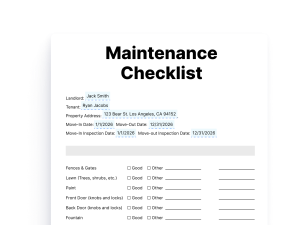
Inspections & Documentation
Move-in inspections
Move-in inspections establish baseline property condition and protect both landlords and tenants from disputes about damage responsibility at move-out. Schedule inspections immediately before or during tenant move-in, walking through the entire property systematically with the tenant present whenever possible. Use our Comprehensive Move-in inspection Checklist covering every room, documenting condition of walls, floors, ceilings, windows, doors, fixtures, appliances, and built-in features with room-by-room condition assessment sections. Note even minor issues like small scratches, worn areas, stains, or operational quirks so tenants aren’t held responsible for pre-existing conditions at lease end. Download our pre-existing conditions documentation form that categorizes minor wear, damage, and operational issues systematically, preventing disputes about when problems originated.
Supplement written checklists with comprehensive photo and video documentation capturing wide shots of each room from multiple angles plus close-ups of any damage, wear, or concerns using our property photo documentation guide that shows exactly which angles and features to capture for complete coverage. Date-stamp all photos and videos, and take them the same day tenants receive keys to establish clear timing. Use our photo organization system template to name and organize images by room, date, and condition type, making before-and-after comparisons effortless months or years later.
Have tenants sign the completed inspection form acknowledging accuracy of condition statements using our tenant move-in acknowledgment form, and provide copies to them immediately along with our tenant move-in packet containing property information and maintenance procedures. Store original inspection documents with lease files, keeping digital backup copies separately in case physical records are lost using our landlord record organization system and cloud backup checklist to ensure documentation survives device failures or disasters.
This documentation becomes critical evidence if security deposit disputes arise or small claims court proceedings become necessary. The few hours invested in thorough move-in inspection and documentation can save you thousands of dollars in disputed charges and legal fees later. Access our move-in inspection best practices guide with step-by-step procedures, common mistakes to avoid, and legal requirements for documenting property condition in your state.
Move-Out Inspections
A move-out inspection is a walkthrough of the rental property conducted when a tenant vacates, allowing landlords to assess the unit’s condition and identify any damage beyond normal wear and tear. Several states require landlords to offer tenants the opportunity to participate in this inspection, providing them a chance to address issues before final deductions are made from the security deposit. During the inspection, landlords typically document the condition of walls, flooring, appliances, fixtures, and other property components, often using photographs or video alongside written checklists. Comparing the move-out inspection to the original move-in inspection helps establish what damage occurred during the tenancy versus pre-existing conditions.
Landlords should provide tenants with reasonable advance notice of the scheduled inspection, typically 48 hours, and conduct the walkthrough during normal business hours when possible. In states where joint inspections are mandatory, failing to offer the tenant an opportunity to attend may limit the landlord’s ability to withhold security deposit funds for damages. Tenants who participate in move-out inspections benefit from understanding exactly what issues may result in deductions and have the opportunity to make repairs or dispute claims before the final accounting. Thorough documentation during this process protects both parties and helps prevent costly disputes over security deposit withholdings.
Notice of Date/Time of Move-Out Inspection
| STATE | RULE | STATUTE |
| Alabama | No statute | |
| Alaska | No statute | |
| Arizona | On request by the tenant | Ariz. Rev. Stat. § 33-1321(c) |
| Arkansas | No statute | |
| California | Yes. Should be conducted at a reasonable time and no later than two weeks before termination date. | Cal. Civ. Code § 1950.5(f)(1) |
| Colorado | No statute | |
| Connecticut | No statute | |
| Delaware | No statute | |
| Florida | No statute | |
| Georgia | No statute | |
| Hawaii | No statute | |
| Idaho | No statute. Refer to lease agreement for specifications. | |
| Illinois | No statute. Local ordinances may vary | |
| Indiana | No statute | |
| Iowa | No statute | |
| Kansas | Within 5 days of moving in or delivery of possession an inspection shall be performed jointly by both parties. | Kan. Stat. § 58-2548 |
| Kentucky | No statute | |
| Louisiana | No statute | |
| Maine | No statute | |
| Maryland | Yes | Md. Code, Real. Prop. § 8-203.1 |
| Massachusetts | No statute | |
| Michigan | No specific statute about a notice being required. However, an inventory checklist shall be provided to the tenant upon giving possession of premises to be returned within 7 days. At termination of tenancy, landlord must do a new inventory checklist to list any damages. | Mich. Comp. Laws § 554.608 |
| Minnesota | Within 14 days of move-in. 5 days before move-out | Minn. Stat. § 504B.182 |
| Mississippi | No statute | |
| Missouri | Landlord must give tenant date and time of move-out inspection in the event that there’s any deductions from the security deposit. | Mo. Rev. Stat. § 535.300(5) |
| Montana | The premises may be inspected 1 week prior to termination of tenancy at the request of either party. | Mont. Code § 70-25-201(2) |
| Nebraska | No statute | |
| Nevada | No statute | |
| New Hampshire | No statute | |
| New Jersey | No statute. | |
| New Mexico | No statute. | |
| New York | No statute. | |
| North Carolina | No statute. | |
| North Dakota | No statute. | |
| Ohio | No statute. | |
| Oklahoma | No statute. | |
| Oregon | No statute. | |
| Pennsylvania | No statute. | |
| Rhode Island | No statute. | |
| South Carolina | No statute. | |
| South Dakota | No statute. | |
| Tennessee | No statute. | |
| Texas | No statute. | |
| Utah | No statute. | |
| Vermont | No statute. | |
| Virginia | The landlord is required to notify the tenant about the move-out inspection within five days of the move-out notice. The inspection should occur no more than three days before the move-out date. | Va. Code § 55.1-1226 |
| Washington | No statute. | |
| West Virginia | No statute. | |
| Wisconsin | No statute. | |
| Wyoming | No statute. |
Annual inspections
Periodic inspections throughout the tenancy help you identify maintenance needs early, ensure tenants are complying with lease terms, and demonstrate active property management if problems arise. Most leases include provisions allowing landlord inspections with proper advance notice, typically 24-48 hours except in emergencies. Use our property inspection notice template to formally notify tenants of scheduled inspections, documenting proper notice delivery as required by law.
Schedule inspections at least annually using our annual inspection scheduling calendar, more frequently if concerns exist about property care or lease compliance. Annual inspections let you verify smoke detector operation, check for unreported damage or maintenance issues, identify lease violations like unauthorized occupants or pets, and assess general property care and cleanliness standards using our annual property inspection checklist that covers all critical areas systematically.
During inspections, document everything with photos showing overall room conditions and any specific concerns. Check for moisture problems, pest issues, fire hazards, and potential habitability concerns that require addressing. Look for tenant-caused damage that exceeds normal wear, unauthorized alterations or modifications, and safety violations like blocked exits or removed detectors. Use our lease compliance inspection form to systematically check for common violations and our safety hazard inspection checklist to identify fire, electrical, or structural risks requiring immediate correction.
Be respectful of tenant privacy during inspections, focusing on property condition and lease compliance rather than personal belongings or activities. Follow up inspections with written summaries using our inspection report template and inspection follow-up letter noting any concerns, required repairs by either party, or lease violations that need correction.
Maintain inspection records chronologically in your property files—this documentation demonstrates reasonable care and can support eviction proceedings or damage claims if tenant-landlord relationships deteriorate. Organize all inspection records with our inspection history tracking log that creates chronological property condition timelines proving proactive management and proper maintenance.
Photo evidence
Comprehensive photo documentation is your strongest defense in security deposit disputes, damage claims, and eviction proceedings. Take extensive photos at move-in, move-out, and during periodic inspections, maintaining consistent approaches to ensure comparability. Use the same angles and lighting conditions when possible so before-and-after comparisons clearly show condition changes. Modern smartphones with date and location stamping provide sufficient quality and automatic metadata that verifies when and where photos were taken, though dedicated cameras produce higher quality images.
Capture wide shots showing entire rooms and overall condition, then take close-up photos of specific features, damage, or concerns. Document all walls, floors, ceilings, appliances, fixtures, and built-in features systematically so you have complete coverage without gaps. For damage documentation, photograph from multiple angles with sufficient lighting, including close-ups that show severity and extent. Consider including a measuring tape or common object in photos to establish scale. Store photos in organized folders labeled by property address, unit number, date, and inspection type. Back up all images to cloud storage or external drives immediately to prevent loss if devices fail. When disputes arise, well-organized, comprehensive photo evidence demonstrating clear condition differences between move-in and move-out almost always supports your position more effectively than verbal descriptions or partial documentation.
Recording damage
Accurate damage documentation requires systematic recording of location, extent, severity, and estimated repair costs for every issue identified. Create damage logs with specific details: which room, which wall or surface, what type of damage occurred, approximate size and severity, whether it appears to be recent or long-standing, and photographic evidence cross-referenced by file name using our detailed damage documentation form and damage assessment worksheet that capture every relevant detail. For move-out damage, compare directly to move-in documentation to determine definitively whether damage occurred during the tenancy or existed previously using our move-in vs. move-out comparison worksheet that places baseline and final condition side-by-side for clear damage identification.
Obtain repair estimates or quotes from qualified contractors for significant damage using our contractor estimate request template, creating paper trails that justify security deposit deductions and satisfy state documentation requirements. For minor damage you’ll repair yourself, document material costs and reasonable labor rates to support charges using our DIY repair cost documentation form that tracks materials, time, and market-rate labor calculations.
Many states require landlords to provide receipts, invoices, or estimates when withholding security deposit funds, making thorough cost documentation essential for legally defensible deductions. Organize all repair documentation with our security deposit deduction evidence organizer that compiles photos, estimates, invoices, and before/after comparisons into packages that satisfy state disclosure requirements.
Organize damage records by date, severity, and financial impact, maintaining all supporting documentation together in our damage claim master file template that consolidates evidence for each deduction in one comprehensive package. If eviction becomes necessary, detailed damage records with photo evidence and cost documentation strengthen your case significantly. In any security deposit dispute or small claims proceeding, judges overwhelmingly favor landlords who present organized, comprehensive damage documentation over those relying on memory or vague assertions about property condition. Use our small claims court documentation guide and security deposit dispute evidence checklist to prepare airtight cases that win deposit disputes.
Notices Landlords Must Be Able to Provide
Rent Increase Notice
Rent increase notices inform tenants of upcoming rent changes while complying with state-mandated notice periods and rent control regulations where applicable. Most states require 30-60 days written notice before rent increases for month-to-month tenancies, though some jurisdictions mandate 90 days or more, particularly for larger increases or rent-controlled properties. Fixed-term leases typically cannot be increased mid-term unless the lease specifically allows it with proper notice provisions. Your rent increase notice should clearly state current rent amount, new rent amount, effective date of increase, and reference the lease clause or statutory authority allowing the increase using our rent increase notice template that includes all required elements in state-compliant format.
Rent Increase Notice
| STATE | RENT INCREASE NOTICE | STATUTE |
| Alabama | No statute | |
| Alaska | 30-day notice for month-to-month tenancies. | The Alaska Landlord and Tenant Act Page 21 |
| Arizona | No statute | |
| Arkansas | No statute. 30 days is common legal practice | |
| California | Landlord is required to give notice in person or mailed | Cal. Civ. Code § 827 |
| Colorado | Yes. 21-day notice required for tenancies over 1 month and less than 6 months. All other circumstances require 60-day notice. | Colo. Rev. Stat. § 38-12-701 |
| Connecticut | 45-day notice required | House Bill No. 5474 Public Act No. 24-143, Page 23, Sec 17 |
| Delaware | 60-day notice is required for any amendments to the rental agreement. | Del. Code tit. 25 § 5107(a) |
| Florida | No statute | |
| Georgia | 60-day notice required for any changes in the rental agreement. | Ga. Code § 44-7-7 |
| Hawaii | 45-day notice for month-to-month tenancies. 15-day notice for tenancies less than month-to-month. | Haw. Rev. Stat. § 521-21(d)(e) |
| Idaho | 30-day notice required | Idaho Landlord-Tenant Manual (Rent and Fee Increases and Lease Renewals) Pg.19 |
| Illinois | No state-wide statute. Cities may have specific regulations in this regard. Usually a 30-day notice is required. | |
| Indiana | 30 day notice required for any modification of the rental agreement. | Ind. Code § 32-31-5-4 |
| Iowa | 30 day notice required | Iowa Code § 562A.13(5) |
| Kansas | No statute. The general principle is 30-day notice. | |
| Kentucky | No specific statute. However, it’s common to provide 30-day notice when making material changes to the rental agreement. | |
| Louisiana | No staute. It’s common to give 30-day notice in this case. | |
| Maine | 45-day notice required. If the rent increase is greater than 10%, a 75-day notice is required. | Me. Stat. tit. 14 § 6015 |
| Maryland | 90-day notice for tenancies over 1 month. 60-day notice for tenancies over 1 week but less than 1 month. 7-day notice for tenancies of 1 week with written lease, and 21-day notice for tenancies of 1 week without a written lease. | Md. Code, Real. Prop. § 8-209 |
| Massachusetts | No statute. Common practice is 30-day notice | |
| Michigan | No statute | |
| Minnesota | It must be the same amount of time a tenant has to give notice to quit or one full rental period in the case of a periodic tenancy. | Minn. Stat. § 504B.147 |
| Mississippi | No statute. Common practice is 30 days notice. | |
| Missouri | No statute. Usually it’s one full term before the next payment is due depending on the contract. | |
| Montana | No specific statute regarding rent increase notices. However, if the landlord wants to make any substantial change they must give 30-day notice for monthly agreements, and 7-day notice for weekly agreements. | Mont. Code § 70-24-311 |
| Nebraska | No specific statute but it’s common to give 30 day’s notice. | |
| Nevada | 60-day notice. If periodic tenancy is less than 1 month, a 30-day notice. | Nev. Rev. Stat. § 118A.300 |
| New Hampshire | 30-day notice | N.H. Rev. Stat. § 540:2(IV) |
| New Jersey | Landlords must provide a notice to quit and notification of the rent increase as agreed to in the lease, but at least thirty (30) days prior to the scheduled increase, unless stipulated by a rent controlled ordinance. | New Jersey Rent Increase Bulletin (Notice Required) Pg. 1 paragraph 4 |
| New Mexico | Landlords may increase the rent payable by the tenant in a month-to-month residency or for a lease with a fixed term residency by providing written notice to the tenant of the plannedd increase at least thirty (30) days prior to the periodic rental date or fixed term specified in the rental agreement. For tenancy of less than one month, written notice shall be provided at least one rental period in advance of the first rental payment to be increased. | N.M. Stat. § 47-8-15 |
| New York | Written notice is required and shall be based on the cumulative amount of time the tenant has occupied the residence or the length of the tenancy in each lease, whichever is longer. See statute. | N.Y. Real Prop. Law § 226-C |
| North Carolina | No statute. | |
| North Dakota | Landlords may change the terms of the lease to take effect at the expiration of the month upon giving notice in writing at least thirty (30) days before the expiration of the month. | N.D. Cent. Code § 47-16-07 |
| Ohio | No statute. | |
| Oklahoma | No statute. Typically outlined in the rental agreement. | |
| Oregon | Landlords must give 30-days written notice for month-to-month leases and at least 7-days written notice for week-to-week leases. | ORS § 90.323 |
| Pennsylvania | No statute. | |
| Rhode Island | A 60-day notice is required for a rent increase prior to the effective date. For month-to-month tenants over the age of 62, 120 days’ notice is mandatory. | R.I. Gen. Laws § 34-18-16.1 |
| South Carolina | No statute. | |
| South Dakota | Lessors must provide lessees with written notice at least 30 days before increasing rent for month-to-month leases. The notice must be given when rent is due. | S.D. Codified Laws § 43-32-13 |
| Tennessee | No statute. | |
| Texas | No statute. | |
| Utah | No statute. | |
| Vermont | Landlords are required to give 60 days’ notice before increasing rent. | Vt. Stat. tit. 9 § 4455(b) |
| Virginia | the amount of notice a landlord must provide before raising rent depends on the type of lease. See statute. | Va. Code § 55.1-1204 |
| Washington | A 30-day written notice is required for month-to-month leases. | Wash. Rev. Code § 59.18.140 |
| West Virginia | No statute. | |
| Wisconsin | Landlords are required to give at least 28 days’ notice for a Month-to-Month lease. | Wis. Stat. Ann. §§ 704.19(3) |
| Wyoming | No statute. |
Check our rent increase notice requirements by state to determine exact notice periods, allowable increase amounts, and any rent control restrictions in your jurisdiction.
Check state and local rent control laws before implementing increases, as some jurisdictions cap allowable annual increases to specific percentages, require additional notice for increases exceeding certain thresholds, or mandate registration and approval processes before increases take effect. Never implement discriminatory or retaliatory rent increases targeting tenants who complained about habitability issues, organized other tenants, or exercised legal rights. Document legitimate business reasons for increases such as property tax increases, insurance cost changes, major capital improvements, or market rate adjustments. Serve rent increase notices using your state’s required delivery method—typically personal delivery, certified mail, or posting and mailing—and retain proof of service. Improperly executed rent increases may be unenforceable, requiring you to accept old rent amounts while starting the notice process over correctly.
Change of terms
Lease change notices modify rental agreement provisions other than rent, such as utility responsibility shifts, parking allocation changes, or revised property rules. Like rent increases, changes to month-to-month leases typically require 30 days advance written notice in most states, though fixed-term leases cannot be unilaterally modified mid-term without tenant agreement unless the lease explicitly authorizes specific changes with proper notice. Change notices must clearly describe the existing term, the new term that will replace it, effective date of change, and the lease provision or statutory authority permitting the modification using our lease change notice template designed for modifying rental agreement terms legally.
Significant changes to material lease terms—like prohibiting previously allowed pets, restricting previously permitted activities, or substantially altering maintenance responsibilities—may face enforceability challenges if challenged as improper unilateral contract modifications. Use our lease modification enforceability guide to understand which changes can be implemented unilaterally versus which require mutual agreement and new lease execution.
Minor changes to property rules, clarifications of existing provisions, or updates to comply with new laws generally face fewer obstacles. Always provide changes in writing with proper notice periods, never implement them verbally or informally. Consider whether major term changes might be better addressed at lease renewal rather than mid-tenancy, giving tenants the option to accept new terms or choose not to renew. Document business reasons for changes and apply them consistently to all tenants in similar situations to avoid discrimination claims.
Our lease renewal with changed terms template helps you present updated lease provisions at renewal time when tenants can accept or decline without contract modification concerns.
24-hour entry notice
Entry notices inform tenants when you’ll access the rental unit for inspections, repairs, showings, or other legitimate purposes while respecting their right to quiet enjoyment and privacy. Most states require reasonable advance notice before landlord entry, commonly defined as 24-48 hours, except for emergencies that threaten life, safety, or property where immediate entry is justified. Entry notices should specify date and time (or time range) of entry, reason for entry, expected duration if known, and who will be entering (landlord, contractors, agents, prospective tenants).
Acceptable reasons for entry typically include making necessary or requested repairs, conducting periodic inspections, showing property to prospective tenants or buyers, responding to emergencies, and complying with legal obligations like inspections required by government authorities. Use our entry purpose documentation form to record the reason, timing, and results of every property entry, creating records that prove appropriate entry practices if disputes arise.
Entries must occur during reasonable hours, usually defined as daytime and early evening, not early morning or late night unless true emergencies justify it. Never abuse entry rights by entering excessively, for improper purposes, or to harass tenants. Review our landlord entry rights and limitations guide to understand the boundaries of legal property access and avoid privacy violations that could trigger harassment claims or lease breach defenses.
Even with proper notice, tenants can sometimes refuse entry for non-emergency situations if timing is genuinely inconvenient, requiring you to reschedule cooperatively. Document all entries with date, time, purpose, who was present, and any observations or actions taken. Repeated entry disputes may indicate deeper landlord-tenant relationship problems requiring frank discussion documented in our landlord-tenant communication log or potentially non-renewal at lease end using proper non-renewal notice procedures REQUIRED NOTICE BEFORE ENTRY
Required Notice before Entry
| STATE | REQUIRED NOTICE BEFORE ENTRY | STATUTE |
| Alabama | 2 day notice required | Ala. Code § 35-9A-303(c) |
| Alaska | 24 hour notice required | Alaska Stat. § 34.03.140(c) |
| Arizona | 2-day notice required. | Ariz. Rev. Stat. § 33-1343(d) |
| Arkansas | No statute | |
| California | 24-hour notice required unless it’s an emergency or premises are surrendered/abandoned. | Cal. Civ. Code § 1954(d)(1) |
| Colorado | No statute but common practice is to give 24-hour notice minimum. | |
| Connecticut | Yes | Conn. Gen. Stat. § 47a-16(c) |
| Delaware | 48-hour notice | Del. Code tit. 25 § 5509(b) |
| Florida | 24-hour notice required | Fla. Stat. § 83.53(2) |
| Georgia | No statute. Generally it is expected that a landlord give 24-hour notice and respect the tenant’s right to privacy. | |
| Hawaii | 2-day notice required, and must be during reasonable hours. | Haw. Rev. Stat. § 521-53(b) |
| Idaho | No statute. The lease agreement should specify the landlord’s right to enter including timeframe of notice, and timeframe of entry. | Idaho Landlord-Tenant Manual (The Tenant’s Right to Privacy) Pg.10-11 |
| Illinois | No state-wide statute. However, local ordinances may vary. Common practice is giving 24-48 hour notice. | |
| Indiana | Yes. A landlord must give a tenant reasonable notice | Ind. Code § 32-31-5-6(g)(2) |
| Iowa | 24-hour notice and entry must be within reasonable times. | Iowa Code § 562A.19(3) |
| Kansas | No specifications on how much of a notice but reasonable notice is required. Usually 24-hour notice suffices. | Kan. Stat. § 58-2557 |
| Kentucky | 2-day notice required | Ky. Rev. Stat. § 383.615(3) |
| Louisiana | No statute. Generally 24-hour notice must be given during reasonable time frames to respect the tenant’s right to privacy. | |
| Maine | Yes. 24-hour notice required | Me. Stat. tit. 14 § 6025(2) |
| Maryland | No statute. Common practice is 24-hour notice minimum. | |
| Massachusetts | The statute doesn’t specify how much notice must be given, but common practice is 24-hour notice minimum. | Mass. Gen. Laws ch. 186 § 15B(1)(a) |
| Michigan | No statute, but common practice is 24-hour notice within a reasonable timeframe. | |
| Minnesota | 24-hour notice | Minn. Stat. § 504B.211(Subd. 2) |
| Mississippi | No statute. Generally a 24-hour notice is required | |
| Missouri | No statute. Generally 24-hour notice is recommended. | |
| Montana | 24-hour notice required | Mont. Code § 70-24-312(3)(a) |
| Nebraska | 24-hour notice | Neb. Rev. Stat. §§ 76-1423(3)(a) |
| Nevada | 24-hour notice | Nev. Rev. Stat. § 118A.330(3) |
| New Hampshire | Yes | N.H. Rev. Stat. § 540-A:3(V-b)(b) |
| New Jersey | Reasonable notice required – typically twenty-four (24) hours. | New Jersey Right of Entry Bulletin |
| New Mexico | Landlords must supply twenty-four (24) hours’ written notice of his intent to enter the dwelling unit, the purpose for entry, and the date and reasonable estimate of the time frame of the entry. This notice is not required when landlords enter within seven (7) days per tenant request to perform repairs or inspections with a government official. See statute. | N.M. Stat. § 47-8-24 |
| New York | No statute, but “reasonable” notice is recommended of at least 24 hours. | |
| North Carolina | No statute, but reasonable notice is presumed (24 hours typically). | |
| North Dakota | No required notice, though entry must be discussed prior and agreed to at a certain time. The tenant cannot unreasonably deny landllord’s entry. Tenant’s failure to object confirms presumed consent. | N.D. Cent. Code § 47-16-07.3 |
| Ohio | Landlords must provide tenants reasonable notice (presumably 24 hours’ of notice) before showing the rental property to potential buyers, unless a shorter timeframe is agreed by both parties. | Ohio Rev. Code § 5321.04 |
| Oklahoma | A landlord shall not abuse the right of access or use it to harass the tenant. Except in case of emergency or unless it is impracticable to do so, the landlord shall give the tenant at least one (1) day’s notice of his intent to enter and may enter only at reasonable times. | Okla. Stat. tit. 41 § 128 |
| Oregon | The landlord must give the tenant at least 24 hours’ actual notice of the intent of the landlord or landlord’s agent to enter – only at reasonable time. | ORS § 90.322 |
| Pennsylvania | There is no exact time specified, but it is recommended to provide 24 hours’ notice or more. | |
| Rhode Island | Tenants shall not withold entry from the landlord for routine inspections and/or maintenance. Entry must be made “at a reasonable time.” See statute, | R.I. Gen. Laws § 34-18-26 |
| South Carolina | Landlords are required to provide 24 hours’ notice and entry only at “reasonable” times once notified. | S.C. Code § 27-40-530 |
| South Dakota | Landlords are required to give notice of at least 24 hours required in writing to the tenant, The reason for entry, the date or dates and time of entry during business hours, and providing the tenant an opportunity to reschedule must be included. | S.D. Codified Laws § 43-32-32 |
| Tennessee | No statute, but 24 hours is recommended. | |
| Texas | No statute, though it is generally recommended for landlords to provide at least 24 hours’ of notice. | |
| Utah | Landlords are required to provide 24 hours’ notice, unless otherwise specified in the lease. | Utah Code § 57-22-4 |
| Vermont | The landlord is required to provide 48 hours’ of notice and can only enter the rental unit between 9:00 am and 9:00 pm. | Vt. Stat. tit. 9 § 4460 |
| Virginia | Landlords must provide tenants with at least 24 hours’ notice before entering a rental property, unless of an emergency. | Va. Code § 55.1-1229 |
| Washington | Landlords must give two days’ notice. | Wash. Rev. Code § 59.18.150(6) |
| West Virginia | No statute, though reasonable notice of at least 24 hours is recommended. | |
| Wisconsin | Landlords are required to give 12 hours of notice unless the tenant agrees to less. | Wis. Stat. Ann. §§ 704.05(2) |
| Wyoming | No statute. |
Late rent notice
Late rent notices formally demand overdue rent and serve as the first step toward potential eviction proceedings if payment isn’t received. Send late rent notices immediately when rent remains unpaid after the due date plus any grace period expires. The notice should state tenant name and property address, rent amount due, late fees if applicable, total amount owed, deadline for payment, acceptable payment methods (often requiring certified funds at this stage), and warning that eviction proceedings may begin if payment isn’t received by the deadline—all included in our late rent demand notice templatewith state-appropriate language.
Some landlords use our friendly rent reminder template before formal legal notices, giving tenants opportunity to pay without legal escalation. However, once rent becomes seriously delinquent or patterns of late payment emerge, more formal notices become necessary. Check state law about whether late rent notices are required before eviction or whether you can proceed directly to pay or quit notices—some jurisdictions make informal demand letters optional while others require specific notice language and timeframes. Access our state eviction notice requirements to understand the specific notice sequence and timing required in your jurisdiction before filing eviction complaints.
Keep copies of all late rent notices, tracking when they were sent, delivery method used, and any responses received. Establishing clear patterns of payment demands and tenant non-responsiveness strengthens your legal position if eviction becomes necessary. Professional, consistent late notice procedures also often motivate payment before legal action becomes necessary, resolving situations less expensively than court proceedings. Track all payment demands with our rent collection enforcement log that documents your consistent notice practices and tenant payment patterns.
Pay or Quit
Pay or Quit Notices are formal legal demands that start the eviction process for rent non-payment, requiring tenants to pay all overdue rent or vacate the property within a specified timeframe. State statutes dictate exact notice periods, typically ranging from 3 to 14 days, and mandate specific notice language, format, and service methods that must be followed precisely for notices to be legally valid. Use our state-specific pay or quit templates: [3-day pay or quit notice], [5-day pay or quit notice], [7-day pay or quit notice], [10-day pay or quit notice], or [14-day pay or quit notice] based on your jurisdiction’s requirements.
These notices typically must state exact amounts owed including rent and any late fees or other charges permitted by your lease, provide deadline by which payment must be received, specify acceptable payment forms (often requiring certified funds like money orders or cashier’s checks), include warning that eviction court proceedings will begin if demands aren’t met, and use the exact statutory language required by your state.
Pay or Quit Notices must be served using methods specified by state law—personal delivery, posting on the door, certified mail, or combinations of methods depending on jurisdiction. Never shortcut service procedures or you’ll need to restart the entire process after discovering the notice wasn’t properly served. Some states allow tenants who pay all amounts demanded before the deadline to reinstate the tenancy automatically, while others allow landlords to refuse payment and proceed with eviction even if tenants cure the default. Check your state’s specific procedures, notice periods, and reinstatement rules. Once the notice period expires without payment or vacancy, you can file eviction complaints with courts. Document everything meticulously—date notice was created, how it was served, by whom, photographic evidence of posting if used, certified mail receipts and return cards—because improper notice service is tenants’ most common defense in eviction proceedings.
Comply and Quit
Notice to comply and quit notices (also called cure or quit notices) demand that tenants correct lease violations other than rent non-payment or vacate the property, starting the eviction process for lease breaches like unauthorized pets, unauthorized occupants, excessive noise, property damage, illegal activity, or other lease violations. Like pay or quit notices, notice to comply and quit must comply exactly with state statute requirements for notice periods, typically 3 to 30 days depending on violation severity and state law, required content, format, and service methods. Use our state-specific notice to comply and quit templates: [3-day notice to comply and quit], [7-day notice to comply and quit], [10-day notice to comply and quit], [14-day notice to comply and quit], or [30-day notice to comply and quit] based on your violation type and jurisdiction.
The notice must specifically describe the lease violation with enough detail that tenants understand exactly what conduct or condition violates the lease, reference the specific lease clause being violated, explain what actions tenants must take to comply and remedy the violation, provide reasonable time to cure, and warn that eviction proceedings will begin if violation continues—all elements included in our comprehensive notice to comply and quit templatewith violation-specific examples.
Some violations may be considered incurable, allowing immediate unconditional quit notices without opportunity to comply—serious violations like illegal drug activity, significant property damage, or violence may justify these harsher notices depending on state law. Use our unconditional quit notice template for incurable violations and our [curable vs. incurable violations guide] to determine which lease breaches must be given compliance opportunities versus which justify immediate termination.
Other violations like pet policy violations or excessive noise must typically be given opportunities to comply first. If tenants fully remedy violations within the notice period, most leases and state laws require you to accept the compliance and allow tenancy to continue. However, repeated violations even if cured each time may eventually justify termination under “pattern of violations” provisions.
Non-renewal
Non-renewal notices inform tenants that their lease will not be extended beyond the current term, requiring them to vacate by the lease end date. Fixed-term leases automatically terminate at the end date unless renewed by mutual agreement or unless they automatically convert to month-to-month tenancies per lease provisions. However, many states require landlords to provide advance notice of non-renewal ranging from 30 to 90 days before lease expiration, even though the lease already specifies an end date. Month-to-month tenancies generally require 30 to 60 days notice for termination without cause, though some tenant-protective jurisdictions prohibit termination without legal cause even for month-to-month tenancies.
Non-renewal notices should state tenant names and property address, current lease end date, clear statement that lease will not be renewed and tenancy terminates on the end date, expected move-out procedures, how keys should be returned, and move-out inspection scheduling information. While you generally don’t need to provide reasons for non-renewal except in rent-controlled or just-cause eviction jurisdictions, never non-renew as retaliation for tenant complaints about habitability issues, discrimination against protected characteristics, or response to tenant organizing or legal rights exercise. Document legitimate business reasons for non-renewal decisions such as plans to sell property, significant renovations requiring vacancy, occupancy by owner or family members, or patterns of lease violations that don’t quite rise to eviction level but make renewal undesirable. Properly executed non-renewal notices allow you to regain possession at lease end without eviction court proceedings, but failure to provide required notice may automatically extend tenancies for additional months.
Termination for cause
Termination for cause notices immediately end tenancies and demand tenant departure within short timeframes, typically allowed only for serious lease violations threatening safety, property integrity, or legal compliance. Unlike cure or quit notices that give opportunities to remedy violations, termination for cause notices provide no cure opportunity—they’re unconditional quit demands based on violations considered too serious for cure chances. Common grounds for immediate termination include illegal drug activity, weapons violations, violence or threats toward other residents, significant property destruction, seriously hazardous conditions created by tenants, or criminal activity on the premises.
State statutes dictate which violations justify immediate termination, required notice periods for unconditional quit notices (often 3 to 10 days), mandatory notice content and format, and proper service methods. These notices must describe the terminating violation in detail with dates, times, and specific prohibited conduct, reference lease clauses and applicable laws being violated, and clearly state the termination date by which tenants must vacate completely. Evidence supporting termination notices should be substantial—police reports, arrest records, criminal convictions, photographic evidence of serious property damage, witness statements from neighbors or other residents, or documented repeated violations after cure opportunities. Judges scrutinize immediate termination cases carefully since tenants receive no cure opportunity, so your supporting documentation must convincingly demonstrate that violations warranted this harsh remedy. If termination notices are challenged, be prepared to prove both that violations occurred and that they were serious enough under state law to justify immediate termination without cure opportunity
Notice to Terminate Tenancy
A notice to terminate tenancy is a formal written document that either a landlord or tenant provides to end a rental agreement. Both parties must deliver this notice within specific timeframes established by state law and the lease agreement. For month-to-month tenancies, most states require 30 days’ notice, although some jurisdictions mandate 60 or even 90 days for longer-term tenants. Fixed-term leases typically end automatically on the specified date, but many still require advance notice to terminate tenancy and prevent automatic renewal. Landlords must include specific information in the notice, such as the tenant’s name, property address, termination date, and reason for ending the tenancy if required by local law.
Additionally, proper delivery of a notice to terminate tenancy plays a critical role in its legal validity. Acceptable delivery methods vary by state but commonly include personal hand delivery, certified mail with return receipt, or posting on the rental property door combined with mailing a copy. Tenants who receive a termination notice should verify that the landlord followed all procedural requirements, as improper notice may provide grounds to contest the termination. Similarly, tenants must deliver their own notice to terminate tenancy according to lease terms and state regulations to avoid liability for additional rent. Both landlords and tenants benefit from keeping copies of all notices and delivery confirmations to protect their interests in potential disputes.
| STATE | NOTICE TO TERMINATE TENANCY | STATUTE |
| Alabama | 10 day notice is required in writing for lease terms less than one year. | Ala. Code § 35-9-5 |
| Alaska | No statute for fixed-end date leases. | |
| Arizona | No statute for fixed-end date leases. | |
| Arkansas | No statute for fixed-end date leases. | |
| California | 60 day notice | Cal. Civ. Code § 1946.1(b) |
| Colorado | 91-day notice is required for lease terms of 1 year+ | Colo. Rev. Stat. § 13-40-107(2)(a) |
| Connecticut | 3-day notice | Conn. Gen. Stat. § 47a-23(a)(G)(C) |
| Delaware | 60-day notice | Del. Code tit. 25 § 5106 |
| Florida | 30-60 day notice for tenancies without specific durations | Fla. Stat. § 83.57 |
| Georgia | 60-day notice required from the landlord. 30 day notice required from the tenant. | Ga. Code § 44-7-7 |
| Hawaii | If it’s a fixed-term lease no notice is required as the agreement simply expires. | Hawaii Residential Landlord-Tenant Code (Termination of tenancy) Pg. 12 Paragraph 2 |
| Idaho | 30-day notice required | Idaho Code § 55-208 |
| Illinois | 60-day notice required. | 735 ILCS 5/9-205 |
| Indiana | 3 month notice for tenancies of a year. If it’s a fixed-term lease then it simply expires. | Ind. Code § 32-31-1-3 |
| Iowa | Lease agreements longer than month-to-month required a 30-day noticed. Usually, a fixed-term lease simply expires so a notice isn’t required. | Iowa Code § 562A.34(3) |
| Kansas | No notice required if it’s a fixed-date lease agreement as it simply ends. | Kan. Stat. § 58-2509 |
| Kentucky | If a lease expires, a 10-day notice is required. | Ky. Rev. Stat. § 383.695(3) |
| Louisiana | Fixed-term leases simply expire at the end of the term without need of notice. | La. Civ. Code art. 2720 |
| Maine | 30-day notice required | Me. Stat. tit. 14 § 6002 |
| Maryland | 60-day notice required | Md. Code, Real. Prop. § 8-402(c)(2)(i) |
| Massachusetts | 3-month notice for payment intervals of 3 months or more. If it’s under 3 months, then notice should be in equal intervals to payments or 30 days whichever is longer. | Mass. Gen. Laws ch. 186 § 12 |
| Michigan | Year-to-year tenancies may be terminated with notice of lease expiration in 1 year. | Mich. Comp. Laws § 554.134(4) |
| Minnesota | No statute for fixed leases. The lease simply expires. | |
| Mississippi | If it’s a fixed-term tenancy, it simply expires and notice isn’t required. If it’s year-to-year, 2-month notice required. | Miss. Code § 89-7-23 |
| Missouri | No notice required in a fixed term agreement as the lease simply expires. If it is a yearly agreement, 60-day notice is required. | Mo. Rev. Stat. § 441.050 |
| Montana | No specific statute for fixed tenancies because they simply finished on the end date. | |
| Nebraska | No specific statute for fixed tenancies because they simply finished on the end date. | |
| Nevada | No specific statute for fixed tenancies because they simply finished on the end date. | |
| New Hampshire | No specific statute for fixed tenancies because they simply finished on the end date. | |
| New Jersey | A 3-Month Notice to Quit must be provided for annual leases. | N.J. Stat. § 2A:18-56 |
| New Mexico | No notice is required as the rental agreement simply expires. | |
| New York | No notice is required to terminate a lease with a definite term, outside the city of New York. | N.Y. Real Prop. Law § 232-B |
| North Carolina | No notice is typically needed as the lease agreement simply expires. If a year-to-year lease, a notice to quit must be provided at least one month or more from the end of the term. | N.C. Gen. Stat. § 42-14 |
| North Dakota | Notice is not required, as the lease simply expires at the term agreed upon in the lease. | N.D. Cent. Code § 47-16-14 |
| Ohio | No notice is required as the lease simply expires. | |
| Oklahoma | No statute. The lease simply expires. | |
| Oregon | Notice must be given in writing no less than 60 days prior to lease termination. | ORS § 91.060 |
| Pennsylvania | When the lease is for any term of one year or less (or for an indeterminate time), the notice shall specify that the tenant shall be removed within fifteen days from the date of service thereof. When the lease is for more than one year, then the tenant must be removed within thirty days from the date of service thereof. | 68 Pa. Stat. § 250.501 |
| Rhode Island | Notice is not required as the lease simply terminates. | |
| South Carolina | No notice is needed as the lease simply expires per the terms in the agreement. It is recommended to provide at least 60 days notice. | |
| South Dakota | Notice is not typically required as the lease simply terminates on the date agreed to by both parties in the lease. | S.D. Codified Laws § 43-32-22 |
| Tennessee | No statute. | |
| Texas | The tenancy terminates on whichever of the following days is the later: (1) the day given in the notice for termination; or (2) one month after the day on which the notice is given. | Tex. Prop. Code § 91.001 |
| Utah | The owner, the owner’s designated agent, or any successor in estate of the owner, must give 15 calendar days or more before the end of that month or period. | Utah Code § 78B-6-802 |
| Vermont | No statute. Typically, no notice is needed since the lease simply expires. In the case of no-cause evictions for tenancies of two years plus, at least 90 days’ notice is required. In the case of no-cause evictions for tenancies of two years or less, at least 60 days’ notice is required. | Vt. Stat. tit. 9 § 4467 |
| Virginia | Written notice for a fixed-term lease is not required as it already has an established end date. | Va. Code § 55.1-1204 |
| Washington | No notice is required because the lease simply expires. | Wash. Rev. Code § 59.04.030 |
| West Virginia | Three months’ written notice is required, unless a different period of notice is agreed to by both parties in writing. | W. Va. Code § 37-6-5 |
| Wisconsin | Tenants are usually given a five-day grace period to pay rent after the due date. If the reny payment is not made within this period, the landlord can issue a “Notice to Terminate” (also known as a “Pay or Vacate” notice), which requires the tenant to either pay the past-due rent balance or vacate the premises. The specific timing and type of notice required can vary based on the type of lease agreement, such as month-to-month or fixed-term leases. | Wis. Stat. Ann. §§ 704.17 |
| Wyoming | No statute. Typically, no notice is given as the lease simply expires. |
Understanding Week-to-Week Lease Termination
A notice to terminate a week-to-week lease is a written document that ends a periodic tenancy renewing on a weekly basis. Most states require either the landlord or tenant to provide at least seven days’ notice before ending a week-to-week lease. However, some jurisdictions mandate longer notice periods, so both parties should verify their local requirements. The notice period typically begins on the first day of the next rental week rather than the date the notice is delivered. For example, if rent is due every Monday and a tenant delivers notice on Wednesday, the seven-day period may not start until the following Monday.
Week-to-week leases offer flexibility but also require careful attention to termination procedures. Landlords must deliver a proper notice to terminate a week-to-week lease using legally accepted methods such as personal delivery, certified mail, or posting and mailing. The notice should clearly state the tenant’s name, rental property address, and the specific date the tenancy will end. Tenants receiving termination notices should confirm the landlord has provided adequate time under state law before vacating. Similarly, tenants who wish to leave should submit written notice to terminate a week-to-week lease to avoid liability for additional rent. Both parties benefit from documenting all communications and retaining copies of termination notices for their records.
Notice to Terminate a Periodic Lease – Week-to-week
| STATE | NOTICE TO TERMINATE (WEEK-TO-WEEK) | STATUTE |
| Alabama | 7 day notice | Ala. Code § 35-9A-441(a) |
| Alaska | 14 day notice | Alaska Stat. § 34.03.290(a) |
| Arizona | 10-day notice | Ariz. Rev. Stat. § 33-1375(a) |
| Arkansas | 7-day notice | Ark. Code § 18-17-704(a) |
| California | 30 day notice | Cal. Civ. Code § 1946.1(c) |
| Colorado | 3-day notice is required for 1 week or longer but less than 1 month. If less than 1 week then 1-day notice required. | Colo. Rev. Stat. § 13-40-107(2)(d)(e) |
| Connecticut | 3-day notice required. After notice is given, rental agreement is terminated, and tenancy converts to a tenancy at sufferance providing basis for Summary Process. | Conn. Gen. Stat. § 47a-23(d) |
| Delaware | No statute | |
| Florida | 7 day notice | Fla. Stat. § 83.57(4) |
| Georgia | No specific statute. 60-day notice required from the landlord. 30 day notice required from the tenant. | Ga. Code § 44-7-7 |
| Hawaii | 10-day notice required. | Haw. Rev. Stat. § 521-71(d) |
| Idaho | No specific statute. The general timeframe is 30 days. | Idaho Code § 55-208 |
| Illinois | 7-day notice required. | 735 ILCS 5/9-207(a) |
| Indiana | No statute for week-to-week lease agreements, but usually it’s a one-week notice. | |
| Iowa | 10-day notice required | Iowa Code § 562A.34(1) |
| Kansas | 7-day notice required | Kan. Stat. § 58-2570(a) |
| Kentucky | 7-day notice required. | Ky. Rev. Stat. § 383.695(1) |
| Louisiana | 5-day notice before the end of the period. | La. Civ. Code art. 2728(3) |
| Maine | 30-day notice required | Me. Stat. tit. 14 § 6002 |
| Maryland | 7-day notice with a written lease. 21-day notice if there no written lease. | Md. Code, Real. Prop. § 8-402(c)(2)(iv) |
| Massachusetts | Notice should be in equal intervals to payments or 30 days whichever is longer. | Mass. Gen. Laws ch. 186 § 12 |
| Michigan | Equal intervals between payments, e.g 1 week. | Mich. Comp. Laws § 554.134(1) |
| Minnesota | The notice must be as long as the intervals between when rent is due or three months, whichever is less. | Minn. Stat. § 504B.135 |
| Mississippi | 1-week notice | Miss. Code § 89-7-23 |
| Missouri | 1-month notice | Mo. Rev. Stat. § 441.060(1) |
| Montana | 7-day notice | Mont. Code § 70-24-441(1) |
| Nebraska | 7-day notice | Neb. Rev. Stat. §§ 76-1437(1) |
| Nevada | 7-day notice | Nev. Rev. Stat. § 40.251(1)(a)(1) |
| New Hampshire | 30-day notice. If the termination is due to tenant’s noncompliance then 7-day notice suffices. | N.H. Rev. Stat. § 540:3 |
| New Jersey | A 1-Month Notice to Quit must be provided for month-to-month leases. | N.J. Stat. § 2A:18-56 |
| New Mexico | Either party may terminate a month-to-month residency by providing a written notice to the other at least thirty (30) days prior to the periodic rental date specified in the notice. | N.M. Stat. § 47-8-37 |
| New York | Notice of termination by the tenant or for a tenancy other than a residential tenancy the landlord, upon the tenant’s or non-residential landlord’s notifying the landlord or non-residential tenant at least one month before the expiration of the term of the tenant’s election to terminate outside New York City. If within New York City, 30 days’ notice is required. | N.Y. Real Prop. Law § 232-B |
| North Carolina | The prevailing party must provide at least seven (7) days’ notice to terminate a lease. If terminating a lease for a manufactured home, at least 60 days’ notice is required. | N.C. Gen. Stat. § 42-14 |
| North Dakota | At least one month’s notice is required to terminate a month-to-month lease. | N.D. Cent. Code § 47-16-15 |
| Ohio | The landlord or tenant may terminate or fail to renew a month-to-month tenancy by giving at least thirty days’ notice prior to the periodic rental date. | Ohio Rev. Code § 5321.17 |
| Oklahoma | The landlord or tenant may terminate the tenancy provided the landlord or tenant gives a written notice to the other party at least thirty (30) days before the date upon which the termination is to become effective. | Okla. Stat. tit. 41 § 111 |
| Oregon | Notice must be given in writing no less than 30 days prior to lease termination. | ORS § 91.070 |
| Pennsylvania | When the lease is for any term of one year or less (or for an indeterminate time), the notice shall specify that the tenant shall be removed within fifteen days from the date of service thereof. | 68 Pa. Stat. § 250.501 |
| Rhode Island | A written notice is required and must be delivered to the other party at least thirty (30) days before the date specified in the notice. | R.I. Gen. Laws § 34-18-37 |
| South Carolina | The landlord or the tenant may terminate a month-to-month tenancy by a written notice given to the other at least thirty days before the termination date specified in the notice. | S.C. Code § 27-40-770 |
| South Dakota | For a month to month lease, the landlord may, upon giving notice in writing at least thirty (30) days before the expiration of the month, modify the terms of the lease to take effect at the expiration of the month. | S.D. Codified Laws § 43-32-13 |
| Tennessee | The landlord or the tenant may terminate a month-to-month lease with a written notice given to the other at least thirty (30) days prior to the periodic rental date specified in the notice. | Tenn. Code § 66-28-512 |
| Texas | For rent-paying periods being less than one month, tenancy terminates on whichever of the following days is the later: (1) the day given in the notice for termination; or (2) one month after the day on which the notice is given. | Tex. Prop. Code § 91.001 |
| Utah | The owner, the owner’s designated agent, or any successor in estate of the owner, must give 15 calendar days or more before the end of that month or period. | Utah Code § 78B-6-802 |
| Vermont | At least 30 days’ notice is required. | Vt. Stat. tit. 9 § 4467(e) |
| Virginia | Written notice to terminate a month-to-month tenancy is 30 days, unless both parties agreed to a shorter timeframe in the lease. | Va. Code § 55.1-1253 |
| Washington | Landlords are required to give 20 days or more of notice from the lease expiration. Less than 20 days’ notice is permitted for any tenant who is a member of the armed forces or receives orders of deployment. | Wash. Rev. Code § 59.18.200(1a-b) |
| West Virginia | One month’s written notice is required from the day the rent payment is due, unless a different period of notice is agreed to by both parties in writing. | W. Va. Code § 37-6-5 |
| Wisconsin | Landlords are required to provide at least 28 days of notice. | Wis. Stat. Ann. §§ 704.19(3) |
| Wyoming | No statute. |
Understanding Month-to-Month Lease Termination
A notice to terminate a month-to-month lease is a formal written document that ends a periodic tenancy renewing on a monthly basis. Most states require landlords and tenants to provide at least 30 days’ notice before ending a month-to-month lease. However, notice requirements vary significantly by jurisdiction, with some states requiring 60 or even 90 days for certain tenants or in rent-controlled areas. The notice period generally begins on the next rent due date rather than the day the notice is delivered. For instance, if rent is due on the first of each month and a tenant delivers notice on January 15th, the tenancy may not end until March 1st.
Month-to-month leases provide flexibility for both landlords and tenants but require strict compliance with termination procedures. To deliver a valid notice to terminate a month-to-month lease, landlords must use approved methods such as personal service, certified mail, or posting combined with mailing. The notice should include the tenant’s full name, property address, termination date, and any reason for ending the tenancy if required by local law. Tenants who receive a termination notice should confirm the landlord has met all legal requirements before making moving arrangements. Likewise, tenants planning to move should submit their own written notice to terminate a month-to-month lease according to state guidelines. Keeping copies of all termination notices and proof of delivery protects both parties in potential disputes over lease obligations.
Notice to Terminate a Periodic Lease – Month-to-Month
| STATE | NOTICE TO TERMINATE (MONTH-TO-MONTH) | STATUTE |
| Alabama | 30 day notice | Ala. Code § 35-9A-441(b) |
| Alaska | 30 day notice | Alaska Stat. § 34.03.290(b) |
| Arizona | 30-day notice | Ariz. Rev. Stat. § 33-1375(b) |
| Arkansas | 30-day notice | Ark. Code § 18-17-704(b) |
| California | 30 day notice | Cal. Civ. Code § 1946.1(c) |
| Colorado | 21-day notice is required for tenancies of 1 month or longer but less than 6 months. | Colo. Rev. Stat. § 13-40-107(2)(c) |
| Connecticut | 3-day notice required. After notice is given, rental agreement is terminated, and tenancy converts to a tenancy at sufferance providing basis for Summary Process. | Conn. Gen. Stat. § 47a-23(d) |
| Delaware | 60-day notice | Del. Code tit. 25 § 5106(d) |
| Florida | 30 day notice | Fla. Stat. § 83.57(3) |
| Georgia | No specific statute. 60-day notice required from the landlord. 30 day notice required from the tenant. | Ga. Code § 44-7-7 |
| Hawaii | 45-day notice required on landlord’s behalf. 28-day notice required on the tenant’s behalf. | Haw. Rev. Stat. § 521-71(a)(b) |
| Idaho | No specific statute. The general timeframe is 30 days. | Idaho Code § 55-208 |
| Illinois | 30-day notice required. | 735 ILCS 5/9-207(b) |
| Indiana | 1 month notice required | Ind. Code § 32-31-1-1 |
| Iowa | 30-day notice required | Iowa Code § 562A.34(2) |
| Kansas | 30-day notice required. 15-day notice is accepted if the tenant is U.S. Military. | Kan. Stat. § 58-2570(b) |
| Kentucky | 30-day notice required. | Ky. Rev. Stat. § 383.695(2) |
| Louisiana | 10-day notice before the end of the month. | La. Civ. Code art. 2728(2) |
| Maine | 30-day notice required | Me. Stat. tit. 14 § 6002 |
| Maryland | 60-day notice required | Md. Code, Real. Prop. § 8-402(c)(2)(i) |
| Massachusetts | Notice should be in equal intervals to payments or 30 days whichever is longer. | Mass. Gen. Laws ch. 186 § 12 |
| Michigan | 1-month notice. | Mich. Comp. Laws § 554.134(1) |
| Minnesota | The notice must be as long as the intervals between when rent is due or three months, whichever is less. | Minn. Stat. § 504B.135 |
| Mississippi | 1-week notice | Miss. Code § 89-7-23 |
| Missouri | 1-month notice | Mo. Rev. Stat. § 441.060(1) |
| Montana | 30-day notice | Mont. Code § 70-24-441(2) |
| Nebraska | 30-day notice | Neb. Rev. Stat. §§ 76-1437(2) |
| Nevada | 30-day notice | Nev. Rev. Stat. § 40.251(1)(a)(2) |
| New Hampshire | 30-day notice. If the termination is due to tenant’s noncompliance then 7-day notice suffices. | N.H. Rev. Stat. § 540:3 |
| New Jersey | A 7-Day Notice to Quit must be provided for week-to-week leases. | N.J. Stat. § 2A:18-56 |
| New Mexico | Either party may terminate a week-to-week residency by providing a written notice to the other at least seven (7) days prior to the periodic rental date specified in the notice. | N.M. Stat. § 47-8-37 |
| New York | Written notice must be provided with no less than seven (7) days’ notice. | N.Y. Real Prop. Law § 232-B |
| North Carolina | The prevailing party must provide at least two (2) days’ notice to terminate a lease. | N.C. Gen. Stat. § 42-14 |
| North Dakota | At least one week’s notice is required to terminate a week-to-week lease. | N.D. Cent. Code § 47-16-15 |
| Ohio | The landlord or tenant may terminate or fail to renew a week-to-week tenancy by giving the other at least seven days’ notice prior to the termination date specified in the notice. | Ohio Rev. Code § 5321.17 |
| Oklahoma | The landlord or tenant may terminate the tenancy provided the landlord or tenant gives to the other party a written notice served as provided in subsection E of this section at least seven (7) days prior to the date for which the termination is to become effective. | Okla. Stat. tit. 41 § 111 |
| Oregon | Landlords are required to provide written notice of intent to terminate the rental agreement due to nonpayment and give the tenant at least 72 hours to remedy the nonpayment of rent. The notice must be presented no sooner than on the fifth day of the rental period, including the first day the rent is due. | ORS § 90.394 |
| Pennsylvania | No statute. | |
| Rhode Island | A written notice is required and must be delivered to the other party at least ten (10) days before the date specified in the notice. | R.I. Gen. Laws § 34-18-37 |
| South Carolina | The landlord or the tenant may terminate a week-to-week tenancy by a written notice given to the other at least seven days before the termination date specified in the notice. | S.C. Code § 27-40-770 |
| South Dakota | One week of notice is required if not otherwise specified in the lease terms. | S.D. Codified Laws § 43-32-15 |
| Tennessee | The landlord or the tenant may terminate a week-to-week lease with a written notice given to the other party at least ten (10) days prior to the termination date specified in the notice. | Tenn. Code § 66-28-512 |
| Texas | For rent-paying periods being less than one month, tenancy terminates on whichever of the following days is the later: (1) the day given in the notice for termination; or (2) one month after the day on which the notice is given. | Tex. Prop. Code § 91.001 |
| Utah | No statute. | |
| Vermont | At least 21 days’ notice is required. | Vt. Stat. tit. 9 § 4467(c)(2) |
| Virginia | The landlord or the tenant may terminate a week-to-week tenancy by serving a written notice on the other at least seven days prior to the next rent due date. | Va. Code § 55.1-1253 |
| Washington | No statute. | |
| West Virginia | One week’s written notice is required from the day the rent payment is due, unless a different period of notice is agreed to by both parties in writing. | W. Va. Code § 37-6-5 |
| Wisconsin | Landlords are required to provide at least five days of notice. | Wis. Stat. Ann. §§ 704.17(1) |
| Wyoming | No statute. |
Understanding Lease Termination Due to Sale of Property
A notice to terminate lease due to sale of property informs tenants that their rental agreement will end because the landlord has sold or is selling the property. In most states, the sale of a rental property does not automatically terminate an existing lease. Instead, the new owner typically inherits the lease and must honor its terms until the agreement expires. However, certain circumstances allow landlords or new owners to issue a notice to terminate lease due to sale of property, particularly for month-to-month tenancies or when specific lease clauses permit early termination upon sale.
Tenant protections vary significantly by state when a rental property changes ownership. Some jurisdictions require new owners to honor fixed-term leases completely, while others allow termination with extended notice periods ranging from 30 to 90 days. Tenants with month-to-month agreements generally have fewer protections and may receive standard termination notices after the sale closes. A valid notice to terminate lease due to sale of property must include the tenant’s name, property address, effective termination date, and information about the new owner when applicable. Tenants who receive such notices should review their lease for sale-related clauses and verify their rights under state law before vacating. Both outgoing landlords and new property owners should ensure they follow proper legal procedures to avoid liability for wrongful eviction claims.
Notice to Terminate Lease due to Sale of Property
| STATE | NOTICE TO TERMINATE DUE TO SALE OF PROPERTY | STATUTE |
| Alabama | No statute | |
| Alaska | No statute | |
| Arizona | No statute | |
| Arkansas | No statute. Refer to general periodic lease notice requirements on Ark. Code § 18-17-704 | |
| California | 30 day notice | Cal. Civ. Code § 1946.1(d) |
| Colorado | No statute | |
| Connecticut | No statute but general notice to terminate a tenancy is 3 days per Conn. Gen. Stat. § 47a-23. | |
| Delaware | No specific statute. New owner assumes lease, and if they wish to terminate they must adhere to Del. Code tit. 25 § 5106. | |
| Florida | No specific statute for sale of property. Refer to general notice of termination outlined in Fla. Stat. § 83.57. | |
| Georgia | No specific statute. The landlord must adhere to the general requirements of lease termination per Ga. Code § 44-7-7. | |
| Hawaii | No statute | |
| Idaho | No specific statute. The general timeframe is 30 days. | Idaho Code § 55-208 |
| Illinois | 90-day notice required. | 735 ILCS 5/9-207.5 |
| Indiana | No statute. In this scenario it depends the type of lease agreement in place. | |
| Iowa | No statute | |
| Kansas | No statute | |
| Kentucky | No statute | |
| Louisiana | No statute | |
| Maine | No specific statute. In general 30-day notice is required. | Me. Stat. tit. 14 § 6002 |
| Maryland | No statute | |
| Massachusetts | No specific statute. General notice of termination states it should be in equal intervals to payments or 30 days, whichever is longer. | Mass. Gen. Laws ch. 186 § 12 |
| Michigan | No specific statute. Depends on the length of the lease as explained in Mich. Comp. Laws § 554.134. | Mich. Comp. Laws § 554.134 |
| Minnesota | No statute | |
| Mississippi | No statute | |
| Missouri | No specific statute | |
| Montana | No statute | |
| Nebraska | No specific statute | |
| Nevada | No statute | |
| New Hampshire | No specific statute due to sale of property. 30-day notice is the standard. | N.H. Rev. Stat. § 540:3 |
| New Jersey | Two months’ written notice is required. | N.J. Stat. § 2A:18-61.2 |
| New Mexico | Landlords must provide the appropriate notice based on the lease term. Upon receipt of written notice of the termination of the owner’s interest in the dwelling unit, the resident shall pay all future rental payments, when due, to the successor in interest to the owner. | N.M. Stat. § 47-8-21 |
| New York | None | |
| North Carolina | Active lease will remain valid until its original expiration and the new owner must honor the existing terms of the lease. | |
| North Dakota | New owners from sale of property must maintain the existing lease terms on a rental unit included in the sold property. Once sold, new owner may give proper notice to terminate the lease – at least 30 days before the next rental period for a month-to-month tenancy | N.D. Cent. Code § 47-16-15 |
| Ohio | Landlords must honor the terms of the lease contract regardless or not if the property has been sold. They are not eligible to terminate the agreement early solely because they’re selling the property. | |
| Oklahoma | The landlord or tenant may terminate the tenancy provided the landlord or tenant gives a written notice to the other party at least thirty (30) days before the date upon which the termination is to become effective. | Okla. Stat. tit. 41 § 111 |
| Oregon | If a landlord sells an occupied rental unit, the landlord must give the current tenant 30 days’ written notice if the tenant has a month-to-month lease. If the tenant has lived in the rental unit for more than one year, the landlord must give 60 days’ written notice. See statute for specific requirements. | ORS § 90.427 |
| Pennsylvania | No statute. | |
| Rhode Island | None | |
| South Carolina | The purchaser shall be entitled to all the benefits and rights under such lease as if he had been the lessor from the date of the purchase. | |
| South Dakota | Landlords must give notice that a tenant must be removed from the premises within a period, specified in the notice, of not less than fifteen days. | S.D. Codified Laws § 43-8-8 |
| Tennessee | The owner must give each tenant at least two (2) months’ actual notice of such owner’s or lessor’s intent to convert such tenant’s property from a rental unit to a property for sale. | Tenn. Code § 66-27-123 |
| Texas | No statute. | |
| Utah | The owner, the owner’s designated agent, or any successor in estate of the owner, must give 15 calendar days or more before the end of that month or period. | Utah Code § 78B-6-802 |
| Vermont | At least 3 days’ notice is required. | Vt. Stat. tit. 9 § 4467(e) |
| Virginia | None | |
| Washington | No statute. | |
| West Virginia | Typically, a 30-day notice to terminate a lease for reasons such as the sale of property is required, unless the lease agreement specifies otherwise. | W. Va. Code § 37-6-5 |
| Wisconsin | No statute. | |
| Wyoming | No statute. |
Understanding Emergency Entry Without Notice
Emergency entry allowed without notice is an exception to standard landlord entry requirements that permits property owners to access a rental unit immediately when urgent circumstances arise. While landlords must typically provide 24 to 48 hours’ advance notice before entering a tenant’s home, emergencies override this requirement to protect life, safety, and property. Common situations where emergency entry allowed without notice applies include fires, gas leaks, flooding, burst pipes, electrical hazards, and suspected criminal activity inside the unit. Landlords may also enter without notice when they reasonably believe a tenant is in medical distress or physical danger.
The emergency entry exception exists to prevent serious harm, not to bypass tenant privacy rights for routine matters. Landlords who abuse this exception by entering without legitimate emergencies may face legal consequences, including liability for invasion of privacy or harassment claims. To qualify as a true emergency, the situation must require immediate action that cannot wait for proper notice. After an emergency entry, landlords should document the circumstances that justified the entry and notify the tenant as soon as reasonably possible. Tenants who believe a landlord entered their unit without a valid emergency should document the incident and consult local tenant rights resources. Both parties benefit from understanding the boundaries of emergency entry allowed without notice to maintain trust and avoid disputes.
Emergency Entry Allowed without Notice
| STATE | EMERGENCY ENTRY ALLOWED WITHOUT NOTICE | STATUTE |
| Alabama | Yes | Ala. Code § 35-9A-303(b)(1) |
| Alaska | Yes | Alaska Stat. § 34.03.140(b) |
| Arizona | Yes | Ariz. Rev. Stat. § 33-1343(c) |
| Arkansas | No specification of a notice requirement but tenant shall not withhold consent to landlord. | Ark. Code § 18-17-602 |
| California | Yes | Cal. Civ. Code § 1954(a)(1) |
| Colorado | No statute but usually no notice is required for emergencies. | |
| Connecticut | Yes | Conn. Gen. Stat. § 47a-16(d) |
| Delaware | Yes | Del. Code tit. 25 § 5509(b) |
| Florida | Yes | Fla. Stat. § 83.53(2)(b) |
| Georgia | No statute. Generally, in cases of emergency no prior notice is required. | |
| Hawaii | Yes | Haw. Rev. Stat. § 521-53(b) |
| Idaho | Yes | Idaho Code § 6-322 |
| Illinois | Yes | 765 Ill. Comp. Stat. 705/5 |
| Indiana | Yes | Ind. Code § 32-31-5-6 |
| Iowa | Yes | Iowa Code § 562A.19(3) |
| Kansas | Yes | Kan. Stat. Ann. § 58-2557(c) |
| Kentucky | Yes | Ky. Rev. Stat. § 383.615(3) |
| Louisiana | No statute. | |
| Maine | Yes | 14 Me. Rev. Stat. § 6025(2) |
| Maryland | No statute. | |
| Massachusetts | Yes | Mass. Gen. Laws ch. 186 § 15B |
| Michigan | No statute. | |
| Minnesota | Yes | Minn. Stat. § 504B.211 |
| Mississippi | No statute. | |
| Missouri | No statute. | |
| Montana | Yes | Mont. Code Ann. § 70-24-312 |
| Nebraska | Yes | Neb. Rev. Stat. § 76-1423 |
| Nevada | Yes | Nev. Rev. Stat. § 118A.330(2) |
| New Hampshire | No statute. | |
| New Jersey | No statute. | |
| New Mexico | Yes | N.M. Stat. Ann. § 47-8-24 |
| New York | No statute. | |
| North Carolina | No statute. | |
| North Dakota | Yes | N.D. Cent. Code § 47-16-07.3 |
| Ohio | Yes | Ohio Rev. Code § 5321.04(A)(8) |
| Oklahoma | Yes | Okla. Stat. tit. 41 § 128 |
| Oregon | Yes | Or. Rev. Stat. § 90.322(1) |
| Pennsylvania | No statute. | |
| Rhode Island | Yes | R.I. Gen. Laws § 34-18-26 |
| South Carolina | Yes | S.C. Code Ann. § 27-40-530 |
| South Dakota | Yes | S.D. Codified Laws § 43-32-32 |
| Tennessee | The landlord may enter the premises without consent of the tenant in case of emergency. | Tenn. Code § 66-28-403 |
| Texas | No statute. | |
| Utah | No statute. | |
| Vermont | Yes. | Vt. Stat. tit. 9 § 4460 |
| Virginia | The landlord is permitted to enter the dwelling unit without consent of the tenant in the case of an emergency. See statute. | Va. Code § 55.1-1229 |
| Washington | Yes, emergency entry without notice is allowed. | Wash. Rev. Code § 59.18.150(5) |
| West Virginia | No statute. | |
| Wisconsin | See statute. | Wis. Stat. Ann. §§ 704.05(2) |
| Wyoming | Yes. |
Understanding Entry During Extended Absence
Entry allowed during tenant’s extended absence without notice is a provision in many states that permits landlords to access a rental unit when tenants are away for prolonged periods. This exception recognizes that properties left unattended for weeks or months may require periodic inspections to prevent damage or address maintenance issues. Most jurisdictions define extended absence as a period ranging from seven to 14 days or longer, depending on state law or lease terms. Landlords typically use this access to check for water leaks, frozen pipes, pest infestations, or other problems that could worsen without intervention.
Several states require tenants to notify their landlord before leaving for an extended period, and failure to do so may grant automatic entry rights. Lease agreements often include clauses requiring tenants to inform the landlord of absences exceeding a specified duration and to provide emergency contact information. Even when entry allowed during tenant’s extended absence without notice applies, landlords should limit access to reasonable inspections rather than extensive property searches. Landlords must still respect tenant belongings and privacy during these visits. Tenants planning vacations or other long trips should review their lease and state laws to understand their notification obligations. Maintaining open communication about extended absences helps both parties protect the property and avoid misunderstandings about landlord entry rights.
Entry Allowed During Tenant’s Extended Absence without Notice
| STATE | RULE | STATUTE |
| Alabama | Yes | Ala. Code § 35-9A-303(b)(5) |
| Alaska | Yes. When necessary as outlined in Alaska Stat. § 34.03.140. | Alaska Stat. § 34.03.230 |
| Arizona | If the tenant has abandoned or surrendered premises. | Ariz. Rev. Stat. § 33-1343(e) |
| Arkansas | No statute | |
| California | Yes | Cal. Civ. Code § 1954(a)(3) |
| Colorado | Yes. If a landlord hasn’t heard of a tenant in 30 days it is considered abandonment. | Colo. Rev. Stat. § 38-20-116 |
| Connecticut | Yes | Conn. Gen. Stat. § 47a-16(d) |
| Delaware | Yes | Del. Code tit. 25 § 5507(b) |
| Florida | Yes | Fla. Stat. § 83.53(2)(d) |
| Georgia | No statute. Generally, in cases of abandonment entry is allowed. | |
| Hawaii | Yes | Haw. Rev. Stat. § 521-53(c) |
| Idaho | No statute. It should be specified in the lease agreement. Generally, a landlord is allowed to enter in the event that the unit is abandoned. | Idaho Landlord-Tenant Manual (The Tenant’s Right to Privacy) Pg.10-11 |
| Illinois | No statute. Local ordinances may vary | |
| Indiana | Yes | Ind. Code § 32-31-5-6(f)(2)(B) |
| Iowa | Yes | Iowa Code § 562A.19(4) |
| Kansas | There is no specific statute regarding entry during extended absence. However, a tenant must notify a landlord of extended absences beyond 7 days. | Kan. Stat. § 58-2558 |
| Kentucky | Yes | Ky. Rev. Stat. § 383.615(4)(c) |
| Louisiana | No statute. Usually no notice is required in the event of abandonment. | |
| Maine | No statute. Generally it is allowed | |
| Maryland | No statute. Usually no notice is required in the event of abandonment. | |
| Massachusetts | Yes | Mass. Gen. Laws ch. 186 § 15B(1)(a)(ii) |
| Michigan | Yes. If the landlord believes in good faith that the tenant has been deceased for a minimum of 18 days. | Mich. Comp. Laws § 600.2918(3)(d)(iii) |
| Minnesota | No statute | |
| Mississippi | No statute. Usually it’s allowed | |
| Missouri | Yes. Specific situations require this such as if rent has been unpaid for 30 days. | Mo. Rev. Stat. § 441.065 |
| Montana | Yes | Mont. Code § 70-24-312(4)(c) |
| Nebraska | Yes | Neb. Rev. Stat. §§ 76-1423(4) |
| Nevada | Yes | Nev. Rev. Stat. § 118A.330(4)(b) |
| New Hampshire | No statute | |
| New Jersey | No statute. | |
| New Mexico | Landlords may enter the dwelling unit at times reasonably necessary when the tenant has been absent for more than seven (7) days. | N.M. Stat. § 47-8-34 |
| New York | No statute. | |
| North Carolina | No statute. | |
| North Dakota | No statute. | |
| Ohio | No statute. | |
| Oklahoma | A landlord shall not abuse the right of access or use it to harass the tenant. Except in case of emergency or unless it is impracticable to do so, the landlord shall give the tenant at least one (1) day’s notice of his intent to enter and may enter only at reasonable times. | Okla. Stat. tit. 41 § 128 |
| Oregon | Landlord may enter at reasonable times if tenant’s absence is greater than seven (7) days. | ORS § 90.340 |
| Pennsylvania | No statute. | |
| Rhode Island | Landlords may enter the dwelling unit without the tenant’s consent if the tenant has been absent for more than seven (7) days, provided the entry is reasonably necessary for the protection of the property. The rental agreement may require that the tenant notify the landlord of any planned extended absence from the premises in excess of ten (10) days. The notice should be given no later than the first day of the extended absence. | R.I. Gen. Laws § 34-18-26 |
| South Carolina | No statute. | |
| South Dakota | No statute. | |
| Tennessee | During any absence of the tenant for more than seven (7) days, the landlord is permitted to enter the dwelling unit at times reasonably necessary. | Tenn. Code § 66-28-507 |
| Texas | No statute. | |
| Utah | No statute. | |
| Vermont | No statute. | |
| Virginia | Landlords may enter the dwelling unit at times reasonably necessary to protect his possessions and property during any absence of the tenant greater than seven days. | Va. Code § 55.1-1249 |
| Washington | No statute. | |
| West Virginia | No statute. | |
| Wisconsin | Yes. | Wis. Stat. Ann. §§ 704.05(2) |
| Wyoming | Yes. |
Understanding Entry for Property Showings
Entry allowed with notice for showing the property is a landlord right that permits access to a rental unit to show it to prospective tenants, buyers, or real estate agents. Most states require landlords to provide advance notice before entering for showings, typically ranging from 24 to 48 hours depending on local law. This notice must generally be in writing and include the date, approximate time, and purpose of the entry. Landlords commonly exercise this right near the end of a lease term when seeking new tenants or when the property is listed for sale.
Tenants retain important rights even when entry allowed with notice for showing the property applies. Landlords must schedule showings at reasonable times, usually during normal business hours, unless the tenant agrees otherwise. Excessive or disruptive showings may constitute harassment, and tenants can request reasonable limitations on frequency. Some states allow tenants to be present during showings, while others permit landlords to show the unit whether or not the tenant is home. Tenants who receive proper notice generally cannot refuse entry for legitimate showings, but they can negotiate preferred times or request consolidation of multiple showings. Both parties benefit from clear communication about showing schedules to minimize disruption while allowing landlords to market the property effectively.
Entry Allowed with Notice for Showing the Property
| STATE | RULE | STATUTE |
| Alabama | Yes. 2 day notice required | Ala. Code § 35-9A-303(c) |
| Alaska | Yes. 24 hour notice required | Alaska Stat. § 34.03.140(c) |
| Arizona | Yes | Ariz. Rev. Stat. § 33-1343(a) |
| Arkansas | No specification of a notice requirement but tenant shall not withhold consent to landlord. | Ark. Code § 18-17-602 |
| California | Yes | Cal. Civ. Code § 1954(d)(2) |
| Colorado | 48-hour notice required | Colo. Rev. Stat. § 38-12-1004 |
| Connecticut | Yes | Conn. Gen. Stat. § 47a-16(a) |
| Delaware | Yes | Del. Code tit. 25 § 5509(a) |
| Florida | Yes | Fla. Stat. § 83.53(1) |
| Georgia | No statute. Generally, it is allowed within regular hours like 8am-8pm | |
| Hawaii | Yes | Haw. Rev. Stat. § 521-53(a) |
| Idaho | No statute. The lease agreement should specify the landlord’s right to enter including timeframe of notice, and timeframe of entry. | Idaho Landlord-Tenant Manual (The Tenant’s Right to Privacy) Pg.10-11 |
| Illinois | No statute. Local ordinances may vary | |
| Indiana | Yes. A landlord must give a tenant reasonable notice | Ind. Code § 32-31-5-6(g)(2) |
| Iowa | Yes | Iowa Code § 562A.19(1) |
| Kansas | Yes. | Kan. Stat. § 58-2557 |
| Kentucky | Yes | Ky. Rev. Stat. § 383.615(1) |
| Louisiana | No statute. Generally 24-hour notice must be given during reasonable time frames to respect the tenant’s right to privacy. | |
| Maine | Yes | Me. Stat. tit. 14 § 6025(1) |
| Maryland | No statute. Common practice is 24-hour notice minimum. | |
| Massachusetts | Yes | Mass. Gen. Laws ch. 186 § 15B(1)(a) |
| Michigan | No statute | |
| Minnesota | Yes | Minn. Stat. § 504B.211(Subd. 3) |
| Mississippi | No statute. Generally a 24-hour notice is required | |
| Missouri | No statute. Generally 24-hour notice is recommended. | |
| Montana | Yes | Mont. Code § 70-24-312(1) |
| Nebraska | Yes | Neb. Rev. Stat. §§ 76-1423(1) |
| Nevada | Yes | |
| New Hampshire | Yes | N.H. Rev. Stat. § 540-A:3(V) |
| New Jersey | Issue of entry for showing of the property must be included in the lease provisions. | New Jersey Right of Entry Bulletin |
| New Mexico | Landlords must supply twenty-four (24) hours’ written notice of his intent to enter the dwelling unit, the purpose for entry and the date and reasonable estimate of the time frame of the entry. | N.M. Stat. § 47-8-24 |
| New York | No statute, but “reasonable” notice is recommended of at least 24 hours. | |
| North Carolina | No statute, but reasonable notice is presumed (24 hours typically). | |
| North Dakota | Landlords are permitted to enter rental unit at a reasonable time with reasonable intent after receiving consent from the tenant. | N.D. Cent. Code § 47-16-07.3 |
| Ohio | Landlords must provide tenants reasonable notice (presumably 24 hours’ of notice) before showing the rental property to potential buyers, unless a shorter timeframe is agreed by both parties. | Ohio Rev. Code § 5321.04 |
| Oklahoma | A landlord shall not abuse the right of access or use it to harass the tenant. Except in case of emergency or unless it is impracticable to do so, the landlord shall give the tenant at least one (1) day’s notice of his intent to enter and may enter only at reasonable times. | Okla. Stat. tit. 41 § 128 |
| Oregon | Yes. See statute. | ORS § 90.322 |
| Pennsylvania | No statute. | |
| Rhode Island | Tenants shall not withhold entry from the landlord for routine inspections and/or maintenance. Entry must be made “at a reasonable time.” See statute, | R.I. Gen. Laws § 34-18-27 |
| South Carolina | Entry is allowed to show the property with at least 24 hours’ notice. | S.C. Code § 27-40-530 |
| South Dakota | Landlords are required to give notice of at least 24 hours required in writing to the tenant, The reason for entry, the date or dates and time of entry during business hours, and providing the tenant an opportunity to reschedule must be included. | S.D. Codified Laws § 43-32-32 |
| Tennessee | The tenant shall not withhold consent to the landlord to enter onto the premises, including entering into the dwelling unit, in order to exhibit the premises to prospective or actual purchasers, mortgagees, workers or contractors. | Tenn. Code § 66-28-403 |
| Texas | Entry is allowed, but no notice is required. | |
| Utah | No statute. | |
| Vermont | No statute. | |
| Virginia | Landlords must provide tenants with 72 hours’ notice before entering a rental property to show it to prospective buyers. | Va. Code § 55.1-1229 |
| Washington | Lanlords may enter to show the property but must give at least one day’s notice. | Wash. Rev. Code § 59.18.150(6) |
| West Virginia | No statute, though reasonable notice of at least 24 hours is recommended. | |
| Wisconsin | A landlord may enter for the amount of time reasonably required to show the premises to prospective tenants or purchasers. | Wis. Admin. Code ATCP § ATCP 134.09 |
| Wyoming | No statute. |
Understanding Notice Requirements for Pesticide Use
A notice to tenants for pesticide use is a written communication landlords must provide before applying pest control treatments in or around a rental property. Many states require landlords to notify tenants at least 24 to 48 hours before pesticide applications, giving residents time to prepare and take necessary precautions. This notice should include the date and approximate time of application, the areas to be treated, the type of pesticide being used, and any safety instructions tenants should follow. Some jurisdictions also require landlords to provide information about the pesticide’s active ingredients and potential health effects.
Proper notice to tenants for pesticide use protects both tenant health and landlord liability. Tenants with chemical sensitivities, respiratory conditions, pregnant women, young children, or pets may need extra time to make arrangements during treatment. Some states allow tenants to request alternative pest control methods or opt out of non-essential treatments in their individual units. Landlords must typically post notices in common areas when treating shared spaces such as hallways, laundry rooms, or building exteriors. Emergency pest treatments for severe infestations may have shortened notice requirements, but landlords should still inform tenants as soon as possible. Tenants who do not receive proper notice to tenants for pesticide use should document the incident and contact local housing authorities if violations continue. Maintaining clear communication about pest control schedules helps ensure tenant safety while allowing landlords to address infestations effectively.
Notice to Tenants for Pesticide Use
| STATE | RULE | STATUTE |
| Alabama | No statute | |
| Alaska | No statute | |
| Arizona | A landlord may provide educational materials such as a description of measures to prevent and control bugs. | Ariz. Rev. Stat. § 33-1319(a)(1)(a) |
| Arkansas | No statute | |
| California | Landlords must provide notice with pests being treated, brand of pesticide, and a notice on toxicity of pesticides if not using a professional pest control company. | Cal. Civ. Code § 1940.8.5(b)(1)(A)(B)(C) |
| Colorado | 48-hour notice required | Colo. Rev. Stat. § 38-12-1004 |
| Connecticut | No statute | |
| Delaware | No statute | |
| Florida | No statute | |
| Georgia | No statute. Certain local ordinances may have requirements. | |
| Hawaii | No statute | |
| Idaho | No statute | |
| Illinois | No statute. | |
| Indiana | No statute | |
| Iowa | No staute | |
| Kansas | No statute | |
| Kentucky | No statute | |
| Louisiana | No statute | |
| Maine | No statute | |
| Maryland | No statute. | |
| Massachusetts | No statute | |
| Michigan | No statute | |
| Minnesota | No statute | |
| Mississippi | No statute | |
| Missouri | No statute | |
| Montana | No statute | |
| Nebraska | No statute | |
| Nevada | No statute | |
| New Hampshire | 48-hour notice | N.H. Rev. Stat. § 540-A:3(V-b)(b) |
| New Jersey | No statute. | |
| New Mexico | No statute. | |
| New York | No statute. | |
| North Carolina | No statute. | |
| North Dakota | No statute. | |
| Ohio | No statute. | |
| Oklahoma | No statute. | |
| Oregon | No statute. | |
| Pennsylvania | No statute. | |
| Rhode Island | No statute. | |
| South Carolina | Entry is allowed for pesticide use with at least 24 hours’ notice. | S.C. Code § 27-40-530 |
| South Dakota | No statute. | |
| Tennessee | No statute. | |
| Texas | No statute. | |
| Utah | No statute. | |
| Vermont | No statute. | |
| Virginia | Landlords must give written notice to the tenant no less than 48 hours prior to his application of an insecticide or pesticide in the tenant’s dwelling unit unless the tenant agrees to a shorter notification period. | Va. Code § 55.1-1223 |
| Washington | No statute. | |
| West Virginia | No statute. | |
| Wisconsin | None | Wis. Admin. Code ATCP § ATCP 134.09 |
| Wyoming | No statute. |
Understanding When Lockouts Are Allowed
Lockouts allowed refers to the limited circumstances under which landlords may legally change locks or restrict tenant access to a rental property. In most states, landlords cannot lock out tenants as a form of self-help eviction, and doing so is illegal regardless of unpaid rent or lease violations. However, a few jurisdictions permit lockouts under specific, regulated conditions, typically requiring landlords to follow strict procedural requirements. States that allow certain lockouts often require landlords to provide advance written notice, make the tenant’s belongings accessible, and offer a key to the new locks during specific hours.
Even in states where lockouts allowed provisions exist, landlords must follow precise legal procedures to avoid liability. Texas, for example, permits lockouts for nonpayment of rent but requires landlords to provide written notice, allow 24-hour access to retrieve belongings, and give tenants a new key upon payment. Landlords who lock out tenants improperly may face significant penalties, including actual damages, statutory penalties, attorney’s fees, and potential criminal charges. Tenants who experience an illegal lockout should document the situation, contact local law enforcement, and seek assistance from tenant rights organizations. Most legal experts recommend landlords pursue formal eviction through the courts rather than risk the substantial legal exposure that comes with lockout procedures. Understanding whether lockouts allowed provisions apply in a specific jurisdiction is essential for both landlords and tenants to protect their rights.
Lockouts Allowed
| STATE | RULE | STATUTE |
| Alabama | No statute | |
| Alaska | No | Alaska Stat. § 34.03.280 |
| Arizona | No. Tenant may recover 2 months of rent or 2x actual damages whichever is greater. | Ariz. Rev. Stat. § 33-1367 |
| Arkansas | No statute. However, it’s usually not allowed. | |
| California | No | Cal. Civ. Code § 789.3(b)(1) |
| Colorado | No | Colo. Rev. Stat. § 38-12-510 |
| Connecticut | A landlord must follow the Summary Process to evict a tenant. | A Landlord’s Guide To Eviction (Summary Process) |
| Delaware | Not allowed. Tenant may recover treble of the damages sustained or 3x per diem (whichever is greater) + cost of suit | Del. Code tit. 25 § 5313 |
| Florida | No | Fla. Stat. § 83.67(2) |
| Georgia | No. If found to be liable, person is subject to conviction and a fine up to $500.00 | Ga. Code § 44-7-14.1 |
| Hawaii | Not allowed. Landlord can be held liable for 2x monthly rent or 2 months of free occupancy to tenant. | Haw. Rev. Stat. § 521-63(c) |
| Idaho | Not allowed. | Idaho Landlord-Tenant Manual (Unlawful Evictions) Pg. 27 |
| Illinois | No statute. Local ordinances may vary | |
| Indiana | Not allowed. | Ind. Code § 32-31-5-6 |
| Iowa | No | Iowa Code § 562A.33 |
| Kansas | Not allowed | Kan. Stat. § 58-2563 |
| Kentucky | No | Ky. Rev. Stat. § 383.655 |
| Louisiana | No | Attorney General’s Guide to Louisiana’s Landlord & Tenant Laws (Proper Eviction Procedures, Cont.) Pg. 29 Paragraph 2 |
| Maine | No | Me. Stat. tit. 14 § 6014 |
| Maryland | No | Md. Code, Real. Prop. § 8-216(b)(1) |
| Massachusetts | No | Mass. Gen. Laws ch. 186 § 14 |
| Michigan | Not allowed | Mich. Comp. Laws § 600.2918(2)(e) |
| Minnesota | Not allowed | Minn. Stat. § 504B.375 |
| Mississippi | No statute. Usually it’s not allowed | |
| Missouri | Not allowed | Mo. Rev. Stat. § 441.233 |
| Montana | Not allowed. | Mont. Code § 70-24-411 |
| Nebraska | Not allowed | Neb. Rev. Stat. §§ 76-1436 |
| Nevada | Not allowed | Nev. Rev. Stat. § 118A.390 |
| New Hampshire | Not allowed | N.H. Rev. Stat. § 540-A:3(I) |
| New Jersey | Illegal. | |
| New Mexico | Lockouts are illegal. | N.M. Stat. § 47-8-36 |
| New York | Lockouts are not permitted. | |
| North Carolina | Lockouts are prohibited. | N.C. Gen. Stat. § 42-25.9 |
| North Dakota | Lockouts are illegal. Tenants are eligible for legal repercussions if a landlord locks them out of the rental unit during an active lease. | N.D. Cent. Code § 32-03-29 |
| Ohio | Landlords are not permitted to initiate any act, including the termination of utilities or services, exclusion from the premises, or threat of any unlawful act, against a tenant, or a tenant whose right to possession has terminated. | Ohio Rev. Code § 5321.15 |
| Oklahoma | Lockouts are not permitted. | |
| Oregon | Lockouts are not permitted. | ORS § 90.375 |
| Pennsylvania | No statute. | |
| Rhode Island | Lockouts are not permitted. See statute listed for tenant’s remedies if a lockout is attempted | R.I. Gen. Laws § 34-18-34 |
| South Carolina | Lockouts are not permitted. | S.C. Code § 27-40-760 |
| South Dakota | Lockouts are not permitted. | S.D. Codified Laws § 43-32-6 |
| Tennessee | Lockouts are not permitted. | |
| Texas | A landlord is not permitted to prevent a tenant from entering a leased premises except by judicial process unless the exclusion results from: (1) repairs, construction, or an emergency; (2) removing the contents of premises abandoned by a tenant; or (3) changing the door locks on the door to the tenant’s unit who is delinquent in paying at least part of the rent. | Tex. Prop. Code § 92.0081 |
| Utah | No. Landlords or owners may not willfully exclude a tenant from the tenant’s premises in any manner except by judicial process. | Utah Code § 78B-6-814 |
| Vermont | No statute. | |
| Virginia | Landlords cannot lock out tenants without going through the proper court eviction process. | |
| Washington | Lockouts are not allowed. | Wash. Rev. Code § 59.18.290 |
| West Virginia | Lockouts are not allowed. Landlords must follow the procedures for eviction. | W. Va. Code § 55-3A-1 |
| Wisconsin | No. | Wis. Admin. Code ATCP § ATCP 134.09 |
| Wyoming | No statute. |
Understanding When Utility Shut-offs Are Allowed
Utility shut-offs allowed refers to the extremely limited circumstances under which landlords may legally discontinue utility services to a rental property. In nearly all states, landlords cannot intentionally shut off utilities such as water, electricity, gas, or heat to force a tenant to vacate. This practice is considered an illegal self-help eviction and is prohibited even when tenants owe back rent or have violated lease terms. Deliberately cutting off essential services endangers tenant health and safety, which is why most jurisdictions impose severe penalties for this behavior.
The few situations where utility shut-offs allowed may apply typically involve necessary repairs, emergencies, or building-wide maintenance that temporarily requires service interruption. In these cases, landlords must generally provide advance notice, keep the disruption as brief as possible, and restore services promptly. When tenants are responsible for paying their own utilities directly to the provider, the utility company may disconnect service for nonpayment following its own notice procedures. However, landlords cannot interfere with tenant-paid utility accounts or request disconnection on the tenant’s behalf. Tenants who experience intentional utility shut-offs should document the outage, contact local code enforcement or housing authorities, and may be entitled to significant damages including rent abatement, relocation costs, and statutory penalties. Most states allow tenants to recover two to three times their actual damages plus attorney’s fees when landlords illegally terminate utility services.
Utility Shut-offs Allowed
| STATE | RULE | STATUTE |
| Alabama | No | Ala. Code § 35-9A-407 |
| Alaska | No | Alaska Stat. § 34.03.210 |
| Arizona | No. Tenant may recover 2 months of rent or 2x actual damages whichever is greater. | Ariz. Rev. Stat. § 33-1367 |
| Arkansas | No statute. However, it’s usually not allowed. | |
| California | No | Cal. Civ. Code § 789.3(a) |
| Colorado | No | Colo. Rev. Stat. § 38-12-510 |
| Connecticut | No | Conn. Gen. Stat. § 47a-13 |
| Delaware | No | Del. Code tit. 25 § 5312(e) |
| Florida | No | Fla. Stat. § 83.67(1) |
| Georgia | No. If found to be liable, person is subject to conviction and a fine up to $500.00 | Ga. Code § 44-7-14.1 |
| Hawaii | Not allowed. Landlord can be held liable for 2x monthly rent or 2 months of free occupancy to tenant. | Haw. Rev. Stat. § 521-63(c) |
| Idaho | Not allowed. | Idaho Landlord-Tenant Manual (The Landlord’s Duty to Provide Utility Services) Pg. 16 |
| Illinois | Not allowed unless it’s a temporary shut off in case of an emergency. | 765 ILCS 735/1.4 |
| Indiana | Not allowed. | Ind. Code § 32-31-5-6 |
| Iowa | No | Iowa Code § 562A.33 |
| Kansas | Not allowed | Kan. Stat. § 58-2563 |
| Kentucky | No | Ky. Rev. Stat. § 383.655 |
| Louisiana | No statute but the majority of the time they are not allowed. | |
| Maine | No | Me. Stat. tit. 14 § 6014 |
| Maryland | No | Md. Code, Real. Prop. § 8-216(b)(1) |
| Massachusetts | No | Mass. Gen. Laws ch. 186 § 14 |
| Michigan | Not allowed | Mich. Comp. Laws § 600.2918(2)(f) |
| Minnesota | Not allowed | Minn. Stat. § 504B.375 |
| Mississippi | No specific statute. However, landlord has a duty to maintain premises in habitable conditions. | Miss. Code § 89-8-23 |
| Missouri | Not allowed | Mo. Rev. Stat. § 441.233 |
| Montana | Not allowed unless the tenant has abandoned or surrendered the premises. | Mont. Code § 70-24-428 |
| Nebraska | Not allowed | Neb. Rev. Stat. §§ 76-1436 |
| Nevada | Not allowed | Nev. Rev. Stat. § 118A.390 |
| New Hampshire | Not allowed | N.H. Rev. Stat. § 540-A:3(I) |
| New Jersey | Illegal. | |
| New Mexico | Shutting off utilities on a tenant is illegal. | N.M. Stat. § 47-8-36 |
| New York | Utility shut-offs are not permitted. | |
| North Carolina | Shutting off a rental unit’s utilities is prohibited. | N.C. Gen. Stat. § 42-25.9 |
| North Dakota | Removing utility services are illegal. Tenants are eligible for legal reprocussions if a landlord diminishes services during an active lease in an effort to evict. | N.D. Cent. Code § 32-03-29 |
| Ohio | Landlords are not permitted to initiate any act, including the termination of utilities or services, exclusion from the premises, or threat of any unlawful act, against a tenant, or a tenant whose right to possession has terminated. | Ohio Rev. Code § 5321.15 |
| Oklahoma | Landlords are required to maintain utilities and cannot shut them off due to noncompliance of a tenant. | Okla. Stat. tit. 41 § 121 |
| Oregon | Utility shut-offs are not permitted. | ORS § 90.375 |
| Pennsylvania | No statute. | |
| Rhode Island | Utility shut-offs are not permitted. See statute listed for tenant’s remedies if services are interrupted without consent. | R.I. Gen. Laws § 34-18-34 |
| South Carolina | Landlords are not allowed to shut-off utilities. | S.C. Code § 27-40-760 |
| South Dakota | Landlords are not permitted to shut-off utilities. | S.D. Codified Laws § 43-32-6 |
| Tennessee | If a rental lease agreement states that the tenant must have utility services transferred into their name(s), and the tenant(s) fails to do so within three (3) days of occupying the rental property, the landlord has the right to disconnect the utilities, provided that the utility services are currently in the landlord’s name. | Tenn. Code § 66-28-521 |
| Texas | A landlord or their agent is prohibited from interrupting or causing the interruption of utility services that are paid directly by the tenant to the utility company, except when the interruption is due to legitimate repairs, construction work, or an emergency situation. | Tex. Prop. Code § 92.008 |
| Utah | No. Landlords or owners may not willfully exclude a tenant from the tenant’s premises in any manner except by judicial process. | Utah Code § 78B-6-814 |
| Vermont | No. | Vermont Department of Health’s Rental Housing Health Code, Pg. 12 Section 12.1.2 (General Responsibilities) |
| Virginia | Landlords may not shut off utilities without going through the proper court eviction process. | |
| Washington | No, the landlord is obligated to pay actual damages plus $100/day of disrupted service. They are also responsible for any court/attorney costs. | Wash. Rev. Code § 59.18.300 |
| West Virginia | Utility shut-offs are not allowed. Landlords must follow the procedures for eviction. | W. Va. Code § 55-3A-1 |
| Wisconsin | No. | Wis. Admin. Code ATCP § ATCP 134.09 |
| Wyoming | No statute. |
Understanding When Electronic Notices Are Allowed
Electronic notices allowed refers to state laws and lease provisions that permit landlords and tenants to communicate official notices via email, text message, or other digital methods. Traditionally, landlord-tenant notices required physical delivery through personal service, certified mail, or posting on the property. However, many states have updated their laws to recognize electronic notices allowed as a valid delivery method for certain communications. These updates reflect the growing preference for digital communication and provide faster, more convenient ways to exchange important rental information.
The rules governing electronic notices allowed vary significantly by state and notice type. Some jurisdictions permit electronic delivery only when both parties have agreed in writing to receive notices electronically. Others require tenants to provide an email address or phone number specifically designated for official communications. Critical notices such as eviction filings, lease terminations, or rent increase notifications may still require traditional delivery methods even in states where electronic notices allowed provisions exist. Landlords using electronic notices should retain proof of delivery, such as read receipts, delivery confirmations, or screenshots with timestamps. Tenants who consent to electronic notices should monitor their designated email or phone regularly to avoid missing important deadlines. Both parties benefit from clearly outlining acceptable electronic communication methods in the lease agreement to prevent disputes over whether proper notice was provided.
Electronic Notices Allowed
| STATE | RULE | STATUTE |
| Alabama | No statute | |
| Alaska | No statute | |
| Arizona | No statute | |
| Arkansas | No statute | |
| California | Allowed in certain instances like notifications for pesticide use. | Cal. Civ. Code § 1940.8.5(d)(2)(b)(iii) |
| Colorado | No statute | |
| Connecticut | No statute | |
| Delaware | No statute | |
| Florida | No statute | |
| Georgia | No statute | |
| Hawaii | No statute | |
| Idaho | No statute | |
| Illinois | No statute | |
| Indiana | No statute | |
| Iowa | No statute | |
| Kansas | No statute | |
| Kentucky | No statute | |
| Louisiana | No statute | |
| Maine | No statute | |
| Maryland | Yes. If previously elected by the tenant | Md. Code, Real. Prop. § 8-209(b)(2)(i)(2) |
| Massachusetts | Must be agreed to by all parties | Mass. Gen. Laws ch. 110G § 15 |
| Michigan | Yes if parties agreed to it previously. | Mich. Comp. Laws § 450.835 |
| Minnesota | No statute | |
| Mississippi | Yes, if previously agreed to in the lease. | Miss. Code § 89-7-27(third) |
| Missouri | No statute. Could be possible if previously stated in the lease. | |
| Montana | Yes | Mont. Code § 70-24-108 |
| Nebraska | No statute | |
| Nevada | No statute | |
| New Hampshire | No statute | |
| New Jersey | Electronic notices are not acceptable. | |
| New Mexico | No statute. | |
| New York | No | |
| North Carolina | Electronic notices satisfy the requirement of delivering information in writing as long as the information and electronic notice can be retained by the recipient. | N.C. Gen. Stat. § 66-318 |
| North Dakota | Electronic notices are not permitted. | |
| Ohio | Electronic notices are not permitted. | |
| Oklahoma | No statute. | |
| Oregon | Landlords and tenants can agree to communicate via electronic notices, though this must be specified in a written addendum to the rental agreement. The addendum must include specific email addresses for both parties and information on the rights of the parties regarding electronic notices. | ORS § 90.155 |
| Pennsylvania | No | |
| Rhode Island | No | |
| South Carolina | No | |
| South Dakota | No | |
| Tennessee | No | |
| Texas | No | |
| Utah | No | |
| Vermont | No | |
| Virginia | No | |
| Washington | No | |
| West Virginia | No | |
| Wisconsin | No | |
| Wyoming | No |
Eviction Process Overview
When eviction is legal
Eviction is legally justified when tenants violate lease terms or fail to vacate after proper notice, but lawful grounds vary by jurisdiction and situation. Most common eviction causes include non-payment of rent, lease term expiration without renewal, lease violations like property damage or unauthorized occupants or pets, nuisance behaviors affecting other residents, criminal activity, and material breach of lease obligations. Some jurisdictions with just-cause eviction protections require specific legal grounds and prohibit no-cause terminations even for month-to-month tenancies. Never attempt eviction for retaliatory or discriminatory reasons such as tenant complaints about habitability, discrimination against protected classes, or tenant organizing activities—these wrongful evictions expose you to substantial damages, attorney’s fees, and penalties.
Before pursuing eviction, ensure you’ve complied with all landlord obligations. Courts may refuse eviction if you’ve failed to maintain habitable premises, violated lease terms yourself, or accepted partial rent payments without explicit reservations of eviction rights. Consider whether alternatives like payment plans, lease modifications, or cash-for-keys agreements might resolve issues more quickly and cheaply than court proceedings. Document everything supporting your eviction decision including lease violations, notice history, payment records, photos of damage, police reports for criminal activity, or neighbor complaints about nuisances. Courts require clear evidence that grounds existed and that you followed proper procedures, so thorough documentation from the start proves essential.
Steps
Eviction follows systematic legal procedures that vary by state but generally include similar stages. The process begins with proper notice, serving pay or quit notices, notice to comply and quit notices, or unconditional quit notices that give tenants opportunity to remedy violations or vacate before court involvement, following procedures in our eviction notice step-by-step guide. If tenants neither cure violations nor vacate within notice periods, you file an eviction complaint or summons with the appropriate court, typically paying filing fees and describing violation grounds. Courts then schedule hearings, usually within one to three weeks, though timelines vary dramatically by jurisdiction. You must serve tenants with summons and complaint, again following exact statutory service procedures.
At the eviction hearing, both parties present evidence and testimony supporting their positions. You’ll need to prove valid grounds existed, that you followed proper notice procedures, that the lease authorizes eviction for the grounds claimed, and that you’ve met all landlord obligations. Tenants may raise defenses like improper notice, habitability failures, retaliation, discrimination, or disputes about violation facts. If you prevail, courts issue judgment for possession plus any awarded back rent and court costs. After a brief appeal period passes, courts issue writs of possession or execution authorizing sheriff removal if tenants don’t vacate voluntarily. Only law enforcement can physically remove tenants—landlords who attempt self-help evictions face substantial liability and criminal charges. The entire process typically takes three weeks to six months depending on jurisdiction, case complexity, whether tenants contest proceedings, and local court backlogs.
Timelines
Eviction timelines vary enormously by state, ranging from extremely fast in landlord-friendly jurisdictions to extremely slow in tenant-protective cities. Fast-track states might complete uncontested evictions in three weeks: 3-day notice, immediate filing, hearing within a week, judgment same day, and writ executable within days. Mid-range states typically require 4-8 weeks for straightforward cases: 5-14 day notice periods, filing and summons service, hearings scheduled 2-3 weeks out, appeals or execution stays adding time. Slow jurisdictions, particularly major cities with tenant protections, may take three to six months even without significant tenant defense: long notice periods, court scheduling delays, mandatory mediation sessions, extensive appeals rights, and delayed writ execution by overloaded sheriff departments.
Tenant defenses add time at every stage. Requested continuances delay hearings weeks or months. Raising habitability defenses or procedural challenges triggers additional hearings and evidence gathering. Appeals extend timelines months beyond initial judgments in most states. Emergency stays granted for hardship or pending assistance add more delays. COVID-19 eviction moratoria and ongoing eviction diversion programs in many jurisdictions further lengthened timelines, with some pandemic-era impacts persisting years later. Factor realistic timelines into financial planning—carrying costs during protracted evictions can devastate cash flow. Consider jurisdiction speed when evaluating potential investment properties, as tenant-friendly locations increase operational risk substantially. Budget for several months of lost rent plus legal fees in any eviction scenario to avoid financial crisis if worst-case delays occur.
Alternatives (cash-for-keys, mediation)
Cash-for-keys agreements offer tenants money in exchange for voluntary, immediate departure, often resolving problems faster and cheaper than formal evictions. Typical cash-for-keys offers range from $500 to several thousand dollars depending on situation severity, local eviction timelines, and property rent levels. You’re essentially purchasing quick vacancy and avoiding the time, legal fees, lost rent, and property damage risks inherent in contested evictions. Agreements should be written, specifying move-out date, property condition expectations, key return procedures, cash payment timing (typically at final walk-through), mutual release of claims, and tenant waiver of further possession rights.
Cash-for-keys works well when tenants have some negotiating power—leases haven’t expired, technical notice defects exist, habitability defenses are possible, or eviction timelines would be lengthy. It’s less effective with judgment-proof tenants who see little downside in forcing full evictions or in jurisdictions with extremely fast eviction procedures where tenant leverage is minimal. Mediation programs available in many courts offer structured negotiation with neutral third parties facilitating resolution. Mediators help develop payment plans, move-out timelines, or lease modifications that resolve conflicts without judgment proceedings. While initially more time-consuming than contested hearings, successful mediations typically reduce total resolution time and preserve tenant-landlord relationships better than adversarial proceedings. Both alternatives provide more control over outcomes and timelines than leaving decisions to courts, though they require willingness to compromise rather than insisting on maximum legal remedies.
What landlords must avoid (self-help eviction)
Self-help eviction—attempting to force tenant departure through intimidation, property access denial, utility shutoffs, or belongings removal without court process—is illegal in every jurisdiction and exposes landlords to massive liability. Never change locks, remove doors or windows, padlock property, or otherwise block tenant access to their home regardless of how far behind on rent they are or how many lease violations have occurred. Never shut off utilities including electricity, water, gas, or heat to force tenants out, even if you’re paying for these services. Don’t remove or dispose of tenant belongings from the property or common areas before legal eviction and proper post-eviction procedures are completed.
Never harass, threaten, or intimidate tenants through aggressive communication, stalking, or coordinating harassment through other residents or third parties. Don’t enter properties excessively, without proper notice, or for purposes of harassment rather than legitimate business needs. Self-help eviction tactics can result in tenant lawsuits seeking actual damages, emotional distress compensation, punitive damages, attorney’s fees, and statutory penalties that may be multiplied in some states. Criminal harassment or trespass charges may also result. Courts view self-help evictions extremely negatively and award substantial damages even when tenants legitimately violated leases, because property rights and due process protections apply even to defaulting tenants until proper legal eviction occurs. The frustration of dealing with problem tenants doesn’t justify shortcuts—always follow proper legal procedures completely regardless of time and cost involved.
Self-Help Evictions
Self-help eviction refers to any action a landlord takes to force a tenant out of a rental property without going through the formal legal eviction process. Common examples include changing the locks, removing doors or windows, shutting off utilities such as water, electricity, or gas, removing the tenant’s personal belongings, or physically threatening or intimidating the tenant to leave. Self-help evictions are illegal in virtually all states, regardless of whether the tenant has failed to pay rent, violated the lease, or engaged in other problematic behavior. Landlords must follow proper legal procedures, which typically involve providing written notice, filing an eviction lawsuit, obtaining a court judgment, and having law enforcement execute the removal.
Tenants who experience self-help evictions have significant legal remedies available to them, including the right to regain possession of the property, recover monetary damages, and in many states, receive statutory penalties of two to three times their actual damages plus attorney’s fees. Some jurisdictions also impose criminal penalties on landlords who engage in illegal lockouts or utility shutoffs. Landlords frustrated with problem tenants may be tempted to take matters into their own hands, but self-help tactics almost always result in greater financial and legal consequences than following the proper eviction process. Tenants facing illegal eviction attempts should document all incidents, contact local law enforcement, and seek assistance from tenant rights organizations or legal aid services.
| STATE | SELF-HELP EVICTIONS | STATUTE |
| Alabama | No statute | |
| Alaska | No statute | |
| Arizona | Not allowed. Tenant may terminate rental and recover no more than two months’ rent or 2x the actual damages whichever is greater. | Ariz. Rev. Stat. § 33-1367 |
| Arkansas | No statute | |
| California | No statute | |
| Colorado | Not allowed. However, if the removal is consistent with article 18.5 of title 25 or the property seems to be abandoned then yes. | Colo. Rev. Stat. § 38-12-510 |
| Connecticut | The State of Connecticut has a guide on how to evict a tenant called Summary Process. | A Landlord’s Guide To Eviction (Summary Process) |
| Delaware | Not allowed. Tenant may recover treble of the damages sustained or 3x per diem (whichever is greater) + cost of suit | Del. Code tit. 25 § 5313 |
| Florida | Not allowed | Fla. Stat. § 83.67 |
| Georgia | Not allowed. | Ga. Code § 44-7-14.1 |
| Hawaii | Not allowed. Tenant may recover damages in the amount of 2x monthly rent or free occupancy for two months + attorney fees, etc. | Haw. Rev. Stat. § 521-63(c) |
| Idaho | No statute. Usually not allowed, and the landlord is responsible for maintaining and providing essential services. | Idaho Code § 6-320(a) |
| Illinois | No state-wide statute. Usually it’s not allowed and the landlord may be liable. | |
| Indiana | Not allowed. | Ind. Code § 32-31-5-6 |
| Iowa | Not allowed | Iowa Code § 562A.26 |
| Kansas | Not allowed | Kan. Stat. § 58-2563 |
| Kentucky | No | Ky. Rev. Stat. § 383.655 |
| Louisiana | The landlord may be liable for wrongful eviction. | Attorney General’s Guide to Louisiana’s Landlord & Tenant Laws (Proper Eviction Procedures, Cont.) Pg. 29 Paragraph 2 |
| Maine | Not allowed | Me. Stat. tit. 14 § 6014 |
| Maryland | No | Md. Code, Real. Prop. § 7-113(b)(1)(i)(ii)(iii) |
| Massachusetts | Not allowed. Punishable by a fine of up to $300 or imprisonment of up to 6 months. | Mass. Gen. Laws ch. 186 § 14 |
| Michigan | Not allowed | Mich. Comp. Laws § 600.2918 |
| Minnesota | Not allowed | Minn. Stat. § 504B.375 |
| Mississippi | No statute, but it’s usually not allowed. | |
| Missouri | Not allowed. | Mo. Rev. Stat. § 441.233 |
| Montana | Not allowed. A landlord must comply with housing codes, and maintain the premises fit to live. | Mont. Code § 70-24-303 |
| Nebraska | Not allowed | Neb. Rev. Stat. §§ 76-1436 |
| Nevada | Not allowed | Nev. Rev. Stat. § 118A.390 |
| New Hampshire | Not allowed | N.H. Rev. Stat. § 540-A:3(I) |
| New Jersey | Self-help evictions are illegal. | |
| New Mexico | Self-help evictions are illegal. | |
| New York | Landlords are prohibited from using self-help tactics to evict a tenant. | |
| North Carolina | Self-help evictions are prohibited by law. | |
| North Dakota | Evictions must follow process through a North Dakota state district court. | |
| Ohio | Landlords are not permitted to initiate any act, including exclusion from the premises, or threat of any unlawful act, against a tenant, or a tenant whose right to possession has terminated. | Ohio Rev. Code § 5321.15 |
| Oklahoma | Self-Help evictions are illegal. | |
| Oregon | Self-help evictions are illegal. | |
| Pennsylvania | Not permitted. | |
| Rhode Island | Self-help evictions are illegal and could result in criminal or civil penalties. | |
| South Carolina | A landlord is not permitted to recover or take possession of a dwelling unit through any action, including reducing or interrupting essential services to the tenant, except in cases of abandonment, surrender, lease termination, or as otherwise allowed by law. | S.C. Code § 27-40-760 |
| South Dakota | No statute. | |
| Tennessee | Self-help evictions are illegal. They are considered disorderly conduct. Landlords engaging in self-help evictions can be sued by the tenant. | Tenn. Code § 66-28-514 |
| Texas | Texas law prohibits landlords from resorting to “self-help” evictions. | |
| Utah | No statute. | |
| Vermont | No statute. | |
| Virginia | Self-help evictions are prohibited for residential properties. Landlords are required to follow a legal process to remove tenants who violate their lease agreement. | Va. Code § 55.1-1245 |
| Washington | No statute. | |
| West Virginia | No statute. | |
| Wisconsin | No landlord may exclude, forcibly evict or constructively evict a tenant from a leased property, other than by a specified eviction procedure. | Wis. Admin. Code ATCP § ATCP 134.09(7) |
| Wyoming | No statute. |
List of 50 States Eviction Law Pages
Handling Problem Tenants
Nonpayment
Rent nonpayment is landlords’ most common tenant problem but requires careful handling to protect your rights while complying with law. When rent is even one day late, document the delinquency immediately. Send friendly payment reminders first for tenants with previously good payment history who may have simply forgotten or encountered temporary disruption. If payment doesn’t materialize within a few days, send formal late rent demand notices or pay or quit notices by state depending on your strategy and jurisdiction requirements detailed in our late rent escalation guide. Track all communication attempts, payment promises made and broken, and partial payments offered or accepted.
Notice of Termination for Nonpayment
| STATE | NOTICE OF TERMINATION FOR NONPAYMENT | STATUTE |
| Alabama | 7 day notice to remedy or quit | Ala. Code § 35-9A-421(a) |
| Alaska | 7 day notice to pay or quit | Alaska Stat. § 34.03.220(b) |
| Arizona | 5-day notice to pay or quit required | Ariz. Rev. Stat. § 33-1368(b) |
| Arkansas | Yes. 14 days to remedy or quit | Ark. Code § 18-17-701(a)(1) |
| California | Yes. 3 days notice to quit | Cal. Code Civ. Proc. § 1161(2) |
| Colorado | No specific statute about non-payment but a notice to terminate tenancy in general is required. Refer to Colo. Rev. Stat. § 13-40-107 | |
| Connecticut | 3-day notice required | Conn. Gen. Stat. § 47a-23(a) |
| Delaware | 5-day notice | Del. Code tit. 25 § 5502(a) |
| Florida | 3-day notice to quit | Fla. Stat. § 83.56(3) |
| Georgia | A landlord can go to court immediately if a tenant does not give possession upon termination of rental agreement. | Ga. Code § 44-7-50 |
| Hawaii | 5-day notice to pay or quit | Haw. Rev. Stat. § 521-68(a) |
| Idaho | 3-day notice | Idaho Code § 6-303(2) |
| Illinois | 5-day notice to remedy or quit | 735 ILCS 5/9-209 |
| Indiana | 10-day notice to quit or pay | Ind. Code § 32-31-1-6 |
| Iowa | 7-day notice to remedy or quit. | Iowa Code § 562A.27(1) |
| Kansas | If the period of tenancy is 3+ months a 10-day notice to quit is required. If tenancy is less than 3-month period, then a 3-day notice is required. | Kan. Stat. § 58-2507 |
| Kentucky | 7-day notice required | Ky. Rev. Stat. § 383.660(2) |
| Louisiana | 5-day notice | La. Code Civ. Proc. art. 4701 |
| Maine | 7-day notice required | Me. Stat. tit. 14 § 6002(c) |
| Maryland | 10-day notice to remedy or quit | Md. Code, Real. Prop. § 8-401(c)(1) |
| Massachusetts | 14-day notice to quit or remedy. | Mass. Gen. Laws ch. 186 § 11 |
| Michigan | 7-day notice to quit | Mich. Comp. Laws § 554.134(2) |
| Minnesota | 14-day notice to quit | Minn. Stat. § 504B.321 |
| Mississippi | 3-day notice | Miss. Code § 89-7-27(second) |
| Missouri | No specific statute for a notice. However, a landlord can file a statement with an affidavit into the court for further assistance in procuring possession of premises. | Mo. Rev. Stat. § 535.020 |
| Montana | 3-day notice to quit or remedy | Mont. Code § 70-24-422(2) |
| Nebraska | 7-day notice | Neb. Rev. Stat. §§ 76-1431(2) |
| Nevada | 5 days for commercial property. 7 days for real property other than commercial. | Nev. Rev. Stat. § 40.2512(1)(a)(b) |
| New Hampshire | 7-day notice | N.H. Rev. Stat. § 540:3 |
| New Jersey | Immediate termination for non-payment unless the landlord has previously accepted late rent. If so, 30-days’ notice is required. | N.J. Stat. § 2A:18-61.2 |
| New Mexico | Landlords must provide a three-day written notice after rent is unpaid and past due, notifying of termination. The tenant may avoid lease termination by paying all monies that are past due prior to the expiration of the three-day notice. | N.M. Stat. § 47-8-33 |
| New York | For rental units outside of New York City, notice must be given five (5) days since the rent is past due. Tenant has 14 days to remedy the past due rent or quit. | |
| North Carolina | Termination of lease may be implemented upon failure to pay the rent within 10 days after a demand notice is made by the lessor. | N.C. Gen. Stat. § 42-3 |
| North Dakota | Landlords can initiate eviction process for nonpayment after 3 days of missing payment. Landlord must give at least 3 days’ notice for tenant to vacate due to non-payment. | N.D. Cent. Code § 47-32-01 |
| Ohio | Three day written notice is required. | Ohio Rev. Code § 1923.04 |
| Oklahoma | Landlords may terminate a rental agreement for failure to pay when due, if the tenant fails to pay the rent within five (5) days after written notice of landlord’s demand for payment. | Okla. Stat. tit. 41 § 131 |
| Oregon | For week-to-week tenancies, 72 hours’ written notice must be given to remedy the nonpayment. For all other leases, see statute for requirements. | ORS § 90.394 |
| Pennsylvania | In case of failure of the tenant, upon demand, to pay any rent reserved and due, the notice must indicate that the tenant must vacate within ten (10) days from the date of the notice. | 68 Pa. Stat. § 250.501 |
| Rhode Island | Landlords must provide a five day written notice before lease is terminated if monthly rent is 15 or more days late. See statute. | R.I. Gen. Laws § 34-18-35 |
| South Carolina | Five (5) days written notice is required before lease termination and filing for eviction. It can be written in the lease conspicuously so that termination can occur five (5) days after nonpayment of rent, though it here must be required language. | S.C. Code § 27-40-710 |
| South Dakota | Landlords have the right to start the eviction process if rent is past due by a minimum of three (3) days. | S.D. Codified Laws § 21-16-1 |
| Tennessee | A landlord must give fourteen (14) days’ notice of termination of tenancy for the purpose of eviction of a residential tenant | Tenn. Code § 66-7-109 |
| Texas | A landlord must give a tenant at least three days’ written notice to vacate if the tenant defaults on their rent, unless otherwise specified in the lease. | Tex. Prop. Code § 94.206 |
| Utah | Three calendar days. | Utah Code § 78B-6-802 |
| Vermont | 14 days’ notice is required. | Vt. Stat. tit. 9 § 4467(a) |
| Virginia | A landlord can terminate a lease for nonpayment of rent by serving a tenant with a five-day notice to pay rent or quit, a “pay or quit” notice. | Va. Code § 55.1-1245 |
| Washington | Landlords are required to give tenants three days’ notice. | Wash. Rev. Code § 59.12.030(3) |
| West Virginia | Landlords have the right to file for eviction immediately without notice. Once the circuit court sets a hearing date, the landlord is required to notify the tenant in writing of the hearing. | W. Va. Code § 55-3A-1 |
| Wisconsin | Landlords must give varying notice of termination based on the lease terms. See statute. | Wis. Stat. Ann. §§ 704.17 |
| Wyoming | Three days. | Wyo. Stat. § 1-21-1002 |
Be cautious accepting partial payments once you’re considering eviction, as accepting anything less than full rent owed may waive your right to proceed with eviction for that period in many states or restart notice periods. If you accept partial payment, include explicit written reservations stating you’re accepting it without prejudice to eviction proceedings already underway or rights to collect the balance. Consider whether payment plans might resolve situation—some jurisdictions require landlords to accept reasonable payment plans before evicting, particularly during or after COVID-19 protections. Research rent assistance programs in your area and inform tenants about these resources, as many jurisdictions require landlords to accept government rent assistance when tenants apply. Maintaining detailed payment records with dates, amounts, methods, and running balances using our comprehensive rent ledger template and payment default documentation log proves crucial in eviction proceedings where you must demonstrate exact amounts owed and when each payment default occurred.
Unauthorized occupants
Discovering unauthorized occupants violates most leases and creates liability concerns since these individuals haven’t been screened, aren’t lease parties, and you may not be able to hold them responsible for damages or other issues. When unauthorized occupancy is suspected based on extended stays by individuals not listed on the lease, additional vehicles regularly present, unusual traffic, neighbor reports, or consumption patterns inconsistent with lease occupant numbers, investigate appropriately without harassing tenants or invading privacy. Document your observations systematically with our [unauthorized occupant documentation log] that records dates, times, evidence observed, and witness information without violating tenant privacy rights. Review your lease’s guest policy and occupancy limitations, then document violations observed including dates, times, and specifics about unauthorized individuals. Reference your lease’s occupancy standards using our [occupancy standards checklist] and [guest policy violation documentation form] to establish clear lease breaches.
Send written notices using our [unauthorized occupant violation notice template] identifying the violation, referencing specific lease clauses prohibiting unauthorized occupants, demanding either that unauthorized individuals immediately cease residing at property or that they be added to the lease after proper application and screening using our [additional occupant application form], and warning that eviction proceedings may begin if violation isn’t cured within required timeframes. Some states require cure opportunities while others allow immediate termination for occupancy violations. Check our [state unauthorized occupant violation requirements] to determine whether your jurisdiction requires cure opportunities or permits immediate termination for occupancy breaches. If adding occupants to the lease becomes the solution, screen them thoroughly as you would any original applicant, potentially increasing rent if your lease allows and total occupancy increases significantly. Use our [mid-lease occupant addition agreement] and [occupant screening checklist] to properly evaluate and document new occupants, and our [rent increase for additional occupants notice] if adjusting rent. If tenants refuse to cure violations, proceed with eviction through proper notice and court procedures. Unauthorized occupants discovered during eviction proceedings may complicate cases since they aren’t lease parties but have possession rights, potentially requiring separate proceedings to remove them depending on jurisdiction. Consult our [eviction with unauthorized occupants guide] for strategies addressing this complex situation.
Complaints
Neighbor or tenant complaints about noise, disturbances, property condition, parking violations, pet problems, or other nuisances require prompt investigation and resolution to maintain property value, retain good tenants, and avoid liability for tolerating problem behaviors. When receiving complaints, document everything: complainant identity, specific behaviors complained about, dates and times of incidents, frequency of problems, and any evidence like photos, videos, or police reports. Verify complaints independently when possible rather than relying solely on neighbor reports which may be exaggerated or motivated by personal conflicts.
Once violations are verified, communicate immediately with offending tenants using our [noise complaint notice template], [nuisance violation notice template], or [disturbance warning letter] identifying the problem, citing specific lease clauses being violated, explaining impact on neighbors or property, demanding immediate cessation, and warning of eviction possibility if behaviors continue. Follow up written warning notices with subsequent notices for each additional violation, building documentation trail that demonstrates pattern of recurring problems. For serious nuisances like excessive noise at all hours, threatening behavior, or activities affecting other tenants’ quiet enjoyment, more aggressive enforcement may be necessary including immediate cure or quit notices or even unconditional termination notices depending on violation severity and state law. Balance aggressive enforcement against frivolous complaints from overly sensitive neighbors—not every complaint warrants eviction proceedings, and you need to distinguish legitimate disturbances from unrealistic expectations about apartment living. Maintaining detailed complaint files and response documentation protects you if situations escalate to eviction proceedings or if complaining tenants sue you for failing to address nuisances that violate their quiet enjoyment rights.
Property damage
Tenant-caused property damage beyond normal wear and tear requires immediate action to prevent escalation and preserve your ability to recover costs. When damage is discovered during inspections or reported by neighbors, document it thoroughly using our property damage documentation form with photos from multiple angles following our [damage photography guide], measurements showing extent, detailed written descriptions, and estimated repair costs from contractors obtained via our [contractor estimate request template]. Distinguish between normal wear requiring no tenant responsibility and actual damage for which tenants are liable. When damage is discovered during inspections or reported by neighbors, document it thoroughly using our [property damage documentation form] with photos from multiple angles following our [damage photography guide], measurements showing extent, detailed written descriptions, and estimated repair costs from contractors obtained via our [contractor estimate request template].
For minor damage like small holes in walls, carpet stains, or broken fixtures discovered during tenancy, send written notices documenting the problem and requesting repairs or reimbursement, building paper trail for eventual security deposit deductions. For major damage like significant holes in walls, broken appliances, damaged flooring throughout units, or structural damage, consider whether the severity justifies immediate eviction proceedings rather than waiting until lease end. Very serious or malicious damage may warrant police reports for property destruction, creating documentation that strengthens eviction cases and provides potential criminal restitution routes for compensation. Always obtain multiple repair estimates for damage exceeding a few hundred dollars, demonstrating market-rate costs if security deposit disputes arise. When damage continues accumulating throughout tenancies despite warnings, document each new incident systematically and consider non-renewal or eviction rather than allowing destruction to mount until security deposits can’t cover repairs.
Lease violations
Lease violations beyond rent nonpayment, unauthorized occupants, and property damage include countless other breaches like unapproved alterations, prohibited activities, business operation in residential properties, smoking violations, parking infractions, improper storage, or any other breach of negotiated lease terms. Your response should be proportionate to violation severity and compliance risk. Minor one-time violations might warrant friendly reminders before formal notices, while serious or repeated violations require immediate formal cure or quit notices starting the eviction clock. Always document violations observed with dates, specifics, photos or other evidence, and witness statements if available. Use our [general lease violation documentation form] and [violation evidence checklist] to capture all relevant details supporting enforcement actions.
Notice for Lease Violation
| STATE | NOTICE FOR LEASE VIOLATION | STATUTE |
| Alabama | 7 day notice to remedy or quit | Ala. Code § 35-9A-421(a) |
| Alaska | 10 day notice required | Alaska Stat. § 34.03.220 |
| Arizona | 10-day notice to remedy or quit required. If tenant’s noncompliance affects health & safety 5-day notice is ok. | Ariz. Rev. Stat. § 33-1368(a) |
| Arkansas | Yes. 14 days to remedy or quit | Ark. Code § 18-17-701(a)(1) |
| California | Yes. 3 days notice to quit | Cal. Code Civ. Proc. § 1161 |
| Colorado | 10-day notice required or 3-day notice for exempt residential agreements | Colo. Rev. Stat. § 13-40-104 |
| Connecticut | 15-day notice required | Conn. Gen. Stat. § 47a-15 |
| Delaware | 7-day notice to remedy or quit | Del. Code tit. 25 § 5513(a) |
| Florida | 7-day notice | Fla. Stat. § 83.56 |
| Georgia | No statute | |
| Hawaii | 10-day notice to remedy. The landlord may take action to obtain possession of unit if breach is recurring. | Haw. Rev. Stat. § 521-72 |
| Idaho | 3-day notice | Idaho Code § 6-303(3) |
| Illinois | 10-day notice | 735 ILCS 5/9-210 |
| Indiana | No statute. If it’s pertaining to nonpayment then 10-day notice is required. | |
| Iowa | 7-day notice to remedy or quit | Iowa Code § 562A.27(1) |
| Kansas | The tenant has 14 days to remedy the situation or the lease is terminated within 30 days provided that the landlord notified the tenant of this in writing. | Kan. Stat. § 58-2564 |
| Kentucky | 14-day notice required | Ky. Rev. Stat. § 383.660(1) |
| Louisiana | 5-day notice | La. Code Civ. Proc. art. 4701 |
| Maine | 7-day notice required | Me. Stat. tit. 14 § 6002(c) |
| Maryland | 30-day notice for lease violation. 14-day notice if there is imminent threat on tenant’s behalf. | Md. Code, Real. Prop. § 8-402.1(a)(1)(i)(2)(A)(B) |
| Massachusetts | No specific statute. General notice of termination states it should be in equal intervals to payments or 30 days, whichever is longer. | Mass. Gen. Laws ch. 186 § 12 |
| Michigan | 24-hour notice for lease violations related explicitly to controlled substances. 7-day notice for nonpayment, noncompliance, etc. | Mich. Comp. Laws § 554.134(2)(4) |
| Minnesota | No statute | |
| Mississippi | 14-day notice | Miss. Code § 89-8-13(3) |
| Missouri | No statute | |
| Montana | 3-day notice for unauthorized pets and people in unit. 14-day notice for other noncompliant matters. | Mont. Code § 70-24-422(1)(b)(c)(d) |
| Nebraska | 30-day notice | Neb. Rev. Stat. §§ 76-1431(1) |
| Nevada | 5 day notice. | Nev. Rev. Stat. § 40.2516 |
| New Hampshire | 30-day notice | N.H. Rev. Stat. § 540:3 |
| New Jersey | For lease violations, a 30-days’ notice to quit is required. For disorderly conduct or non-compliance of the lease, 3-days’ notice to quit is required. | N.J. Stat. § 2A:18-61.2 |
| New Mexico | Landlords must provide a seven-day written notice to quit or remedy. If there is a second violation of non-compliance by a tenant within six (6) months of the original notice, the landlord is eligible to provide a seven-day unconditional notice to quit. See statute. | N.M. Stat. § 47-8-33 |
| New York | For rental units outside of New York City, notice must be given five (5) days since the rent is past due. Tenant has 14 days to remedy the past due rent or quit. | NEEDS TO BE CONFIRMED – Couldn’t confirm statute. |
| North Carolina | Termination of tenant can be immediate if there is non-compliance of the lease agreement. | N.C. Gen. Stat. § 42-26 |
| North Dakota | Three days’ notice is required to terminate a lease if the tenant is in non-compliance with the rental agreement. | N.D. Cent. Code § 47-32-01 |
| Ohio | Three day written notice is required. | Ohio Rev. Code § 1923.04 |
| Oklahoma | Landlords are able to provide a written notice to the tenant served as provided in subsection E of Section 111 of this title specifying the acts and omissions constituting the noncompliance and that the rental agreement will terminate upon a date not less than fifteen (15) days after receipt of the notice. The tenant has the ability to remedy the noncompliance within ten (10) days. | Okla. Stat. tit. 41 § 132 |
| Oregon | Once written notice is provided to the tenant, the rental agreement will terminate in 30 days. If the tenant has a prior lease violation within the most recent six (6) months, the landlord is able to only provide ten (10) days’ notice. | ORS § 90.392 |
| Pennsylvania | No statute. | |
| Rhode Island | Landlords must provide written notice before lease is terminated if noncompliance was made by the tenant. See statute for requirements. | R.I. Gen. Laws § 34-18-35 |
| South Carolina | Landlords are required to give 14 days written notice if a lessee is in noncompliance of the rental agreement. | S.C. Code § 27-40-710 |
| South Dakota | Landlords have the right to terminate a lease before the end of its term if the tenant uses the premises in a manner that violates the terms of the lease agreement. If the tenant fails to make any necessary repairs that they are responsible for, as outlined in the lease, the landlord may also terminate the lease. | S.D. Codified Laws § 43-32-18 |
| Tennessee | A landlord must give thirty (30) days’ notice of termination of tenancy for the purpose of eviction of a residential tenant for a lease violation | Tenn. Code § 66-7-109 |
| Texas | No statute. | |
| Utah | Three calendar days. | Utah Code § 78B-6-802 |
| Vermont | 30 days’ notice is required for lease violations; 14 days’ notice is required if the eviction notice is due to criminal activity. | Vt. Stat. tit. 9 § 4467(b)(1) and (2) |
| Virginia | No less than 30 days to quit – 21 days to remedy (“21/30 notice”) | Va. Code § 55.1-1245 |
| Washington | Landlords are required to give tenants 10 days’ notice. If there is illegal or nuisance activity, landlords are required to give three days’ notice. | Wash. Rev. Code § 59.12.030 |
| West Virginia | Landlords have the right to file for eviction immediately without notice. Once the circuit court sets a hearing date, the landlord is required to notify the tenant in writing of the hearing. | W. Va. Code § 55-3A-1 |
| Wisconsin | None | |
| Wyoming | Three days. | Wyo. Stat. § 1-21-1002 |
Reference specific lease clauses being violated in all written communication using our [lease violation notice template] with clause-specific language options, avoiding vague accusations that tenants can dispute or misunderstand. For first violations of non-serious provisions, give reasonable cure opportunities—tenants who promptly correct violations and show good faith should often be given chances to comply rather than facing immediate eviction. Use our [first violation warning letter] for minor initial breaches, giving tenants clear expectations and cure opportunities before escalating to formal eviction notices. However, repeated violations even if individually cured, flagrant violations showing disrespect for lease terms, or violations that can’t be cured may justify proceeding directly to eviction. Document repeat offenses with our [habitual violator tracking system] and proceed with our [notice to comply and quit for repeated violations] or [unconditional quit notice for incurable violations] when appropriate. Always follow your state’s notice requirements for lease violations carefully, providing required cure periods for curable violations or proper unconditional quit notice for incurable violations. Maintain comprehensive violation files with complete chronology of each breach, notices sent, tenant responses, and current status. Patterns of violations revealed through organized records often support eviction even when any single violation considered alone might seem insufficient for termination. Present pattern evidence effectively with our [pattern of violations evidence template] and [cumulative violation summary report].
How to document interactions
Comprehensive documentation of every tenant interaction protects you legally and helps manage properties effectively. Document all communication regardless of format—in-person conversations, phone calls, texts, emails, formal letters—by creating written summaries immediately afterward noting date, time, participants, topics discussed, agreements reached, and any follow-up actions needed. Save all electronic communications permanently in property management files organized by property and tenant. Follow up verbal discussions with email or letter summaries confirming what was discussed and agreed upon, creating written records that prevent “he said, she said” disputes.
For significant issues, incidents, or decisions, document not just what occurred but why decisions were made, what alternatives were considered, and what legal provisions or policies guided your actions. Photograph everything significant—property condition, damage, repairs, violations, or incidents. Date-stamp and organize photos systematically. Keep detailed chronologies for problem situations, logging every incident with dates, what happened, who was involved, actions you took, and outcomes. Save copies of all notices served with service dates and methods, receipts if certified mail was used, and photos of postings if applicable. Contemporaneous documentation created at the time events occur holds far more credibility in legal proceedings than memories reconstructed months later when disputes arise. Organized, comprehensive documentation makes the difference between winning and losing in court, supports appropriate security deposit deductions, and demonstrates professionalism and reasonable management practices that may deter tenant lawsuits or encourage quick settlements if disputes arise.
Property Accounting & Tax Basics for Landlords
Tracking income & expenses
Accurate income and expense tracking forms the foundation for tax compliance, financial decision-making, and demonstrating profitability to lenders or partners.Record every dollar that flows through your rental business using our comprehensive rent ledger template and [rental income tracking spreadsheet], categorizing income by source: monthly rent, late fees, pet rent, parking fees, application fees, early termination fees, or security deposit forfeitures. Track expenses in standard categories using our [rental property expense tracker] and [IRS-compliant expense categorization guide]: repairs and maintenance, property management fees, insurance, property taxes, mortgage interest, utilities if paid by landlord, advertising and marketing, legal and professional fees, supplies, pest control, landscaping, and HOA dues.
Maintain separate accounts for each property using our [property-by-property accounting system] or use bookkeeping systems that track income and expenses property-by-property with our [multi-property financial dashboard], allowing you to evaluate each investment’s individual performance. Collect and file all receipts, invoices, bank statements, and financial documents in organized systems whether physical files or digital storage. Consider property management software or accounting applications like QuickBooks or Stessa that automate much of the tracking, generate financial reports, and simplify tax preparation, or use our [rental property accounting spreadsheet system] if you prefer manual tracking with built-in formulas and tax-ready reports. Reconcile accounts monthly, ensuring recorded transactions match bank statements and identifying any missing documentation immediately while memories are fresh and papers can be recovered. Quarterly financial reviews help you spot problems early—units not performing as expected, expense categories exceeding budget, or declining profitability requiring attention. Organized financial records also prove essential when securing financing, selling properties, or defending security deposit deductions and evictions requiring financial evidence. Generate professional reports with our [monthly owner’s statement template], [annual property financial summary], and [lender-ready financial package] for mortgage applications or refinancing.
What’s deductible
Rental property owners can deduct numerous expenses directly from rental income, reducing taxable income substantially. Download our [complete rental property deduction checklist] and [IRS-approved expense categories guide] to ensure you claim every legitimate deduction available. Ordinary and necessary expenses required to maintain and operate rental properties are generally deductible including repairs and maintenance, property management fees, insurance premiums, property taxes, mortgage interest, utilities paid by landlords, advertising for tenants, legal and professional fees, pest control, landscaping, cleaning, homeowners association fees, and property inspection costs. Categorize expenses correctly with our [rental expense categorization worksheet] that matches IRS Schedule E line items for seamless tax preparation.”
Travel expenses for property management including mileage, tolls, and parking can be deducted when you visit properties for legitimate business purposes. Track deductible travel with our [landlord mileage log template] and [property management travel expense tracker] that document business purpose, dates, destinations, and mileage for IRS substantiation. Home office deductions may be available if you have dedicated space used regularly and exclusively for rental property administration. Calculate your home office deduction with our [home office deduction calculator for landlords] and [home office qualification checklist] to determine eligibility and maximize this valuable deduction.
Education expenses for landlord-relevant courses, books, or seminars are often deductible. Document educational deductions with our [landlord education expense log] showing how courses relate directly to improving rental property management skills. Professional fees for accountants, attorneys, and property managers are fully deductible. However, not all expenditures qualify as immediately deductible expenses—capital improvements that add value, prolong property life, or adapt properties to new uses must typically be depreciated over time rather than deducted immediately. Distinguishing between immediately deductible repairs and capitalized improvements proves challenging and critical for proper tax treatment. Personal expenses never qualify even if rental properties are involved—you can’t deduct personal meals, entertainment, or travel unrelated to legitimate rental business. Security deposits returned to tenants aren’t income and thus don’t require corresponding deductions, while forfeited deposits become income that should be offset by documented damage expenses detailed in our [security deposit accounting for taxes guide] and [deposit forfeiture income reporting worksheet]. Always maintain thorough records substantiating every deduction claimed using our [tax deduction documentation checklist] and [IRS audit-proof record system], and consult tax professionals specializing in rental property to maximize legitimate deductions while remaining compliant with IRS requirements.
Depreciation
Depreciation allows landlords to recover the cost of rental property improvements over time through annual tax deductions, even though no actual cash expenditure occurs each year. Calculate your annual depreciation with our [rental property depreciation calculator] and [depreciation schedule template] that track basis, accumulated depreciation, and remaining deductible amounts. The IRS permits residential rental property depreciation over 27.5 years using straight-line method, allowing you to deduct approximately 3.636% of the property’s basis each year. Property basis includes purchase price plus acquisition costs like closing costs, title fees, and transfer taxes, but excludes land value which isn’t depreciable—calculate correct basis with our [property basis calculation worksheet] and [land vs. building value allocation guide]. Renovations, additions, and major improvements completed after purchase increase basis and can be depreciated separately based on when they were placed in service. Track all improvements with our [capital improvement depreciation tracker] and [property improvement basis schedule] that organize additions by date, cost, and depreciation method for accurate tax reporting.
Depreciation recapture creates tax liability when selling properties, requiring you to pay taxes on depreciation claimed at rates up to 25% on the recaptured amount. Project recapture liability with our [depreciation recapture calculator] and [property sale tax impact estimator] to plan for tax consequences when selling rental properties.
Bonus depreciation provisions allow accelerated write-offs for certain qualified improvement property and personal property like appliances, carpeting, and other assets with shorter recovery periods than the building itself. Identify bonus depreciation opportunities with our [qualified property bonus depreciation guide] and [5-year vs. 7-year vs. 15-year property classification tool] for maximum first-year deductions.
Cost segregation studies can identify property components that qualify for accelerated depreciation, significantly front-loading tax benefits. Determine whether cost segregation makes sense with our [cost segregation ROI calculator] and [cost segregation study decision guide] that weighs study costs against tax savings potential. While depreciation provides valuable annual deductions reducing current tax liability, it’s a complex area requiring professional guidance. Maintaining detailed records of acquisition costs, improvements, and depreciation claimed over time using our [lifetime property depreciation log] and [acquisition to sale tax basis tracker] proves essential when selling properties to properly calculate recapture obligations. Consider consulting with CPAs specializing in real estate taxation to develop optimal depreciation strategies and ensure compliance with evolving tax regulations.
Capital improvements vs repairs
Distinguishing between immediately deductible repairs and capital improvements requiring depreciation significantly impacts your tax obligations and cash flow. Repairs and maintenance restore property to previous condition, have relatively short-term benefit, and are immediately deductible as ordinary expenses. Examples include patching holes, painting, replacing broken fixtures, fixing plumbing leaks, replacing individual roof shingles, or repairing appliances. Capital improvements add value beyond original condition, substantially prolong property life, adapt property to new uses, or involve major replacements of major systems, and must be depreciated over time rather than immediately deducted. Examples include room additions, new HVAC systems, complete roof replacements, kitchen or bathroom remodels, new plumbing or electrical systems, or adding central air conditioning.
The IRS considers multiple factors including whether work is part of larger renovation project, whether it’s required to improve property marketability, and whether restoration is necessitated by damage you let persist rather than maintained property properly. Gray areas abound—replacing a few windows may be repairs, while replacing all windows throughout might be capital improvement. Individual judgment calls can significantly affect tax outcomes, making professional guidance valuable. Some landlords prefer capitalizing borderline expenditures to reduce depreciation recapture eventually, while others prefer immediate deductions for current tax savings. Document the purpose, scope, and cost of every significant project, retaining invoices, contracts, and photos showing work performed. If audited, detailed contemporaneous records demonstrating your reasonable basis for expense classification provides strongest defense for chosen treatment.
Keeping records
The IRS requires taxpayers to maintain records substantiating income, expenses, and deductions claimed on tax returns. For rental property, you should retain all records for at least three years from filing date, though seven years provides safer margin for audit defense and some situations justify even longer retention. Follow our [rental property record retention schedule] that specifies how long to keep each document type and our [document retention policy template] for systematic record management.
Keep every rent check, deposit slip, bank statement, loan statement, insurance policy, property tax bill, repair invoice, contractor payment, utility bill, and management fee statement permanently organized by year and property using our [landlord financial filing system] and [year-end document organization checklist]. Digital scanning creates backup copies protecting against physical document loss while enabling easier searching and retrieval.
Organize expense receipts by category and year using our [expense receipt organization system] and [tax preparation folder structure], making tax preparation efficient and audit defense straightforward. Maintain complete records of all improvements and capital expenditures since acquisition with invoices, permits, contractor contracts, and photos of work performed using our [capital improvement documentation system] and [property improvement lifetime log]—these prove essential for calculating depreciation, determining cost basis when selling, and substantiating any challenged expense classifications. Keep all closing documents from purchases and sales permanently. Document mileage, meals, and other expenses subject to special substantiation rules with our [IRS-compliant mileage log], [business meal documentation form], and [travel expense substantiation worksheet] showing dates, amounts, purposes, and business relationships meeting heightened IRS requirements. If using property management software or accounting applications, regularly back up data to multiple locations following our [rental property data backup protocol] and [disaster recovery plan for landlord records].
Organized record-keeping seems tedious but saves enormous time and stress during tax preparation, dramatically improves audit outcomes if selected, and allows you to evaluate investment performance, make informed financial decisions, and potentially reduce tax liabilities through proper expense tracking and deduction maximization.
Compliance & Legal Disclosures
Lead-based Paint
Federal law requires landlords of pre-1978 housing to provide specific lead-based paint disclosures before lease signing. You must provide tenants with the EPA-approved pamphlet “Protect Your Family from Lead in Your Home,” disclose known lead-based paint and hazards through our lead-based paint disclosure form, and provide any available testing records using our [lead testing records template. The lease must include specific disclosure language using our [lead-based paint disclosure addendum], and you must obtain a signed Lead Paint Disclosure Receipt documenting that tenants received all required information. Tenants must receive a 10-day opportunity to conduct lead inspections before becoming obligated under the lease, though they commonly waive this right using our lead inspection opportunity waiver form.
Properties built before 1978 are presumed to contain lead-based paint unless testing proves otherwise, so these disclosure requirements apply to most older rental housing regardless of identified hazards. Penalties for non-compliance can reach $16,000 per violation plus treble damages and attorney’s fees if tenants sue. Keep signed disclosure forms and the completed Lead Paint Disclosure Receipt with your permanent lease records using our lead disclosure compliance filing system.
Mold disclosures
While federal law doesn’t mandate mold disclosures, many states like California, Texas, and Montana require landlords to inform tenants about mold presence, previous mold problems, or proper prevention measures using our Mold Disclosure form. Even in states without mandatory disclosure, proactive mold disclosures protect landlords by establishing tenant knowledge and prevention responsibilities from the start. Effective mold disclosures should acknowledge that mold exists naturally and can grow when moisture accumulates, explain tenant responsibilities for controlling humidity through ventilation, heating, and promptly reporting leaks, and describe landlord responsibilities for addressing moisture problems and mold growth reported by tenants.
Include provisions establishing that tenants will be financially responsible for mold growth resulting from their failure to ventilate properly, keep units reasonably heated in cold weather, or promptly report water intrusion using our Mold Addendum to clearly outline these responsibilities. Document any mold present at move-in through photos and written acknowledgment that tenants accept the property in current condition with no hidden mold claims. If you’ve previously remediated mold, disclose this history using our [Mold Disclosure] and explain that affected areas have been properly treated and tested, maintaining documentation of any testing, remediation, or clearance reports supporting your representations. Proactive mold disclosure with our Mold Disclosure and Mold Addendum, combined with clear tenant obligations, creates a paper trail that limits your liability for mold issues arising from tenant actions while preserving your right to enforce habitability obligations for mold growth resulting from property defects.
Bed bugs
Bed bug disclosure requirements vary widely by state, with some requiring landlords to inform prospective tenants about property’s bed bug history, provide information about preventing and identifying infestations, and disclose any current or recent infestations in the unit or building. States like Arizona, Maine, and New York have specific bed bug disclosure laws, while many others address bed bugs through general habitability or landlord-tenant statutes without specific disclosure mandates. Even absent legal requirements, proactive bed bug disclosure protects landlords by establishing prevention responsibilities, reporting protocols, and treatment cooperation expectations.
Effective bed bug policies include information about how infestations occur and spread, tenant responsibilities for promptly reporting any evidence of bed bugs, cooperation requirements if treatment becomes necessary including preparation, access, and follow-up procedures, and clarification about financial responsibility for treatment—whether landlord always pays, tenants pay if they caused infestation through their actions or belongings, or some hybrid approach. Document bed bug history in units and buildings, maintaining records of inspections, treatments, and clearance confirmations. If units had previous infestations now resolved, disclose this history and explain that appropriate treatment occurred and subsequent inspections showed no evidence of continuing problems. Never conceal known bed bug problems during marketing or lease negotiations, as tenants can sue for fraudulent concealment, breach of habitability warranties, and potentially recover relocation costs, treatment expenses, property damage, and consequential losses.
Smoking rules
Smoke-free housing policies protect properties from cigarette damage while responding to tenant demand for smoke-free living environments. If establishing smoke-free policies, clearly disclose them during marketing and include explicit lease clauses using our Smoke-Free Property form and No Smoking Addendum prohibiting smoking anywhere on the property or in designated areas only if you’re allowing outdoor smoking zones. Smoke-free policies should specify whether they cover only cigarettes or also include e-cigarettes, vaping, marijuana where legal, and other smoking products. Define exactly which areas are affected—entire property including outdoor areas, individual units but not patios, buildings but not grounds, or other configurations fitting your property and preferences using our No Smoking Addendum.
Explain consequences for violation using our No Smoking Addendum including warning notices for first violations, potential lease termination and eviction for repeated violations, and financial liability for smoke damage remediation costs that could include carpet and drape cleaning, wall washing, paint sealing, and odor elimination treatments. Some states have laws restricting landlord ability to prohibit legal activities in private residences, but courts have generally upheld non-smoking policies as legitimate property protections. Consider obtaining certifications from organizations like the Smoke-Free Housing Coalition that designate your properties as smoke-free, potentially attracting tenants seeking these environments. Enforce policies consistently—allowing some tenants to smoke while evicting others creates discrimination claims. Document all violations, warnings, and enforcement actions thoroughly using our Smoke-Free Property documentation, and follow proper notice procedures if violations necessitate lease termination.
Flood zone notices
Properties located in Special Flood Hazard Areas as designated by FEMA typically require disclosure to tenants and often trigger mandatory flood insurance requirements for mortgaged properties. While federal law doesn’t uniformly mandate flood zone disclosure to tenants, many states require landlords to inform tenants if properties are in designated flood zones or have flood damage history. Even absent legal mandates, disclosing flood risks protects landlords by establishing tenant knowledge and encouraging tenants to obtain renters insurance covering flood damage to their belongings—standard renters insurance excludes flood coverage.
Effective flood zone disclosures should indicate whether property is in FEMA-designated flood zones (A, AE, V, or VE zones face highest risk), explain that landlord insurance covers only building and landlord property while tenant belongings aren’t covered without separate tenant flood insurance, provide information about obtaining flood insurance through the National Flood Insurance Program, and note any history of actual flood damage to the property with date and severity of past events. If you’ve made improvements reducing flood risk since previous events like elevating equipment, installing flood vents, or improving drainage, mention these in your disclosure. Maintain documentation of flood zone determinations, flood insurance policies, and any correspondence with FEMA or insurers about flood status. Properties with flood damage history may face stigma affecting marketability, but transparent disclosure with information about mitigation steps taken can maintain tenant confidence while protecting you from concealment liability.
Rent control
Rent control or stabilization exists in select cities and municipalities, imposing limits on rent increases, just-cause eviction requirements, and other tenant protections that dramatically affect property management. If your property is subject to rent control ordinances in places like New York City, San Francisco, Los Angeles, or other jurisdictions with these regulations, you must provide tenants with information about their rights under applicable rent control laws, maximum allowable rent increases and how they’re calculated, any registration or filing requirements for the unit, allowable grounds for rent increases beyond annual adjustments such as capital improvement passthroughs, and eviction limitations requiring specific legal grounds for termination.
Rent control jurisdictions typically regulate security deposits more strictly, require specific lease language, mandate registration of units and annual reporting, and severely limit eviction grounds to specific legally recognized causes. Violating rent control regulations can result in massive penalties including rent refunds to tenants, fines from rent boards, attorney’s fees, and loss of right to increase rents or recover possession. Landlords in rent-controlled markets need specialized knowledge of local ordinances and often benefit from property management companies experienced with these complex regulations. Before purchasing properties in rent-controlled jurisdictions, thoroughly research the specific regulations, understand their impact on profitability and operational flexibility, and factor compliance costs and restricted revenue growth into your financial projections. Some rent-controlled properties can be removed from regulations through specific procedures or owner move-in provisions, but these options have strict requirements and should be explored with qualified legal counsel.
State-by-State Landlord-Tenant Laws
Landlord Tenant Laws
Landlord-tenant law varies dramatically across the United States, with each state enacting unique statutes governing security deposits, notice requirements, eviction procedures, habitability standards, disclosure obligations, and landlord-tenant relationships. Understanding your specific state’s requirements is essential for legal compliance and effective property management. Our comprehensive state-by-state guide system provides detailed information tailored to each jurisdiction, covering maximum security deposit limits and whether interest payments are required, required notice periods for rent increases, lease changes, property entry, and lease terminations, eviction grounds, procedures, and timelines unique to your state, mandatory lease disclosures and prohibited lease provisions, repair and habitability obligations with required response timeframes, and fair housing protections that may exceed federal minimums.
Each state guide links directly to relevant statutes, regulations, and official resources where you can access primary legal sources and stay informed about regulatory changes. Some states like California and New York have extensive, detailed landlord-tenant statutes providing clear rules for most situations, while others like Alabama and Arkansas have minimal state-level regulation leaving many issues to common law or local ordinances. Understanding whether your state offers strong landlord protections, balances interests relatively evenly, or favors tenant rights significantly affects your management strategies, financial projections, and risk assessment. Multi-state landlords must maintain awareness of different requirements in each jurisdiction they operate, as practices legal in one state may violate law in another. Our interactive state map allows you to quickly access the information most relevant to your properties, making compliance research efficient and ensuring you’re applying the correct legal standards.
Landlord Tenant Laws By State
Landlord Templates & Forms Library



FAQs
Most landlords require a minimum credit score of 620-650, though you should evaluate the complete financial picture including income verification and rental history. Use a comprehensive rental application form to collect all necessary tenant information.
Yes, accepting the first applicant who meets your documented criteria helps avoid fair housing discrimination claims. Document your tenant screening criteria clearly and apply them consistently.
Skipping background checks and credit reports to fill vacancies quickly often leads to problem tenants, evictions, and lost rental income. Always use a thorough tenant screening checklist before approving applications.
Yes, but many states cap application fees between $30-$75 per applicant to cover actual screening costs. Check your state-specific landlord-tenant laws for exact limits.
Yes, but avoid using information revealing protected characteristics like race, religion, or family status in your decision. Focus on verifiable information in the rental application instead.
Generic templates often lack state-specific clauses and legal protections, creating liability risks. Use a state-compliant residential lease agreement tailored to your jurisdiction.
Fixed-term leases (6-12 months) provide income stability and tenant commitment, while month-to-month rental agreements offer flexibility but less predictability.
No, signed leases are binding contracts that cannot be changed mid-term without written consent from both parties. Changes can only occur at lease renewal time.
Yes, using specific addendums like pet addendums, parking agreements, and amenity policies provides clarity and legal protection for special terms.
Every lease needs rent amount and due date, security deposit terms, maintenance responsibilities, entry notice requirements, and termination conditions. Download our complete lease agreement template with all essential clauses.
Most states cap deposits at 1-2 months’ rent, with some allowing higher amounts for furnished units or pets. Check security deposit laws by state for specific limits.
Return timeframes range from 14-60 days depending on your state, along with an itemized deduction statement. Use our security deposit return letter template to comply with requirements.
Normal wear includes faded paint, worn carpet from regular use, and minor scuffs; damage includes holes, stains, and broken fixtures. Document everything with a move-in inspection checklist.
Pet deposits (refundable) are subject to state caps, while pet fees (non-refundable) may not be restricted. Include clear terms in your pet policy addendum.
Yes, security deposits can cover unpaid rent, cleaning costs, and repairs beyond normal wear and tear. Document all deductions with receipts in your itemized deduction statement.
Online payment platforms create automatic records and reduce collection hassles compared to cash or checks. Specify acceptable payment methods in your lease agreement.
Late fees must be “reasonable” (typically $25-50 or 5% of rent) and require a grace period in most states. Include late fee terms clearly in your residential lease agreement.
Accepting partial payments can complicate eviction proceedings in some states by creating implied payment agreements. Consult your state eviction laws before accepting partial payments.
No, rent increases only apply at lease renewal or with proper notice (30-60 days) for month-to-month tenancies. Use a rent increase notice for proper documentation.
Begin eviction after the grace period expires and rent remains unpaid, following your state’s procedure. Start with a pay or quit notice as your first formal step.
Landlords must maintain habitable conditions including heat, water, electricity, weatherproofing, and structural safety as outlined in the implied warranty of habitability.
Emergency repairs (no heat, water leaks, gas leaks) require immediate response within 24 hours, while non-urgent issues need response within 3-7 days. Track requests with a maintenance request form.
No, landlords handle structural repairs and habitability issues; tenants only pay for damage they caused. Clarify responsibilities in your lease agreement.
Licensed contractors provide liability protection, code compliance, and professional quality for major repairs. Document all work with your maintenance records system.
In many states yes, if repairs affect habitability and you failed to respond to proper notice. Avoid this by addressing issues promptly using a repair request procedure.
Federal law protects race, color, religion, national origin, sex, disability, and familial status; many states add categories like sexual orientation. Review fair housing requirements carefully.
No, refusing families with children violates federal fair housing law unless you qualify as senior housing (55+ communities). Apply consistent tenant screening criteria to all applicants.
You must allow service animals and may need to accommodate emotional support animals with documentation, even with “no pets” policies. Understand service animal requirements.
Avoid asking about country of origin, religious observances, pregnancy, family planning, disability needs, or government assistance. Use only a standardized rental application with legal questions.
No, such phrases suggest familial status or age discrimination and violate fair housing laws. Use neutral language in all rental listings.
No, self-help evictions including lockouts, utility shutoffs, or removing belongings are illegal in all states. You must follow formal eviction procedures through court.
Serve proper notice such as a pay or quit notice for non-payment or lease violation notice for other breaches, following your state’s specific requirements.
Evictions typically take 3-8 weeks but vary significantly by state, court backlog, and whether tenants contest. Understand your state’s eviction timeline before starting.
While not always required, eviction attorneys help avoid costly procedural mistakes and speed up the process. Many landlords use professional eviction services for non-payment evictions.
No, retaliatory evictions for legitimate habitability complaints, fair housing complaints, or joining tenant organizations are illegal. Only evict for valid reasons documented in your lease agreement.
Required notices include entry notices, lease violation notices, rent increase notices, and lease termination notices per state law timing requirements.
Most states require 24-48 hours notice except for emergencies, using a formal notice to enter form delivered according to your lease terms.
Yes, typically 30-60 days notice is required for month-to-month tenancies, with no increases allowed mid-lease. Use a proper rent increase letter template.
Maintain copies of the lease agreement, rental application, move-in/move-out inspections, repair records, notices served, and all financial transactions for 3-7 years.
Certified mail with return receipt provides proof of delivery for critical notices like eviction notices, lease terminations, and security deposit returns.
Yes, landlord insurance covers rental-specific risks including loss of rental income, liability claims, and property damage from tenants that homeowner policies exclude.
Yes, requiring renters insurance (typically $15-30/month) protects tenants’ belongings and provides liability coverage that ultimately protects you. Include this requirement in your lease agreement.
You can be held liable for injuries caused by negligent maintenance, code violations, or known hazards you failed to fix. Maintain detailed property maintenance records as protection.
LLCs provide liability protection separating personal assets from business risks, plus potential tax benefits. Consult professionals about entity formation for your rental property business.
Common risks include slip-and-falls, lead paint exposure, mold issues, swimming pool accidents, and dog bites. Address hazards immediately using a maintenance tracking system.
Always conduct documented inspections with photos and signed checklists at both move-in and move-out to avoid security deposit disputes. Use our property inspection checklist.
Most landlords conduct annual inspections with proper notice to enter, plus inspections when lease violations are suspected or maintenance is needed.
Tenants cannot unreasonably refuse entry for inspections with proper notice, but you cannot force entry without court permission. Document refusals and follow state entry laws.
Photograph all rooms, appliances, flooring, walls, fixtures, and any existing damage at move-in. Store photos with the rental application and lease documents for reference.
Professional inspections provide objective documentation for security deposit disputes and help identify deferred maintenance issues. Consider pros for high-value properties or disputed security deposit returns.