
Utility Source Disclosure


(1)
Utility Source Disclosure protects buyers from surprise service limitations and unexpected utility costs. Unfortunately, many sellers overlook key details about utility providers when selling a property. As a result, this can lead to serious legal trouble. This guide covers everything you need to know about utility source disclosure for water, gas, electric, and waste services.
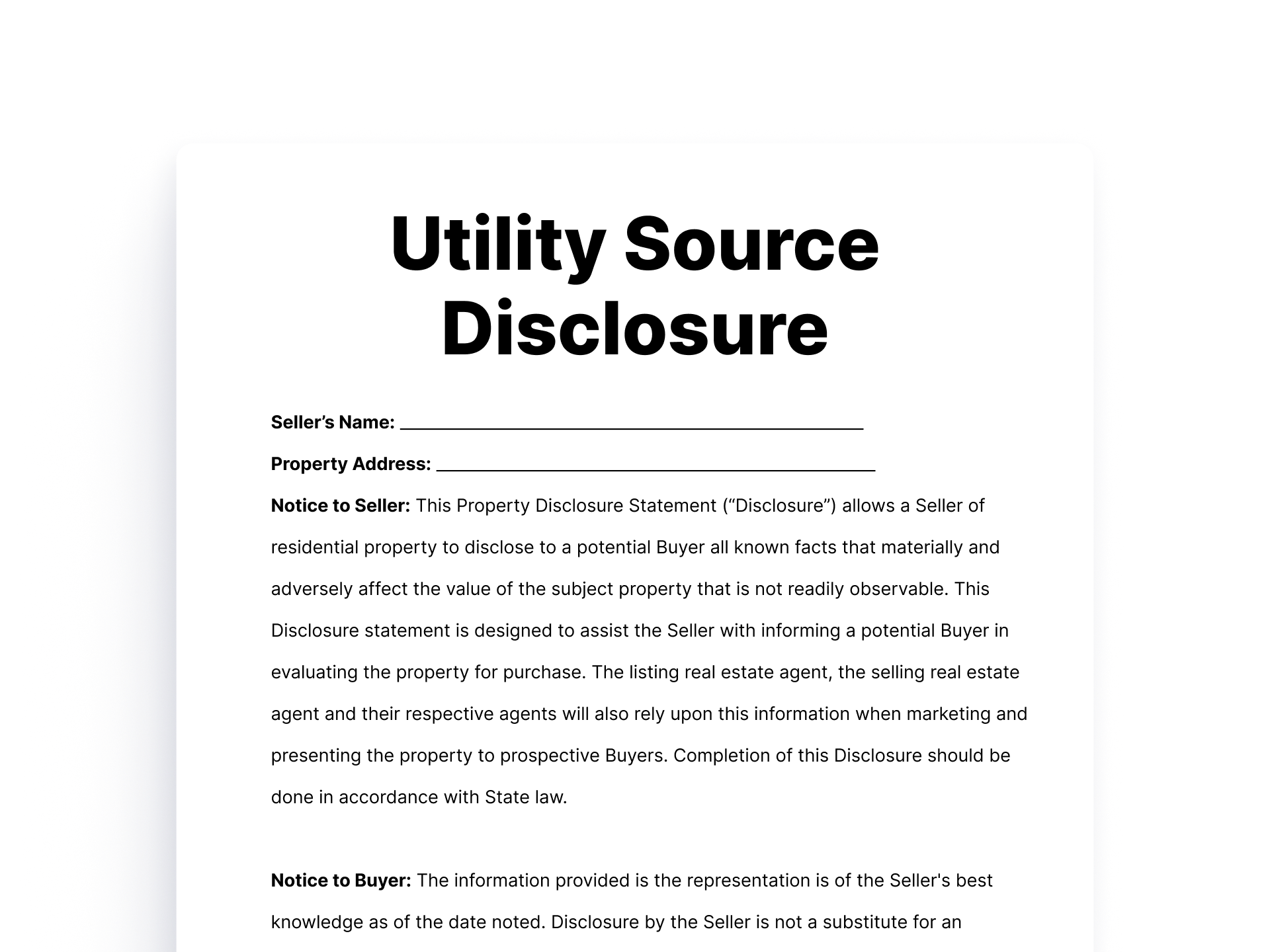
Download as PDF when complete
What Is Utility Source Disclosure?
Utility source disclosure tells buyers about all available utility services and their providers. Specifically, it covers:
- Water supply sources
- Natural gas availability
- Electric service providers
- Waste disposal methods
- Service costs and connection fees
- Any known service limitations
When a property has limited utility options or unusual service arrangements, detailed disclosure is required. Buyers need complete utility information to decide if a property meets their needs. For this reason, thorough utility source disclosure also prevents costly post-closing disputes about service access and connection costs.
Understanding Utility Service Types
Public vs. Private Utility Systems
Public utility systems are run by municipalities or government agencies. They typically provide water, sewer, and sometimes electric or gas services. In addition, public utilities operate under regulatory oversight, which means buyers get service standard protections and rate controls.
Private utility systems, on the other hand, serve individual properties through wells, septic systems, or propane tanks. As a result, property owners are fully responsible for maintenance and costs. Unlike public systems, private utilities offer no regulatory protections.
Essential Utility Services Every Buyer Needs to Know
Most properties require all of the following services for basic habitability:
- Water
- Electricity
- Gas
- Sewer or septic
- Waste collection
Some rural properties use alternative systems like wells, propane, and private waste disposal. It is important to note that utility availability significantly affects property value and buyer financing. Properties without standard utility connections may require expensive upgrades. Furthermore, alternative utility systems often cost more to operate than municipal services.
Legal Requirements for Utility Source Disclosure
State Utility Source Disclosure Laws
Most states require sellers to identify utility service sources and providers in their property disclosure statements. Typically, this includes:
- Water, gas, electric, and waste service providers
- Any service limitations or interruptions during ownership
- Connection issues experienced while owning the property
States like California, Texas, and Florida have especially detailed utility source disclosure requirements. In addition, some states require specific utility disclosure forms separate from general property disclosures. Moreover, states may require sellers to disclose utility costs, connection fees, and reliability issues.
Local Ordinance Requirements for Utility Disclosure
Beyond state laws, local municipalities and counties often add their own utility source disclosure requirements. For example, local rules may require:
- Water quality testing results or well inspection reports
- Proof of adequate water supply and waste disposal capacity
- Disclosure of utility service areas and connection availability
Rural properties typically face stricter requirements for private systems like wells and septic tanks. Local health departments regulate these systems and require permits, inspections, and maintenance records. Therefore, sellers of rural properties should gather this documentation early in the sales process.
Seller Certifications and Utility Affidavits
Many areas require sellers to complete utility affidavits certifying service availability and functionality. These documents confirm that utilities meet local code requirements. In addition, some areas require service letters from providers confirming active accounts and service capacity.
It is important to understand that false certifications about water quality, service reliability, or connection status can constitute fraud. Consequently, sellers must ensure all information is accurate before signing any utility affidavit.
What Utility Source Disclosure Must Include: Water Supply
Municipal Water Service Disclosure
For properties on public water, disclose:
- The municipal water provider and service area boundaries
- Current connection status and water pressure
- Any boil water notices issued during ownership
- Monthly service costs and connection fees
- Any special assessments applied
- Water quality issues and any filtration systems installed
Furthermore, include meter locations, shutoff valve positions, and clarity on who is responsible for the service line between the meter and the home.
Private Well Systems and Utility Source Disclosure
For properties with a private well, provide:
- Well type, depth, age, and pumping capacity in gallons per minute
- Recent water quality test results, including bacteria, mineral, and contaminant levels
- Pump replacement dates and maintenance history
- Well yield information, especially if supply is limited during droughts
- Any shared well agreements with neighboring properties
Water Quality and Treatment Requirements
Regardless of water source, always include:
- All water quality testing reports completed during your ownership
- Any contamination issues such as bacteria, arsenic, or lead
- Water treatment systems installed, like softeners, filters, or purifiers
- Ongoing treatment costs and maintenance requirements
Some properties require regular treatment for hard water, iron, or sulfur. As a result, buyers need this information to budget for ongoing water treatment expenses.
What Utility Source Disclosure Must Include: Electric Service
Electric Service Provider Information
For electric utility disclosure, identify:
- The electric company or cooperative serving the property
- Service reliability and average monthly costs
- Any extended outages experienced during ownership
- Whether the property has standard 200-amp service or limited capacity
- Meter locations, panel conditions, and connection type (overhead or underground)
- Any electrical service upgrades completed during ownership
Alternative Power Sources and Utility Source Disclosure
If the property has solar panels, wind turbines, or backup generators, disclose:
- Whether systems are owned outright or leased through a power purchase agreement
- Energy production levels and savings achieved
- Net metering agreements or utility buyback programs
- Battery storage systems and backup power capabilities
- Whether solar leases transfer to buyers or require new agreements
This information is especially important since some solar leases require buyer approval or costly buyouts at closing.
What Utility Source Disclosure Must Include: Gas Service
Natural Gas Service Disclosure
For properties with natural gas, include:
- The gas provider and confirmation of active service
- Average monthly gas costs and service reliability
- Gas meter locations and service line responsibilities
- Whether gas reaches all appliances or only certain areas
- Any gas leaks, repairs, or safety concerns addressed during ownership
Propane and Alternative Fuel Utility Disclosure
For properties using propane or other alternative fuels, disclose:
- Propane tank size, ownership status, and supplier agreements
- Tank lease terms, refill costs, and average annual consumption
- Tank maintenance history and inspection reports
- Alternative heating fuel types such as oil, wood, or pellet systems
- Fuel storage tank locations and any environmental concerns
- Seasonal fuel availability and delivery access
What Utility Source Disclosure Must Include: Sewer and Waste Services
Municipal Sewer Service Disclosure
For properties connected to public sewer, provide:
- The municipal sewer provider and confirmation of property connection
- Sewer service costs and connection fees
- Any capacity limitations or backup incidents
- Sewer line material, age, and known defects or repairs
- Any tree root intrusion, pipe deterioration, or slope issues
Septic System Utility Source Disclosure
For properties with a septic system, disclose:
- System type, size, age, and exact location
- Pumping records, inspection reports, and full maintenance history
- Drain field location, condition, and any performance problems
- Whether the system is adequately sized for current household needs
- Any septic failures, repairs, or health department violations during ownership
Older septic systems are often undersized for modern water usage. Consequently, buyers need this information before committing to a purchase.
Waste Collection Service Disclosure
For waste services, identify:
- The waste collection provider, service schedule, and monthly cost
- Whether trash service is municipal, private, or included in HOA fees
- Recycling options, bulk pickup, and yard waste collection details
- Any service restrictions, container requirements, or access limitations
- Whether residents must transport waste to a collection center
What Utility Source Disclosure Must Include: Costs and Fees
Average Monthly Utility Costs
Provide average monthly costs for all utilities over the past year, including seasonal variations. Specifically, include:
- Water, electric, gas, sewer, and waste collection expenses
- Any unusually high bills and explanations for cost spikes
- Pending rate increases or special assessments affecting future costs
Buyers use this information to budget for ongoing housing expenses. Therefore, accurate cost disclosure helps avoid post-closing financial surprises.
Connection and Impact Fees in Utility Source Disclosure
Disclose all fees required to establish or transfer utility services, such as:
- Connection fees and utility impact fees for new construction or renovations
- Deposits, activation fees, or meter installation costs
- Any unpaid utility balances that could block service transfers
- Liens filed against the property for unpaid utility bills
What Utility Source Disclosure Must Include: Service Limitations
Service Interruptions and Reliability Issues
Report all utility service interruptions during your ownership, including:
- Frequency and duration of power outages or water pressure problems
- Seasonal issues like low water pressure in summer or freeze risks in winter
- Extended outages caused by weather events or infrastructure failures
- Utility infrastructure age and any planned replacement projects
Capacity and Adequacy Concerns in Utility Source Disclosure
Disclose any capacity issues that could limit property use, such as:
- Limited water supply or inadequate electric service
- Septic capacity constraints that restrict household size
- Restrictions on adding circuits, increasing water usage, or expanding septic systems
- Any utility company warnings about overtaxing system capacity
- Professional assessments indicating utility inadequacy for current or planned uses
Consequences of Poor Utility Source Disclosure
Property Damages and Buyer Claims
If buyers find utility limitations that were not disclosed, they can sue for damages. For instance, courts may award costs to establish adequate utility services, which can reach tens of thousands of dollars. In addition, buyers may recover diminished property value caused by utility limitations.
Fraud and Misrepresentation from Inadequate Utility Disclosure
Sellers who falsely claim municipal services exist when a property uses private systems face fraud lawsuits. Similarly, concealing water quality problems or septic failures creates clear legal liability. Moreover, fraudulent utility source disclosure can void a sales contract entirely, requiring the seller to repurchase the property.
Contract Rescission and Financing Problems
Inadequate utility source disclosure may allow buyers to cancel purchase contracts before closing. Lenders often refuse to finance properties without adequate utility services. Furthermore, properties with undisclosed utility deficiencies may fail to meet loan underwriting requirements, putting the entire deal at risk.
Best Practices for Completing Utility Source Disclosure
Gather Complete Utility Information Early
To ensure your utility source disclosure is accurate, take these steps:
- Contact all utility providers to confirm service details and account information
- Request service history reports showing outages, maintenance, and reliability records
- Compile utility bills from the past year to document actual costs
- Obtain written service confirmations from all providers
- Schedule well testing, septic inspections, and water quality reports in advance
Provide Detailed Provider Information in Your Utility Source Disclosure
Create a clear utility information sheet for buyers listing:
- All providers with contact information, account numbers, and service addresses
- Customer service phone numbers and websites
- Billing cycles, payment methods, and automatic payment arrangements
- Budget billing or prepayment options available to buyers
- Utility assistance programs available in your area
Disclose All Utility Service Issues and Limitations
Always include every utility problem or limitation experienced during ownership, no matter how minor. In fact, comprehensive utility source disclosure protects sellers better than selective omission. In addition, document all utility repairs, upgrades, and system modifications, as these improvements demonstrate proper maintenance and may add property value.
Update Utility Source Disclosure Before Closing
Verify all utility information is still accurate immediately before the closing date. Service providers, costs, and availability can change during the sales process. Therefore, obtain updated service letters confirming active accounts and transfer procedures. Furthermore, notify buyers right away about any utility changes, rate increases, or new service limitations that arise during the transaction.
Utility Source Disclosure: Key Takeaways
Utility source disclosure protects both sellers and buyers by making all service details clear before closing. Specifically, it covers water supply, electric service, gas availability, and waste disposal to prevent post-closing disputes.
To complete your utility source disclosure thoroughly:
- Gather written confirmation from all utility providers
- Document service costs, reliability history, and known limitations
- Disclose every private system detail, including wells and septic tanks
- Provide detailed provider contact information for easy buyer reference
- Update all information before the closing date
Ultimately, a complete and honest utility source disclosure builds buyer confidence and protects your financial interests from costly legal consequences.
FAQs
Utility source disclosure informs buyers about all available utility services, their providers, costs, connection fees, and any service limitations on a property being sold.
Yes — most states require sellers to disclose utility service sources and providers, and some states like California, Texas, and Florida have detailed specific requirements for utility information disclosure.
Sellers must disclose information about water supply, electric service, natural gas or propane, sewer or septic systems, and waste collection services.
Buyers can sue for damages, seek contract rescission, and in cases of intentional concealment, pursue fraud claims that may result in punitive damages or a voided sales contract.
Sellers should contact all utility providers for written service confirmations, compile at least one year of utility bills, and obtain professional inspection reports for private systems like wells and septic tanks.