
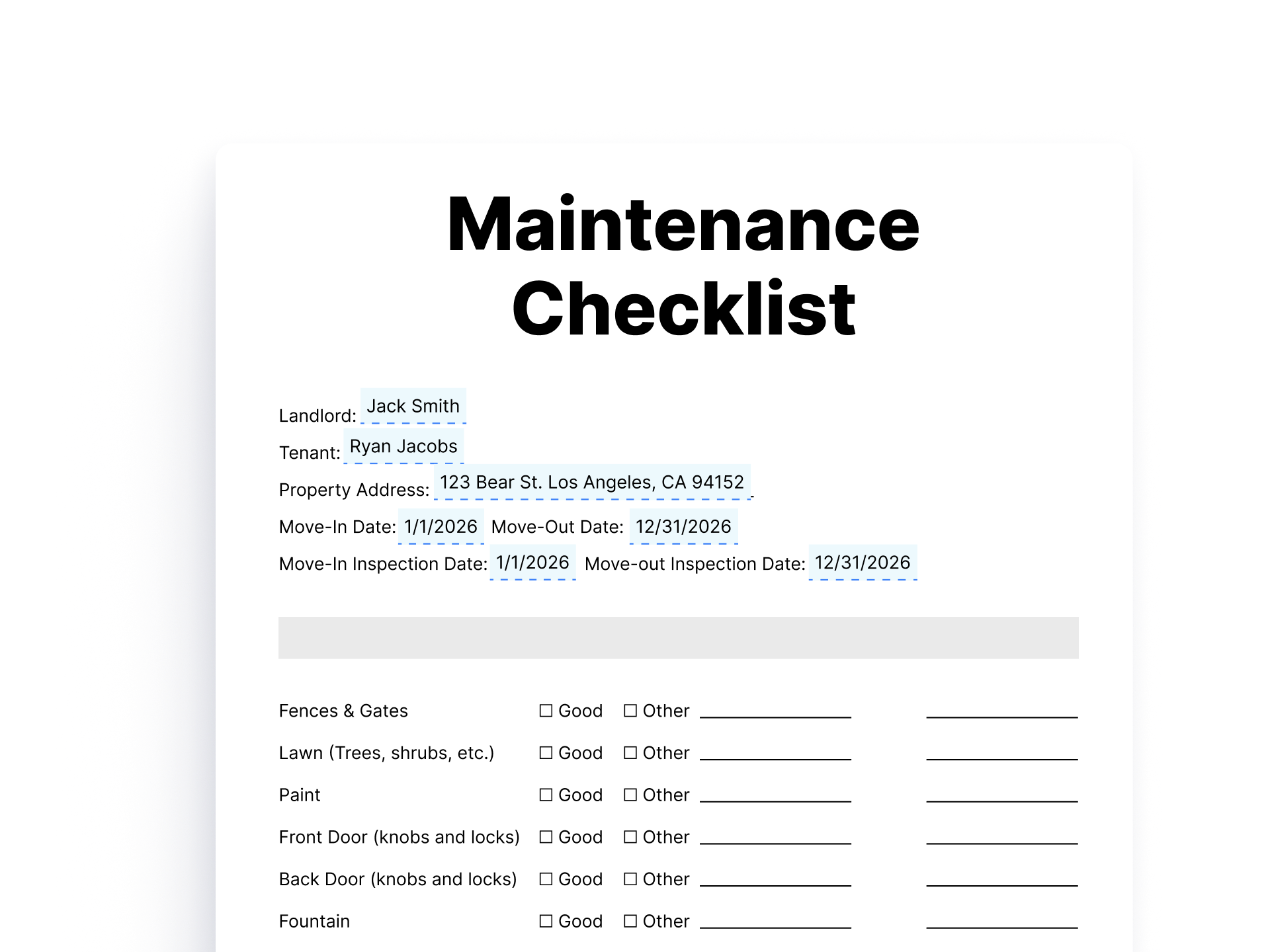
Maintenance Checklist


(1)
A Property Maintenance Checklist helps you complete essential tasks on schedule. It also maintains warranty coverage and extends the lifespan of major systems. In short, regular maintenance protects your investment by catching small problems before they become expensive disasters.
Download as PDF when complete
Property Maintenance Checklist: Complete Guide for Homeowners and Landlords
A property maintenance checklist helps homeowners and landlords preserve property value and prevent costly repairs. Whether you own one home or manage multiple rentals, a thorough checklist keeps your properties in excellent condition. Specifically, this guide covers seasonal inspections, HVAC servicing, roof and gutter maintenance, safety device testing, and exterior care.
Seasonal Inspections Checklist
Conducting seasonal inspections twice yearly helps you identify issues early. In addition, it prepares your property for weather changes. Your checklist should include both spring and fall inspections.
Spring Inspection Checklist
Spring inspections prepare properties for warm weather and assess winter damage. Specifically, your checklist should include:
- Checking the roof for missing or damaged shingles
- Inspecting gutters and downspouts for debris
- Examining the foundation and basement for cracks or water intrusion
- Testing air conditioning before cooling season begins
- Inspecting exterior paint, siding, and trim for damage
- Checking window and door screens for tears
- Evaluating landscaping and irrigation systems
- Looking for signs of pest activity around the property
Document all findings with photos and notes. Address urgent issues immediately. Furthermore, schedule non-critical repairs before summer. Otherwise, small issues can become costly problems during peak season.
Fall Inspection Checklist
Fall inspections prepare properties for cold weather and heating season. Therefore, your checklist should cover:
- Checking heating systems before temperatures drop
- Cleaning and inspecting chimneys and fireplaces
- Examining weatherstripping around doors and windows
- Inspecting insulation in attics and crawl spaces
- Cleaning gutters of leaves and debris
- Trimming tree branches near the roof or power lines
- Checking for gaps or cracks where pests might enter
- Testing smoke and carbon monoxide detectors
- Draining outdoor faucets and irrigation systems in freezing climates
Prioritize winterization tasks to prevent freeze damage and heating failures. Also, schedule professional services early before contractors get busy.
HVAC Service Schedule Checklist
Regular HVAC maintenance extends equipment life, improves efficiency, and prevents breakdowns. Consequently, your checklist requires both professional servicing and routine owner tasks throughout the year.
Professional HVAC Service
Schedule professional HVAC service twice a year — spring for air conditioning and fall for heating. Professional technicians will:
- Inspect and clean components
- Check refrigerant levels and test safety controls
- Lubricate moving parts and measure airflow
- Identify potential problems before failures occur
Additionally, establish relationships with reliable HVAC contractors who offer preventive maintenance contracts. These agreements typically cost $100 to $300 annually. Moreover, they include priority service, discounted repairs, and regular tune-ups.
Filter Changes and Routine Tasks
Change HVAC filters monthly or quarterly depending on filter type and occupancy. Specifically:
- Standard 1-inch filters need monthly replacement
- High-efficiency filters last three months
Keep spare filters on hand and set calendar reminders. Clean filters improve air quality, reduce energy costs, and prevent system strain. For rental properties, provide tenants with filters and instructions.
Additional HVAC Maintenance
In addition to filter changes, perform these routine tasks:
- Keep outdoor units clear of debris and vegetation
- Check thermostat operation and replace batteries as needed
- Listen for unusual noises that may indicate problems
- Monitor utility bills for efficiency changes
Roof and Gutter Cleaning Checklist
Roof and gutter maintenance prevents water damage and protects your property’s foundation. Therefore, your checklist should include regular inspections and cleaning.
Roof Inspection
Inspect roofs at least twice yearly during spring and fall checks. Specifically, look for:
- Missing, damaged, or curling shingles
- Flashing gaps around chimneys, vents, and skylights
- Debris accumulation in roof valleys
- Algae, moss, or vegetation growth
Document your roof’s age and remaining lifespan. Most asphalt shingle roofs last 15 to 25 years. Consequently, budget for replacement before problems develop — not after leaks appear. In other words, proactive planning is always cheaper than emergency repairs.
Gutter Cleaning
Clean gutters at least twice yearly, or quarterly near trees. When cleaning, make sure to:
- Remove leaves, twigs, and debris
- Flush downspouts to ensure proper drainage
- Check that gutters slope correctly without sagging
- Repair loose gutter attachments
Furthermore, extend downspouts at least 4 to 6 feet from foundations. Consider installing gutter guards to reduce cleaning frequency, especially on tall buildings.
Fire Alarm and Smoke Detector Testing Checklist
Testing safety devices protects lives and ensures compliance with building codes. As a result, your checklist must include regular testing of all fire safety equipment.
Test smoke and carbon monoxide detectors monthly by pressing the test button. Replace batteries annually or immediately when warnings chirp. Additionally, replace entire detector units every 10 years as sensors degrade. Install detectors:
- On every level of the property
- Inside each bedroom and outside sleeping areas
- Near sleeping areas and fuel-burning appliances (carbon monoxide)
Document all testing dates for liability protection.
Rental Property Detector Requirements
For rental properties, provide working detectors before move-in as most state laws require. Test all devices during move-in inspections and document results. Furthermore, some states require landlords to maintain detectors while others place responsibility on tenants. Therefore, understand your legal obligations and maintain clear documentation. Also, certified professionals should inspect fire extinguishers in kitchens and near exits annually.
Pest Control and Landscaping Review Checklist
Exterior maintenance protects property value, prevents damage, and maintains curb appeal. In general, your checklist should address both preventive pest control and regular landscaping upkeep.
Pest Control Checklist
Implement preventive measures to avoid infestations before they start. Specifically:
- Seal cracks and gaps around foundations and pipes
- Install door sweeps and repair damaged screens
- Keep properties clean and eliminate food sources
- Store firewood away from structures
- Trim vegetation touching buildings
Schedule professional pest control quarterly or as needed. Regular treatments prevent ants, cockroaches, spiders, and rodents. Moreover, address termite prevention seriously through annual inspections and treatment barriers.
Landscaping Maintenance Checklist
Maintain landscaping regularly to preserve curb appeal and prevent damage. Key tasks include:
- Mowing lawns weekly during growing season
- Edging walkways and beds for a neat appearance
- Trimming shrubs and hedges to prevent overgrowth
- Pruning tree branches away from roofs and power lines
- Fertilizing lawns and plants seasonally
- Managing weeds through mulching and herbicides
- Checking irrigation systems for leaks
- Removing dead plants or trees
For rental properties, clarify landscaping responsibilities in the lease agreement. Otherwise, disputes over lawn care and upkeep are common. Professional landscaping services cost $100 to $300 monthly depending on property size.
Creating Your Maintenance Schedule
Develop a schedule that organizes all required tasks by frequency. For example:
- Daily — Basic cleaning and monitoring
- Weekly — Lawn mowing during season
- Monthly — Filter changes and safety testing
- Quarterly — Gutter cleaning and pest control
- Seasonal — HVAC service and full inspections
- Annual — Detector replacement and major system service
Use calendar reminders or property management software to stay on track. Additionally, for multiple properties, create individual schedules tracking each property’s unique needs and service histories.
Documenting Maintenance Activities
Keep detailed records of all maintenance activities. Specifically, document:
- Dates of service and work performed
- Contractors used and costs incurred
- Parts replaced and warranty information
Take before and after photos for significant repairs. Organized records help you track spending, maintain warranty coverage, support insurance claims, and document property value. Furthermore, store records digitally through property management software or cloud storage so you can access them quickly at any time.
Hiring Maintenance Professionals
Build relationships with reliable contractors for specialized maintenance work. Vet professionals carefully by:
- Checking licenses and insurance
- Reading reviews and checking references
- Getting multiple quotes for major work
- Verifying warranties on parts and labor
Consider annual contracts with HVAC, pest control, and landscaping companies. In particular, these agreements provide regular service at discounted rates with priority emergency response. Overall, good contractors save money through preventive care and long-term reliable service.
Maintenance Checklist Takeaways
A comprehensive property maintenance checklist preserves property value, prevents costly repairs, and ensures safe living conditions. By scheduling regular inspections, servicing HVAC systems, maintaining roofs and gutters, testing safety devices, and managing pest control and landscaping, you can keep your property in excellent condition throughout ownership.
FAQs
Conduct seasonal inspections twice a year — once in spring to check for winter damage and once in fall to prepare for cold weather.
Schedule professional HVAC service twice a year — in spring for air conditioning and in fall for heating systems.
Clean gutters at least twice a year in spring and fall, or quarterly if your property has many nearby trees.
Test detectors monthly, replace batteries annually, and swap out entire units every 10 years as sensors degrade over time.
Responsibility depends on the lease agreement, but regardless of who handles it, preventive pest control should be scheduled quarterly and landscaping maintained regularly to protect property value.