
Notice to Pay or Quit


(No Ratings Yet)
A Notice to Pay or Quit is the primary legal tool for addressing unpaid rent. Specifically, it gives tenants a formal chance to pay what they owe before a landlord can start eviction under state law. This guide covers everything you need to know about the pay-or-quit process.
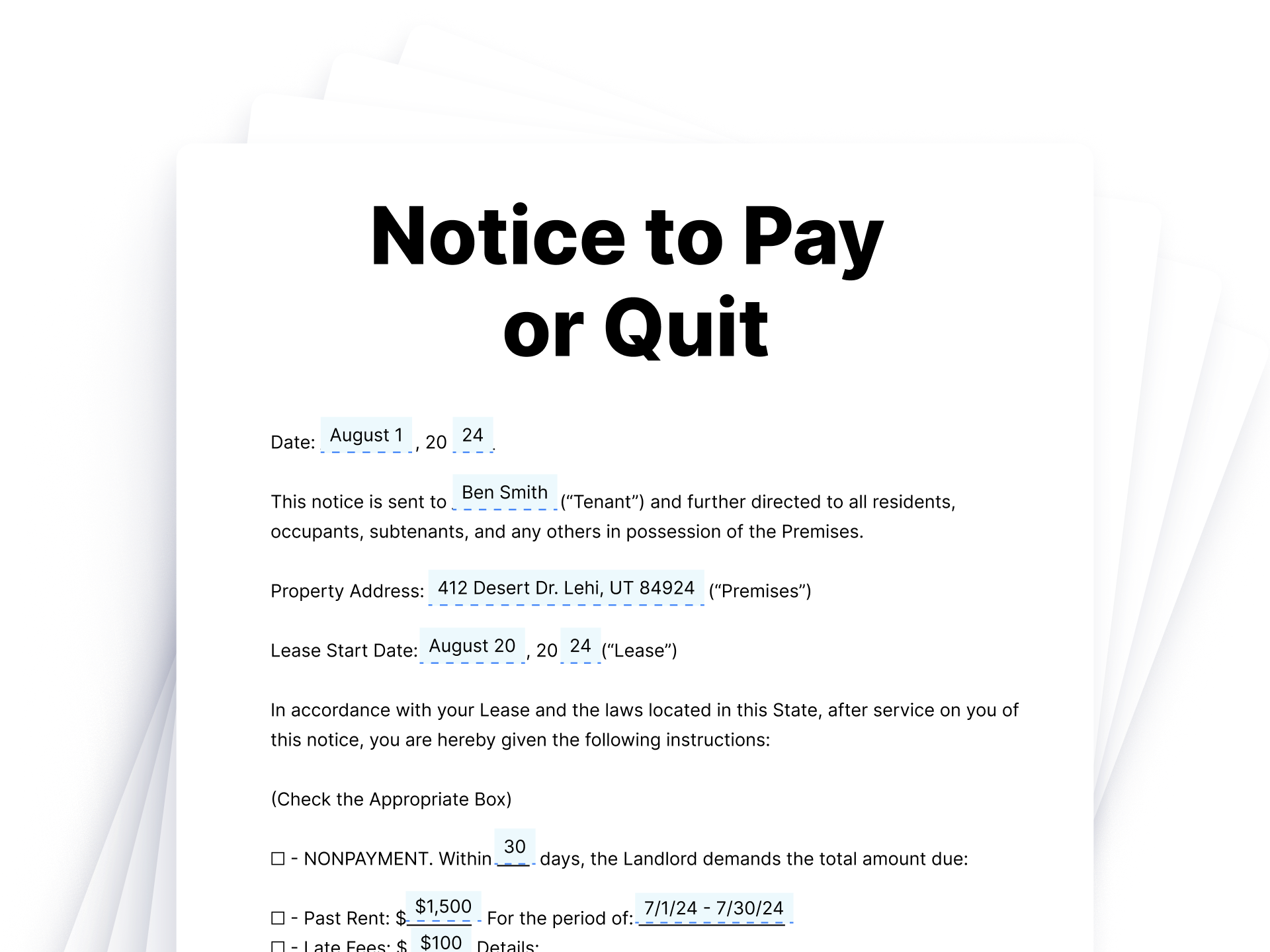
Download as PDF when complete
 Google Doc,
  PDF &
PDF &  Word) or create one online!
What Is a Notice to Pay or Quit?
A Notice to Pay or Quit is a written document that tells a tenant they owe rent and sets a deadline to pay or leave. Courts and housing agencies recognize properly drafted notices as legally binding when they meet state rules. In addition, rent enforcement affects millions of rental relationships each year, with pay-or-quit deadlines ranging from 3 days in California to 14 days in Wisconsin.
Why a Notice to Pay or Quit Protects Both Parties
Smart property owners use legally valid pay-or-quit notices to protect rental income and maintain steady cash flow. Proper notices also preserve tenant relationships through clear payment steps and help avoid costly legal disputes. Furthermore, knowing the correct Notice to Pay or Quit process protects both landlord income and tenant rights throughout the rental relationship.
Legal Protection Benefits of a Notice to Pay or Quit
A properly issued Notice to Pay or Quit gives key legal protection to both parties. Specifically, it offers:
- State law compliance — meets required payment periods and notice rules for rent defaults
- Due process protection — maintains tenant rights while giving landlords legal grounds for action
- Record keeping — creates complete records for eviction and legal review
- Cash flow protection — addresses unpaid rent quickly while keeping collection steps professional
- Tenant relationship care — offers payment chances that encourage cooperation
- Legal strength — ensures court recognition and valid eviction steps if payment fails
Types of Rent Default and Pay-or-Quit Situations
Complete Non-Payment and Total Rent Default
Complete non-payment requires a full pay-or-quit notice covering all unpaid rent, late fees, and other approved charges. The notice must state the exact amount due and include a clear payment deadline. In addition, accepted payment methods must be listed so the tenant knows how to act right away.
Partial Payment and Outstanding Balance Issues
Partial rent payments create more complex notice needs. Landlords must address remaining balances, how payments are applied, and the tenant’s right to stay. As a result, these situations require careful legal review to ensure the notice meets state rules and protects both parties fairly.
Late Fees and Extra Charge Inclusion
Late fees, utility charges, and other costs may be added to a pay-or-quit notice when they are properly listed in the lease and follow state law limits. Each charge must be clearly broken down. Furthermore, landlords should check lease terms before adding any extra fees to avoid notice being rejected.
State-Specific Notice to Pay or Quit Deadlines
Required Payment Periods by State
State laws set specific payment deadlines for rent defaults. Common timeframes include:
- 3 days — California, Florida, and several other states
- 5 days — Texas and similar areas
- 14 days — Wisconsin and other tenant-friendly states
Payment period counts start from the date of proper notice delivery and must follow state timing rules. Therefore, landlords should always check their state’s exact rules before sending any Notice to Pay or Quit.
Grace Periods and Payment Timeline Planning
State grace periods and lease-based payment extensions must be factored into pay-or-quit timing to stay legally sound. Overlooking these details can make the notice invalid. Consequently, landlords should review both state law and the lease carefully before setting any payment due date.
Notice to Pay or Quit Content Requirements
Required Information in Every Pay-or-Quit Notice
Every Notice to Pay or Quit must include specific details to be legally valid. Required content includes:
- The exact amount owed, broken down by rent, late fees, and other charges
- Accepted payment methods
- Payment location or delivery steps
- The payment deadline
- Results of non-payment
Clear and complete details give tenants a fair chance to pay before eviction starts. As a result, leaving out any required item can delay or stop eviction proceedings entirely.
Legal Language and State Compliance Standards
Notice language must meet state rules, including required legal phrases and compliance statements. Using vague or wrong language can make the notice invalid. Moreover, state-approved language stops court challenges while making sure the tenant gets proper notice and fair treatment.
Rent Calculation and Amount Accuracy
Pay-or-quit notices must state the exact amount due. This includes:
- Base monthly rent or any partial period amounts
- Rent increases properly noticed under state law
- Late fees that follow state law and lease terms
- Utility charges or upkeep fees, if applicable
Amount accuracy is essential for legal strength. Even a small math error can give a tenant grounds to fight the notice in court. For this reason, landlords should check all figures carefully before sending the notice.
Accepted Payment Methods in a Notice to Pay or Quit
Payment Method Details
A Notice to Pay or Quit must clearly state how the tenant can pay. Accepted options may include:
- Cash, check, or money order
- Electronic bank transfer
- Online payment portal
- Mobile payment app
Listing specific options removes confusion and gives tenants a clear way to fix the default. In addition, landlords should include steps for confirming payment receipt to protect both sides.
Payment Location and Delivery Steps
The notice must also state where and how to submit payment. This may include:
- A physical office address
- A drop-box location
- An online portal link
- A mailing address with specific delivery steps
Clear delivery instructions lower the risk of payment disputes. Furthermore, landlords should keep records of all payment submissions to maintain an accurate collection log.
Service Methods for a Notice to Pay or Quit
Personal Service and Direct Delivery
Personal service means handing the notice directly to the tenant, which gives the strongest legal proof of delivery. Good records should include:
- The date and time of delivery
- The name of the person who received it
- A witness signature if available
Therefore, personal service is always the best option when the tenant is available and accessible.
Certified Mail and Postal Delivery
Certified mail with return receipt creates a reliable paper trail and is widely accepted across states. Landlords should keep the return receipt as proof of delivery. In addition, proper addressing and timely mailing are key to ensuring the notice period starts on the right date.
Posted Notice and Substitute Service Options
When personal service is not possible, most states allow substitute service methods such as:
- Posting the notice on the front door in a visible spot
- Delivering it to an adult household member
- Sending it by certified mail combined with door posting
Each method requires records of failed personal service attempts. Moreover, landlords must follow their state’s exact rules for substitute service to avoid the notice being rejected.
Electronic Notice to Pay or Quit Delivery
Many states now allow electronic delivery by email, text, or property management platform when the tenant has agreed to digital communication. Electronic delivery requires:
- Delivery confirmation or read receipts
- A backup method via mail or posting
- Following state-specific electronic communication laws
Consequently, landlords using digital delivery should always keep a backup paper record to protect legal strength.
Payment and Compliance After a Notice to Pay or Quit
Full Payment and Complete Cure
Full payment cure requires the tenant to pay everything owed — including rent, late fees, and approved charges — within the notice period. Once payment is confirmed, the tenancy is restored. In addition, landlords should send a written payment confirmation to document the cure and prevent future disputes.
Partial Payment Issues and Acceptance Policies
Accepting partial payment during the notice period can affect eviction rights. In some states, accepting any partial payment resets the notice period entirely. In others, landlords can continue eviction despite a partial payment. For this reason, landlords should have a clear written policy on partial payments before sending any pay-or-quit notice.
Payment Deadline Counting and Business Day Rules
Payment deadlines must follow state law counting rules, including whether to count:
- Calendar days or business days
- Holidays and weekends
- The day the notice was served
Even a one-day counting error can make an otherwise valid notice invalid. Therefore, landlords should carefully verify deadline counts before serving the notice.
Late Payment Acceptance and Waiver Risks
Accepting payment after the notice deadline may affect the landlord’s right to proceed with eviction, depending on state law. Some states treat late payment acceptance as giving up the default claim. Consequently, landlords should consult a legal professional before accepting any payment after the pay-or-quit deadline has passed.
Common Pay-or-Quit Situations and Notice Applications
Month-to-Month Tenancy Payment Default
Month-to-month rent defaults require specific notice steps that address payment timing, tenancy continuation, and eviction options. These notices should clearly state the full amount due and the deadline to pay. Furthermore, landlords should be ready to send a termination notice if the tenant fails to pay and eviction becomes needed.
Fixed-Term Lease Default and Breach Results
Fixed-term lease rent defaults may trigger added results such as lease acceleration or damage counts beyond unpaid rent. As a result, fixed-term default notices must address both the immediate payment need and any broader lease breach issues. Landlords should review the lease carefully before drafting the notice.
Commercial Rent Default and Business Tenancy Issues
Commercial rent defaults involve different legal standards and notice needs than home rentals. These notices must address business-specific needs while ensuring full legal compliance. In addition, mixed-use buildings that combine home and commercial spaces require careful legal review to ensure the correct notice steps are used for each tenancy type.
Legal Results of Ignoring a Notice to Pay or Quit
Failed Payment and Eviction Steps
When a tenant does not pay within the specified deadline, the landlord may file an unlawful detainer action and begin court eviction steps. In that case, records of the failed payment become key evidence. Specifically, landlords must show that the Notice to Pay or Quit was properly served and that the tenant did not pay within the required timeframe.
Court Filing Needs and Evidence Standards
Eviction proceedings require complete records, including:
- The original lease agreement
- Copies of all pay-or-quit notices served
- Proof of proper legal delivery with dates and methods
- Evidence that the tenant failed to pay within the deadline
- All written and electronic communications about the rent default
Filing needs vary by area. However, thorough records give landlords the strongest possible position in court.
Tenant Defenses Against a Notice to Pay or Quit
Tenants can raise legal defenses against pay-or-quit enforcement, including:
- Habitability defense — arguing the landlord failed to keep the property livable
- Payment dispute defense — claiming errors in how payments were applied or counted
- Procedural defense — challenging the technical validity of the notice itself
Landlords must therefore keep thorough records of all charges, payments, and communications from the start of the tenancy. In particular, responding quickly to upkeep requests and keeping all rent receipts can prevent these defenses from succeeding.
Special Cases and Notice to Pay or Quit Considerations
Emergency Situations and Financial Hardship
Job loss, medical issues, or other money hardships may call for adjusted payment steps or extended deadlines in some cases. Landlords should review state and local hardship protections before moving forward with eviction. Moreover, connecting tenants with rental assistance resources can lead to faster resolution than formal legal proceedings.
Government Assistance and Rental Aid Programs
Government rental aid programs and emergency assistance may affect pay-or-quit timing and eviction limits. Landlords need to understand current program rules in their area. Additionally, working with assistance agencies can help both parties reach a resolution without going to court.
Seasonal Markets and Economic Conditions
Seasonal rental markets — such as tourist areas, university towns, and farm regions — may require adjusted payment steps based on market changes. Similarly, local economic conditions can influence enforcement strategies. In all cases, however, legal compliance must remain the priority regardless of market context.
Technology and Modern Notice to Pay or Quit Tools
Digital Payment Systems and Collection Tools
Modern pay-or-quit steps increasingly use digital payment platforms, automated collection systems, and electronic notices. These tools improve efficiency while maintaining state law compliance. In addition, online payment portals make it easier for tenants to fix defaults quickly, which benefits both parties.
Automated Notice Creation and Tracking
Property management software can automate notice creation, payment tracking, and record keeping. As a result, these systems reduce manual errors and ensure timely enforcement. However, landlords should always review automated notices to confirm they meet current state law rules before sending them.
Tenant Communication and Payment Reminders
Multi-channel communication — including email, text, phone, and platform messaging — can improve payment outcomes. Sending reminders before the payment deadline often stops defaults from growing into formal notices. Furthermore, keeping open communication with tenants throughout the process supports positive relationships and faster resolution.
Notice to Pay or Quit: Key Takeaways
A Notice to Pay or Quit protects both landlords and tenants by making sure all rent collection steps follow state law. To do it right, use the correct deadline for your state, include accurate figures and clear legal language, serve it through an approved method, and keep complete records throughout. Ultimately, a valid notice prevents costly disputes and gives both parties a fair path to resolution.
Sample
FAQs
A Notice to Pay or Quit is a legal document that formally notifies a tenant of unpaid rent and gives them a specific deadline to pay the full amount owed or vacate the property before eviction proceedings begin.
Payment deadlines vary by state, ranging from 3 days in states like California and Florida to 5 days in Texas and up to 14 days in more tenant-protective jurisdictions like Wisconsin.
In addition to base rent, landlords may include late fees, utility charges, and other property-related fees, provided they are properly disclosed in the lease agreement and comply with state law limitations.
If the tenant fails to pay the full amount within the specified deadline, the landlord may proceed with formal eviction by filing an unlawful detainer action and presenting the notice as evidence in court proceedings.
Yes — tenants can raise legal defenses such as habitability issues, payment application disputes, or calculation errors, which is why landlords must maintain thorough documentation of all charges and communications throughout the rent collection process.