
Smoke-Free Property


(1)
Smoke-Free Property Disclosure protects landlords and tenants from disputes about smoking policies and enforcement. Many property owners fail to set clear smoking rules, which can lead to tenant conflicts and property damage. In short, this guide explains everything you need to know about disclosing smoke-free policies, enforcement steps, and tenant duties.
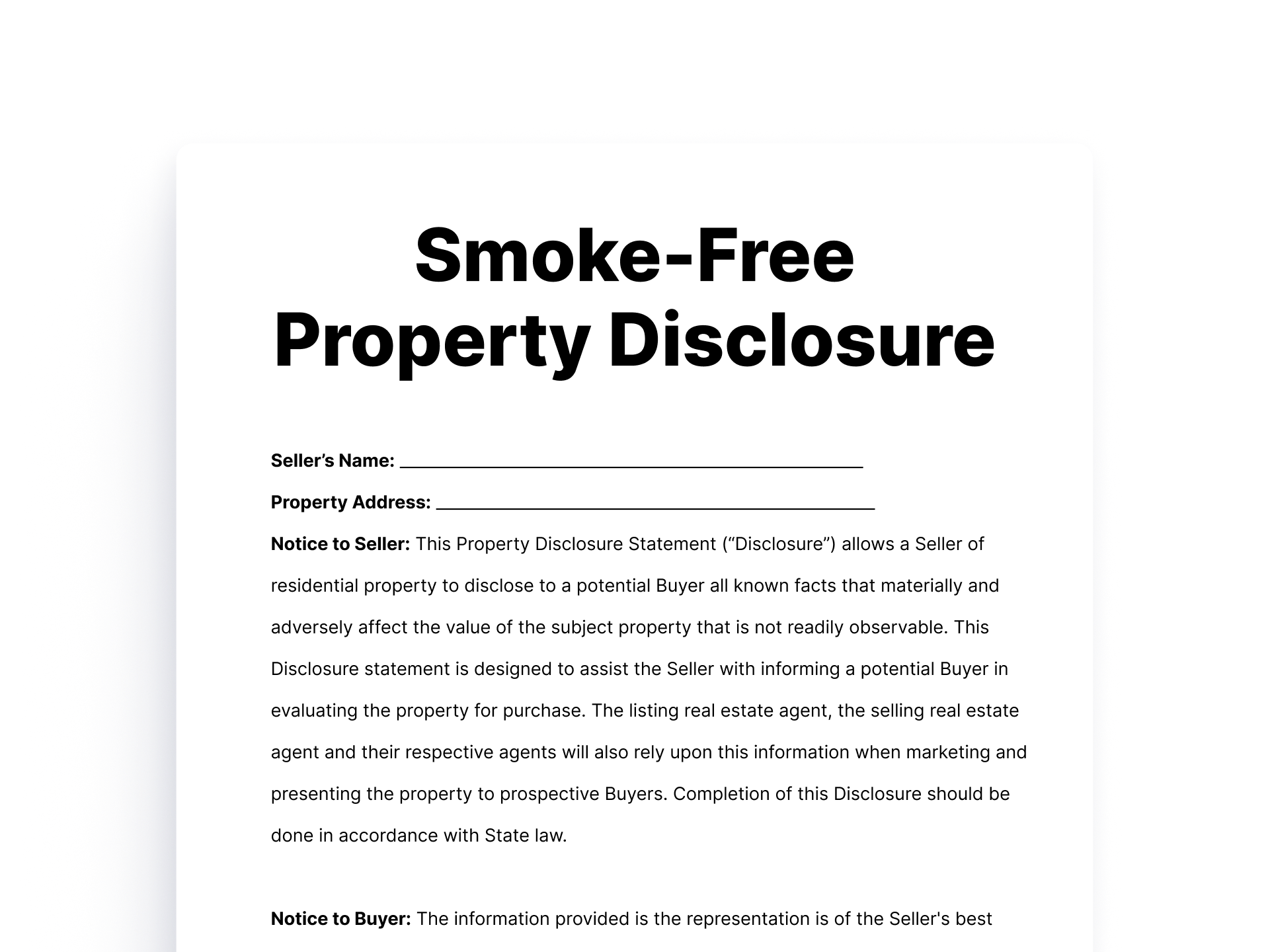
Download as PDF when complete
What Is Smoke-Free Property Disclosure?
How Smoke-Free Disclosure Protects Landlords and Tenants
Smoke-free property disclosure tells tenants about smoking rules and restrictions on rental properties. It covers where smoking is banned, what substances are restricted, and what happens if rules are broken. Additionally, it includes information about any designated smoking areas.
Properties may ban smoking entirely or limit it to specific outdoor areas away from buildings. Clear disclosure prevents misunderstandings about where tenants and guests can smoke. Furthermore, proper smoke-free property disclosure protects landlords from secondhand smoke complaints and property damage claims.
Types of Smoking Restrictions
Smoke-free policies range from full bans to partial limits with designated smoking areas. Specifically:
- Full bans — no smoking anywhere on the property, including units, common areas, and outdoor spaces
- Partial restrictions — smoking allowed only in outdoor areas at least 25 feet from buildings
- Substance-specific rules — different rules for cigarettes, cigars, marijuana, and e-cigarettes
Some policies apply to tenants, guests, and service workers equally. Multi-family properties often ban smoking inside units while allowing it on private outdoor balconies.
Legal Requirements for Smoke-Free Property Disclosure
Federal and State Requirements
Federal law does not require smoke-free property disclosure for most private rentals. However, HUD requires smoke-free policies in all public housing nationwide. The Fair Housing Act does not protect smoking as a protected class, so landlords can legally ban smoking without breaking anti-discrimination laws.
At the state level, some areas require landlords to disclose smoking policies in writing before tenants sign leases. California requires written smoke-free property disclosure before lease signing. Additionally, some cities require landlords to register smoke-free properties with health departments.
Lease Agreement Provisions for Smoke-Free Policies
Smoke-free policies must appear in written lease agreements to be legally binding. Verbal agreements about smoking do not provide enough legal protection. Lease provisions should clearly define:
- What counts as smoking — cigarettes, cigars, pipes, marijuana, and vaping devices
- Which areas are restricted
- Enforcement steps and penalties for breaking the rules
What Must Be Disclosed: Smoke-Free Policy Details
Prohibited Areas and Designated Smoking Zones
Clearly identify all areas where smoking is banned, including units, balconies, patios, and common areas. Specify whether bans apply to building entries, parking lots, and property edges. Additionally, define what counts as smoking and whether rules apply to guests and visitors.
If smoking is allowed in specific areas, describe those locations clearly in your smoke-free property disclosure. Designated areas must typically be at least 20 to 25 feet from building entries and windows. Furthermore, disclose who is responsible for maintaining these areas, including emptying ash containers.
Enforcement Steps and Penalties
Explain how smoking rule violations will be recorded and handled. Include:
- The warning and notice process before eviction steps begin
- Whether first violations result in warnings or immediate lease violations
- How complaints are reported and reviewed
- Fines ranging from $100 to $500 per violation
- Steps that lead to lease termination for repeat violations
Additionally, describe any cleaning fees or damage charges tenants may face for smoking-related damage.
What Must Be Disclosed: Health and Safety Information
Secondhand Smoke Risks and Fire Safety
Inform tenants about health risks from secondhand smoke. Secondhand smoke contains over 7,000 chemicals and causes cancer, heart disease, and breathing problems. Additionally, children and elderly residents face greater risks from exposure. Explain that smoke travels through ventilation systems, outlets, and gaps between units.
For fire safety, disclose that smoking is a leading cause of home fires. Cigarette fires often start from improperly discarded cigarettes or smoking in bed. Furthermore, smoke-free policies significantly lower fire risks for all residents in the building.
Tenant Duties and Guest Rules
Tenants must follow all smoke-free rules and ensure their guests do the same. Key tenant duties include:
- Informing guests about smoking restrictions before visits
- Reporting smoking violations by neighbors that affect their unit
- Understanding that guest violations count as tenant violations
Tenants cannot change smoke-free policies through personal requests or deals with management. Breaking smoking rules is a material lease violation that may prevent lease renewal. Moreover, repeated guest violations can be grounds for ending the lease.
Consequences of Inadequate Smoke-Free Property Disclosure
Liability Claims and Property Damage Costs
Landlords who fail to disclose or enforce smoking policies face serious risks. Specifically:
- Secondhand smoke claims — courts may award damages for health problems from preventable smoke exposure
- Property damage costs — smoke cleanup often costs thousands of dollars for paint, carpet, and air duct cleaning
- Lost damage recovery — without proper disclosure, landlords cannot charge tenants for smoke-related damage
- Deposit shortfalls — cleanup costs often exceed security deposits, leaving landlords to absorb losses
Enforcement Problems and Legal Disputes
Vague or undisclosed smoking policies create enforcement problems and tenant disputes. Tenants may argue that policies were unclear or that past violations were ignored. Additionally, courts may find smoke-free rules unenforceable without proper written disclosure and consistent application. Selective enforcement or failing to act on violations also weakens future eviction cases.
Best Practices for Smoke-Free Property Disclosure
Provide Written Disclosure and Post Visible Reminders
Include full smoke-free property disclosure in lease agreements and separate policy documents. Provide disclosure during property showings so tenants can make informed decisions. Additionally, require tenants to sign forms confirming they understand smoking policies.
Post smoke-free signs at building entries, common areas, and property edges. Additionally:
- Include smoking policy information in tenant welcome packets
- Provide door signs tenants can display for guests
- Send periodic reminder notices to keep awareness high
Document Violations and Enforce Rules Consistently
Keep detailed records of smoking complaints, investigations, and violations. Records should include dates, times, locations, evidence, and actions taken. Additionally, photograph smoke-related damage and keep witness statements for any violations.
Apply smoke-free rules to all tenants equally and without exceptions. Consistent enforcement prevents claims of unfair treatment and sets clear expectations. Furthermore, follow established steps for warnings, fines, and eviction notices every time to maintain policy strength.
Smoke-Free Property Disclosure Takeaways
Proper smoke-free property disclosure protects landlords from liability while creating healthier homes for tenants. Disclose all rules in writing before lease signing, post clear reminders, enforce policies consistently, and document all violations. Overall, thorough smoke-free property disclosure reduces fire risks, lowers upkeep costs, and attracts quality tenants who value healthy living spaces.
FAQs
Smoke-free property disclosure informs tenants about where smoking is prohibited, what substances are restricted, designated smoking areas if applicable, enforcement procedures, and the penalties for violations.
Yes — the Fair Housing Act does not protect smoking as a protected class, so landlords can legally prohibit all forms of smoking without violating federal anti-discrimination laws.
Yes — landlords can include marijuana smoking in their prohibition policies regardless of state legalization status, and this restriction must be clearly stated in the lease agreement to be enforceable.
Yes — tenants bear full responsibility for ensuring their guests and visitors comply with smoking restrictions, and repeated guest violations can constitute grounds for lease termination.
Landlords who fail to properly disclose or consistently enforce smoking policies risk liability for secondhand smoke health claims, loss of the right to charge tenants for smoke-related property damage, and unenforceable eviction proceedings.