
Electrical System


(1)
Electrical System Disclosure protects property owners from legal liability. It also helps buyers and tenants understand safety concerns and needed upgrades. In short, detailed disclosure practices ensure you meet legal requirements, document known issues, and set realistic expectations.
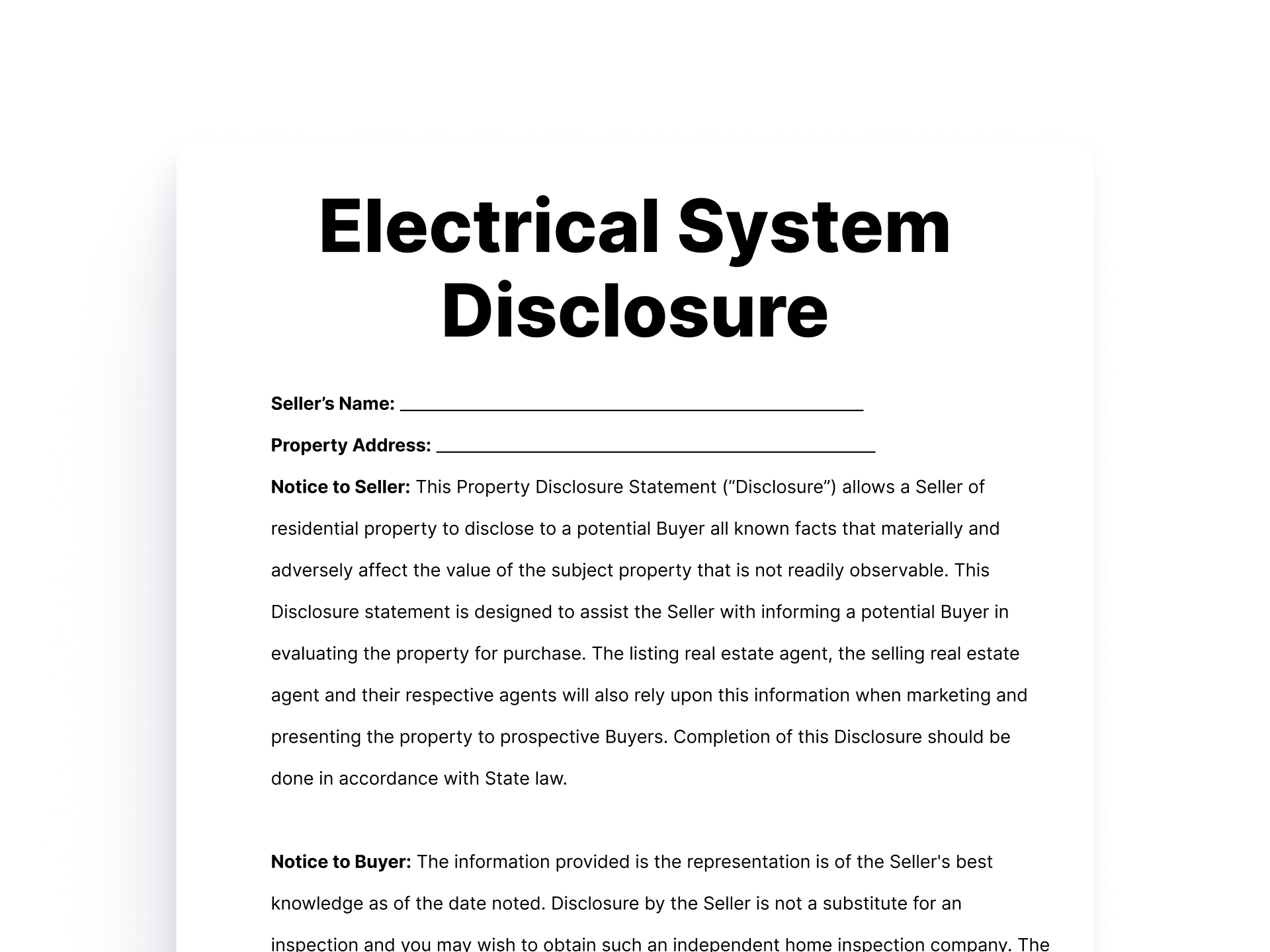
Download as PDF when complete
Electrical System Disclosure: Complete Guide for Property Owners
A complete disclosure informs buyers and tenants about the condition, capacity, and potential issues with property electrical systems. Whether you’re selling or renting, clear procedures prevent disputes and liability. Specifically, this guide covers:
- Disclosure requirements and common electrical issues
- Safety concerns and code compliance
- Documentation needs for sales and rentals
Our guide helps you handle electrical disclosures with confidence while protecting your interests and occupant safety.
Legal Requirements for Electrical System Disclosure
State Requirements for Disclosing Electrical Defects
Disclosure requirements vary by state, but most require sellers to disclose known defects, malfunctions, and safety issues. Your disclosure must reveal problems with:
- Wiring and electrical panels
- Outlets, switches, and fixtures
- Any issues affecting safety or functionality
Additionally, many states require disclosure of hazardous components like aluminum wiring, Federal Pacific panels, or knob-and-tube wiring. Some jurisdictions mandate electrical inspections before property transfers, particularly for older homes.
Why Electrical Disclosure Protects You From Legal Claims
Proper disclosure protects you from legal claims after closing or move-in. Electrical problems cause fires, shocks, and expensive repairs that buyers or tenants may blame on you if not disclosed. Therefore, your disclosure creates documentation that you informed all parties about known issues. Furthermore, failing to disclose electrical defects can result in lawsuits for fraud, breach of contract, and liability for repair costs or damages from electrical fires or injuries.
What to Include in Your Electrical System Disclosure
Key Electrical Components to Document in Your Disclosure
Your disclosure should cover all major electrical components and their known conditions. Specifically, include:
- Electrical panels — age, brand, capacity (amperage), condition, and any known issues like overheating or tripping
- Wiring type — copper, aluminum, or outdated knob-and-tube wiring
- Outlets and switches — any that don’t work, are loose, or show signs of damage
- GFCI and AFCI protection — which areas have required safety protections and which don’t meet current code
Furthermore, disclose the property’s electrical service capacity, typically 100, 150, or 200 amps for residential properties.
Permits and Unpermitted Electrical Work
Mention any electrical upgrades, repairs, or inspections completed, including dates, contractors used, and permits obtained. Additionally, reveal any areas where electrical work was done without permits. Unpermitted work creates liability and financing problems for buyers. Therefore, always be upfront about the permit status of any past electrical work.
Common Electrical Problems That Require Disclosure
Hazardous Wiring and Panel Issues to Disclose
Your disclosure must address common problems that affect safety and property value. Key issues to disclose include:
- Aluminum wiring (1965–1973 homes) — poses fire risks due to expansion and contraction causing loose connections
- Federal Pacific Electric (FPE) and Zinsco panels — breakers may fail to trip during overloads, creating fire hazards; many insurers refuse coverage or charge higher premiums
- Knob-and-tube wiring (pre-1950 homes) — lacks grounding and adequate insulation for modern electrical loads; most insurers won’t cover properties with active knob-and-tube wiring
Other Wiring and Circuit Problems
Additional issues that commonly require disclosure include:
- Insufficient electrical service capacity (60-amp or 100-amp service may need upgrading)
- Backstabbed outlets where wires are pushed into holes rather than secured with screws
- Double-tapped breakers where two wires connect to a single breaker, violating electrical codes
Therefore, review your property carefully for these issues before listing or renting.
Safety Concerns and Code Compliance
Missing Safety Protections in Older Properties
Your disclosure should address safety concerns and code compliance. Common issues include:
- Missing GFCI protection in kitchens, bathrooms, garages, and outdoor outlets
- Lack of AFCI protection in bedrooms and living areas
- Ungrounded outlets using two-prong receptacles instead of three-prong grounded outlets
Current electrical codes require both GFCI and AFCI protections in new construction and major renovations. Therefore, disclose properties with ungrounded electrical systems since upgrading requires significant expense.
Other Code Violations to Disclose
Additional code compliance issues to include in your disclosure:
- Overloaded circuits evident from frequently tripping breakers or reliance on extension cords
- Exposed wiring in attics, basements, or crawl spaces
- Outdoor electrical equipment not rated for exterior use or lacking proper weather protection
Furthermore, these issues create shock and fire risks that buyers and tenants have a right to know about.
Documenting Electrical Condition for Your Disclosure
What to Record Before Listing Your Property
Document electrical system condition thoroughly before listing. Your records should include:
- Age of electrical panels, wiring, and major components
- Electrical service capacity and whether it meets modern needs
- Any problems experienced — tripping breakers, flickering lights, buzzing outlets, or burning smells
- Photos of electrical panels, visible wiring, and any obvious defects
Benefits of Getting a Professional Electrical Inspection
Professional electrical inspections provide comprehensive documentation. Therefore, hire a licensed electrician to evaluate systems before listing. Inspection reports typically cost $200 to $400 and identify safety hazards, code violations, and needed repairs. Furthermore, these reports protect you by documenting property conditions at a specific point in time. Moreover, buyers often conduct their own electrical inspections during due diligence, so a proactive inspection helps you address issues before they create negotiation pressure.
Electrical System Disclosure for Home Sales
What Seller Disclosure Forms Require
Home sale disclosure follows seller property disclosure forms required by most states. Your disclosure must answer questions about:
- Electrical system age, condition, and known defects
- Repairs or upgrades completed
- Whether electrical work was properly permitted
Buyers can’t obtain conventional mortgages on properties with significant unpermitted electrical work until the issues are corrected.
Being Honest About Electrical Problems
Be honest about electrical problems even if they affect negotiations. Therefore, disclose flickering lights, outlets that don’t work, and breakers that trip frequently. Furthermore, mention if electricians recommended upgrades or repairs that you haven’t completed. Moreover, some sellers complete electrical upgrades before listing to eliminate disclosure concerns and increase property value. In particular, addressing safety issues like panel replacements or aluminum wiring remediation prevents buyer objections during inspections.
Electrical System Disclosure for Rental Properties
What Landlords Must Tell Tenants About Electrical Systems
Landlord disclosure requirements protect tenant safety and limit liability. Most states require landlords to provide safe, functional electrical systems. Your rental disclosure should document:
- Electrical service capacity and known outlet or switch issues
- Presence of GFCI protection in required locations
- Any electrical limitations affecting appliance use
Additionally, disclose if tenants need to avoid using certain appliances simultaneously due to circuit limitations.
Keeping Tenants Safe and Informed
Provide tenants with breaker box labels showing which breakers control which areas. Therefore, include electrical safety information in lease documents or move-in packets. Furthermore, address tenant responsibilities for replacing light bulbs and reporting electrical problems. Moreover, respond promptly to tenant reports of electrical issues — ignoring problems creates serious liability if fires or injuries result.
Managing Upgrades and Repairs
Documenting Completed Electrical Work
Your disclosure should address how you’ve managed electrical issues. Document any upgrades completed, including:
- Panel replacements and wiring updates
- Addition of GFCI and AFCI protection
- Receipts, permits, and inspection approvals for all work
Furthermore, if electricians recommended repairs that you haven’t completed, share those recommendations with buyers or tenants.
Cost of Common Electrical Upgrades
Some sellers complete upgrades before listing to eliminate disclosure concerns. Here are typical costs:
- Upgrading from 100-amp to 200-amp service: $1,500 to $3,000
- Replacing hazardous FPE or Zinsco panels: $1,200 to $2,500
- Aluminum wiring remediation: varies based on home size
Additionally, completing upgrades demonstrates property care and may justify a higher asking price. Overall, addressing electrical issues proactively is almost always worth the investment.
Electrical System Disclosure Takeaways
Proper electrical disclosure protects property owners while ensuring buyer and tenant safety. Document all known issues honestly, including service capacity, panel condition, wiring type, and safety features. Additionally, disclose hazardous components prominently and include professional inspection reports, receipts, and permits. Overall, thorough disclosure prevents legal liability, demonstrates good faith, and helps buyers and tenants make informed decisions about electrical safety and needed improvements.
FAQs
An electrical system disclosure informs buyers and tenants about the condition, capacity, and known issues with a property’s electrical system, protecting owners from legal liability for undisclosed defects, fires, or injuries.
Sellers must disclose the age and condition of electrical panels, wiring type (including aluminum or knob-and-tube), service capacity, GFCI and AFCI protection status, unpermitted electrical work, and any known safety issues.
Federal Pacific Electric (FPE) Stab-Lok panels, Zinsco/Sylvania panels, and aluminum wiring require prominent disclosure because they pose significant fire risks and many insurance companies refuse coverage or demand immediate replacement.
Buyers who discover undisclosed electrical problems after closing can sue for fraud, misrepresentation, and breach of contract, and may also seek damages for fires, injuries, or repair costs caused by the hidden defects.
Landlords should document electrical service capacity, known outlet or switch issues, and GFCI protection status in lease documents, and respond promptly to tenant reports of electrical problems to avoid liability for fires or injuries.