
Security Deposit Transfer


(1)
Security Deposit Transfer Disclosure protects tenants and ensures smooth property ownership transitions. Many landlords overlook this critical requirement when selling properties or changing management companies. In short, this guide explains everything you need to know about properly disclosing security deposit transfers to your tenants.
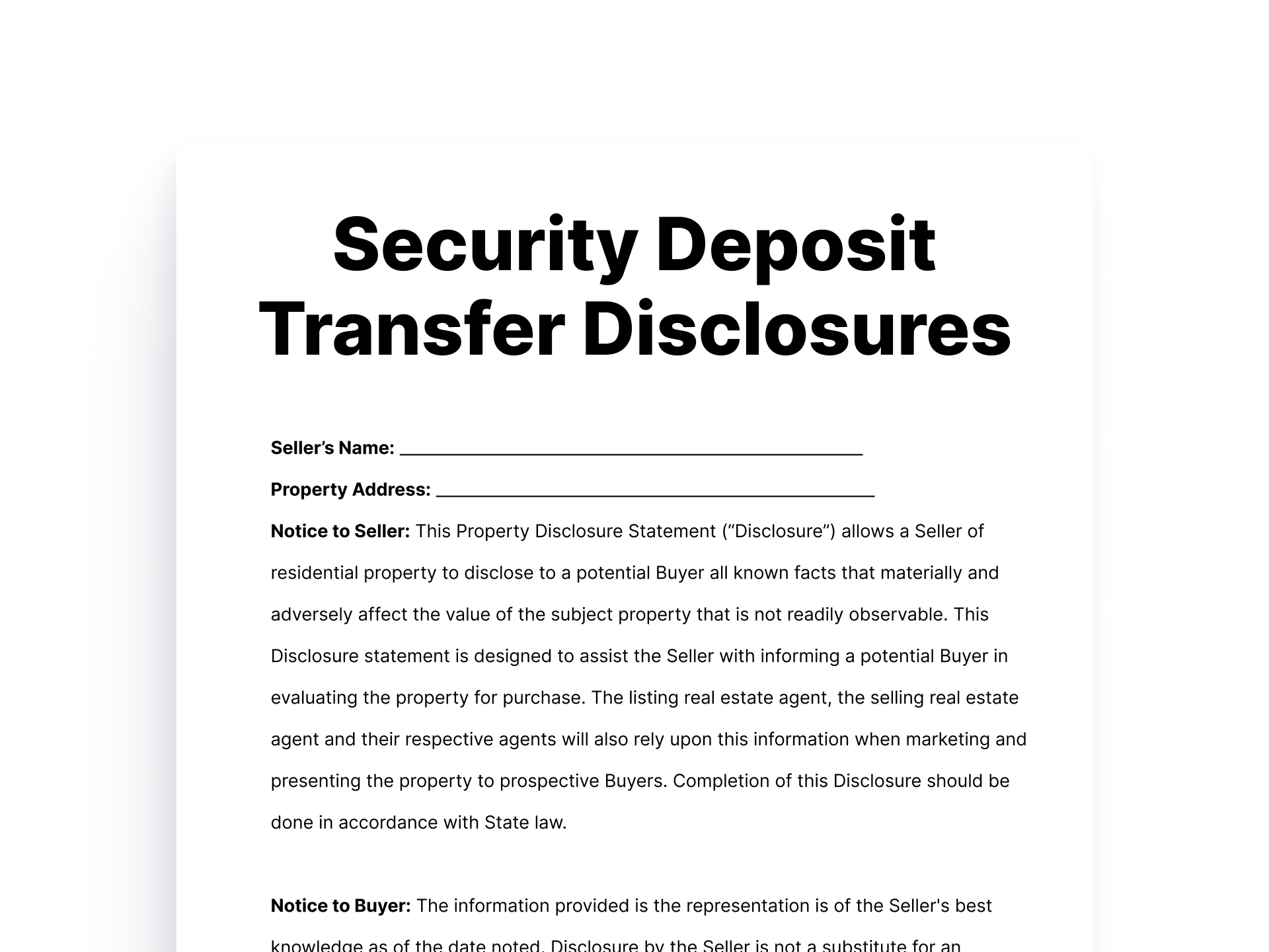
Download as PDF when complete
What Is Security Deposit Transfer Disclosure?
How Transfer Disclosure Protects Tenants
Security deposit transfer disclosure informs tenants when their deposits move to new owners or managers. This notice explains who holds their deposits and where to direct future communications. Additionally, proper disclosure protects both outgoing and incoming landlords from liability disputes.
Why Tenants Need to Know Who Holds Their Deposit
When property ownership changes, security deposits transfer to the new owner. The new owner then becomes responsible for returning deposits at lease termination. Furthermore, tenants must know who holds their money to ensure proper refund procedures. Clear disclosure also prevents confusion when landlords switch property management companies.
When Security Deposit Transfer Disclosure Is Required
Property Sales and Ownership Changes
Property sales trigger mandatory disclosure in most jurisdictions. Sellers must notify tenants about the ownership change and deposit transfer. Additionally, new owners must inform tenants they now hold the deposits and provide updated contact information. Both parties should document the transfer to establish clear liability for future refunds.
Management Changes and Corporate Restructuring
When landlords change property management companies, tenants need clear information about where their deposits are held. Disclosure must specify whether the management company or owner bears refund responsibility. Additionally, business restructuring like LLC formations or corporate mergers requires security deposit transfer disclosure. When ownership entities change, tenants must receive notice about the new legal entity holding their deposits.
Lease Assignments and Other Transfers
Some property transactions involve assignment of leases without full ownership transfer. These arrangements may transfer deposit custody to new parties temporarily or permanently. Therefore, disclosure clarifies who is responsible for deposit management. Clear communication helps tenants understand their rights under new arrangements.
Legal Requirements for Security Deposit Transfer Disclosure
Federal Standards and State-Specific Laws
Federal law does not set specific disclosure requirements for residential rentals. However, state and local laws govern these obligations and vary significantly. Key state requirements include:
- California — sellers must transfer deposits or return them within 21 days; new owners must notify tenants promptly
- New York — written notice required including the new owner’s name and address
- Texas — new owners must notify tenants in writing within 60 days of purchase
- Florida — disclosure required within 30 days with specific deposit location information
Municipal and Local Disclosure Requirements
Some cities and counties impose additional requirements beyond state law. Local ordinances may require shorter notice timeframes or extra information. Therefore, always check municipal codes in your operating area. Rent-controlled jurisdictions often have stricter rules and may require filing transfer documents with local rent boards.
What to Include in Security Deposit Transfer Disclosure
New Owner Information and Deposit Amounts
Your disclosure must clearly include:
- Complete legal name, business address, and phone number of the new owner or manager
- Email addresses and other contact details tenants may need
- Exact deposit amount transferred for each tenant and unit
- Any interest accrued if state law requires interest payments
- Transfer date and effective date of new ownership
Specifying amounts prevents disputes during ownership transitions. Additionally, documenting transferred amounts protects both sellers and buyers from future liability claims.
Deposit Location, Contact Details, and Tenant Rights
Also include the following:
- Bank name and location where deposit funds are held
- Whether deposits are in individual or pooled accounts
- Complete contact information for deposit-related questions
- Office hours, phone numbers, and email addresses
- Whether tenants should contact owners directly or through a property manager
Furthermore, inform tenants about their rights under new ownership. Explain how refund procedures, inspection policies, and deduction rules may change. Transparency about changing procedures helps maintain positive tenant relationships.
Consequences of Failing to Disclose Security Deposit Transfers
Dual Liability, Forfeiture, and Statutory Penalties
Failing to provide proper disclosure creates serious financial risk. Specifically, landlords face:
- Dual liability — both old and new owners can be sued for deposit return
- Full forfeiture — landlords may lose all rights to make damage deductions
- Statutory penalties — ranging from one to three times the deposit amount
- Daily fines — accumulating until full compliance is achieved
- Attorney fees — tenants may recover legal costs for successful enforcement actions
Lease Termination Rights and Loss of Deductions
Courts view serious disclosure failures as violations that warrant full deposit forfeiture. Consequently, new owners cannot withhold amounts for legitimate damages or unpaid rent. Additionally, material violations may give tenants the right to terminate leases without penalty. Some jurisdictions treat non-disclosure as a breach of habitability, allowing tenants to recover relocation costs and rent differences.
Best Practices for Security Deposit Transfer Disclosure
Notify Tenants Promptly and Use Written Documentation
Provide disclosure immediately upon ownership or management changes. Do not wait until state deadlines expire. Additionally, always provide disclosure in writing through methods that create proof of delivery:
- Certified mail with return receipt
- Email with read receipts
- Hand delivery with signed acknowledgments
Retain copies of all disclosure documents in permanent tenant files. Written notices give tenants reference materials and protect landlords from future disputes.
Obtain Acknowledgment and Coordinate Between Parties
Request that tenants sign and return copies of transfer notices. While not always legally required, signed acknowledgments provide strong protection from future disputes. Additionally, sellers and buyers should work together to ensure consistent, seamless disclosure. Some landlords have both old and new owners co-sign transfer notices for extra clarity.
Document the Process and Update Lease Agreements
Maintain detailed records of every step in the transfer process. Keep closing documents, bank transfer confirmations, and tenant notification proof. Additionally, provide updated lease addendums reflecting ownership or management changes. These documents create clear records of tenant acknowledgment. Furthermore, consult legal professionals to verify compliance with all state and local requirements.
Security Deposit Transfer Disclosure Takeaways
Proper security deposit transfer disclosure protects both landlords and tenants by ensuring transparent, well-documented transitions that build tenant trust and shield your rental business from costly penalties and disputes.
FAQs
Security deposit transfer disclosure informs tenants when their security deposits move to a new owner or property manager, and it is required in most jurisdictions whenever a property is sold, management changes, or ownership entities are restructured.
A complete transfer notice must include the new owner’s or manager’s full legal name, business address, and contact information, the exact deposit amount transferred, the transfer date, the location where funds are held, and tenant rights under the new ownership.
Timeframes vary by state — for example, California requires notification within 21 days, Texas within 60 days, and Florida within 30 days — but best practice is to notify tenants immediately upon ownership or management change.
Landlords who fail to disclose transfers can face dual liability for both the old and new owner, mandatory full deposit refunds, statutory penalties of one to three times the deposit amount, and loss of all rights to make damage deductions.
Yes — material violations of security deposit transfer disclosure requirements may give tenants the right to terminate their lease without penalty and demand an immediate full refund of their deposit.