
Mold Disclosure


(1)
Mold Disclosure practices ensure you meet legal requirements. They also protect buyers, tenants, and yourself from health risks and legal problems. In short, mold grows in damp environments and can cause health issues and structural damage requiring professional treatment.
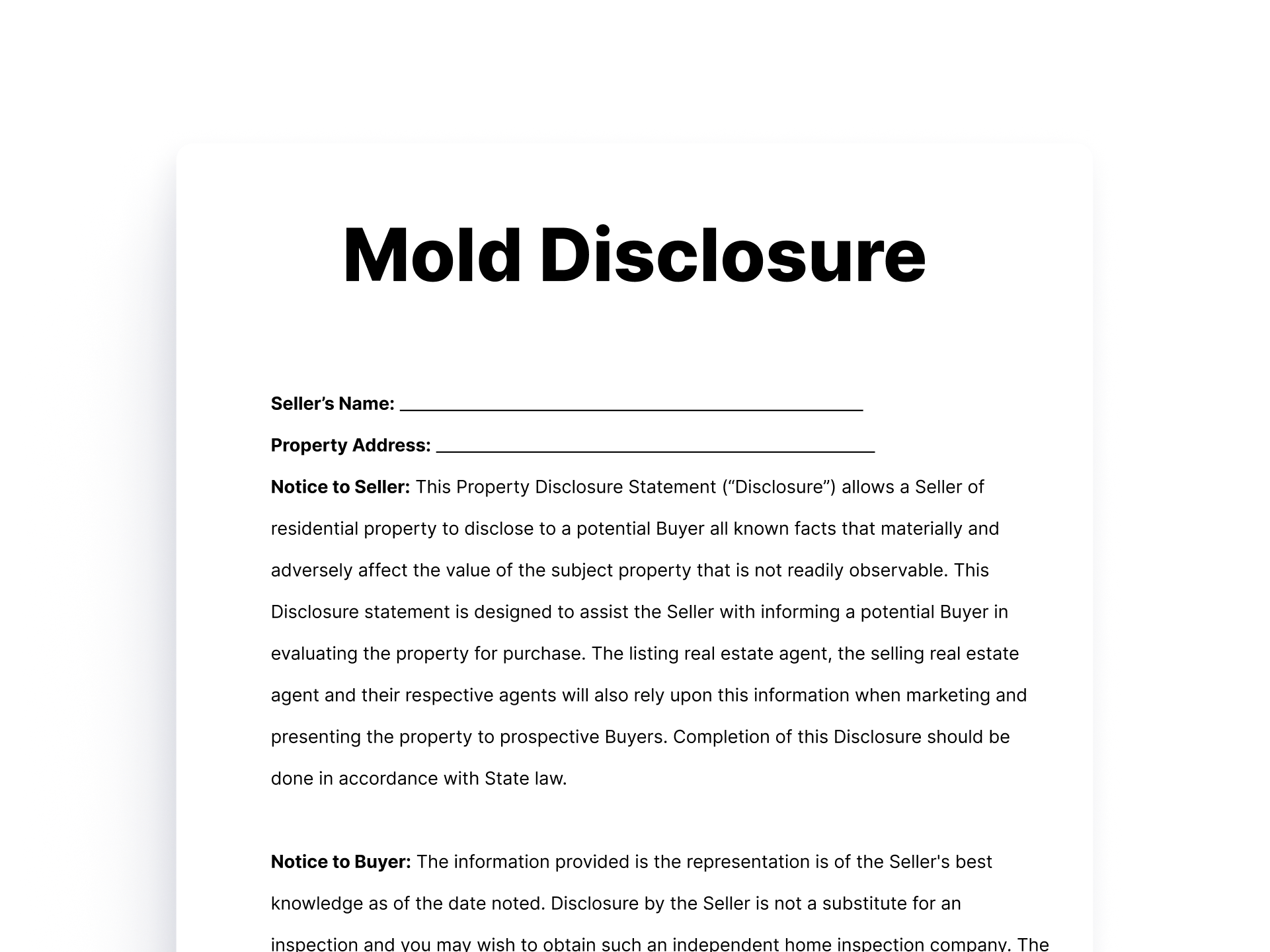
Download as PDF when complete
Mold Disclosure: Complete Guide for Property Owners
A complete Mold Disclosure informs buyers and tenants about mold issues, water damage history, and cleanup work done on properties. Whether you’re selling or renting a property with current or past mold problems, clear disclosure prevents legal disputes. Specifically, this guide covers:
- Disclosure requirements and health risks
- Testing procedures and cleanup standards
- Rental and sale-specific disclosure practices
Our guide helps you handle mold disclosures with confidence while protecting your interests and occupant health.
Understanding Mold Disclosure Requirements
What State Laws Require for Mold Disclosure
Mold Disclosure requirements vary by state. Some states require specific disclosure forms while others include mold in general property condition statements. Most states require sellers to disclose known mold problems, water damage history, and moisture issues. Additionally, landlords must maintain safe properties free from mold hazards under implied warranty of habitability laws. States like California and Texas have specific mold laws requiring detailed information about mold presence and cleanup.
Why Proper Mold Disclosure Protects Property Owners
Proper disclosure protects you from legal liability and health-related claims. Mold causes breathing problems, allergic reactions, and serious health issues — particularly for sensitive individuals. Therefore, buyers and tenants who find undisclosed mold can sue for fraud, health damages, and cleanup costs ranging from $500 to $10,000 or more. Furthermore, failing to disclose known mold creates liability for ongoing health problems and property damage.
Health Risks of Mold Exposure
Common Molds and Their Health Effects
Your disclosure must explain health risks from mold exposure. Common molds like Cladosporium, Penicillium, and Aspergillus cause allergic reactions in many people. Additionally, toxic black mold (Stachybotrys) produces harmful substances causing serious health problems including breathing issues, headaches, and immune system problems. People with asthma, allergies, or weakened immune systems face the greatest risks.
Health effects from mold include:
- Nasal and sinus problems
- Coughing, wheezing, and throat irritation
- Skin rashes and eye irritation
- Headaches, fatigue, and worsening asthma
Long-Term Health Risks From Mold
Long-term exposure to high mold levels can cause more serious issues. These include chronic breathing infections, nerve problems, and immune system disorders. Furthermore, children, elderly individuals, and pregnant women are especially vulnerable. Moreover, health impacts vary by personal sensitivity, mold type, and how long someone is exposed.
Common Mold Locations and Causes
Where Mold Typically Grows in Properties
Your disclosure should identify areas where mold commonly grows. High-risk locations include:
- Bathrooms with poor ventilation — around tubs, showers, and sinks
- Basements and crawl spaces with moisture problems
- Kitchen areas under sinks and around appliances
- HVAC systems and ductwork where moisture collects
What Causes Mold to Grow
Mold needs moisture, organic materials, and warm temperatures to grow. Therefore, water damage from leaks, floods, or high humidity creates mold conditions within 24 to 48 hours. Furthermore, roof leaks, plumbing problems, foundation cracks, and poor airflow commonly cause mold. Moreover, your disclosure should address any water damage history since past moisture problems often signal recurring mold risks.
Mold Testing and Inspection
When and How to Test for Mold
Your disclosure should include results from any mold testing or inspections. Professional mold inspectors use visual checks, moisture meters, and air or surface samples to assess mold presence and types. Testing typically costs $300 to $700 depending on property size and sample count.
Test a property if it has:
- Visible mold or musty odors
- A water damage history
- Unexplained health symptoms reported by occupants
What Professional Mold Inspection Reveals
Professional inspection identifies moisture sources feeding mold growth. Furthermore, musty or earthy odors often indicate hidden mold in walls, ceilings, or HVAC systems. In addition, some buyers request mold testing during home inspections, particularly for properties with basements, previous water damage, or humid locations.
Mold Cleanup and Remediation Standards
What Professional Mold Cleanup Involves
Your disclosure must document any professional mold treatment. Small mold areas under 10 square feet can sometimes be cleaned with standard products. However, larger areas require professional cleanup including:
- Containing the area to stop spores from spreading
- Removing contaminated materials like drywall and insulation
- Cleaning remaining surfaces with anti-mold solutions
- Fixing the moisture source causing mold growth
Cleanup Costs and Documentation
Professional mold cleanup costs range from $500 for small areas to $10,000 or more for large problems. Therefore, certified contractors following IICRC standards must handle all major cleanup work. Furthermore, your cleanup records should include contractor details, work performed, materials removed, and any clearance testing results. Moreover, some states require licensed contractors for mold cleanup while others have no specific rules.
Mold Disclosure for Home Sales
What to Reveal When Selling a Property With Mold History
Home sale disclosure follows state-specific requirements. Your disclosure must reveal:
- Known mold problems and past issues
- Water damage history that created mold risks
- Current moisture or airflow problems
- All inspection reports, testing results, and cleanup records
Being Honest About Mold Issues
Be honest about mold issues even if they affect negotiations. Therefore, buyers who find undisclosed mold can cancel purchases, sue for damages, or demand cleanup at your expense. Furthermore, properties with properly disclosed and remediated mold often sell well when buyers understand the issue was fully addressed. Additionally, offering pre-listing mold inspections shows transparency and attracts confident buyers.
Mold Disclosure for Rental Properties
Landlord Obligations for Mold Disclosure
Landlord disclosure protects tenant health and limits liability. Most states require landlords to provide safe housing free from mold hazards. Additionally, landlords must respond quickly to tenant reports of mold, leaks, or moisture problems. Your rental disclosure must reveal known mold issues before lease signing and outline landlord duties for prevention and cleanup.
Protecting Yourself From Tenant Mold Claims
Landlords face significant liability for exposing tenants to mold. Therefore, tenants with health problems from mold can sue for medical costs, moving expenses, and damages. Furthermore, some courts have awarded large judgments for landlord negligence in mold cases. In addition, include lease terms requiring tenants to report leaks or mold right away and maintain proper airflow.
Preventing Mold Through Regular Maintenance
Key Steps to Prevent Mold Growth
Your disclosure should address prevention steps completed or recommended. Key actions include:
- Keeping indoor humidity below 60% using fans or dehumidifiers
- Ensuring proper airflow in bathrooms, kitchens, and laundry areas
- Fixing water leaks in plumbing, roofs, and foundations quickly
- Cleaning and maintaining HVAC systems regularly
Additional Prevention Tips for Buyers and Tenants
Improve drainage around properties by directing water away from foundations. Therefore, clean gutters regularly and make sure downspouts extend at least 6 feet from buildings. Furthermore, use mold-resistant products like mold-resistant drywall and paint in damp areas. Moreover, document all prevention work in your disclosure to show proactive management. In addition, give buyers or tenants simple tips for keeping mold away — good airflow, quick leak repairs, and regular cleaning go a long way.
Legal Consequences of Inadequate Mold Disclosure
Buyer and Tenant Claims Against Property Owners
Failing to provide proper disclosure creates serious legal risk. Buyers who find undisclosed mold can sue for:
- Fraud and cancellation of the sale
- Cleanup costs and reduced property value
- Health damages and medical expenses
Additionally, landlords face habitability claims, rent refusals, and lawsuits for mold-related health problems. Some areas allow extra damages for intentional mold disclosure failures.
Agent Liability and Insurance Consequences
Real estate agents share liability for failing to disclose known mold issues. Therefore, agents must check for signs like water stains, musty odors, or visible mold. Furthermore, agents should advise sellers to disclose mold even when sellers push back. Moreover, insurance companies may deny claims for mold damage when properties had known, undisclosed mold problems. In short, proper disclosure with good records protects everyone involved and shows honest effort to inform buyers and tenants.
Insurance and Mold Disclosure
How Mold History Affects Property Insurance
Your disclosure should address insurance effects. Most homeowners insurance policies do not cover mold damage unless it results from a covered event like a burst pipe. Additionally, many insurers add mold limits or exclusions to policies. Some offer optional mold coverage for extra cost. Therefore, disclose any past insurance claims related to water damage or mold since this affects future coverage.
Helping Buyers Obtain Insurance Coverage
Properties with mold history may face higher premiums or coverage refusals. Furthermore, some insurers require proof of completed cleanup and clearance testing before offering coverage. Consequently, good mold cleanup records in your disclosure help buyers get insurance. Additionally, buyers should confirm insurance availability before purchasing properties with mold history since home loans often require proof of coverage.
Mold Disclosure Takeaways
Proper Mold Disclosure protects property owners while keeping buyers and tenants safe. Understand your state’s requirements, disclose all known mold and water damage, and provide full cleanup records. Additionally, conduct testing when warning signs appear and hire certified contractors for serious mold problems. Overall, thorough disclosure prevents lawsuits, shows good faith, and helps buyers and tenants make smart decisions about property health and safety.
FAQs
Mold disclosure informs buyers about known mold problems, water damage history, moisture issues, and any remediation completed, along with all inspection reports, testing results, and contractor documentation.
Mold exposure causes respiratory problems, allergic reactions, headaches, and worsening asthma symptoms, with children, elderly individuals, and pregnant women facing the greatest health risks.
Professional mold remediation costs range from $500 for small areas to $10,000 or more for extensive contamination, and must be performed by certified contractors following IICRC industry standards.
Yes — most states require landlords to provide habitable housing free from mold hazards, respond promptly to tenant mold reports, and disclose known mold issues before lease signing.
Buyers who discover undisclosed mold can sue for fraud, rescission of the sale, remediation costs, diminished property value, and health damages, with some jurisdictions allowing punitive damages for intentional concealment.