
Maintenance Log


(1)
A maintenance log is a detailed record of all maintenance work done on a property, including routine upkeep, repairs, checks, and system servicing. Specifically, it captures dates, work notes, contractor details, costs, and outcomes for every maintenance task.
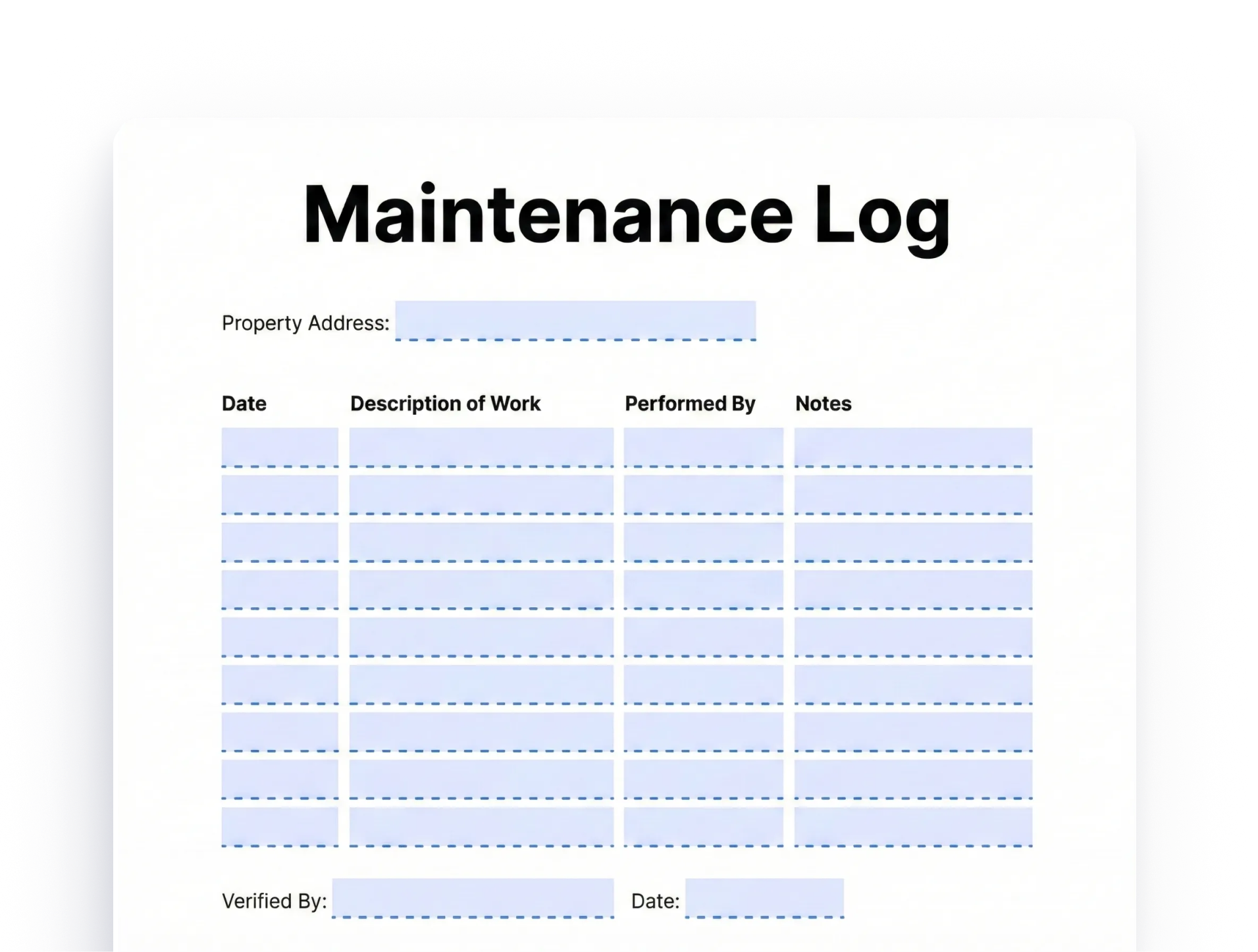
Download as PDF when complete
Maintenance Log: Definition and Purpose
Key Benefits for Property Managers
A maintenance log does more than track repairs. It also:
- Reveals patterns pointing to recurring problems that need a lasting fix
- Proves you maintained the property properly during insurance claims or sales
- Helps you plan future maintenance based on past service intervals
- Defends against tenant claims of deferred maintenance or carelessness
Property managers use this record to track property condition, plan ahead, and show skilled care over time.
Why Keeping Thorough Records Matters
This record creates a clear, organized history of every task performed on your property. In addition, it protects you legally, supports budget planning, and helps you get more from your contractors. Landlords who keep thorough logs are better prepared for disputes, sales, and checks.
Benefits of Keeping a Detailed Maintenance Log
Improved Property Life and Condition
Regular maintenance tracking ensures you never miss key upkeep tasks that protect your equipment and building systems. Your maintenance log reminds you when HVAC systems need servicing, when roofs require check, and when appliances are close to the end of their useful life.
In addition, a recorded maintenance history increases property value during a sale. Buyers appreciate clear records showing proper care over the years. Also, a strong log reduces buyer concerns about hidden problems since it shows every system has been looked after.
Cost Control and Smarter Budget Planning
This record gives you the historical data you need for accurate budget planning. You can review past spending to spot seasonal patterns and typical annual costs. This helps you set realistic maintenance budgets and build reserves for major repairs.
The log also shows which contractors are cost-effective and which ones regularly go over estimate. Over time, you learn who delivers quality work at fair prices. In addition, tracking regular business with a contractor can help you negotiate better rates.
Legal Protection and Liability Defense
Detailed records protect you during lawsuits that claim you neglected the property. When tenants say they were hurt because of a delayed repair, your log proves you inspected regularly and responded promptly. This record shows reasonable care and diligence in keeping the property safe.
Also, these records support your defense when tenants withhold rent claiming the property is unlivable. Your records show you addressed problems quickly when they were reported. Courts tend to favor landlords who can show a regular, well-recorded maintenance routine.
Essential Details to Track in Your Maintenance Log
Basic Maintenance Entry Details
Every maintenance log entry should include:
- The date the work was done
- Full property address and unit number
- Who did the work — staff, contractor, or tenant
- Who reported or identified the need
- Work order numbers linking to other records
- A brief but specific description of the work completed
Instead of writing “fixed sink,” write “replaced kitchen sink P-trap gasket, stopped leak under cabinet.” This level of detail helps you recall exactly what was done when reviewing the log months or years later.
Cost and Payment Details to Record
Record all costs linked to each maintenance task, including:
- Labor and materials
- Permits and disposal fees
- Payment method and date
- Whether costs came from operating budget, capital reserves, or tenant duty
- Any warranty coverage that reduced or removed the cost
Separating labor from materials helps you spot where money is actually going. In addition, proper cost categorization supports accounting and helps you analyze spending patterns over time.
Contractor and Vendor Details
Record complete contractor details in your log, including:
- Company name and technician name
- License number and contact details
- Results notes on quality, timing, communication, and price
This data helps you quickly reach reliable contractors when similar problems come up. In addition, it supports proving that licensed workers completed jobs requiring specific credentials. Also, results notes help you decide who to call — and who to avoid — when an emergency comes up fast.
Equipment and System Tracking
Equipment and System Tracking
Track maintenance by specific equipment or systems to build individual service histories. For each item, record:
- Make, model, and serial number
- Installation date and warranty details
- Service dates, filter changes, and check records
This tracking shows when systems are close to the end of their useful life, giving you time to plan replacements. It also ensures you never miss a service interval that could shorten equipment life.
Creating an Effective Maintenance Log System
Choosing the Right Format for Your Maintenance Log
Pick a format that fits your portfolio size and comfort level:
- Paper logs work for very small portfolios but can become hard to manage
- Spreadsheets offer flexibility and search options but need regular updating
- Property management software is the most complete solution, integrating maintenance with work orders, tenant messages, and financial tracking
Software tools send automatic reminders for scheduled tasks and allow updates from your phone at the job site. However, they come with monthly costs and a learning curve that some landlords prefer to skip.
Organizing Your Maintenance Log by Property or System
Consider organizing by property so all activities for one building are in one place. This helps you understand the maintenance needs and costs for each property. Alternatively, organize by system type — tracking all HVAC work together, all plumbing together — across your portfolio.
Many managers use both approaches through software that tags entries by property and by system. As a result, you can spot both property-specific patterns and portfolio-wide issues. In addition, this dual view helps you identify which contractors specialize in certain repair types.
Standardizing Entry Procedures for Consistency
Create standard templates for common tasks to keep entries regular. Templates remind you to capture all needed details and make log reviews easier. In addition, they simplify training new staff on proper record-keeping.
Set a rule that all entries must be completed within 24 hours of finishing the work. Fresh memories lead to more accurate notes than trying to recall events weeks later. Also, prompt entry ensures no work goes unrecorded, leaving gaps in your maintenance history.
Best Practices for Maintenance Log Tracking
Regular Review and Analysis of Your Maintenance Log
Schedule monthly reviews of your maintenance log to spot patterns that need attention. For example:
- Some properties may need more repairs than others, suggesting a deeper problem
- Some contractors may need repeated follow-up visits, pointing to quality issues
Regular analysis turns raw data into useful insights that improve how you manage properties. Also, compare actual work against your planned planned maintenance schedule to catch anything that slipped through.
Linking Records to Planned Maintenance Schedules
Use your maintenance log to drive planned work rather than just reacting to problems. Schedule tasks like HVAC servicing, gutter cleaning, and property checks based on past service records and maker recommendations. Proactive planning prevents emergency repairs and extends the life of your equipment.
Create an annual planned maintenance calendar for each property listing all planned tasks by month. Check completed work against the calendar to ensure nothing is missed. In addition, adjust schedules over time based on what you learn about your specific properties and local climate.
Using Photos and Documents to Support Your Records
Improve your written log entries with photos showing property condition before and after work. Images give context that words alone cannot. In addition, photos support insurance claims and prove work quality if a dispute comes up.
Attach contractor invoices, check reports, and warranties to matching log entries. This keeps all related records in one place for easy reference. Also, digital attachments remove the need for physical storage and prevent documents from being lost.
Staff Training and Record-Keeping Duty
Training Staff on Accurate Record Entry
Train all staff on proper log entry procedures and explain why detailed records matter. Show examples of strong versus weak entries so expectations are clear. In addition, run occasional quality checks on log entries to keep standards high.
Provide feedback when entries are incomplete or unclear, and recognize staff who regularly keep good records. Over time, this creates a culture of thorough records that protects everyone involved.
Advanced Uses of Your Maintenance Log
Predictive Maintenance Planning
Study your log to find average equipment lifespans and common failure patterns. Use this data to predict when replacements will be needed, allowing you to plan and budget ahead. In addition, track seasonal patterns to find the best time of year for certain tasks — for example, roof work in late summer before winter storms arrive.
Maintenance Log Data for Portfolio Comparison
Compare maintenance costs and frequency across similar properties to find high-performing versus problem assets. Properties needing far more repairs than similar ones may have deeper issues worth addressing. In addition, compare your costs against regional averages to see whether you are overpaying or possibly deferring too much.
Tenant Retention and Your Maintenance Log
Look at the link between how fast you respond to maintenance requests and how long tenants stay. Properties with quick, reliable maintenance service tend to have longer tenancies and fewer vacancies. Your maintenance log combined with turnover data reveals whether maintenance quality is affecting your bottom line.
Also use your log to show tenants what you have done for the property during lease renewal time. Sharing highlights of planned work and improvements builds tenant appreciation and encourages lease renewals rather than moves elsewhere.
Maintenance Log: Key Takeaways
Why Every Property Manager Needs a Maintenance Log
A maintenance log is one of the most valuable tools in skilled property management. It protects you legally, supports budget planning, tracks contractor results, and helps you deliver regular, reliable maintenance service to tenants.
Steps to Build and Maintain an Effective Maintenance Log
To get the most from this log:
- Choose a format that fits your portfolio — paper, spreadsheet, or software
- Record every maintenance task within 24 hours with specific, accurate details
- Track costs, contractor results, and equipment service history
- Review your log monthly to spot patterns and plan ahead
- Use photos and attached documents to support every entry
FAQs
Each entry should include the date, property address, work description, who performed the work, costs incurred, and any relevant contractor information. Additionally, record who requested the work and note any follow-up actions needed to ensure complete documentation.
Digital systems offer superior advantages including searchability, automatic reminders, mobile updates, and integrated reporting that paper logs cannot match. However, small landlords with only a few properties may find simple spreadsheets or paper logs adequate for their needs.
Maintain logs for at least seven years covering potential liability claims and tax audit periods. However, many property managers retain logs throughout property ownership as they provide valuable history affecting property value, insurance claims, and future maintenance planning.
Yes, comprehensive maintenance logs demonstrating preventive care and systematic upkeep can qualify you for insurance discounts. They also support claims by proving you maintained properties properly, and they defend against claims alleging negligent maintenance causing losses.
Document all tenant-performed maintenance in your log noting dates, descriptions, and any agreements about cost reimbursement or rent credits. This documentation ensures you maintain complete property maintenance history regardless of who performed the work.