
Rent Control and Stabilization Disclosure


(1)
Rent Control and Stabilization Disclosure protects tenants from illegal rent increases and ensures landlord compliance. Many property owners misunderstand these complex regulations, which can lead to serious legal penalties. In short, this guide explains everything landlords need to know about disclosing rent-regulated status and restrictions.
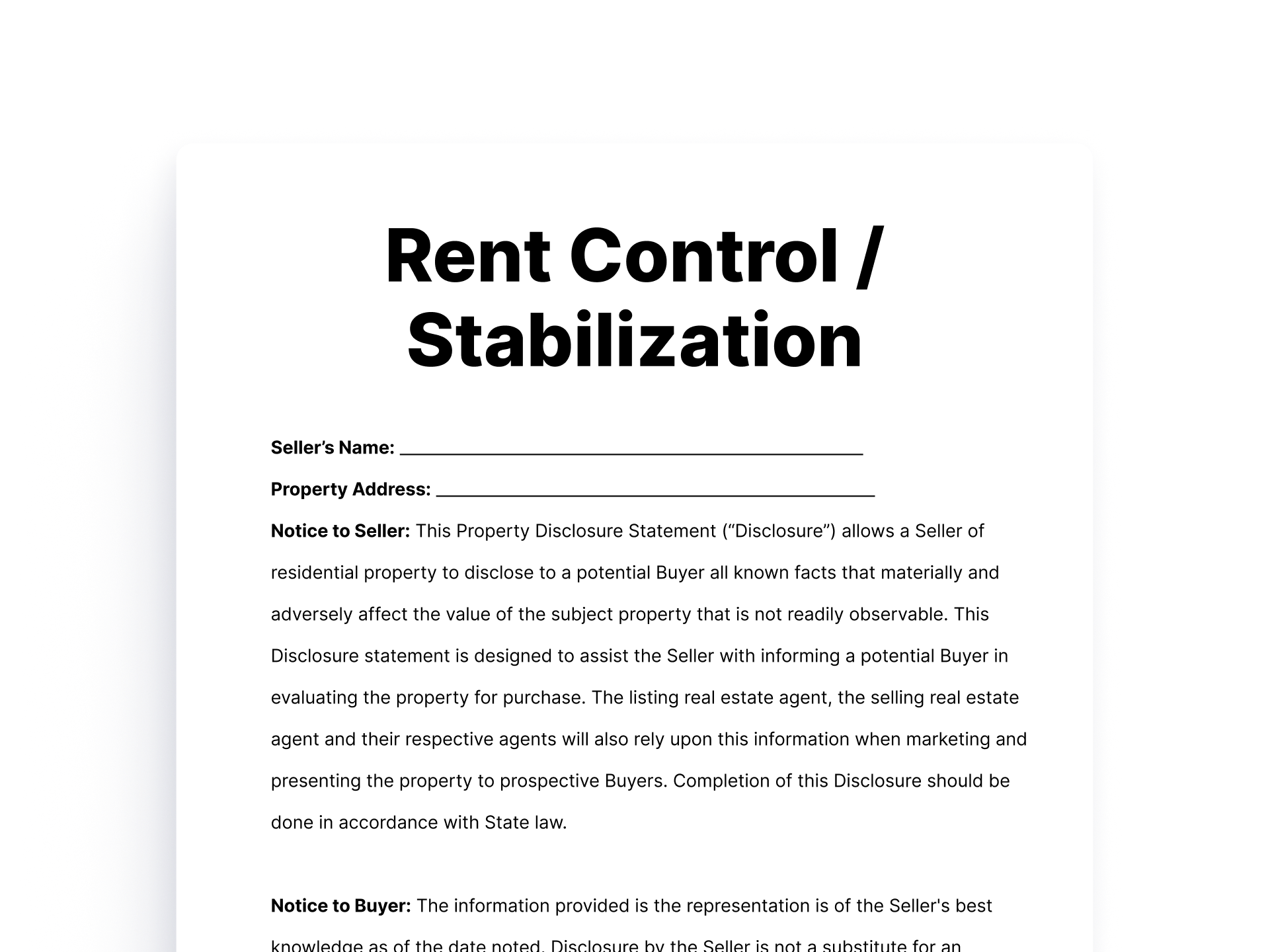
Download as PDF when complete
Understanding Rent Control and Stabilization Disclosure
Rent control and rent stabilization are two different systems that limit rental pricing. Many landlords confuse these terms, but they operate under different rules. Understanding the difference helps you provide accurate rent control and stabilization disclosure to your tenants.
What Is Rent Control?
Rent control strictly limits how much landlords can charge for rental units. These rules typically freeze rents at specific levels or allow only small annual increases. Additionally, rent control often restricts the reasons landlords can evict tenants. Classic rent control applies to older buildings built before certain dates and usually ends only when tenants voluntarily leave.
What Is Rent Stabilization?
Rent stabilization allows higher rents than rent control but still limits annual increases. These programs permit percentage-based increases set by local rent boards each year. Moreover, rent stabilization applies to a broader range of properties than traditional rent control. Stabilized units often start at market rates, but annual increases follow regulated limits regardless of market conditions.
Key Differences Between the Two Systems
Rent control imposes stricter limits on rental rates than rent stabilization. Controlled units often rent well below market rates, while stabilized units stay closer to market value. Furthermore, rent control typically applies to older properties, while stabilization covers newer buildings. Some cities are phasing out strict rent control in favor of more flexible stabilization models.
Cities and States With Rent Control and Stabilization
New York City Rent Regulation
New York City has one of the most complex rent regulation systems in the country. The city has both rent-controlled and rent-stabilized units under different rules. Specifically:
- Rent-controlled units apply to buildings built before February 1947 with continuous occupancy since July 1971
- Rent-stabilized units cover buildings with six or more units built before January 1974
Additionally, approximately one million apartments remain under some form of rent regulation.
California and Other Jurisdictions
Several California cities maintain rent control ordinances including Los Angeles, San Francisco, and Oakland. California’s Costa-Hawkins Act limits how cities can implement rent control, so most programs exempt newer properties. For example:
- Los Angeles rent control applies to buildings built before October 1978
- San Francisco covers buildings built before June 1979
- Berkeley, Santa Monica, and other cities have their own systems
Other states with rent control include Oregon (7% plus inflation statewide), Washington D.C., several New Jersey municipalities, and Maryland’s Montgomery County. Each jurisdiction has unique rules, so landlords must research their specific location carefully.
Legal Requirements for Rent Control and Stabilization Disclosure
Initial Lease Disclosure Requirements
Most rent-regulated areas require landlords to disclose rent-controlled or stabilized status before lease signing. The disclosure must clearly state the unit’s regulatory status and applicable rent limits. Additionally, landlords must provide information about tenant rights under the program. Some cities require specific disclosure forms with details about maximum allowable rent increases and eviction protections.
Annual Rent Increase Notices
When increasing rent on controlled or stabilized units, landlords must provide detailed written notices. These notices must state the legal basis for increases and cite applicable regulations. Key requirements include:
- 30 to 90 days advance notice before increases take effect
- Both old and new rent amounts and the percentage increase
- Information about the tenant’s right to challenge illegal increases
Registration and Ongoing Disclosure Obligations
Some jurisdictions require landlords to register rent-regulated units with municipal agencies. Registration typically includes current rent amounts, tenant information, and property details. Failure to register can result in fines or the inability to legally raise rents. Additionally, landlords must disclose rent regulation status to prospective tenants during showings — not just at lease signing. Any changes to rent-regulated status must be disclosed promptly throughout the entire tenancy.
What to Include in Rent Control and Stabilization Disclosure
Regulatory Status, Maximum Rent, and Increase Limits
Your disclosure must clearly cover:
- Whether the unit is rent-controlled, rent-stabilized, or subject to other limits
- Which ordinance or program governs the property
- The maximum legal rent amount and how it is calculated
- Annual rent increase limits set by local rent boards
- Whether increases are fixed percentages or tied to inflation
Additionally, some jurisdictions require disclosing the rent charged to previous tenants in stabilized units. This helps new tenants verify they are not being overcharged.
Tenant Rights, Protections, and Exemptions
Provide full information about tenant rights under rent regulation programs, including:
- Protections against arbitrary evictions and lease non-renewals
- How to challenge illegal rent increases through administrative hearings
- Contact information for local rent control boards and tenant advocacy organizations
Furthermore, disclose any exemptions that might affect rent regulation. Some units may be exempt due to new construction dates, substantial renovation, or owner occupancy. Additionally, explain conditions like vacancy decontrol provisions that may affect rent-setting when tenants move out.
Consequences of Failing to Disclose Rent Control Status
Rent Refunds, Fines, and Criminal Penalties
Landlords who fail to provide proper rent control and stabilization disclosure face serious consequences. Specifically:
- Rent refunds — courts can order repayment of all rent above legal maximums with interest
- Treble damages — some jurisdictions require landlords to pay three times the overcharge amount
- Civil fines — ranging from hundreds to thousands of dollars per violation
- Daily penalties — continuing until full compliance is achieved
- Criminal charges — deliberate fraud can result in fines, probation, or incarceration
License Suspension and Lease Termination Rights
Municipalities can suspend or revoke rental licenses for serious violations. License revocation prevents landlords from legally renting units until they achieve compliance. Additionally, tenants may have grounds to terminate leases without penalty if landlords misrepresented rent control status. Courts can void entire lease agreements, requiring landlords to refund all paid rent. Moreover, cities may publish lists of landlords with violations, causing lasting reputation damage.
Best Practices for Rent Control and Stabilization Disclosure
Research Regulations and Create Disclosure Documents
Carefully research all rent control and stabilization regulations that apply to your properties. Consult local rent control boards to verify your units’ regulatory status. Additionally, hire attorneys who specialize in landlord-tenant law to review your rent-regulated properties. Develop standard disclosure forms using plain language that tenants can understand. Attach rent registration certificates, maximum rent certifications, and copies of applicable ordinances.
Disclose Early and Maintain Compliance Records
Provide rent control and stabilization disclosure during initial property showings — not just at lease signing. Feature rent-regulated status clearly in rental listings and advertisements. Furthermore, keep organized files documenting all registrations, rent increase notices, and signed disclosure forms. Document dates when you provided disclosure to each tenant, as these records protect you if disputes arise. Additionally, monitor local rent boards for regulation changes and update your disclosure documents right away. In short, proactive and transparent disclosure builds tenant trust and protects your rental business.
Rent Control and Stabilization Disclosure Takeaways
Rent control and stabilization disclosure protects tenants while ensuring landlord compliance with complex regulations. Understand the difference between rent control and stabilization, research your jurisdiction’s specific rules, and provide detailed written disclosure before lease signing. Additionally, keep organized records, respond promptly to regulatory changes, and consult legal professionals when questions arise. Overall, transparent and thorough disclosure prevents costly violations and builds positive long-term tenant relationships.
FAQs
Rent control strictly limits how much landlords can charge and often freezes rents at specific levels, while rent stabilization allows market-rate starting rents but limits annual increases to regulated percentages set by local rent boards.
Landlords must disclose rent regulation status during initial property showings and marketing — never waiting until lease signing — and must continue disclosing this status throughout the entire tenancy.
A complete disclosure must include the unit’s regulatory status, the applicable ordinance or program, the maximum allowable rent, permitted annual increase percentages, eviction protections, and contact information for the local rent control board.
Landlords who fail to disclose rent control status can face mandatory rent refunds, treble damages of up to three times the overcharge amount, civil penalties, criminal prosecution, and potential license suspension or revocation.
Many rent control jurisdictions require landlords to register rent-regulated units with municipal agencies, and failure to register can result in fines, penalties, or the inability to legally increase rents.