
Move-In Charges Statement


(1)
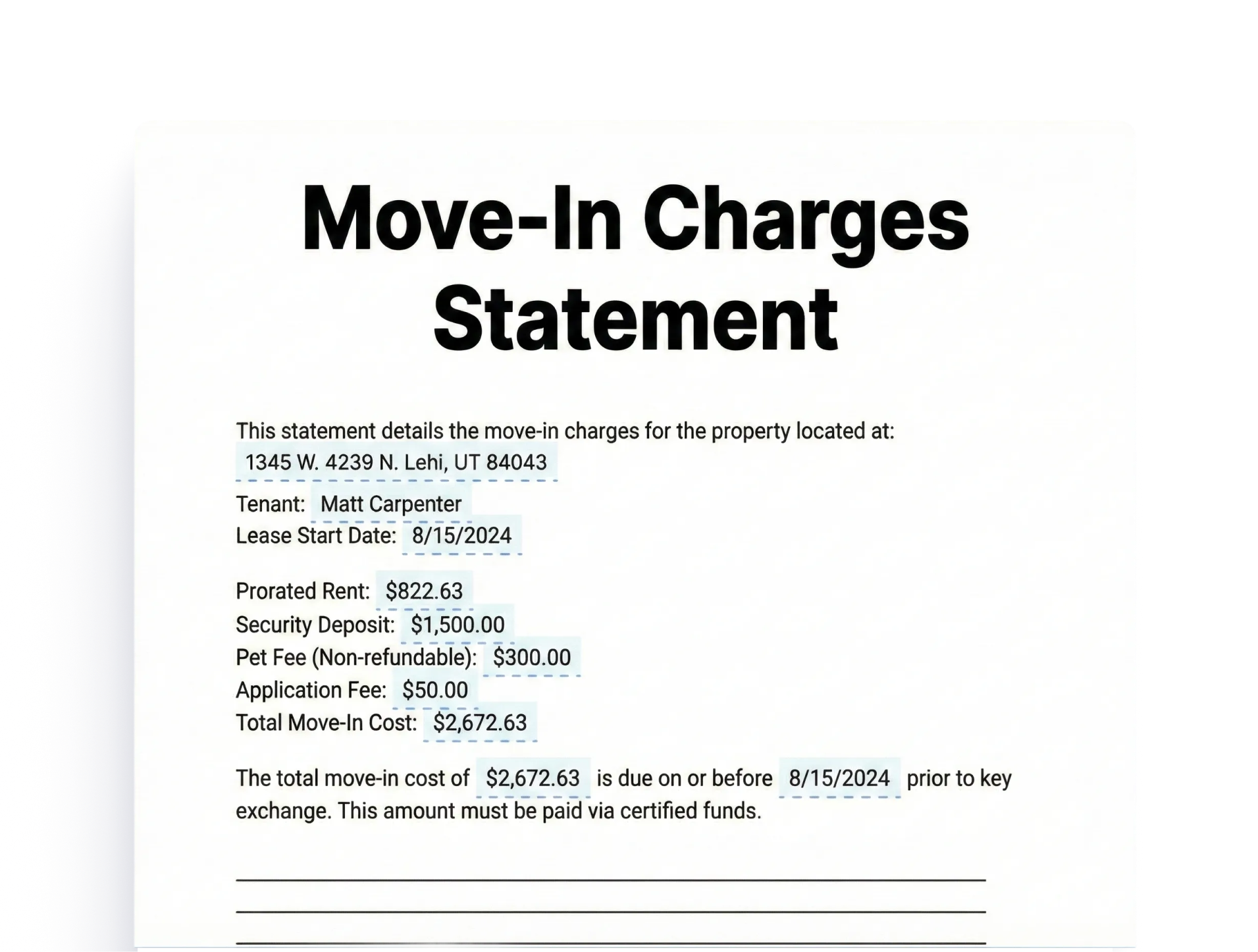
A move-in charges statement is a document that lists all financial charges tenants must pay before receiving keys to a rental property. Specifically, it shows each charge separately with amounts, due dates, accepted payment methods, and a brief explanation for each fee.
Download as PDF when complete
Move-In Charges Statement: Definition and Purpose
What This Document Does for Landlords and Tenants
A move-in charges statement serves several key purposes:
- It creates transparency about upfront costs, preventing surprise charges
- It documents tenant acknowledgment of fees, protecting you from disputes
- It ensures compliance with state disclosure laws requiring itemized charges
- It provides clear payment steps, reducing confusion and delays
Property managers provide this statement at lease signing so tenants understand all financial obligations before the tenancy begins.
Why Transparency in Your Move-In Charges Statement Matters
Being clear about costs upfront builds trust and reduces the chance of disputes later. In addition, many states legally require written itemization of all move-in charges before or during lease signing. Landlords who skip this step risk penalties, including losing the right to collect certain fees.
Legal Requirements for a Move-In Charges Statement
State Disclosure Laws
Many states require landlords to provide a written breakdown of all move-in charges before lease signing. These disclosure laws protect tenants from hidden fees and ensure they understand the total cost before committing. Some areas also require specific formats or language in the statement.
Failing to provide proper disclosure can lead to penalties, including giving up certain fees or owing tenants statutory damages. In addition, some states prohibit collecting fees that were not specifically disclosed upfront — even if the lease mentions them generally. A clear, itemized statement protects your right to collect all legitimate charges.
Permitted Charges and Maximum Amounts
States regulate which charges landlords can impose at move-in and how much they can charge. Common rules include:
- Security deposit caps, typically one to two months’ rent for unfurnished units
- Limits on application fees or outright bans in some areas
- Restrictions on key deposits or other administrative fees
Research your state and local rules before setting your move-in fee structure. What is legal in one area may violate the law elsewhere. Furthermore, rent control rules often add extra restrictions beyond state law. Staying compliant protects you from costly violations and keeps your charges enforceable.
Refundable vs Non-Refundable Charges
Clearly label each charge in your move-in charges statement as either refundable or non-refundable. Security deposits are refundable, subject to deductions for damage beyond normal wear. In contrast, application fees, admin fees, and pet fees are often non-refundable.
Some states require specific disclosures about refund conditions and timelines. Others ban non-refundable fees entirely or limit them to specific purposes. Clear labeling prevents misunderstandings and keeps you in compliance with consumer protection laws.
Essential Components of a Move-In Charges Statement
Property and Tenant Identification
Start your move-in charges statement with complete details, including:
- Rental property address and unit number
- Lease start date
- All tenant names exactly as they appear on the lease
- Landlord or property management company name and contact details
Also reference the lease agreement by date to connect the statement to the signed contract. This shows that all charges come from agreed lease terms — not arbitrary demands. In addition, note the statement date and any payment deadline before key release.
Itemized Charge Breakdown in Your Move-In Charges Statement
List every charge separately with a clear name, amount, and brief explanation. Common charges include:
- First month’s rent
- Last month’s rent, if collected upfront
- Security deposit
- Pet deposit or pet fee
- Application fee
- Administrative or processing fee
- Parking or storage fees
- Utility setup fees
- Key deposits
Never group multiple charges into one line item. For each charge, clearly state whether it is refundable or non-refundable. For refundable deposits, note the conditions that affect eligibility for a refund, such as lease compliance and property condition at move-out.
Payment Instructions
Provide complete payment details in your move-in charges statement, including:
- Total amount due
- Payment deadline
- Accepted payment methods such as cashier’s check, money order, or electronic transfer
- Where and how to submit payment
- Office hours for in-person payments
- Any fees for specific methods, such as credit card processing charges
Clear instructions prevent delays that could push back move-in dates. In addition, detailed guidance shows professionalism and builds tenant confidence from the start.
Payment Deadlines and Consequences
Due Date and Consequences
Set a firm payment deadline and state clearly that keys will not be released until all charges are paid in full. Also explain what happens if payment is late or incomplete, such as lease cancellation or added fees.
If you offer a payment plan, detail the full schedule showing amounts and dates for each installment. Furthermore, explain what happens if an installment is missed, so tenants understand the terms before agreeing.
Best Practices for Creating a Move-In Charges Statement
Using Clear and Plain Language
Write your move-in charges statement in plain language that anyone can understand. Avoid legal terms or vague labels. For example, instead of “admin fee,” write “administrative processing fee for lease preparation and file setup.” This level of detail helps tenants understand exactly what they are paying for.
Also, avoid surprising tenants with charges that were not mentioned during showings or the application process. Share approximate move-in costs early so tenants can budget ahead. Transparency prevents last-minute cancellations and builds trust from the first interaction.
Consistent Formatting Across All Properties
Use a standard move-in charges statement template across all your properties. Consistent formatting looks professional and makes it easier to train staff. In addition, a standard template ensures you never leave out a required disclosure or legal notice.
Review your templates at least once a year to check that all charges are still needed and legally compliant. Remove fees that no longer apply and add new ones as your business evolves. Furthermore, regular reviews help you stay current with any changes in local or state law.
Delivery Timing and Tenant Acknowledgment
Providing the Statement Well in Advance
Send your move-in charges statement two to three days before the lease signing appointment. This gives tenants enough time to review, ask questions, and arrange payment. In addition, advance notice prevents delays at the signing and shows respect for the tenant’s decision-making process.
Never hand the statement to a tenant for the first time at the signing table. Reviewing costs under pressure to sign creates dissatisfaction and potential legal risks. Giving tenants time to prepare sets a positive tone for the entire tenancy.
Getting Written Acknowledgment From Tenants
Include a signature line where each tenant confirms they received the statement, understand all charges, and agree to the payment terms. Require all adult tenants to sign — not just the primary leaseholder. This protects you if anyone later claims they were unaware of a fee.
Give every tenant a signed copy for their own records. This shows transparency and gives them a reference document for tracking payments. Furthermore, providing copies upfront reduces future requests for duplicates and saves you administrative time.
Common Charges Explained in a Move-In Charges Statement
Security Deposits
Security deposits protect landlords from tenant-caused damage and unpaid rent. Most states cap deposits at one to two months’ rent for unfurnished units. In your move-in charges statement, clearly explain:
- The deposit amount
- Conditions for receiving a full refund
- How deductions are handled
- The timeline for returning the deposit after move-out
Also state that the deposit is separate from rent and cannot be applied to the final month’s rent without written agreement.
First and Last Month’s Rent
Collecting first month’s rent at move-in is standard practice. Some landlords also collect last month’s rent upfront to ensure coverage for the final period of the tenancy. Clearly label these as separate charges to avoid confusion about which months they apply to.
If collecting last month’s rent, note whether your state requires interest to be paid on this prepayment. In addition, clarify that the prepaid amount cannot be applied to other months without a written modification. This prevents disputes about how prepaid rent is used.
Pet-Related Fees in Your Move-In Charges Statement
Pet charges come in three distinct types, and your statement should make the difference clear:
- Pet deposit — refundable, subject to deductions for pet damage
- Pet fee — a one-time, non-refundable charge
- Monthly pet rent — an ongoing addition to the base rent
Specify which charges apply and explain the refund conditions for any pet deposit. In addition, reference any pet-related lease rules such as breed or size limits. Full transparency about pet costs prevents misunderstandings and protects the landlord-tenant relationship from the start.
Move-In Charges Statement: Key Takeaways
Why Every Landlord Needs a Move-In Charges Statement
A move-in charges statement creates transparency, protects you legally, and sets a positive tone for the tenancy. By listing every fee clearly, providing payment instructions, and getting written acknowledgment, you reduce disputes and demonstrate professional property management.
Steps to Create an Effective Move-In Charges Statement
To prepare a strong move-in charges statement:
- List every charge separately with a clear name, amount, and refundable or non-refundable label
- Include complete payment instructions and a firm deadline
- Send the statement two to three days before lease signing
- Require all adult tenants to sign and give each one a copy
- Review your statement template at least once a year for legal compliance
FAQs
A Move-In Charges Statement is a document that lists all financial charges a tenant must pay before receiving keys, including each fee’s amount, due date, accepted payment method, and whether it is refundable or non-refundable.
Yes — many states legally require landlords to provide a written itemization of all move-in charges before or during lease signing, and failing to do so can result in penalties including losing the right to collect certain fees.
Common charges include first and last month’s rent, security deposit, pet deposit or fee, application fee, administrative processing fee, parking or storage fees, utility setup fees, and key deposits.
A pet deposit is refundable and subject to deductions for pet damage, a pet fee is a one-time non-refundable charge, and monthly pet rent is an ongoing addition to the base rent amount.
Landlords should send the statement two to three days before the lease signing appointment to give tenants enough time to review the charges, ask questions, and arrange payment without feeling pressured.