
Maintenance Emergency Report


(1)
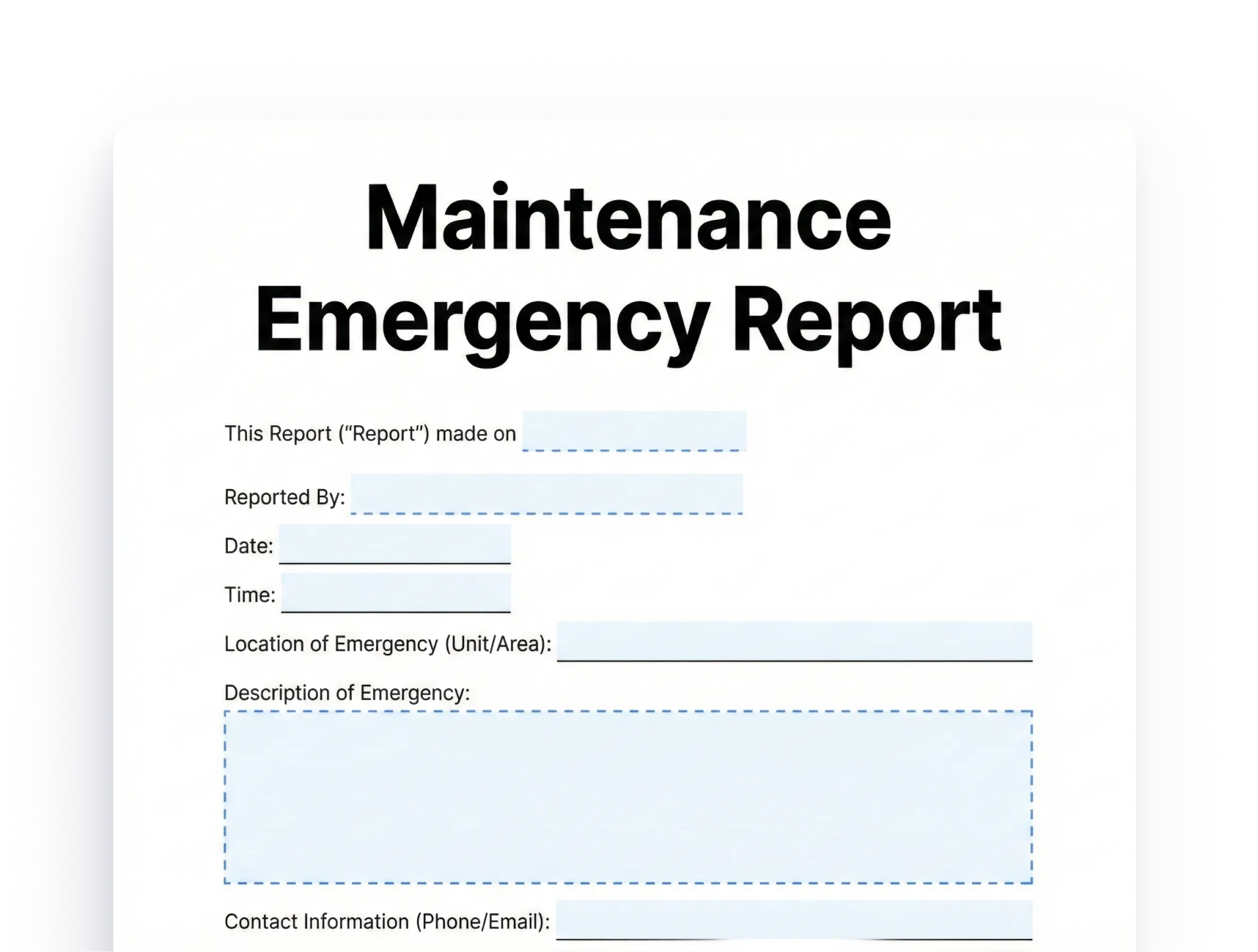
A Maintenance Emergency Report is a document that details urgent property issues requiring immediate attention to prevent injury, property damage, or loss of livable conditions. Specifically, it records the emergency type, discovery time, notice steps, response actions, contractor details, and fix details.
Download as PDF when complete
Maintenance Emergency Report: Definition and Purpose
What a Maintenance Emergency Report Does for Property Managers
A Maintenance Emergency Report serves several key functions:
- It proves you responded quickly, protecting you from carelessness claims
- It justifies extra costs to property owners
- It supports insurance claims for emergency damage
- It identifies recurring problems that need lasting fixes
Property managers use this report to document cases like burst pipes, gas leaks, electrical failures, heating breakdowns, or structural damage that threatens tenant safety.
When to Use a Maintenance Emergency Report
Use a Maintenance Emergency Report any time a situation poses an immediate threat to health, safety, or property. In addition, the report helps you distinguish true emergencies from urgent but non-critical repairs — which prevents extra after-hours service costs.
Defining Maintenance Emergencies
True Emergency Characteristics
Genuine emergencies involve immediate threats to health, safety, or property. Common examples include:
- Water leaks causing flooding
- Complete heating failure in winter
- Electrical sparks or burning smells
- Gas leaks or strong gas odors
- Sewage backups
- Broken locks compromising security
- Major roof leaks during storms
Each of these cases demands immediate response regardless of the time or day. Your Maintenance Emergency Report should clearly explain why the situation required urgent action.
Non-Emergency Urgent Cases
Some issues need prompt attention but do not qualify as true emergencies. Examples include:
- Minor leaks controlled by buckets
- Partial heating loss where temperatures remain above 55 degrees
- A single broken appliance when alternatives are available
- Cosmetic damage that does not affect function
These cases deserve next-business-day attention but do not justify premium emergency service rates. In addition, educating tenants about the difference between emergencies and urgent repairs helps prevent extra panic and extra costs.
Essential Components of a Maintenance Emergency Report
Initial Emergency Details
Start your Maintenance Emergency Report with key identification details. Record:
- The exact date and time you received the emergency notice
- The property address and unit number
- The tenant’s name and contact details
- How you learned about the emergency — phone call, automated alert, or on-site discovery
Describe the situation in specific, objective terms. For example, instead of “bad leak,” write “water flowing from ceiling fixture at approximately 2 gallons per minute.” Instead of “heating broken,” write “furnace not producing heat, thermostat reading 48 degrees, outdoor temperature 15 degrees.” This detail proves the emergency was serious and justifies immediate action.
Response Timeline in Your Maintenance Emergency Report
Record a detailed timeline showing every step from first notice through final fix. Include:
- When you acknowledged the emergency
- When you contacted contractors
- When you arrived on-site, if applicable
- When temporary and permanent repairs began and finished
Accurate timestamps prove you responded without delay. Gaps between notice and action can suggest carelessness during a liability review. In contrast, clear documented response times show you acted quickly and responsibly.
Actions Taken and Decisions Made
Document every action you took to address the emergency, including both temporary and permanent repairs. Describe decisions about utility shutoffs, tenant temporary move, or contractor access. Also explain why you chose specific contractors or repair approaches when multiple options were available.
Include all contacts with tenants, property owners, and service providers. Note any special conditions that affected how repairs were made. This thorough record shows you made reasonable decisions under pressure rather than acting without care.
Contractor and Cost Details in Your Maintenance Emergency Report
Contractor and Service Provider Details
Record complete details about every contractor involved in the emergency response. Include:
- Company name and technician name
- License number
- Arrival and departure times
- Verbal cost estimates and final invoices
Note whether you used your regular contractors or had to find new providers due to availability. Emergencies often require using whoever responds fastest rather than waiting for a preferred vendor. This explanation helps property owners understand higher costs or unfamiliar contractor use.
Cost Records in Your Maintenance Emergency Report
Itemizing Emergency Expenses
List all emergency-related costs separately. Include:
- Contractor charges and labor
- Material costs
- Equipment rentals
- Tenant temporary move expenses
- Emergency service premiums separate from standard repair rates
Also estimate the damage you prevented through quick action. This shows the value of the emergency response and helps justify the total cost to property owners.
Cost Categorization and Insurance Claims
Note how each cost will be handled — through insurance, charged to the tenant if their carelessness caused the emergency, or absorbed as a normal operating expense. This categorization supports proper accounting, insurance claim filing, and security deposit decisions when appropriate.
Best Practices for Writing a Maintenance Emergency Report
Real-Time Recording Methods
Write your Maintenance Emergency Report as events happen rather than from memory later. Use your phone to take photos, videos, and voice notes during the response. These records are more accurate and reliable than reconstructed accounts.
Many property management apps include emergency reporting features that timestamp entries automatically. In addition, these tools notify relevant parties right away, which reduces delays in contact.
Photographic Evidence Standards
Take photos at every stage of the emergency. Include:
- Wide shots that show the overall affected area
- Close-up shots that show specific damage
- Images of temporary repairs in progress
- Photos of the final restoration
Timestamp all photos either through camera settings or written notes. These images prove the severity of the emergency and support insurance claims. Furthermore, they defend against tenant claims about slow response or poor repair quality.
Contact Records for Your Emergency Report
Save every text message, email, and voicemail related to the emergency. These records show the full notice timeline and prove you kept tenants informed throughout the process. In addition, they show openness about repair progress and expected completion dates.
Write down the key points of any verbal conversations right away, including the date, time, participants, and what was discussed. This habit creates records of important exchanges that might otherwise be forgotten or disputed. Furthermore, written summaries prevent misunderstandings about what was promised or agreed during a stressful response.
Learning From Each Maintenance Emergency Report
Follow-Up and Lessons Learned From Each Emergency Report
Complete each Maintenance Emergency Report by noting what worked well and what could improve. Identify recurring problems that suggest a need for a larger fix beyond emergency repairs. In addition, share completed reports with property owners to give full openness about incidents and costs.
Review emergency reports during staff meetings to spot training needs or process improvements. Over time, this review process turns individual emergencies into lessons that strengthen your overall readiness.
Managing Different Emergency Types With Your Maintenance Emergency Report
Water and Plumbing Emergency Reports
Water emergencies are among the most common and most damaging cases. In your Maintenance Emergency Report, document:
- The water source and estimated flow rate
- Areas affected
- Steps taken to stop or reduce the flow
- Whether water supplies were shut off
- Water extraction and drying efforts
Also include details about mold prevention steps taken after the emergency, such as dehumidifier placement and moisture monitoring. These details show you took action to prevent secondary damage.
Heating and Cooling Failure Reports
For HVAC emergencies, record indoor and outdoor temperatures to show the severity of the failure. Note whether the breakdown happened during extreme weather, creating a real livability concern. Also document:
- Temporary heating or cooling options offered to tenants
- Efforts to reach your regular HVAC contractor first
- Why emergency services were used instead
This details helps property owners understand premium service costs during urgent HVAC failures.
Electrical and Safety Hazard Emergency Reports
Electrical emergencies require careful records. In your Maintenance Emergency Report, note:
- Visible signs such as sparks, burning smells, or reported electrical shocks
- Immediate safety steps taken, including circuit breaker shutoffs or evacuation
- Whether the utility company was involved
- Whether the fire department responded
Complete records of electrical emergencies show you put tenant safety first, even when that means higher costs or more complex repairs.
Maintenance Emergency Report: Key Takeaways
Why Every Property Manager Needs a Maintenance Emergency Report
A Maintenance Emergency Report protects property managers legally, supports insurance claims, and provides a clear record of every decision made during a crisis. By documenting emergencies thoroughly, you prove your professionalism and protect yourself from liability.
Steps to Complete an Effective Maintenance Emergency Report
To create a strong Maintenance Emergency Report:
- Record the emergency details and timeline in real time
- Take photos and videos at every stage of the response
- Document all contractor details, costs, and decisions made
- Save every contact related to the emergency
- Review completed reports to improve future emergency responses
FAQs
True emergencies involve situations posing immediate threats to health, safety, or property including burst pipes, gas leaks, electrical failures, heating loss in winter, sewage backups, and security breaches. Non-emergency issues can wait until regular business hours without causing significant harm or damage.
Acknowledge emergency reports immediately, ideally within 30 minutes, and dispatch appropriate contractors within 1-2 hours depending on severity. Document all response times in your emergency report proving rapid attention to urgent situations.
You can charge tenants for emergency repairs caused by their negligence or misuse if your lease agreement includes such provisions. However, document the cause thoroughly in your emergency report including photos and contractor statements supporting tenant responsibility claims.
Photograph the emergency situation from multiple angles, temporary repairs or mitigation efforts, contractor work in progress, and final completed repairs. Include wide shots establishing context and close-ups showing specific damage details, ensuring all images are timestamped for verification.
Retain emergency reports for at least seven years to cover potential liability claims and insurance requirements. Many property managers keep reports throughout property ownership as they provide valuable maintenance history affecting property value and future repair planning.