
Move-Out Statement / Final Account Statement


(1)
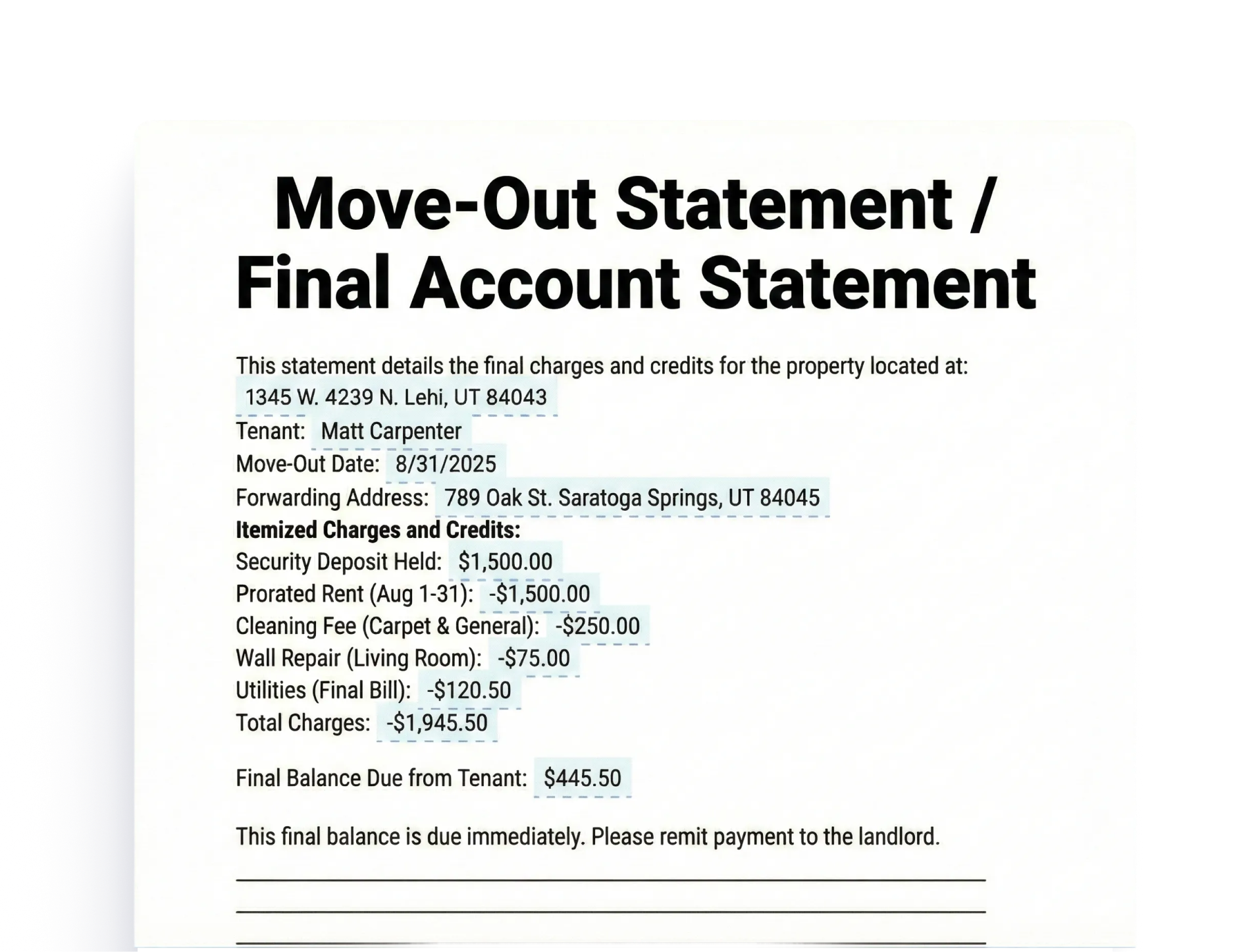
A move-out statement is a financial document that accounts for a security deposit after a tenancy ends. Specifically, it lists all deductions for damage beyond normal wear, unpaid charges, cleaning costs, and the remaining refund amount.
Download as PDF when complete
Move-Out Statement: Definition and Purpose
What a Move-Out Statement Does
A move-out statement serves several key purposes for both landlords and tenants:
- It provides full transparency about how the deposit was used
- It creates legal records supporting deductions during disputes or court proceedings
- It ensures compliance with state laws requiring detailed deposit accounting
- It prevents lingering payment disputes by clearly closing out all financial obligations
Property managers must provide this final accounting within state deadlines — typically 14 to 60 days after move-out depending on the state.
Why a Move-Out Statement Protects Both Parties
A clear, itemized move-out statement builds trust even when a tenancy ends on difficult terms. In addition, it protects you legally by proving you followed proper steps before keeping any portion of the deposit. Landlords who skip this step or send vague statements often face penalties and lose the right to keep legitimate deductions.
Legal Requirements for a Move-Out Statement
State-Specific Deadlines
Every state sets its own deadline for sending a move-out statement and returning any remaining deposit balance. Common timeframes include:
- 14 days — Arizona and New York (in certain cases)
- 21 days — California
- 30 days — Texas
- 60 days — Hawaii
Missing these deadlines often means losing your right to keep any deposit amount — even for real damage. Furthermore, many states require landlords to pay two or three times the original deposit as a penalty for violations. Always count your deadline from the actual move-out date, not the lease end date.
Required Documentation Standards
Most states require specific details in a move-out statement. Common requirements include:
- Clear damage descriptions for each deduction
- Exact dollar amounts for each charge
- Supporting receipts or estimates
- The remaining balance calculation
- A timeline for refund delivery
Some areas also require attaching contractor invoices to prove costs. Others allow reasonable estimates for repairs done personally, but those estimates must reflect fair market rates. In addition, some states require including tenant rights information or dispute procedures.
Normal Wear and Tear vs Actual Damage
State laws ban deductions for normal wear and tear from regular residential use. Normal wear includes:
- Minor scuff marks on walls
- Small nail holes from picture hanging
- Carpet wear in high-traffic areas
- Paint fading from age
In contrast, damage you can deduct includes large holes needing drywall repair, pet stains, broken fixtures, and excessive mess beyond routine cleaning. Your move-out statement must explain clearly why each deduction is actual damage and not expected wear. For items like carpet, noting the age and prorating the cost shows fairness and legal compliance.
Essential Components of a Move-Out Statement
Property and Tenant Identification
Start your move-out statement with complete details, including:
- Rental property address and unit number
- Tenant names and lease start and end dates
- Actual move-out date
- Original security deposit amount collected at move-in
- Landlord or property management contact details
- Statement date and refund delivery method
Also reference the original lease agreement to connect any deductions to specific lease terms. This shows charges come from a binding contract — not arbitrary decisions.
Itemized Deduction Breakdown in Your Move-Out Statement
List every deduction separately with a specific description, location, and amount. Avoid vague entries. For example:
- Instead of “cleaning $200,” write: “kitchen oven deep cleaning — baked grease removal $85, bathroom tile and grout cleaning $65, carpet steam cleaning for pet odors $50”
Group deductions by category such as cleaning, repairs, unpaid rent, and damage. Within each category, list items by room for clear organization. In addition, separate labor from materials when possible so charges do not look like a single arbitrary lump sum.
Supporting Documentation for Your Move-Out Statement
Attach photos showing each damaged item that justifies a deduction. Include move-in photos for comparison to show what changed during the tenancy. In addition, attach contractor invoices, cleaning service receipts, or material purchase records to prove actual costs.
For repairs you do yourself, provide a clear cost breakdown showing your hourly rate and material costs. Include receipts for any supplies purchased. This level of detail proves your charges reflect real expenses — not inflated estimates.
Final Calculations in Your Move-Out Statement
Final Calculation Section
Present a clear summary showing:
- The original deposit amount
- Each deduction listed above
- The remaining balance being refunded
Display this clearly so the final number is easy to find. Also note the expected refund date and delivery method. If deductions exceed the deposit, show that the full deposit was applied and explain whether you plan to pursue the remaining balance through small claims court.
Sending and Delivering Your Move-Out Statement
Timely Delivery Methods
Send your move-out statement well before the state deadline using certified mail with return receipt. This proves both the mailing date and delivery, protecting you from claims of missed deadlines. In addition, certified mail shows that you take legal compliance seriously.
Also consider sending a copy by email or regular mail at the same time. Multiple delivery methods ensure the tenant actually receives the statement even if certified mail goes unclaimed. Furthermore, prompt delivery gives tenants time to ask questions or dispute charges before the deadline passes.
Written Acknowledgment and Record Keeping
Keep a complete move-out file that includes:
- The final move-out statement
- All supporting photos
- Contractor invoices and receipts
- The original move-in inspection report
- The lease agreement
- All written communication with the tenant
Store these records for at least seven years to cover potential liability claims and tax audits. Digital backups protect against lost paper records. In addition, organized files show professionalism if the case goes to court.
Best Practices for Preparing a Move-Out Statement
Conducting a Thorough Move-Out Inspection
Inspect the property right after the tenant leaves and returns the keys. Compare current condition against your move-in inspection report room by room. Bring:
- The original move-in inspection report
- A camera or phone for photos
- A clipboard and a notes sheet
Test all appliances, utilities, and fixtures. Take wide shots for context and close-ups for specific damage. Thorough inspections prevent you from missing damage that you later cannot prove happened during the tenancy.
Using Objective and Professional Language
Write your move-out statement using neutral, factual language. Avoid emotional or blaming words. Focus on what you can see and measure — not who caused it.
For example:
- Instead of “tenant destroyed carpet,” write: “carpet contains multiple large stains requiring replacement”
- Instead of “filthy bathroom,” write: “bathroom fixtures coated with soap scum and hard water deposits requiring professional cleaning”
This tone positions you as a fair professional and reduces the chance of a defensive or combative response from the tenant.
Keeping Charges Fair and Reasonable
Make sure every deduction reflects actual costs or fair market rates. Never inflate amounts or add charges to profit from damage. Doing so violates landlord-tenant laws in most states and can result in penalty damages of two to three times the deposit amount.
Also account for age and wear when charging for replacements. Courts regularly reject charges for brand-new items replacing worn ones at the end of a tenancy. Calculate a fair depreciated value so you are restoring the property to its prior condition — not upgrading it at the tenant’s expense.
Handling Common Move-Out Statement Scenarios
Partial Deposit Refunds
Most move-out situations involve a partial refund after legitimate deductions. Show clearly how you calculated the refund by subtracting your itemized charges from the original deposit. Explain each deduction so the tenant understands why they are not receiving the full amount back.
Include a check number or transfer reference so the tenant can identify the incoming payment. In addition, provide your contact details and invite the tenant to reach out with questions rather than going straight to a complaint or lawsuit.
Zero or Negative Balances in Your Move-Out Statement
Sometimes damage costs exceed the full deposit, leaving nothing to refund. In these cases, clearly list all damage found and show that the deposit was fully applied toward the total. Also explain whether you plan to pursue the remaining balance through small claims court or a collections process.
Never send a separate invoice for extra charges after already stating the deposit was fully used. Include all charges in the original move-out statement. This shows full transparency and avoids accusations of hidden or added fees after the fact.
Handling Disputes About Your Move-Out Statement
When a tenant disputes a deduction, respond professionally and provide more supporting evidence. Offer to discuss the concern by phone or in writing. In many cases, a simple conversation resolves misunderstandings about why a charge was made.
Consider negotiating on borderline items to avoid small claims court, which can cost more than the disputed amount. However, do not waive clearly legitimate charges just to keep the peace. Balance firm enforcement of valid deductions with reasonable flexibility for genuinely debatable items.
Move-Out Statement Templates and Standardization
Using a Standard Move-Out Statement Template
Develop a standard move-out statement template and use it across all your properties. Consistent formatting looks professional and makes it easier to train staff. In addition, a standard template ensures you never leave out required disclosures or legal language.
Review your template at least once a year to check for legal compliance and remove outdated language. Working with a landlord-tenant attorney to review your template is also a smart step. Regular updates keep your statements current as laws change.
Move-Out Statement: Key Takeaways
Why Every Landlord Needs a Clear Move-Out Statement
A move-out statement protects your right to keep legitimate deductions, ensures legal compliance, and shows tenants that you handled their deposit fairly and professionally. Landlords who prepare thorough, well-documented statements are far less likely to face disputes, penalties, or court proceedings.
Steps to Prepare an Effective Move-Out Statement
To prepare a strong move-out statement:
- Inspect the property right after move-out and document everything with photos
- List every deduction separately with a clear description and amount
- Attach all receipts, invoices, and supporting photos
- Send the statement by certified mail well before your state’s deadline
- Keep complete records for at least seven years
FAQs
Each deduction should include specific descriptions, exact locations, repair methods, and itemized costs. Vague entries like “repairs $500” violate most state requirements, so specify “master bedroom wall repair for 6-inch hole – $85 materials, $100 labor.”
You can only deduct the depreciated value based on remaining useful life. If carpet typically lasts 10 years and is 8 years old at move-out, you can only charge 20% of replacement cost for damage requiring premature replacement.
Most states prohibit additional deductions after sending final statements and deadlines passing. Conduct thorough inspections immediately after move-out ensuring you identify all damages before preparing statements to avoid losing legitimate claims.
Requirements vary by state, but actual receipts provide strongest documentation for completed repairs. For pending work, reasonable estimates based on contractor quotes are typically acceptable, though some jurisdictions require good faith estimates reflecting actual expected costs.
Missing deadlines often results in forfeiting all deduction rights requiring full deposit refunds regardless of legitimate damages. Some states impose penalty damages of 2-3 times the deposit amount, so always prioritize meeting deadlines even if documentation is imperfect.