
Itemized Damages List


(1)
An Itemized Damages List is a document that details all property damage beyond normal wear and tear that occurred during a tenancy. Specifically, it includes damage descriptions, location details, repair or replacement costs, and supporting records like photos or receipts. Landlords send this list to former tenants to explain security deposit deductions within timeframes set by state law.
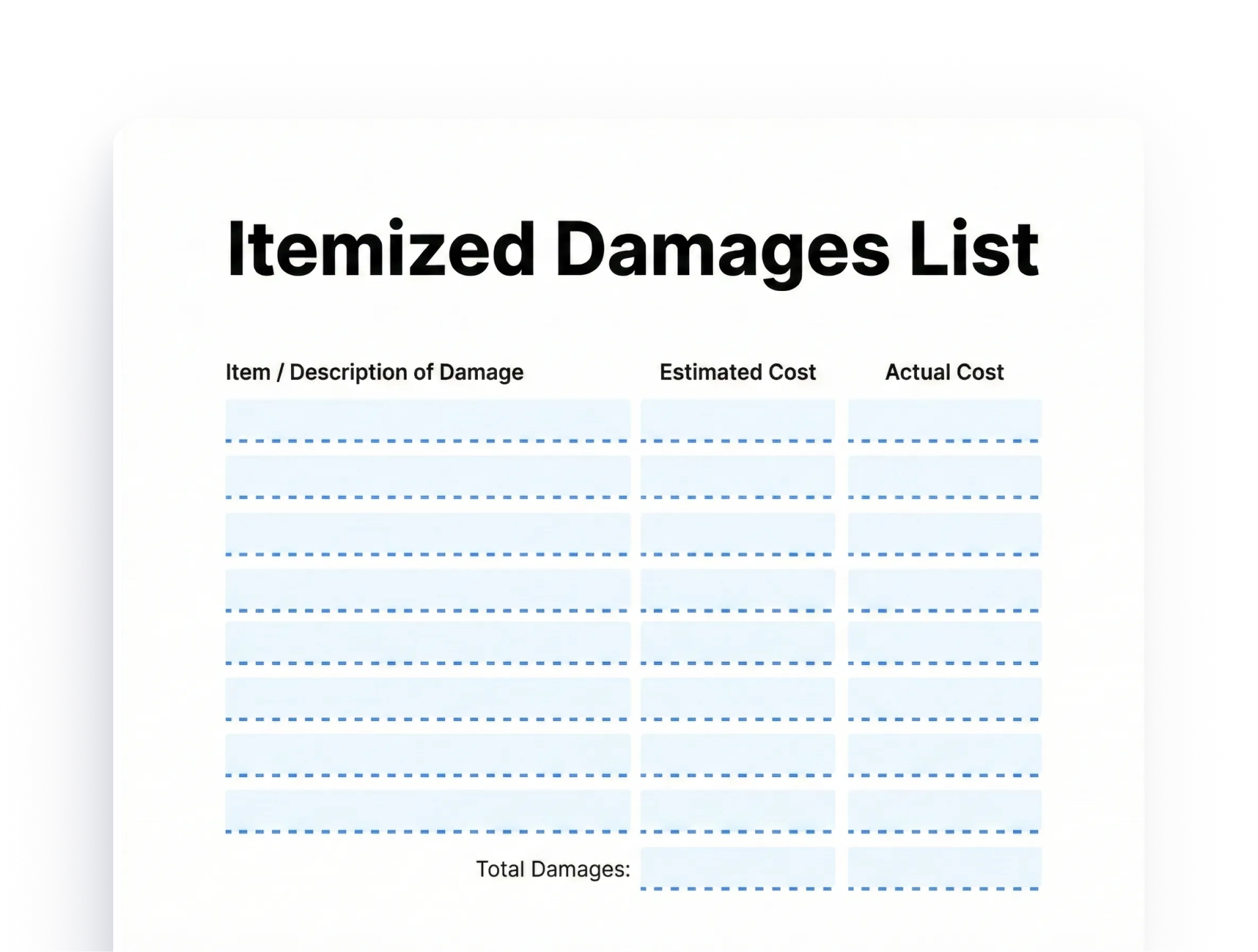
Download as PDF when complete
Itemized Damages List: Definition and Purpose
What This Document Does for Landlords
The Itemized Damages List serves several key purposes in property management:
- It gives tenants a clear breakdown of how their security deposit was used
- It creates legal records supporting your deductions during disputes or small claims court
- It helps you spot patterns in tenant-caused damage to improve future lease terms or screening
Why Transparency Matters in Your Itemized Damages List
Being clear and specific in your list builds tenant trust and reduces the chance of disputes. In addition, detailed records protect you legally if a tenant challenges your deductions. Landlords who skip proper documentation often lose disputes even when the damage is real.
Legal Requirements for Your Itemized Damages List
State-Specific Deadlines
Every state sets specific timeframes for sending an Itemized Damages List after a tenant moves out. These deadlines range from 14 to 60 days depending on the state. For example:
- California requires itemized statements within 21 days
- Texas allows up to 30 days
Missing these deadlines often means losing your right to keep any portion of the security deposit. Calculate your deadline from the actual move-out date, not the lease end date. Also, some states measure the timeframe from when you mail the list, while others use the date the tenant receives it.
Required Documentation in an Itemized Damages List
Most states require specific details in an Itemized Damages List. Common requirements include:
- Clear damage descriptions
- Exact deduction amounts for each item
- Remaining deposit balance after deductions
- Timeline for refund delivery
- Repair receipts or contractor invoices in some states
Some states allow landlords to estimate repair costs for work they do themselves. However, estimates must reflect fair market rates. Inflated charges can be treated as bad faith, which may result in penalty damages against you.
Normal Wear and Tear vs Actual Damage
State laws prohibit deducting for normal wear and tear from regular tenancy use. Normal wear includes:
- Minor scuff marks on walls
- Small nail holes
- Carpet wear in high-traffic areas
- Gradual paint fading
In contrast, damage you can deduct includes large wall holes, pet stains, broken fixtures, and excessive mess beyond routine cleaning. Your Itemized Damages List must explain clearly why each charge is damage rather than expected wear. This is especially important for items like carpet, where age and prior condition affect whether a full replacement charge is fair.
Essential Components of an Itemized Damages List
Property and Tenant Information
Start your Itemized Damages List with complete identification details, including:
- Rental property address and unit number
- Tenant names and move-out date
- Your name, business name, and mailing address
- Reference to the original lease and move-in inspection report
- Total security deposit amount collected
This header section gives tenants the context they need to understand your deductions.
Detailed Damage Descriptions in Your Itemized Damages List
Write specific, objective descriptions for each damaged item. Avoid vague or emotional language. For example:
- Instead of “filthy apartment,” write: “kitchen oven interior coated with baked-on grease requiring professional cleaning”
- Instead of “destroyed carpet,” write: “living room carpet contains multiple pet urine stains totaling 15 square feet requiring replacement”
Also include the exact location of each damaged item. This level of detail helps tenants recall what happened and reduces disputes. In addition, it shows professional care and strengthens your position if the case goes to court.
Cost Breakdown and Calculations
List every charge separately. For each item, include:
- Labor costs and material expenses
- Any applicable taxes
- Contractor invoices for professional work
- Hourly rates and material receipts if you did the repairs yourself
Also prorate charges for items with limited remaining life. For example, carpet with a ten-year lifespan that is eight years old at move-out should only result in a charge for 20% of replacement cost. This approach shows fairness and meets many state requirements that prevent landlords from profiting from tenant damage.
Supporting Documentation for Your Itemized Damages List
Photographs and Visual Evidence
Attach photos that clearly show each damaged item. Include:
- Wide shots that show the location and overall context
- Close-up shots that reveal the specific damage
- Move-in photos compared to move-out photos when available
These comparisons show exactly what changed during the tenancy and are often the most compelling evidence in a dispute.
Receipts and Cost Proof
Include receipts for all repairs, cleaning services, or replacement items. These prove actual costs rather than estimates. In addition, save contractor quotes for repairs not yet done to show fair market rates for your claimed deductions.
Best Practices for Preparing an Itemized Damages List
Conducting a Thorough Move-Out Inspection
Schedule the move-out inspection right after the tenant leaves and returns the keys. Prompt inspections capture damage while details are fresh and evidence is intact. In addition, quick action gives you more time to gather documents and meet your state deadline comfortably.
Bring the following to every move-out inspection:
- Move-in inspection report for comparison
- Camera or phone for photos
- Itemized damages list template to fill in on-site
Check every room, fixture, and surface against your baseline records.
Using Objective and Professional Language
Use neutral, factual language throughout your Itemized Damages List. Focus on what you can see, not who caused it or why. For example:
- Instead of “tenant obviously never cleaned,” write: “bathroom tile grout contains dirt and mildew buildup”
- Instead of “tenant destroyed property,” write: “property sustained damage during the tenancy period”
This tone positions you as a fair professional rather than an upset landlord. As a result, it also reduces the chance of an emotional or defensive response from the tenant.
Ensuring Reasonable and Justified Charges
Make sure every charge reflects actual costs or fair market rates. Never inflate prices or pad deductions. Doing so violates landlord-tenant laws in many states and can result in penalty damages of two to three times the deposit amount.
Also consider age and wear when charging for replacements. Courts regularly reject charges for brand-new items replacing worn ones at tenancy end. Calculate a fair depreciated value so you are restoring the property to its prior condition — not upgrading it at the tenant’s expense.
Sending and Delivering Your Itemized Damages List
Sending Your Itemized Damages List on Time
Send your list well before the state deadline using certified mail with return receipt. This proves both the mailing date and delivery date. Furthermore, certified mail shows that you take compliance seriously.
Also consider sending a second copy by email or regular mail. Multiple delivery methods ensure tenants receive the notice even if certified mail goes unclaimed. In addition, prompt delivery gives tenants time to respond if they have questions, which can prevent drawn-out disputes.
Common Mistakes to Avoid With Your Itemized Damages List
Insufficient Documentation
The most common mistake is not having enough records to support your deductions. Generic descriptions without photos or receipts leave you exposed during a dispute. Always over-document rather than under-document — assume every deduction might be challenged.
Take photos of the entire property, not just damaged areas. In addition, photograph undamaged areas to show what normal condition looks like. This full set of images proves both the extent of the damage and the baseline you are comparing against.
Improper Calculations in Your Itemized Damages List
Math errors in your list hurt your credibility and may break state law. Double-check all addition, subtraction, and prorating before sending. A simple arithmetic mistake can suggest carelessness and may make otherwise valid deductions look questionable.
Showing the Full Deposit Breakdown Clearly
Also make sure total deductions never exceed the actual deposit amount. Clearly show:
- The original deposit amount
- Each itemized deduction
- The remaining balance being refunded
This transparency shows good faith, even when the total damage exceeds what the deposit covers.
How Late Delivery Costs You Your Itemized Damages List Rights
Failing to send your Itemized Damages List on time is the most costly mistake a landlord can make. Many states impose serious penalties, including:
- Losing all rights to keep any deductions
- Being required to return the full deposit
- Owing the tenant two or three times the deposit as statutory damages
Set a calendar reminder right after move-out. Build in extra time for inspections, getting quotes, and preparing records well before the deadline arrives. This planning prevents last-minute errors that can void otherwise legitimate charges.
Itemized Damages List: Key Takeaways
An Itemized Damages List protects landlords by ensuring security deposits are handled fairly, transparently, and within state legal requirements. To prepare a strong one, inspect the property right after move-out, write specific objective descriptions, prorate charges fairly, attach all receipts, and send the list by certified mail before your state’s deadline.
FAQs
An Itemized Damages List is a document landlords send to former tenants that details all property damage beyond normal wear and tear, including specific damage descriptions, repair costs, and supporting documentation to explain security deposit deductions.
Deadlines vary by state, ranging from 14 to 60 days after move-out, with California requiring 21 days and Texas allowing 30 days, and missing these deadlines can mean forfeiting the right to withhold any portion of the security deposit.
Normal wear and tear — such as minor scuff marks, small nail holes, and gradual carpet wear — cannot be deducted, while actual damage like large wall holes, pet stains, broken fixtures, and excessive filth beyond routine cleaning can be charged to the tenant.
Landlords should prorate charges based on the item’s remaining useful life — for example, carpet that is eight years into a ten-year lifespan should only be charged at 20% of replacement cost if the tenant’s damage forces early replacement.
The most common mistakes include inadequate documentation without photos or receipts, mathematical errors in calculations, and missing state-mandated deadlines, any of which can invalidate legitimate deductions or result in penalty damages against the landlord.