
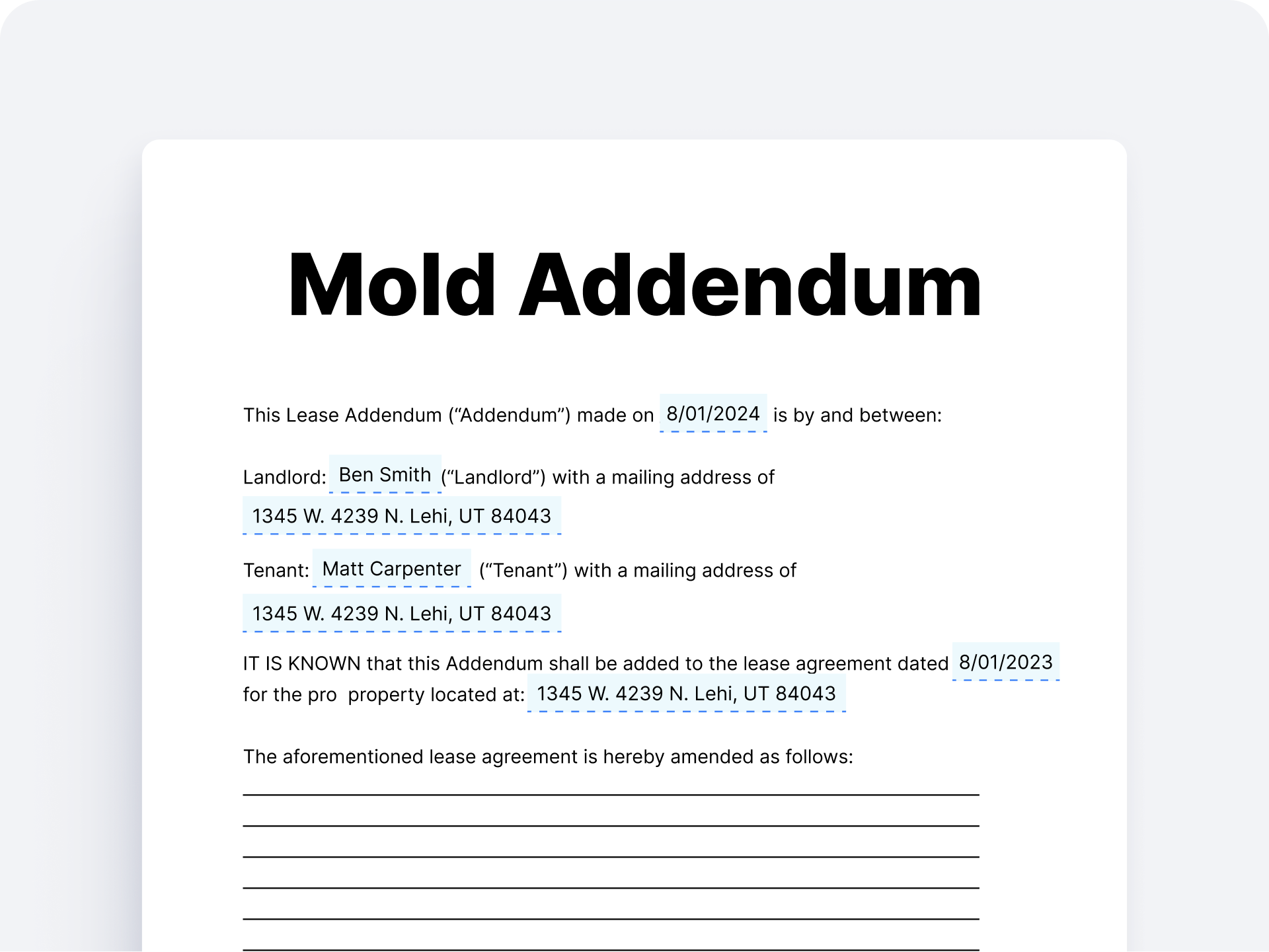
Mold Addendum


(1)
Our professionally-drafted mold addendum template provides essential legal protection for landlords. Specifically, it establishes clear prevention and remediation procedures that protect both property owners and tenants. Mold-related damages can cost property owners tens of thousands of dollars, including remediation, legal fees, and property damage. In short, proper documentation is one of the most effective ways to avoid these costs.
Download as PDF when complete
 Google Doc,
  PDF &
PDF &  Word) or create one online!
What Our Mold Addendum Covers
This customizable mold addendum addresses several key areas:
- Disclosure requirements
- Prevention responsibilities
- Cost allocation
- Professional remediation standards that courts recognize and enforce
Smart landlords use mold addendums to prevent disputes. In addition, they ensure compliance with evolving mold regulations. They also create clear accountability that protects their investment while maintaining healthy living environments for tenants.
Why Mold Addendums Are Essential for Landlords in 2025
Rising Legal Costs and Liability
Mold-related lawsuits against landlords have increased dramatically. Furthermore, average settlements range from $15,000 to $100,000 depending on health claims and property damage.
Additionally, courts increasingly hold landlords responsible for mold problems when proper prevention measures and documentation aren’t in place. Therefore, comprehensive mold addendums provide critical legal protection.
Key Benefits of a Well-Drafted Mold Addendum
A well-drafted mold addendum protects your investment by:
- Establishing clear prevention responsibilities that reduce mold growth risk
- Creating legal documentation of property conditions and tenant obligations
- Defining cost allocation based on fault determination and prevention compliance
Additional Protection Benefits
Moreover, effective mold addendums provide:
- Ensuring professional remediation standards that protect property value
- Providing liability protection through proper disclosure and prevention procedures
- Preventing tenant health claims with documented prevention and response protocols
Critical Components of Effective Mold Addendums
Comprehensive Disclosure Requirements
Effective mold addendums must include detailed disclosure of any previous mold issues. Furthermore, they should cover water damage history and current property conditions.
Many states now require specific mold disclosures. Consequently, failure to provide accurate information can result in significant legal liability.
Therefore, your addendum should document all known mold history. Additionally, it should establish baseline conditions that protect against future claims.
Prevention and Maintenance Responsibilities
Clear allocation of prevention responsibilities between landlords and tenants is crucial. As a result, this helps with both mold prevention and legal protection.
Your addendum should specify daily tenant obligations. These include:
- Ventilation practices
- Moisture reporting
- Housekeeping standards
Meanwhile, it should also outline landlord responsibilities for:
- Building systems
- Structural maintenance
- Professional inspections
Professional Remediation Standards
Mold remediation must follow EPA guidelines and industry best practices to ensure effectiveness and legal compliance. Your addendum should require professional remediation for all significant mold issues. Moreover, it should prohibit tenant self-treatment attempts. Finally, it should establish clearance testing requirements that ensure proper completion and tenant safety.
State-Specific Mold Laws and Disclosure Requirements
Understanding Regional Variations
Mold regulations vary significantly across the United States. For example, states like California, Texas, and Florida maintain strict disclosure and remediation requirements.
Some jurisdictions require specific language in lease agreements. Alternatively, others mandate particular remediation protocols or impose strict liability standards for landlord negligence. As a result, always verify your state’s specific requirements before finalizing your addendum.
Common State Requirements Include:
- Written disclosure of mold history within specified timeframes
- Mandatory professional remediation by licensed contractors
- Specific notice periods for remediation work and tenant relocation
Additional Compliance Requirements
Furthermore, states may also require:
- Required provision of mold prevention education materials
- Liability limitations for landlords who follow proper procedures
- Insurance requirements and coverage recommendations
Understanding Mold Growth Conditions and Prevention
Moisture Control Fundamentals
Mold requires moisture to grow. Therefore, moisture control is the cornerstone of effective mold prevention.
Properties with humidity levels above 60% face significant mold risks. Additionally, persistent moisture problems can lead to extensive property damage and health concerns.
Consequently, your addendum should establish specific humidity control requirements. Furthermore, it should include ventilation standards that prevent mold-conducive conditions.
High-Risk Areas and Special Considerations
Bathrooms, kitchens, basements, and HVAC systems represent the highest mold risk areas in rental properties. As a result, these areas require specific prevention measures including:
- Exhaust fan usage requirements
- Regular cleaning standards
- Prompt leak reporting obligations
Therefore, your addendum should clearly specify and enforce these requirements.
Cost Allocation and Liability Protection Strategies
Fault-Based Cost Allocation
Effective mold addendums establish clear criteria for determining responsibility for mold remediation costs. In general, landlords typically bear costs for:
- Structural issues
- Building system failures
- Pre-existing conditions
Conversely, tenants become responsible when their actions contribute to mold growth, including negligence, poor housekeeping, or failure to report problems.
Documentation Requirements for Cost Recovery
Successful cost recovery requires comprehensive documentation. This includes:
- Photographs
- Professional inspections
- Communication records
- Remediation reports
Therefore, your addendum should specify documentation requirements. Moreover, it should establish procedures for evidence collection that support cost allocation decisions and legal proceedings.
Professional Remediation and Industry Standards
EPA Guidelines and Best Practices
All significant mold remediation should follow EPA guidelines. These include:
- Proper containment
- Air filtration
- Source removal
- Clearance testing
Therefore, your addendum should require professional remediation for areas exceeding 10 square feet. Additionally, it should prohibit tenant attempts at major mold removal, as these attempts could spread contamination or create serious health risks.
Contractor Qualifications and Insurance
Mold remediation contractors should carry appropriate licensing, insurance, and professional certifications. Consequently, your addendum should specify contractor qualification requirements. Furthermore, it should ensure all remediation work includes proper insurance coverage to protect both property owners and tenants from liability exposure.
Health Considerations and Tenant Safety
Health Disclosure and Liability Limitations
While mold can cause health problems in sensitive individuals, landlords cannot guarantee tenant health outcomes. Therefore, your addendum should include appropriate health disclosures. Additionally, it should limit landlord liability for health claims when proper prevention and remediation procedures are followed.
Safety During Remediation Work
Professional mold remediation may require temporary tenant relocation, especially for extensive contamination or sensitive tenant populations. Consequently, your addendum should establish:
- Safety protocols
- Relocation procedures
- Re-entry requirements
These measures protect tenant health while minimizing landlord liability exposure.
Insurance Coverage and Risk Management
Property Insurance Considerations
Standard property insurance policies often have limited mold coverage. Therefore, specialized mold insurance is worth considering for high-risk properties. Additionally, your addendum should address insurance requirements. Furthermore, it should recommend that both landlords and tenants review their coverage for mold-related damages and remediation costs.
Tenant Renters Insurance Requirements
Requiring tenant renters insurance with mold coverage helps protect tenant belongings. Moreover, it may also reduce landlord liability exposure. Consequently, your addendum should recommend appropriate coverage levels. Additionally, it should suggest tenants verify mold protection for personal property and temporary relocation expenses.
Prevention Education and Tenant Compliance
Daily Prevention Practices
Effective mold prevention requires consistent daily practices. These include:
- Proper ventilation
- Prompt spill cleanup
- Regular cleaning of moisture-prone areas
Therefore, your addendum should specify required practices. Additionally, it should provide educational materials that help tenants understand their role in mold prevention.
Reporting Requirements and Response Procedures
Early detection and prompt reporting are crucial for preventing minor moisture problems from becoming major mold infestations. Consequently, your addendum should establish:
- Clear reporting requirements
- Response timelines
- Communication procedures
These procedures ensure rapid problem resolution.
Enforcement and Lease Violation Procedures
Material Breach Standards
Failure to follow mold prevention requirements can constitute material lease violations. Similarly, failure to report moisture problems can also warrant legal action. Therefore, your addendum should clearly define violation standards. Additionally, it should provide reasonable cure periods for correctable tenant failures.
Documentation for Enforcement Actions
Successful enforcement requires comprehensive documentation. This includes:
- Tenant violations
- Communication attempts
- Prevention education provided
Consequently, your addendum should establish record-keeping requirements to support enforcement actions and protect landlord interests in legal proceedings.
Seasonal Considerations and Climate-Specific Issues
High-Humidity Climate Challenges
Properties in humid climates face increased mold risks. As a result, these require enhanced prevention measures including:
- Dehumidification requirements
- Increased ventilation standards
- More frequent professional inspections
Therefore, your addendum should address climate-specific challenges. Additionally, it should establish appropriate prevention standards for your geographic area.
Seasonal Maintenance and Inspection Schedules
Seasonal changes can create moisture problems through condensation, heating system issues, and weather-related leaks. Consequently, your addendum should establish seasonal inspection schedules. Furthermore, it should include maintenance requirements that address climate-specific risks to ensure year-round mold prevention effectiveness.
Technology Solutions and Modern Prevention Methods
Humidity Monitoring and Smart Home Integration
Modern humidity monitors and smart home systems can provide early warning of moisture problems before mold growth begins. Therefore, your addendum should consider technology requirements. Additionally, it should establish monitoring standards that leverage modern prevention tools while maintaining reasonable tenant obligations.
Air Quality Monitoring and Professional Testing
Professional air quality testing can provide objective evidence of mold conditions and remediation effectiveness. Consequently, your addendum should establish:
- Testing procedures
- Clearance standards
- Documentation requirements
These measures ensure proper remediation completion and tenant safety.
Download Your Free Mold Addendum Template
Our comprehensive mold addendum template provides essential legal protection for landlords. Additionally, it establishes clear prevention and remediation procedures. Furthermore, this professionally-drafted document addresses common mold issues and ensures compliance with industry best practices and regulatory requirements.
Template features:
- Comprehensive disclosure requirements
- Clear prevention responsibility allocation
- Professional remediation standards
- Fair cost allocation procedures
- Health and safety protections
- Regulatory compliance provisions
Sample
FAQs
A mold addendum is a legal document added to a lease that defines prevention responsibilities, remediation standards, and cost allocation for mold-related issues. Without one, landlords risk lawsuits with average settlements ranging from $15,000 to $100,000.
It depends on the cause — landlords typically cover costs for structural issues or pre-existing conditions, while tenants are responsible when negligence or poor housekeeping contributed to mold growth. A fault-based cost allocation framework in your addendum determines this clearly.
In many states, yes — states like California, Texas, and Florida require written disclosure of mold history within specified timeframes. Failing to provide accurate disclosure can result in significant legal liability.
No — tenant self-treatment is strongly discouraged and should be prohibited in your addendum. DIY mold removal can spread contamination, create health risks, and complicate professional remediation efforts.
By including proper health disclosures and documenting compliance with prevention and remediation procedures, landlords can limit their liability for health claims. Following EPA guidelines and requiring professional remediation demonstrates due diligence in court.