
Notice to Quit For Non-Payment


(1)
A Notice to Quit For Non-Payment is the final legal tool for ending a tenancy due to unpaid rent. Specifically, it applies when cure opportunities have expired or are not required under state landlord-tenant law. This guide covers everything landlords need to know about issuing a legally valid quit notice for rent default.
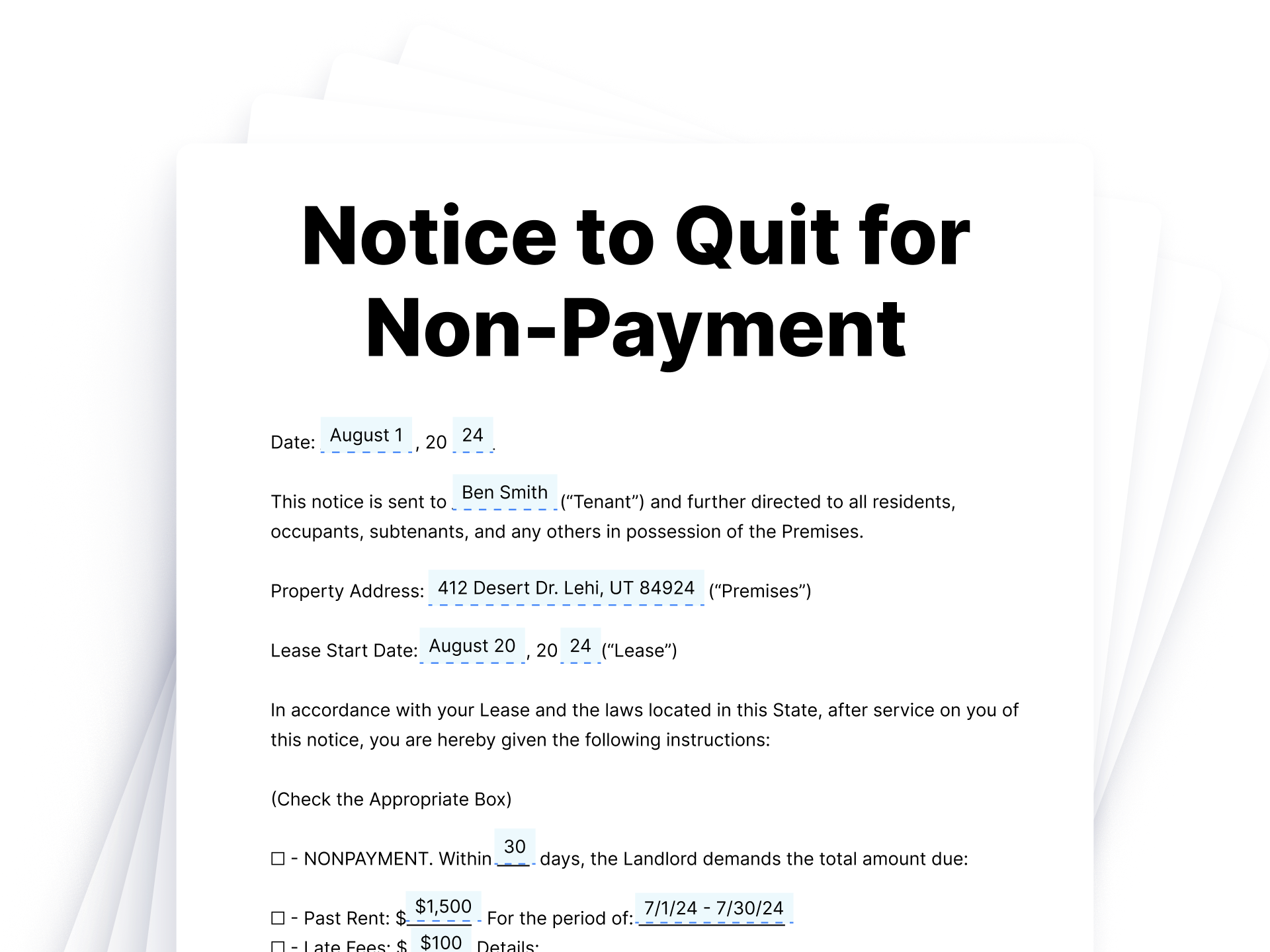
Download as PDF when complete
What Is a Notice to Quit For Non-Payment?
Definition and Key Facts
This formal document ends a tenancy without offering another chance to pay. Courts and housing agencies recognize properly drafted notices as legally enforceable for unconditional tenant removal following rent default. In addition, rent collection enforcement through unconditional ending affects millions of rental relationships each year, with quit notices typically following failed pay-or-quit procedures.
Why a Notice to Quit For Non-Payment Matters
Smart property owners use legally valid quit notices to protect rental income, recover possession efficiently, and enforce payment obligations through decisive legal action. These notices also maintain cash flow stability and ensure rent collection is handled through proper legal steps. Furthermore, knowing the correct process for this type of quit notice protects both landlord financial interests and due process compliance throughout enforcement.
Legal Protection Benefits of a Notice to Quit For Non-Payment
Key Benefits Every Landlord Should Know
A properly issued unconditional quit notice gives landlords key legal tools to act decisively. Specifically, it provides:
- Unconditional ending authority — applies when cure procedures have failed or immediate ending is allowed
- Cash flow protection — addresses chronic non-payment and protects rental income
- Legal compliance — meets state law rules for rent default ending and due process steps
- Efficient possession recovery — enables prompt property recovery and re-rental
- Complete records — creates evidence for eviction proceedings and court action
- Decisive collection enforcement — addresses payment failures through immediate ending authority
Rent Default Types and Notice to Quit For Non-Payment Applications
Failed Pay-or-Quit Compliance and Cure Expiration
Tenants who do not pay within a pay-or-quit notice period become subject to unconditional ending through a quit notice. Unlike a standard pay-or-quit notice, this document offers no additional cure opportunity. In addition, failed cure situations require complete records while ensuring legal compliance and proper evidence gathering.
Chronic Non-Payment and Repeat Default Violations
Chronic rent default patterns, multiple payment failures, or habitual late payment may warrant unconditional ending in states that allow stronger action for repeat violations. Documenting a full payment history is essential in these cases. Furthermore, chronic non-payment enforcement requires complete payment records to support the legal case in court.
Substantial Arrearages and Notice to Quit For Non-Payment
Significant rent arrearages, multiple months of unpaid rent, or large payment failures may justify unconditional ending depending on state law. Each situation requires accurate calculation and thorough records. Moreover, the severity of the default and state-specific classifications will determine the correct ending procedure to follow.
State-Specific Notice to Quit For Non-Payment Requirements
Statutory Requirements for Rent Default Ending
State laws set specific rules for rent default ending, including payment calculation standards, notice periods, and ending procedures. These rules vary significantly across states. Therefore, landlords should always review their state’s exact requirements before issuing this type of quit notice.
Unconditional vs. Conditional Ending Classifications
Some states distinguish between unconditional quit notices — which offer no cure opportunities — and conditional notices that may allow limited payment options during the ending process. Knowing which type applies in your state is essential. Consequently, landlords should confirm the correct classification with a legal professional before proceeding.
Notice to Quit For Non-Payment Timing Requirements
Quit notice periods vary by state and may range from immediate ending to 30-day requirements depending on the situation. Ending date calculations must account for business days, weekends, and holidays. As a result, even a small timing error can delay the eviction process or make the notice invalid.
Payment Calculation and Records for a Notice to Quit For Non-Payment
Accurate Rent Calculation and Default Assessment
Quit notices must state the exact amount owed, including:
- Base monthly rent and any prorated amounts
- Late fees that comply with state law and lease terms
- Utility charges or additional fees properly listed in the lease
- A clear breakdown of each charge included
Calculation accuracy is critical for legal strength. Therefore, landlords should double-check all figures before serving the notice.
Payment History and Default Pattern Documentation
Complete payment records — including past defaults, cure attempts, and payment patterns — support ending enforcement and provide key evidence for court. In addition, historical records help demonstrate a pattern of non-payment, which strengthens the landlord’s legal position. Furthermore, all records should be organized and retained well before the notice is served.
Late Fees and Additional Charge Documentation
Late fees and other charges included in this quit notice require proper documentation, lease compliance verification, and compliance with state law limits. Each charge must be clearly itemized. Moreover, landlords should confirm that all fees were properly disclosed in the lease before including them in the notice.
Notice to Quit For Non-Payment Content Requirements
Required Information in Every Quit Notice
Every unconditional quit notice for rent default must include specific details to be legally valid. Required content includes:
- The exact amount of unpaid rent and any additional charges
- The ending date and deadline to vacate
- Legal consequences of non-compliance
- Tenant rights information, including court options and legal assistance resources
- Required statutory language specific to your state
In addition, all information must ensure complete tenant notification while maintaining legal enforceability throughout the process.
Legal Language and Due Process Standards
Notice language must comply with state rules, including required legal phrases and compliance statements. Using vague or incorrect language can make the notice invalid. Also, state-approved language prevents court challenges while ensuring the tenant receives proper notification and legal protection throughout the process.
Service Methods for a Notice to Quit For Non-Payment
Personal Service and Direct Delivery
Personal service means handing the notice directly to the tenant, which provides the strongest legal proof of delivery. Delivery records should include:
- The date and time of delivery
- The name and identification of the recipient
- A witness signature when available
Therefore, personal service is always the preferred method when the tenant is accessible and it is safe to proceed.
Certified Mail and Documented Delivery
Certified mail with return receipt provides essential delivery proof for this type of quit notice. Specifically, landlords should keep the return receipt as legal evidence of delivery. In addition, proper addressing and timely mailing ensure the notice period starts on the correct date.
Posted Notice and Electronic Delivery Options
When personal service is not possible, posted notice may be allowed under state law. Posting rules typically include a visible location, witness verification, and simultaneous certified mail delivery. Moreover, many states now allow electronic service by email or text when the tenant has previously agreed to digital communication — though a backup delivery method is always recommended.
Tenant Defenses Against a Notice to Quit For Non-Payment
Tenant Contest Procedures and Court Challenges
Tenants may contest this quit notice through court proceedings by challenging payment calculations, default claims, or procedural steps. Specifically, landlords must be ready to present complete evidence supporting the ending claim. For this reason, well-organized payment records and proper service documentation are the most effective tools for countering tenant challenges.
Habitability Defense and Rent Withholding Claims
Tenants may raise a habitability defense by arguing that the landlord failed to maintain the property, justifying rent withholding. They may also raise warranty of habitability violations as a basis for rent reduction or payment credits. As a result, landlords should keep thorough records of all maintenance requests, repairs completed, and property condition throughout the tenancy.
Payment Tender and Late Cure Attempts
Payment submitted after a quit notice is served may affect ending procedures depending on state law and the landlord’s acceptance policies. In some states, accepting any payment restarts the process. Consequently, landlords should have a clear written policy on late payments and consult a legal professional before accepting any funds after the notice has been served.
Eviction Steps After a Failed Notice to Quit For Non-Payment
Unlawful Detainer Actions and Court Filings
When a tenant does not leave after receiving this notice, the landlord may file an unlawful detainer action. In that case, court filings typically require:
- The original lease agreement
- Complete payment records showing the default
- Copies of all notices served with delivery proof
- Default calculations and any prior collection efforts
Money Judgment Recovery and Debt Collection
If the court rules in the landlord’s favor, a money judgment may be awarded for unpaid rent, court costs, and attorney fees. In addition, judgment enforcement may involve wage garnishment or bank account collection to recover the full amount owed. Furthermore, landlords should work with a legal professional to pursue all available collection methods efficiently.
Writ of Possession and Physical Removal After Non-Payment
After a successful court judgment, a writ of possession is issued allowing a sheriff or marshal to carry out the physical removal of the tenant. Landlords must also follow state law rules for handling any personal property left behind, including required notice, storage, and proper disposal steps.
Special Cases and Notice to Quit For Non-Payment Considerations
Student Housing and Academic Calendar Issues
Student housing properties face unique payment default situations, including semester-based payments, financial aid delays, and academic calendar timing. These cases require specialized enforcement steps. In addition, landlords should be aware of any state or local rules that provide extra protections for student tenants before issuing this type of notice.
Senior Housing and Fixed-Income Tenant Situations
Senior housing properties may involve payment defaults related to fixed incomes, benefit delays, or healthcare costs. These situations require sensitive but legally compliant enforcement. Similarly, landlords should connect tenants with available assistance resources before proceeding with unconditional ending when circumstances allow.
Commercial Rent Default and Mixed-Use Properties
Commercial rent defaults may involve business failure, cash flow problems, or complex multi-use rent calculations that require specialized enforcement steps. Unlike residential tenancies, commercial leases often have different notice rules and cure periods. Therefore, landlords should review the specific lease terms and local commercial tenancy laws carefully before issuing any notice.
Best Practices for Issuing a Notice to Quit For Non-Payment
Gather Complete Records Before Serving the Notice
Before issuing this quit notice, landlords should:
- Compile full payment history showing all defaults and prior notices
- Calculate the exact amount owed with supporting lease documentation
- Confirm the violation qualifies for unconditional ending under state law
- Review all required notice content and service method rules
Overall, taking these steps before serving the notice reduces the risk of a successful tenant challenge in court.
Use Technology to Strengthen Notice to Quit For Non-Payment Enforcement
Modern property management tools can improve the enforcement process. Useful technology includes:
- Automated payment tracking — records all payments and flags defaults immediately
- Digital notice generation — creates state-compliant notices with accurate calculations
- Deadline reminders — tracks notice periods, cure deadlines, and court dates
- Multi-channel communication logs — maintains complete records of all tenant interactions
In addition, property management software helps ensure state law compliance and reduces the chance of errors that could invalidate the notice.
Consult Legal Professionals for Complex Non-Payment Cases
Complex cases — such as substantial arrearages, commercial defaults, or tenants raising habitability defenses — benefit greatly from legal guidance. Landlords should consider working with an experienced landlord-tenant attorney to ensure this quit notice is legally sound. Ultimately, professional legal support gives landlords the best possible outcome in court.
Notice to Quit For Non-Payment: Key Takeaways
How to Handle the Process the Right Way
A properly issued unconditional rent default notice protects landlords by ensuring all ending procedures follow state law. Specifically, to handle the process correctly:
- Confirm the default qualifies for unconditional ending under your state’s law
- Calculate the exact amount owed and document all charges clearly
- Include all required legal language and tenant rights information
- Serve the notice using an approved delivery method and document every step
- Be prepared for court proceedings with complete payment records
The Bottom Line on Notice to Quit For Non-Payment
Ultimately, a legally valid Notice to Quit For Non-Payment protects rental income, enables efficient possession recovery, and gives landlords a clear legal path to ending tenancies where rent obligations have not been met.
FAQs
A Notice to Quit For Non-Payment is a legal document that ends a tenancy due to unpaid rent when cure opportunities have expired or are not required under state law, giving landlords the authority to proceed directly with eviction.
A landlord can issue this notice when a tenant fails to pay within a pay-or-quit period, shows a chronic pattern of non-payment, or has accumulated substantial rent arrearages that qualify for unconditional ending under state law.
The notice must include the exact amount of rent owed, ending dates, legal consequences of non-compliance, tenant rights information, court proceeding explanations, and any late fees or additional charges properly documented under the lease.
Yes — tenants can contest the notice by challenging payment calculations, raising habitability defenses claiming the landlord failed to maintain the property, or arguing that the landlord did not follow proper legal procedures when serving the notice.
If the court rules in the landlord’s favor, a writ of possession is issued allowing a sheriff or marshal to physically remove the tenant, and the landlord may also receive a money judgment covering unpaid rent, court costs, and attorney fees.