
Late Rent Notice


(1)
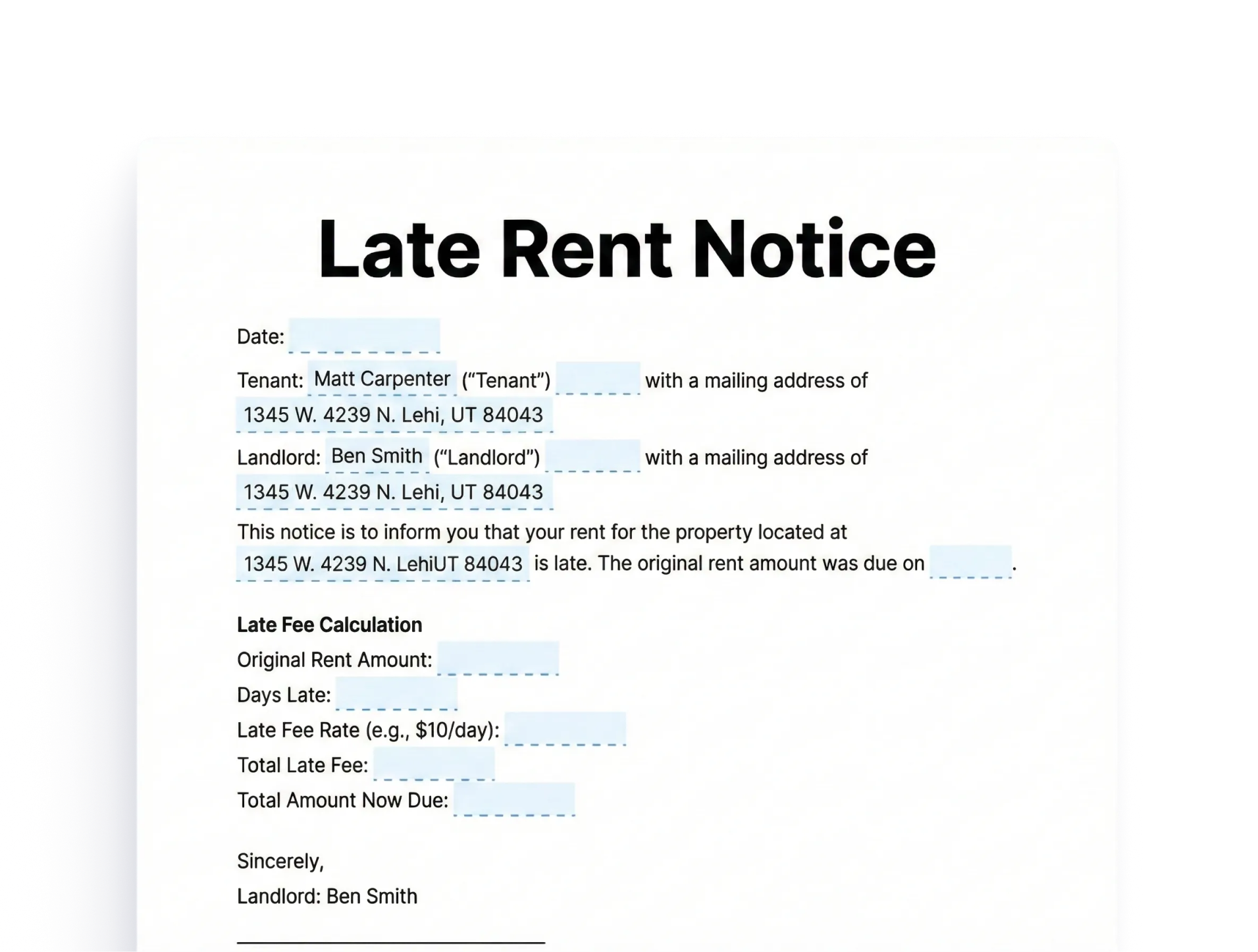
A Late Rent Notice is a formal written document that tells tenants their rent is overdue and must be paid right away. Specifically, it includes the amount owed, the due date that passed, any late fees, and the deadline for payment before further action is taken.
Download as PDF when complete
Late Rent Notice: Definition and Purpose
What a Late Rent Notice Does for Landlords
This notice does more than remind tenants to pay. It also:
- Creates a written record showing when the tenant was notified about overdue rent
- Shows that you enforce lease terms consistently
- Gives tenants clear steps to fix the payment issue
- Builds the foundation for eviction proceedings if the problem continues
Property managers use this notice as the first step in rent collection before moving to legal action.
Why Every Landlord Needs a Late Rent Notice Process
Sending this notice promptly sets clear expectations for all tenants. In addition, it protects you legally by proving you followed proper steps before taking further action. Landlords who skip this step or send notices inconsistently often face delays in eviction proceedings.
Legal Requirements for a Late Rent Notice
Notice Period Variations by State
State laws set different grace periods and notice timeframes before landlords can file for eviction due to non-payment. Common notice periods include:
- 3 days in many states
- 5 or 7 days in others
- 14 days in some jurisdictions
Also, some states treat month-to-month leases differently from fixed-term leases. Always check your state’s specific rules before sending any Late Rent Notice. Using the wrong timeframe can make the notice invalid and delay eviction significantly.
Required Elements in a Late Rent Notice
Most states require this notice to include specific information. Common requirements are:
- Exact amount owed
- Payment deadline
- Accepted payment methods
- Consequences of continued non-payment
- Landlord contact information and property address
Some states also require quoting specific statutes or including tenant rights information. The notice must only include charges your lease allows. Adding unauthorized fees or inflating amounts can make the notice invalid and create legal liability for you.
Delivery Method Compliance for Your Late Rent Notice
State laws also specify how the notice must be delivered. Common accepted methods include:
- Personal hand delivery
- Posting on the tenant’s door
- Certified mail
- Email, only if the lease explicitly allows it
Always document your delivery attempt carefully. For personal delivery, get a signed receipt when possible. With posted notices, take a photo showing the date and location. When using certified mail, keep the receipt and delivery confirmation. This proof is important if a tenant later claims they never received the notice.
Essential Components of a Late Rent Notice
Clear Identification Information
Start your rent notice with complete property and tenant details. Include:
- Rental property address and unit number
- Tenant names as listed on the lease
- Current date
- Your name, phone number, email, and mailing address
Also reference the original lease agreement by date. This ties the payment demand to an enforceable contract rather than an arbitrary request. Furthermore, citing the specific lease sections about rent amount and due dates strengthens your legal position.
Specific Payment Details in Your Late Rent Notice
State the exact amount owed with a clear breakdown. Include:
- Base rent
- Late fees permitted by the lease
- Any other charges such as utilities or pet rent
Also show the original due date and how many days late the payment is. In addition, provide detailed payment instructions covering accepted methods, office address, online payment options, and office hours. Clear instructions remove any excuse for further delay.
Deadline, Consequences, and Late Fee Information
Set a specific payment deadline using an exact date rather than vague language like “within three days.” This removes any confusion about how the deadline is calculated. State clearly what happens if that date passes without payment — such as an eviction filing or additional fees.
Keep your tone firm but professional. Avoid threatening or emotional language. Instead, use plain factual statements about your rights under the lease and state law.
Also explain your late fee policy clearly. If a grace period applies, note whether it has expired and when fees started. Detail how fees are calculated — whether by daily rate or flat charge. Furthermore, make sure your late fees comply with state law limits. Charging more than allowed can make your notice invalid and give tenants grounds for a counterclaim.
Best Practices for Issuing a Late Rent Notice
Consistent Enforcement Timing
Set a standard schedule for sending these notices after due dates pass. For example, send notices on the first business day after the grace period ends. This consistency shows fair treatment across all tenants and prevents claims of selective enforcement or discrimination.
Never wait hoping tenants will pay on their own. Prompt notices set clear expectations and protect all your legal options under state law. In addition, consistent timing prevents tenants from assuming late payment is acceptable.
Professional and Respectful Tone in Your Late Rent Notice
Always use respectful, professional language in your notice. Keep in mind that many tenants face temporary financial trouble rather than choosing to ignore rent. A respectful tone often leads to faster payment than an aggressive approach.
You can express willingness to discuss payment options while still stating the payment obligation clearly. This balance shows care while protecting your business interests. Furthermore, professional communication reduces the chance of a defensive reaction that makes the situation worse.
Documentation and Record Keeping
Keep a copy of every rent notice you send along with delivery proof and any tenant responses. Organize records by tenant and property so you can find them quickly during eviction proceedings or audits. Digital backups of paper notices protect against lost documents.
Also track how quickly tenants pay after receiving notices. This helps you see whether your process is working or needs adjustment. In addition, patterns of repeated late payment may signal a need to review your screening criteria or lease terms.
Follow-Up and Communication After a Late Rent Notice
Follow-Up After Sending a Late Rent Notice
After sending the notice, stay available for tenant questions or payment discussions. Sometimes confusion about payment methods or temporary communication issues — not unwillingness — cause delays. A quick response to tenant questions often resolves the issue before it escalates.
Avoiding Harassment When Following Up on Overdue Rent
However, avoid contacting tenants so often that it becomes harassment. One or two follow-ups after the notice is appropriate. Repeated calls, texts, or visits can cross into harassment territory and create liability for you. Let your formal notice do the work while staying available for real communication.
Handling Special Situations With a Late Rent Notice
Partial Payments During a Notice Period
Decide in advance how you will handle partial rent payments. Some landlords accept partial amounts and keep pursuing the balance. Others decline partial payments during the notice period to keep a stronger eviction position. Know your state’s rules about whether accepting partial payment affects your eviction rights.
Whatever you decide, apply the policy consistently and communicate it clearly. Document all partial payments with amounts, dates, and remaining balances. This prevents confusion about whether the tenant has met the notice requirements.
Repeated Late Payment Patterns
When a tenant repeatedly pays late despite notices, consider whether continuing the tenancy is in your best interest. Chronic late payers create ongoing cash flow problems and administrative work. Also, repeated late payment suggests the tenant may struggle with other lease obligations too.
In some cases, a direct conversation about the tenant’s financial situation may help. Payment plan adjustments or a temporary rent reduction might improve reliability. In other cases, non-renewal or early termination may be the better path for both parties.
Emergency and Hardship Circumstances
Show flexibility when a genuine emergency or hardship causes a late payment. Job loss, a medical crisis, or a family emergency can affect even the most reliable tenants. Working with tenants during hard times often leads to full payment and builds long-term loyalty.
If you agree to a payment plan or extension, put it in writing. Specify the new payment date, the amount due, and what happens if the arrangement is not met. This protects both parties and maintains your legal position if problems continue.
Late Rent Notice: Key Takeaways
A Late Rent Notice is one of the most important tools in professional rent collection, documenting your enforcement steps and giving tenants a clear path to resolve payment issues. To issue an effective one, check your state’s rules, include all required details with a specific deadline, deliver it through an approved method, and apply your policy consistently to every tenant.
FAQs
A Late Rent Notice is a formal written document informing a tenant that rent is overdue, specifying the amount owed, the missed due date, any applicable late fees, and the deadline for payment before further action is taken.
Yes, you can charge late fees if your lease agreement includes them and they comply with state law limits. Clearly itemize late fees separately from base rent and reference the specific lease provision authorizing these charges.
This depends on your state’s laws and business preferences, as accepting partial payments may waive your right to evict in some jurisdictions. If you accept partial payment, document the amount received and remaining balance owed clearly in writing.
Proper documentation of delivery protects you from such claims, which is why certified mail, photographed door postings, or signed delivery receipts are crucial. Courts typically accept proof of proper delivery methods over tenant claims of non-receipt.
Electronic delivery is acceptable only if your lease agreement explicitly authorizes it and your state law permits electronic notices. Always confirm tenant email addresses or phone numbers are current and maintain delivery confirmation records.