
Tenant Screening Checklist


(No Ratings Yet)
A Tenant Screening Checklist protects landlords from problem tenants and reduces rental property risks. Thorough screening identifies reliable tenants who pay rent on time, maintain properties well, and follow lease terms. In short, a detailed checklist ensures you evaluate all applicants consistently, follow fair housing laws, and make informed decisions.
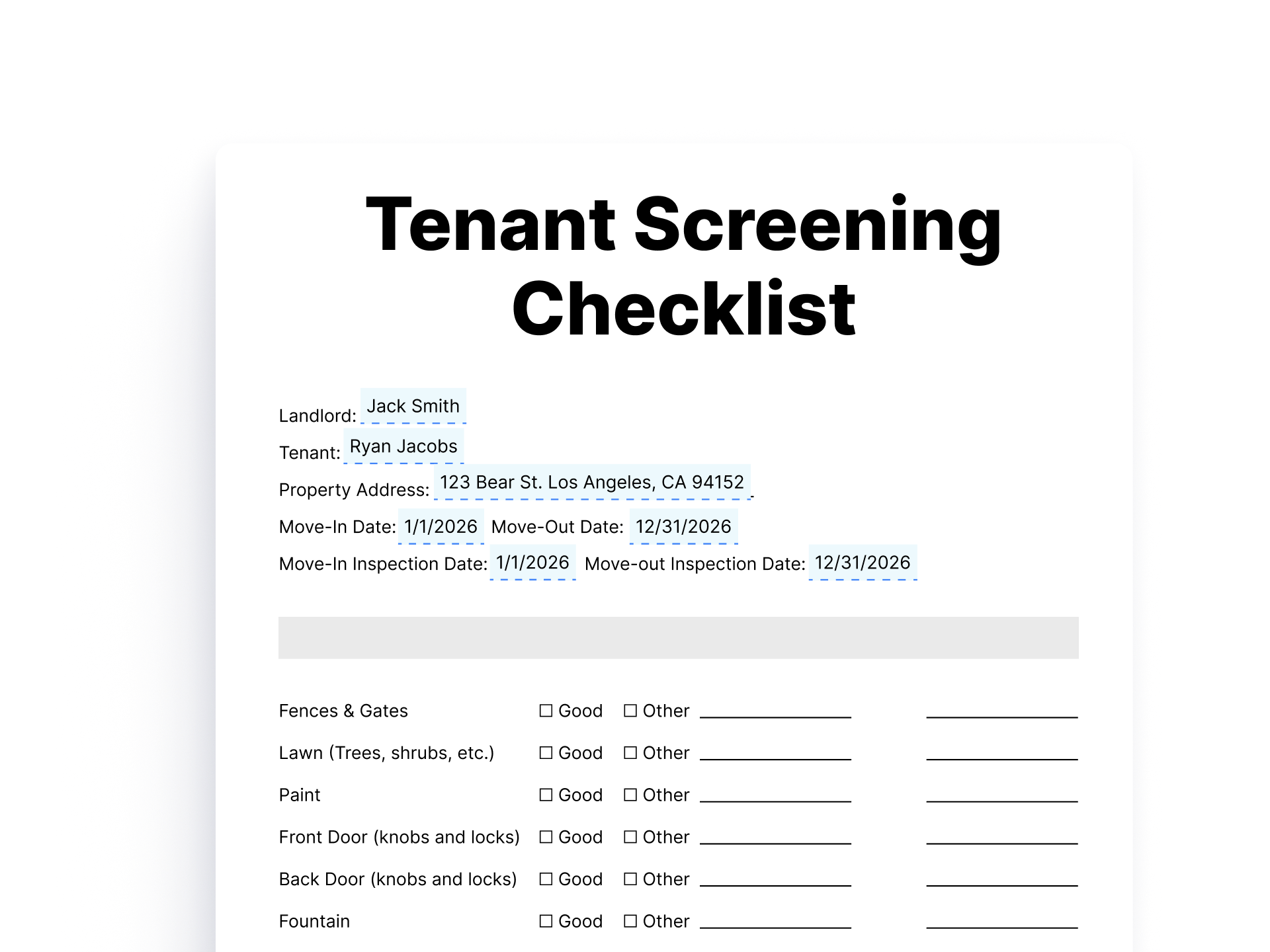
Download as PDF when complete
 Google Doc,
  PDF &
PDF &  Word) or create one online!
Tenant Screening Checklist: Complete Guide for Landlords
Whether you manage one rental or an entire portfolio, a clear tenant screening checklist prevents costly mistakes. Specifically, this guide covers:
- Rental applications and credit checks
- Background checks and income verification
- Landlord references and decision documentation
Our checklist helps you find quality tenants while staying legally compliant.
Rental Application Review Checklist
What to Collect on Your Tenant Screening Application
Collect complete rental applications from all prospective tenants. Standardized forms ensure consistent information and fair treatment. In particular, your application should request:
- Current contact information including phone and email
- Current and previous addresses for the past three to five years
- Employment information and income details
- Personal and professional references
- Vehicle information and license plate numbers
- Emergency contact information
Also, include authorization for background and credit checks.
Reviewing Tenant Applications for Red Flags
Review each application carefully for completeness before processing. Incomplete applications may indicate applicants trying to hide problems. Therefore, your tenant screening checklist should flag:
- Employment gaps or frequent moves
- Eviction history or inconsistent information
Charge application fees covering actual screening costs — typically $30 to $75 per applicant. Some states limit fee amounts or require refunds of unused portions. Never waive fees for some applicants but not others, as this can create fair housing violations.
Credit and Background Check Tenant Screening Process
Running Credit Checks as Part of Tenant Screening
Run comprehensive credit and background checks on all applicants who meet initial screening criteria. Your tenant screening checklist requires professional screening services providing:
- Credit reports and eviction history
- Criminal records and identity verification
National screening companies like TransUnion, CoreLogic, or RentPrep offer comprehensive reports for $25 to $50 per applicant. These services pull data from multiple sources for reliable decision-making.
Evaluating Credit Reports and Background Check Results
Establish minimum credit score requirements for your market and property type. Most landlords require scores of 600 to 650 minimum. When reviewing credit reports, specifically look for:
- Payment history and outstanding debts
- Collections, bankruptcies, and debt levels
Consider the context of credit issues — not just scores. For example, medical collections differ from patterns of nonpayment. Additionally, check eviction records carefully since past evictions strongly predict future problems. Criminal background checks help assess safety risks. However, HUD guidance warns that blanket criminal history policies may create disparate impact on protected classes.
Employment and Income Verification Tenant Screening Checklist
Verifying Employment During Tenant Screening
Verify applicant employment and income thoroughly. Never rely on self-reported income or unverified documents. Instead, contact employers directly using phone numbers you find independently. Verify:
- Employment status and position
- Hire date and salary or wages
Also, request recent pay stubs showing year-to-date earnings.
Income Requirements for Tenant Qualification
Establish income requirements based on rent amounts. Most landlords require monthly gross income of 2.5 to 3 times monthly rent. This ratio ensures tenants can afford rent while covering other living expenses.
Your tenant screening checklist should accept various income sources equally, including:
- Employment wages and self-employment income
- Investment earnings and retirement benefits
- Government assistance and housing vouchers
In particular, many jurisdictions prohibit discrimination based on lawful income source. For self-employed applicants, request at least two years of tax returns or bank statements showing consistent income.
Landlord Reference Verification Tenant Screening Checklist
How to Verify Landlord References Effectively
Contact previous landlords to verify rental history and tenant behavior. Specifically, speak with at least two previous landlords when possible. Current landlords may give overly positive references to remove problem tenants. Previous landlords, on the other hand, have no incentive to lie.
Ask each reference about:
- Rent payment history and lease compliance
- Property care and noise or disturbance issues
- Whether they would rent to the applicant again
Spotting Fake References During Tenant Screening
Verify landlord references carefully — applicants sometimes provide fake contacts. Therefore, look up property ownership records to confirm you’re speaking with the actual owner or manager. Use independently found contact information rather than numbers applicants provide.
Document all reference conversations with dates, contact details, and key points. Furthermore, ask yes/no questions to make responses easier. Hesitation or reluctance to give positive recommendations often signals problems the landlord won’t state directly.
Application Decision Log and Tenant Screening Documentation
Maintaining a Tenant Screening Decision Log
Maintain detailed records of all screening decisions. Document every application received, including:
- Screening results and approval or denial reasons
- All communications with applicants
- Dates and methods of contact
Federal and state fair housing laws require consistent application of screening criteria. Consequently, detailed records prove you applied the same standards to all applicants.
Writing Tenant Denial Letters and Adverse Action Notices
Create written denial letters for rejected applications citing specific, objective reasons. Common valid denial reasons include:
- Insufficient income for rent requirements
- Negative landlord references
- Poor credit history showing payment problems
- Criminal history presenting safety concerns
- Incomplete applications with unverified information
Never include protected characteristics as denial reasons. Additionally, provide adverse action notices required by the Fair Credit Reporting Act when denying applicants based on credit reports. These notices inform applicants which screening company provided the report and explain their dispute rights. Keep all application materials and screening records for at least three years.
Tenant Screening Criteria and Fair Housing Compliance
Setting Written Tenant Screening Criteria
Establish clear, written screening criteria before accepting applications. Your tenant screening checklist should include objective standards for:
- Minimum credit scores
- Income requirements
- Rental history expectations
- Criminal background considerations
Written criteria ensure consistent application to all applicants. They also provide legal protection if screening decisions are challenged. Moreover, review criteria regularly to ensure they don’t create disparate impact discrimination against protected classes.
Applying Tenant Screening Criteria Consistently
Apply screening criteria consistently to every applicant without exceptions. Inconsistent application creates fair housing liability even without intent to discriminate. Therefore, document how each applicant met or failed to meet your established criteria.
Some landlords use scoring systems assigning points to various factors. This approach makes decisions more systematic and demonstrates consistent treatment. Most applicants expect decisions within three to five business days after submitting complete applications.
Fair Housing Compliance in the Tenant Screening Process
Follow fair housing laws throughout your tenant screening process. The Federal Fair Housing Act prohibits discrimination based on:
- Race, color, national origin, and religion
- Sex, familial status, and disability
Many states and cities add protected classes like source of income or sexual orientation. As a result, treat all applicants identically in advertising, applications, screening, and selection.
Never ask about protected characteristics on applications or during conversations. Focus solely on objective qualification criteria — ability to pay rent, rental history, and property care. Furthermore, make reasonable accommodations for applicants with disabilities when requested, and document all accommodation requests and your responses.
Tenant Screening Checklist Takeaways
A complete tenant screening checklist protects your rental investment while helping you find quality tenants. Collect standardized applications, run credit and background checks, verify income, check landlord references, and document all decisions. Overall, thorough screening reduces tenant problems, improves rent collection, and protects your investment through careful, consistent tenant selection.
Sample
FAQs
A complete tenant screening checklist should cover rental applications, credit and background checks, income verification, landlord references, and detailed documentation of all approval or denial decisions.
Most landlords require a minimum credit score of 600 to 650, though standards vary by location, property type, and rental market demand.
Most landlords require monthly gross income of 2.5 to 3 times the monthly rent to ensure tenants can comfortably afford rent while covering other living expenses.
Contact at least two previous landlords using independently found contact information — not numbers provided by the applicant — and look up property ownership records to confirm you’re speaking with the actual landlord.
Keep all application materials, screening reports, and decision documentation for at least three years to protect against potential fair housing discrimination claims.