
Megan’s Law Disclosure


(1)
Megan’s Law Disclosure practices ensure you meet legal requirements. They also help buyers and tenants access important community safety information. Named after Megan Kanka, this federal law requires states to maintain public sex offender registries that anyone can search.
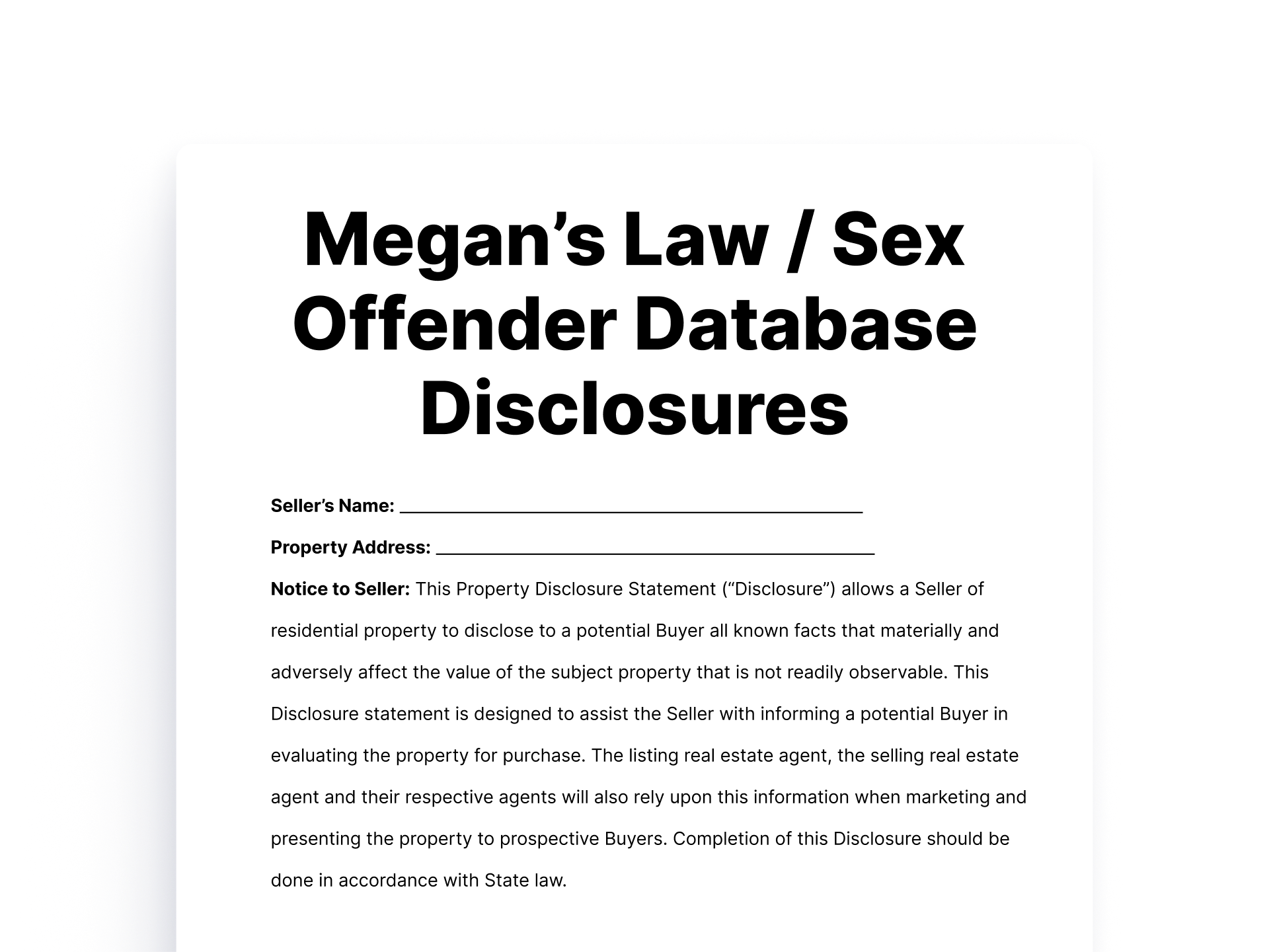
Download as PDF when complete
Megan’s Law Disclosure: Complete Guide for Property Owners
A complete Megan’s Law Disclosure informs buyers and tenants about their ability to access sex offender registry information. Whether you’re selling or renting property, clear disclosure procedures protect you from legal liability. Specifically, this guide covers:
- Disclosure requirements and state-specific laws
- Database access information and search methods
- Legal obligations and privacy considerations
Our guide helps you handle Megan’s Law Disclosure with confidence while protecting your interests and buyer rights.
Understanding Megan’s Law Disclosure Requirements
What the Law Requires From Sellers and Landlords
Megan’s Law Disclosure requirements inform buyers and tenants about publicly available sex offender registry information. Federal law doesn’t require sellers or landlords to research sex offender presence near properties. However, many states require providing buyers with information about how to access state sex offender registries. Additionally, some states like California mandate specific disclosure forms explaining how to search databases.
Why Proper Disclosure Protects Property Owners
Proper disclosure protects you by documenting that buyers received required information. The disclosure typically states that sex offender information is publicly available and provides website addresses or phone numbers for accessing registries. Therefore, buyers and tenants must conduct their own searches if concerned about sex offender proximity. Furthermore, sellers and landlords are not required to investigate or disclose specific offenders nearby unless they have actual knowledge of their presence.
State-Specific Megan’s Law Disclosure Requirements
California and States With Mandatory Disclosure Forms
California requires comprehensive disclosure through specific forms notifying buyers about registry access. Sellers must provide disclosure at least 48 hours before transfer for manufactured homes or upon signing sales contracts for other properties. Additionally, California’s disclosure includes the state’s Megan’s Law database website at meganslaw.ca.gov. The disclosure form must be signed by buyers acknowledging receipt.
States With General Disclosure Requirements
Many other states require general disclosure that sex offender information is publicly available. Therefore, some states include this information in standard seller disclosure forms while others require separate notices. Furthermore, real estate agents in most states have professional obligations to inform buyers about registry access even without specific legal requirements. Moreover, check your state’s real estate commission or attorney general website for exact requirements. Additionally, working with experienced real estate attorneys ensures full compliance.
What Megan’s Law Disclosure Must Include
Required Information in Your Disclosure
Your disclosure should provide clear information about accessing sex offender registries. Specifically, include:
- The website address for your state’s sex offender registry
- The phone number for your state’s registry information line if available
- A note that registration may be required to access certain features
Clarifying Buyer and Tenant Responsibilities
Explain that buyers and tenants are responsible for conducting their own searches. Therefore, clarify that you have not researched sex offender presence and are not providing information about specific individuals. Furthermore, state that sex offender information changes frequently as offenders move or new registrations occur. Moreover, encourage buyers to check databases multiple times during their home search and after moving in.
Sex Offender Database Access and Search Methods
How to Access Sex Offender Registries
Your disclosure should explain how buyers access sex offender information. The national sex offender public website at nsopw.gov provides access to registries from all states in one location. Additionally, individual state registries often provide more detailed information and search options. Most registries allow searches by address, showing all registered offenders within specified distances.
What Registry Searches Reveal
Searches typically reveal:
- Offender names, photos, and addresses
- Physical descriptions and offense information
- Risk level or tier based on offense severity
- Registration dates and compliance status
Furthermore, some states allow residents to sign up for notifications when offenders move into neighborhoods or update their information. In addition, some registries provide detailed offense descriptions while others offer limited information to protect victim privacy.
Limitations of Megan’s Law Disclosure
What Sex Offender Registries Don’t Cover
Your disclosure should acknowledge registry limitations. Registries only include convicted offenders who completed criminal justice processes. Additionally, registries may be outdated if offenders fail to update addresses. Some offenders become non-compliant, making registry information inaccurate.
Other Important Limitations to Communicate
Not all sex crimes result in registration requirements. Therefore, offense types, dates, and jurisdictions all affect registration obligations. Furthermore, juvenile offenders often don’t appear in public registries due to privacy protections. Moreover, the presence or absence of registered offenders doesn’t guarantee safety or danger since most sex crimes involve people known to the victim.
Megan’s Law Disclosure for Home Sales
When and How to Provide Disclosure During a Sale
Home sale disclosure follows state-specific requirements for informing buyers about registry access. Most states include this information in standard seller disclosure packages. Additionally, some states require separate forms specifically addressing sex offender information. Provide disclosure early in the transaction — typically with initial property disclosures when buyers enter contracts.
Real Estate Agent Responsibilities
Real estate agents typically handle disclosure by providing required forms and information. Therefore, agents should explain how to access registries and encourage searches as part of due diligence. Furthermore, some agents proactively provide registry search printouts, though this isn’t required. Moreover, buyers should conduct independent searches since agent-provided information may become outdated. Additionally, sellers are not required to disclose actual knowledge of nearby sex offenders unless specifically asked.
Megan’s Law Disclosure for Rental Properties
Landlord Disclosure Obligations to Tenants
Landlord disclosure requirements vary significantly by state. Some states require landlords to provide sex offender registry information before lease signing. Additionally, other states have no specific requirements for rental properties. Therefore, check your local laws carefully since landlord-tenant requirements differ from real estate sales requirements.
Best Practices for Landlords
Even without legal requirements, providing disclosure demonstrates transparency and helps tenants make informed housing decisions. Specifically, include registry access information in lease packets or during property showings. Furthermore, some landlords conduct background checks that include sex offender registry searches. Moreover, landlords cannot discriminate against registered sex offenders solely based on registry status — consult legal counsel before denying housing to registered offenders.
Privacy and Fair Housing Considerations
Balancing Safety Information With Fair Housing Rights
Your disclosure must balance public safety information with privacy rights and fair housing obligations. Registered sex offenders have housing rights and cannot face blanket discrimination. Additionally, fair housing laws in some jurisdictions protect individuals from discrimination based solely on criminal history. Therefore, landlords must evaluate offenders individually — considering the offense nature, time elapsed, and rehabilitation evidence.
How to Handle Offender Information Responsibly
Avoid sharing specific offender information beyond what’s publicly available in registries. Furthermore, don’t create panic or stigmatize properties by emphasizing sex offender presence during marketing. Instead, focus your disclosure on informing buyers and tenants about their ability to access public information. Additionally, consult fair housing attorneys before implementing policies that might discriminate against individuals with criminal histories.
Legal Consequences of Inadequate Disclosure
Buyer and Agent Liability for Disclosure Failures
Failing to provide required disclosure creates legal liability in states with specific requirements. Buyers can sue for failure to provide mandatory forms even though sellers are not required to research offender presence. Additionally, inadequate disclosure may support fraud claims if sellers knew about nearby offenders but failed to disclose when asked. Courts generally hold that sellers must answer buyer questions honestly even when proactive disclosure isn’t required.
Penalties for Real Estate Agents
Real estate agents face professional liability and license sanctions for failing to provide required disclosure forms. Therefore, agents must stay informed about state requirements and ensure clients receive proper information. Furthermore, some states fine agents or sellers for disclosure violations. In short, proper disclosure protects against claims that you intentionally withheld material information affecting buyer decisions.
Encouraging Buyer and Tenant Research
How to Guide Buyers Toward Independent Searches
Your disclosure should encourage proactive research by buyers and tenants. Emphasize that sex offender registries are free, publicly accessible, and easy to search. Additionally, recommend searching multiple times during home searches and after moving in since information changes. Suggest signing up for neighborhood notifications when available.
Additional Safety Research to Recommend
Advise buyers to check registries for work addresses, schools, and frequently visited locations beyond just home addresses. Therefore, comprehensive searches provide a fuller picture of potential exposures in daily routines. Furthermore, encourage conversations with local law enforcement about neighborhood safety. Moreover, remind buyers that registries are tools for awareness — not guarantees of safety — and that common-sense precautions always apply.
Megan’s Law Disclosure Takeaways
Proper Megan’s Law Disclosure protects property owners while ensuring buyers and tenants receive required safety information. Understand your state’s specific requirements, provide all mandatory forms, and include website addresses for state and national registries. Additionally, clarify that buyers must conduct their own searches and acknowledge registry limitations. Overall, thorough disclosure prevents legal liability, demonstrates good faith, and helps buyers and tenants make informed decisions about property locations.
FAQs
Megan’s Law Disclosure informs buyers and tenants about their right to access public sex offender registry information, and requirements vary by state for both property sellers and landlords.
No — sellers and landlords are only required to provide information about how to access public sex offender registries, not to research or disclose specific offenders living nearby.
Buyers and tenants can search the national registry at nsopw.gov or their individual state registry by address, name, or ZIP code to find registered offenders within a specified distance.
Requirements vary significantly by state — some states require landlords to provide sex offender registry information before lease signing, while others have no specific requirements for rentals.
Landlords cannot blanket-discriminate against registered sex offenders and must evaluate each applicant individually, considering the nature of the offense, time elapsed, and rehabilitation evidence, while consulting legal counsel to avoid fair housing violations.