
Rhode Island Rent Increase Notice


(1)
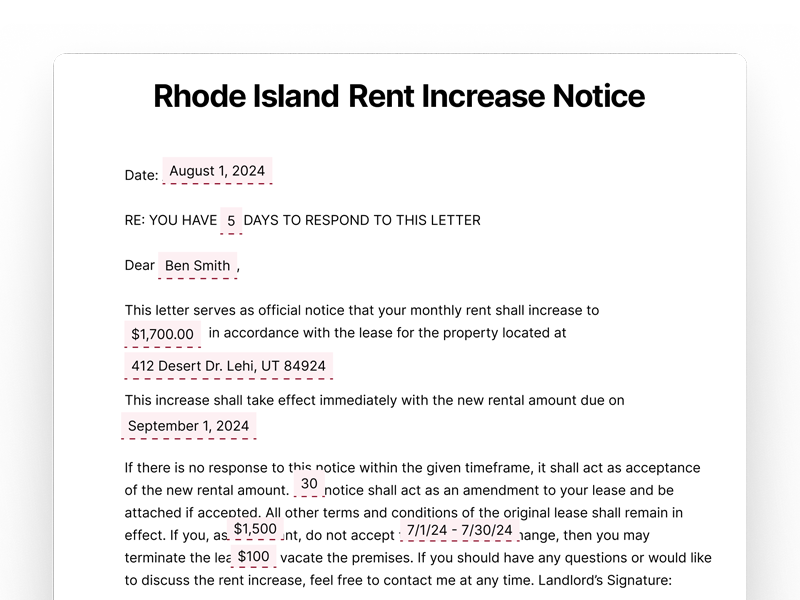
A Rhode Island rent increase notice provides the formal notification required when landlords plan to adjust rental rates. Specifically, this notice outlines the legal requirements and proper procedures for implementing rent increases under Rhode Island law. Clear notice guidelines help ensure that both landlords and tenants understand their rights and responsibilities during rental rate adjustments. Ultimately, following the correct procedures protects everyone involved.
Download as PDF when complete
 Google Doc,
  PDF &
PDF &  Word) or create one online!
Understanding Rhode Island Rent Increase Notice
A Rhode Island rent increase notice is a formal written document that landlords must provide tenants before raising rental rates. Moreover, this notification must comply with specific state laws regarding timing, content, and service methods to ensure legal validity and enforceability. Without proper compliance, the notice may be considered invalid under state law.
Under Rhode Island General Laws Chapter 34-18 (Residential Landlord and Tenant Act), landlords cannot arbitrarily increase rent without proper notice. Therefore, the written notification serves as official documentation protecting both landlord property rights and tenant housing stability. In other words, proper notice is not optional — it is a legal requirement.
Rhode Island Notice to Increase Rent: Legal Requirements
Mandatory Notice Period Requirements
Rhode Island law requires landlords to provide tenants with specific advance notice before implementing rent increases:
Month-to-Month Tenancies For month-to-month rental agreements, landlords must provide at least 30 days’ written notice before implementing any rent increase. Consequently, this advance notification period allows tenants sufficient time to budget for changes or seek alternative housing.
Week-to-Week Tenancies For week-to-week rental agreements, landlords must provide at least 7 days’ written notice before implementing rent increases. Additionally, this shorter period reflects the more flexible nature of weekly rentals.
Fixed-Term Leases For fixed-term leases, landlords generally cannot increase rent during the lease term unless the rental agreement specifically includes rent escalation clauses. Furthermore, rent increases typically apply at lease renewal or expiration.
Notice Period Calculations for Written Rent Notifications
The notice period begins when the tenant receives the written notification, not when you mail or prepare it. Additionally, for legal protection, always document the exact date, time, and method of service for your notice to increase rent in Rhode Island. Otherwise, improper documentation can weaken your legal position if a dispute arises.
Legal Requirements for Notice to Increase Rent in Rhode Island
Written Documentation Requirement
Every rent increase notification in Rhode Island must be provided in writing. Indeed, Rhode Island law does not recognize verbal notifications as legally sufficient. As a result, attempting verbal notice could delay or invalidate your increase entirely.
Essential Information for Written Rent Notifications
Your legally compliant written notice must include:
- Current monthly rent amount
- New monthly rent amount
- Dollar amount of the increase
- Effective date (minimum 30 days for month-to-month, 7 days for week-to-week)
- Complete property address
- All tenant names on the lease
- Landlord name and contact information
- Date the notice was served
- Landlord signature
- Statement regarding tenant rights (recommended)
Rhode Island Specific Notice Requirements
Rhode Island has additional considerations for rent increase notifications. As a result, landlords must go beyond the standard requirements to ensure full compliance:
- Security deposit implications — increases may affect security deposit limits
- Mobile home park regulations — special notice requirements apply
- Public housing considerations — additional protections for subsidized tenants
- Municipal ordinance compliance — some cities have enhanced requirements
Acceptable Service Methods for Notice to Increase Rent in Rhode Island
Rhode Island recognizes these methods for serving your written notification:
Personal Service Hand-deliver the document directly to the tenant for immediate, documented receipt. In addition, consider having a witness present if possible.
Certified Mail Mail your written notification via certified mail, return receipt requested, to create official delivery documentation. This method, however, may extend the effective date due to delivery time.
Regular Mail Rhode Island allows service by regular mail to the tenant’s last known address for your written rent notification. However, this method offers less delivery confirmation than certified mail.
Posted Service Post the notice conspicuously on the rental property after attempting other service methods, as allowed under Rhode Island law. Generally, this method is used only as a last resort.
When Landlords Can Issue Written Rent Notifications
Legitimate Reasons for Notice to Increase Rent in Rhode Island
Rhode Island landlords may issue rent increase notifications for various legitimate business reasons. In general, these fall into three categories: market-based increases, cost-based increases, and value-added improvements.
Market-Based Increases
- Rental market rate adjustments based on comparable properties
- Area median rent increases and market demand
- Competitive positioning with similar rental units
- Tourism and seasonal market fluctuations
Cost-Based Increases
- Property tax increases passed to tenants
- Rising insurance premiums and coverage costs
- Utility cost increases affecting landlord expenses
- Maintenance and repair cost inflation
- Municipal fee increases and assessments
Value-Added Improvements
- Property renovations that increase rental value
- New amenities or services provided to tenants
- Capital improvements enhancing property desirability
- Energy efficiency upgrades reducing operating costs
Timing Restrictions for Written Rent Notifications
You cannot serve a rent increase notification:
- Without proper notice period (30 days for month-to-month, 7 days for week-to-week)
- During fixed-term leases without lease authorization
- As retaliation against tenant complaints or legal actions
- Based on discriminatory motives against protected classes
- During winter heating season in some municipalities
Prohibited Rhode Island Rent Increase Situations
Retaliatory Notice to Increase Rent in Rhode Island
Rhode Island law prohibits landlords from issuing retaliatory rent increases in response to tenant actions. Specifically, the following situations are prohibited grounds for issuing a notice:
- Tenant complaints about habitability or safety issues
- Tenant reports to government authorities about property violations
- Tenant exercise of legal rights under Rhode Island landlord-tenant law
- Tenant participation in tenant organizations
- Filing complaints with local housing authorities
- Requesting necessary repairs or maintenance
- Contacting health departments about code violations
Discriminatory Rent Increases
Your written notification cannot be motivated by discrimination. Specifically, increases cannot be based on protected characteristics. For instance, the following are all prohibited grounds for a rent increase:
- Race, color, religion, or national origin
- Sex, gender identity, or sexual orientation
- Familial status, pregnancy, or number of children
- Disability or handicap status
- Age, marital status, or source of income
- Military status or veteran status
Tenant Rights When Receiving Written Rent Notifications
Primary Options for Notice to Increase Rent in Rhode Island
When Rhode Island tenants receive a rent increase notification, they have these choices. Specifically, tenants can take one of four approaches:
Accept the Increase Continue the tenancy by paying the new rental rate starting on the effective date.
Negotiate with Landlord Request discussions about the increase amount, effective date, or payment arrangements. However, landlords are not legally required to negotiate.
Challenge the Increase If the notice violates legal requirements or appears retaliatory, seek legal assistance to challenge the validity. In that case, acting quickly is essential to protect your rights.
Terminate Tenancy Provide proper written notice to end the rental agreement before the rent increase takes effect. Alternatively, you may choose to negotiate with the landlord first.
Legal Protections Under Rhode Island Law
Tenants receiving rent increase notifications are entitled to several legal protections. In particular, these include:
- Proper notice period (30 days for month-to-month, 7 days for week-to-week)
- Non-retaliatory increases based solely on legitimate business reasons
- Non-discriminatory treatment regardless of protected characteristics
- Due process rights if challenging the legality of the increase
- Security deposit protections when rent increases affect deposit limits
Rhode Island Rent Control and Municipal Regulations
State Approach to Rent Control
Rhode Island does not have statewide rent control but allows local municipalities to enact rent stabilization measures. Consequently, landlords must check local regulations in addition to state notice requirements when issuing a notice to increase rent in Rhode Island. In fact, failing to account for local rules is one of the most common compliance mistakes landlords make.
Municipal Considerations for Written Rent Notifications
Rhode Island cities may have additional housing regulations:
Providence Providence has specific tenant protections and lead paint regulations that may affect rental procedures. Therefore, check Providence Housing and Community Development regulations before issuing any notice.
Newport Newport may have seasonal rental considerations and historic preservation requirements affecting rental properties. As a result, landlords should review local rules carefully.
Warwick Review Warwick municipal regulations for additional notification procedures beyond state law. Similarly, always verify whether your city has adopted any enhanced tenant protections before issuing a notice.
Other Cities Contact local housing departments in Cranston, Pawtucket, and East Providence for any municipality-specific rules governing rental notifications. As a result, you can avoid violations that state law alone may not cover.
Special Situations for Rhode Island Rent Increase Notices
Mobile Home Park Regulations
Rhode Island has comprehensive regulations for mobile home parks regarding lot rent increases. Notably, these rules differ significantly from standard residential tenancy requirements:
- 90-day notice requirement for lot rent increases in mobile home parks
- Special procedures for park-wide rent adjustments
- Enhanced tenant protections for mobile home residents
- Specific regulations under Rhode Island General Laws Chapter 31-44
Seasonal and Tourist Rental Considerations
Rhode Island’s coastal tourism economy creates unique rental situations. For example, landlords must navigate seasonal fluctuations that other states rarely encounter:
- Seasonal rental market fluctuations
- Short-term vs. long-term rental distinctions
- Tourist season rental rate considerations
- Off-season tenant protections
Lead Paint and Housing Code Requirements
Rhode Island has strict lead paint regulations affecting rental properties. In particular, landlords should be aware of the following requirements before issuing any rent increase notice:
- Lead paint disclosure requirements that may affect rent increase procedures
- Housing code compliance implications for increases
- Tenant rights regarding habitability standards
- Municipal inspection requirements
Common Mistakes with Notice to Increase Rent in Rhode Island
Critical Landlord Errors
Wrong Notice Period Using incorrect notice periods makes your rent increase legally invalid. Therefore, always match notice period to tenancy type.
Improper Service Documentation Failing to document service properly can create legal challenges. As a result, maintain detailed service records for your written rent notification.
Missing Required Information Omitting essential details like effective dates, contact information, or increase amounts invalidates the notice. Consequently, use a comprehensive checklist.
Retaliatory Timing Issuing notifications shortly after tenant complaints creates a presumption of retaliation under Rhode Island law. Thus, timing is crucial for legal compliance.
Ignoring Municipal Requirements Failing to check local ordinances may expose you to additional violations beyond state law. Therefore, always research local housing regulations.
Mobile Home Park Oversights Using standard notice periods instead of the required 90-day notice for mobile home park lot rent increases. Consequently, verify property type before issuing notices.
Tenant Response Mistakes
Ignoring Written Rent Notifications Failing to respond doesn’t make the increase disappear. Instead, tenants should address the notice promptly.
Confusing Notice Periods Not understanding different notice periods for month-to-month vs. week-to-week tenancies can lead to missed deadlines. Therefore, review your rental agreement type carefully.
Not Checking Local Protections Failing to research municipal tenant protections may mean missing additional rights. Therefore, contact local housing authorities.
Accepting Illegal Increases Paying rent increases that violate notice requirements without challenging their legality is avoidable. Furthermore, tenants have rights to refuse improperly noticed increases.
Best Practices for Rhode Island Rent Notifications Success
For Rhode Island Landlords
Legal Compliance
- Match notice period to tenancy type (30 days month-to-month, 7 days week-to-week)
- Verify mobile home park requirements (90-day notice for lot rent)
- Research local municipal regulations and requirements
- Document all service methods and dates
- Ensure lead paint and housing code compliance
Professional Communication
- Use respectful, professional language in written notifications
- Provide clear explanations for increase reasons when appropriate
- Respond promptly to tenant questions
- Maintain detailed records of all communications
Strategic Planning
- Research local market rates considering seasonal fluctuations
- Factor in Rhode Island’s tourism economy impacts
- Time increases appropriately with lease renewal cycles
- Consider tenant turnover costs in tourist areas
For Rhode Island Tenants Receiving Notice to Increase Rent
Know Your Tenancy Type
- Understand whether you have month-to-month, week-to-week, or fixed-term lease
- Know your proper notice period protections (30 days vs. 7 days)
- Verify mobile home park protections if applicable (90-day notice)
- Review lease terms for any rent increase provisions
Research Local Protections
- Contact municipal housing authorities about local tenant rights
- Understand seasonal rental market considerations
- Know your rights regarding housing code compliance
- Research lead paint disclosure requirements
Professional Response
- Acknowledge receipt of notifications promptly
- Ask specific questions if terms are unclear
- Document all communications with landlords
- Seek legal assistance if increase appears improper
Rhode Island-Specific Considerations
Coastal Property Considerations
Rhode Island’s coastal location creates unique rental situations. Specifically, landlords and tenants should account for:
- Hurricane and storm season impacts on rental markets
- Flood insurance requirements affecting rental costs
- Seasonal property maintenance considerations
- Tourism economy effects on rental availability
Historic Property Regulations
Many Rhode Island rental properties are historic, creating additional considerations. As a result, landlords must be aware of the following rules that may affect their rental operations:
- Historic preservation requirements affecting renovations
- National Register properties with special restrictions
- Municipal historic district regulations
- Preservation tax credits affecting rental economics
Legal Resources for Rhode Island Rent Notification Issues
For Landlords
- Rhode Island Bar Association — Attorney referral services
- Rhode Island Association of Realtors — Industry resources and guidance
- Local property management attorney specialists
- Rhode Island Housing Resources Commission
For Tenants
- Rhode Island Legal Services — Statewide legal assistance
- HousingHelpRI — Housing counseling and assistance
- Rhode Island Center for Justice — Legal advocacy
- Local tenant advocacy organizations and legal aid societies
Municipal Rent Increase Regulations
Providence Specific Requirements
Providence has additional considerations that may affect rent increase procedures. Therefore, landlords operating in Providence should review the following before issuing any notice:
- Lead paint ordinance compliance requirements
- Rental property registration and inspection programs
- Enhanced tenant protection ordinances
- Code enforcement implications for rent increases
Other Municipal Considerations
Other Rhode Island cities may have specific regulations. In addition, landlords should review all local requirements, including:
- Newport seasonal rental considerations
- Warwick municipal housing requirements
- Local registration and licensing programs
- Municipal tenant protection measures
Mastering Rhode Island Rent Notifications
Successfully managing rent increases in Rhode Island requires understanding state law, local municipal regulations, and unique coastal considerations. Furthermore, Rhode Island’s diverse rental market — from urban Providence to coastal tourist areas — requires specialized knowledge for different property types.
By understanding the different notice periods for various tenancy types, researching local regulations, accounting for mobile home park requirements, following proper service procedures, and maintaining professional communication, landlords and tenants can navigate rent increases successfully. Additionally, staying informed about Rhode Island’s landlord-tenant laws and consulting with qualified legal professionals ensures continued compliance. In short, preparation and attention to detail are the keys to avoiding costly mistakes.
Overall, Rhode Island’s municipal variations, seasonal considerations, mobile home park regulations, and coastal property factors require careful attention to both state law and local requirements for complete legal compliance.
Statutes
- R.I. Gen. Laws § 9-1-13 – Limitation of actions generally – Product liability
- R.I. Gen. Laws § 34-18-19(a) – Security deposits
- R.I. Gen. Laws § 34-18-19(c) – Security deposits
- R.I. Gen. Laws § 34-18-19(b – Security deposits
- R.I. Gen. Laws § 34-18-15(c) – [Effective 1/1/2025] Terms and conditions of rental agreement
- R.I. Gen. Laws § 34-18-15(5) – [Effective 1/1/2025] Terms and conditions of rental agreement
- R.I. Gen. Laws § 34-18-16.1 – Rent increases – notice requirements
- R.I. Gen. Laws § 6-42-3 – Cause of action – Damages
- R.I. Gen. Laws § 34-18-31 – Wrongful failure to supply heat, water, hot water, or essential services
- R.I. Gen. Laws § 34-18-30 – Self-help for limited repairs
- R.I. Gen. Laws § 34-18-38 – Eviction for unlawfully holding over after termination or expiration of tenancy
- R.I. Gen. Laws § 34-18-40 – Remedies for abandonment
- R.I. Gen. Laws § 34-18-15(e) – [Effective 1/1/2025] Terms and conditions of rental agreement
- R.I. Gen. Laws § 34-18-15(4) – [Effective 1/1/2025] Terms and conditions of rental agreement
- R.I. Gen. Laws § 34-18-56 – Notices and complaint forms
- R.I. Gen. Laws § 34-18-37(a) – Termination of periodic tenancy
- R.I. Gen. Laws § 34-18-37(b) – Termination of periodic tenancy
- R.I. Gen. Laws § 34-18-37(c) – Termination of periodic tenancy
- R.I. Gen. Laws § 34-18-36(f) – Eviction for noncompliance with rental agreement
- R.I. Gen. Laws § 34-18-36 – Eviction for noncompliance with rental agreement
- R.I. Gen. Laws § 34-18-39 – Failure to maintain
- R.I. Gen. Laws § 34-18-35 – Eviction for nonpayment of rent
- R.I. Gen. Laws § 34-18-26(a) – Access
- R.I. Gen. Laws § 34-18-26(b) – Access
- R.I. Gen. Laws § 34-18-26(c) – Access
- R.I. Gen. Laws § 34-18-27 – Tenant to use and occupy
- R.I. Gen. Laws 34-18-34 – Tenant’s remedies for landlord’s unlawful ouster, exclusion, or diminution of service
- R.I. Gen. Laws § 34-18-20 – Disclosure
- R.I. Gen. Laws § 34-18-22.1 – Landlord’s duty to notify tenant of violation
- R.I. Gen. Laws § 34-37-1 – Finding and declaration of policy
- R.I. Gen. Laws § 34-18-22 – Landlord to maintain premises
- R.I. Gen. Laws § 34-18-24 – Tenant to maintain dwelling unit
- R.I. Gen. Laws § 21-28-4.06 – Prohibited acts F – Places used for unlawful sale, use, or keeping of controlled substances
- R.I. Gen. Laws § 34-18-46 – Retaliatory conduct prohibited
- R.I. Gen. Laws § 34-18-22.2 – Landlord’s duty regarding compliance with zoning and minimum housing laws
- R.I. Gen. Laws § 34-18-57 – Providence and Warwick Absentee Landlord Enforcement Act
- R.I. Gen. Laws § 9-1-13 – Limitation of actions generally – Product liability
- R.I. Gen. Laws § 34-18-16.1 – Rent Increase Notice
- R.I. Gen. Laws § 34-18-59 – Fair limitation on rental application fees
- R.I. Gen. Laws § 34-18-21 – Landlord to deliver possession of dwelling unit
Sample
FAQs
For month-to-month tenancies, landlords must provide at least 30 days’ written notice before a rent increase takes effect. For week-to-week tenancies, a minimum of 7 days’ written notice is required.
Generally, landlords cannot increase rent during a fixed-term lease unless the rental agreement includes a specific rent escalation clause. Rent increases for fixed-term leases typically apply at renewal or expiration.
A valid notice must include the current and new rent amounts, the dollar amount of the increase, the effective date, the full property address, all tenant names, and the landlord’s contact information and signature. Missing any of these required details can invalidate the notice.
No — Rhode Island law prohibits retaliatory rent increases in response to tenant complaints about habitability, reports to housing authorities, or the exercise of any legal tenant rights. An increase issued shortly after a tenant complaint may be presumed retaliatory under state law.
Yes — mobile home park landlords must provide 90 days’ written notice before implementing lot rent increases, which is significantly longer than the standard notice period. These enhanced protections fall under Rhode Island General Laws Chapter 31-44.