
Bed Bug Addendum


(No Ratings Yet)
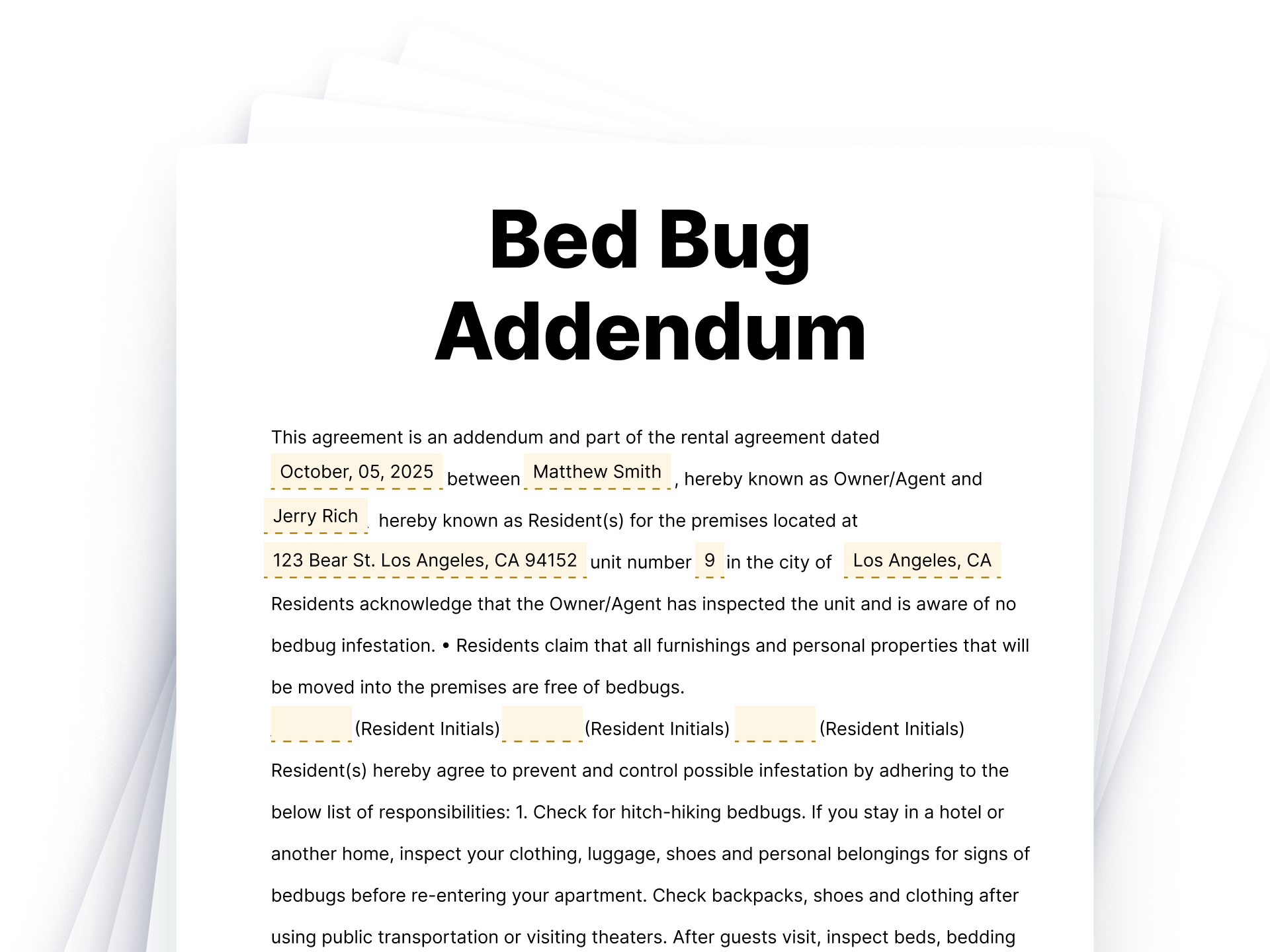
Our comprehensive bed bug addendum serves as an essential legal shield for landlords across the United States, clearly defining responsibilities, treatment procedures, and cost allocation between property owners and tenants. Ultimately, protecting your rental property investment from bed bug infestations requires more than just vigilant property management—it demands proper legal documentation. In short, the right addendum can save landlords thousands of dollars in disputes and treatment costs.
Download as PDF when complete
 Google Doc,
  PDF &
PDF &  Word) or create one online!
Why Every Landlord Needs a Bed Bug Addendum in 2026
Bed bug infestations have increased by over 300% in the past decade, making them one of the most common and costly issues facing rental property owners today. Without proper legal documentation, landlords often find themselves shouldering the entire financial burden of professional bed bug treatment, which can range from $1,000 to $5,000 per unit depending on the severity of the infestation. As a result, even a single unprotected unit can become a significant financial liability.
A well-crafted bed bug addendum protects your investment by:
- Establishing clear liability for treatment costs based on fault determination
- Creating legal documentation of property conditions at move-in
- Defining tenant responsibilities for prevention and early reporting
- Ensuring compliance with state and local disclosure requirements
- Preventing costly disputes through predetermined procedures
Key Components of an Effective Bed Bug Lease Addendum
Landlord Disclosure Requirements
Modern bed bug addendums must include comprehensive disclosure statements about any previous infestations, treatments, or ongoing issues within the building. In fact, many states now require landlords to provide written notice of bed bug history, making this disclosure both a legal necessity and a protective measure for property owners. Without this disclosure, landlords risk significant legal liability.
Tenant Prevention Responsibilities
Your addendum should clearly outline tenant obligations including immediate reporting requirements, cooperation with inspections, and restrictions on self-treatment attempts. Furthermore, these provisions help ensure early detection and professional treatment while preventing tenants from worsening infestations through improper DIY remedies. Without clear tenant obligations, early intervention becomes significantly harder to enforce.
Cost Allocation Framework
One of the most critical aspects of any bed bug addendum is establishing fair cost distribution for treatment expenses. Specifically, our template includes criteria for determining fault, ensuring landlords aren’t unfairly burdened with costs resulting from tenant negligence while maintaining compliance with tenant protection laws. Consequently, both parties benefit from a clear and enforceable cost framework.
State-Specific Bed Bug Laws and Compliance Requirements
Bed bug regulations vary significantly across the United States, with states like New York, California, and Illinois maintaining strict disclosure and treatment requirements. For example, some jurisdictions require specific language in lease agreements, while others mandate particular treatment protocols or impose strict timelines for addressing infestations. Overall, understanding your state’s specific rules is essential before finalizing any addendum.
Common state requirements include:
- Written disclosure of bed bug history within 12 months
- Mandatory professional treatment by licensed pest control operators
- Specific notice periods for inspections and treatments
- Restrictions on tenant liability for treatment costs
- Required provision of bed bug identification materials
Because requirements differ by location, always verify your state’s specific rules before finalizing your addendum.
Professional Treatment Standards and Documentation
Successful bed bug management requires working exclusively with licensed pest control professionals who understand integrated pest management (IPM) approaches. Therefore, your addendum should prohibit tenant attempts at self-treatment, which often spread infestations and create pesticide resistance issues. In particular, DIY treatments are one of the leading causes of worsening infestations in multi-unit properties.
Documentation Requirements
Professional treatment documentation serves as crucial legal protection, including inspection reports, treatment logs, follow-up schedules, and photographic evidence. Moreover, this documentation proves compliance with legal requirements and supports any cost allocation decisions outlined in your addendum.
Cost-Effective Prevention Strategies for Rental Properties
Regular Inspection Protocols
Implementing quarterly bed bug inspections, particularly in high-risk properties, can identify infestations before they become severe and expensive to treat. As a result, early detection saves both time and money while protecting your property’s reputation and tenant satisfaction.
Tenant Education Programs
Providing comprehensive bed bug identification guides and prevention tips reduces the likelihood of tenant-introduced infestations. In addition, educated tenants are more likely to report issues early and follow proper protocols, ultimately protecting your investment.
Property Maintenance Standards
Maintaining proper cleanliness standards, sealing cracks and crevices, and addressing moisture issues creates an environment less conducive to bed bug infestations. Consequently, these preventive measures complement your legal protections with practical risk reduction.
Digital Documentation and Record Management
Modern property management requires comprehensive digital record keeping for all bed bug-related communications, inspections, and treatments. Furthermore, cloud-based documentation systems ensure you can quickly access historical data for legal compliance and cost recovery purposes.
Essential records include:
- Tenant communication logs and written notices
- Professional inspection reports and photographs
- Treatment documentation and follow-up schedules
- Cost receipts and insurance claims
- Legal correspondence and dispute resolution records
Implementing Your Bed Bug Addendum: Best Practices
Integration with Existing Lease Documents
Your bed bug addendum should seamlessly integrate with your standard lease agreement while addressing specific local requirements. Additionally, ensure all current and future tenants receive copies of the addendum and acknowledge understanding through written signature.
Staff Training and Procedures
Property management staff must understand the procedures outlined in your addendum to ensure consistent implementation. Otherwise, gaps in knowledge can lead to costly mistakes in reporting protocols and legal compliance. Regular training, therefore, is not optional — it is essential for protecting your business.
Regular Review and Updates
Bed bug laws and best practices continue evolving, making regular addendum reviews essential for maintaining legal compliance and effectiveness. Therefore, annual reviews with qualified legal counsel ensure your documentation remains current and enforceable.
Download Your Free Bed Bug Addendum Template
Our professionally-drafted bed bug addendum template provides comprehensive legal protection while ensuring compliance with federal housing laws and common state requirements. In short, this customizable document serves as the foundation for protecting your rental property investment from costly bed bug disputes.
Template features:
- Comprehensive disclosure requirements
- Clear cost allocation guidelines
- Professional treatment standards
- Tenant responsibility definitions
- Record keeping requirements
- Legally-compliant termination procedures
Sample
FAQs
A bed bug addendum is a legal document attached to your lease that defines each party’s responsibilities for prevention, reporting, and treatment. Without one, landlords risk paying up to $5,000 out of pocket for professional treatment.
It depends on fault — if the infestation is linked to tenant negligence, the tenant may be held responsible. A proper cost allocation framework in your addendum determines this clearly.
In many states, yes — states like New York, California, and Illinois require written disclosure of any bed bug history within the past 12 months. Always verify your local requirements before finalizing your addendum.
No — DIY treatments often spread infestations and create pesticide resistance, making the problem worse. Your addendum should require all treatments to be handled by a licensed pest control professional.
At least once a year, since bed bug laws continue to evolve across different states. Annual reviews with legal counsel keep your addendum current and enforceable.