
Water Damage and Flooding Disclosure


(1)
Water Damage and Flooding Disclosure protects buyers from expensive repair costs and future water problems. Unfortunately, many sellers overlook critical details about past flooding and water intrusion when selling a property. As a result, this can lead to serious legal liability. This guide covers everything you need to know about disclosing past flooding, water damage, and drainage issues to prospective buyers.
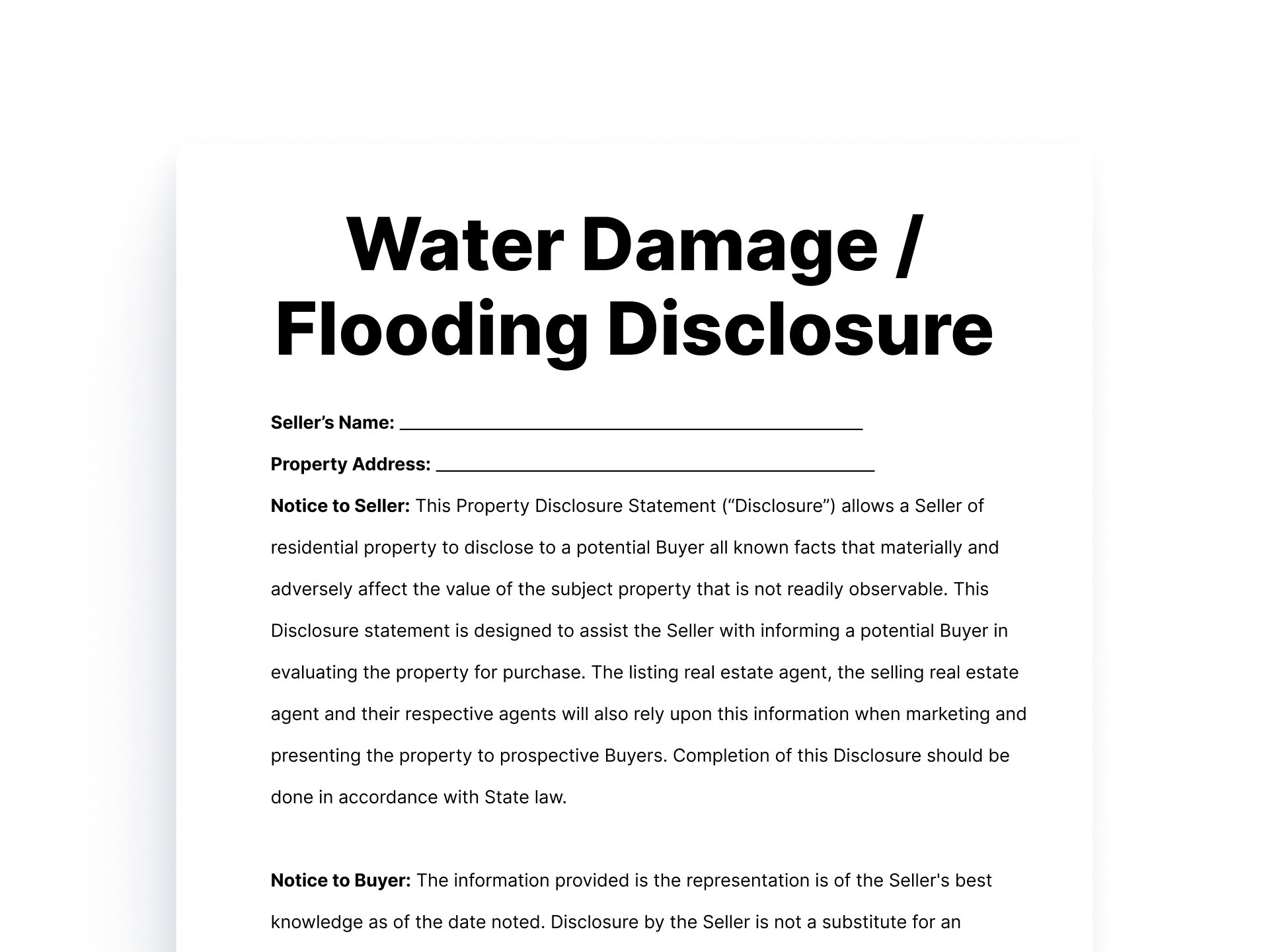
Download as PDF when complete
What Is Water Damage and Flooding Disclosure?
Water damage and flooding disclosure tells buyers about all water intrusion incidents and flooding history on a property. Specifically, it covers:
- Basement flooding and crawl space water intrusion
- Roof leaks and structural water damage
- Plumbing failures and storm damage
- Drainage problems and remediation efforts
- Future water risks
Why Water Damage and Flooding Disclosure Matters
Properties with any water damage history require full disclosure, even if repairs were completed. Buyers need this information to assess future water risk and estimate insurance costs. For this reason, complete water damage and flooding disclosure also prevents costly disputes after closing.
Understanding the Types of Water Damage
Flooding from External Sources
External flooding happens when water enters a property from outside. Common sources include:
- River flooding and flash floods
- Coastal storm surges
- Heavy rainfall accumulation
- Overwhelmed drainage systems
- Poor property grading
Some properties flood regularly during specific weather conditions or seasons. As a result, flood-prone properties often face higher insurance costs and habitability concerns. Sellers must disclose all of these patterns as part of their water damage and flooding disclosure.
Water Intrusion and Plumbing Failures
Water intrusion occurs through structural defects like foundation cracks, window leaks, or roof failures. These issues allow water to enter during rain events, causing interior damage. In addition, plumbing failures from burst pipes, water heater leaks, or washing machine malfunctions can cause significant water damage.
Structural water intrusion is especially dangerous because it often goes unnoticed until visible damage appears. Consequently, concealed moisture behind walls can cause mold growth and structural deterioration. Furthermore, aging plumbing systems face increasing failure risks and may need proactive replacement.
Legal Requirements for Water Damage and Flooding Disclosure
Federal and State Flooding Disclosure Laws
Federal law requires sellers to disclose whether a property is located in a Special Flood Hazard Area. Properties in these high-risk zones require flood insurance for federally backed mortgages. In addition, most states require comprehensive water damage and flooding disclosure in standard property disclosure statements.
Key state requirements include:
- California requires Natural Hazard Disclosure Statements identifying flood zone locations
- Texas mandates disclosure of property flooding within the previous five years
- Most states require disclosure even when water damage was fully repaired before the sale
Local Ordinances and Flood Zone Requirements
Local municipalities and counties often add their own water damage and flooding disclosure requirements. For example, counties may keep records of properties with repeated flooding or drainage complaints. Similarly, coastal communities have specific rules for disclosing hurricane damage and storm surge.
Sellers must also:
- Identify the property’s FEMA flood zone designation
- Explain the associated flood risks to buyers
- Disclose any flood insurance claims previously filed on the property
Properties in FEMA Zones A, AE, or V face the highest flooding risks and mandatory insurance requirements. Therefore, this information is essential for buyers to understand before making a purchase decision.
What Water Damage and Flooding Disclosure Must Include: Flooding History
Documented Flood Events and Drainage Issues
For each flooding incident during your ownership, disclose:
- Dates and water depth levels
- Areas of the property affected
- Source of the flooding, such as storms, rising rivers, or coastal surges
- Frequency and seasonal patterns if flooding occurs regularly
In addition, report any stormwater drainage problems that cause water to accumulate on the property. Poor grading, inadequate drainage systems, or overwhelmed storm sewers all contribute to flooding. Moreover, disclose whether neighboring properties drain toward yours, creating recurring water problems.
What Water Damage and Flooding Disclosure Must Include: Water Intrusion
Roof, Foundation, and Window Leak Disclosure
Disclose all roof leaks that occurred during your ownership, including:
- Leak locations and severity
- When leaks occurred and how long they lasted
- Interior damage caused, such as ceiling repairs or mold remediation
- All repairs completed and by whom
In addition, disclose all foundation water intrusion, including:
- Seepage, cracks, or groundwater infiltration
- Chronic basement dampness during rain events
- Water intrusion through windows or doors during wind-driven rain
Furthermore, full disclosure of roof and foundation issues is one of the most important parts of any water damage and flooding disclosure.
What Water Damage and Flooding Disclosure Must Include: Drainage Problems
Grading, Gutters, and Underground Water Issues
Poor drainage is a leading cause of water damage. As a result, sellers must disclose:
- Inadequate property grading that directs water toward the foundation
- Ponding water near the home or in the yard
- Grading corrections attempted and their effectiveness
- Malfunctioning gutters and downspouts that contribute to water damage
- Overflow damage to siding, foundations, or landscaping from clogged gutters
In addition, report any underground water sources, natural springs, or high water tables that affect the property. These conditions can cause ongoing moisture issues that buyers need to plan for.
What Water Damage and Flooding Disclosure Must Include: Remediation and Repairs
Water Damage Repairs and Mold Remediation Disclosure
For every water damage repair completed during ownership, disclose:
- Affected areas and scope of work performed
- Completion dates and contractor details
- Permits pulled and warranties provided
- What caused the damage and whether the root issue was fully fixed
In addition, disclose any mold growth discovered during your ownership, including:
- Mold locations and extent of contamination
- Removal methods used
- Post-remediation testing results and clearance certificates
Furthermore, disclose all waterproofing systems installed, such as interior drainage systems, exterior waterproofing membranes, or foundation sealants. These improvements are valuable to buyers and demonstrate responsible ownership.
What Water Damage and Flooding Disclosure Must Include: Insurance Claims
Filed Claims and Coverage Details
Disclose all insurance claims related to water damage or flooding, including:
- Claim dates and amounts received
- What damages each claim covered
- Any denied claims and the reasons provided by the insurer
- Whether insurers required specific repairs or improvements to maintain coverage
In addition, provide information about flood insurance policy details, such as:
- Coverage limits and deductibles
- Coverage exclusions buyers should be aware of
It is important to note that standard homeowners insurance does not cover flood damage. Consequently, buyers may need to purchase a separate flood insurance policy, and your water damage and flooding disclosure should make this clear.
Consequences of Inadequate Water Damage and Flooding Disclosure
Financial Liability for Undisclosed Water Damage
Sellers who fail to disclose water damage history face serious financial consequences. For instance, recurring water intrusion from undisclosed sources can cost tens of thousands of dollars in repairs. In addition, courts typically order sellers to pay full remediation costs when non-disclosure is proven.
Undisclosed water damage that leads to mold growth also creates health risks for buyers. As a result, properties with mold require expensive remediation before they are livable again.
Impact on Property Value After Water Damage Non-Disclosure
Even after repairs, water damage history can significantly reduce a property’s market value. Furthermore, appraisers routinely reduce valuations for properties with flooding or water intrusion histories. Consequently, buyers may offer far less — or walk away entirely — once undisclosed water issues come to light.
Fraud Claims and Contract Rescission Risks
Intentionally hiding flooding history is considered fraud and can result in punitive damages. In addition, buyers may rescind the contract entirely if they discover material water damage was not disclosed. In the most serious cases, fraudulent water damage and flooding disclosure can result in criminal charges. Therefore, full and honest disclosure is always the safer and smarter choice for sellers.
Best Practices for Water Damage and Flooding Disclosure
Document and Inspect Thoroughly Before Listing
To prepare a complete water damage and flooding disclosure, sellers should:
- Keep detailed records of every water intrusion or flooding event during ownership
- Gather photographs, repair invoices, insurance claims, and contractor reports
- Create a chronological timeline of all water damage incidents and corrective actions
- Hire a professional inspector to check for hidden moisture before listing
- Use moisture meters and thermal imaging to identify concealed water damage
Professional inspections reveal hidden problems early, allowing sellers to make proactive repairs and disclosures. As a result, this reduces the risk of disputes after closing.
Provide Complete Documentation in Your Flooding Disclosure
Compile all of the following before submitting your water damage and flooding disclosure:
- Repair invoices, permits, and completion certificates for all water damage work
- Remediation protocols and mold clearance certificates
- Post-repair testing results confirming issues were fully resolved
- Contractor warranties for waterproofing or drainage improvements
In addition, include any concerns about potential future water problems, even without concrete evidence. For example, properties near flood zones or with marginal drainage may face future risks that buyers should know about. Furthermore, explain any seasonal conditions that could contribute to water problems after purchase.
Water Damage and Flooding Disclosure: Key Takeaways
Water damage and flooding disclosure keeps both buyers and sellers protected by ensuring all water-related history is shared before closing. To do it properly, document every water incident, get professional inspections, and compile all repair records, mold certificates, and insurance claims. Full disclosure builds buyer trust and shields sellers from costly legal consequences.
FAQs
Water damage and flooding disclosure informs buyers about all past water intrusion incidents, flooding history, drainage problems, remediation efforts, and future water risks on a property being sold.
Yes — federal law requires disclosure of Special Flood Hazard Area locations, and most states mandate full water damage and flooding disclosure even when damage was fully repaired before the sale.
Sellers must disclose all flooding incidents, roof and foundation leaks, plumbing failures, drainage problems, mold growth, remediation efforts, and any insurance claims filed for water-related damage.
Sellers who conceal water damage history face liability for future repair costs, fraud lawsuits with punitive damages, and buyers may rescind the contract entirely upon discovering the non-disclosure.
Sellers should maintain detailed records of every water incident, hire a professional inspector to identify hidden moisture problems, and compile all repair invoices, permits, mold clearance certificates, and insurance claim documentation before listing the property.