
Washington Lease Agreement
A Washington rental lease agreement establishes a legally binding contract between landlords and tenants. This comprehensive document outlines rental terms, payment obligations, property rules, and the rights of both parties. The agreement protects landlord investments while ensuring tenants understand their responsibilities throughout the tenancy.
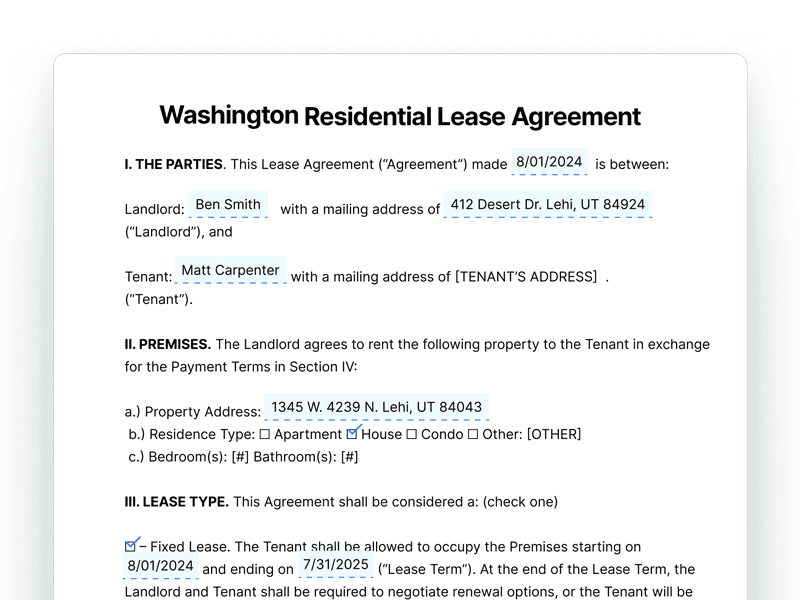


Understanding Washington Lease Agreement Requirements
State Legal Framework
Washington landlord tenant law provides strong tenant protections while establishing clear obligations for property owners. The Washington Residential Landlord-Tenant Act (RCW Chapter 59.18) establishes comprehensive rights and responsibilities for both parties. Washington has enacted significant tenant protections in recent years, including just cause eviction requirements, limitations on move-in fees, and specific notice requirements. Understanding these regulations is essential for Washington landlords. The Washington rental lease agreement becomes enforceable when both parties sign the document, creating mutual obligations that govern the entire landlord-tenant relationship under Washington’s Residential Landlord-Tenant Act.
Written Agreement Standards
Washington does not legally require written lease agreements for tenancies under one year. However, creating a written residential lease agreement Washington landlords can reference provides essential documentation and legal protection. Given Washington’s extensive tenant protections, written agreements become critical for compliance and dispute resolution.
Essential Elements of a Washington Lease Agreement
Parties and Property Identification
Complete Party Information Every Washington lease agreement template should identify all parties involved in the rental arrangement. Required information includes:
- Full legal names of all landlords or property managers
- Full legal names of all adult tenants
- Complete property address including unit numbers
- Legal property description when applicable
Accurate identification prevents confusion about who holds rights and responsibilities under the agreement.
Lease Term and Duration
Fixed-Term Agreements Fixed-term leases establish specific start and end dates for tenancies. Most Washington rental contracts run for 12-month periods, though landlords can create agreements for any duration. Fixed-term leases provide stability for both parties and establish clear expectations about tenancy length.
Month-to-Month Arrangements Month-to-month rental agreements automatically renew each month until either party provides proper termination notice. Washington requires at least 20 days written notice to terminate month-to-month tenancies. However, under just cause eviction requirements, landlords must have a valid reason to terminate.
Rent Payment Terms
Payment Obligations Washington lease agreements must clearly state rent payment requirements including:
- Monthly rent amount
- Payment due date
- Accepted payment methods
- Where tenants should submit payments
- Grace period provisions
Washington law does not mandate a specific statewide grace period, though some local jurisdictions require grace periods. Landlords should clearly specify any grace period terms in lease agreements.
Late Fee Provisions Washington does not impose specific statutory caps on late fee amounts statewide, but fees must be reasonable. Some local jurisdictions have late fee limitations. Seattle, for example, limits late fees to $10 per month for the first month. Late fee policies should appear clearly in the rental agreement Washington tenants receive.
Security Deposit Requirements in Washington
Deposit Limits and Handling
No Statutory Cap Washington places no statewide statutory limit on security deposit amounts. However, landlords cannot collect more in total move-in costs (deposits plus fees) than one month’s rent in certain cities like Seattle. Most landlords collect deposits equal to one month’s rent.
No Separate Account Requirements Washington does not require landlords to hold security deposits in separate escrow accounts or pay interest on deposited funds statewide. However, Seattle requires deposits to be held in trust accounts.
Move-In Fee Limitations
Washington enacted significant limitations on move-in costs effective 2024:
- Tenants can request installment payment plans for deposits and fees
- Landlords must offer installments for move-in costs exceeding one month’s rent
- Payment plans must allow at least three months to pay
Checklist Requirements
Washington requires landlords to provide a written checklist or statement describing the condition and cleanliness of the unit at move-in. The checklist must:
- Describe the condition of the premises
- Be provided to the tenant at the beginning of tenancy
- Be signed by both landlord and tenant
This documentation is essential for security deposit disputes.
Return Procedures
21-Day Timeline Washington landlords must return security deposits within 21 days after tenants vacate properties. This timeline applies to both the deposit return and required itemized statements of deductions.
Full Statement Requirements Washington requires landlords to provide a full statement specifically identifying:
- The basis for any deductions
- The estimated or actual cost of repairs
- Evidence of charges (receipts or good faith estimates)
- Any amounts retained for unpaid rent
Allowable Deductions Landlords can deduct from security deposits for:
- Unpaid rent
- Damage beyond normal wear and tear
- Costs to restore property to move-in condition
- Cleaning costs if not left in same condition
- Unpaid utility charges
- Other charges authorized in the lease agreement
Wrongful Withholding Penalties
Washington imposes significant penalties on landlords who wrongfully withhold security deposits. Landlords who fail to return deposits or provide proper documentation within 21 days may be liable for:
- The full deposit amount
- Up to two times the deposit amount in penalties
- Court costs and reasonable attorney fees
These penalties make compliance with security deposit requirements essential.
Required Disclosures for Washington Rental Agreements
Lead-Based Paint Disclosure
Federal law mandates lead-based paint disclosures for all rental properties built before 1978. Washington landlords must provide:
- Written disclosure of known lead-based paint presence
- EPA pamphlet “Protect Your Family from Lead in Your Home”
- Ten-day opportunity for lead inspection
- Signed acknowledgment of disclosure receipt
Owner/Agent Identification
Washington requires landlords to disclose:
- Name and address of the property owner
- Name and address of any person authorized to manage the property
- Name and address of person authorized to receive legal notices
This information must be provided in the lease agreement or posted conspicuously on the premises.
Move-In Checklist
Washington requires landlords to provide a written checklist describing the condition and cleanliness of the unit and furnishings at the commencement of the tenancy. Both parties should sign and retain copies.
Mold Disclosure
Washington requires landlords to provide information about mold:
- The health hazards of mold
- How to prevent mold growth
- How to report mold to the landlord
This disclosure must be provided in writing.
Fire Safety and Smoking Policy
Washington requires landlords to disclose:
- The smoking policy for the premises
- Information about fire safety
- Location of fire extinguishers and smoke detectors
Flood Zone Disclosure
Washington does not mandate flood zone disclosure statewide, but landlords should consider disclosing flood zone status as a best practice, particularly in flood-prone areas.
Bed Bug Disclosure
Washington does not require specific bed bug disclosures statewide. Best practices include:
- Disclosing known infestation history
- Establishing reporting procedures in lease terms
- Clarifying treatment responsibilities
Radon Disclosure
Washington does not mandate radon disclosure but recommends testing and disclosure as a best practice. Parts of Washington have elevated radon levels.
Nonrefundable Fee Disclosure
Washington requires landlords to clearly identify any fees that are nonrefundable. If a fee is nonrefundable, it must be specifically designated as such in the lease agreement.
Landlord and Tenant Rights Under Washington Law
Landlord Obligations
Warranty of Habitability Washington imposes strong implied warranty of habitability requirements on landlords. Required maintenance includes:
- Compliance with all applicable building and housing codes materially affecting health and safety
- Making all repairs necessary to keep premises fit and habitable
- Keeping common areas clean and safe
- Maintaining electrical, plumbing, sanitary, heating, ventilating, and air conditioning systems
- Providing running water and adequate hot water
- Providing adequate heat
- Maintaining working smoke detectors and carbon monoxide detectors
- Providing garbage receptacles and arranging for removal
- Extermination of pest infestations (including bed bugs)
- Maintaining weathertight conditions
- Providing secure locks on doors and windows
- Maintaining supplied appliances
Landlords must make repairs within 10 days after receiving written notice from tenants for most repairs. For conditions imminently hazardous to life, landlords must respond within 24 hours.
Property Access Rights Washington requires landlords to provide at least two days (48 hours) advance notice before entering rental properties. This is longer than many states. Entry must occur at reasonable times for legitimate purposes including:
- Inspections
- Repairs and maintenance
- Showing property to prospective tenants or buyers
- Emergencies (no notice required)
Landlords cannot abuse the right of access or use it to harass tenants.
Tenant Responsibilities
Property Care Standards Tenants must maintain rental units according to Washington statutory requirements including:
- Keeping the property clean and sanitary
- Using electrical, plumbing, heating, and other systems properly
- Disposing of garbage in a clean and sanitary manner
- Not deliberately or negligently destroying property
- Not disturbing neighbors’ peaceful enjoyment
- Complying with housing and building codes
- Allowing reasonable landlord access with proper notice
- Maintaining smoke and carbon monoxide detectors (battery replacement)
- Properly using facilities and appliances
Just Cause Eviction Requirements
Statewide Just Cause Protections
Washington enacted statewide just cause eviction requirements effective 2021. Landlords cannot terminate tenancies without a valid cause after the initial lease term. Permissible causes include:
Tenant-Based Causes:
- Nonpayment of rent
- Material lease violations (after notice and opportunity to cure)
- Criminal activity
- Nuisance behavior
- Failure to comply with material terms
Landlord-Based Causes:
- Owner or immediate family member plans to occupy the unit
- Sale of the property to a buyer who will occupy
- Major renovation requiring vacancy
- Demolition of the property
- Change of use from residential
- Removal from rental market
For landlord-based causes, landlords must typically provide:
- 90-day notice
- Relocation assistance equal to one month’s rent (in some circumstances)
Seattle Additional Protections
Seattle has even stronger just cause eviction requirements:
- 16 enumerated just causes for eviction
- Relocation assistance requirements
- First-in-time tenant selection rules
- Additional notice requirements
Lease Termination and Eviction Procedures
Voluntary Termination
Notice Requirements Washington termination notice requirements depend on lease type:
- Fixed-term leases convert to month-to-month after expiration (cannot be non-renewed without cause)
- Month-to-month tenancies require 20 days written notice from tenants
- Landlords must have just cause and provide proper notice (typically 60-90 days depending on cause)
Eviction Processes
Washington uses unlawful detainer actions for evictions.
Nonpayment of Rent Washington landlords can begin eviction proceedings when tenants fail to pay rent. The process requires:
- 14-day notice to pay rent or vacate
- Filing unlawful detainer action if tenant fails to comply
- Court hearing and judgment
- Writ of restitution for physical removal
Lease Violations Landlords can pursue eviction for material lease violations:
- 10-day notice to comply or vacate (for curable violations)
- Court filing after notice period expires
- Court proceedings and judgment
Nuisance or Illegal Activity:
- 3-day notice for waste, nuisance, or illegal activity
- Immediate court filing
Retaliatory Eviction Protections
Washington prohibits retaliatory evictions. Landlords cannot evict or retaliate against tenants for:
- Complaining about code violations to appropriate governmental agencies
- Exercising legal rights under the Residential Landlord-Tenant Act
- Organizing or joining tenant unions
- Reporting landlord misconduct
- Asserting fair housing rights
Retaliatory actions within 90 days of protected activity are presumed retaliatory.
Creating an Effective Washington Lease Agreement
Documentation Best Practices
Comprehensive Terms Strong Washington lease agreements include provisions addressing:
- Pet policies and deposits
- Guest and occupancy limits
- Maintenance responsibilities
- Utility payment assignments
- Parking and storage rules
- Noise and conduct standards
- Renewal and termination procedures
- Entry notice procedures (48 hours minimum)
- Smoking policy
- Move-in checklist acknowledgment
- Mold disclosure acknowledgment
- Nonrefundable fee identification
- Just cause eviction acknowledgment
Professional Templates Using a Washington lease agreement template ensures contracts include all legally required elements. Given Washington’s just cause eviction requirements, move-in checklist mandate, and mold disclosure obligations, professional templates help landlords maintain compliance.
Tenant Screening Integration
Application Procedures Thorough tenant screening before lease signing helps landlords select reliable tenants. Washington limits screening fees. Seattle has additional limitations:
- First-in-time tenant selection required in Seattle
- Limitations on criminal history screening
- Income verification limitations in some jurisdictions
Washington prohibits discrimination based on source of income. Criminal history screening has significant limitations statewide.
Washington-Specific Considerations
Seattle Metro Area
The Seattle metropolitan area dominates Washington’s rental market:
- Highest rental rates in the state
- Extensive local tenant protections beyond state law
- Just cause eviction with 16 enumerated causes
- First-in-time tenant selection
- Relocation assistance requirements
- Move-in cost limitations
- University of Washington student market
- Tech industry employment (Amazon, Microsoft)
- Strong rental demand
Seattle-Specific Regulations
Seattle has extensive additional tenant protections:
- Rental registration and inspection program
- First-in-time tenant selection requirement
- Limitations on screening criteria
- Security deposit alternatives required
- Move-in fee installment requirements
- Relocation assistance for certain terminations
- Winter eviction limitations
- Late fee limitations ($10 per month first month)
- Source of income discrimination prohibited
Tacoma Area
Tacoma presents distinct dynamics:
- More affordable than Seattle
- Growing rental demand
- Local tenant protections
- University of Puget Sound student market
- Joint Base Lewis-McChord military tenant market
- Port and logistics employment
Spokane Area
Eastern Washington’s largest city:
- More affordable rental rates
- Gonzaga University student market
- Fairchild Air Force Base proximity
- Different climate and market dynamics
- Less stringent local regulations than Seattle
Bellingham and Northwest Washington
Bellingham offers unique characteristics:
- Western Washington University student market
- Canadian border proximity
- Outdoor recreation focus
- Growing tech presence
- Progressive tenant protections
College Town Rentals
Washington has significant college student rental markets:
- University of Washington (Seattle)
- Washington State University (Pullman)
- Western Washington University (Bellingham)
- Gonzaga University (Spokane)
- University of Puget Sound (Tacoma)
- Seattle University
- Central Washington University (Ellensburg)
- Eastern Washington University (Cheney)
Landlords in college areas should consider:
- Academic year lease terms
- Parental guarantor requirements
- Move-in/move-out timing around semesters
- Multiple roommate arrangements
- Summer subletting provisions
Military Tenant Considerations
Washington’s military presence requires understanding:
- Service members Civil Relief Act (SCRA) protections
- Lease termination rights upon deployment or PCS orders
- Joint Base Lewis-McChord (JBLM) tenant considerations
- Naval Base Kitsap (Bremerton, Bangor)
- Fairchild Air Force Base (Spokane)
- Naval Station Everett
- Coast Guard presence
- Washington National Guard activations
- Eviction protections during active duty
Tech Industry Impact
Washington’s tech sector significantly affects rentals:
- Amazon, Microsoft, Google presence
- High-income tenant pool
- Corporate relocation housing needs
- Competition for quality rentals
- Eastside (Bellevue, Redmond, Kirkland) premium markets
Earthquake Considerations
Washington has earthquake risk:
- Seismic safety awareness
- Building code considerations
- Emergency preparedness provisions
- Unreinforced masonry building concerns
- Cascadia Subduction Zone awareness
Rain and Moisture Considerations
Western Washington’s wet climate creates considerations:
- Mold prevention in lease terms (disclosure required)
- Ventilation requirements
- Prompt response to moisture issues
- Gutter and drainage maintenance
- Weatherproofing requirements
Winter Weather Provisions
Washington weather varies by region:
- Western Washington: rain and mild temperatures
- Eastern Washington: cold winters, snow
- Mountain areas: significant snowfall
- Heating system maintenance
- Snow removal in eastern regions
Short-Term Rentals
Washington regulates short-term rentals at local levels:
- Seattle strict STR regulations
- Local registration and licensing varies
- Transient occupancy tax obligations
- Platform regulations (Airbnb, VRBO)
- HOA restrictions common
HOA and Condominium Rentals
Many Washington rentals occur within HOAs:
- Association approval requirements
- Tenant compliance with CC&Rs
- Rental restrictions and caps common
- Application processes and fees
- Seattle condo rental regulations
Manufactured Housing
Washington has manufactured housing protections:
- Manufactured/Mobile Home Landlord-Tenant Act
- Strong tenant protections in mobile home parks
- Specific notice requirements
- Relocation assistance for park closures
- Right of first refusal for park sales
Cannabis Considerations
Washington has legalized recreational cannabis:
- Landlords can prohibit cannabis smoking in lease agreements
- Cannot discriminate based on lawful cannabis use
- Smoking policy disclosure required
- Growing restrictions may be imposed
- Federal housing programs maintain prohibitions
Source of Income Protections
Washington prohibits discrimination based on source of income:
- Housing Choice Voucher (Section 8) acceptance required statewide
- Other lawful sources of income protected
- Cannot refuse based on source of income
- Reasonable screening criteria still permitted
Criminal History Screening Limitations
Washington limits criminal history screening:
- Cannot automatically reject based on criminal history
- Must conduct individualized assessment
- Lookback period limitations
- Arrest record limitations
- Seattle has additional restrictions
Flood and Landslide Considerations
Parts of Washington have flood and landslide risks:
- River valley flooding
- Coastal flooding
- Landslide-prone areas (hillsides)
- Disclosure recommended for known risks
Ferry-Dependent Communities
Island and peninsula communities have unique dynamics:
- Bainbridge Island, Vashon Island
- Kitsap Peninsula
- San Juan Islands
- Ferry schedule impacts
- Limited rental inventory
Security Deposit
| TOPIC | RULE |
| Security Deposit Maximum: | No statute. |
| Security Deposit Interest: | The landlord is entitled to receipt of interest paid on trust account deposits, unless otherwise agreed to by both parties in writing. Wash. Rev. Code § 59.18.270 |
| Separate Security Deposit Bank Account: | A separate bank account is required to hold security deposits. Wash. Rev. Code § 59.18.270 |
| Non-refundable fees: | Non-refundable fees are permitted, but they must be part of the security deposit. They must be clearly specified as “non-refundable fees” in the written lease agreement. Wash. Rev. Code § 59.18.285 |
| Pet Deposits and Additional Fees: | Pet deposits are permitted. Wash. Rev. Code § 59.18.285 |
| Deadline for Returning Security Deposit: | Landlords must return the security deposit within 21 days. Wash. Rev. Code § 59.18.280 |
| Permitted Uses of the Deposit: | No statute. |
| Security Deposit can be Withheld: | No statute. |
| Require Written Description/Itemized List of Damages and Charges: | The landlord is required to provide a tenant with an itemized list of damages and charges in writing. Wash. Rev. Code § 59.18.280 |
| Receipt of Security Deposit: | The landlord shall provide a written receipt for all deposits and must provide written notice of the name, address, and location of the depository (and any subsequent change thereof). Wash. Rev. Code § 59.18.270 |
| Record Keeping of Deposit Withholdings: | Not statute. |
| Failure to Comply: | If the landlord collects a security deposit without providing the mandatory written checklist of the commencement of the tenancy, the landlord is liable to the tenant for the entirety of the deposit amount. The prevailing party is entitled to recover court costs and reasonable attorneys’ fees. Wash. Rev. Code § 59.18.260 |
Lease, Rent & Fees
| TOPIC | RULE |
| Rent is Due: | No statute. |
| Payment Methods: | No statute. |
| Rent Increase Notice: | A 30-day written notice is required for month-to-month leases. Wash. Rev. Code § 59.18.140 |
| Late Fees: | No statute. |
| Application Fees: | No statute. |
| Prepaid Rent: | No statute. |
| Returned Check Fees: | Returned check fees are allowed, but must not exceed $40.00, or the face amount of the check – whichever is less. Wash. Rev. Code § 62A.3-515 |
| Tenant Allowed to Withhold Rent for Failure to Provide Essential Services (Water, Heat, etc.): | The tenant is allowed to withhold payment, but must also notify the appropriate government authorities. The tenant must also deposit the withheld rent into an escrow account. Wash. Rev. Code § 59.18.115 |
| Tenant Allowed to Repair and Deduct Rent: |
If a rental unit requires repairs that the landlord is responsible for, and the landlord fails to make these repairs in a timely manner, tenants have the right to make repairs themselves. The tenant is able to deduct the cost of the repairs from their rent, subject to certain conditions. Repairs Requiring a Licensed Professional: – If the repair requires a licensed professional (ex: electrical, plumbing, or other specialized work), the tenant must: Provide the landlord with an estimate of the repair costs before the work is performed. Ensure that the total cost of the repair does not exceed the total of two months’ rent. Repairs Not Requiring a Licensed Professional: – For repairs that do not require a licensed professional (ex: basic maintenance or cosmetic repairs), the tenant is allowed to perform the repairs themselves. However, there are limits: The cost of repairs must not exceed one month’s rent.The total cost of repairs that a tenant deducts from rent in a 12-month period cannot exceed one month’s rent in total. Was. Rev. Code § 59.18.100 |
| Self-Help Evictions: | No statute. |
| Landlord Allowed to Recover Court and Attorney’s Fees: | The landlord is allowed to recover court and attorney fees. Wash. Rev. Code § 59.18.280 |
| Landlord Must Make a Reasonable Attempt to Mitigate Damages to Lessee, including an Attempt to Re-rent: | The landlord must make a reasonable attempt. Wash. Rev. Code § 59.18.310 |
Notices and Entry
| TOPIC | RULE |
| Notice to Terminate Tenancy: | No notice is required because the lease simply expires. Wash. Rev. Code § 59.04.030 |
| Notice to Terminate a Periodic Lease – Month-to-Month: | Landlords are required to give 20 days or more of notice from the lease expiration. Less than 20 days’ notice is permitted for any tenant who is a member of the armed forces or receives orders of deployment. Wash. Rev. Code § 59.18.200(1a-b) |
| Notice to Terminate a Periodic Lease – Week-to-week: | No statute. |
| Notice to Terminate Lease due to Sale of Property: | No statute. |
| Notice of date/time of Move-Out Inspection: | No statute. |
| Notice of Termination for Nonpayment: | Landlords are required to give tenants three days’ notice. Wash. Rev. Code § 59.12.030(3) |
| Notice for Lease Violation: | Landlords are required to give tenants 10 days’ notice. If there is illegal or nuisance activity, landlords are required to give three days’ notice. Wash. Rev. Code § 59.12.030 |
| Required Notice before Entry: | Landlords must give two days’ notice.` Wash. Rev. Code § 59.18.150(6) |
| Entry Allowed with Notice for Maintenance and Repairs: | Entry is permitted with notice. Wash. Rev. Code § 59.18.150(6) |
| Emergency Entry Allowed without Notice: | Yes, emergency entry without notice is allowed. Wash. Rev. Code § 59.18.150(5) |
| Entry Allowed During Tenant’s Extended Absence: | No statute. |
| Entry Allowed with Notice for Showing the Property: | Landlords may enter to show the property but must give at least one day’s notice. Wash. Rev. Code § 59.18.150(6) |
| Notice to Tenants for Pesticide Use: | No statute. |
| Lockouts Allowed: | Lockouts are not allowed. Wash. Rev. Code § 59.18.290 |
| Utility Shut-offs Allowed: | No, the landlord is obligated to pay actual damages plus $100/day of disrupted service. They are also responsible for any court/attorney costs. Wash. Rev. Code § 59.18.300 |
| Electronic Notices Allowed: | no |
Disclosures
- Name and Addresses: Landlord must disclose name and address of owner and agent. (Wash. Rev. Code § 59.18.060)
- Copy of the Lease: Tenant must receive a copy of the lease. (Wash. Rev. Code § 59.18.065)
- Domestic Violence Situations: Victims may terminate lease with proof. (Wash. Rev. Code § 59.18.575)
Duties
Landlord’s Duties
- Compliance: Must comply with housing codes. (Wash. Rev. Code § 59.18.060)
- Repairs: Maintain habitable premises. (Wash. Rev. Code § 59.18.060)
- Common Areas: Keep clean and safe. (Wash. Rev. Code § 59.18.060)
- Maintenance: Provide essential services. (Wash. Rev. Code § 59.18.060)
- Garbage: Provide waste removal. (Wash. Rev. Code § 59.18.060)
Tenant’s Duties
- Cleanliness: Maintain unit clean. (Wash. Rev. Code § 59.18.130)
- Trash: Dispose properly. (Wash. Rev. Code § 59.18.130)
- Plumbing: Use fixtures properly. (Wash. Rev. Code § 59.18.130)
- Appliances: Use responsibly. (Wash. Rev. Code § 59.18.130)
- Damage: Avoid damaging property. (Wash. Rev. Code § 59.18.130)
- Quiet Enjoyment: Do not disturb others. (Common law)
- Subleasing: Permitted with consent. (Lease-specific)
- Retaliation: Not permitted. (Wash. Rev. Code § 59.18.240)
- Lead Disclosure: Required by federal law.
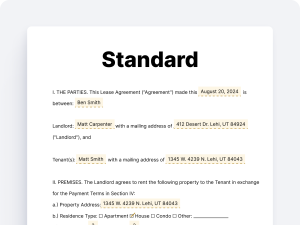
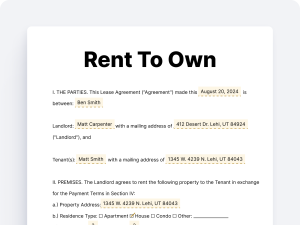
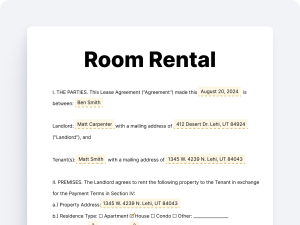
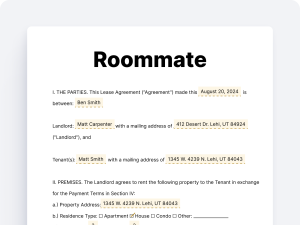
By Type (19)
Protecting Your Washington Rental Investment
A well-drafted Washington rental lease agreement forms the foundation of successful property management. Given Washington’s just cause eviction requirements, move-in checklist mandate, source of income protections, and extensive Seattle-specific regulations, comprehensive documentation and strict compliance become essential. Clear terms addressing mold disclosure, entry notice requirements, and just cause provisions protect both landlord and tenant interests.
RocketRent provides Washington lease agreement templates designed to meet state and local requirements while protecting landlord investments. Our platform streamlines property management with integrated tools for lease creation, rent collection, and tenant screening. Create your Washington rental lease agreement today and manage your properties with confidence.
Washington Lease Agreement PDF
FAQs
Washington does not legally require written lease agreements for tenancies under one year. However, written agreements are strongly recommended given Washington’s extensive tenant protections and just cause eviction requirements.
Washington places no statewide statutory limit on security deposit amounts. However, Seattle limits total move-in costs to one month’s rent, and tenants statewide can request installment payment plans for move-in costs exceeding one month’s rent.
Washington landlords must return security deposits within 21 days after the tenant vacates. Wrongful withholding may result in liability for up to two times the deposit amount plus attorney fees.
Tenants must provide 20 days written notice. Landlords must have just cause for termination under Washington’s statewide just cause eviction requirements, with notice periods typically ranging from 60-90 days depending on the cause.
Washington requires landlords to provide at least two days (48 hours) advance notice before entering rental properties. This is longer than most states. Entry must occur at reasonable times except for emergencies.
Washington requires landlords to disclose owner/agent identification, move-in checklist, mold information, smoking policy, and clearly identify nonrefundable fees. Properties built before 1978 require federal lead-based paint disclosures.
Yes, Washington has statewide just cause eviction requirements effective 2021. Landlords cannot terminate tenancies without a valid cause after the initial lease term. Seattle has even stronger protections with 16 enumerated causes.