
Radon Gas Disclosure


(1)
Radon Gas Disclosure protects both landlords and tenants from serious health risks. Many property owners overlook this critical safety requirement, which can lead to legal liability and health problems. In short, this guide explains everything landlords need to know about disclosing radon testing results and potential risks.
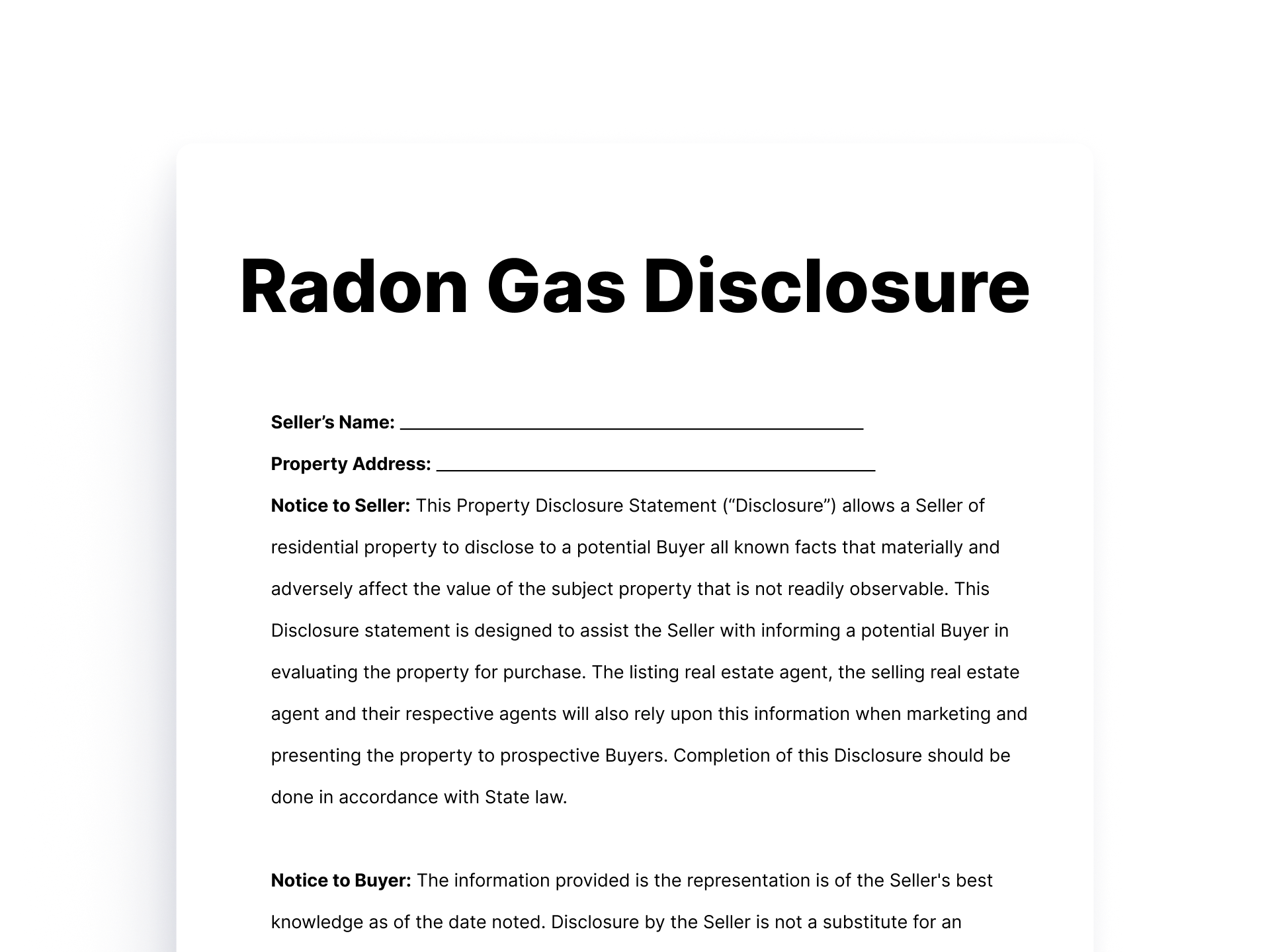
Download as PDF when complete
What Is Radon Gas and Why Does It Require Disclosure?
Radon is a naturally occurring radioactive gas that comes from uranium decay in soil and rock. This colorless, odorless gas seeps into buildings through cracks in foundations, floors, and walls. Additionally, radon enters through construction joints, gaps around pipes, and porous building materials.
The EPA identifies radon as the leading cause of lung cancer among non-smokers. Long-term exposure causes approximately 21,000 lung cancer deaths annually in the United States. Furthermore, radon risk increases for individuals who smoke cigarettes. Basements and ground-floor rooms typically have the highest radon levels, but dangerous concentrations can occur anywhere in a building.
Federal Radon Gas Disclosure Requirements
Federal Guidelines for Radon Disclosure
The federal government does not require radon testing or disclosure for residential rental properties. However, federal guidelines strongly recommend radon testing and disclosure as best practice. The EPA provides extensive resources about radon risks, testing, and mitigation. Moreover, the EPA recommends action when radon levels exceed 4.0 picocuries per liter (pCi/L).
HUD and Federal Mortgage Radon Standards
The Department of Housing and Urban Development encourages radon testing in federally assisted housing. HUD guidelines suggest disclosing known radon problems to prospective tenants. Furthermore, federal mortgage programs may require radon testing for certain property transactions.
State Radon Gas Disclosure Laws
States With Mandatory Radon Disclosure Requirements
Laws per state vary significantly regarding radon disclosure for rental properties. Some states mandate testing and disclosure while others have no specific requirements. For example:
- Illinois requires landlords to provide radon disclosure pamphlets before lease signing
- Maine mandates disclosure of all known radon testing results
- Florida requires sellers to disclose known radon issues, though rental requirements differ
Some states require disclosure only when previous testing revealed elevated radon levels. Moreover, some states require annual radon disclosures for lease renewals in affected properties.
States With Recommended Radon Disclosure
Many states recommend radon gas disclosure without legally requiring it. These guidelines encourage voluntary testing as responsible property management. However, landlords may still face liability for concealing known radon hazards. State health departments often provide free testing resources and educational materials.
Landlord Liability Regardless of State Laws
Landlords can face legal liability for radon exposure even without specific disclosure laws. General premises liability requires property owners to address known hazardous conditions. Furthermore, the implied warranty of habitability may cover protection from dangerous radon levels. Courts increasingly recognize radon as a material defect requiring disclosure, so landlords should disclose radon information regardless of state requirements.
When Radon Testing Is Required or Recommended
High-Risk Areas and Property Characteristics
The EPA identifies certain geographic regions as high-risk radon zones. Properties in Zone 1 areas have the highest predicted radon potential. Consequently, landlords in these regions should prioritize radon testing and disclosure. Additionally, these property types carry higher risk:
- Homes with basements, crawl spaces, or slab-on-grade foundations
- Properties with well water
- Older properties with foundation cracks or poor ventilation
- Properties near mining areas, granite deposits, or uranium-rich soil
Tenant Requests and Pre-Lease Testing
Some tenants request radon testing before signing leases, particularly families with young children or those with personal lung cancer history. Landlords should respond positively to these requests — refusing them may create suspicion about concealed problems. Additionally, many property managers recommend testing before marketing rental properties. Pre-lease testing allows you to fix problems before tenant move-in and creates baseline documentation for future radon gas disclosure.
How to Conduct Radon Testing
Short-Term and Long-Term Testing Methods
Short-term radon tests run for two to seven days using charcoal canisters, alpha-track detectors, or electronic monitors. Close all windows and exterior doors twelve hours before testing and throughout the test period. However, short-term results may not reflect long-term average exposure levels.
Long-term testing runs for at least 90 days and provides more accurate average readings. These tests account for seasonal variations and better reflect actual tenant exposure risk. Furthermore, long-term results provide more reliable data for radon gas disclosure and mitigation decisions.
Professional Testing vs. DIY Test Kits
Professional radon testing costs $150 to $300 and includes certified laboratory analysis following EPA standards. This reports carry more weight in legal disputes or disclosure challenges. In contrast, DIY test kits cost $15 to $50 at hardware stores and include prepaid laboratory analysis. Follow kit instructions carefully for accurate results — improperly conducted tests may need professional confirmation.
What to Include in Radon Gas Disclosure
Testing Results, Dates, and Locations
Your radon gas disclosure should include:
- All radon test results with specific pCi/L measurements
- Testing dates, duration, and methods used
- Laboratory or professional tester information
- Exact locations where tests were conducted
Explain what measurements mean in relation to the EPA’s 4.0 pCi/L action threshold. Additionally, note if testing occurred only in basements while upper floors were not evaluated.
Mitigation Systems and Known Risk Factors
If a radon mitigation system is installed, provide details about the system type, installation date, and who performed the work. Include post-mitigation test results showing the system’s effectiveness. Additionally, describe maintenance requirements and clarify whether tenants or landlords are responsible for upkeep.
Disclose any property characteristics that may increase radon risk, including foundation types, basement conditions, or local geology. Furthermore, provide EPA educational materials about radon health risks and recommended exposure limits.
Disclosing When No Testing Has Been Done
If no radon testing has been done, disclose this honestly. Keep in mind that untested does not mean safe. Therefore, offer to arrange professional testing before lease signing if tenants request it. Additionally, provide tenants with EPA radon information and local health department resources. Transparency about untested properties demonstrates good faith.
Consequences of Failing to Disclose Radon Information
Health Claims, Fraud, and Lease Termination
Landlords who conceal known radon problems face serious legal consequences. Specifically, tenants can pursue:
- Health liability claims for lung cancer or radon-related illness
- Fraud and misrepresentation lawsuits seeking rent refunds and relocation costs
- Lease termination without penalty for habitability violations
- Punitive damages for deliberate concealment
Additionally, making false statements about radon testing or providing altered test reports can result in criminal fraud charges.
Regulatory Penalties for Non-Disclosure
Some states impose fines for radon gas disclosure violations. Regulatory agencies may suspend or revoke rental licenses for repeated failures. Additionally, housing code violations related to radon can result in property condemnations or rental restrictions. Moreover, local health departments may impose mandatory testing and mitigation requirements with strict deadlines.
Best Practices for Radon Gas Disclosure
Test Early and Provide Written Disclosure
Test rental properties before listing them and address elevated levels before tenant move-in. Create standard radon gas disclosure forms including all test results, EPA guidelines, and property-specific information. Additionally, provide copies of actual laboratory reports — not just verbal summaries. Tenants should sign acknowledgment forms, and you should keep signed copies in their files for legal protection.
Address Elevated Radon Promptly and Communicate Ongoing
If testing reveals levels at or above 4.0 pCi/L, hire certified mitigation professionals immediately. Notify current tenants about elevated levels and planned work. Consider temporary rent reductions or relocation assistance during installation. Furthermore, conduct post-mitigation testing to verify the system worked. Keep tenants informed about new testing, system maintenance, and any changes to radon conditions throughout their tenancy.
Radon Gas Disclosure Takeaways
Radon gas disclosure protects both landlords and tenants from serious health risks and legal liability. Test your properties, provide written disclosure with all results, and address elevated levels promptly through professional mitigation. Additionally, maintain open communication with tenants about radon safety throughout their tenancy. Overall, proactive radon testing and thorough disclosure builds tenant trust and protects your rental business long-term.
FAQs
Radon is a colorless, odorless radioactive gas that seeps into buildings through foundation cracks and is the leading cause of lung cancer among non-smokers, causing approximately 21,000 deaths annually in the United States.
Federal law does not mandate radon disclosure for rental properties, but some states like Illinois and Maine require it, and landlords in any state can face liability for concealing known radon hazards under general premises liability and habitability laws.
The EPA recommends taking action when radon levels reach or exceed 4.0 picocuries per liter (pCi/L), at which point landlords should arrange professional mitigation immediately and notify current tenants.
DIY radon test kits cost $15 to $50 at hardware stores, while professional testing by a licensed radon measurement specialist costs $150 to $300 and provides certified results with more legal weight in disclosure disputes.
Landlords who conceal elevated radon levels can face health liability claims, fraud lawsuits, lease termination rights for tenants, regulatory fines, and potentially significant punitive damages for deliberate concealment.