
North Dakota Lease Agreement
A North Dakota rental lease agreement establishes a legally binding contract between landlords and tenants. This comprehensive document outlines rental terms, payment obligations, property rules, and the rights of both parties. The agreement protects landlord investments while ensuring tenants understand their responsibilities throughout the tenancy.
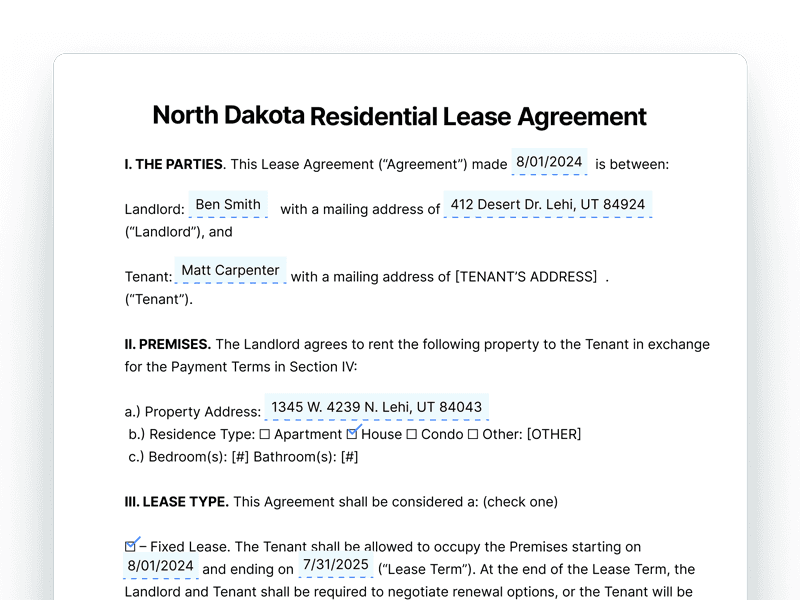


Understanding North Dakota Lease Agreement Requirements
State Legal Framework
North Dakota landlord tenant law provides the foundation for all residential rental agreements in the state. North Dakota Century Code Chapter 47-16 establishes rights and responsibilities for both parties. North Dakota maintains a landlord-friendly legal environment with streamlined procedures and minimal regulatory requirements. The state does not impose rent control, allowing landlords significant flexibility in setting rental rates and lease terms. The North Dakota rental lease agreement becomes enforceable when both parties sign the document, creating mutual obligations that govern the entire landlord-tenant relationship under North Dakota’s landlord-tenant statutes.
Written Agreement Standards
North Dakota does not legally require written lease agreements for tenancies under one year. However, creating a written residential lease agreement North Dakota landlords can reference provides clear documentation and legal protection. Written agreements prevent disputes by establishing explicit terms both parties acknowledge and accept.
Essential Elements of a North Dakota Lease Agreement
Parties and Property Identification
Complete Party Information Every North Dakota lease agreement template should identify all parties involved in the rental arrangement. Required information includes:
- Full legal names of all landlords or property managers
- Full legal names of all adult tenants
- Complete property address including unit numbers
- Legal property description when applicable
Accurate identification prevents confusion about who holds rights and responsibilities under the agreement.
Lease Term and Duration
Fixed-Term Agreements Fixed-term leases establish specific start and end dates for tenancies. Most North Dakota rental contracts run for 12-month periods, though landlords can create agreements for any duration. Fixed-term leases provide stability for both parties and establish clear expectations about tenancy length.
Month-to-Month Arrangements Month-to-month rental agreements offer flexibility for landlords and tenants who prefer shorter commitments. These arrangements automatically renew each month until either party provides proper termination notice. North Dakota requires one month written notice to terminate month-to-month tenancies.
Rent Payment Terms
Payment Obligations North Dakota lease agreements must clearly state rent payment requirements including:
- Monthly rent amount
- Payment due date
- Accepted payment methods
- Where tenants should submit payments
- Grace period provisions (if offered)
North Dakota law does not mandate specific grace periods, so landlords should clearly specify any grace period terms in lease agreements.
Late Fee Provisions North Dakota does not impose statutory caps on late fee amounts, allowing landlords to set reasonable penalties for overdue rent. Late fee policies should appear clearly in the rental agreement North Dakota tenants receive. Including specific late fee amounts and assessment dates prevents disputes.
Security Deposit Requirements in North Dakota
Deposit Limits and Handling
Statutory Cap North Dakota limits security deposits to one month’s rent. However, landlords may require a larger deposit if special conditions pose a danger to the property, such as pets or waterbeds. Any additional deposit amount must be specifically documented in the lease agreement.
No Separate Account Requirements North Dakota does not require landlords to hold security deposits in separate escrow accounts or pay interest on deposited funds. Landlords have flexibility in managing deposit funds while maintaining proper records.
Return Procedures
30-Day Timeline North Dakota landlords must return security deposits within 30 days after tenants vacate properties. This timeline applies to both the deposit return and required itemized statements of deductions.
Itemization Requirements If landlords withhold any portion of the deposit, they must provide a written itemized statement of deductions describing:
- Each item of damage claimed
- Estimated or actual cost of repairs
- Any unpaid rent or charges
Allowable Deductions Landlords can deduct from security deposits for:
- Unpaid rent
- Damage beyond normal wear and tear
- Costs to restore property to move-in condition
- Cleaning costs if not left in same condition
- Utility charges owed by tenant
- Other charges authorized in the lease agreement
Providing itemized deduction statements with remaining deposit balances prevents tenant disputes and potential legal claims.
Wrongful Withholding Penalties
North Dakota landlords who wrongfully withhold security deposits may face legal action from tenants. If a landlord fails to return the deposit or provide proper itemization within 30 days, the tenant may recover the full deposit amount. Landlords should document property condition thoroughly and provide timely itemized statements.
Required Disclosures for North Dakota Rental Agreements
Lead-Based Paint Disclosure
Federal law mandates lead-based paint disclosures for all rental properties built before 1978. North Dakota landlords must provide:
- Written disclosure of known lead-based paint presence
- EPA pamphlet “Protect Your Family from Lead in Your Home”
- Ten-day opportunity for lead inspection
- Signed acknowledgment of disclosure receipt
Failure to provide proper lead disclosures exposes landlords to significant federal penalties.
Owner/Agent Identification
North Dakota landlords should disclose:
- Name and address of the property owner
- Name and address of any person authorized to manage the property
- Name and address of person authorized to receive notices and demands
This information should be provided in the lease agreement or separately at the beginning of tenancy.
Mold Disclosure
North Dakota does not mandate specific mold disclosures. However, landlords should consider:
- Disclosing known mold problems as a best practice
- Addressing mold prevention in lease terms
- Responding promptly to tenant mold reports
Bed Bug Disclosure
North Dakota does not require specific bed bug disclosures. Best practices include:
- Disclosing known infestation history
- Establishing reporting procedures in lease terms
- Clarifying treatment responsibilities
Radon Disclosure
North Dakota does not mandate radon disclosure but recommends it as a best practice. North Dakota has areas with elevated radon levels, particularly in certain regions.
Flood Zone Disclosure
While not strictly required, North Dakota landlords should consider disclosing flood zone status, particularly for properties near rivers and in flood-prone areas.
Landlord and Tenant Rights Under North Dakota Law
Landlord Obligations
Warranty of Habitability North Dakota imposes implied warranty of habitability requirements on landlords. Required maintenance includes:
- Compliance with building and housing codes materially affecting health and safety
- Making all repairs necessary to keep premises fit and habitable
- Keeping common areas clean and safe
- Maintaining electrical, plumbing, sanitary, heating, and ventilating systems
- Providing running water and reasonable amounts of hot water
- Providing adequate heat
- Maintaining working smoke detectors
- Providing garbage receptacles and arranging for removal (for multi-unit properties)
- Extermination of pest infestations
- Maintaining weathertight conditions
- Providing secure locks on doors
Landlords must complete repairs within a reasonable time after receiving notice from tenants.
Property Access Rights North Dakota requires landlords to provide reasonable notice before entering rental properties. While no specific statutory timeframe exists, reasonable advance notice (typically 24 hours) is required. Entry must occur at reasonable times for legitimate purposes including:
- Inspections
- Repairs and maintenance
- Showing property to prospective tenants or buyers
- Emergencies (no notice required)
Tenant Responsibilities
Property Care Standards Tenants must maintain rental units according to North Dakota law including:
- Keeping the property clean and sanitary
- Using electrical, plumbing, heating, and other systems properly
- Disposing of garbage in a clean and sanitary manner
- Not deliberately or negligently destroying property
- Not disturbing neighbors’ peaceful enjoyment
- Complying with housing and building codes
- Allowing reasonable landlord access with proper notice
- Maintaining smoke detectors (battery replacement)
Lease Termination and Eviction Procedures
Voluntary Termination
Notice Requirements North Dakota termination notice requirements depend on lease type:
- Fixed-term leases end automatically on specified dates
- Month-to-month tenancies require one month written notice
- Year-to-year tenancies require one month written notice before the end of the lease period
Including clear termination procedures in lease agreements prevents misunderstandings about proper notice protocols.
Eviction Processes
North Dakota uses eviction actions for removing tenants.
Nonpayment of Rent North Dakota landlords can begin eviction proceedings when tenants fail to pay rent. The process requires:
- Three-day notice to pay rent or vacate
- Filing eviction action if tenant fails to comply
- Court hearing and judgment
- Writ of execution for physical removal
Lease Violations Landlords can pursue eviction for material lease violations. North Dakota generally allows:
- Notice of violation (as specified in lease or reasonable notice)
- Filing eviction action if violation continues
- Court proceedings and judgment
Unconditional Notice to Quit Certain serious violations may allow immediate termination:
- Criminal activity on premises
- Actions endangering health or safety
- Repeated violations
Retaliatory Eviction Protections
North Dakota provides limited statutory protection against retaliatory evictions. Landlords should avoid:
- Evicting tenants for reporting code violations
- Raising rent in response to tenant complaints
- Taking adverse action after tenant exercises legal rights
Creating an Effective North Dakota Lease Agreement
Documentation Best Practices
Comprehensive Terms Strong North Dakota lease agreements include provisions addressing:
- Pet policies and deposits (with special condition documentation)
- Guest and occupancy limits
- Maintenance responsibilities
- Utility payment assignments
- Parking and storage rules
- Noise and conduct standards
- Renewal and termination procedures
- Entry notice procedures
- Snow removal responsibilities
- Heating fuel responsibilities
- Extreme cold weather provisions
Professional Templates Using a North Dakota lease agreement template ensures contracts include all necessary elements. Given North Dakota’s extreme winter conditions, comprehensive lease terms addressing heating and winter maintenance become particularly important.
Tenant Screening Integration
Application Procedures Thorough tenant screening before lease signing helps landlords select reliable tenants. Screening should include:
- Credit history review
- Employment and income verification
- Rental history and references
- Background checks where permitted
North Dakota does not prohibit source of income discrimination statewide. Documenting screening criteria and applying standards consistently protects landlords from discrimination claims.
North Dakota-Specific Considerations
Fargo-Moorhead Metro Area
The Fargo-Moorhead metropolitan area dominates North Dakota’s rental market:
- State’s largest city with diverse rental stock
- North Dakota State University student market
- Cross-border considerations (Moorhead, Minnesota)
- Growing tech and healthcare employment
- Strong rental demand
Bismarck-Mandan Area
The state capital region presents distinct dynamics:
- Government workforce housing
- University of Mary student rentals
- Bismarck State College area
- Missouri River area considerations
Oil Patch Region (Bakken)
Western North Dakota’s oil industry creates unique rental dynamics:
- Williston and surrounding areas
- Boom-and-bust economic cycles
- High rental demand during oil booms
- Temporary workforce housing
- Premium rental rates in oil patch areas
- Furnished rental demand
- Short-term lease flexibility
- Man camps and alternative housing
Extreme Winter Weather Provisions
North Dakota’s severe winters create essential rental considerations:
- Heating system maintenance requirements
- Minimum heating temperature requirements
- Emergency heating failure procedures
- Pipe freezing prevention (critical in ND)
- Snow and ice removal responsibilities
- Heating fuel responsibilities (natural gas, propane, fuel oil)
- Block heater outlet provisions for vehicles
- Garage and indoor parking access
- Extreme cold weather protocols (-30°F and below common)
- Wind chill emergency preparations
Lease agreements must clearly address winter maintenance duties given North Dakota’s extreme cold.
Flood Considerations
North Dakota experiences significant flooding:
- Red River flooding (Fargo area)
- Missouri River flooding
- Spring flood preparations
- Flood zone disclosures recommended
- Flood insurance requirements
- Basement water concerns
- Sandbag and flood preparation responsibilities
College Town Rentals
North Dakota has college student rental markets:
- North Dakota State University (Fargo)
- University of North Dakota (Grand Forks)
- University of Mary (Bismarck)
- Minot State University
- Dickinson State University
Landlords in college towns should consider:
- Academic year lease terms
- Parental guarantor requirements
- Move-in/move-out timing around semesters
- Multiple roommate arrangements
- Summer subletting provisions
Military Tenant Considerations
North Dakota’s military installations require understanding:
- Servicemembers Civil Relief Act (SCRA) protections
- Lease termination rights upon deployment or PCS orders
- Minot Air Force Base tenant considerations
- Grand Forks Air Force Base housing
- North Dakota National Guard activations
- Eviction protections during active duty
Agricultural and Rural Properties
North Dakota’s agricultural economy affects rural rentals:
- Farm and ranch housing considerations
- Well water and septic system disclosures
- Agricultural property provisions
- Grain storage and outbuilding access
- Remote property access (especially in winter)
- Seasonal worker housing
Manufactured Housing
North Dakota has manufactured housing inventory:
- Specific considerations for mobile home communities
- Lot rental agreement distinctions
- Community rules and enforcement
- Title and registration requirements
- Extreme cold weatherization requirements
- Skirting and heat tape considerations
HOA and Condominium Rentals
Some North Dakota rentals occur within homeowner associations:
- Association approval requirements
- Tenant compliance with community rules
- Rental restrictions and caps
- Application processes and fees
- Common area usage rules
Landlords should verify HOA rental policies before marketing properties.
Energy Industry Housing
Beyond oil, North Dakota’s energy sector affects rentals:
- Wind farm worker housing
- Pipeline construction workforce
- Coal mining community housing
- Temporary workforce considerations
Native American Reservation Considerations
North Dakota has tribal lands:
- Tribal law may apply on reservation properties
- Jurisdictional considerations
- Tribal housing programs
- Federal regulations may apply
Utility Provisions
North Dakota’s climate makes utility provisions critical:
- Heating utility responsibilities (crucial)
- Electric service for heating equipment
- Natural gas vs. propane considerations
- Water and sewer in rural areas
- Utility shutoff protections during extreme cold
Cannabis Considerations
North Dakota has a medical marijuana program:
- Recreational cannabis remains illegal
- Medical marijuana patient considerations
- Landlords can prohibit smoking in lease agreements
- Growing restrictions apply
- Federal housing programs maintain prohibitions
Security Deposit
| TOPIC | RULE |
| Security Deposit Maximum: | Landlords are permitted to require up to one (1) months’ rent as a security deposit unless certain tenant circumstances apply. See statute. N.D. Cent. Code § 47-16-07.1 |
| Security Deposit Interest: | The security deposit money must be deposited in a federally insured interest-bearing savings or checking account for the benefit of the tenant. The security deposit and any interest accruing on the deposit must be paid to the lessee upon termination of a lease, minus any withholdings due to tenant non-compliance of the rental agreement. Interest is not required for leases less than nine (9) months. N.D. Cent. Code § 47-16-07.1 |
| Separate Security Deposit Bank Account: | The security deposit money must be deposited in a federally insured interest-bearing savings or checking account for the benefit of the tenant. The security deposit and any interest accruing on the deposit must be paid to the lessee upon termination of a lease, minus any withholdings due to tenant non-compliance of the rental agreement. N.D. Cent. Code § 47-16-07.1 |
| Non-refundable fees: | No statute. |
| Pet Deposits and Additional Fees: | A pet security deposit may be required if not a service animal under Fair Hosuing Laws. A pet deposit cannot exceed the greater of two thousand five hundred dollars or an amount equivalent to two months’ rent. N.D. Cent. Code § 47-16-07.1 |
| Deadline for Returning Security Deposit: | Landlords have 30 days to return the remaining security deposit (plus interest) within 30 days of the termination of the rental agreement. N.D. Cent. Code § 47-16-07.1 |
| Permitted Uses of the Deposit: | Deposits can be used for unpaid rent, damage to the rental unit caused by the tenants or their pets, or other reasonable expenses to get the unit back to its original state minus normal “wear and tear.” N.D. Cent. Code § 47-16-07.1 |
| Security Deposit can be Withheld: | Deposits can be used for unpaid rent, damage to the rental unit caused by the tenants or their pets, or other reasonable expenses to get the unit back to its original state minus normal “wear and tear.” N.D. Cent. Code § 47-16-07.1 |
| Require Written Description/Itemized List of Damages and Charges: | The remaining portion of a security deposit not paid to the lessee upon termination of the lease must be itemized by the lessor. Itemized list and amount due must be delivered or mailed to the lessee at the last address provided, along with a written notice within thirty days after termination of the lease and delivery of possession by the lessee. The notice must contain a statement of any amount still due the lessor or the refund due the lessee. N.D. Cent. Code § 47-16-07.1 |
| Receipt of Security Deposit: | No statute. |
| Record Keeping of Deposit Withholdings: | No statute. |
| Failure to Comply: | A lessor is liable for triple the monetary value of any security deposit money withheld without reasonable justification N.D. Cent. Code § 47-16-07.1 |
Lease, Rent & Fees
| TOPIC | RULE |
| Rent is Due: | Rent shall be paid monthly at the end of the term, or as otherwise agreed to in the lease. N.D. Cent. Code § 47-16-20 |
| Payment Methods: | No statute. |
| Rent Increase Notice: | Landlords may change the terms of the lease to take effect at the expiration of the month upon giving notice in writing at least thirty (30) days before the expiration of the month. N.D. Cent. Code § 47-16-07 |
| Late Fees: | Late fees may be imposed only if it is a provision originally stated in the lease agreement. The stipulations of the fees including the amount and when it can be charged must be included in the lease. |
| Application Fees: | No statute. |
| Prepaid Rent: | No statute. |
| Returned Check Fees: | Subject to a fee of no more than $40.00 to the check holder. N.D. Cent. Code § 6-08-16 |
| Tenant Allowed to Withhold Rent for Failure to Provide Essential Services (Water, Heat, etc.): | No statute. |
| Tenant Allowed to Repair and Deduct Rent: | If the landlord does not make necessary repairs after a reasonable amount of time after the tenant gave notice requesting the repair, the tenant can make the repair directly and deduct the cost of the repair from the future payment of rent. N.D. Cent. Code § 47-16-13 |
| Self-Help Evictions: | Evictions must follow process through a North Dakota state district court. |
| Landlord Allowed to Recover Court and Attorney’s Fees: | The court may award any rights enforceable by action and reasonable attorney’s fees to the prevailing party. N.D. Cent. Code § 47-16-13.6 |
| Landlord Must Make a Reasonable Attempt to Mitigate Damages to Lessee, including an Attempt to Re-rent: | A lessee evicted according to law is liable for rent during the remainder of the term of the lease. This does not relieve the landlord of the duty to mitigate damages. N.D. Cent. Code § 47-16-13.7 |
Notices and Entry
| TOPIC | RULE |
| Notice to Terminate Tenancy: | Notice is not required, as the lease simply expires at the term agreed upon in the lease. N.D. Cent. Code § 47-16-14 |
| Notice to Terminate a Periodic Lease – Month-to-Month: | At least one month’s notice is required to terminate a month-to-month lease. N.D. Cent. Code § 47-16-15 |
| Notice to Terminate a Periodic Lease – Week-to-week: | At least one week’s notice is required to terminate a week-to-week lease. N.D. Cent. Code § 47-16-15 |
| Notice to Terminate Lease due to Sale of Property: | New owners from sale of property must maintain the existing lease terms on a rental unit included in the sold property. Once sold, new owner may give proper notice to terminate the lease – at least 30 days before the next rental period for a month-to-month tenancy N.D. Cent. Code § 47-16-15 |
| Notice of date/time of Move-Out Inspection: | No statute. |
| Notice of Termination for Nonpayment: | Landlords can initiate eviction process for nonpayment after 3 days of missing payment. Landlord must give at least 3 days’ notice for tenant to vacate due to non-payment. N.D. Cent. Code § 47-32-01 |
| Notice for Lease Violation: | Three days’ notice is required to terminate a lease if the tenant is in non-compliance with the rental agreement. N.D. Cent. Code § 47-32-01 N.D. Cent. Code § 47-32-02 |
| Required Notice before Entry: | No required notice, though entry must be discussed prior and agreed to at a certain time. The tenant cannot unreasonably deny landllord’s entry. Tenant’s failure to object confirms presumed consent. N.D. Cent. Code § 47-16-07.3 |
| Entry Allowed with Notice for Maintenance and Repairs: | Landlords are permitted to enter rental unit at a reasonable time with reasonable intent after receiving consent from the tenant. N.D. Cent. Code § 47-16-07.3 |
| Emergency Entry Allowed without Notice: | Landlords are permitted to enter a rental unit at any time in case of an emergency or if they feel the tenant has violated the rental agreement. N.D. Cent. Code § 47-16-07.3 |
| Entry Allowed During Tenant’s Extended Absence: | No statute. |
| Entry Allowed with Notice for Showing the Property: | Landlords are permitted to enter rental unit at a reasonable time with reasonable intent after receiving consent from the tenant. N.D. Cent. Code § 47-16-07.3 |
| Notice to Tenants for Pesticide Use: | No statute. |
| Lockouts Allowed: | Lockouts are illegal. Tenants are eligible for legal reprocussions if a landlord locks them out of the rental unit during an active lease. N.D. Cent. Code § 32-03-29 |
| Utility Shut-offs Allowed: | Removing utility services are illegal. Tenants are eligible for legal reprocussions if a landlord diminishes services during an active lease in an effort to evict. N.D. Cent. Code § 32-03-29 |
| Electronic Notices Allowed: | Electronic notices are not permitted. |
Disclosures
- Name and Addresses: Landlords must disclose the name and address of the property owner and any authorized agent. (N.D. Cent. Code § 47-16-07.1)
- Lead-Based Paint: Required for housing built before 1978 (federal law).
- Domestic Violence Protection: Tenants may terminate a lease early with documentation of domestic violence. (N.D. Cent. Code § 47-16-17.1)
Duties
Landlord’s Duties
- Compliance: Must comply with applicable building and housing codes. (N.D. Cent. Code § 47-16-13.1)
- Repairs: Must make necessary repairs and keep the premises fit for habitation. (N.D. Cent. Code § 47-16-13.1)
- Common Areas: Must keep all common areas in a clean and safe condition.
- Maintenance: Maintain plumbing, heating, and other essential facilities.
- Garbage: Provide receptacles for garbage disposal and arrange for removal.
Tenant’s Duties
- Cleanliness: Keep the premises clean and safe. (N.D. Cent. Code § 47-16-13.2)
- Trash: Dispose of all waste in a clean and safe manner.
- Plumbing: Keep plumbing fixtures clean and use them properly.
- Appliances: Use facilities and appliances reasonably.
- Damage: Avoid intentional or negligent damage to the unit.
- Quiet Enjoyment: Must not disturb neighbors’ peaceful enjoyment.
- Subleasing: Allowed if the lease permits.
- Retaliation: Landlords cannot retaliate against tenants for complaints. (N.D. Cent. Code § 47-16-39.1)
- Lead Disclosure: Required by federal law.
By Type (19)
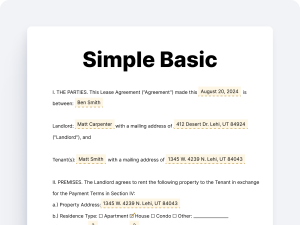
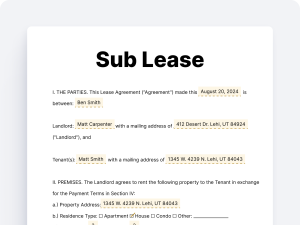
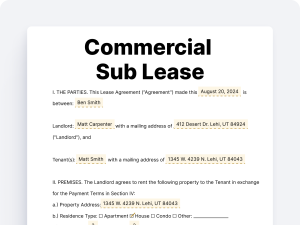
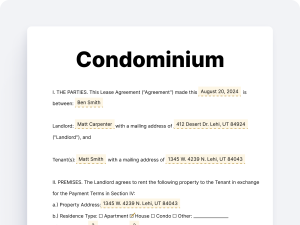
Protecting Your North Dakota Rental Investment
A well-drafted North Dakota rental lease agreement forms the foundation of successful property management. Given North Dakota’s extreme winter conditions, oil industry dynamics, and flood considerations, comprehensive documentation becomes essential. Clear terms addressing heating requirements, winter maintenance, and emergency procedures protect both landlord and tenant interests.
RocketRent provides North Dakota lease agreement templates designed to meet state requirements and protect landlord investments. Our platform streamlines property management with integrated tools for lease creation, rent collection, and tenant screening. Create your North Dakota rental lease agreement today and manage your properties with confidence.
North Dakota Lease Agreement PDF
FAQs
North Dakota does not legally require written lease agreements for tenancies under one year. However, written agreements provide essential documentation and legal protection for both landlords and tenants.
North Dakota limits security deposits to one month’s rent. However, landlords may require additional deposit amounts for special conditions posing danger to the property (such as pets), which must be documented in the lease.
North Dakota landlords must return security deposits within 30 days after the tenant vacates. Landlords must provide itemized statements for any deductions.
North Dakota requires one month written notice from either party to terminate a month-to-month rental agreement.
North Dakota requires landlords to provide reasonable advance notice before entering rental properties, typically 24 hours. Entry must occur at reasonable times except for emergencies.
North Dakota has minimal mandatory disclosure requirements. Properties built before 1978 require federal lead-based paint disclosures. Owner/agent identification is recommended. Flood zone and radon disclosures are best practices.
North Dakota landlords must provide a 3-day notice to pay rent or vacate before filing eviction proceedings for nonpayment. Tenants can avoid eviction by paying all owed amounts within this period.