
California Lease Agreement
A California rental lease agreement establishes a legally binding contract between landlords and tenants. This comprehensive document outlines rental terms, payment obligations, property rules, and the rights of both parties. The agreement protects landlord investments while ensuring tenants understand their responsibilities throughout the tenancy.
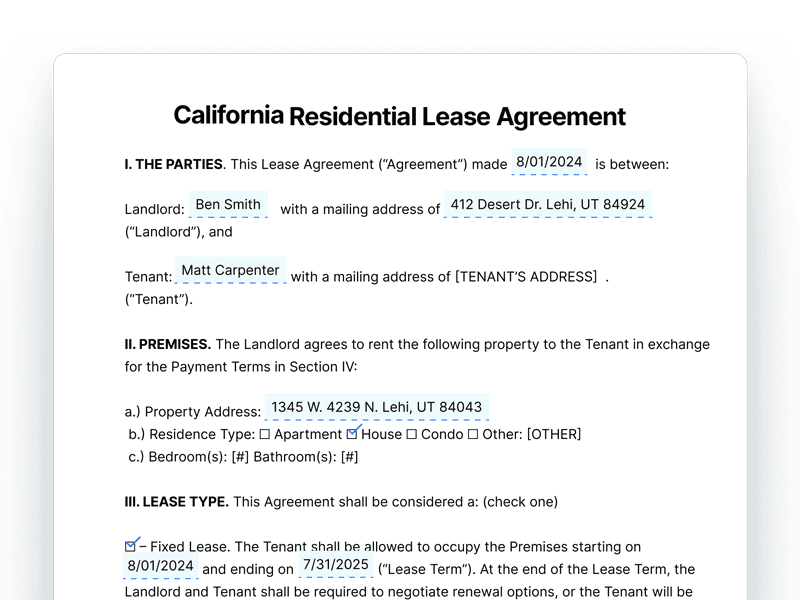


Understanding California Lease Agreement Requirements
State Legal Framework
California landlord tenant law provides extensive protections for renters while establishing clear obligations for property owners. The California Civil Code governs residential rental agreements, with additional regulations under the California Tenant Protection Act (AB 1482). This framework creates standardized requirements landlords must follow, including rent increase limitations and just cause eviction requirements for most residential properties. The California rental lease agreement becomes enforceable when both parties sign the document, creating mutual obligations that govern the entire landlord-tenant relationship under one of the nation’s most comprehensive landlord-tenant regulatory frameworks.
Written Agreement Standards
California requires landlords to provide written lease agreements for tenancies exceeding 12 months. However, creating a written residential lease agreement California landlords can reference benefits all tenancies regardless of duration. Written agreements prevent disputes by establishing explicit terms both parties acknowledge and accept.
Essential Elements of a California Lease Agreement
Parties and Property Identification
Complete Party Information Every California lease agreement template should identify all parties involved in the rental arrangement. Required information includes:
- Full legal names of all landlords or property managers
- Full legal names of all adult tenants
- Complete property address including unit numbers
- Legal property description when applicable
Accurate identification prevents confusion about who holds rights and responsibilities under the agreement.
Lease Term and Duration
Fixed-Term Agreements Fixed-term leases establish specific start and end dates for tenancies. Most California rental contracts run for 12-month periods, though landlords can create agreements for various durations. Fixed-term leases provide stability for both parties and establish clear expectations about tenancy length.
Month-to-Month Arrangements Month-to-month rental agreements offer flexibility for landlords and tenants who prefer shorter commitments. These arrangements automatically renew each month until either party provides proper termination notice. California requires 30 days written notice for tenancies under one year and 60 days notice for tenancies exceeding one year.
Rent Payment Terms
Payment Obligations California lease agreements must clearly state rent payment requirements including:
- Monthly rent amount
- Payment due date
- Accepted payment methods
- Where tenants should submit payments
- Grace period provisions
California law does not mandate specific grace periods, though many landlords provide reasonable time before assessing late fees.
Late Fee Provisions California courts scrutinize late fees for reasonableness. Late fees must reflect actual costs incurred by landlords due to late payment. Excessive fees may be deemed unenforceable penalties. Late fee policies should appear clearly in the rental agreement California tenants receive.
Rent Control and Increase Limitations
Statewide Rent Cap The California Tenant Protection Act limits annual rent increases to 5% plus local inflation or 10%, whichever is lower, for covered properties. This cap applies to most residential properties over 15 years old.
Local Rent Control Many California cities impose additional rent control ordinances with stricter limitations. Cities including Los Angeles, San Francisco, Oakland, and Berkeley maintain local rent control boards. Landlords must comply with both state and local regulations where applicable.
Security Deposit Requirements in California
Deposit Limits and Handling
Statutory Cap California limits security deposits based on furnishing status:
- Unfurnished units: Maximum two months rent
- Furnished units: Maximum three months rent
Beginning July 1, 2024, California law limits security deposits to one month rent for most landlords, with exceptions for small landlords owning no more than two residential properties.
No Non-Refundable Deposits California prohibits non-refundable security deposits. All deposits must be refundable, though landlords can make lawful deductions. Landlords cannot charge non-refundable cleaning fees or pet deposits.
Return Procedures
21-Day Timeline California landlords must return security deposits within 21 days after tenants vacate properties. This timeline applies to both the deposit return and required itemized statements.
Itemization Requirements California requires detailed itemized statements for any deductions including:
- Description of damages and repair costs
- Supporting documentation and receipts
- Labor costs if work performed by landlord
Landlords must provide copies of receipts for completed repairs or good faith estimates for pending work.
Allowable Deductions Landlords can deduct from security deposits for:
- Unpaid rent
- Cleaning costs to restore property to move-in condition
- Repair of damages beyond normal wear and tear
- Costs specified in lease for tenant default
California law specifically prohibits deductions for normal wear and tear.
Required Disclosures for California Rental Agreements
California mandates numerous disclosures protecting tenant health, safety, and legal rights. Landlords must provide extensive documentation before tenants sign lease agreements.
Lead-Based Paint Disclosure
Federal law mandates lead-based paint disclosures for all rental properties built before 1978. California landlords must provide:
- Written disclosure of known lead-based paint presence
- EPA pamphlet “Protect Your Family from Lead in Your Home”
- Ten-day opportunity for lead inspection
- Signed acknowledgment of disclosure receipt
Mold Disclosure
California requires landlords to disclose known mold presence affecting habitability. Landlords must provide:
- Written notice of known mold contamination
- Information about health risks associated with mold exposure
- Disclosure of any mold testing or remediation performed
Bed Bug Disclosure
California landlords must provide written information about bed bugs including:
- General bed bug information and identification
- History of known bed bug infestations at the property
- Current bed bug issues affecting the unit
Natural Hazard Disclosures
California requires extensive natural hazard disclosures including:
- Flood zone locations
- Fire hazard severity zones
- Earthquake fault zones
- Seismic hazard zones
- State responsibility areas for fire protection
Demolition Disclosure
Landlords must disclose intentions to demolish rental units. If landlords have applied for demolition permits or plan to demolish within the reasonably foreseeable future, tenants must receive written notice before signing lease agreements.
Sex Offender Database Notice
California requires landlords to notify tenants about the Megan’s Law database. This disclosure informs tenants they can check the database for registered sex offenders in their area.
Pest Control Disclosure
Landlords must provide copies of pest control company inspection reports if pest control services treat the property. Tenants must receive information about pesticides used and potential health effects.
Smoking Policy Disclosure
California requires landlords to disclose smoking policies for rental properties. Disclosures must specify where smoking is prohibited and where smoking is permitted on the premises.
Additional Required Disclosures
California landlords must also provide:
- Notice of building demolition history (if applicable)
- Military ordnance location disclosure (if applicable)
- Intention to sell disclosure
- Notice of utility billing arrangements
- Contact information for property owners and managers
Landlord and Tenant Rights Under California Law
Landlord Obligations
Habitability Standards California imposes strong implied warranty of habitability requirements. Landlords must maintain rental properties with:
- Effective waterproofing and weather protection
- Functional plumbing and gas facilities
- Hot and cold running water
- Adequate heating facilities
- Working electrical lighting and wiring
- Clean and sanitary buildings and grounds
- Proper garbage receptacles
- Floors, stairways, and railings in good repair
- Working locks on doors and windows
- Freedom from pest infestations
Landlords must complete repairs within 30 days of receiving written notice, or sooner for urgent issues affecting health and safety.
Property Access Rights California requires landlords to provide at least 24 hours advance notice before entering rental properties. Notice must be provided in writing and entry must occur during normal business hours. Exceptions apply for emergencies, tenant-requested repairs, and abandoned properties.
Tenant Responsibilities
Property Care Standards Tenants must maintain rental units according to California statutory requirements including:
- Keeping property clean and sanitary
- Using electrical, plumbing, and gas systems properly
- Avoiding property damage beyond normal wear
- Properly disposing of garbage
- Not disturbing neighbors
- Complying with housing and building codes
Just Cause Eviction Requirements
California Tenant Protection Act
California requires just cause for evicting tenants who have occupied properties for 12 months or more. Just cause falls into two categories:
At-Fault Just Cause includes:
- Failure to pay rent
- Breach of lease terms
- Nuisance or criminal activity
- Refusing reasonable access
- Subletting without permission
- Refusing to sign a similar lease renewal
No-Fault Just Cause includes:
- Owner or family member move-in
- Property withdrawal from rental market
- Substantial renovations requiring vacancy
- Compliance with government orders
No-fault evictions require relocation assistance equal to one month rent.
Local Just Cause Ordinances
Many California cities impose additional just cause requirements. Local ordinances may provide greater tenant protections than state law. Landlords must comply with the most protective applicable regulations.
Lease Termination and Eviction Procedures
Voluntary Termination
Notice Requirements California termination notice requirements depend on tenancy duration:
- Tenancies under one year require 30 days written notice
- Tenancies over one year require 60 days written notice
- Week-to-week tenancies require 7 days written notice
Eviction Processes
Nonpayment of Rent California landlords can begin eviction proceedings when tenants fail to pay rent. The process requires:
- Three-day notice to pay rent or quit
- Filing unlawful detainer action if tenant fails to comply
- Court hearing and judgment
- Writ of possession for physical removal
Lease Violations Landlords can pursue eviction for curable lease violations with three-day notice to cure or quit. Incurable violations may warrant three-day notice to quit without opportunity to cure.
Creating an Effective California Rental Lease Agreement
Documentation Best Practices
Comprehensive Terms Strong California lease agreements include provisions addressing:
- Pet policies and deposits (refundable only)
- Guest and occupancy limits
- Maintenance responsibilities
- Utility payment assignments
- Parking and storage rules
- Noise and conduct standards
- Renewal and termination procedures
- Rent increase notification procedures
Professional Templates Using a California lease agreement template ensures contracts include all legally required elements and disclosures. Given California’s extensive regulatory requirements, professional templates help landlords maintain compliance.
Tenant Screening Integration
Application Procedures California permits thorough tenant screening with limitations. Screening should include:
- Credit history review
- Employment and income verification
- Rental history and references
California limits application fees to actual screening costs plus any additional amounts permitted by law. Source of income discrimination is prohibited statewide.
California-Specific Considerations
Local Ordinance Compliance
California landlords must research and comply with local regulations including:
- City-specific rent control ordinances
- Local just cause eviction requirements
- Tenant harassment prohibitions
- Relocation assistance requirements
- Registration and inspection programs
Rent Registry Requirements
Some California cities require landlords to register rental units and report rent amounts. Registration programs help enforce rent control and provide tenant protections.
Accessory Dwelling Unit Regulations
California encourages accessory dwelling unit development. Landlords adding ADUs should understand:
- Permit requirements and processes
- Rent control applicability
- Owner-occupancy requirements
- Parking and utility considerations
Security Deposit
| TOPIC | RULE |
| Security Deposit Maximum: | 1x monthly rent. If agreement term is 6+ months an advance payment of 6x monthly rate minimum is allowed. Additional amounts are allowed based on agreement amongst parties of upgrades, furnishings, etc. Cal. Civ. Code § 1950.5(c) |
| Security Deposit Interest: | No state-wide statute. However, certain city laws require landlords to pay interest on security deposits collected. |
| Separate Security Deposit Bank Account: | No statute |
| Non-refundable fees: | An agreement cannot state security deposits as “non-refundable”. Cal. Civ. Code § 1950.5(m) |
| Pet Deposits and Additional Fees: | No pet deposit specification. For information regarding additional fees, refer to Cal. Civ. Code § 1950.5(c) |
| Deadline for Returning Security Deposit: | 21 days after tenant vacates property. Cal. Civ. Code § 1950.5(g) |
| Permitted Uses of the Deposit: | Default rent, repairs, cleaning. Cal. Civ. Code § 1950.5(b) |
| Security Deposit can be Withheld: | Yes Cal. Civ. Code § 1950.5(b) |
| Require Written Description/Itemized List of Damages and Charges: | Yes Cal. Civ. Code § 1950.5(g) |
| Receipt of Security Deposit: | No statute |
| Record Keeping of Deposit Withholdings: | Yes Cal. Civ. Code § 1950.5(g)(2) |
| Failure to Comply: | May subject landlord to claim damages of 2x security deposit + actual damages Cal. Civ. Code § 1950.5(l) |
Lease, Rent & Fees:
| TOPIC | RULE |
| Rent is Due: | Due at the end of the term if lease is less than one year. Cal. Civ. Code § 1947 |
| Payment Methods: | Landlords shall allow tenants to pay by a form of payment that is neither cash, or electronic transfers. If an issued check has insufficient funds, the landlord may require a cash payment for 3 months maximum Cal. Civ. Code § 1947.3 |
| Rent Increase Notice: | Landlord is required to give notice in person or mailed Cal. Civ. Code § 827 |
| Late Fees: | No statute |
| Application Fees: | $30 maximum, may be adjusted based on Consumer Price Index. Cal. Civ. Code § 1950.6(b) |
| Prepaid Rent: | 1x monthly rent. Additional amount can be collected based on agreement amongst all parties. Cal. Civ. Code § 1950.5(c) |
| Returned Check Fees: | $25 for first check and $35 for each subsequent check Cal. Civ. Code § 1719 |
| Tenant Allowed to Withhold Rent for Failure to Provide Essential Services (Water, Heat, etc.): | No statute |
| Tenant Allowed to Repair and Deduct Rent: | Yes Cal. Civ. Code § 1942 |
| Self-Help Evictions: | No statute |
| Landlord Allowed to Recover Court and Attorney’s Fees: | Yes Cal. Civ. Code § 789.3(d) |
| Landlord Must Make a Reasonable Attempt to Mitigate Damages to Lessee, including an Attempt to Re-rent: | Yes Cal. Civ. Code § 1951.2 |
Notices and Entry:
| TOPIC | RULE |
| Notice to Terminate Tenancy: | 60 day notice Cal. Civ. Code § 1946.1(b) |
| Notice to Terminate a Periodic Lease – Week-to-week: | 30 day notice Cal. Civ. Code § 1946.1(c) |
| Notice to Terminate a Periodic Lease – Month-to-Month: | 30 day notice Cal. Civ. Code § 1946.1(c) |
| Notice to Terminate Lease due to Sale of Property: | 30 day notice Cal. Civ. Code § 1946.1(d) |
| Notice of date/time of Move-Out Inspection: | Yes. Should be conducted at a reasonable time and no later than two weeks before termination date. Cal. Civ. Code § 1950.5(f)(1) |
| Notice of Termination for Nonpayment: | Yes. 3 days notice to quit Cal. Code Civ. Proc. § 1161(2) |
| Notice for Lease Violation: | Yes. 3 days notice to quit Cal. Code Civ. Proc. § 1161 |
| Required Notice before Entry: | 24-hour notice required unless it’s an emergency or premises are surrendered/abandoned. Cal. Civ. Code § 1954(d)(1) |
| Entry Allowed with Notice for Maintenance and Repairs: | Yes Cal. Civ. Code § 1954(a)(2) |
| Emergency Entry Allowed without Notice: | Yes Cal. Civ. Code § 1954(a)(1) |
| Entry Allowed During Tenant’s Extended Absence: | Yes Cal. Civ. Code § 1954(a)(3) |
| Entry Allowed with Notice for Showing the Property: | Yes Cal. Civ. Code § 1954(d)(2) |
| Notice to Tenants for Pesticide Use: | Landlords must provide notice with pests being treated, brand of pesitice, and a notice on toxicity of pesticides if not using a professional pest control company. Cal. Civ. Code § 1940.8.5(b)(1)(A)(B)(C) |
| Lockouts Allowed: | No Cal. Civ. Code § 789.3(b)(1) |
| Utility Shut-offs Allowed: | No Cal. Civ. Code § 789.3(a) |
| Electronic Notices Allowed: | Allowed in certain instances like notifications for pesticide use. Cal. Civ. Code § 1940.8.5(d)(2)(b)(iii) |
Disclosures
- Name and Addresses: Landlord must disclose the name and address of the person authorized to manage the premises. (Cal. Civ. Code § 1962)
- Copy of the Lease: Tenant must be given a copy of the written rental agreement. (Cal. Civ. Code § 1962)
- Domestic Violence Situations: Tenants who are victims of domestic violence may terminate the lease early with documentation. (Cal. Civ. Code § 1946.7)
Duties
Landlord’s Duties
- Compliance: Must comply with health and safety codes. (Cal. Civ. Code § 1941.1)
- Repairs: Maintain premises in habitable condition. (Cal. Civ. Code § 1941.1)
- Common Areas: Keep clean and safe. (Cal. Civ. Code § 1941.1)
- Maintenance: Working plumbing, heating, electrical, floors, and more. (Cal. Civ. Code § 1941.1)
- Garbage: Provide adequate trash receptacles. (Cal. Civ. Code § 1941.1)
Tenant’s Duties
- Cleanliness: Maintain clean premises. (Cal. Civ. Code § 1941.2)
- Trash: Properly dispose of waste. (Cal. Civ. Code § 1941.2)
- Plumbing: Keep fixtures clean. (Cal. Civ. Code § 1941.2)
- Appliances: Use responsibly. (Cal. Civ. Code § 1941.2)
- Damage: Do not damage property. (Cal. Civ. Code § 1941.2)
- Quiet Enjoyment: No excessive noise. (Cal. Civ. Code § 1927)
- Subleasing: Must follow lease agreement. (Cal. Civ. Code § 1995.230)
- Retaliation: Prohibited. (Cal. Civ. Code § 1942.5)
- Lead Disclosure: Federal requirement.
By Type (19)
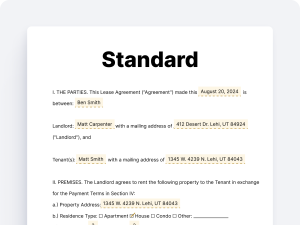
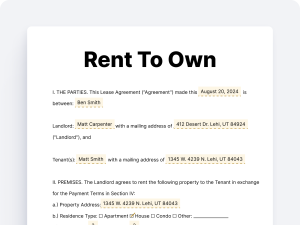
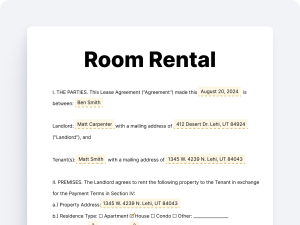
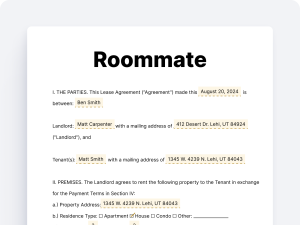
Protecting Your California Rental Investment
A well-drafted California rental lease agreement forms the foundation of successful property management. Given California’s extensive regulatory framework, comprehensive lease documentation and proper disclosures become essential. Clear terms, defined responsibilities, and regulatory compliance protect both landlord and tenant interests.
RocketRent provides California lease agreement templates designed to meet state and local requirements while protecting landlord investments. Our platform streamlines property management with integrated tools for lease creation, rent collection, and tenant screening. Create your California rental lease agreement today and manage your properties with confidence.
California Lease Agreement PDF
FAQs
California requires written lease agreements for tenancies exceeding 12 months. Written agreements benefit all tenancies by providing clear documentation of terms and required disclosures.
California limits security deposits to one month rent for most landlords as of July 2024. Small landlords owning two or fewer properties may collect up to two months rent for unfurnished units.
California landlords must return security deposits within 21 days after the tenant vacates the property. Landlords must provide itemized statements with receipts for any deductions taken.
Tenancies under one year require 30 days written notice while tenancies exceeding one year require 60 days written notice. Just cause requirements may also apply.
California requires just cause for evicting tenants who have occupied properties for 12 months or more under the Tenant Protection Act. No-fault evictions require relocation assistance payments.
California landlords must provide at least 24 hours written notice before entering rental properties. Entry must occur during normal business hours except for emergencies.
California requires extensive disclosures including lead-based paint, mold, bed bugs, natural hazards, demolition intent, sex offender database notice, pest control information, and smoking policies.