
Florida Lease Agreements
A Florida rental lease agreement establishes a legally binding contract between landlords and tenants. This comprehensive document outlines rental terms, payment obligations, property rules, and the rights of both parties. The agreement protects landlord investments while ensuring tenants understand their responsibilities throughout the tenancy.
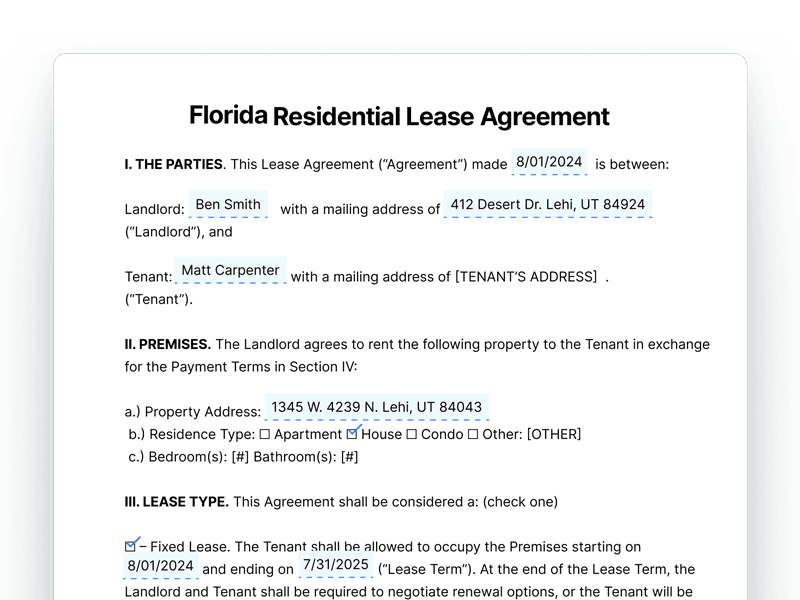
Download as PDF when complete


(No Ratings Yet)


Understanding Florida Lease Agreement Requirements
State Legal Framework
Florida landlord tenant law provides the foundation for all residential rental agreements in the state. The Florida Residential Landlord and Tenant Act (Florida Statutes Chapter 83, Part II) establishes rights and responsibilities for both parties. This statute applies to most residential rental properties throughout Florida and creates standardized requirements landlords must follow. Florida maintains a relatively landlord-friendly legal environment while providing essential tenant protections. The Florida rental lease agreement becomes enforceable when both parties sign the document, creating mutual obligations that govern the entire landlord-tenant relationship under Florida’s landlord-tenant statutes.
Written Agreement Standards
Florida does not legally require written lease agreements for tenancies under one year. However, creating a written residential lease agreement Florida landlords can reference provides clear documentation and legal protection. Written agreements prevent disputes by establishing explicit terms both parties acknowledge and accept.
Essential Elements of a Florida Lease Agreement
Parties and Property Identification
Complete Party Information Every Florida lease agreement template should identify all parties involved in the rental arrangement. Required information includes:
- Full legal names of all landlords or property managers
- Full legal names of all adult tenants
- Complete property address including unit numbers
- Legal property description when applicable
Accurate identification prevents confusion about who holds rights and responsibilities under the agreement.
Lease Term and Duration
Fixed-Term Agreements Fixed-term leases establish specific start and end dates for tenancies. Most Florida rental contracts run for 12-month periods, though landlords can create agreements for any duration. Fixed-term leases provide stability for both parties and establish clear expectations about tenancy length.
Month-to-Month Arrangements Month-to-month rental agreements offer flexibility for landlords and tenants who prefer shorter commitments. These arrangements automatically renew each month until either party provides proper termination notice. Florida requires 15 days written notice to terminate month-to-month tenancies.
Rent Payment Terms
Payment Obligations Florida lease agreements must clearly state rent payment requirements including:
- Monthly rent amount
- Payment due date
- Accepted payment methods
- Where tenants should submit payments
- Grace period provisions (if offered)
Florida law does not mandate specific grace periods, so landlords should clearly specify any grace period terms in lease agreements.
Late Fee Provisions Florida does not impose statutory caps on late fee amounts, allowing landlords to set reasonable penalties for overdue rent. Late fee policies should appear clearly in the rental agreement Florida tenants receive. Courts may scrutinize excessive fees that appear punitive rather than compensatory.
Security Deposit Requirements in Florida
Deposit Limits and Handling
No Statutory Cap Florida places no legal limit on security deposit amounts. Landlords can request deposits based on property value, rental rates, and risk assessment. Most landlords collect deposits equal to one or two months rent.
Deposit Holding Options Florida provides landlords three options for holding security deposits:
- Non-interest-bearing account at a Florida banking institution
- Interest-bearing account at a Florida banking institution (with interest paid to tenant)
- Surety bond equal to the deposit amount
Landlords must notify tenants in writing within 30 days of receiving the deposit, specifying the holding method and account details.
Return Procedures
Standard Timeline Florida landlords must return security deposits within 15 days after tenants vacate if no deductions are claimed. When landlords intend to make deductions, they must provide written notice of the claim within 30 days.
Claim Notice Requirements The 30-day claim notice must:
- Be sent by certified mail to tenant’s last known address
- Itemize the reasons for withholding
- Include the following statutory language: “This is a notice of my intention to impose a claim for damages in the amount of [amount] upon your security deposit. It is sent to you as required by s. 83.49(3), Florida Statutes. You are hereby notified that you must object in writing to this deduction from your security deposit within 15 days from the time you receive this notice or I will be authorized to deduct my claim from your security deposit. Your objection must be sent to [landlord’s address].”
Allowable Deductions Landlords can deduct from security deposits for:
- Unpaid rent
- Damage beyond normal wear and tear
- Cleaning costs to restore property condition
- Early lease termination costs
- Other charges specified in the lease agreement
Wrongful Withholding Consequences
Florida landlords who fail to provide proper notice within 30 days forfeit the right to make any deductions. Landlords who wrongfully withhold deposits may also be liable for court costs and attorney fees if tenants prevail in court actions.
Required Disclosures for Florida Rental Agreements
Lead-Based Paint Disclosure
Federal law mandates lead-based paint disclosures for all rental properties built before 1978. Florida landlords must provide:
- Written disclosure of known lead-based paint presence
- EPA pamphlet “Protect Your Family from Lead in Your Home”
- Ten-day opportunity for lead inspection
- Signed acknowledgment of disclosure receipt
Failure to provide proper lead disclosures exposes landlords to significant federal penalties.
Security Deposit Disclosure
Florida requires landlords to provide written notice of security deposit terms within 30 days of receipt. The notice must include:
- Name and address of the banking institution holding the deposit
- Whether the account is interest-bearing or non-interest-bearing
- Rate of interest if applicable
- Time and manner of interest payments
Radon Gas Disclosure
Florida requires the following radon disclosure in all lease agreements:
“RADON GAS: Radon is a naturally occurring radioactive gas that, when it has accumulated in a building in sufficient quantities, may present health risks to persons who are exposed to it over time. Levels of radon that exceed federal and state guidelines have been found in buildings in Florida. Additional information regarding radon and radon testing may be obtained from your county health department.”
This disclosure must appear in the lease agreement verbatim.
Landlord Contact Information
Florida requires landlords to disclose in the lease agreement or separately:
- Name and address of the landlord
- Name and address of the landlord’s agent (if applicable)
- Name and address of person authorized to receive notices and demands
Fire Protection Disclosure
For buildings over three stories, Florida requires landlords to disclose whether the building has fire protection, including:
- Presence of fire sprinkler systems
- Extent of sprinkler coverage (full or partial)
- Operational status of fire protection systems
Landlord and Tenant Rights Under Florida Law
Landlord Obligations
Statutory Requirements Florida landlords must comply with specific statutory obligations rather than an implied warranty of habitability. Required maintenance includes:
- Compliance with building, housing, and health codes
- Maintaining roofs, windows, doors, floors, and screens in good repair
- Providing reasonable extermination for pest infestations
- Maintaining plumbing in reasonable working condition
- Providing hot water and running water
- Maintaining heating facilities where provided
- Maintaining locks and keys
- Removing garbage (for buildings with four or more units)
Landlords must complete repairs within a reasonable time after receiving written notice from tenants.
Property Access Rights Florida requires landlords to provide at least 12 hours advance notice before entering rental properties. Entry must occur at reasonable times and for legitimate purposes including:
- Inspection of premises
- Making necessary repairs
- Showing property to prospective tenants or buyers
- In case of emergency
Landlords cannot abuse access rights to harass tenants.
Tenant Responsibilities
Property Care Standards Tenants must maintain rental units according to Florida statutory requirements including:
- Complying with building, housing, and health codes
- Keeping the dwelling clean and sanitary
- Removing garbage in a clean and sanitary manner
- Keeping plumbing fixtures clean and sanitary
- Using electrical, plumbing, heating, and other facilities properly
- Not destroying or damaging property
- Not disturbing neighbors
- Complying with lease terms
Lease Termination and Eviction Procedures
Voluntary Termination
Notice Requirements Florida termination notice requirements depend on lease type:
- Fixed-term leases end automatically on specified dates
- Month-to-month tenancies require 15 days written notice
- Week-to-week tenancies require 7 days written notice
- Yearly tenancies require 60 days written notice
Including clear termination procedures in lease agreements prevents misunderstandings about proper notice protocols.
Eviction Processes
Florida provides relatively streamlined eviction procedures compared to many other states.
Nonpayment of Rent Florida landlords can begin eviction proceedings when tenants fail to pay rent. The process requires:
- Three-day notice to pay rent or vacate
- Filing eviction complaint if tenant fails to comply
- Court hearing and judgment
- Writ of possession for physical removal
The three-day notice excludes weekends and legal holidays from the calculation.
Lease Violations Landlords can pursue eviction for material lease violations. Florida requires:
- Seven-day notice to cure for correctable violations
- Seven-day unconditional notice to vacate for non-curable violations
- Court filing after notice period expires
Non-Curable Violations Certain violations allow immediate seven-day notice to vacate without opportunity to cure:
- Intentional destruction of property
- Unreasonable disturbances
- Repeat violations of the same lease term within 12 months
Creating an Effective Florida Lease Agreement
Documentation Best Practices
Comprehensive Terms Strong Florida lease agreements include provisions addressing:
- Pet policies and deposits
- Guest and occupancy limits
- Maintenance responsibilities
- Utility payment assignments
- Parking and storage rules
- Noise and conduct standards
- Renewal and termination procedures
- Hurricane and storm damage provisions
- Pool and amenity rules
- HOA compliance requirements
Professional Templates Using a Florida lease agreement template ensures contracts include all legally required elements and disclosures. Customizing templates for specific properties and situations creates comprehensive agreements that protect landlord interests.
Tenant Screening Integration
Application Procedures Thorough tenant screening before lease signing helps landlords select reliable tenants. Screening should include:
- Credit history review
- Employment and income verification
- Rental history and references
- Background checks where permitted
Florida does not prohibit source of income discrimination statewide, though some local ordinances may apply. Documenting screening criteria and applying standards consistently protects landlords from discrimination claims.
Florida-Specific Considerations
Hurricane and Storm Provisions
Florida’s vulnerability to hurricanes creates unique rental considerations:
- Lease provisions for storm preparation responsibilities
- Property access during evacuation orders
- Rent abatement for uninhabitable conditions after storms
- Security deposit applications for storm damage
- Insurance requirements and recommendations
- Evacuation and re-entry procedures
Condominium and HOA Rentals
Many Florida rentals occur within condominium associations or HOA communities:
- Association approval requirements for tenants
- Rental restrictions and caps within communities
- Tenant compliance with association rules
- Application fees and screening processes
- Minimum lease term requirements (many associations require annual minimums)
Landlords must verify association rental policies before marketing properties.
Short-Term and Vacation Rentals
Florida regulates short-term rentals at state and local levels:
- State vacation rental licensing requirements
- Local regulations varying by municipality
- Tax collection and remittance obligations
- Advertising and safety requirements
- Platform registration requirements in some areas
Seasonal Rental Considerations
Florida’s seasonal rental market has unique characteristics:
- Higher rates during peak tourist seasons
- Furnished rental requirements
- Utility inclusion arrangements
- Shorter lease terms with higher deposits
- Snowbird tenant considerations
Flood Zone Disclosures
While not strictly required, Florida landlords should consider disclosing:
- Whether property is in a flood zone
- Flood insurance requirements and costs
- History of flooding at the property
- Evacuation zone designations
Mold Disclosure
Florida does not require specific mold disclosures. However, landlords should:
- Disclose known mold problems
- Address moisture and ventilation issues
- Respond promptly to tenant mold reports
- Include mold prevention responsibilities in lease terms
Security Deposit
| TOPIC | RULE |
| Security Deposit Maximum: | No maximum Fla. Stat. § 83.49 |
| Security Deposit Interest: | Security deposit can be placed in a non-interest bearing account. If placed in interest-bearing account, the tenant receives 75% of the average interest rate. Fla. Stat. § 83.49(a)(b) |
| Separate Security Deposit Bank Account: | Yes Fla. Stat. § 83.49 |
| Non-refundable fees: | No statute |
| Pet Deposits and Additional Fees: | No statute |
| Deadline for Returning Security Deposit: | 15 days if there are no deductions. If something is being deducted, landlord must notify tenant within 30 days of rental agreement termination. Fla. Stat. § 83.49(3)(a) |
| Permitted Uses of the Deposit: | No statute |
| Security Deposit can be Withheld: | Yes. With written notice within 30 days of termination of rental agreement Fla. Stat. § 83.49(3)(a) |
| Require Written Description/Itemized List of Damages and Charges: | Yes Fla. Stat. § 83.49(3)(a) |
| Receipt of Security Deposit: | Yes Fla. Stat. § 83.49 |
| Record Keeping of Deposit Withholdings: | No statute |
| Failure to Comply: | If landlord doesn’t serve notice with intent to claim against security deposit, the right is forfeited. Fla. Stat. § 83.49(3)(a) |
Lease, Rent & Fees:
| TOPIC | RULE |
| Rent is Due: | Due at the beginning of the rent period unless otherwise stated in the terms of agreement. Fla. Stat. § 83.46(1) |
| Payment Methods: | No statute |
| Rent Increase Notice: | No statute |
| Late Fees: | No statute |
| Application Fees: | No statute |
| Prepaid Rent: | No statute |
| Returned Check Fees: | No statute |
| Tenant Allowed to Withhold Rent for Failure to Provide Essential Services (Water, Heat, etc.): | Yes. Landlord has 7 days to remedy after receiving written notice from the tenant. Fla. Stat. § 83.60 |
| Tenant Allowed to Repair and Deduct Rent: | Yes Fla. Stat. § 83.201 |
| Self-Help Evictions: | Not allowed Fla. Stat. § 83.67 |
| Landlord Allowed to Recover Court and Attorney’s Fees: | Yes Fla. Stat. § 83.48 |
| Landlord Must Make a Reasonable Attempt to Mitigate Damages to Lessee, including an Attempt to Re-rent: | Landlord is not required to give preference over other vacant units Fla. Stat. § 83.595 |
Notices and Entry:
| TOPIC | RULE |
| Notice to Terminate Tenancy: | 30-60 day notice for tenancies without specific durations Fla. Stat. § 83.57 |
| Notice to Terminate a Periodic Lease – Week-to-week: | 7 day notice Fla. Stat. § 83.57(4) |
| Notice to Terminate a Periodic Lease – Month-to-Month: | 30 day notice Fla. Stat. § 83.57(3) |
| Notice to Terminate Lease due to Sale of Property: | No specific statute for sale of property. Refer to general notice of termination outlined in Fla. Stat. § 83.57. |
| Notice of date/time of Move-Out Inspection: | No statute |
| Notice of Termination for Nonpayment: | 3-day notice to quit Fla. Stat. § 83.56(3) |
| Notice for Lease Violation: | 7-day notice Fla. Stat. § 83.56 |
| Required Notice before Entry: | 24-hour notice required Fla. Stat. § 83.53(2) |
| Entry Allowed with Notice for Maintenance and Repairs: | Yes Fla. Stat. § 83.53(1) |
| Emergency Entry Allowed without Notice: | Yes Fla. Stat. § 83.53(2)(b) |
| Entry Allowed During Tenant’s Extended Absence: | Yes Fla. Stat. § 83.53(2)(b) |
| Entry Allowed with Notice for Showing the Property: | Yes Fla. Stat. § 83.53(1) |
| Notice to Tenants for Pesticide Use: | No statute |
| Lockouts Allowed: | No Fla. Stat. § 83.67(2) |
| Utility Shut-offs Allowed: | No Fla. Stat. § 83.67(1) |
| Electronic Notices Allowed: | No statute |
Disclosures
- Name and Addresses: Landlord must disclose in writing the name and address of the landlord and any person authorized to manage the premises or receive notices. (Fla. Stat. § 83.50)
- Copy of the Lease: Tenant must be provided with a copy of the lease agreement. (Standard practice)
- Domestic Violence Situations: Florida law does not currently provide an early lease termination right specifically for victims of domestic violence. However, landlords may voluntarily agree to termination. (No specific statutory provision)
Duties
Landlord’s Duties
- Compliance: Must comply with applicable housing codes. (Fla. Stat. § 83.51)
- Repairs: Maintain premises in good repair. (Fla. Stat. § 83.51)
- Common Areas: Keep clean and safe. (Fla. Stat. § 83.51)
- Maintenance: Maintain plumbing, electrical, and heating. (Fla. Stat. § 83.51)
- Garbage: Provide waste receptacles and removal if multi-unit dwelling. (Fla. Stat. § 83.51)
Tenant’s Duties
- Cleanliness: Keep unit clean and sanitary. (Fla. Stat. § 83.52)
- Trash: Dispose of garbage properly. (Fla. Stat. § 83.52)
- Plumbing: Keep fixtures clean. (Fla. Stat. § 83.52)
- Appliances: Use reasonably. (Fla. Stat. § 83.52)
- Damage: Do not destroy or damage premises. (Fla. Stat. § 83.52)
- Quiet Enjoyment: Must not disturb neighbors. (Fla. Stat. § 83.52)
- Subleasing: Only if lease permits. (Customary)
- Retaliation: Landlords cannot retaliate against tenants for lawful actions. (Fla. Stat. § 83.64)
- Lead Disclosure: Federal requirement for housing built before 1978.
By Type (19)
Protecting Your Florida Rental Investment
A well-drafted Florida rental lease agreement forms the foundation of successful property management. Clear documentation of terms, responsibilities, and procedures prevents disputes while protecting both landlord and tenant interests. Taking time to create comprehensive agreements reduces legal risks and supports positive landlord-tenant relationships.
RocketRent provides Florida lease agreement templates designed to meet state requirements and protect landlord investments. Our platform streamlines property management with integrated tools for lease creation, rent collection, and tenant screening. Create your Florida rental lease agreement today and manage your properties with confidence.
Florida Lease Agreements PDF
FAQs
Florida does not legally require written lease agreements for tenancies under one year. However, written agreements provide essential documentation and legal protection for both landlords and tenants.
Florida places no statutory limit on security deposit amounts. Landlords can request any amount they consider appropriate based on property value and risk assessment.
Florida landlords must return security deposits within 15 days if no deductions are claimed. When claiming deductions, landlords must provide written notice within 30 days by certified mail.
Florida requires 15 days written notice from either party to terminate a month-to-month rental agreement. Week-to-week tenancies require 7 days notice.
Florida requires landlords to provide at least 12 hours advance notice before entering rental properties. Entry must occur at reasonable times except for emergencies.
Florida requires landlords to disclose security deposit account information, radon gas warnings, fire protection status (for tall buildings), and landlord contact information. Properties built before 1978 require federal lead-based paint disclosures.
Florida landlords must provide a 3-day notice to pay rent or vacate before filing eviction proceedings for nonpayment. The three days exclude weekends and legal holidays.