
Arizona Lease Agreement
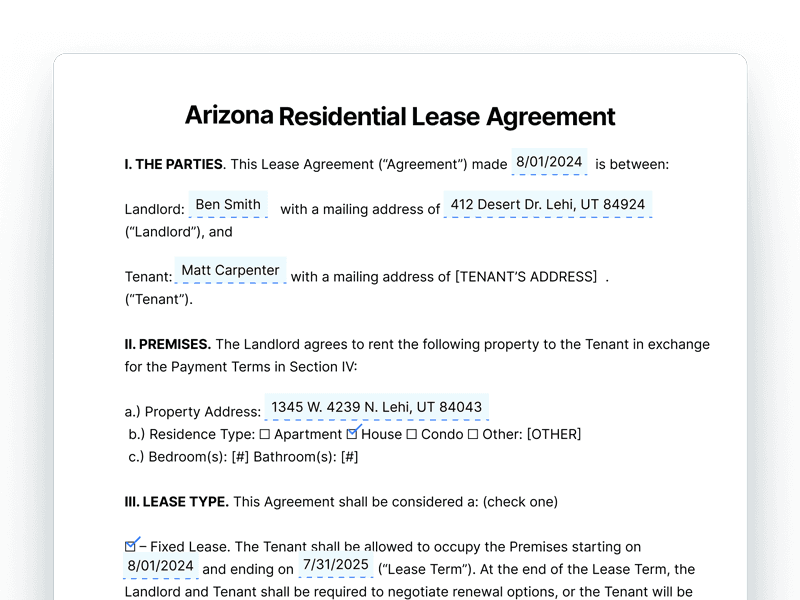
An Arizona rental lease agreement establishes a legally binding contract between landlords and tenants. This comprehensive document outlines rental terms, payment obligations, property rules, and the rights of both parties. The agreement protects landlord investments while ensuring tenants understand their responsibilities throughout the tenancy.


Understanding Arizona Lease Agreement Requirements
State Legal Framework
Arizona landlord tenant law provides the foundation for all residential rental agreements in the state. The Arizona Residential Landlord and Tenant Act (ARS Title 33, Chapter 10) establishes comprehensive rights and responsibilities for both parties. This statute applies to most residential rental properties throughout Arizona and creates standardized requirements landlords must follow. The Arizona rental lease agreement becomes enforceable when both parties sign the document, creating mutual obligations that govern the entire landlord-tenant relationship.
Written Agreement Standards
Arizona does not legally require written lease agreements for tenancies under one year. However, creating a written residential lease agreement Arizona landlords can reference provides clear documentation and legal protection. Written agreements prevent disputes by establishing explicit terms both parties acknowledge and accept.
Essential Elements of an Arizona Lease Agreement
Parties and Property Identification
Complete Party Information Every Arizona lease agreement template should identify all parties involved in the rental arrangement. Required information includes:
- Full legal names of all landlords or property managers
- Full legal names of all adult tenants
- Complete property address including unit numbers
- Legal property description when applicable
Accurate identification prevents confusion about who holds rights and responsibilities under the agreement.
Lease Term and Duration
Fixed-Term Agreements Fixed-term leases establish specific start and end dates for tenancies. Most Arizona rental contracts run for 12-month periods, though landlords can create agreements for any duration. Fixed-term leases provide stability for both parties and establish clear expectations about tenancy length.
Month-to-Month Arrangements Month-to-month rental agreements offer flexibility for landlords and tenants who prefer shorter commitments. These arrangements automatically renew each month until either party provides proper termination notice. Arizona requires 30 days written notice to terminate month-to-month tenancies.
Rent Payment Terms
Payment Obligations Arizona lease agreements must clearly state rent payment requirements including:
- Monthly rent amount
- Payment due date
- Accepted payment methods
- Where tenants should submit payments
- Grace period provisions (if offered)
Arizona law does not mandate specific grace periods, though many landlords provide reasonable time before assessing late fees.
Late Fee Provisions Arizona does not impose statutory caps on late fee amounts, allowing landlords to set reasonable penalties for overdue rent. Late fee policies should appear clearly in the rental agreement Arizona tenants receive. Courts may scrutinize excessive fees that appear unreasonable or punitive.
Security Deposit Requirements in Arizona
Deposit Limits and Handling
Statutory Cap Arizona limits security deposits to one and one-half months rent for most residential properties. This cap applies to the total of all deposits collected, including pet deposits and cleaning deposits.
Non-Refundable Fees Arizona permits landlords to collect non-refundable fees separate from security deposits. These fees must be clearly designated as non-refundable in the lease agreement. Common non-refundable fees include cleaning fees and pet fees.
Return Procedures
14-Day Timeline Arizona landlords must return security deposits within 14 business days after tenants vacate properties and return all keys. This timeline applies when tenants provide forwarding addresses and comply with lease termination requirements.
Allowable Deductions Landlords can deduct from security deposits for:
- Unpaid rent or utility charges
- Damage beyond normal wear and tear
- Cleaning costs to restore property condition
- Costs for repairing tenant-caused damage
- Early termination fees if specified in lease
Providing itemized deduction statements with remaining deposit balances prevents tenant disputes and potential legal claims.
Deposit Documentation
Arizona landlords should document property condition thoroughly at move-in and move-out. While not strictly required, detailed documentation with photographs protects landlords when assessing security deposit deductions. Both parties should retain signed move-in checklists.
Required Disclosures for Arizona Rental Agreements
Lead-Based Paint Disclosure
Federal law mandates lead-based paint disclosures for all rental properties built before 1978. Arizona landlords must provide:
- Written disclosure of known lead-based paint presence
- EPA pamphlet “Protect Your Family from Lead in Your Home”
- Ten-day opportunity for lead inspection
- Signed acknowledgment of disclosure receipt
Failure to provide proper lead disclosures exposes landlords to significant federal penalties.
Move-In Checklist Requirements
Arizona law requires landlords to provide move-in checklists documenting property condition at tenancy commencement. Both parties should complete thorough inspections and sign the checklist within five days of move-in. This documentation directly impacts security deposit disputes and landlord deduction rights.
Landlord Contact Information
Every Arizona rental lease agreement must include the name and address of the property owner or authorized management agent. Arizona law specifically requires disclosure of:
- Person authorized to manage the property
- Person authorized to receive legal notices and service of process
- Property owner name and address
Tenants need this information for communications, repair requests, and legal notices throughout tenancies.
Bedbug Disclosure
Arizona requires landlords to provide written educational materials about bedbugs to tenants. This disclosure must include information about:
- Bedbug identification and biology
- Prevention measures
- Reporting procedures
- Treatment responsibilities
Landlords must provide this disclosure before tenants sign lease agreements.
Pool Safety Disclosure
Arizona landlords renting properties with pools must provide written notice about pool safety requirements. This disclosure must inform tenants about:
- Pool barrier and fencing requirements
- Gate and door alarm obligations
- Landlord and tenant maintenance responsibilities
- Local pool safety ordinances
Pool safety disclosures help protect children and reduce landlord liability.
Crime-Free and Drug-Free Housing
Arizona allows landlords to include crime-free housing addendums in lease agreements. These provisions permit expedited eviction for criminal activity and help maintain safe communities. Many Arizona municipalities encourage or require crime-free housing programs.
Landlord and Tenant Rights Under Arizona Law
Landlord Obligations
Habitability Standards Arizona landlords must maintain rental properties in habitable condition meeting specific statutory requirements. Required maintenance includes:
- Compliance with building and housing codes
- Functional plumbing and reasonable hot water
- Working heating and cooling facilities
- Safe electrical systems
- Clean and sanitary common areas
- Proper garbage receptacles and removal
- Running water and reasonable water supply
- Working locks and security devices
Landlords must complete repairs within reasonable timeframes after receiving tenant notification. Arizona law specifies 10 days for most repairs and 5 days for conditions affecting health and safety.
Property Access Rights Arizona landlords can enter rental properties for inspections, repairs, and showings with proper notice. Arizona law requires at least two days advance notice before entry except in emergencies. Landlords can only enter at reasonable times unless tenants consent to alternative arrangements.
Tenant Responsibilities
Property Care Standards Tenants must maintain rental units according to Arizona statutory requirements. Tenant obligations include:
- Keeping property clean and sanitary
- Using electrical, plumbing, and heating systems properly
- Avoiding property damage beyond normal wear
- Following all lease provisions and rules
- Disposing of garbage properly
- Not disturbing neighbors
- Complying with housing and building codes
- Maintaining smoke detectors and replacing batteries
Lease Termination and Eviction Procedures
Voluntary Termination
Notice Requirements Arizona termination notice requirements depend on lease type:
- Fixed-term leases end automatically on specified dates
- Month-to-month agreements require 30 days written notice
- Week-to-week tenancies require 10 days written notice
Including clear termination procedures in lease agreements prevents misunderstandings about proper notice protocols.
Eviction Processes
Nonpayment of Rent Arizona landlords can begin eviction proceedings when tenants fail to pay rent. The process requires:
- Five-day written notice to pay or vacate
- Filing special detainer action if tenant fails to comply
- Court hearing and judgment
- Writ of restitution for physical removal
Lease Violations Landlords can pursue eviction for material lease violations. Arizona law requires 10 days written notice for correctable violations with opportunity to cure. Non-correctable violations may allow immediate five-day notice to vacate.
Health and Safety Violations Arizona permits expedited eviction proceedings for serious violations including illegal drug activity, gang-related activity, or conditions posing imminent health risks. These situations may allow immediate five-day notice periods.
Creating an Effective Arizona Rental Lease Agreement
Documentation Best Practices
Comprehensive Terms Strong Arizona lease agreements include provisions addressing:
- Pet policies and deposits
- Guest and occupancy limits
- Maintenance responsibilities
- Utility payment assignments
- Parking and storage rules
- Noise and conduct standards
- Renewal and termination procedures
- Pool and spa maintenance responsibilities
- Landscaping and yard care duties
Professional Templates Using an Arizona lease agreement template ensures contracts include all legally required elements. Customizing templates for specific properties and situations creates comprehensive agreements that protect landlord interests.
Tenant Screening Integration
Application Procedures Thorough tenant screening before lease signing helps landlords select reliable tenants. Screening should include:
- Credit history review
- Employment and income verification
- Rental history and references
- Background checks where permitted
Documenting screening criteria and applying standards consistently protects landlords from discrimination claims.
Arizona-Specific Considerations
Desert Climate Provisions
Arizona’s extreme heat creates unique rental considerations landlords should address:
- Air conditioning maintenance and minimum cooling requirements
- Evaporative cooler vs. refrigerated air responsibilities
- Landscaping water usage and xeriscaping requirements
- Pool and spa maintenance during summer months
- Monsoon season water damage prevention
HOA Compliance Requirements
Many Arizona rental properties fall within homeowners associations. Landlords must:
- Provide tenants with HOA rules and regulations
- Ensure lease terms comply with HOA requirements
- Include provisions for tenant HOA violation consequences
- Disclose HOA fees and assessment possibilities
Short-Term Rental Regulations
Arizona state law generally permits short-term rentals, but landlords should understand:
- Local ordinances may impose additional requirements
- HOA restrictions may limit or prohibit short-term rentals
- Tax collection and remittance obligations
- Registration requirements in certain municipalities
Security Deposit
| TOPIC | RULE |
| Security Deposit Maximum: | 1.5x monthly rent Ariz. Rev. Stat. § 33-1414(c) |
| Security Deposit Interest: | No statute |
| Separate Security Deposit Bank Account: | No statute |
| Non-refundable fees: | Must be stated in writing. Any fee not mentioned as non-refundable is refundable. Ariz. Rev. Stat. § 33-1321(a) |
| Pet Deposits and Additional Fees: | No statute |
| Deadline for Returning Security Deposit: | Within 14 days of the termination of tenancy excluding weekends and legal holidays. Ariz. Rev. Stat. § 33-1321(d) |
| Permitted Uses of the Deposit: | May be used for provisions detailed in the property management agreement. Ariz. Rev. Stat. § 33-1321(g) |
| Security Deposit can be Withheld: | Yes Ariz. Rev. Stat. § 33-1321(d) |
| Require Written Description/Itemized List of Damages and Charges: | Yes required within 14 days of tenancy termination. Ariz. Rev. Stat. § 33-1321(d) |
| Receipt of Security Deposit: | No statute |
| Record Keeping of Deposit Withholdings: | Yes Ariz. Rev. Stat. § 33-1321(d) |
| Failure to Comply: | May entitle the tenant to recover property and 2x the amount withheld. Ariz. Rev. Stat. § 33-1321(e) |
Lease, Rent & Fees:
| TOPIC | RULE |
| Rent is Due: | At the beginning of any term of one month or less unless otherwise agreed by all parties. Ariz. Rev. Stat. § 33-1314(c) |
| Payment Methods: | No statute |
| Rent Increase Notice: | No statute |
| Late Fees: | $5 per day if rent is not paid by the sixth day from the due date. Ariz. Rev. Stat. § 33-1314(c) |
| Application Fees: | No statute |
| Prepaid Rent: | 1.5x monthly rent maximum Ariz. Rev. Stat. § 33-1321(a) |
| Returned Check Fees: | $25 + any fees charged by financial institution. Ariz. Rev. Stat. § 44-6852 |
| Tenant Allowed to Withhold Rent for Failure to Provide Essential Services (Water, Heat, etc.): | Yes Ariz. Rev. Stat. § 33-1364 |
| Tenant Allowed to Repair and Deduct Rent: | Yes. If landlord fails to comply within 10 days. Tenant needs to provide itemized statement and waiver of lien. Amount must not exceed $300 or half of the monthly rent, whichever is greater. Ariz. Rev. Stat. § 33-1363(a) |
| Self-Help Evictions: | Not allowed. Tenant may terminate rental and recover no more than two months’ rent or 2x the actual damages whichever is greater. Ariz. Rev. Stat. § 33-1367 |
| Landlord Allowed to Recover Court and Attorney’s Fees: | Yes Ariz. Rev. Stat. § 12-341.01 |
| Landlord Must Make a Reasonable Attempt to Mitigate Damages to Lessee, including an Attempt to Re-rent: | Yes Ariz. Rev. Stat. § 33-1370(c) |
Notices and Entry:
| TOPIC | RULE |
| Notice to Terminate Tenancy: | No statute for fixed-end date leases. |
| Notice to Terminate a Periodic Lease – Week-to-week: | 10-day notice Ariz. Rev. Stat. § 33-1375(a) |
| Notice to Terminate a Periodic Lease – Month-to-Month: | 30-day notice Ariz. Rev. Stat. § 33-1375(b) |
| Notice to Terminate Lease due to Sale of Property: | No statute |
| Notice of date/time of Move-Out Inspection: | On request by the tenant Ariz. Rev. Stat. § 33-1321(c) |
| Notice of Termination for Nonpayment: | 5-day notice to pay or quit required Ariz. Rev. Stat. § 33-1368(b) |
| Notice for Lease Violation: | 10-day notice to remedy or quit required. If tenant’s noncompliance affects health & safety 5-day notice is ok. Ariz. Rev. Stat. § 33-1368(a) |
| Required Notice before Entry: | 2-day notice required. Ariz. Rev. Stat. § 33-1343(d) |
| Entry Allowed with Notice for Maintenance and Repairs: | Yes Ariz. Rev. Stat. § 33-1343(a) |
| Emergency Entry Allowed without Notice: | Yes Ariz. Rev. Stat. § 33-1343(c) |
| Entry Allowed During Tenant’s Extended Absence: | If the tenant has abandoned or surrendered premises. Ariz. Rev. Stat. § 33-1343(e) |
| Entry Allowed with Notice for Showing the Property: | Yes Ariz. Rev. Stat. § 33-1343(a) |
| Notice to Tenants for Pesticide Use: | A landlord may provide educational materials such as a description of measures to prevent and control bugs. Ariz. Rev. Stat. § 33-1319(a)(1)(a) |
| Lockouts Allowed: | No. Tenant may recover 2 months of rent or 2x actual damages whichever is greater. Ariz. Rev. Stat. § 33-1367 |
| Utility Shut-offs Allowed: | No. Tenant may recover 2 months of rent or 2x actual damages whichever is greater. Ariz. Rev. Stat. § 33-1367 |
| Electronic Notices Allowed: | No statute |
Disclosures
- Name and Addresses: Landlord must disclose the name and address of the owner or the owner’s agent. (Ariz. Rev. Stat. § 33-1322)
- Copy of the Lease: Tenant must receive a copy of the lease agreement. (Standard practice)
- Domestic Violence Situations: Tenants who are victims of domestic violence may terminate the lease with 30 days’ notice and documentation. (Ariz. Rev. Stat. § 33-1318)
Duties
Landlord
- Compliance: Must comply with applicable building codes affecting health and safety. (A.R.S. § 33-1324)
- Repairs: Make all repairs to maintain the premises in a fit and habitable condition. (A.R.S. § 33-1324)
- Common Areas: Keep all common areas in a clean and safe condition. (A.R.S. § 33-1324)
- Maintenance: Maintain electrical, plumbing, sanitary, heating, ventilating, air-conditioning, and appliances supplied by the landlord. (A.R.S. § 33-1324)
- Garbage: Provide and maintain garbage containers and arrange for removal. (A.R.S. § 33-1324)
Tenant’s Duties
- Cleanliness: Keep the dwelling unit as clean and safe as conditions permit. (A.R.S. § 33-1341)
- Trash: Dispose of garbage and waste cleanly and safely. (A.R.S. § 33-1341)
- Plumbing: Keep plumbing fixtures clean. (A.R.S. § 33-1341)
- Appliances: Use appliances and facilities reasonably. (A.R.S. § 33-1341)
- Damage: Do not damage the property or permit others to do so. (A.R.S. § 33-1341)
- Quiet Enjoyment: Avoid disturbing neighbors’ peaceful enjoyment. (A.R.S. § 33-1341)
- Subleasing: Prohibited unless allowed by the lease or landlord approval.
- Retaliation: Landlord cannot retaliate for legal tenant actions like complaints or organizing. (A.R.S. § 33-1381)
- Lead Disclosure: Federal law requires disclosure of lead hazards in pre-1978 housing.
By Type (19)
Protecting Your Arizona Rental Investment
A well-drafted Arizona rental lease agreement forms the foundation of successful property management. Clear documentation of terms, responsibilities, and procedures prevents disputes while protecting both landlord and tenant interests. Taking time to create comprehensive agreements reduces legal risks and supports positive landlord-tenant relationships.
RocketRent provides Arizona lease agreement templates designed to meet state requirements and protect landlord investments. Our platform streamlines property management with integrated tools for lease creation, rent collection, and tenant screening. Create your Arizona rental lease agreement today and manage your properties with confidence.
Arizona Lease Agreement PDF
FAQs
Arizona does not legally require written lease agreements for tenancies under one year. However, written agreements provide essential documentation and legal protection for both landlords and tenants.
Arizona limits security deposits to one and one-half months rent for residential properties. This cap includes all refundable deposits but excludes non-refundable fees clearly designated in the lease.
Arizona landlords must return security deposits within 14 business days after the tenant vacates and returns all keys. Landlords must provide itemized statements for any deductions taken.
Arizona landlords must provide at least two days advance notice before entering rental properties except in emergencies. Entry must occur at reasonable times unless tenants consent otherwise.
Either party must provide at least 30 days written notice to terminate a month-to-month rental agreement in Arizona. Week-to-week tenancies require 10 days written notice.
Arizona requires landlords to provide move-in checklists, bedbug information, pool safety notices, and contact information for property managers. Properties built before 1978 also require federal lead-based paint disclosures.
Arizona landlords must provide a 5-day written notice to pay or vacate before filing eviction proceedings for nonpayment of rent. Tenants can avoid eviction by paying all owed amounts within this period.