
Prorated Rent Calculator Template
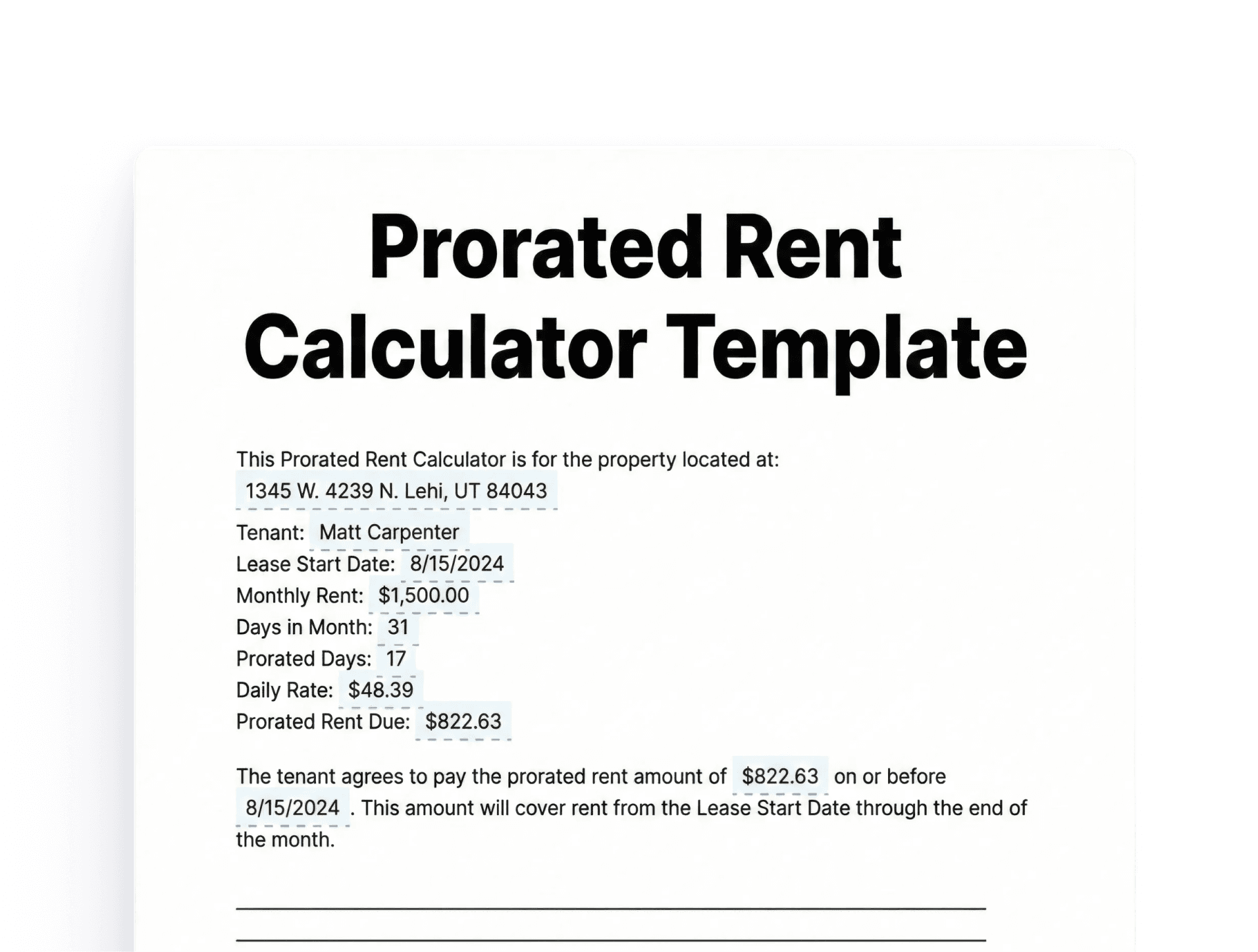
A prorated rent calculator template is a standardized tool that calculates partial month rent charges based on the number of days tenants occupy properties within billing periods. This template uses specific calculation methods dividing monthly rent by days in the month and multiplying by occupancy days.
Download as PDF when complete


(No Ratings Yet)
What Is a Prorated Rent Calculator Template?
The template serves multiple important functions in property management. First, it eliminates calculation errors that occur with manual math particularly during busy leasing periods. Second, it ensures consistent calculation methodology across all properties and tenants preventing discrimination claims. Third, it creates documentation showing how you determined prorated amounts supporting transparency. Finally, it saves time by automating complex calculations allowing you focusing on other management responsibilities. Property managers use this tool whenever leases begin or end mid-month, ensuring tenants pay fair amounts reflecting actual usage rather than full monthly rates.
Understanding Proration Methods
Days in Month Method
The most common proration method divides monthly rent by actual days in the specific month then multiplies by occupancy days. For example, $1,500 rent in a 30-day month equals $50 per day. A tenant moving in on the 16th pays for 15 days totaling $750. This method accurately reflects each month’s varying day counts.
This approach proves fairest since it accounts for February’s shorter length and months with 31 days. Tenants appreciate the accuracy as they never overpay due to calendar variations. Additionally, this method simplifies explanations when tenants question calculations since the logic remains transparent and straightforward.
30-Day Standard Method
Some landlords prefer using a standardized 30-day calculation regardless of actual month length for consistency. Under this method, monthly rent divided by 30 provides daily rates applied to occupancy days. While simpler, this approach slightly overcharges tenants in 31-day months and undercharges in February.
The 30-day method offers predictability making budgeting easier for both parties. However, it lacks precision and might create disputes when tenants calculate their own proration using actual days. Consider whether consistency advantages outweigh accuracy concerns before selecting this approach.
Annual Day Method
The annual day method divides monthly rent by 365 then multiplies by 12 to determine daily rates, creating consistent per-day amounts year-round. This sophisticated approach eliminates all monthly variations providing absolute consistency. However, it involves more complex calculations confusing some tenants.
Few landlords use this method despite its mathematical elegance. The complexity rarely justifies marginal accuracy improvements over the days-in-month approach. Additionally, explaining annual day calculations to tenants takes more effort than simpler monthly methods.
Essential Template Components
Property and Tenant Information
Your prorated rent calculator template should begin with identification fields including property address, unit number, tenant names, and lease start or end dates. Document monthly rent amounts from lease agreements providing baseline figures for calculations. Additionally, include the billing period being prorated specifying exact start and end dates.
This header information contextualizes calculations linking them to specific tenants and properties. Furthermore, it creates audit trails connecting prorated amounts to lease agreements and occupancy dates. Complete identification prevents confusion when reviewing calculations months later during accounting reconciliation.
Calculation Method Selection
Include clear indicators specifying which proration method your template uses whether actual days, 30-day standard, or annual basis. This transparency ensures everyone understands calculation methodology preventing disputes about approaches. Additionally, standardizing one method across your portfolio maintains consistency.
Some templates offer multiple calculation methods side-by-side allowing comparison and selection of preferred approaches. This flexibility accommodates different preferences while maintaining structured calculations. However, ensure you apply chosen methods consistently for all tenants avoiding discrimination concerns.
Daily Rate Calculation
Display daily rate calculations prominently showing mathematical breakdown. For example, “Monthly Rent: $1,500 ÷ Days in Month: 30 = Daily Rate: $50.00.” This transparency helps tenants verify calculations and builds trust in your processes. Additionally, showing work demonstrates professionalism and mathematical competency.
Round daily rates to two decimal places maintaining dollar and cents precision. Never round to whole dollars as this creates cumulative errors across multiple calculations. Additionally, consistent rounding rules prevent accidental overcharges or undercharges that accumulate significantly over time.
Occupancy Period Documentation
Create clear sections documenting exact occupancy periods including move-in and move-out dates. Note whether these dates include partial days or only count full 24-hour periods. Additionally, specify whether move-in days count as occupied days or if occupancy begins the following day.
Most landlords count both move-in and move-out days as occupied days unless leases specify otherwise. This approach recognizes that tenants have access to properties on both dates. However, clearly document your policy in lease agreements and calculator templates preventing disputes about day counting methodology.
Final Prorated Amount
Display final prorated amounts prominently in your template using clear labeling and formatting. Show complete calculations from monthly rent through daily rate to final prorated charge. Additionally, separate prorated first month rent from prorated last month rent when applicable avoiding confusion about which period charges cover.
Include space for additional charges beyond prorated rent such as prorated utilities, pet rent, or parking fees. These itemized additions create comprehensive move-in or move-out charges statements. Furthermore, they ensure you don’t overlook any prorated recurring charges beyond base rent.
Implementation Best Practices
Clear Policy Documentation
Document your proration policies in lease agreements and tenant handbooks preventing disputes about calculation methods. Specify which proration approach you use, whether move-in days count as occupied, and how you round calculations. This transparency eliminates surprises when tenants receive prorated charges.
Additionally, explain proration concepts during lease signing ensuring tenants understand charges before committing. Show sample calculations illustrating how proration works. This education builds trust and reduces questions when actual prorated charges appear on statements.
Consistent Application
Apply identical proration methods to all tenants regardless of property, lease terms, or move-in timing. Consistency demonstrates fairness and prevents discrimination claims. Document that you use the same calculator template for every proration situation proving uniform treatment.
Train all staff members using your proration template ensuring everyone calculates identically. Inconsistent calculations across different properties or staff members create confusion and potentially legal vulnerabilities. Furthermore, standardization simplifies training and reduces errors from improvised calculation approaches.
Verification and Double-Checking
Verify all prorated calculations before sending charges to tenants. Have second staff members reviewing amounts catching potential errors before they cause disputes. Additionally, keep calculation worksheets showing your mathematical process supporting accuracy claims.
Compare calculated amounts against logical expectations catching obvious errors. For example, half-month occupancy should produce approximately half monthly rent. Amounts significantly diverging from these benchmarks warrant additional scrutiny ensuring no input errors occurred.
Communication and Transparency
Communicate prorated amounts to tenants well before payments are due allowing time for questions or concerns. Include calculation breakdowns showing exactly how you determined charges. This transparency builds trust and reduces disputes dramatically.
Encourage tenants verifying calculations using the same methodology you employed. Confident landlords welcome scrutiny knowing their calculations withstand examination. Furthermore, openness demonstrates fairness making tenants more likely accepting charges without dispute.
Common Proration Scenarios
Mid-Month Move-Ins
New leases beginning mid-month require prorating first month rent from move-in date through month-end. Calculate daily rates using your selected method then multiply by remaining days in the first month. Additionally, collect full rent for subsequent months unless leases end before month completion.
Consider whether to collect both prorated first month rent and full second month rent at move-in or if you’ll bill the second month separately. Collecting both upfront reduces administrative effort and ensures payment before occupancy begins. However, large combined amounts might create affordability challenges for some tenants.
Mid-Month Move-Outs
Lease terminations occurring mid-month require prorating final month rent. Calculate charges from the first of the month through actual move-out date. Deduct prorated amounts from security deposits when applicable or refund overpayments if tenants prepaid full final month.
Communicate clearly about move-out date expectations. Specify whether tenants must vacate by specific times or if they maintain access through the entire final day. These details affect whether to include move-out dates in proration calculations or charge only through preceding days.
Lease Renewals with Rent Changes
Rent increases taking effect mid-month require careful proration using both old and new rent amounts. Charge prorated amounts at old rates for days before increases then charge new rates for remaining days. This split calculation ensures fairness while implementing agreed-upon rent changes.
Document these dual-rate calculations meticulously preventing tenant confusion about why charges don’t match either rent amount exactly. Show separate proration calculations for each rate period summing to total month charges. This transparency helps tenants understanding complex split-period billing.
Technology and Automation
Spreadsheet Templates
Excel or Google Sheets provide excellent platforms for prorated rent calculator templates. Create formulas automatically calculating daily rates and prorated amounts when you input monthly rent and occupancy dates. Additionally, protect formula cells preventing accidental modifications while allowing data entry in appropriate fields.
Include data validation ensuring users input dates correctly and that end dates follow start dates logically. These protections prevent common input errors that produce nonsensical calculations. Furthermore, add conditional formatting highlighting unusual results warranting additional review.
Property Management Software
Modern property management software includes built-in proration calculators integrated with lease management modules. These systems automatically prorate rent when you enter mid-month move-in or move-out dates. Additionally, they generate itemized statements showing calculation breakdowns for tenant transparency.
Software automation eliminates manual calculation requirements saving time and reducing errors. However, verify that software uses your preferred proration methodology since different platforms employ varying approaches. Adjust settings if possible ensuring calculations match your policies.
Conclusion
A prorated rent calculator template ensures accurate, consistent, and transparent partial month rent calculations protecting both landlord revenue and tenant fairness. By selecting appropriate calculation methods, documenting policies clearly, applying calculations consistently, and communicating transparently with tenants, you eliminate disputes while demonstrating professional property management standards. Whether using simple spreadsheets or sophisticated property management software, implement standardized proration tools today ensuring every mid-month transaction receives accurate mathematical treatment. Professional proration practices strengthen tenant relationships while protecting your financial interests through precise accounting.
FAQs
The actual days-in-month method proves fairest as it accounts for varying month lengths ensuring tenants never overpay or underpay due to calendar variations. This approach provides mathematical accuracy and transparency that tenants can easily verify independently.
Most landlords count both days as occupied since tenants have property access on both dates. However, clearly document your policy in lease agreements and apply it consistently to all tenants to prevent discrimination claims or confusion.
Calculate separate prorated amounts for each rate period – charge days before the increase at old rates and remaining days at new rates. Sum both prorated amounts for total month charges, and document calculations clearly showing the dual-rate methodology.
While legally possible in some jurisdictions if disclosed upfront, this practice is unfair and may violate regulations in certain states. Prorating demonstrates fairness and professionalism, building positive relationships while ensuring tenants pay only for actual occupancy.
Provide detailed calculation breakdown showing your methodology step-by-step. If using standard days-in-month method, your calculations should match tenant’s independent verification. Discrepancies usually stem from different calculation methods or date counting policies requiring clarification.