
NSF / Bounced Check Notice
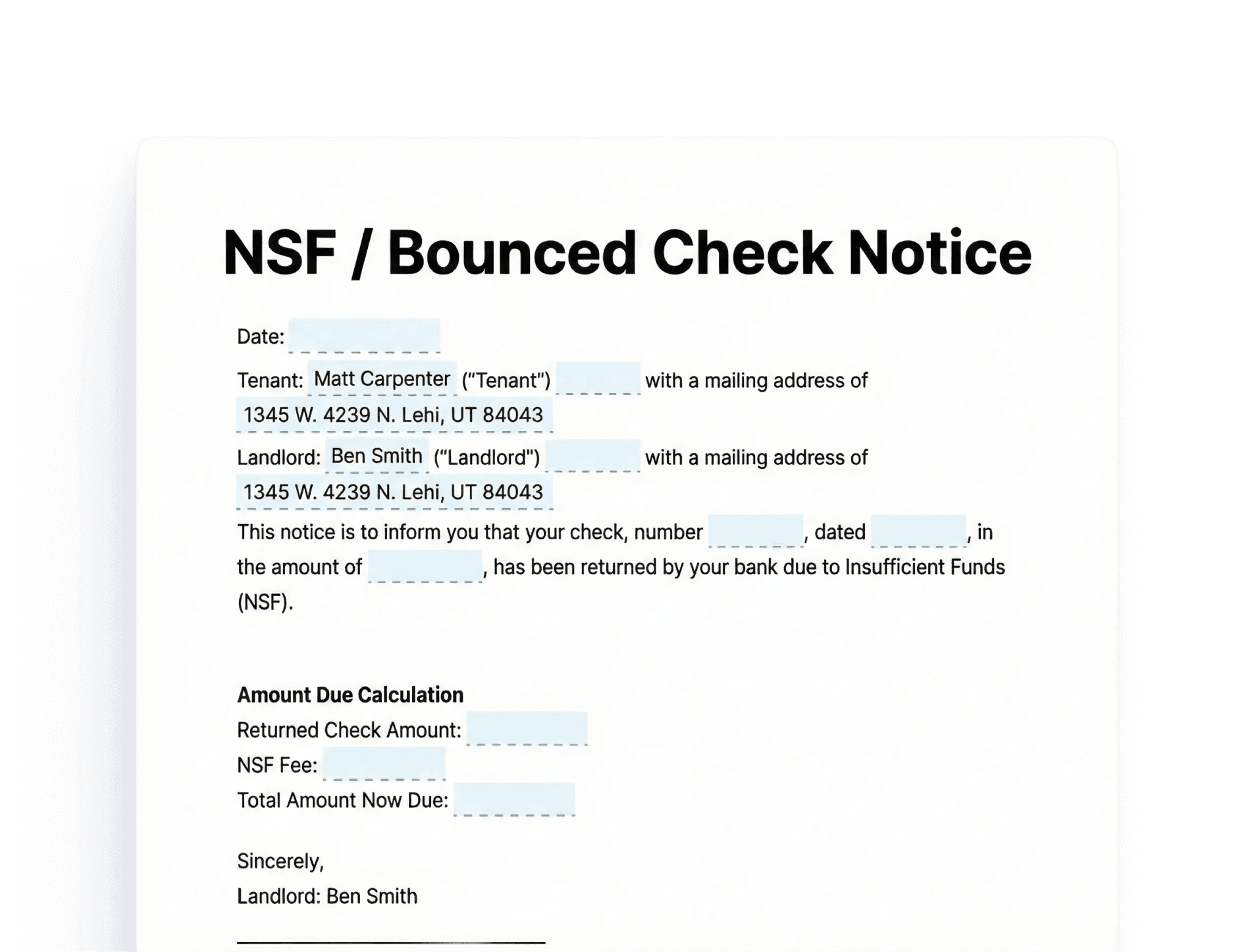
An NSF / bounced check notice is a formal written notification landlords send tenants when rent checks are returned unpaid due to insufficient funds, closed accounts, or other banking problems. This notice documents the returned payment amount, NSF fee charges, new payment deadlines, acceptable payment methods, and potential lease violations or eviction consequences.
Download as PDF when complete


(No Ratings Yet)
What Is an NSF / Bounced Check Notice?
Property managers must send these notices promptly after receiving bank notifications about returned checks establishing clear communication about payment status and tenant obligations. The notice serves multiple critical legal and practical functions. First, it creates official documentation proving tenants were notified about payment failure and outstanding balances. Second, it establishes legal foundations for eviction proceedings if tenants don’t cure payment defaults. Third, it informs tenants about NSF fee charges and revised payment expectations. Finally, it demonstrates your professional business practices even when handling frustrating payment problems strengthening your position during potential disputes.
Legal Framework and Requirements
State NSF Fee Regulations
State laws regulate maximum NSF fees landlords can charge for bounced checks. Common limits range from $20 to $50 per returned check though some states allow higher amounts or bank fee pass-through. For example, California permits $25 for first bounced check and $35 for subsequent occurrences, while Texas allows up to $30. Additionally, some jurisdictions require specific fee disclosure in lease agreements before charges apply.
Research your state’s NSF fee restrictions before including charges in notices. Excessive fees violate consumer protection laws creating liability and potentially invalidating other legitimate charges. Furthermore, ensure lease agreements specifically authorize NSF fees with stated amounts preventing tenant challenges about unauthorized charges.
Notice Timing Requirements
Send NSF notices immediately upon receiving bank notification about returned checks, typically within 24-48 hours. Prompt notification gives tenants maximum time curing defaults before escalating to eviction proceedings. Additionally, delayed notices might weaken legal positions by suggesting payment wasn’t urgent.
Some states require specific notification timing before proceeding with eviction actions for non-payment. Missing notice deadlines or failing to provide adequate cure opportunities might require restarting eviction processes. Furthermore, document notice delivery dates proving timely notification supporting your procedural compliance.
Payment Default Implications
Bounced checks typically constitute lease payment default violations. However, most states require providing tenants opportunities to cure defaults by paying outstanding amounts plus fees within specified periods. Notice-to-pay-or-quit deadlines commonly range from three to fourteen days depending on jurisdiction.
Distinguish between first-time versus repeated bounced check situations. Many landlords show leniency for single occurrences while treating chronic problems more seriously. Additionally, lease agreements might include provisions treating multiple NSF checks as material lease violations warranting termination beyond simple non-payment.
Essential Notice Components
Header and Identification
Begin NSF notices with clear subject lines like “URGENT: Returned Check Notification – Immediate Action Required” ensuring tenants recognize message importance. Include complete property addresses, unit numbers, tenant names, and lease reference numbers. Additionally, document notice dates and landlord contact information.
Use certified mail or hand delivery with signature acknowledgment for official notices establishing proof of receipt. Email or text message courtesy copies supplement formal delivery but shouldn’t replace properly documented notification. Furthermore, retain delivery receipts and tracking information supporting your notice timing claims.
Returned Check Details
Specify exact returned check information including check numbers, dates written, amounts, and reasons banks provided for returns such as “insufficient funds,” “account closed,” or “stop payment placed.” This detail demonstrates notice accuracy preventing tenant claims about mistaken notifications. Additionally, attach or reference bank returned check notices as supporting documentation.
Note the date your bank notified you about the returned check establishing timeline context. Some state laws measure cure period deadlines from tenant notice receipt rather than landlord notification. Furthermore, clear timeline documentation supports eviction proceedings if tenants fail meeting payment deadlines.
Current Balance Owed
Calculate and display total amounts currently owed including original rent payment, NSF fees, and any other outstanding charges. Show calculation breakdowns clearly: “Returned Rent Payment: $1,500, NSF Fee: $35, Previous Balance: $50, Total Amount Due: $1,585.” This transparency prevents confusion about payment obligations.
Specify whether quoted totals include only current returned payment or accumulated arrearages from previous defaults. Additionally, note whether late fees will accrue if payments aren’t received by specified deadlines. Furthermore, clarify how partial payments will be applied if tenants cannot immediately pay full amounts.
Payment Instructions
Provide detailed payment instructions specifying acceptable methods for resolving bounced check situations. Most landlords require certified checks, money orders, or cash after NSF occurrences prohibiting personal checks. Additionally, specify where payments should be submitted including office addresses, drop-box locations, or online payment portals if accepting electronic payments.
Establish firm payment deadlines typically ranging from three to seven days depending on state requirements and lease terms. Clear deadlines create urgency while providing reasonable cure opportunities. Furthermore, note office hours for in-person payments preventing tenants claiming they couldn’t submit payments during unavailable times.
Consequences and Next Steps
Clearly explain consequences if tenants don’t cure payment defaults within specified timeframes. State that continued non-payment will result in eviction proceedings, potential credit reporting, collections actions, and liability for all legal costs. However, balance firmness with professional tone avoiding threatening or harassing language.
Additionally, offer to discuss payment arrangements if tenants face genuine temporary hardships. This flexibility demonstrates reasonableness potentially resolving situations cooperatively. Furthermore, document any payment plan discussions in writing creating clear mutual understanding about alternative arrangements.
Best Practices for Notice Delivery
Professional Communication Tone
Maintain professional business tone throughout NSF notices avoiding emotional, accusatory, or demeaning language. State facts objectively focusing on payment status and required actions rather than making personal judgments about tenant financial management. Professional communication preserves relationships and demonstrates your business maturity.
However, ensure notices clearly communicate situation seriousness. Tenants must understand that bounced checks represent significant problems requiring immediate attention. Furthermore, professional firmness establishes that you take rental obligations seriously while remaining respectful.
Immediate Response Timing
Send NSF notices within 24 hours of receiving bank notifications about returned checks. Immediate response demonstrates your attentiveness and provides tenants maximum time resolving problems. Additionally, prompt notification reduces likelihood of additional bounced checks from tenants believing previous payments cleared successfully.
Immediate notice also protects you from claims that delayed notification prevented timely resolution. Some tenants argue they would have cured defaults sooner if notified promptly. Furthermore, quick response establishes your systematic business practices rather than casual informal management.
Multiple Delivery Methods
Use multiple notification methods ensuring tenants actually receive NSF notices. Send certified mail establishing legal delivery proof while also providing courtesy calls, emails, or text messages. Redundant notification prevents tenants claiming ignorance about payment problems.
However, rely on formal written documentation as official legal notice rather than verbal communication alone. Verbal notifications serve as courtesy supplements but lack enforceability. Additionally, written notices prevent miscommunication about payment amounts, deadlines, or consequences.
Documentation and Record Keeping
Maintain comprehensive files for all bounced check situations including bank returned check notices, NSF notices sent to tenants, delivery receipts, and any subsequent communications. This documentation proves your proper notice timing and content supporting eviction proceedings or collections actions.
Photograph or scan all documents creating digital backups protecting against lost physical records. Additionally, note all verbal conversations about payment issues including dates, topics discussed, and commitments made. Furthermore, organized documentation demonstrates professionalism if property owners question your handling of payment problems.
Preventing Future NSF Situations
Payment Method Restrictions
Consider requiring alternative payment methods from tenants with NSF history. Many landlords prohibit personal checks after first bounced payments requiring certified checks, money orders, or electronic transfers. Additionally, some property managers mandate automatic ACH payments preventing future NSF occurrences.
However, ensure payment method restrictions comply with state laws. Some jurisdictions prohibit discriminatory practices like charging higher deposits or requiring different payment methods based solely on past payment problems. Furthermore, document reasonable business justifications for restrictions supporting your decisions.
Enhanced Screening Procedures
Bounced checks from new tenants might indicate inadequate screening. Review application procedures ensuring thorough income verification, rental history checks, and credit evaluations. Additionally, consider increasing income requirements or security deposits for applicants with concerning financial indicators.
However, apply screening criteria consistently across all applicants avoiding fair housing violations. Document objective standards supporting decisions rather than subjective judgments. Furthermore, periodic screening procedure reviews identify improvements preventing future problematic tenant selections.
Conclusion
An NSF / bounced check notice provides essential formal notification about returned payments while establishing clear expectations for resolution. By sending notices immediately, calculating fees accurately, providing specific payment instructions, and maintaining professional communication, you protect legal rights while demonstrating business maturity. Always document delivery thoroughly, specify payment deadlines clearly, explain consequences firmly, and maintain comprehensive records. Professional bounced check notice procedures demonstrate systematic financial management supporting both cooperative problem resolution and strong legal positions when court proceedings become necessary.
FAQs
NSF fee limits vary by state, typically ranging from $20-$50 per returned check, with some jurisdictions allowing higher amounts or bank fee pass-through. Always check your state’s specific regulations and ensure lease agreements disclose NSF fees before charging, as unauthorized fees violate consumer protection laws.
No, most states require providing notice-to-pay-or-quit opportunities allowing tenants curing defaults by paying outstanding amounts plus fees within 3-14 days depending on jurisdiction. Immediate eviction without proper notice violates landlord-tenant laws potentially invalidating proceedings and creating liability.
Most landlords require certified checks, money orders, or cash after bounced checks rather than accepting replacement personal checks that might also bounce. This policy protects against repeated NSF occurrences though you should verify state laws permit payment method restrictions after NSF incidents.
Require tenants providing bank statements proving sufficient deposit timing before check processing, but ultimately bounced checks represent tenant responsibility regardless of deposit timing issues. Additionally, banks provide specific return reasons helping determine whether claims are legitimate or excuses.
This depends on state law and lease terms, with some jurisdictions allowing NSF fee deductions while others restrict security deposits to move-out damage and unpaid rent only. However, most landlords collect NSF fees immediately rather than waiting until move-out when recovery becomes more difficult.