
NSF / Bounced Check Notice


(1)
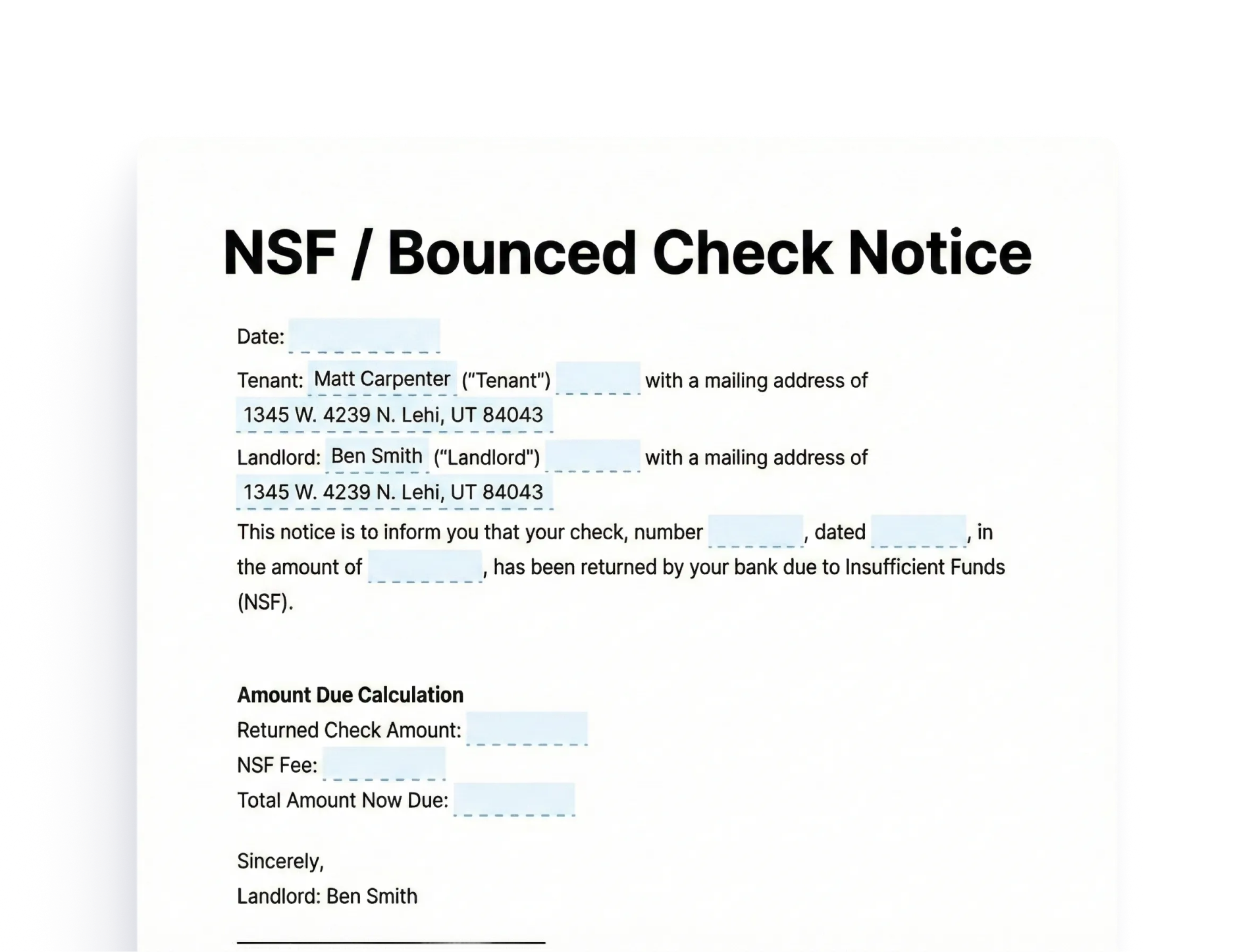
An NSF / bounced check notice is a formal written notification landlords send tenants when rent checks are returned unpaid due to insufficient funds, closed accounts, or other banking issues. Specifically, it documents the returned payment amount, NSF fee charges, new payment deadlines, accepted payment methods, and any eviction consequences.
Download as PDF when complete
NSF Bounced Check Notice: Definition and Purpose
What an NSF Notice Does for Landlords
Property managers must send an NSF bounced check notice right away after receiving a bank alert about a returned check. This notice serves several key purposes:
- It creates official records proving the tenant was told about the payment failure
- It builds the legal foundation for eviction if the tenant does not fix the default
- It informs the tenant about NSF fee charges and revised payment expectations
- It shows professional management practices, strengthening your position in disputes
Why Prompt Action on a Bounced Check Notice Matters
Sending an NSF bounced check notice quickly gives tenants the maximum time to fix the problem before eviction steps begin. In addition, a delayed notice can weaken your legal standing by suggesting the payment issue was not urgent. Landlords who respond fast and document everything are in a much stronger position.
Legal Framework for an NSF Bounced Check Notice
State NSF Fee Limits
State laws set limits on how much landlords can charge for bounced checks. Common limits include:
- California — $25 for the first bounced check, $35 for each one after
- Texas — up to $30 per returned check
- Most states — $20 to $50 per returned check, though some allow more
Research your state’s rules before listing any NSF fee in your notice. Charging more than the legal limit violates consumer protection laws and may void your other legitimate charges. In addition, make sure your lease specifically mentions NSF fees and states the allowed amount, so tenants cannot claim the charge was unexpected.
Notice Timing Requirements
Send your NSF bounced check notice within 24 to 48 hours of receiving the bank alert. Quick action gives tenants the best chance to fix the default before the situation escalates. Also, some states set specific notification deadlines before an eviction can proceed. Missing those deadlines may force you to restart the entire eviction process.
Document the date you sent the notice to prove timely delivery. This record supports your case if a tenant later claims they were not given enough time to respond.
Payment Default and Cure Periods
A bounced check typically counts as a lease payment default. However, most states require you to give tenants a chance to fix the default by paying the full amount owed plus any fees within a set timeframe. Common cure periods range from three to fourteen days depending on the state.
Also, think about how you will handle first-time versus repeated bounced checks. Many landlords are more flexible for a one-time issue but treat repeated failures more seriously. In addition, some leases include terms that treat multiple NSF checks as a serious lease breach — not just a simple non-payment problem.
Essential Components of an NSF Bounced Check Notice
Header and Tenant Identification
Start your NSF bounced check notice with a clear subject line such as: “URGENT: Returned Check Notification — Immediate Action Required.” Include:
- Full property address and unit number
- Tenant names and lease reference number
- Notice date and your contact details
Use certified mail or hand delivery with a signed receipt for the official notice. Email or text message copies are helpful as a backup but should not replace formal documented delivery. Keep all tracking information and delivery receipts.
Returned Check Details in Your NSF Notice
Specify the exact returned check details, including:
- Check number and the date it was written
- The amount of the check
- The reason the bank gave for the return — for example, “insufficient funds,” “account closed,” or “stop payment placed”
Attach the bank’s returned check notice as supporting proof. Also note the date your bank told you about the return. Some state laws measure the cure period deadline from when the tenant receives notice, not when you found out. Clear timing records support your case if eviction becomes necessary.
Current Balance Owed
Show the full amount the tenant owes with a clear breakdown. For example:
- Returned rent payment: $1,500
- NSF fee: $35
- Previous balance: $50
- Total amount due: $1,585
State whether this total includes only the current returned payment or also covers past-due amounts from earlier defaults. In addition, note whether late fees will build up if the full amount is not received by the deadline. Also clarify how partial payments will be applied if the tenant cannot pay the full balance right away.
Payment Instructions and Consequences in Your NSF Notice
Payment Instructions in Your NSF Bounced Check Notice
List the accepted payment methods clearly. After an NSF check, most landlords require:
- Certified checks or money orders
- Cash
- Electronic transfers, if available
Personal checks are typically not accepted after an NSF event. Specify exactly where payment should be submitted — office address, drop-box location, or online portal. Set a firm deadline, typically three to seven days depending on state rules and lease terms. Also include your office hours so tenants cannot claim they were unable to submit payment.
Consequences and Next Steps
Clearly explain what will happen if the tenant does not pay by the deadline. State that continued non-payment may lead to:
- Eviction proceedings
- Credit reporting
- Collections actions
- Tenant responsibility for all legal costs
Keep your tone firm and professional — avoid threatening or harsh language. In addition, you may want to offer to discuss a payment plan if the tenant is facing a genuine short-term hardship. Any agreement should be put in writing to avoid confusion later.
Best Practices for Delivering an NSF Bounced Check Notice
Professional Communication Tone
Write your NSF bounced check notice using neutral, factual language. Focus on the payment facts and required actions — not personal judgments about the tenant’s financial habits. A professional tone preserves the landlord-tenant relationship and shows business maturity.
At the same time, make sure the notice clearly communicates the seriousness of the situation. Tenants need to understand that a bounced check requires immediate attention. In addition, a firm but respectful notice shows you take rental obligations seriously without crossing into harassment.
Using Multiple Delivery Methods for Your NSF Notice
Send the notice by certified mail to establish legal proof of delivery. Also provide a courtesy call, email, or text message to make sure the tenant is aware of the issue right away. Using more than one method reduces the chance the tenant claims they never received the notice.
However, rely on your written, documented notice as the official legal record. Verbal notifications alone are not enough. Written notices prevent any misunderstanding about payment amounts, deadlines, or consequences.
Record Keeping for Your NSF Bounced Check Notice
Keep a complete file for every bounced check situation. This should include:
- The bank’s returned check notice
- A copy of the NSF bounced check notice you sent
- Delivery receipts and tracking confirmation
- All follow-up communications with the tenant
- Notes from any verbal conversations, including date, topic, and what was discussed
Scan or photograph all documents to create digital backups. Organized records show professional management and support your case if the matter goes to court or a property owner asks questions.
Preventing Future NSF Situations After a Bounced Check Notice
Payment Method Restrictions
After a tenant’s first bounced check, consider requiring a different payment method going forward. Many landlords no longer accept personal checks after an NSF event and instead require:
- Certified checks or money orders
- ACH bank transfers
- Electronic payment through a tenant portal
Make sure any payment method restrictions comply with your state’s laws. Some areas limit what landlords can require based on past payment issues. In addition, document your business reason for the change so you can support the decision if challenged.
Improved Screening to Reduce Future Bounced Checks
Repeated NSF checks from new tenants may point to gaps in your screening process. Review your application steps and consider whether you are doing enough to verify:
- Income level relative to rent
- Rental payment history
- Credit history and financial stability
Apply all screening criteria the same way to every applicant to avoid fair housing issues. Document the objective standards you use for decisions. In addition, review your screening process regularly to stay ahead of patterns that lead to bounced checks and payment problems.
NSF Bounced Check Notice: Key Takeaways
Why Every Landlord Needs a Clear NSF Bounced Check Notice Process
An NSF bounced check notice protects your legal rights, keeps communication professional, and gives tenants the information they need to fix the problem quickly. Landlords who send clear, timely notices with all required details are in a much stronger position — whether the situation resolves cooperatively or moves toward eviction.
Steps to Send an Effective NSF Bounced Check Notice
To handle a bounced check the right way:
- Send the NSF bounced check notice within 24 to 48 hours of the bank alert
- Include the full balance owed with a clear breakdown of all charges
- Specify accepted payment methods and a firm deadline
- Deliver by certified mail and follow up by phone or email
- Keep complete records of every step, including delivery confirmation
FAQs
An NSF / bounced check notice is a formal written notification landlords send tenants when a rent check is returned unpaid, documenting the returned amount, NSF fee charges, a new payment deadline, and the consequences of continued non-payment.
Landlords should send the notice within 24 to 48 hours of receiving the bank notification, as prompt delivery gives the tenant maximum time to fix the default and protects the landlord’s legal position.
The notice must include the exact check details, the total balance owed with a clear breakdown, accepted payment methods, a firm payment deadline, and a clear statement of consequences if the tenant does not pay by the deadline.
Yes, landlords can charge NSF fees, but the amount is regulated by state law — for example, California allows $25 for the first occurrence and $35 for repeat events, while Texas allows up to $30 per returned check.
After a bounced check, landlords can require certified checks, money orders, or electronic transfers going forward, and should also review their tenant screening process to ensure thorough income and credit checks are in place.