
Notice of Rent Withholding
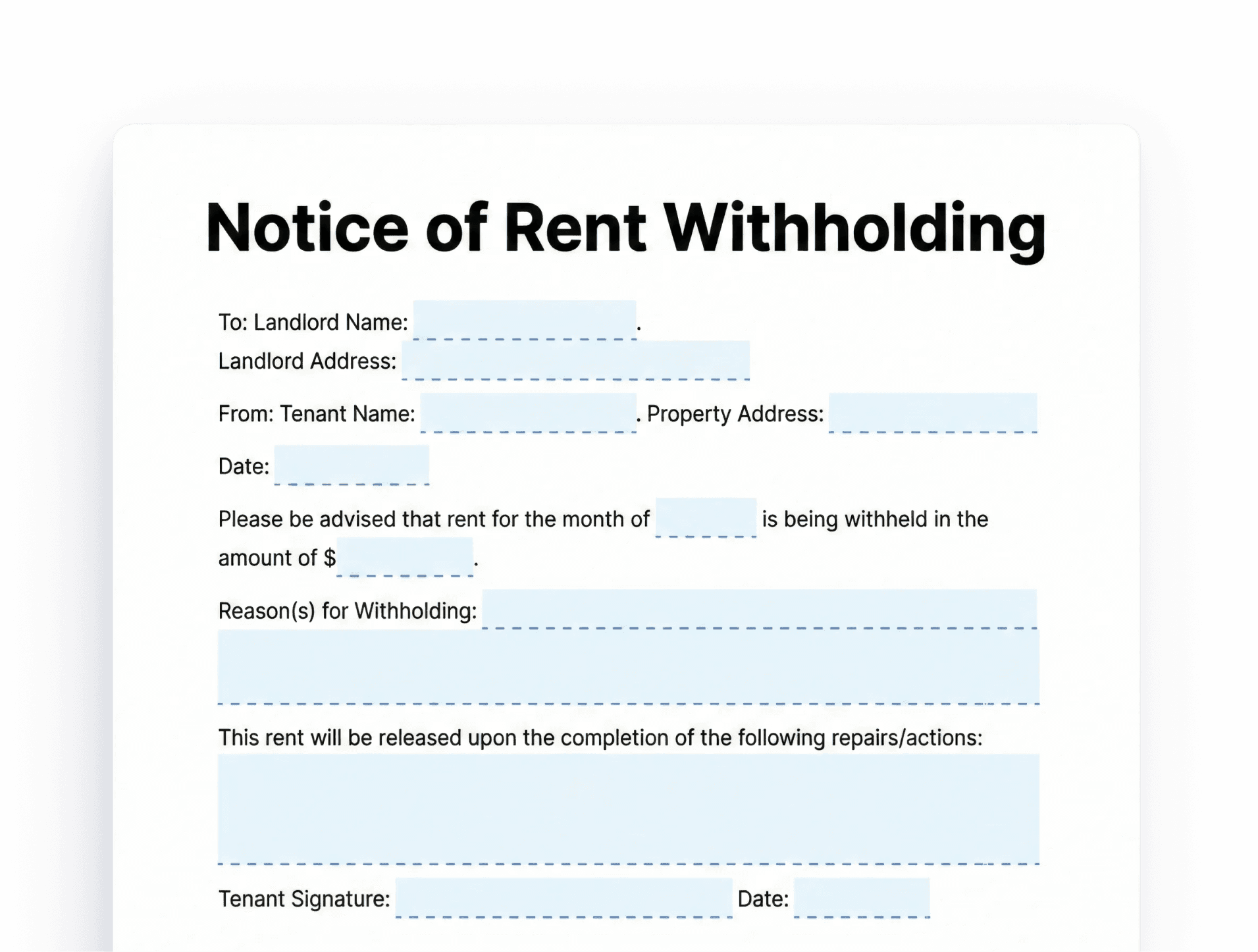
A notice of rent withholding is a written communication informing landlords that tenants will stop paying rent until specific property conditions are corrected. This notice typically cites uninhabitable conditions, unaddressed maintenance problems, or landlord lease violations justifying the withholding action.
Download as PDF when complete


(No Ratings Yet)
What Is a Notice of Rent Withholding?
The notice serves multiple purposes in landlord-tenant disputes. First, it documents tenant complaints and provides landlords with formal notice about problems requiring attention. Second, it establishes legal foundation for tenant defenses if landlords pursue eviction for non-payment. Third, it creates opportunity for resolution before disputes escalate to court proceedings. Finally, it protects tenants from immediate eviction by demonstrating good faith efforts addressing legitimate habitability concerns. Tenants use this tool as leverage compelling landlords to address serious property issues affecting health, safety, or basic habitability.
Legal Grounds for Rent Withholding
Implied Warranty of Habitability
Most states recognize an implied warranty of habitability requiring landlords to maintain rental properties in livable condition regardless of lease language. This warranty covers essential services including adequate heating, plumbing, electricity, water, structural integrity, and freedom from pest infestations. When landlords breach habitability obligations, tenants gain legal right withholding rent until corrections occur.
The warranty applies automatically to residential leases without requiring specific written provisions. Landlords cannot waive habitability obligations through lease clauses. Furthermore, tenants can assert habitability defenses even when leases include “as-is” provisions or maintenance responsibility transfers. This strong tenant protection recognizes power imbalances in rental relationships.
State-Specific Withholding Laws
State laws vary significantly regarding rent withholding rights and procedures. Some states like California explicitly authorize rent withholding for habitability violations. Others require tenants depositing withheld rent into court escrow accounts. Several jurisdictions permit withholding only after following specific notice and waiting period requirements.
Research your state’s particular laws before responding to withholding notices. Some states allow immediate withholding while others require 30-day cure periods. Additionally, certain jurisdictions limit withholding amounts to proportional rent reductions reflecting diminished property value rather than complete payment suspension. Understanding these variations ensures appropriate responses.
Legitimate vs Illegitimate Withholding
Not all rent withholding claims have legal merit. Legitimate grounds include serious health and safety violations like broken heating in winter, extensive water damage, sewage problems, or electrical hazards. Conversely, minor maintenance annoyances like cosmetic issues, slow repairs for non-essential items, or tenant-caused damage rarely justify withholding.
Evaluate withholding notices carefully determining whether claimed conditions truly violate habitability standards. Tenants sometimes misunderstand their rights withholding rent for minor complaints. Additionally, some withhold rent dishonestly using fabricated maintenance claims hiding financial difficulties. Distinguishing legitimate claims from improper withholding guides your response strategy.
Essential Components of the Notice
Problem Description and Documentation
Valid rent withholding notices should contain detailed descriptions of alleged habitability violations. Effective notices specify exact problems, locations within properties, dates issues began, and previous repair requests made. Additionally, notices often include photographs documenting conditions supporting withholding justifications.
Tenants strengthening their positions provide comprehensive documentation including repair request copies, correspondence about problems, inspection reports, and code violation notices from authorities. This documentation demonstrates good faith efforts resolving issues before resorting to withholding. Furthermore, it establishes timelines showing prolonged landlord non-responsiveness.
Legal Basis and Tenant Rights
Many notices cite specific statutes or regulations supporting withholding actions. Tenants may reference state habitability laws, local housing codes, or lease provisions violated by landlords. Additionally, notices often explain tenant rights under applicable laws including proportional rent reduction calculations or escrow deposit requirements.
Some tenants include legal research or attorney communications strengthening their positions. While not required, legal citations demonstrate seriousness and preparedness for potential court proceedings. Furthermore, they signal tenants understand their rights making dismissive responses ineffective.
Proposed Resolution and Timeline
Constructive withholding notices suggest reasonable solutions and timelines for corrections. Tenants might request specific repairs, professional inspections, or temporary accommodations during major renovations. Additionally, they typically specify deadlines for landlord response and problem resolution before taking additional actions.
Proposed timelines should reflect problem severity. Emergency issues like heating failures demand immediate responses within 24-48 hours. Non-emergency habitability problems might allow 7-14 days for corrections. Reasonable timelines demonstrate tenant good faith and provide landlords achievable deadlines preventing unnecessary escalation.
Proper Response Procedures
Immediate Acknowledgment
Respond to rent withholding notices immediately, ideally within 24 hours of receipt. Written acknowledgment demonstrates you take concerns seriously and are addressing them promptly. Even if you disagree with withholding justifications, professional responses maintain communication channels and show good faith.
Your acknowledgment should confirm receipt, summarize your understanding of claimed problems, and outline your intended actions. Additionally, provide realistic timelines for inspections, contractor scheduling, and anticipated repair completion. Transparency about your response process reduces tenant anxiety and often encourages continued dialogue.
Property Inspection and Assessment
Conduct thorough property inspections immediately after receiving withholding notices. Bring cameras documenting current conditions, checklists ensuring comprehensive reviews, and potentially neutral third parties like inspectors providing objective assessments. Systematic inspections reveal whether claimed conditions truly exist and their severity.
Compare current conditions against tenant claims identifying discrepancies. Sometimes problems are less severe than described or don’t violate habitability standards. Conversely, inspections occasionally reveal additional issues tenants didn’t mention. Complete assessments ensure you address all legitimate concerns while defending against exaggerated claims.
Swift Problem Resolution
Address legitimate habitability violations immediately regardless of withholding disagreements. Your primary obligation involves maintaining safe, habitable properties. Prompt repairs often convince tenants resuming rent payments voluntarily without continued conflict. Furthermore, quick action demonstrates good faith reducing tenant leverage in potential legal proceedings.
Prioritize repairs by severity addressing safety hazards before cosmetic issues. Provide regular progress updates to tenants showing active problem-solving. Additionally, document all repair activities thoroughly including contractor invoices, completion dates, and verification inspections. This documentation proves you fulfilled habitability obligations.
Written Response and Documentation
Provide formal written responses to withholding notices after completing inspections and beginning repairs. Your response should address each claimed violation explaining actions taken or why certain claims lack merit. Additionally, include supporting documentation like contractor quotes, repair receipts, or inspection reports refuting unfounded allegations.
Clearly state your position on rent payment obligations. If you’ve addressed all legitimate issues, demand immediate rent payment resumption. Alternatively, propose reasonable payment plans allowing tenants catching up on withheld amounts. Furthermore, explain consequences of continued withholding after problem resolution including potential eviction proceedings.
Preventing Rent Withholding Situations
Proactive Maintenance Systems
Implement systematic preventive maintenance programs addressing potential problems before they become habitability issues. Regular HVAC servicing, plumbing inspections, and structural assessments prevent emergency failures triggering withholding. Additionally, seasonal preparations like winterization protect against cold weather problems.
Maintain detailed maintenance logs documenting all property upkeep activities. These records prove your diligence maintaining habitability standards. Furthermore, they demonstrate patterns of responsive maintenance making tenant withholding claims less credible during disputes.
Responsive Repair Procedures
Establish clear procedures for tenants reporting maintenance problems ensuring prompt responses. Provide multiple communication channels including phone, email, and online portals. Additionally, acknowledge all repair requests immediately even if actual repairs require scheduling delays.
Set and meet realistic repair timelines based on problem severity. Emergency issues demand same-day responses while routine maintenance can follow normal scheduling. Consistent responsiveness builds tenant trust preventing them from resorting to withholding as their only remedy. Furthermore, it creates documentation showing your typical reliability if disputes arise.
Clear Communication Practices
Maintain regular communication with tenants about property conditions and planned maintenance. Proactive updates about anticipated repairs, upgrade schedules, or seasonal preparations demonstrate attentiveness. Additionally, encourage tenants reporting problems early before minor issues become major habitability violations.
Document all communications thoroughly including dates, subjects discussed, and commitments made. This documentation proves your accessibility and responsiveness if tenants later claim you ignored complaints. Furthermore, clear communication often prevents misunderstandings that escalate into withholding situations.
Legal and Financial Considerations
Understanding Eviction Limitations
Many states prohibit evicting tenants for non-payment when withholding stems from legitimate habitability violations. Courts often rule for tenants presenting credible evidence of unaddressed serious problems. Therefore, pursuing eviction without resolving underlying issues typically fails while damaging your reputation.
Before filing eviction actions, ensure you’ve completely addressed all legitimate habitability concerns. Additionally, obtain documentation from contractors or inspectors confirming repairs meet code requirements. This evidence strengthens your position if tenants continue withholding after proper corrections.
Financial Impact Management
Rent withholding creates immediate cash flow problems particularly for landlords depending on rental income for mortgage payments or operating expenses. Develop contingency plans for temporary income loss including emergency reserves or credit lines. Additionally, prioritize essential repairs over discretionary improvements during financial constraints.
Consider whether property insurance covers certain repair situations reducing your out-of-pocket expenses. Some policies include loss of rent coverage compensating for income lost during major repairs. Furthermore, insurance might cover emergency repairs for covered events like storm damage or burst pipes.
Conclusion
A notice of rent withholding signals serious tenant concerns requiring immediate attention and professional responses. By understanding legal grounds for withholding, responding promptly to notices, addressing legitimate habitability issues swiftly, and maintaining proactive maintenance practices, you minimize conflicts while protecting tenant safety and your financial interests. Always prioritize property habitability regardless of payment disputes, document everything thoroughly, and seek legal counsel when situations become complex. Professional handling of rent withholding situations often preserves valuable tenancies while demonstrating your commitment to providing quality housing.
FAQs
Legal requirements vary by state, but most jurisdictions require tenants providing written notice before withholding rent for habitability violations. However, even without formal notice, tenants can raise habitability defenses during eviction proceedings if they previously reported problems to landlords.
Respond professionally explaining that minor cosmetic issues don’t justify rent withholding under habitability laws. Offer to address concerns within reasonable timeframes while demanding immediate rent payment, and document your communications thoroughly if eviction becomes necessary.
No, you cannot evict immediately, and pursuing eviction without addressing legitimate habitability violations typically fails in court. First resolve all valid concerns, then provide proper notice demanding rent payment before filing eviction for continued non-payment.
This depends on your state’s laws, as accepting partial payments may waive eviction rights in some jurisdictions. Consult with a local attorney before accepting or rejecting partial payments during disputes to protect your legal position.
Maintain comprehensive documentation including contractor invoices, completion certificates, before-and-after photographs, and written communications with tenants about repairs. Additionally, consider obtaining third-party inspection reports confirming code compliance after completing corrections.