
Notice of Rent Withholding


(1)
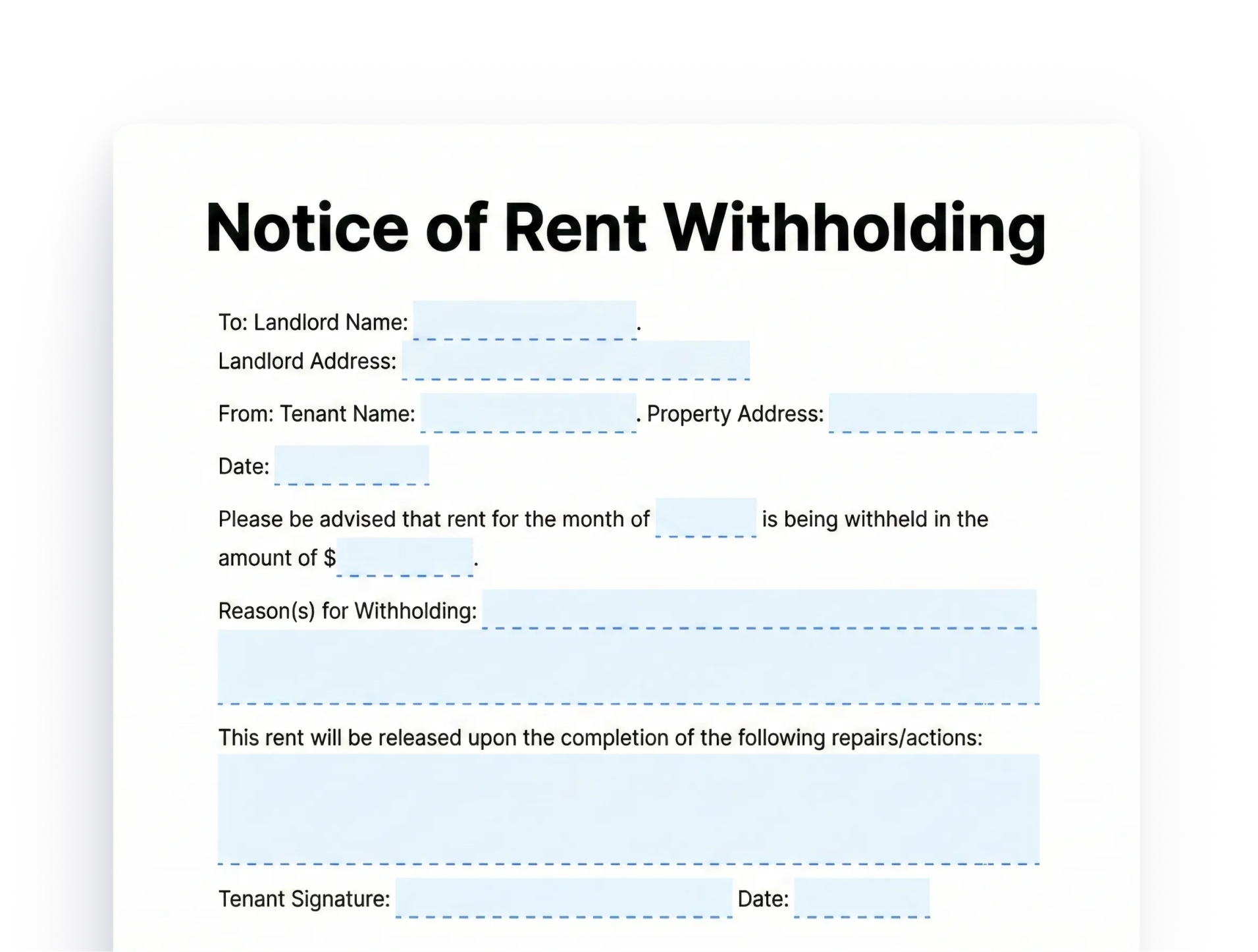
A notice of rent withholding is a written contact telling landlords that a tenant will stop paying rent until specific property issues are fixed. Specifically, it cites unlivable issues, ignored upkeep problems, or landlord lease breaches as the reason for withholding payment.
Download as PDF when complete
Notice of Rent Withholding: Definition and Purpose
What This Notice Does for Tenants and Landlords
A notice of rent withholding serves several key purposes in a landlord-tenant dispute:
- It formally documents the tenant’s complaint and puts the landlord on notice
- It creates a legal foundation for the tenant’s defense if eviction process begin
- It opens the door to solution before the dispute reaches court
- It protects the tenant from immediate eviction by showing good faith
Tenants use this notice as leverage to push landlords to fix serious property issues that affect health, safety, or basic livable issues.
Why Landlords Must Take a Rent Withholding Notice Seriously
A notice of rent withholding is not just a complaint — it is a legal signal that requires a prompt, skilled response. In addition, ignoring the notice or dismissing the tenant’s concerns can weaken your legal position if the case goes to court. Landlords who respond quickly and address real issues are in a much stronger position than those who do not.
Legal Grounds for a Notice of Rent Withholding
Implied Warranty of Livable issues
Most states recognize an implied warranty of livable issues that requires landlords to keep rental properties in livable condition. This warranty covers:
- Adequate heating, plumbing, and electricity
- Safe drinking water
- Building safety
- Freedom from pest infestations
The warranty applies to all residential leases automatically — landlords cannot waive it through lease clauses. Also, tenants can use livable issues defenses even when the lease includes “as-is” language or upkeep clauses that shift responsibility to the tenant.
State-Specific Rent Withholding Laws
State laws on rent withholding vary greatly. Some states, like California, allow withholding directly for livable issues breaches. Others require tenants to deposit withheld rent into a court escrow account. Some areas only allow withholding after the tenant has given a formal notice and waited a set cure period.
Research your state’s specific rules before responding to any notice of rent withholding. Key differences include:
- Whether withholding is allowed right away or requires a waiting period
- Whether tenants must pay into escrow
- Whether withholding is limited to a matching rent reduction rather than a full stop in payment
Real vs Questionable Rent Withholding Claims
Not all rent withholding claims are legally sound. Real grounds include serious health and safety issues such as:
- Broken heating in winter
- Extensive water damage
- Sewage backups
- Electrical hazards
In contrast, minor cosmetic issues, slow repairs for non-essential items, or damage caused by the tenant rarely justify withholding. Some tenants misunderstand their rights and withhold rent for complaints that do not meet the legal threshold. Others may use false upkeep claims to hide financial trouble. Carefully evaluating the notice helps you decide how to respond.
Responding to a Notice of Rent Withholding
Immediate Confirmation
Respond to a notice of rent withholding within 24 hours of receiving it. A written confirmation shows you take the concern seriously and are acting on it. Even if you disagree with the withholding, a skilled response keeps the lines of contact open and shows good faith.
Your confirmation should:
- Confirm you received the notice
- Summarize your grasp of the claimed problems
- Outline what steps you plan to take
- Provide realistic timelines for checks and repairs
Property Check and Review
Conduct a thorough check of the property right after receiving the notice. Bring a camera, a checklist, and consider inviting a neutral third party such as a licensed inspector. A full review tells you whether the claimed issues actually exist and how serious they are.
Compare what you find against the tenant’s claims. Sometimes problems are less severe than described or do not meet the legal threshold for livable issues breaches. Other times, the check may reveal issues the tenant did not mention. In addition, a full review ensures you address all real concerns while also building your defense against any overstated ones.
Swift Problem Solution After a Rent Withholding Notice
Address any real livable issues breaches right away — regardless of the payment dispute. Your main legal duty is to keep the property safe and livable. Prompt repairs often lead tenants to resume paying rent voluntarily. Also, quick action shows good faith and reduces the tenant’s legal leverage if the case goes to court.
Steps to take after confirming a real issue:
- Prioritize safety hazards over cosmetic or minor items
- Give the tenant regular progress updates
- Document all repair work with contractor invoices, dates, and completion records
Written Response After a Rent Withholding Notice
Written Response and Follow-Up
After completing your check and starting repairs, send a formal written response to the notice of rent withholding. Address each claimed violation and explain what actions you have taken or why certain claims do not meet the legal standard for withholding.
In your written response, include:
- Supporting records such as contractor quotes, repair receipts, or check reports
- A clear statement of your position on rent payment
- A request for rent to resume if all real issues have been fixed
- A proposed payment plan if the tenant needs time to catch up on withheld rent
Essential Components of a Notice of Rent Withholding
Problem Description and Records
A valid notice of rent withholding should include a detailed description of the alleged livable issues breaches. Strong notices include:
- The specific problem and its exact location in the property
- When the issue started
- Copies of prior repair requests and related correspondence
- Photos documenting issues
- Check reports or code violation notices from local authorities
This records shows the tenant made good faith efforts to resolve the issue before withholding. In addition, it creates a timeline that may work against you in court if you failed to respond.
Legal Basis and Proposed Solution
Many notices also cite the specific statutes or housing codes that support the withholding action. While not required, legal references show the tenant is prepared to go to court if needed. Also, a well-written notice often includes a proposed solution and a reasonable timeline for repairs.
Timelines in a notice of rent withholding should match the severity of the problem. For instance:
- Emergency issues like heating failure — response expected within 24 to 48 hours
- Serious but non-emergency issues — 7 to 14 days for repairs
- Moderate livable issues concerns — a reasonable timeframe based on complexity
Preventing a Notice of Rent Withholding
Proactive Upkeep to Avoid Rent Withholding
The best way to prevent a notice of rent withholding is to stay ahead of upkeep issues before they become livable issues breaches. Key steps include:
- Regular HVAC servicing and plumbing checks
- Seasonal preparations such as winterization
- Building reviews before problems develop
Keep detailed upkeep logs to prove your ongoing care. These records make tenant withholding claims less credible if a dispute arises. In addition, documented upkeep history is one of the strongest defenses in a livable issues case.
Responsive Repair Procedures
Set up clear procedures for tenants to report problems and make it easy to reach you. Provide multiple contact options — phone, email, and an online portal if possible. Acknowledge all repair requests right away, even if the actual repair takes time to schedule.
Match your response speed to the severity of the issue:
- Same-day response for emergencies
- Within a week for routine but important repairs
- Normal scheduling for minor non-urgent items
Consistent responsiveness builds tenant trust and often prevents them from ever reaching the point of sending a notice of rent withholding.
Clear Contact Practices
Keep tenants informed about planned upkeep, upcoming repairs, and seasonal work. Proactive updates show attentiveness and reduce the chance of misgrasps that escalate into a formal dispute.
Document all contact — including dates, topics discussed, and any commitments made. This record protects you if a tenant later claims you ignored their requests. Also, clear and regular contact is one of the simplest ways to avoid the situations that lead to a notice of rent withholding.
Legal and Financial Considerations After a Rent Withholding Notice
Understanding Eviction Limitations
Many states prohibit evicting a tenant for non-payment when the withholding is tied to a real livable issues violation. Courts often rule in favor of tenants who can show credible evidence of ignored serious problems. As a result, filing for eviction without first fixing the underlying issues usually fails — and can damage your reputation.
Before taking any eviction action, make sure:
- All real livable issues concerns have been fully addressed
- You have written confirmation from a contractor or inspector that repairs meet code
- You have documented your entire response process from notice to solution
Managing the Financial Impact of a Rent Withholding Situation
A notice of rent withholding creates immediate cash flow problems — especially for landlords who depend on rental income for mortgage payments or operating costs. To prepare for this possibility, consider:
- Keeping an emergency reserve or access to a credit line for unexpected repair costs
- Checking whether your property insurance covers certain repairs or includes loss of rent coverage
- Prioritizing essential repairs over optional upgrades when cash is tight
Also review your insurance policy for provisions that may help. Some policies cover emergency repairs for events like storm damage or burst pipes. In addition, loss of rent coverage may offset some income lost during a major repair period.
Notice of Rent Withholding: Key Takeaways
Why Landlords Must Respond Promptly to a Rent Withholding Notice
A notice of rent withholding signals a serious tenant concern that requires an immediate and skilled response. Landlords who respond quickly, fix real issues, and document everything are far better positioned — legally and financially — than those who ignore the notice or delay action.
Steps to Handle a Notice of Rent Withholding Effectively
When you receive a notice of rent withholding:
- Acknowledge receipt within 24 hours in writing
- Inspect the property right away and document issues
- Fix any real livable issues breaches as quickly as possible
- Send a formal written response addressing each claim
- Keep complete records of every step you take
FAQs
Legal requirements vary by state, but most jurisdictions require tenants providing written notice before withholding rent for habitability violations. However, even without formal notice, tenants can raise habitability defenses during eviction proceedings if they previously reported problems to landlords.
Respond professionally explaining that minor cosmetic issues don’t justify rent withholding under habitability laws. Offer to address concerns within reasonable timeframes while demanding immediate rent payment, and document your communications thoroughly if eviction becomes necessary.
No, you cannot evict immediately, and pursuing eviction without addressing legitimate habitability violations typically fails in court. First resolve all valid concerns, then provide proper notice demanding rent payment before filing eviction for continued non-payment.
This depends on your state’s laws, as accepting partial payments may waive eviction rights in some jurisdictions. Consult with a local attorney before accepting or rejecting partial payments during disputes to protect your legal position.
Maintain comprehensive documentation including contractor invoices, completion certificates, before-and-after photographs, and written communications with tenants about repairs. Additionally, consider obtaining third-party inspection reports confirming code compliance after completing corrections.