
Move-In Charges Statement
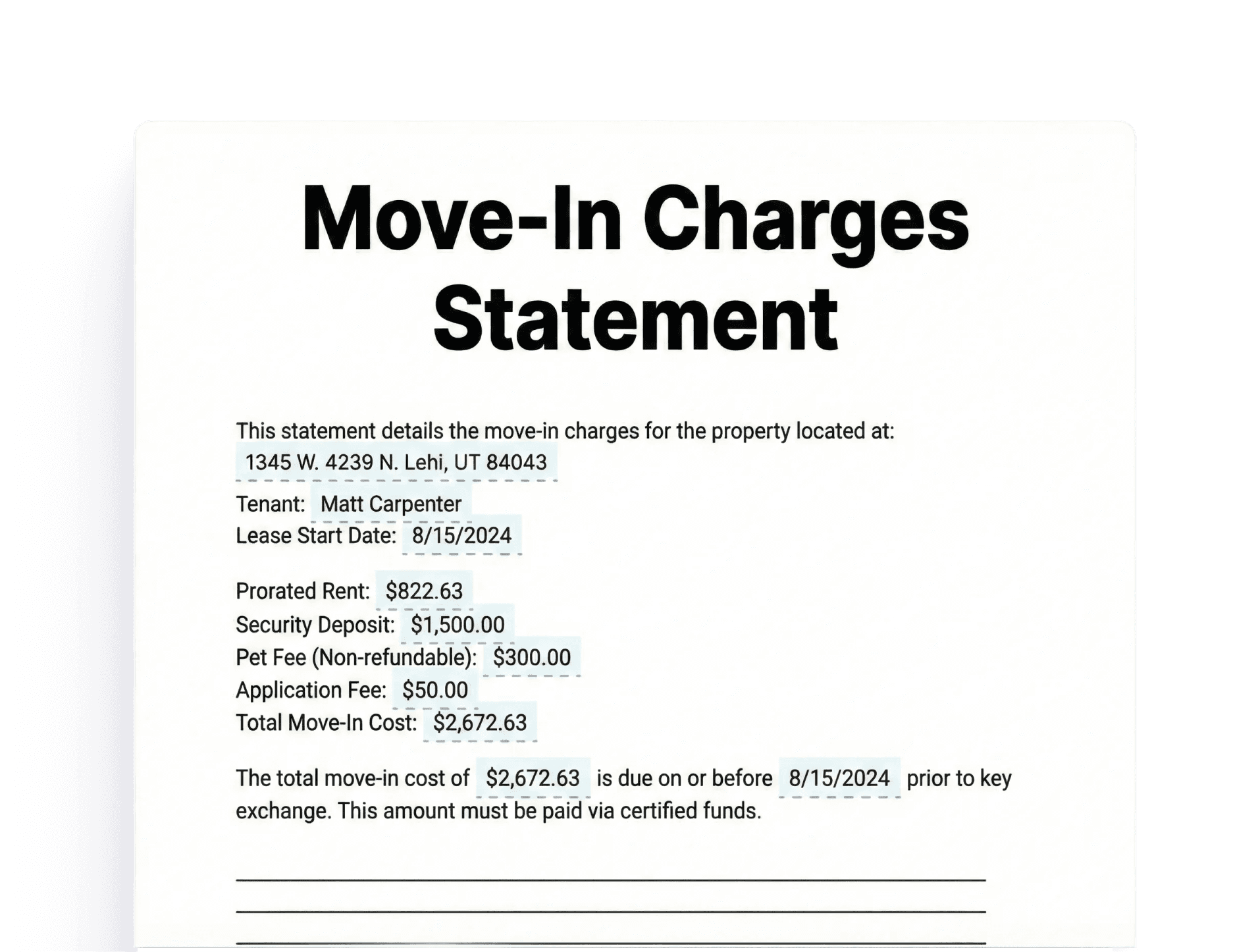
A move-in charges statement is a comprehensive document itemizing all financial charges tenants must pay before receiving keys and moving into rental properties. This statement lists each charge separately with amounts, due dates, acceptable payment methods, and explanations for each fee.
Download as PDF when complete


(No Ratings Yet)
What Is a Move-In Charges Statement?
The statement serves multiple important purposes in property management. First, it creates transparency about upfront costs preventing surprise charges that upset tenants. Second, it documents tenant acknowledgment of charges protecting you from disputes about unauthorized fees. Third, it ensures compliance with state disclosure laws requiring itemized charge documentation. Finally, it provides clear payment instructions streamlining collection and reducing confusion. Property managers provide this statement during lease signing ensuring tenants understand complete financial obligations before tenancy begins.
Legal Requirements and Compliance
State Disclosure Laws
Many states require landlords to provide written itemization of all move-in charges before or during lease signing. These disclosure laws protect tenants from hidden fees and ensure they understand total costs before committing to leases. Some jurisdictions mandate specific formats or require particular language in charge statements.
Failure to provide proper disclosure can result in penalties including forfeiture of certain fees or statutory damages favoring tenants. Additionally, some states prohibit collecting undisclosed fees even if lease agreements mention them generally. Specific itemization before lease execution protects your right to collect legitimate charges.
Permissible Charges by Jurisdiction
States regulate which charges landlords can impose at move-in and maximum amounts allowed. Common restrictions include security deposit caps, typically one to two months’ rent, and prohibitions on certain fees like key deposits in some jurisdictions. Additionally, some states limit application fees to actual screening costs or prohibit them entirely.
Research your specific state and local regulations before finalizing move-in charge structures. What’s legal in one jurisdiction might violate laws elsewhere. Furthermore, rent control ordinances often impose additional restrictions on allowable fees beyond state-level regulations. Compliance protects you from costly violations and ensures enforceable charge collection.
Refundable vs Non-Refundable Designations
Clearly distinguish between refundable and non-refundable charges in your statement. Security deposits remain refundable subject to deductions for damages beyond normal wear. Conversely, application fees, administrative fees, and pet fees often constitute non-refundable charges. This distinction significantly affects tenant expectations and your legal obligations.
Some states require specific disclosures about refund conditions and timelines for refundable deposits. Additionally, certain jurisdictions prohibit non-refundable fees entirely or limit them to specific purposes. Clear labeling prevents misunderstandings and ensures compliance with applicable consumer protection laws.
Essential Components of the Statement
Property and Tenant Information
Begin your move-in charges statement with complete identification details. Include the rental property address, unit number, lease commencement date, and all tenant names exactly as they appear on lease agreements. Add landlord or property management company information with contact details. This header establishes context for all subsequent charges listed.
Reference the lease agreement by date connecting the charge statement to binding rental contracts. This linkage demonstrates that charges stem from agreed lease terms rather than arbitrary demands. Additionally, note the statement preparation date and any payment deadline before key release.
Itemized Charge Breakdown
List every charge separately with descriptive names, amounts, and brief explanations. Common categories include first month’s rent, last month’s rent if collected, security deposit, pet deposit, application fees, administrative fees, utility setup fees, parking fees, storage fees, and key deposits. Never combine multiple charges into single line items lacking transparency.
Specify whether each charge is refundable or non-refundable clearly. For refundable deposits, note conditions affecting refund eligibility such as lease compliance and property condition at move-out. This transparency prevents disputes about deposit expectations and refund entitlements.
Payment Instructions
Provide detailed payment instructions including total amount due, payment deadline, acceptable payment methods, and where to submit payments. Specify whether you accept personal checks, cashier’s checks, money orders, electronic transfers, credit cards, or cash. Additionally, note any fees associated with specific payment methods like credit card processing charges.
Include payee information for checks and account details for electronic transfers. Provide office hours and locations for in-person payments. Clear instructions eliminate confusion preventing payment delays that could postpone move-in dates. Furthermore, comprehensive guidance demonstrates professionalism building tenant confidence.
Due Date and Consequences
Establish firm payment deadlines typically requiring full payment before key release and occupancy. State explicitly that keys will not be provided until all move-in charges are paid in full. Additionally, clarify what happens if payments are late or insufficient including potential lease cancellation or additional fees.
Some landlords allow payment plans for move-in costs splitting amounts across multiple installments. If offering this flexibility, detail the payment schedule clearly showing amounts and due dates for each installment. Furthermore, explain consequences of missed installment payments protecting your interests while providing tenant accommodation.
Best Practices for Creating Statements
Transparency and Clarity
Use plain language avoiding legal jargon or complex terminology that confuses tenants. Write charge descriptions clearly explaining what each fee covers. For example, instead of “admin fee,” specify “administrative processing fee for lease preparation and file setup.” This specificity helps tenants understand what they’re paying for.
Avoid surprising tenants with charges not discussed during property showings or application processes. Preview approximate move-in costs early in the leasing process allowing prospects to budget appropriately. Transparency builds trust and reduces lease cancellations from sticker shock at signing appointments.
Consistent Format Across Properties
Develop standardized move-in charges statement templates used consistently across all properties. Consistent formatting demonstrates professionalism and simplifies training for staff members preparing statements. Additionally, standardization ensures you never accidentally omit required disclosures or legal language.
Update templates annually reviewing all charges for continued necessity and legal compliance. Remove outdated fees and add new charges as business needs evolve. Furthermore, regular template reviews incorporate changing legal requirements maintaining ongoing compliance.
Advance Provision Timing
Provide move-in charges statements well before lease signing appointments allowing tenants adequate review time. Emailing statements 2-3 days before scheduled signings gives tenants opportunity to ask questions or arrange financing. This advance notice prevents delays at signing appointments and demonstrates respect for tenant decision-making.
Never present move-in charges statements for the first time during signing appointments. Rushed reviews under pressure to sign create dissatisfaction and potential legal vulnerabilities. Additionally, advance provision allows you to address tenant concerns or negotiate terms before scheduled appointments preventing last-minute complications.
Written Acknowledgment
Include signature lines where tenants acknowledge receiving the statement, understanding all charges, and agreeing to payment terms. This acknowledgment creates powerful documentation protecting you from future disputes about unauthorized fees or amounts. Require all adult tenants to sign preventing claims that some tenants lacked knowledge.
Provide tenants with copies of signed statements for their records. This courtesy demonstrates transparency and gives tenants reference materials for tracking their payments. Furthermore, providing copies reduces future requests for documentation copies saving administrative effort.
Common Move-In Charges Explained
Security Deposits
Security deposits protect landlords from tenant-caused damages and unpaid rent. Most states cap deposits at one to two months’ rent for unfurnished units. Clearly state deposit amount, refund conditions, deduction procedures, and return timeframes in your charges statement.
Explain that security deposits remain separate from rent payments and cannot be applied toward final month’s rent without written agreement. This distinction prevents tenant confusion about deposit purposes. Additionally, note any interest payment requirements mandated by state law.
First and Last Month Rent
Collecting first month’s rent at move-in is standard practice universally. Some landlords also collect last month’s rent upfront ensuring coverage for final occupancy periods. Clearly label these separate charges preventing confusion about which rent periods they cover.
If collecting last month’s rent, explain whether interest accrues on these prepayments per state requirements. Additionally, clarify that last month’s rent cannot be applied to other months without written modification agreements. This specificity prevents disputes about prepaid rent application.
Pet-Related Fees
Pet deposits, pet fees, and monthly pet rent serve different purposes requiring clear distinction. Pet deposits remain refundable subject to pet damage deductions. Pet fees are one-time non-refundable charges. Monthly pet rent adds ongoing charges to base rent amounts.
Specify which charges apply to your property and explain refund conditions for pet deposits. Additionally, note any pet-related lease provisions like breed restrictions or size limits. Complete transparency about pet costs prevents misunderstandings affecting tenant satisfaction.
Conclusion
A move-in charges statement provides essential transparency establishing positive landlord-tenant relationships from tenancy start. By clearly itemizing all charges, explaining each fee’s purpose, providing payment instructions, and ensuring legal compliance, you create trust while protecting your financial interests. Always provide statements well before lease signing, use consistent formatting, and obtain written acknowledgment from all tenants. Professional move-in charge documentation demonstrates your commitment to fair dealing while ensuring you collect legitimate fees supporting successful property management operations.
FAQs
Allowable charges vary by state but typically include security deposits, first month’s rent, pet deposits, application fees, and reasonable administrative fees. However, some states prohibit certain fees or cap amounts, so research your jurisdiction’s specific regulations before finalizing your charge structure.
Provide statements at least 2-3 days before lease signing appointments allowing tenants adequate review time. Some states require disclosure before lease execution, and advance provision prevents surprise fees causing lease cancellations or tenant dissatisfaction.
Yes, landlords can withhold keys until receiving full payment of all move-in charges. However, clearly communicate this requirement in your statement and allow reasonable time for tenants to arrange payments, typically 1-2 business days for fund transfers.
Address disputes promptly by explaining each charge’s purpose and showing how amounts comply with lease agreements and state laws. If charges truly violate regulations, adjust statements accordingly, but never waive legitimate fees simply to appease tenants without proper justification.
Including payment plan options can help tenants manage upfront costs, but clearly detail installment amounts, due dates, and consequences of missed payments. Some states regulate payment plan terms, so ensure your arrangements comply with applicable consumer protection laws.