
Itemized Damages List
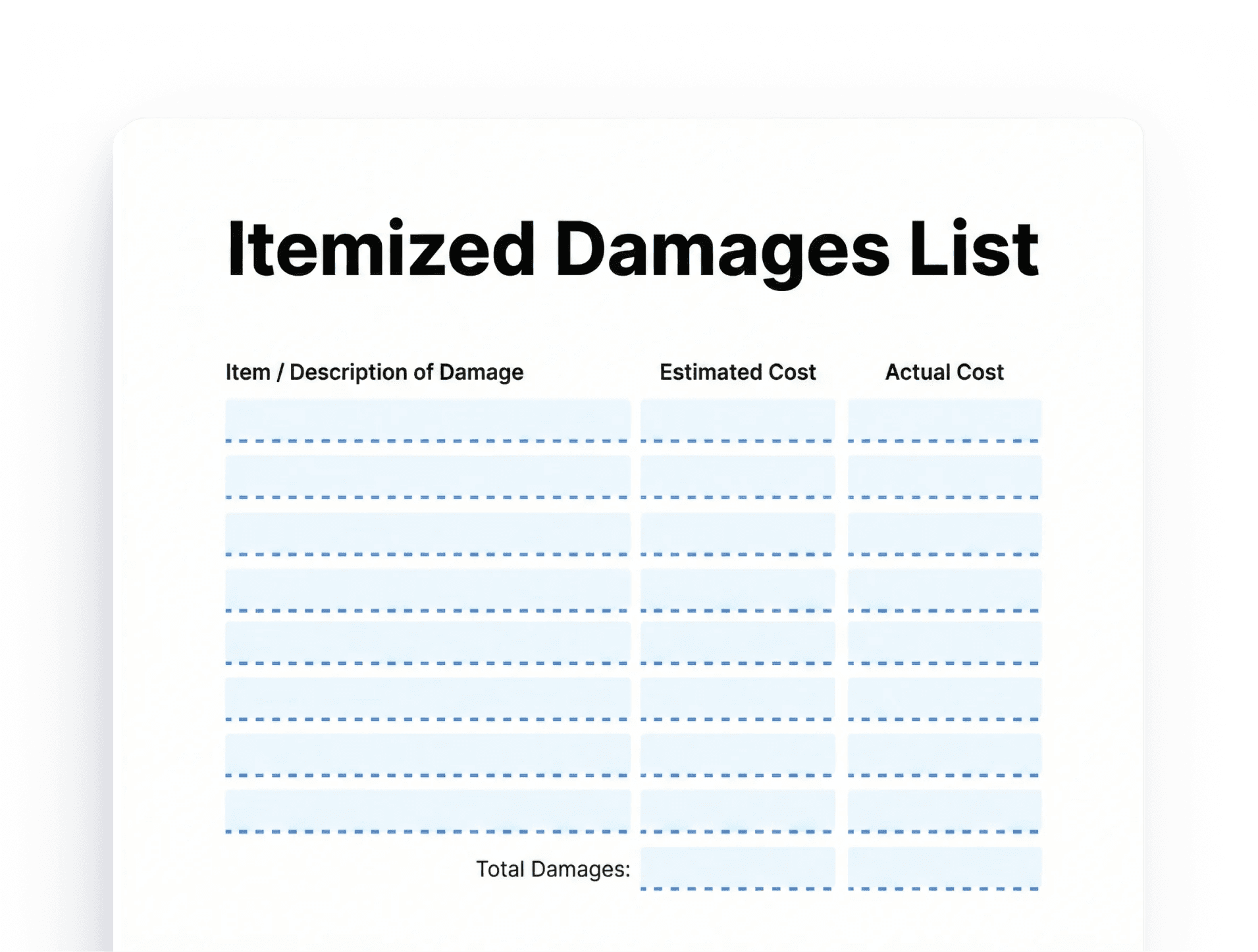
An Itemized Damages List is a comprehensive document detailing all property damage beyond normal wear and tear that occurred during a tenancy. This list includes specific damage descriptions, location details, repair or replacement costs, and supporting documentation like photographs or receipts. Landlords send this itemized list to former tenants explaining security deposit deductions within timeframes mandated by state law.
Download as PDF when complete


(No Ratings Yet)
What Is an Itemized Damages List?
The document serves multiple critical purposes in property management. First, it provides transparency about security deposit usage building tenant trust. Second, it creates legal documentation supporting your deductions during disputes or small claims court proceedings. Finally, it helps you identify patterns in tenant-caused damage informing future lease terms or tenant screening criteria.
Legal Requirements and Timeframes
State-Specific Deadlines
Every state establishes specific timeframes for sending itemized damages lists after tenant move-out. These deadlines range from 14 to 60 days depending on jurisdiction. For example, California requires itemized statements within 21 days, while Texas allows 30 days. Missing these deadlines often results in forfeiting your right to withhold any security deposit amount.
Calculate deadlines carefully starting from the actual move-out date, not lease end date. Additionally, some states measure timeframes by when you mail the itemized list while others use tenant receipt dates. Understanding your state’s specific requirements prevents costly procedural errors that invalidate legitimate damage claims.
Required Documentation Elements
Most states mandate specific information inclusion in itemized damages lists. Common requirements include detailed damage descriptions, exact deduction amounts for each item, remaining deposit balance, and timeline for refund delivery. Some jurisdictions require attaching actual repair receipts or contractor invoices as proof of claimed costs.
Several states allow landlords to estimate repair costs for damages you plan to fix yourself. However, these estimates must reflect reasonable market rates for similar work. Inflated estimates or charges exceeding actual repair costs constitute bad faith potentially resulting in penalty damages against landlords.
Normal Wear and Tear Exclusions
State laws universally prohibit deducting for normal wear and tear resulting from ordinary tenancy use. Normal wear includes minor scuff marks, small nail holes, carpet wear in traffic areas, and gradual paint fading. Conversely, damage requiring deduction includes large wall holes, pet stains, broken fixtures, and excessive filth beyond routine cleaning.
Distinguishing between normal wear and actual damage requires careful judgment and documentation. Your itemized damages list must clearly explain why each deduction represents damage rather than expected deterioration. This explanation proves particularly important for items like carpet replacement where age and existing condition significantly affect whether charges are appropriate.
Essential Components of the List
Property and Tenant Information
Begin your itemized damages list with complete identification details. Include the rental property address, unit number if applicable, tenant names, and move-out date. Add your contact information, business name, and mailing address. This header section establishes context for all subsequent damage documentation.
Reference the original lease agreement and move-in inspection report. These documents establish baseline property condition before tenancy began. Additionally, note the total security deposit amount collected initially. This information helps tenants understand deduction calculations and remaining refund amounts.
Detailed Damage Descriptions
Create specific, objective descriptions for each damaged item avoiding vague or judgmental language. Instead of writing “filthy apartment,” specify “kitchen oven interior coated with baked-on grease requiring professional cleaning.” Rather than “destroyed carpet,” state “living room carpet contains multiple pet urine stains totaling 15 square feet requiring replacement.”
Include exact locations for all damage noting rooms, specific fixtures, or areas affected. This precision helps tenants recall incidents that caused damage and reduces disputes about whether problems existed. Furthermore, detailed descriptions demonstrate professional thoroughness strengthening your position during disagreements.
Cost Breakdown and Calculations
Itemize every charge separately showing labor costs, material expenses, and any applicable taxes. For professional repairs, attach contractor invoices showing actual amounts paid. When performing repairs yourself, document hourly rates and material receipts supporting claimed costs.
Prorate deductions for items with limited remaining useful life. For example, carpet lasting ten years that’s eight years old at move-out should only charge tenants for 20% of replacement cost if damage requires early replacement. This prorating demonstrates fairness and compliance with many state requirements preventing profit from tenant damages.
Supporting Documentation
Attach photographs clearly showing each damaged item from multiple angles. Include wide shots establishing location context and close-ups revealing damage details. Compare move-in photos with move-out images when available demonstrating condition changes during tenancy.
Include receipts for all repair work, cleaning services, or replacement items purchased. These receipts prove actual costs incurred rather than estimates or inflated charges. Additionally, save contractor quotes or estimates for repairs not yet completed showing reasonable market rates for claimed deductions.
Best Practices for Creating Your List
Conducting Thorough Move-Out Inspections
Schedule move-out inspections immediately after tenants vacate and return keys. Prompt inspections reveal damage while memories remain fresh and evidence stays intact. Additionally, quick inspections allow faster security deposit processing meeting state deadlines comfortably.
Bring your move-in inspection report, camera, and itemized list template to move-out inspections. Compare current condition against documented baseline systematically checking every room, fixture, and surface. Take numerous photographs documenting overall condition and specific problems discovered.
Objective and Professional Language
Use neutral, factual language throughout your itemized damages list avoiding emotional or accusatory tone. Focus on observable conditions rather than assigning blame or making assumptions about causation. Professional presentation increases credibility and reduces defensive tenant responses.
Avoid phrases suggesting opinions rather than facts. Instead of “tenant obviously never cleaned,” write “bathroom tile grout contains accumulated dirt and mildew.” Replace “tenant destroyed property” with “property sustained damage during tenancy period.” This objectivity positions you as reasonable professional rather than vindictive landlord.
Reasonable and Justified Charges
Ensure all charges reflect actual costs incurred or legitimate market rates for repair work. Never inflate prices seeking profit from damages or padding security deposit deductions. Such practices violate landlord-tenant laws in many states and expose you to penalty damages potentially tripling tenant recovery amounts.
Consider age and depreciation when charging for replacements. Courts typically reject charges for brand new items replacing worn ones at tenancy end. Calculate depreciated value recognizing tenants shouldn’t fund improvements beyond restoring pre-tenancy condition. This fairness prevents legal challenges while maintaining ethical business practices.
Timely Delivery Methods
Send itemized damages lists well before deadline expiration using certified mail with return receipt. This delivery method proves mailing date and tenant receipt protecting you from claims about missing deadlines. Additionally, certified mail demonstrates professionalism and seriousness about compliance.
Consider also sending courtesy copies via email or regular mail. Multiple delivery methods ensure tenants actually receive documentation even if certified mail goes unclaimed. Furthermore, immediate notification allows tenants to respond quickly if they dispute charges preventing prolonged conflicts.
Preventing Common Mistakes
Insufficient Documentation
The most common error involves inadequate damage documentation supporting deductions. Generic descriptions without photographs or receipts create vulnerability during disputes. Always over-document rather than under-document assuming every deduction might face challenge.
Take photos of entire properties, not just damaged areas. Wide shots establish overall condition while close-ups show specific problems. Additionally, photograph comparable undamaged areas demonstrating what normal condition looks like. This comprehensive documentation proves damage severity and deduction legitimacy.
Improper Calculations
Mathematical errors in itemized damages lists undermine credibility and potentially violate state laws. Double-check all addition, subtraction, and prorating calculations before sending. Simple arithmetic mistakes suggest carelessness potentially invalidating otherwise legitimate deductions.
Ensure total deductions never exceed actual security deposit amounts. Some landlords mistakenly list damages totaling more than deposits collected, then refund nothing. Instead, clearly show deposit amount, itemized deductions, and remaining balance refunded. This transparency demonstrates good faith even when damages exceed deposits.
Missing Deadline Requirements
Failing to send itemized lists within state deadlines represents the most costly mistake landlords make. Many jurisdictions impose severe penalties including forfeiture of all deduction rights and mandatory return of entire deposits. Some states even allow tenants recovering two or three times deposit amounts as statutory damages.
Set calendar reminders immediately after tenant move-outs ensuring adequate preparation time. Build buffer periods into your process completing inspections, obtaining quotes, and preparing documentation well before deadlines approach. This proactive scheduling prevents last-minute rushes causing procedural errors.
Conclusion
An itemized damages list protects landlords while ensuring fair, transparent security deposit handling. By documenting damages thoroughly, calculating charges reasonably, and meeting state requirements consistently, you minimize disputes and legal risks. Always prioritize accuracy, objectivity, and timeliness when preparing these essential documents. Proper itemized lists demonstrate professionalism, build positive relationships even with departing tenants, and establish strong legal positions when disagreements arise. Implement systematic procedures today ensuring every tenant move-out includes properly prepared, compliant itemized documentation of any security deposit deductions.
FAQs
Each damage item should include specific location, detailed description, repair method, and exact cost breakdown. Generic descriptions like “cleaning” or “repairs” are insufficient and may violate state requirements, so specify “kitchen oven deep cleaning” or “master bedroom drywall repair for 3-inch hole.”
Yes, most states allow landlords to charge reasonable hourly rates for personal labor performing repairs. However, these rates must reflect market rates for similar work, typically $25-$50 per hour depending on location and task complexity, and you must document hours worked.
List all damages with costs even if they exceed the deposit, then clearly show the deposit was fully applied toward damages. You can pursue remaining balance through small claims court or collections, but the itemized list should still document total actual damages discovered.
Requirements vary by state, but actual receipts provide strongest documentation for completed repairs. For pending repairs, reasonable estimates are typically acceptable, though some states require good faith estimates based on actual contractor quotes rather than inflated projections.
Missing deadlines often results in forfeiting your right to withhold any security deposit, requiring full refund regardless of legitimate damages. Some states impose additional penalties including statutory damages of 2-3 times the deposit amount, so always prioritize meeting deadlines.