
Inspection Repair Follow-Up Form
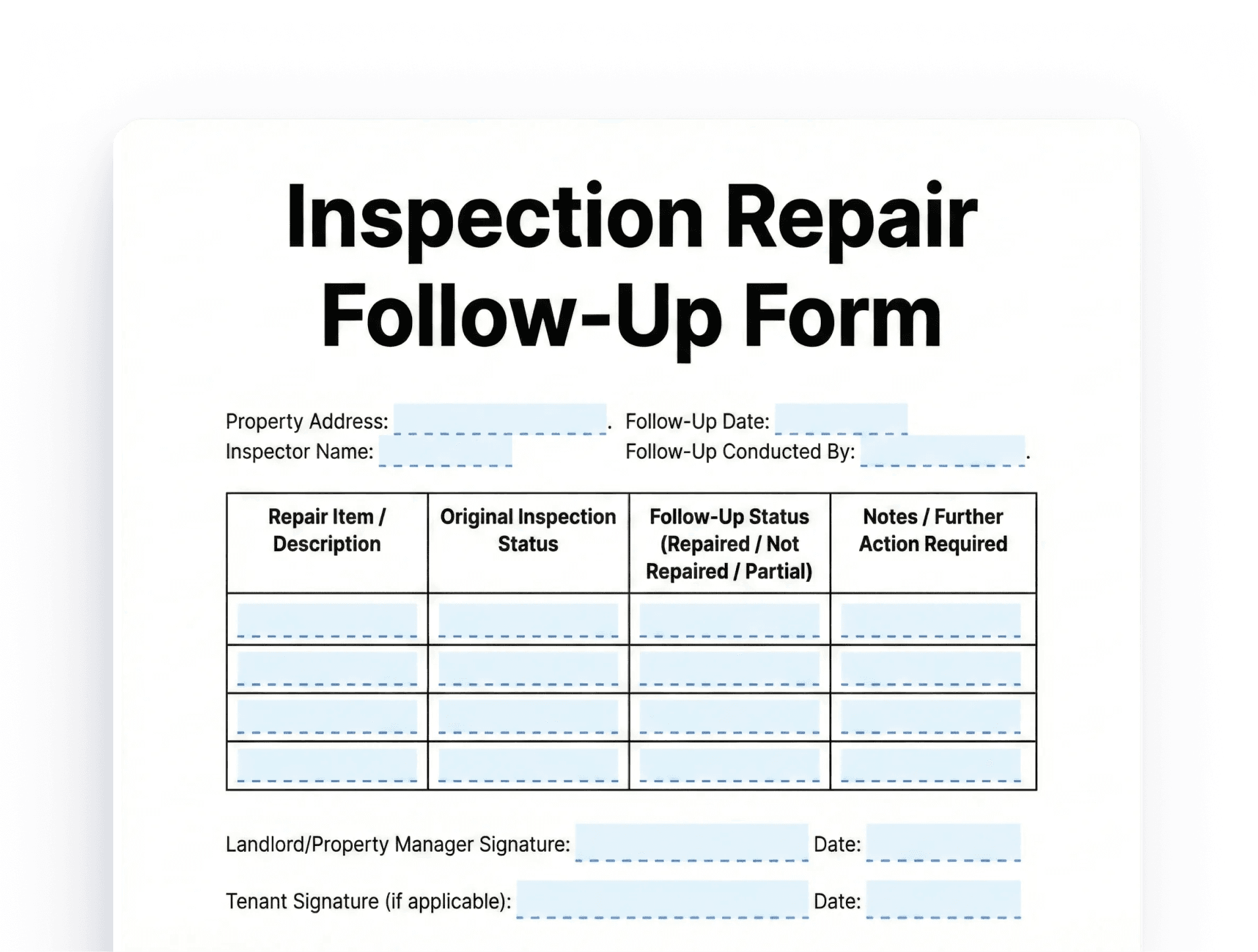
An Inspection Repair Follow-up Form is a comprehensive document tracking repairs identified during property inspections until contractors complete all necessary work. This form captures inspection findings, repair descriptions, contractor information, completion timelines, and verification details.
Download as PDF when complete


(No Ratings Yet)
What Is an Inspection Repair Follow-Up Form?
The form serves as your central command center for managing post-inspection maintenance activities. Instead of relying on memory or scattered notes, you maintain organized records showing exactly what needs repair, who’s responsible, and current status. Additionally, completed forms provide documentation proving you addressed maintenance issues promptly when disputes arise with tenants or during property sales. Property managers use this tool to monitor multiple ongoing repairs simultaneously across different properties.
Why Property Managers Need This Tool
Preventing Maintenance Backlog
Inspection reports often contain dozens of items ranging from minor cosmetic issues to critical safety concerns. Without systematic tracking, urgent repairs get delayed while minor problems multiply over time. An inspection repair follow-up form prioritizes issues by urgency and ensures timely completion prevents backlog accumulation.
The form also helps you identify recurring problems requiring permanent solutions rather than temporary fixes. When the same issue appears across multiple inspection cycles, documentation reveals patterns. Consequently, you can address root causes through capital improvements rather than continually patching symptoms.
Maintaining Property Value
Deferred maintenance accelerates property deterioration and reduces asset value significantly. Your follow-up form ensures repairs happen promptly, preserving property condition and market competitiveness. Additionally, documented maintenance history enhances property value during sales by demonstrating proper stewardship and reducing buyer concerns about hidden problems.
Regular repair completion also prevents minor issues from escalating into major expenses. A small roof leak caught during inspection becomes a simple patch costing hundreds. Ignored for months, that leak causes structural damage, mold growth, and interior repairs costing thousands. Your tracking system ensures early intervention saves money long-term.
Legal and Liability Protection
Documented repair tracking protects you from liability claims alleging negligent maintenance. If tenants claim injuries resulted from deferred repairs, your follow-up forms prove when you discovered issues and how quickly you responded. This documentation demonstrates reasonable care and diligence in maintaining safe housing conditions.
Furthermore, some jurisdictions require landlords to address specific violations within mandated timeframes. Your follow-up form helps you meet these deadlines consistently. Missing code compliance deadlines triggers fines and potential legal action. Systematic tracking ensures compliance with all regulatory requirements.
Essential Components of the Form
Inspection Details Section
Begin your inspection repair follow-up form with complete inspection information. Record the inspection date, inspector name, property address, and inspection type such as move-in, move-out, routine maintenance, or pre-purchase. Include the inspection report number or reference code for easy cross-referencing.
Document who attended the inspection including property managers, tenants, contractors, or property owners. This attendance record clarifies who saw problems firsthand and acknowledged repair necessity. Additionally, note any immediate safety concerns requiring emergency response before routine repair scheduling.
Repair Item Description
Create detailed descriptions for each repair item identified during inspection. Specify the exact location within the property, such as “master bedroom ceiling” or “kitchen sink faucet.” Describe the problem clearly using specific terms rather than vague language.
Include severity ratings for each item, typically using categories like critical, high priority, medium priority, or low priority. Critical items pose immediate safety hazards requiring emergency response. High priority issues affect habitability or prevent significant damage. Medium and low priority items involve cosmetic concerns or minor functionality problems.
Cost Estimates and Budgeting
Document estimated repair costs for each item based on historical data or contractor quotes. These estimates help you prioritize repairs within budget constraints and identify items requiring additional approval. Additionally, track actual costs after completion showing budget accuracy and revealing trends in estimation accuracy.
Note the funding source for each repair such as operating budget, capital reserves, or tenant responsibility. This tracking ensures proper accounting and cost allocation. Furthermore, it helps identify whether security deposits cover move-out repair costs or if additional collection becomes necessary.
Contractor Assignment Details
Record which contractors you assigned to each repair item. Include contractor names, contact information, license numbers, and insurance verification dates. Document when you requested quotes, received bids, and issued work orders. This timeline proves due diligence in contractor selection and project initiation.
Track contractor availability and scheduled start dates for each repair. Some contractors maintain waiting lists requiring advance scheduling. Your follow-up form helps you manage multiple contractor timelines simultaneously. Additionally, it reveals which contractors consistently meet deadlines versus those who frequently delay projects.
Completion and Verification
Create sections documenting repair completion including actual finish dates and final costs. Describe the work performed and materials used for future reference. Note any variations from original scope explaining why changes occurred.
Include verification details showing who inspected completed work and confirmed quality. Sometimes property managers conduct final inspections while other times tenants or owners verify completion. Document verification dates and any follow-up issues discovered requiring additional attention. This closure process ensures repairs truly resolve original problems.
Implementation Best Practices
Prioritization and Scheduling
Develop clear prioritization criteria based on safety concerns, habitability impacts, and cost considerations. Address critical safety issues within 24 hours regardless of cost or scheduling challenges. Schedule high priority repairs within one week to prevent tenant complaints and property damage.
Medium and low priority items can follow normal maintenance scheduling, typically within 30-60 days. However, batch similar repairs together for efficiency. For example, schedule all painting touch-ups simultaneously rather than making multiple trips. This batching reduces contractor costs and minimizes tenant disruption.
Communication Protocols
Establish standardized communication procedures for repair status updates. Notify tenants when you identify issues, schedule contractors, and complete repairs. This transparency builds trust and reduces tenant complaints about maintenance responsiveness. Additionally, provide tenants with contractor arrival estimates and any access requirements.
Communicate with property owners regularly about significant repairs identified during inspections. Share your follow-up forms showing repair progress, costs, and completion timelines. This reporting demonstrates active management and prevents surprises when owners review expenses. Furthermore, it allows owners to approve or reject major expenditures before work begins.
Digital vs Paper Systems
Consider digital tracking systems offering advantages over paper forms. Property management software typically includes inspection and work order modules that automatically generate follow-up tracking. These systems send automatic reminders when repairs approach deadlines and allow real-time status updates from smartphones.
However, paper forms remain viable for smaller portfolios or property managers preferring tangible records. Use clipboard-mounted forms during inspections for immediate note-taking. Transfer information to master tracking spreadsheets later for comprehensive monitoring. Regardless of format chosen, consistency and completeness matter more than specific methodology.
Quality Control Measures
Implement verification procedures ensuring repairs meet quality standards before marking items complete. Never rely solely on contractor claims that work is finished. Conduct physical inspections verifying repairs resolve original problems and meet workmanship expectations.
Photograph repairs before and after completion documenting problem severity and solution quality. These images provide valuable evidence during disputes and help future contractors understand previous work. Additionally, photos enhance marketing materials by demonstrating property condition and maintenance standards.
Tracking Multiple Properties
Portfolio-Wide Monitoring
Managing multiple properties requires centralized tracking showing all pending repairs across your entire portfolio. Create master spreadsheets or dashboards displaying high-priority items needing immediate attention. This overview prevents any property from falling through cracks due to competing demands.
Identify patterns affecting multiple properties requiring systematic solutions. Perhaps all properties with a certain roof type need proactive maintenance. Maybe specific appliance brands consistently fail prematurely. Portfolio-wide tracking reveals these patterns enabling strategic improvements.
Resource Allocation
Use your tracking data to allocate maintenance resources strategically across properties. Perhaps one property consistently requires more repairs than others, indicating deferred maintenance problems or tenant issues. Conversely, well-maintained properties need minimal intervention allowing resource reallocation elsewhere.
Track contractor performance across all properties identifying your most reliable service providers. Contractors who consistently deliver quality work on schedule deserve preferential treatment and potentially higher volumes. Meanwhile, underperforming contractors should face scrutiny or replacement.
Reporting and Analysis
Generate regular reports summarizing repair activity, costs, and completion rates. Share these reports with property owners during monthly or quarterly reviews. Additionally, analyze trends over time identifying whether maintenance costs are rising, stable, or declining.
Use historical data to improve future inspection planning and budgeting. If certain systems consistently fail after specific timeframes, schedule proactive replacements before failures occur. This predictive approach reduces emergency repairs and tenant dissatisfaction while controlling costs.
Conclusion
An inspection repair follow-up form transforms property maintenance from reactive chaos into proactive management. By systematically tracking repairs from discovery through completion, you ensure timely problem resolution while maintaining comprehensive documentation. This organized approach protects property value, reduces liability risks, and demonstrates professional management standards. Implement a standardized follow-up process today to improve maintenance outcomes, control costs, and enhance tenant satisfaction across your entire property portfolio.
FAQs
Maintain completed forms for at least seven years to cover potential liability claims and tax audit periods. Many property managers retain records throughout property ownership to document complete maintenance history, which enhances property value during sales.
Document all delays thoroughly in your follow-up form, then communicate expectations clearly with contractors about deadline importance. If delays continue, replace unreliable contractors with more dependable service providers who respect your timelines and tenant commitments.
Share repair status updates with tenants regularly, but complete forms containing cost information and contractor details typically remain internal management documents. However, provide tenants with repair schedules and completion timelines ensuring they understand when issues will be resolved.
Always address critical safety issues immediately regardless of cost, then prioritize repairs preventing further property damage over cosmetic improvements. Consider spreading medium and low priority repairs across multiple months to manage cash flow while ensuring eventual completion.
Yes, use the same form for tracking tenant damage repairs identified during inspections, but clearly note these items are tenant responsibility. This documentation supports security deposit deductions and helps you pursue additional compensation if damages exceed deposit amounts.