
Credit and Debit Card Authorization Form
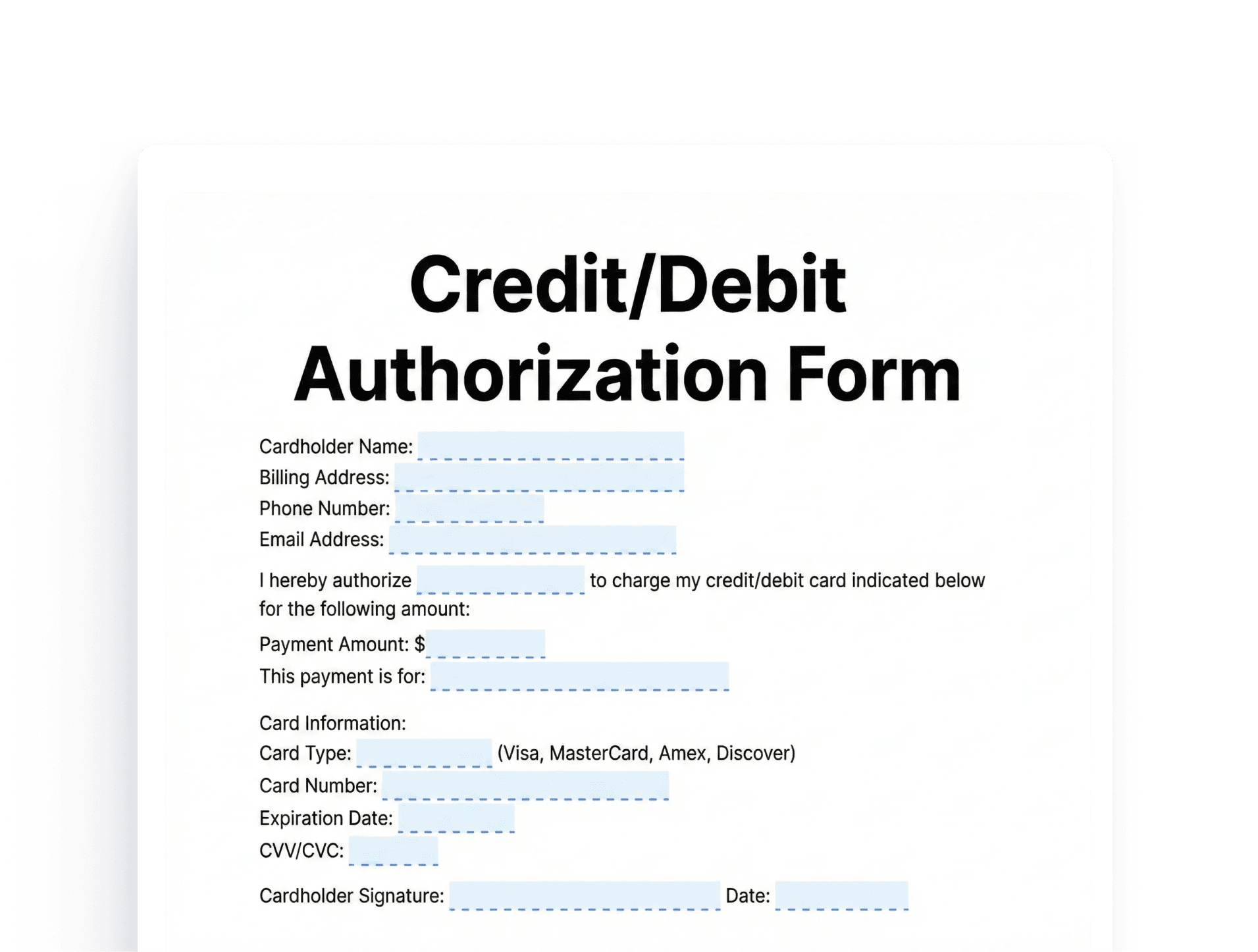
A Credit and Debit Card Authorization Form is a legal document where tenants grant landlords permission to charge their payment cards for specified amounts and purposes. The form captures card details, billing information, and explicit consent for recurring or one-time charges. Property managers use this tool to automate rent collection and process approved charges without requesting payment authorization each month.
Download as PDF when complete


(No Ratings Yet)
What Is a Card Authorization Form?
This document protects landlords legally by documenting tenant consent for card charges. Without proper authorization, charging tenant cards could violate payment processing regulations and expose you to disputes. The form also benefits tenants by eliminating missed payment risks and providing convenient automatic payment options that fit modern financial management preferences.
Benefits of Accepting Card Payments
Improved Cash Flow and On-Time Payments
Automatic card payments dramatically reduce late rent issues plaguing many landlords. Tenants no longer forget due dates or delay mailing checks. Instead, rent charges process automatically on scheduled dates, ensuring predictable cash flow. Consequently, you spend less time chasing late payments and more time managing properties effectively.
Card payments also eliminate bounced check problems that create accounting headaches. Payment processors verify available funds before completing transactions. If cards decline, you receive immediate notification allowing quick follow-up. This speed lets you address payment issues within days rather than weeks.
Convenience for Tenants and Landlords
Modern tenants expect digital payment options matching their other financial transactions. Offering card payments demonstrates professionalism and meets contemporary expectations. Additionally, many tenants prefer earning credit card rewards points on large monthly rent payments.
For landlords, card payments eliminate trips to banks depositing checks or handling cash. Payment data flows directly into accounting software, reducing manual entry errors. Furthermore, you maintain complete digital records simplifying tax preparation and financial reporting throughout the year.
Reduced Administrative Burden
Processing card payments requires less administrative effort than traditional methods. You avoid tracking down tenants for late payments or managing bounced check fees. Additionally, automated payments reduce bookkeeping time since transactions record automatically in your payment processing system.
The authorization form also streamlines handling other charges beyond rent. When repairs exceed security deposit coverage, you can process additional authorized charges promptly. This efficiency prevents disputes and ensures timely payment for legitimate expenses.
Essential Components of the Form
Cardholder Information Section
Your credit and debit card authorization form must capture complete cardholder details. Include the cardholder’s full legal name exactly as it appears on the card. Add the complete billing address associated with the card for verification purposes. Document phone numbers and email addresses for communication about payment issues.
Clearly distinguish between tenant information and cardholder information when they differ. Sometimes parents or guarantors provide cards for tenant rent payments. Accurate identification of all parties prevents confusion and ensures proper communication channels remain open.
Payment Card Details
Create secure fields for capturing card information including the full card number, expiration date, and CVV security code. Specify whether you accept credit cards, debit cards, or both types. Additionally, include space for noting the card type such as Visa, Mastercard, Discover, or American Express.
Implement proper security measures for storing sensitive card data. Consider using payment processors that tokenize card information rather than storing actual numbers. This approach reduces your liability and protects tenant financial information from potential data breaches.
Authorization and Consent Language
Include explicit consent language specifying exactly what charges the authorization covers. Clearly state that authorization permits recurring monthly rent charges. Additionally, list other potential charges like late fees, pet rent, utilities, or damage repairs when applicable.
Specify whether authorization covers variable amounts or only fixed charges. For example, state whether you can charge different amounts monthly for utility fluctuations. This clarity prevents disputes about unauthorized charges later. Furthermore, explain how tenants receive notification before non-routine charges process.
Terms and Conditions
Detail important terms governing the card payment arrangement. Specify when monthly rent charges will process, typically 1-3 days before the due date. Explain procedures for handling declined transactions and associated fees. Additionally, outline how tenants can update card information or revoke authorization.
Include language about processing fees if you pass these costs to tenants. Some jurisdictions prohibit surcharges for card payments, so verify local regulations before implementing fees. Clearly state any transaction fees tenants will pay so they can make informed payment method choices.
Legal and Compliance Considerations
PCI Compliance Requirements
Payment Card Industry Data Security Standards (PCI DSS) govern how businesses handle card information. Landlords accepting card payments must follow these security requirements protecting cardholder data. Consequently, choose payment processors that handle PCI compliance rather than managing it independently.
Never store complete card numbers, CVV codes, or magnetic stripe data after authorization. These practices violate PCI standards and create enormous liability. Instead, use processors providing secure tokens representing card information without exposing actual numbers.
State and Local Regulations
Many states regulate surcharges for card payments differently. Some prohibit surcharges entirely while others permit them with specific disclosure requirements. Research your jurisdiction’s rules before implementing any card payment fees. Additionally, some rent control ordinances restrict payment processing fees landlords can charge.
Certain states require specific language in payment authorization forms. For example, some mandate explicit statements about revocation rights or dispute procedures. Consult with local attorneys specializing in landlord-tenant law to ensure your form complies with all applicable regulations.
Fair Debt Collection Practices
The Fair Debt Collection Practices Act limits how creditors pursue debts. While collecting rent doesn’t typically qualify as debt collection, using card authorizations to charge past-due amounts requires caution. Never threaten to charge cards for amounts exceeding authorized purposes.
Always provide clear billing statements showing charges before processing them. Transparent communication prevents disputes and demonstrates good faith. Additionally, respond promptly to tenant questions about charges maintaining professional relationships even during payment disagreements.
Implementation Best Practices
Choosing Payment Processors
Select payment processors specializing in property management or recurring billing. These providers understand landlord-specific needs better than generic merchant services. Compare transaction fees, monthly costs, chargeback policies, and integration capabilities with your property management software.
Evaluate processor reliability and customer service quality carefully. Payment processing problems directly impact your cash flow, so responsive support matters significantly. Additionally, verify processors comply with all PCI requirements and offer robust security features protecting both parties.
Secure Form Distribution and Storage
Distribute card authorization forms through secure channels protecting sensitive information. Avoid emailing forms requesting card details since email lacks adequate security. Instead, use encrypted portals, secure document signing platforms, or collect forms in person.
Store completed forms securely following document retention best practices. Keep digital copies in password-protected systems with restricted access. Additionally, maintain physical copies in locked filing cabinets if you retain paper forms. Proper storage prevents unauthorized access and protects tenant privacy.
Communication and Transparency
Clearly communicate card payment processes to tenants before lease signing. Explain how automatic payments work, when charges process, and how to update payment information. This transparency builds trust and reduces confusion about billing procedures.
Send payment receipts immediately after processing charges. These confirmations help tenants track rent payments and verify charges match expectations. Additionally, provide advance notice before processing any charges beyond regular rent amounts.
Handling Payment Issues
Establish clear procedures for managing declined card transactions. Contact tenants immediately when payments fail, providing specific information about the declined amount and reason if available. Offer multiple resolution options including alternative payment methods or updated card information.
Document all payment issue communications thoroughly. This record protects you if disputes escalate to legal proceedings. Furthermore, apply late fees consistently according to lease terms regardless of payment method, maintaining fairness across all tenants.
Conclusion
A credit and debit card authorization form modernizes rent collection while providing convenience for landlords and tenants alike. By implementing secure card payment systems with proper authorization documentation, you improve cash flow, reduce late payments, and decrease administrative burden. Always prioritize security and compliance when handling sensitive payment information. Choose reputable payment processors, follow PCI standards strictly, and communicate transparently with tenants about all payment procedures. Start accepting card payments today to meet tenant expectations and streamline your property management operations for long-term success.
FAQs
This depends on your state’s regulations, as some jurisdictions prohibit surcharges while others allow them with proper disclosure. Even where permitted, you cannot charge fees exceeding your actual processing costs, and you must disclose all fees clearly before tenants authorize payments.
Tenants can typically revoke authorization at any time by providing written notice, though your lease should specify notice requirements. Once revoked, arrange alternative payment methods immediately and document the revocation in your records to prevent unauthorized charges.
Respond immediately to chargeback notifications with documentation proving the charge was authorized, such as the signed authorization form and lease agreement. Payment processors typically give you 7-10 days to provide evidence, so maintain organized records for quick access during disputes.
Accepting both maximizes tenant convenience, but debit card transactions may carry higher dispute risks since funds withdraw directly from bank accounts. Consider requiring credit cards for automatic payments while accepting debit cards for one-time transactions, or clearly communicate the differences to tenants.
Request updated card information whenever cards expire or whenever tenants receive replacement cards with new numbers. Implement automatic reminders 30-60 days before expiration dates listed on authorization forms to prevent payment interruptions from expired cards.