
Credit and Debit Card Authorization Form


(1)
A Credit and Debit Card Authorization Form is a legal document where tenants give landlords permission to charge their payment cards for specific amounts and purposes. Specifically, it captures card details, billing information, and clear consent for recurring or one-time charges. Property managers use this form to automate rent collection and process approved charges without asking for permission each month.
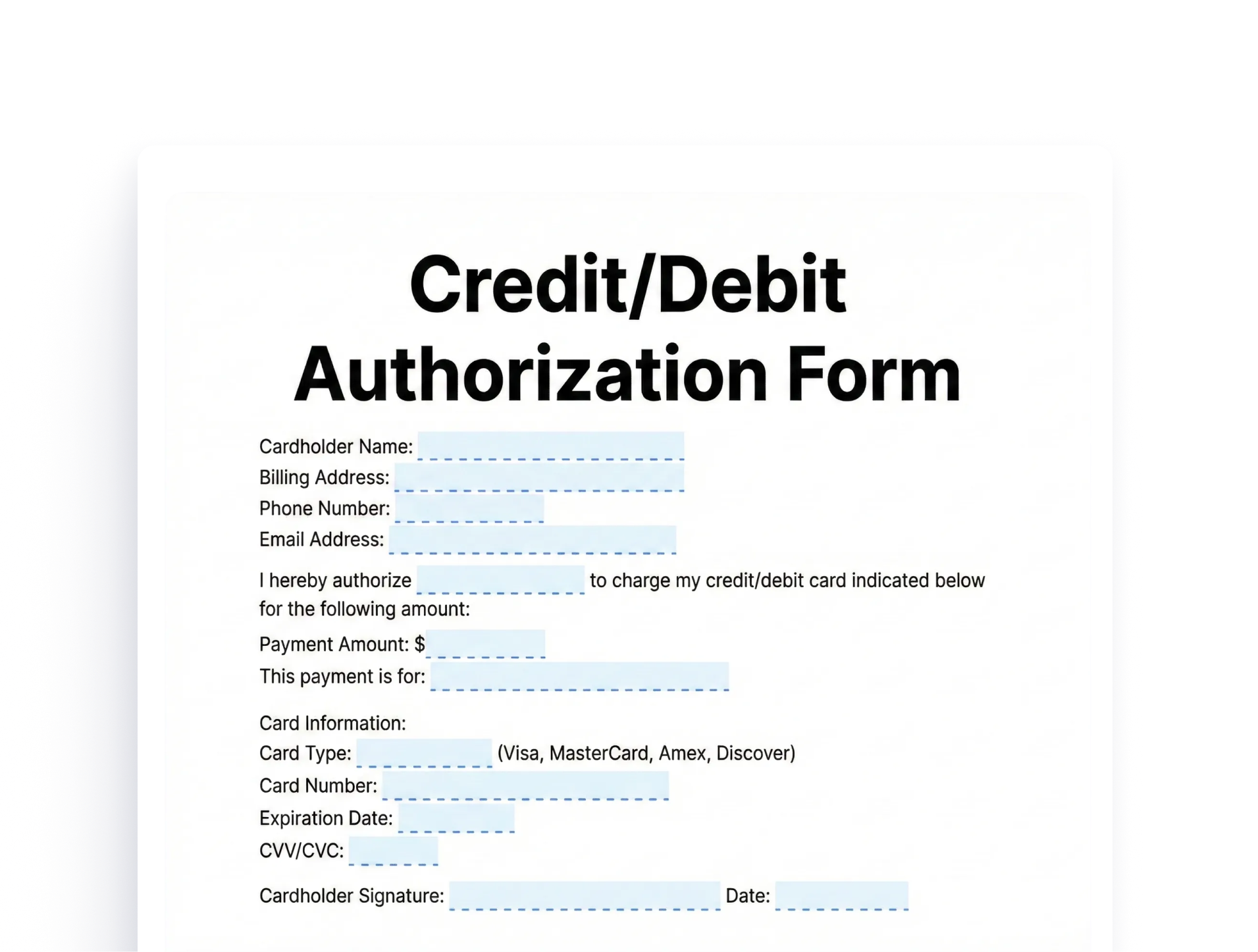
Download as PDF when complete
Card Authorization Form: Definition and Purpose
How a Card Authorization Form Protects Both Parties
This document protects landlords legally by recording tenant consent for card charges. Without proper authorization, charging a tenant’s card could break payment processing rules and expose you to disputes. In addition, the card authorization form benefits tenants by removing the risk of missed payments and offering a convenient automatic payment option.
When Property Managers Use a Card Authorization Form
Property managers use a card authorization form in several common situations, including:
- Setting up automatic monthly rent collection
- Charging approved fees like late fees or pet rent
- Processing damage repair costs covered under the lease
- Handling utility charges billed directly to the tenant
As a result, the form reduces back-and-forth communication and keeps payment processes running smoothly.
Benefits of Accepting Card Payments With a Card Authorization Form
Improved Cash Flow and On-Time Rent Payments
Automatic card payments significantly reduce late rent problems. Tenants no longer forget due dates or delay mailing checks. Instead, rent charges process automatically on scheduled dates, which ensures steady cash flow. Consequently, landlords spend less time chasing late payments and more time managing properties.
Card payments also remove bounced check problems that create accounting headaches. Payment processors check available funds before completing a transaction. If a card declines, you get an immediate alert so you can follow up quickly. In addition, this speed lets you resolve payment issues in days rather than weeks.
Convenience for Tenants and Landlords
Modern tenants expect digital payment options that match how they handle other bills. Offering card payments shows professionalism and meets current expectations. Furthermore, many tenants prefer paying rent by credit card to earn rewards points on their large monthly payment.
For landlords, card payments remove the need to deposit checks or handle cash in person. Payment data flows directly into accounting software, which cuts down on manual entry errors. Also, you keep complete digital records that make tax preparation and financial reporting much easier throughout the year.
Reduced Administrative Burden
Processing card payments takes far less effort than traditional payment methods. You avoid tracking down tenants for late payments or dealing with bounced check fees. In addition, automated payments reduce bookkeeping time since each transaction records itself in your payment system.
The card authorization form also makes it easier to handle charges beyond rent. When repairs go over the security deposit, you can process additional authorized charges right away. This efficiency prevents disputes and ensures timely payment for legitimate expenses.
Essential Components of a Card Authorization Form
Cardholder Information Section
Your card authorization form must capture complete cardholder details. Include:
- The cardholder’s full legal name as it appears on the card
- The complete billing address linked to the card
- Phone number and email address for payment issue communication
Also, clearly distinguish between tenant information and cardholder information when they differ. For example, sometimes a parent or guarantor provides a card for a tenant’s rent. Accurate identification of all parties keeps communication clear and prevents confusion.
Payment Card Details and Security
Create secure fields for capturing card information, including:
- Full card number
- Expiration date
- CVV security code
- Card type such as Visa, Mastercard, Discover, or American Express
Also specify whether you accept credit cards, debit cards, or both. Furthermore, use payment processors that tokenize card information rather than storing actual card numbers. This approach reduces your liability and protects tenant data from potential breaches.
Authorization Language and Terms in Your Card Authorization Form
Authorization and Consent Language in Your Card Authorization Form
Include clear consent language that specifies exactly what charges the card authorization form covers. For example, state clearly that authorization permits:
- Recurring monthly rent charges
- Late fees and pet rent where applicable
- Utility charges if billed through the landlord
- Damage repair costs approved under the lease
Also specify whether authorization covers fixed amounts only or whether you allow variable amounts — for example, when utility charges fluctuate month to month. Furthermore, explain how tenants will be notified before you process any non-routine charges.
Terms and Conditions
Detail the key terms that govern the card payment arrangement. Specifically, include:
- When monthly rent charges will process, typically 1 to 3 days before the due date
- How declined transactions are handled and what fees may apply
- How tenants can update card information or cancel authorization
- Any processing fees tenants will pay, if applicable
Also verify whether your local laws allow surcharges for card payments before adding any fees. Some areas prohibit these charges entirely, while others allow them only with specific disclosures.
Legal and Compliance Considerations for a Card Authorization Form
PCI Compliance Requirements
Payment Card Industry Data Security Standards — known as PCI DSS — govern how businesses handle card information. As a landlord accepting card payments, you must follow these security rules to protect cardholder data. Therefore, choose a payment processor that manages PCI compliance on your behalf rather than handling it yourself.
Key rules to follow include:
- Never store full card numbers after authorization
- Never store CVV codes or magnetic stripe data
- Use secure tokens that represent card data without exposing actual numbers
Violating these rules creates major legal liability and puts tenant data at risk.
State and Local Regulations
Many states regulate card payment surcharges differently. Some states ban surcharges entirely, while others permit them with specific disclosure requirements. In addition, some rent control ordinances restrict the fees landlords can charge for payment processing.
Certain states also require specific language in card authorization forms, such as clear statements about revocation rights or dispute procedures. Consequently, consult a local attorney who specializes in landlord-tenant law to make sure your card authorization form meets all applicable rules.
Fair Debt Collection Practices and Your Card Authorization Form
The Fair Debt Collection Practices Act limits how creditors can pursue debts. While collecting rent does not typically count as debt collection, using a card authorization form to charge past-due amounts still requires caution. Specifically:
- Never charge cards for amounts beyond what was authorized
- Always provide clear billing statements before processing charges
- Respond promptly to any tenant questions about charges
Transparent communication prevents disputes and protects the landlord-tenant relationship even during payment disagreements.
How to Implement Your Card Authorization Form
Choosing the Right Payment Processor
Select a payment processor that specializes in property management or recurring billing. These providers understand landlord-specific needs better than general merchant services. When comparing options, look at:
- Transaction fees and monthly costs
- Chargeback policies
- Integration with your property management software
- Customer support quality and response time
Payment processing problems directly affect your cash flow. Therefore, responsive support and a reliable system are essential.
Secure Distribution and Storage of the Card Authorization Form
Distribute your card authorization form through secure channels that protect sensitive information. Specifically:
- Avoid sending forms by email since email lacks adequate security
- Use encrypted portals or secure document signing platforms instead
- Collect forms in person if preferred
Store completed forms securely by:
- Keeping digital copies in password-protected systems with limited access
- Storing physical copies in locked filing cabinets if you use paper forms
- Following document retention best practices for your jurisdiction
Communication and Problem-Solving With Your Card Authorization Form
Clear Communication With Tenants About Card Payments
Explain the card payment process clearly to tenants before lease signing. Specifically, cover:
- How automatic payments work and when charges are processed
- How to update card information if needed
- How to cancel the card authorization if circumstances change
In addition, send payment receipts immediately after each charge. These confirmations help tenants track rent payments and verify that charges match your agreed terms. Furthermore, give advance notice before processing any charges beyond regular monthly rent.
Handling Declined Payments and Disputes
Establish clear steps for managing declined card transactions. When a payment fails:
- Contact the tenant right away with information about the declined amount
- Offer multiple ways to resolve the issue, such as updating card details or using an alternative payment method
- Document all communication in case the dispute escalates
Also apply late fees consistently according to your lease terms, regardless of the payment method. This ensures fair treatment for all tenants and protects you if a dispute leads to legal proceedings.
Card Authorization Form: Key Takeaways
A card authorization form modernizes rent collection by giving landlords and tenants a more convenient, secure payment experience that improves cash flow and reduces late payments. To implement it effectively, choose a PCI-compliant processor, use secure channels for the form, include clear consent language, and communicate the process to tenants upfront. Ultimately, landlords who use this form collect rent more reliably, avoid disputes, and run a more professional operation.
FAQs
Card Authorization Form is a legal document where tenants give landlords permission to charge their credit or debit cards for specified amounts, covering rent payments and other approved charges like late fees, pet rent, or damage repairs.
Landlords need this form to legally document tenant consent before charging their cards, since processing card payments without proper authorization can violate payment processing regulations and expose the landlord to disputes and liability.
The form must include the cardholder’s full legal name, billing address, card details, explicit consent language specifying what charges are covered, terms for handling declined transactions, and instructions for updating or revoking authorization.
PCI DSS (Payment Card Industry Data Security Standards) are security requirements that govern how card information must be handled, and landlords must follow these rules — or use a compliant payment processor — to protect tenant data and avoid serious liability.
Landlords should collect forms through encrypted portals or secure document signing platforms rather than email, and store completed forms in password-protected digital systems or locked filing cabinets to protect sensitive tenant payment information.