
Tenant Occupancy


(1)
Tenant Occupancy Disclosure protects buyers from surprise lease obligations. Unfortunately, many sellers overlook key tenant details when selling rental properties. As a result, this can lead to serious legal trouble. This guide covers everything you need to know about tenant occupancy disclosure.
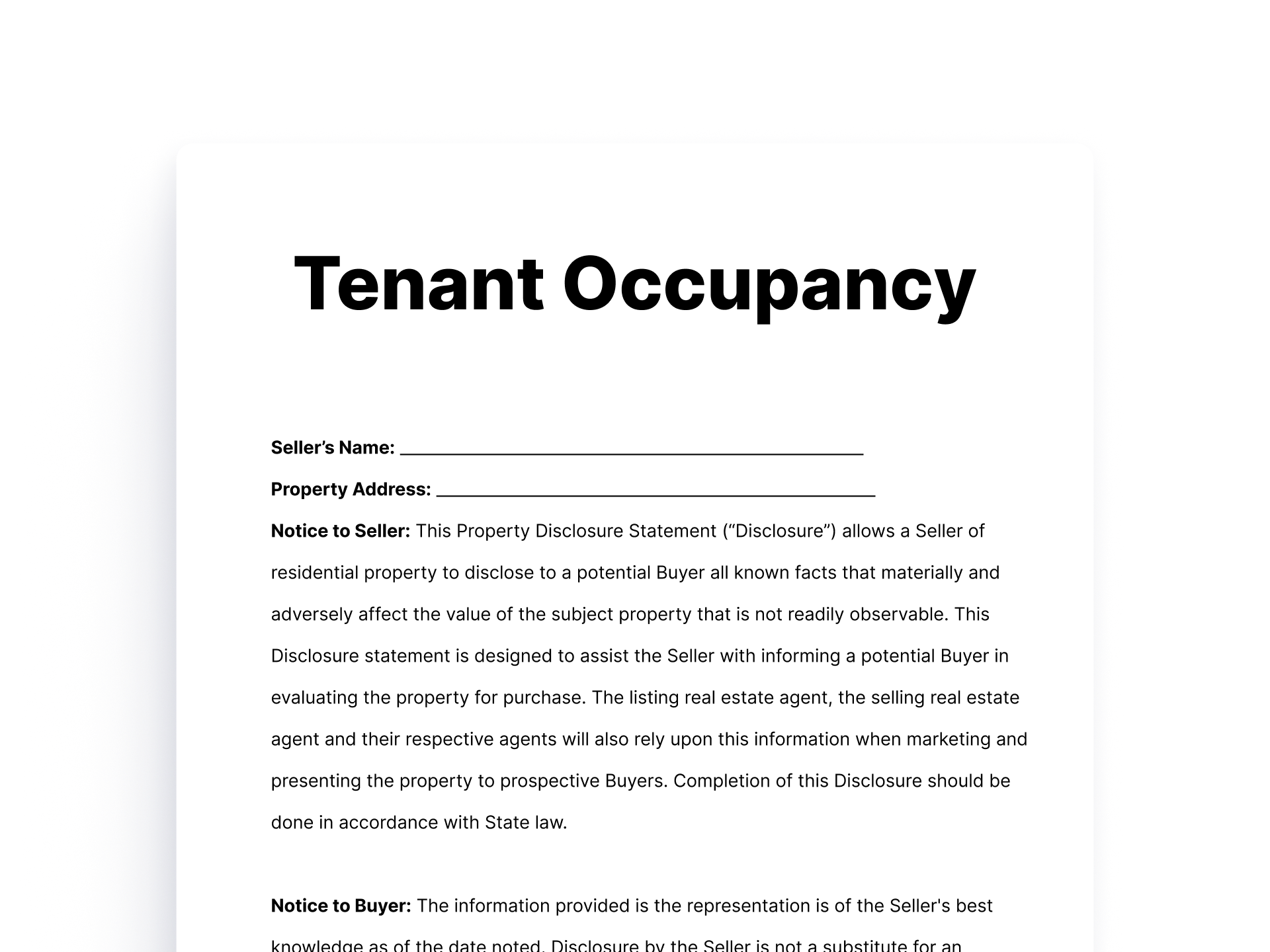
Download as PDF when complete
What Is Tenant Occupancy Disclosure?
Tenant occupancy disclosure tells buyers about all existing tenants and lease agreements on a property. Specifically, it covers:
- Lease terms and expiration dates
- Rental rates and payment history
- Security deposits
- Tenant rights and violations
- Pending disputes
When a property sells, buyers inherit all lease obligations. For this reason, full tenant occupancy disclosure helps buyers assess rental income and management challenges. It also prevents costly disputes after closing.
Understanding Tenant Rights During a Property Sale
Tenants’ Right to Stay During the Sale
Existing leases stay valid when a property changes hands. As a result, here are the key points to know:
- Tenants can stay for the full lease term, no matter who owns the property
- Similarly, month-to-month tenants get the same protections as fixed-term tenants
- New owners must honor all lease terms, including rent rates and renewal options
- Therefore, buyers cannot evict tenants or change lease terms without legal grounds
- In addition, some states offer extra protections against lease termination during a sale
Notice Requirements for Property Showings
Sellers must give proper notice before showing occupied units. In particular, here’s what to keep in mind:
- Most states require 24 to 48 hours advance notice
- Furthermore, tenant access rules and showing limits should be in the lease
- Too many showings or short notice can violate tenant quiet enjoyment rights
- As a result, some tenants may ask for compensation or limit showing times
- Finally, tenant occupancy disclosure should include any agreed showing arrangements
Legal Requirements for Tenant Occupancy Disclosure
State Tenant Occupancy Disclosure Laws
Most states require sellers to disclose all tenancies before closing. Typically, requirements include:
- Copies of all leases, addendums, and changes
- Security deposit amounts and payment histories
- Rental rates for each unit
- Tenant complaints, violations, or pending legal actions
States like California, New York, and Illinois have strict rules for rental property sales. In addition, some require specific tenant occupancy disclosure forms as part of the standard sale process.
Security Deposit Transfer Requirements
Sellers must handle security deposits correctly at closing. Specifically, key rules include:
- Transfer deposits to the buyer or return them to tenants
- Notify tenants in writing about the new owner and deposit transfer
- Disclose deposit amounts, interest earned, and trust account locations
- Provide buyers with actual deposit funds matching disclosed amounts
Failing to do this creates liability for both the seller and buyer. Furthermore, some areas require filing deposit transfer documents with local housing authorities.
Lease Assignment and Tenant Occupancy Disclosure
When a property sells, leases are typically assigned from seller to buyer. As a result, this means:
- All landlord rights and duties pass to the buyer
- However, some leases require tenant consent before a transfer
- Buyers take on all lease obligations, including repair promises and renewal options
- Moreover, lease assignment clauses may limit seller liability after closing
What Tenant Occupancy Disclosure Must Include: Lease Terms
Lease Duration and Expiration Dates
For each tenant, disclose:
- Lease start and end dates
- Time remaining on the current term
- Renewal options or automatic renewals
- Month-to-month conversion terms
- Early termination clauses or tenant exit rights
Why this matters: Near-term lease expirations increase vacancy risk. Similarly, long-term leases below market rent can lower property value.
Rental Rates and Payment Terms
Include for each unit:
- Current monthly rent and due dates
- Accepted payment methods
- Past rent increases with dates and amounts
- Any rent discounts or special rates given to tenants
- Whether rent includes utilities, parking, or storage
In addition, below-market rents reduce income potential and affect how buyers value the property.
Security Deposits and Fees in Tenant Occupancy Disclosure
For each tenant, specify:
- Exact security deposit amount and collection date
- Pet deposits, key deposits, or parking fees
- Any deductions taken and remaining balances owed
- Interest applied to deposits, if required by law
- Trust account locations and any issues with deposit separation
Rent Control and Stabilization Status
If any units are under rent control or stabilization, disclose:
- Which units are affected
- Maximum allowable rents and permitted increase percentages
- Compliance history and registration status
- Any pending decontrol applications or regulatory changes
Overall, rent restrictions significantly affect income potential and property value.
What Tenant Occupancy Disclosure Must Include: Tenant Information
Tenant Payment History
Provide a full rent payment record for each tenant, including:
- On-time payments, late payments, and unpaid balances
- Payment plans or deferred rent agreements
- Bounced checks or stopped payments
- Chronic late payment patterns
- Any pending eviction actions for non-payment
Lease Violations and Complaints
Disclose all documented violations, such as:
- Noise complaints or unauthorized occupants
- Pet violations
- Warning notices and fines issued
- Complaints from neighbors or other tenants
- Any safety concerns, restraining orders, or criminal activity
As a result, this gives buyers a clear picture of the management challenges they may face.
Maintenance and Repair Requests
Tell buyers about any unresolved maintenance issues. For example, include:
- Pending repair requests and outstanding obligations
- Recurring problems or chronic complaints
- Deferred maintenance the tenant has documented
- Any agreements to complete specific repairs or improvements
Importantly, outstanding repairs may become the buyer’s responsibility right after closing.
Special Accommodations in Tenant Occupancy Disclosure
Disclose all disability accommodations and modifications, such as:
- Wheelchair ramps, grab bars, or bathroom changes
- Service animals, emotional support animals, or assistance animal approvals
- Rent reductions or concessions tied to accommodations
Consequently, new owners must continue honoring approved accommodations under fair housing laws.
What Tenant Occupancy Disclosure Must Include: Property and Lease Issues
Pending Litigation and Disputes
Disclose all active legal matters involving tenants, including:
- Lawsuits, disputes, or regulatory complaints
- Eviction proceedings or unlawful detainer actions
- Settlement negotiations or mediation
- Complaints filed with housing authorities
In particular, active evictions can significantly affect property value and buyer confidence.
Lease Agreement Modifications
Provide all changes to original lease terms, including:
- Addendums, amendments, and side agreements
- Verbal agreements or informal arrangements
- Promises about future rent increases, improvements, or policy changes
- Any rent freezes or special terms
As a result, undisclosed verbal agreements can create legal problems for the new owner.
Property Access and Entry History
Report any tenant issues with property access, including:
- Tenant refusals of entry or access restrictions
- Unauthorized lock changes
- Disputes about entry notice requirements
- Legal actions taken to enforce landlord entry rights
Ultimately, access problems affect the buyer’s ability to inspect the property before purchase.
Consequences of Poor Tenant Occupancy Disclosure
Lease Obligation Liability
If buyers find undisclosed lease terms, they may sue for breach of contract. Furthermore, courts can award damages equal to the gap between expected and actual rental income. As a result, buyers may also recover the cost of honoring lease obligations they didn’t know about.
Security Deposit Disputes
Improper deposit disclosure creates liability for both parties. For instance, tenants may sue if deposit amounts are unknown or improperly transferred. In addition, some areas impose penalties for disclosure failures. Buyers who return deposits they never received must then pursue the seller, which is often costly and difficult.
Tenant Turnover and Vacancy Costs
Hidden tenant problems often cause vacancies right after purchase. Consequently, this leads to:
- Lost rental income
- Legal fees for unexpected evictions
- Expensive buyout agreements with problem tenants
- Lower investment returns than projected
Fraud and Misrepresentation Claims
Falsifying rent rolls, payment histories, or tenant quality is fraud. Moreover, courts treat tenant information as a material fact in property sales. Therefore, intentional concealment can result in:
- Punitive damages
- Voided sales contracts
- Required property repurchase
Best Practices for Tenant Occupancy Disclosure
Compile Complete Tenant Files
For each tenant, organize:
- All leases, addendums, and written communications
- Rent payment records and violation notices
- Maintenance requests and repair history
- Security deposit receipts and account statements
In addition, create a short summary for each tenant highlighting lease terms, payment history, and special provisions. Well-organized files show professional management and, as a result, build buyer trust.
Provide Accurate Rent Rolls
Your rent roll should include for each unit:
- Tenant name and unit number
- Lease start and end dates
- Monthly rent and security deposit amount
- Move-in date and payment status
- Any special terms like concessions or below-market rates
Always update the rent roll right before closing. Even so, unintentional errors still count as misrepresentation.
Obtain Tenant Estoppel Certificates
Ask tenants to sign estoppel certificates confirming:
- Rental rates and deposit amounts
- Lease expiration dates and payment status
- Any verbal agreements made by the current landlord
- Any claims or disputes they plan to raise
These documents verify your tenant occupancy disclosure and, furthermore, reduce post-closing disputes.
Disclose Everything Truthfully
Always share all known tenant and lease information, even if it reflects poorly on the property. In fact, full honesty:
- Protects you from fraud claims
- Attracts serious, informed buyers
- Reduces the chance of post-closing lawsuits
Never falsify tenant records to make a property look more attractive. Otherwise, fraud discovered after closing is expensive to resolve.
Tenant Occupancy Disclosure: Key Takeaways
Tenant occupancy disclosure protects both sellers and buyers. Specifically, it ensures a smooth transfer of ownership by making all tenancy details clear upfront.
To complete your tenant occupancy disclosure properly:
- Compile full tenant files with leases, payment records, and correspondence
- Prepare an accurate, up-to-date rent roll
- Obtain signed estoppel certificates from all tenants
- Disclose all lease changes, pending disputes, and verbal agreements
- Update all documents before closing and stay transparent throughout the sale
Ultimately, a thorough tenant occupancy disclosure builds buyer confidence and protects your financial interests from costly legal consequences.
FAQs
Tenant occupancy disclosure informs buyers about all existing tenancies, lease agreements, rental rates, security deposits, and tenant payment history on a property being sold.
No — new owners must honor all existing lease terms and cannot evict tenants or modify agreements without proper legal grounds.
Sellers must transfer security deposits to buyers at closing or return them to tenants, along with written notice identifying the new owner and deposit transfer details.
Sellers who conceal or misrepresent tenant information risk fraud lawsuits, punitive damages, and potentially having the entire sales contract voided.
Sellers should compile thorough tenant files, prepare accurate rent rolls, and obtain signed estoppel certificates from tenants confirming lease terms and payment status before closing.