
Short Term Rental Compliance


(1)
Short-Term Rental Compliance Disclosure protects buyers from regulatory violations and unexpected restrictions. Many property sellers overlook critical information about vacation rental regulations, which can lead to legal liability. In short, this guide explains everything you need to know about disclosing short-term rental permits, restrictions, and compliance requirements.
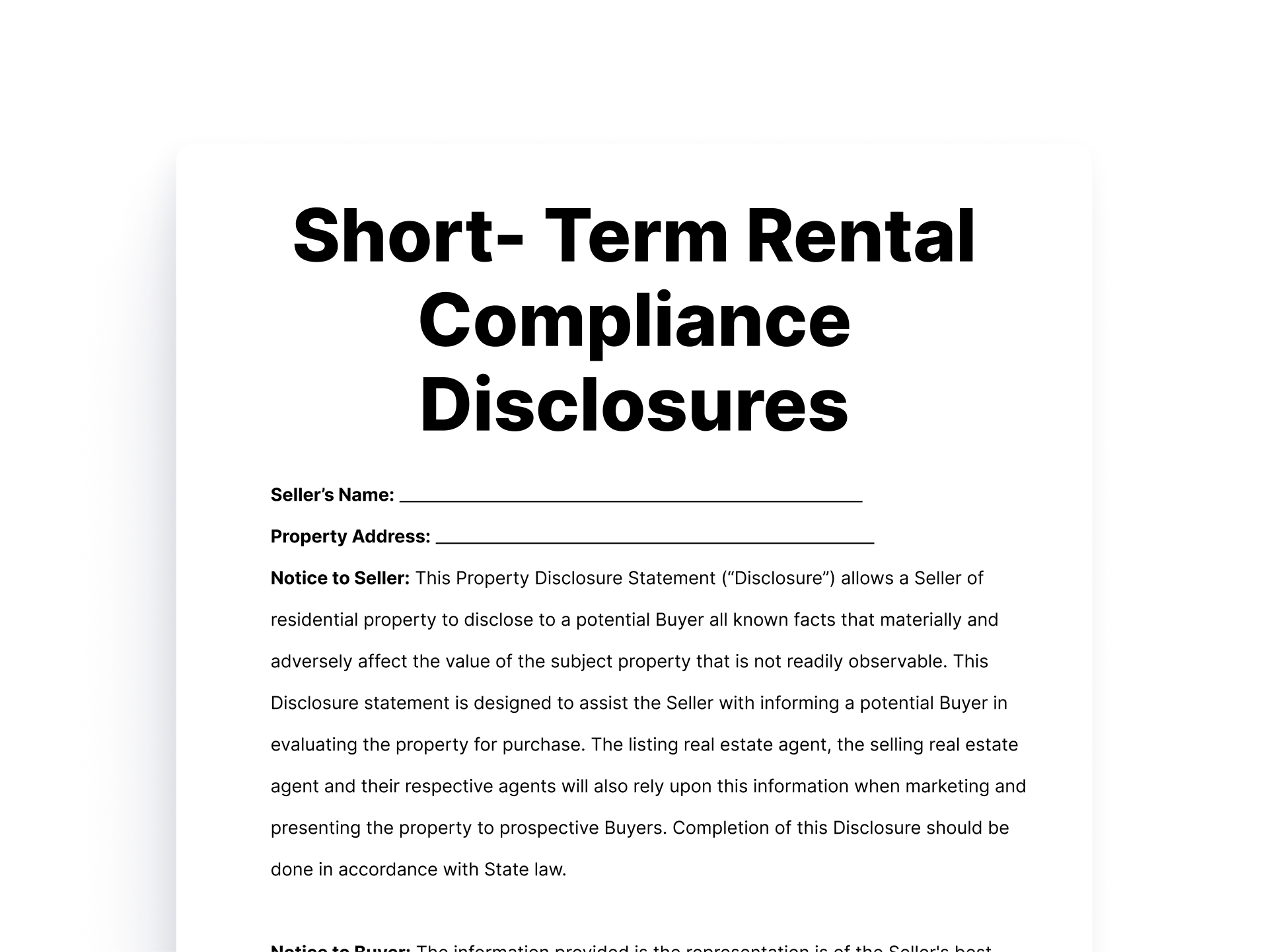
Download as PDF when complete
What Is Short-Term Rental Compliance Disclosure?
How Compliance Disclosure Protects Buyers
Short-term rental compliance disclosure informs buyers about a property’s status under vacation rental regulations. It covers permits, licenses, restrictions, and violations affecting short-term rental operations. Additionally, it includes HOA rules, zoning limitations, and local ordinance requirements.
Properties listed on Airbnb, VRBO, or HomeAway require comprehensive compliance disclosure. Buyers need this information to determine whether they can continue operating vacation rentals legally. Furthermore, undisclosed restrictions or violations can eliminate expected rental income and reduce property value.
How Short-Term Rental Disclosure Differs From General Disclosure
Short-term rental compliance disclosure focuses specifically on vacation rental legality. Many jurisdictions impose strict regulations limiting or prohibiting short-term rentals entirely. Therefore, sellers must disclose both current compliance status and any restrictions affecting future operations.
Understanding Short-Term Rental Regulations
What Qualifies as a Short-Term Rental
Short-term rentals are properties rented for periods typically less than 30 consecutive days. They serve vacationers, business travelers, or temporary housing needs through online platforms, property managers, or direct bookings. Some jurisdictions set thresholds at 14, 30, or 90 days for regulatory purposes. Additionally, the number of rental days per year may trigger different compliance requirements.
Federal, State, and Local Regulatory Framework
Federal law does not regulate short-term rentals, leaving authority to state and local governments. However, federal tax laws require reporting rental income and may impose occupancy taxes. State laws vary widely — some states are permissive while others prohibit short-term rentals entirely. Furthermore, local ordinances represent the primary regulatory framework and change frequently, requiring ongoing compliance monitoring.
Legal Requirements for Short-Term Rental Compliance Disclosure
State Disclosure Laws and Local Ordinance Requirements
Many states require sellers to disclose whether properties are used for short-term rentals. These disclosures must include permit status, compliance history, and known violations. States with significant tourism industries — like California, Florida, and Hawaii — often have specific short-term rental disclosure requirements.
At the local level, municipal codes frequently require disclosure of permits, licenses, and compliance status. Cities like Los Angeles, New York, and San Francisco have strict requirements mandating detailed information about permits, violations, and operational history. Additionally, failure to disclose local compliance status can prevent permit transfers to new owners.
HOA and Covenant Restrictions
Homeowner associations increasingly prohibit or restrict short-term rental operations. HOA rules may limit rental duration, frequency, or ban vacation rentals entirely. Additionally, covenant restrictions recorded on property deeds may override local regulations. Sellers must disclose all HOA rules and covenant restrictions affecting short-term rental operations, as these often prevent buyers from operating vacation rentals regardless of local permit status.
What Must Be Disclosed: Permits and Licenses
Current Permit Status and Application History
Disclose whether the property has valid short-term rental permits required by local ordinances. Include:
- Permit numbers, issue dates, and expiration dates
- Renewal requirements and whether permits transfer to new owners
- Any permit application denials, appeals, or conditional approvals
- Conditions or restrictions imposed on current permits
Some properties received permits under grandfather provisions no longer available to new applicants. These legacy permits may have special conditions or limited transferability. Furthermore, permit caps or lotteries may prevent new permits when current ones expire.
License Suspensions and Revocations
Report any license suspensions, revocations, or enforcement actions affecting short-term rental operations. These indicate serious compliance violations that may prevent future permit approvals. Additionally, disclose any pending investigations or unresolved complaints. License revocations often result from neighbor complaints, safety violations, or operating without permits — and some jurisdictions maintain public records of these actions.
What Must Be Disclosed: Operational Restrictions
Occupancy, Duration, and Property Type Limits
Disclose all operational restrictions including:
- Maximum occupancy limits based on bedrooms, square footage, or parking
- Minimum stay requirements — often three to seven nights
- Annual rental day caps — commonly 90 or 180 days per year
- Zoning restrictions limiting rentals to specific property types or neighborhoods
- Prohibitions on non-owner-occupied short-term rentals
- Distance requirements from schools, parks, or other vacation rentals
Additionally, historic districts and coastal zones often face extra restrictions or approval requirements.
Operational and Safety Requirements
Report operational requirements including parking rules, noise restrictions, and guest registration mandates. Many jurisdictions require safety inspections, smoke detectors, and emergency information postings. Additionally, some cities require a local contact person available 24/7 for complaints. Furthermore, some ordinances require liability insurance with specific coverage limits — disclose all requirements that affect how buyers can operate the property.
What Must Be Disclosed: Compliance History
Code Violations, Complaints, and Tax Compliance
Disclose all code violations, neighbor complaints, or enforcement actions during your ownership. Additionally, include information about transient occupancy tax registration, collection, and payment. Specifically, disclose:
- Noise complaints, parking issues, or party incidents
- Any tax audits, penalties, or outstanding tax liabilities
- Unresolved violations that may prevent permit renewals or transfers
- Compliance history affecting permit eligibility
Many jurisdictions require vacation rental operators to collect hotel taxes from guests. Unpaid tax obligations may transfer to new owners, creating unexpected liabilities.
Platform Account Status
Report short-term rental platform account status including any suspensions or permanent bans. Airbnb and VRBO may suspend accounts for policy violations, guest complaints, or safety concerns. Additionally, platform restrictions can eliminate primary marketing channels, affecting rental income. Include information about guest ratings and any disputes affecting account standing. Furthermore, platform accounts may not be transferable depending on terms of service.
Consequences of Inadequate Short-Term Rental Compliance Disclosure
Lost Income, Fraud Claims, and Regulatory Enforcement
Buyers who discover properties cannot legally operate as short-term rentals can pursue serious legal action. Specifically:
- Lost income claims — buyers may sue for rental income lost due to undisclosed permit ineligibility
- Fraud lawsuits — misrepresenting a property as “Airbnb-ready” without verifying compliance creates clear fraud liability
- Punitive damages — courts may award extra damages for deliberate concealment
- Regulatory enforcement — undisclosed violations can trigger fines, permit denials, and shutdown orders against new owners
Additionally, buyers operating based on false representations may face immediate cease-and-desist orders and daily fines.
HOA and Neighbor Litigation
Undisclosed HOA restrictions or covenant violations may result in court orders stopping vacation rental operations. HOA enforcement can include substantial fines, legal fees, and potential foreclosure for repeated violations. Additionally, neighbors may file nuisance lawsuits based on short-term rental activities. Court orders may prohibit rentals entirely regardless of permit status, creating hostile environments that affect overall property enjoyment.
Best Practices for Short-Term Rental Compliance Disclosure
Research Regulations and Provide Complete Documentation
Review current local ordinances and permit requirements before listing your property. Regulations change frequently, so verify your current compliance status. Additionally, hire an attorney specializing in short-term rental law to review your disclosure obligations.
Compile all documentation for buyers including:
- Permits, licenses, and agency correspondence
- Platform account information and tax registrations
- Insurance policies and compliance records
Complete records help buyers understand requirements and make permit transfers easier.
Disclose All Restrictions and Be Transparent About Challenges
Include every restriction affecting short-term rental operations — HOA rules, zoning limits, permit conditions, and annual caps. Explain how restrictions affect income potential so buyers have realistic expectations. Additionally, disclose any compliance challenges, near-violations, or regulatory interactions during your ownership. Be honest about neighbor complaints and the enforcement climate in your area. Furthermore, disclose any pending regulatory changes that may affect future rental viability.
Short-Term Rental Compliance Disclosure Takeaways
Proper short-term rental compliance disclosure protects sellers from fraud claims while giving buyers the information they need to make smart investment decisions. Research current regulations, provide complete documentation, and disclose all permits, restrictions, and compliance history. Additionally, be transparent about challenges, HOA rules, and pending regulatory changes. Overall, thorough short-term rental compliance disclosure creates smoother transactions and protects your finances from costly legal consequences.
FAQs
Short-term rental compliance disclosure informs buyers about a property’s permit status, operational restrictions, HOA rules, zoning limitations, and compliance history so they can determine whether they can legally operate a vacation rental after purchase.
It depends on the jurisdiction — some areas issue permits to properties that transfer with the sale, while others license individual operators and require new owners to reapply with no guarantee of approval.
Sellers must disclose occupancy limits, minimum stay requirements, annual rental day caps, zoning restrictions, parking and noise rules, safety inspection requirements, and any local mandates like 24/7 contact persons or liability insurance minimums.
Buyers who discover undisclosed restrictions can sue for lost rental income, diminished property value, and fraud damages — and courts may award punitive damages when sellers actively misrepresented a property as “Airbnb-ready” or permit-eligible.
Yes — HOA rules and deed covenants can prohibit or severely restrict short-term rentals regardless of local permit status, and undisclosed HOA violations can result in injunctions, substantial fines, and even foreclosure proceedings.