
Septic and Sewer Disclosure


(1)
Septic and Sewer Disclosure protects buyers from unexpected system failures and expensive repairs. Many property sellers overlook critical information about waste disposal systems, which can lead to legal liability. In short, this guide explains everything you need to know about disclosing system types, maintenance history, and known defects.
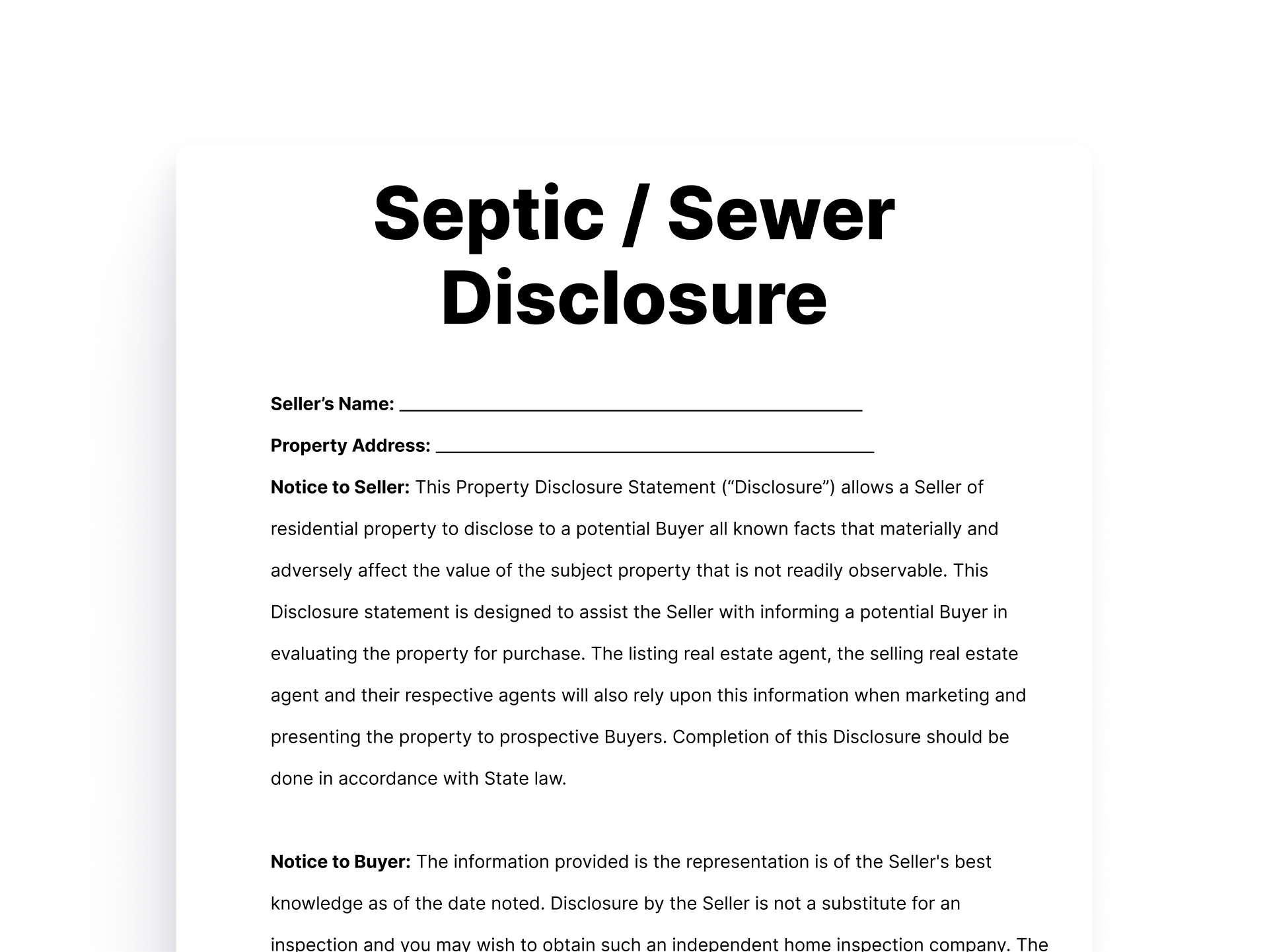
Download as PDF when complete
Understanding Septic vs. Sewer Systems
Septic and sewer systems are two different waste disposal methods. Understanding the difference helps you provide accurate septic and sewer disclosure to buyers. Each system type has unique maintenance needs and potential problems requiring disclosure.
What Is a Septic System?
A septic system is a private wastewater treatment system serving individual properties. It collects, treats, and disposes of household waste on-site without a municipal connection. Septic systems consist of a septic tank, distribution box, and drain field. They require pumping every three to five years, and property owners bear full responsibility for operation, repairs, and compliance.
What Is a Sewer System?
A sewer system connects properties to a municipal wastewater treatment facility through underground pipes. The city maintains main sewer lines while property owners maintain lateral connections. Sewer systems require less maintenance than septic systems. However, owners remain responsible for lateral line problems and blockages on their property.
Key Differences That Require Disclosure
Septic systems require significantly more maintenance and monitoring than sewer connections. Properties with septic systems may also have restrictions on water usage or garbage disposal use. Your septic and sewer disclosure must clearly identify which system serves the property and explain any unique requirements. Buyers need this information to understand ongoing maintenance obligations and costs.
Legal Requirements for Septic and Sewer Disclosure
Federal and State Septic Disclosure Requirements
Federal law does not mandate specific septic and sewer disclosure requirements. However, most states require sellers to disclose septic system presence, type, and known problems. Key requirements vary by state and may include:
- Septic inspections before property sales can proceed
- Certification that systems are functioning properly at time of sale
- Pumping records or maintenance documentation spanning several years
- Prohibition on property transfers until identified defects are corrected
Local Health Department Requirements
County and municipal health departments regulate septic system installation, maintenance, and inspections. Local ordinances may require permits for septic repairs before sales. Additionally, health departments often mandate inspections in areas without municipal sewers. Failed inspections may prevent closing until sellers complete necessary repairs or replacements.
What Must Be Included in Septic and Sewer Disclosure: System Type and Components
Septic System Types and Tank Information
Identify the specific septic system type in your disclosure. Common types include:
- Conventional gravity systems
- Pressure distribution systems
- Aerobic treatment units
Provide details about the septic tank including size, material, age, and location. Additionally, disclose when the tank was last pumped and inspected by professionals.
Drain Field and Sewer Connection Details
Describe drain field location, size, and construction type. Buyers need to know where drain fields are located to avoid damaging them. Additionally, report the drain field age and any repairs made during your ownership.
For sewer-connected properties, identify the lateral line location and condition. Include the pipe material — clay or PVC — and disclose any known problems like tree root intrusion or pipe deterioration.
What Must Be Included in Septic and Sewer Disclosure: Maintenance History
Pumping and Inspection Records
Provide complete septic tank pumping records showing dates and service providers. Most systems require pumping every three to five years. Additionally, include all professional inspection reports from your ownership period. These reports identify system condition and any defects needing attention.
Repairs and Service Contracts
Disclose all septic system repairs, component replacements, or modifications, including:
- Dates and scope of work
- Costs involved
- Permits and invoices
Additionally, inform buyers about any existing maintenance contracts or service agreements. Some systems — especially aerobic treatment units — require regular professional monitoring. Transferable service contracts add value for new owners.
What Must Be Included in Septic and Sewer Disclosure: Known Defects and Problems
System Failures, Drain Field Issues, and Tank Problems
Disclose any system failures, backups, or malfunctions during your ownership. Additionally, report how failures were addressed and whether the underlying cause was fixed. For drain field issues, disclose:
- Soggy areas or surfacing effluent
- Unpleasant odors near the drain field
- Vegetation changes suggesting wastewater surfacing
For tank problems, report any cracks, leaks, or structural damage. Some tank issues appear minor but indicate the need for full replacement. Furthermore, disclose if the system struggles to handle normal household wastewater volumes — buyers planning larger families need to know about capacity limitations.
Sewer Line Issues
For sewer-connected properties, disclose any lateral line problems including blockages or root intrusion. These problems can cause backups and create health hazards. Additionally, lateral line repairs can cost thousands of dollars. Report any backup incidents even if caused by municipal main line problems, and disclose clean-out locations and any accessibility issues affecting future maintenance.
Consequences of Inadequate Septic and Sewer Disclosure
Financial Liability and Buyer Claims From Non-Disclosure
Sellers who fail to disclose known septic problems face significant financial risk. Specifically:
- Courts typically order sellers to pay all repair costs for undisclosed defects
- Septic repairs range from a few hundred dollars to $30,000 for complete replacements
- Sellers may pay extra damages when courts find intentional non-disclosure
- Buyers can rescind purchase agreements and recover deposits for material non-disclosure
Health Department and Regulatory Consequences
Undisclosed septic violations may trigger health department enforcement actions. Sellers remain liable for violations that existed during their ownership. Additionally, some jurisdictions prohibit property use until owners correct septic violations found after purchase. These restrictions create serious hardships for buyers who believed the system was functional at the time of purchase.
Best Practices for Septic and Sewer Disclosure
Conduct Pre-Sale Inspections to Support Your Sewer Disclosure
Hire a licensed septic inspector to evaluate your system before listing the property. Professional inspections identify problems early, allowing proactive repairs or accurate disclosure. Additionally, compile all system records including:
- Permits and installation documents
- Pumping and maintenance history
- Repair invoices and inspection reports
Organized records make completing disclosure forms easier and more accurate.
Provide Comprehensive and Updated Septic Disclosure
Describe your system thoroughly using specific details — not general terms. Include system type, component locations, ages, and any special features. Additionally, provide a property map showing system component locations if possible.
If you discover new problems after initial disclosure, provide supplemental disclosure right away. Your disclosure duty continues until ownership transfers. Furthermore, comprehensive and updated disclosure demonstrates good faith and protects you from post-sale claims.
Septic and Sewer Disclosure Takeaways
Proper septic and sewer disclosure protects sellers from legal liability while giving buyers essential information about waste disposal systems. Conduct pre-sale inspections, gather all maintenance records, and describe your system in detail. Additionally, disclose every known problem regardless of size, update your disclosure for any new issues, and consult professionals when questions arise. Overall, thorough disclosure creates smoother transactions and protects your finances from costly buyer claims.
FAQs
A septic system is a private on-site wastewater treatment system that property owners must maintain and pump every three to five years, while a sewer system connects to a municipal treatment facility with the city maintaining the main lines and the owner responsible only for the lateral connection.
Sellers must disclose the system type and tank details, drain field location and condition, pumping and inspection records, all known repairs or failures, and any capacity limitations or usage restrictions.
Many states and local health departments require septic inspections before property sales can proceed, and some jurisdictions prohibit transfers until sellers correct identified defects or obtain certification that the system is functioning properly.
Septic repairs range from a few hundred dollars for minor fixes to $30,000 or more for complete drain field replacements, which is why full disclosure of known defects is critical before closing.
Sellers who conceal known septic defects face liability for all repair costs, potential buyer rescission of the purchase agreement, health department fines, and enhanced damages from courts when intentional non-disclosure is proven.