
Property Access and Easements Disclosure


(1)
Property Access and Easement Disclosure protects both landlords and tenants from future disputes. Many landlords confuse these two distinct concepts, which can lead to legal problems. In short, this guide explains everything you need to know about disclosing property access rights and easements to your tenants.
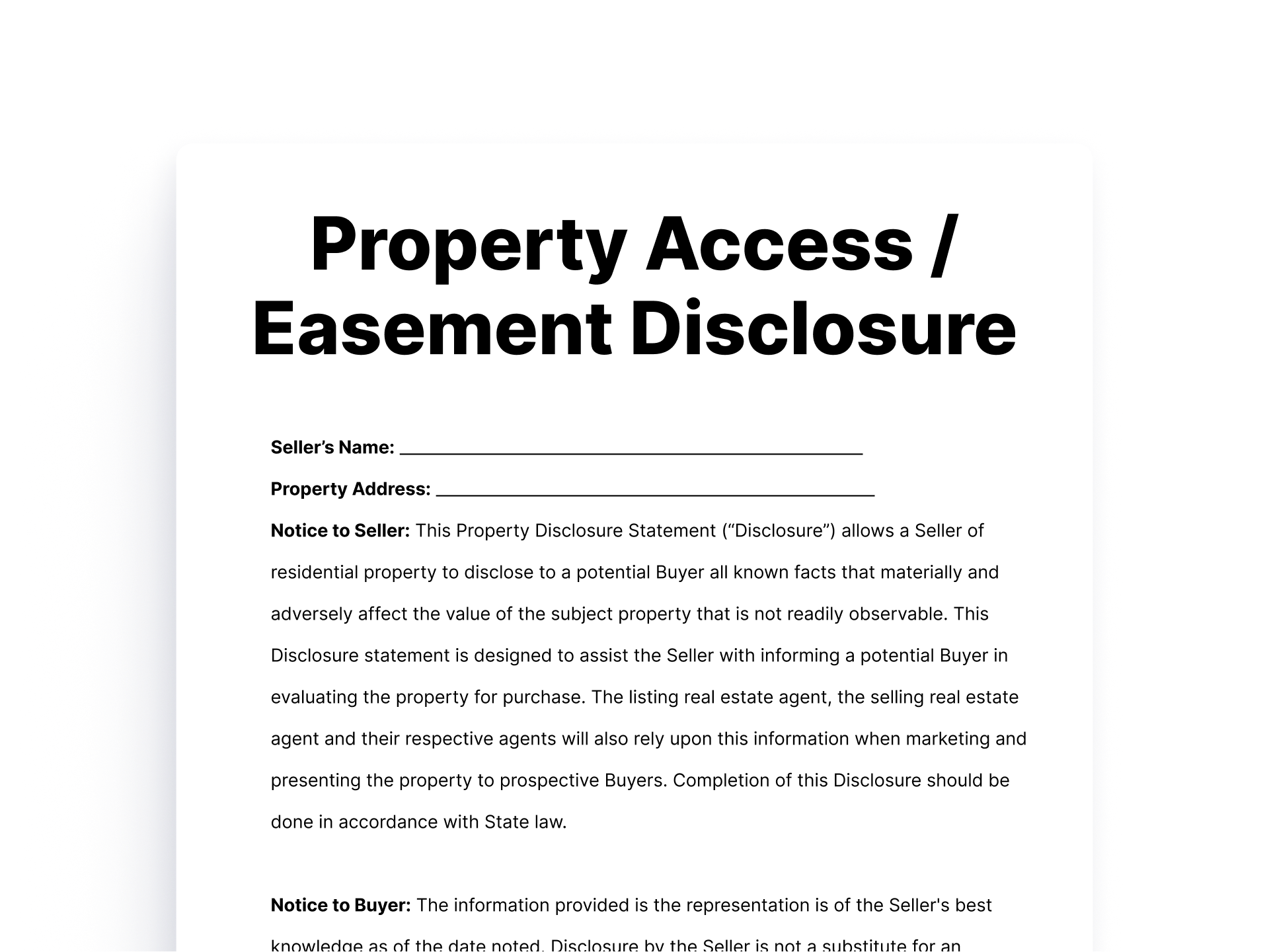
Download as PDF when complete
Understanding Property Access and Easement Disclosure
Property access and easements are two different legal concepts that landlords must disclose. Understanding this difference helps you give tenants accurate information. Both affect how people enter or use your rental property, but they serve completely different purposes.
What Is Property Access?
Property access is the landlord’s legal right to enter a rented property. This right allows you to perform inspections, make repairs, or show the property to future tenants. State laws regulate when and how landlords can use property access rights. Most states require 24 to 48 hours advance notice before entering, except in emergencies.
What Is an Easement?
An easement gives someone else the legal right to use part of your property. Unlike property access, easements involve third parties — not the landlord or tenant. Common examples include utility companies accessing power lines or neighbors using shared driveways. Easements stay attached to the property deed regardless of ownership changes and can be permanent or temporary.
Key Differences Between Access Rights and Easements
Property access involves only the landlord-tenant relationship. Easements involve third parties and exist independently of the landlord’s wishes. Additionally, property access rights end when the lease ends. Easements continue and transfer with the property to new owners.
Legal Requirements for Property Access Disclosure
State Notice Requirements for Landlord Entry
Most states require specific notice periods before landlords can enter rental properties. Common requirements range from 24 hours in California to 48 hours in other states. Your lease must clearly state access terms and notice procedures. Additionally, many states require written notice unless an emergency exists.
Permitted Reasons for Property Access
State laws typically list valid reasons for landlord entry. Common reasons include:
- Making necessary repairs and conducting inspections
- Showing the property to future tenants
- Pest control treatments or utility meter readings
- Emergency situations like fires, floods, or gas leaks
Emergency Access and Tenant Rights
Emergency access allows landlords to enter right away without advance notice. Situations threatening property damage or tenant safety qualify as emergencies. Document all emergency entries with notes about what happened and what actions were taken. Furthermore, tenants have the right to quiet enjoyment — landlords cannot abuse access rights through excessive or unannounced visits.
Types of Easements That Require Disclosure
Utility and Access Easements
Utility companies often hold easements to maintain equipment on your property. These allow workers to access gas lines, electrical systems, water pipes, or phone lines. Consequently, utility workers can enter the property without your permission for maintenance or emergencies.
Access easements permit neighboring property owners to cross your land to reach their own. For instance, a landlocked neighbor might have permanent easement rights through your driveway. These easements can affect tenant privacy, parking, and enjoyment of the property.
Conservation and Shared Driveway Easements
Conservation easements restrict property development to protect natural features or historic areas. These may prohibit building additions, tree removal, or exterior changes. Additionally, they often involve periodic inspections by the holding organization — which can affect tenant privacy.
Shared driveway easements give multiple property owners rights to use common access routes. These are common in older neighborhoods or properties with limited street access. Disputes often arise over snow removal, repaving costs, or parking. Therefore, clear property access and easement disclosure helps tenants understand shared access expectations.
What to Include in Property Access Disclosure
Notice Requirements and Entry Procedures
Clearly state how much advance notice you will give before entering. Specify the notice method — written notice, email, text, or phone call. Include your contact information so tenants can reach you about scheduling. Additionally, describe how you will conduct entries to respect tenant privacy, including whether you will knock, announce yourself, or bring contractors.
Tenant Rights and Remedies for Access Violations
Inform tenants about their rights regarding property access. Specifically, explain that they can refuse entry without proper notice except in emergencies. Additionally, provide information about filing complaints for access violations. Include contact details for local housing authorities or tenant rights organizations.
What to Include in Easement Disclosure
Easement Location, Purpose, and Scope
Clearly identify where easements exist using specific descriptions, surveys, or maps. Visual documentation helps tenants understand how easements affect their living space. For each easement, explain:
- Why it exists and what activities it permits
- Whether it allows pedestrian access, vehicle traffic, or utility maintenance
- Any restrictions on hours, seasons, or types of vehicles
Frequency, Maintenance, and Cost Responsibilities
Tell tenants how often they should expect easement-related activity. Utility easements might involve annual inspections while access easements could mean daily use by neighbors. Furthermore, clarify who maintains easement areas and bears repair costs. Additionally, specify whether tenants can use easement areas for parking, storage, or other purposes.
How to Properly Disclose Property Access Rights
Clear Lease Language for Property Access and Easement Disclosure
Your lease must contain specific, detailed provisions about property access rights. Use plain language that tenants can understand without legal expertise. Include separate sections for routine access, emergency access, and special circumstances. Furthermore, specify what happens if landlords violate access procedures or tenant rights.
Written Notices and Access Records
Create standard written notice forms for property access requests. These should include entry date, time, purpose, and expected duration. Maintain proof of delivery for all notices. Additionally, keep detailed logs of all property entries including dates, times, purposes, and findings — these records protect you from claims of harassment or unauthorized entry.
How to Properly Disclose Property Easements
Timing and Documentation of Easement Disclosure
Disclose all known easements before tenants sign lease agreements. Early disclosure allows tenants to make informed decisions about whether the property meets their needs. Waiting until after lease signing could constitute fraud or misrepresentation. Additionally, provide disclosure during property showings when easement locations are visible.
Always include property access and easement disclosure in written lease documents. Attach copies of recorded easement documents from your property deed and title report. Furthermore, include property surveys showing easement locations and boundaries. Provide contact information for easement holders when available.
Property Walk-Throughs and Easement Updates
Schedule walk-throughs with prospective tenants to physically show easement locations. Point out access routes, utility boxes, shared driveways, or other easement features. Additionally, notify tenants promptly about any new easements or changes to existing ones. Keep detailed records of all easement-related communications throughout the tenancy.
Consequences of Improper Property Access
Tenant Claims and Lease Termination Rights
Landlords who violate property access requirements face tenant complaints to housing authorities. Repeated violations can result in fines, penalties, or license suspensions. Additionally, tenants may sue for harassment, invasion of privacy, or breach of quiet enjoyment. Courts often award damages for emotional distress, inconvenience, and lease violations.
Tenants may also have grounds to terminate leases without penalty for repeated access violations. In some areas, persistent improper entries can constitute constructive eviction. Moreover, entering rental properties without proper notice can constitute criminal trespass in some states. Following proper access procedures protects your rental income and avoids criminal liability.
Consequences of Failing to Disclose Easements
Fraud Claims and Lease Voidability
Landlords who conceal or fail to disclose easements face serious legal risks. Tenants can sue for fraud, misrepresentation, and breach of contract. Courts may allow tenants to void lease agreements entirely if easements affect property use or enjoyment. Consequently, tenants can stop paying rent, recover previously paid amounts, and seek relocation costs.
Financial Losses and Reputation Damage
Undisclosed easements lead to longer vacancies, reduced rental income, and higher turnover costs. Additionally, legal settlements, judgments, and increased insurance premiums add significant financial burden. Beyond costs, failure to disclose damages your reputation — dissatisfied tenants share negative experiences through online reviews and community forums. In short, transparent property access and easement disclosure protects both your finances and your professional standing.
Best Practices for Property Access and Easement Disclosure
Research, Documentation, and Legal Guidance
Review your property title, deed, and survey carefully before listing rental properties. Identify all recorded easements including those created by previous owners. Additionally, hire title companies to perform thorough easement searches for complex properties. Seek attorney guidance when uncertain about disclosure requirements — legal consultation helps you draft effective lease language and avoid costly mistakes.
Go Beyond the Minimum Requirements
Develop standard disclosure forms covering both property access rights and all known easements. Use plain language, include property maps or surveys, and attach copies of recorded easement documents. Furthermore, go beyond minimum legal requirements by explaining how access and easements affect daily property use. In particular, sharing historical information about typical access frequency builds realistic expectations and long-term tenant trust.
FAQs
Property access refers to the landlord’s legal right to enter a rented unit with proper notice, while an easement grants a third party — such as a utility company or neighbor — the right to use a portion of the property regardless of who owns or rents it.
Most states require landlords to provide 24 to 48 hours advance written notice before entering an occupied rental unit, except in emergencies like fires, gas leaks, or burst pipes.
Landlords must disclose all known easements including utility easements, access easements for neighboring properties, conservation easements restricting modifications, and shared driveway or parking easements that affect the tenant’s use of the property.
Easements must be disclosed before tenants sign lease agreements, as waiting until after signing could constitute fraud, misrepresentation, or concealment of material property information.
Tenants can sue for fraud, misrepresentation, and breach of contract, and courts may allow them to void the lease entirely, stop paying rent, recover previously paid amounts, and seek additional damages including relocation costs.