
Heating and Cooling System


(1)
Heating and Cooling System Disclosure practices ensure you meet legal requirements and document known issues. They also set realistic expectations about system performance and replacement needs. In short, proper disclosure protects property owners from legal liability while helping buyers understand HVAC functionality and remaining lifespan.
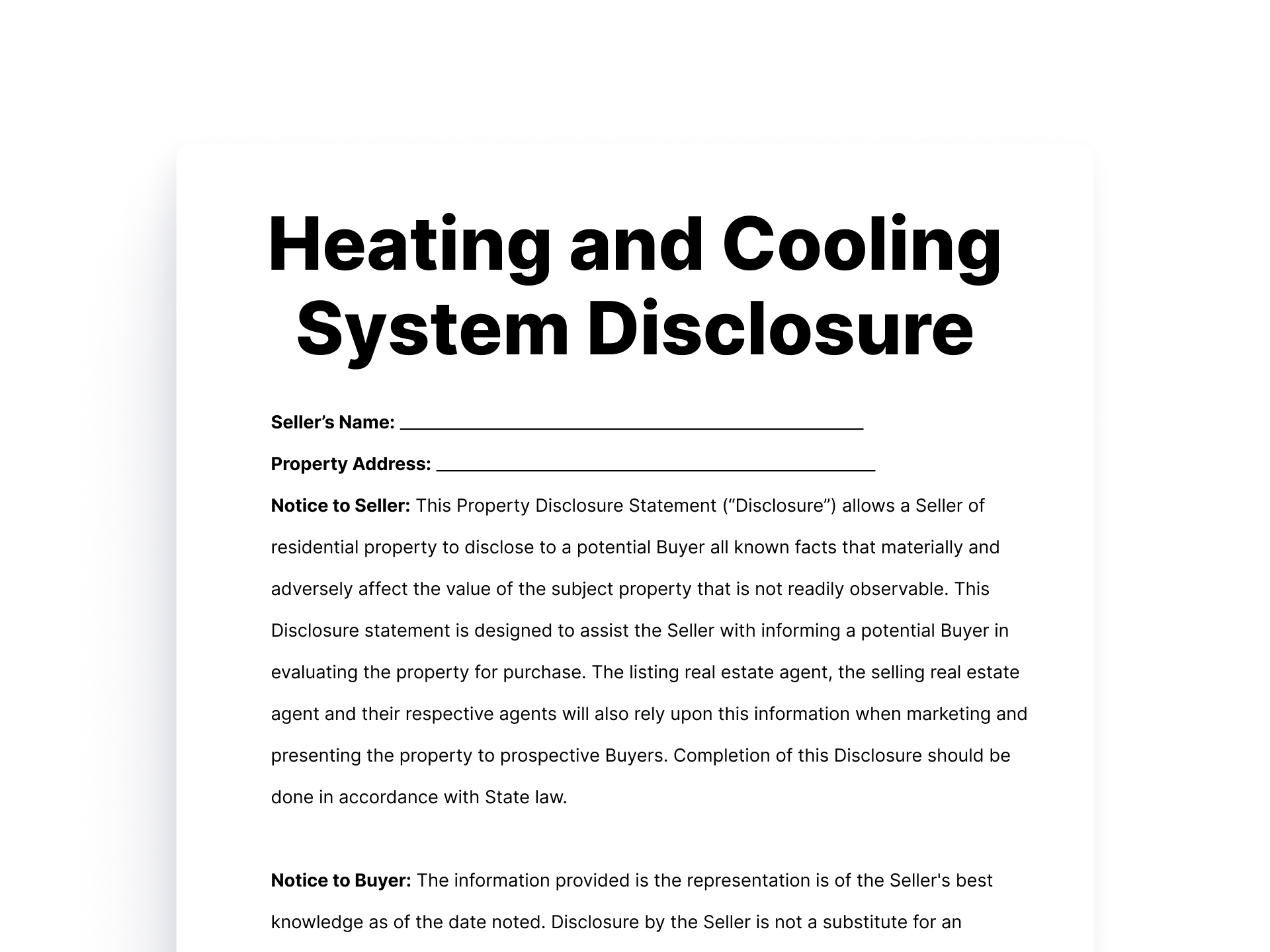
Download as PDF when complete
Heating and Cooling System Disclosure: Complete Guide for Property Owners
A complete Heating and Cooling System Disclosure informs buyers and tenants about HVAC condition, age, capacity, and maintenance history. Whether you’re selling or renting, clear disclosure procedures prevent disputes and costly claims. Specifically, this guide covers:
- Disclosure requirements and common HVAC issues
- Maintenance records and efficiency information
- Warranty coverage and legal obligations
Our guide helps you handle HVAC disclosures with confidence while protecting your interests and occupant comfort.
Understanding Heating and Cooling System Disclosure Requirements
What State Laws Require for HVAC Disclosure
Disclosure requirements vary by state, but most require sellers to disclose known defects, age, and functionality of HVAC equipment. Your disclosure must reveal problems with:
- Furnaces, air conditioners, and heat pumps
- Thermostats and ductwork affecting performance
Additionally, many states require disclosure of system age since HVAC equipment lasts an average of 15 to 20 years. Some jurisdictions mandate HVAC inspections before property transfers, particularly for systems older than 10 years.
Why HVAC Disclosure Protects Property Owners
Proper disclosure protects you from legal claims after closing or move-in. HVAC failures cause expensive repairs and uncomfortable living conditions. Buyers or tenants may blame you if issues were not disclosed. Therefore, your disclosure creates documentation that you informed all parties about system conditions. Furthermore, failing to disclose HVAC defects can result in lawsuits for fraud, breach of contract, and liability for replacement costs that can exceed $10,000.
What to Include in Your HVAC Disclosure
Key System Details to Document
Your disclosure should cover all major HVAC components and their conditions. Specifically, include:
- Heating system type — forced air furnace, boiler, heat pump, or electric baseboard
- Fuel source — natural gas, propane, electricity, or oil
- Cooling system type — central air, heat pump, window units, or no cooling
- System age or installation date
- Efficiency ratings — SEER for air conditioners and AFUE for furnaces
Describe system condition honestly using terms like “excellent,” “good,” “fair,” or “poor.”
Known Problems and Ductwork Issues
Disclose any known problems, including:
- Systems not heating or cooling adequately
- Unusual noises or smells
- Frequent repairs needed
- Thermostat malfunctions
Additionally, reveal ductwork conditions noting leaks, inadequate insulation, or mold issues. Furthermore, note HVAC system capacity measured in BTUs for heating and tons for cooling, as these figures help buyers assess whether the system meets their needs.
Common HVAC Issues That Require Disclosure
Aging Equipment and Refrigerant Problems
Your disclosure must address common problems affecting system safety and functionality. Key issues include:
- Aging equipment — furnaces last 15 to 20 years; air conditioners last 12 to 15 years
- Refrigerant leaks — cause inadequate cooling and expensive repairs
- Outdated R-22 refrigerant (Freon) — no longer produced and costs significantly more than modern alternatives
Therefore, disclose if systems struggle to maintain comfortable temperatures or run constantly.
Safety Hazards and Performance Issues
Additional issues that require disclosure include:
- Carbon monoxide risks from cracked heat exchangers or improper venting
- Poor indoor air quality from dirty filters or duct contamination
- Frozen or leaking coils and faulty thermostats
- Excessive cycling indicating system problems
Furthermore, carbon monoxide risks are particularly serious and require immediate disclosure. In fact, these hazards can pose life-threatening dangers to occupants.
HVAC System Age and Lifespan Disclosure
Typical HVAC Equipment Lifespans
Your disclosure should clearly state equipment age to help buyers plan for replacements. Typical lifespans include:
- Furnaces: 15 to 20 years depending on fuel type and maintenance
- Central air conditioners: 12 to 15 years
- Heat pumps: 10 to 15 years
- Tank water heaters connected to heating systems: 8 to 12 years
- Tankless water heaters: 15 to 20 years
Providing Age Documentation to Buyers
Disclose installation dates or approximate ages if known. Therefore, provide receipts or records showing when current systems were installed. Furthermore, if you don’t know exact ages, provide your best estimate based on home purchase records or contractor information. Moreover, systems approaching or exceeding typical lifespans need prominent disclosure since buyers should budget for replacement. Additionally, note any major repairs or component replacements that may have extended system life.
Maintenance History and Service Records
What Maintenance Records to Include
Your disclosure benefits from documented maintenance history. Regular professional maintenance extends HVAC lifespan and prevents breakdowns. Specifically, include:
- Dates of service and contractors used
- Filter changes, cleaning, and tune-up records
- Compressor replacements and refrigerant recharges
- Heat exchanger repairs and control board replacements
Being Honest About Lack of Maintenance
If you haven’t maintained systems regularly, disclose this honestly — lack of maintenance affects remaining lifespan. Additionally, explain any recurring problems that might indicate chronic system issues. Furthermore, provide contact information for HVAC contractors who serviced the systems so buyers can verify claims and continue service relationships.
Energy Efficiency and Operating Costs
HVAC Efficiency Ratings Explained
Your disclosure should address energy efficiency and utility costs. Key efficiency ratings include:
- SEER ratings for air conditioners — range from 13 to 21 or higher; higher numbers mean better efficiency
- AFUE ratings for furnaces — range from 80% to 98%; shows how much fuel converts to heat
Modern high-efficiency systems significantly reduce energy costs compared to older equipment.
Providing Utility Cost Information
Provide average monthly heating and cooling costs based on your utility bills. Therefore, share seasonal utility expenses to help buyers budget accurately. Furthermore, note if utility bills have increased over time, as this may indicate declining system efficiency. Moreover, disclose any energy audits identifying HVAC inefficiencies. Additionally, explain whether programmable or smart thermostats are installed since these features improve efficiency and comfort control.
Heating and Cooling System Disclosure for Home Sales
What Seller Disclosure Forms Require
Home sale disclosure follows seller property disclosure forms required by most states. Your disclosure must answer questions about:
- System age, type, and fuel source
- Known defects and repair history
- Whether an HVAC inspection has been completed
Many buyers request professional HVAC inspections during due diligence. Therefore, be prepared for inspections that may reveal issues you haven’t noticed.
Being Honest About HVAC Problems
Disclose problems honestly even if they affect negotiations. Reveal systems that don’t heat or cool properly, make unusual noises, or need frequent repairs. Furthermore, mention if contractors recommended replacements or major repairs you haven’t completed. Moreover, some sellers replace aging systems before listing to eliminate disclosure concerns and increase property value. Additionally, offering a home warranty covering HVAC systems for the first year gives buyers peace of mind while protecting sellers from post-closing repair demands.
Heating and Cooling System Disclosure for Rental Properties
Landlord HVAC Disclosure Obligations
Landlord disclosure protects tenant comfort and limits liability. Most states require landlords to provide functional heating systems meeting minimum temperature requirements — typically 68°F during winter months. Additionally, while air conditioning isn’t universally required, landlords must repair or replace AC systems included with properties. Your rental disclosure should document:
- System age and known issues
- Maintenance schedules and service records
- Any limitations like single-zone systems or insufficient cooling capacity
Clarifying Maintenance Responsibilities for Tenants
Specify landlord versus tenant maintenance responsibilities clearly. Therefore, clarify who changes filters, pays for service calls, and handles repairs. Furthermore, many landlords include HVAC maintenance in lease agreements requiring professional service once or twice yearly. Moreover, respond promptly to tenant reports of heating or cooling problems since ignoring issues creates liability and habitability claims.
HVAC Warranties and Service Contracts
Warranty Coverage to Disclose
Your disclosure should address warranty coverage protecting buyers from immediate repair costs. Common coverage includes:
- Manufacturer warranties covering parts for 5 to 10 years from installation date
- Extended or lifetime compressor warranties from some manufacturers
- Installation warranties from HVAC contractors covering labor for 1 to 2 years
Disclose whether warranties transfer to new owners and any requirements for maintaining coverage.
Service Contracts That Can Transfer to Buyers
Provide all warranty documents including manufacturer warranties, installation warranties, and extended coverage information. Furthermore, note any service contracts or maintenance agreements that can transfer to buyers. Moreover, service contracts covering annual maintenance and priority service typically cost $150 to $300 yearly but provide real value through preventive care. Additionally, clarify warranty registration requirements since some manufacturers require registration for full coverage.
Legal Consequences of Inadequate HVAC Disclosure
Buyer Claims for Undisclosed HVAC Defects
Failing to provide adequate disclosure creates serious legal liability. Buyers who discover undisclosed HVAC defects after closing can sue for fraud, misrepresentation, and breach of contract. Additionally, if heating systems fail during winter, inadequate disclosure increases liability for tenant damages. HVAC replacement costs ranging from $5,000 to $15,000 create significant financial claims.
Agent and Inspector Liability
Real estate agents share liability for failing to disclose known HVAC problems. Therefore, agents must advise sellers to disclose system issues even when sellers prefer not to. Furthermore, home inspectors who miss obvious HVAC defects face professional liability claims. Moreover, modern home inspections routinely identify HVAC issues, so concealment rarely succeeds and instead creates additional fraud claims when discovered.
Managing HVAC Upgrades Before Listing
Documenting System Improvements
Your disclosure should document system improvements that increase property value. Specifically, disclose any upgrades including:
- High-efficiency equipment installations
- Smart thermostat additions
- Duct sealing or insulation improvements
- Air quality enhancements like whole-house humidifiers or air purifiers
Therefore, provide receipts, warranties, and permits for all HVAC work completed.
Cost of Common HVAC Upgrades
Some sellers upgrade aging systems before listing to eliminate concerns and attract buyers. Typical costs include:
- Replacing a furnace or air conditioner: $3,000 to $8,000 per unit
- High-efficiency upgrades may qualify for tax credits and utility rebates
Additionally, addressing HVAC issues proactively demonstrates property care and may justify a higher asking price. Overall, buyers appreciate move-in ready properties with new or well-maintained systems requiring no immediate attention.
Heating and Cooling System Disclosure Takeaways
Proper Heating and Cooling System Disclosure protects property owners while ensuring buyer and tenant comfort. Document all known issues honestly, including system age, type, fuel source, capacity, and efficiency ratings. Additionally, include maintenance history, repair records, warranty information, and any upgrades completed. Overall, thorough disclosure prevents legal liability, demonstrates good faith, and helps buyers and tenants make informed decisions about HVAC condition and remaining useful life.
FAQs
Sellers must disclose system type, fuel source, age, known defects, maintenance history, and any recommended repairs or replacements that have not been completed.
Furnaces last 15 to 20 years, central air conditioners last 12 to 15 years, and heat pumps average 10 to 15 years — so buyers should budget for replacement on systems approaching these ages.
The most critical issues to disclose include cracked heat exchangers posing carbon monoxide risks, refrigerant leaks, systems using outdated R-22 refrigerant, inadequate heating or cooling capacity, and any chronic performance problems.
Many manufacturer warranties covering parts for 5 to 10 years are transferable, but sellers must provide all warranty documents and disclose any registration requirements needed to maintain full coverage after transfer.
Buyers who discover undisclosed HVAC problems after closing can sue for fraud, misrepresentation, and breach of contract, with replacement costs ranging from $5,000 to $15,000 creating significant financial claims.