
Energy Efficiency and Solar Panel


(1)
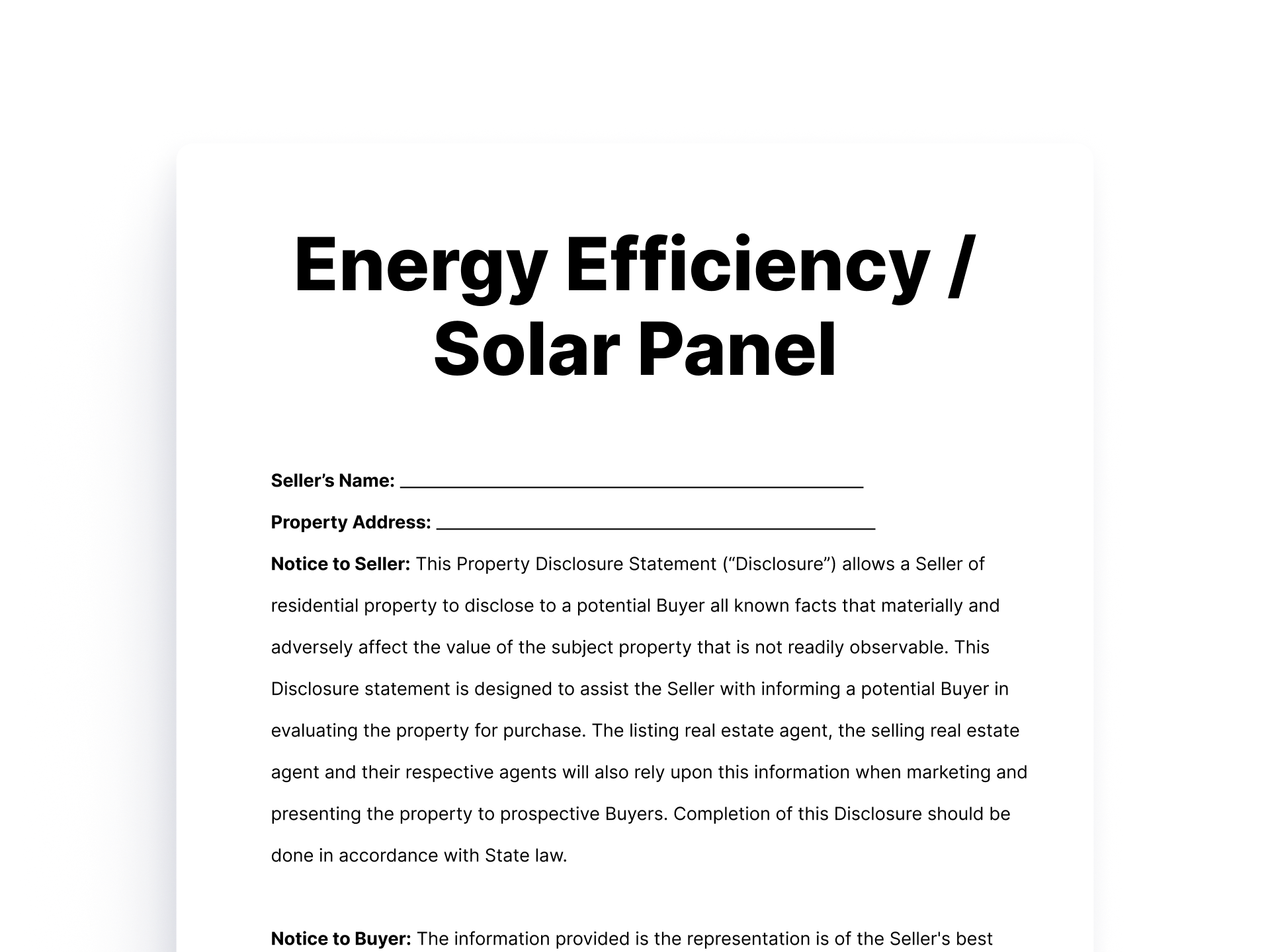
Energy Efficiency and Solar Panel Disclosure helps buyers make informed decisions. It sets realistic expectations about energy costs and savings. In short, detailed disclosure practices ensure you meet legal requirements and document system ownership clearly.
Download as PDF when complete
Energy Efficiency and Solar Panel Disclosure: Complete Guide for Property Owners
A complete disclosure informs buyers and tenants about property energy features, utility costs, and renewable energy systems. Whether you’re selling or renting a property with solar panels or energy-efficient features, clear procedures prevent disputes. Specifically, this guide covers:
- Solar panel ownership and lease disclosure
- Energy certifications and utility cost information
- PACE loans, warranties, and tax credit disclosure
Our guide helps you handle energy and solar disclosures with confidence while protecting your interests.
Understanding Energy Efficiency and Solar Panel Disclosure Requirements
State and Federal Disclosure Requirements
Disclosure requirements vary by state. Many states require sellers to disclose solar panel ownership status — whether panels are owned, leased, or financed. Additionally, some jurisdictions require Energy Performance Certificates or home energy ratings before property transfers. Federal law requires disclosure of Property Assessed Clean Energy (PACE) loans since these create liens on properties.
Why Proper Disclosure Protects Property Owners
Proper disclosure protects you from legal claims after closing. Buyers who discover undisclosed solar lease obligations or PACE loans can sue for fraud and breach of contract. Therefore, your disclosure creates documentation that buyers understood all energy features and financial obligations. Furthermore, disclosing energy-efficient features can increase property value and attract environmentally conscious buyers.
Solar Panel Ownership and Lease Disclosure Requirements
Types of Solar Panel Ownership to Disclose
Your disclosure must clearly explain solar panel ownership status. There are three common scenarios:
- Owned panels — paid off and convey with the property as part of the sale
- Financed panels — buyers must assume the loan or sellers must pay off the balance before closing
- Solar leases or PPAs — transfer to buyers with ongoing payment obligations for 15 to 25 years
Key Solar Lease Terms Buyers Need to Know
Disclose all terms of solar leases or Power Purchase Agreements (PPAs), including:
- Monthly payment amounts and annual escalation clauses
- Contract term and remaining years
- Buyout options and costs
- Maintenance responsibilities
Therefore, provide complete copies of solar agreements to buyers early in the transaction. Furthermore, some solar leases have credit requirements that buyers must meet for transfer approval. Additionally, some lenders won’t finance properties with certain solar lease types, creating extra complications.
Energy Efficiency Features and Certifications
Energy-Efficient Features That Reduce Utility Costs
Your disclosure should highlight property energy features that reduce utility costs. Common features include:
- Energy Star certified appliances, windows, and HVAC systems
- Insulation upgrades in attics, walls, and crawl spaces
- LED lighting, programmable thermostats, and efficient water heaters
Energy Certifications and Ratings to Disclose
Disclose any energy certifications or ratings, including:
- LEED certification for green building standards
- Energy Star Home certification for new construction
- HERS (Home Energy Rating System) scores — lower scores indicate better efficiency
- Solar panel system capacity measured in kilowatts
Therefore, provide documentation of energy audits, efficiency upgrades, and certifications received. Furthermore, these features often justify higher asking prices and attract buyers seeking lower utility costs.
Solar Panel System Details and Performance
Technical Information to Include in Your Disclosure
Your disclosure must provide detailed solar system information. Specifically, disclose:
- Installation date, brand, model, and system capacity in kilowatts
- Inverter type, age, and warranty status (inverters typically need replacement after 10 to 15 years)
- Battery storage systems if installed
- Monitoring systems for tracking production
- Interconnection agreements with utility companies
Solar Energy Production and Net Metering
Provide historical energy production data showing actual electricity generation. Therefore, share utility bills demonstrating cost savings and net metering credits. Furthermore, disclose what percentage of typical electricity use the system offsets — 50%, 75%, or 100%. Moreover, explain how net metering works in your area, including credit rates for excess power sent to the grid. Additionally, note any production guarantees from installers and whether they have been met.
Utility Cost and Energy Bill Disclosure
Providing Accurate Utility Cost Information
Your disclosure should include utility cost information to help buyers budget accurately. Specifically:
- Provide utility bills from the past 12 months covering electricity, gas, water, and sewer costs
- Note seasonal variations in utility expenses
- Give average monthly costs so buyers have realistic expectations
How Solar Panels Affect Monthly Utility Bills
Explain how solar panels affect electricity bills, including:
- Monthly connection fees that remain even with solar
- Net metering credits for excess production
- True-up bills reconciling annual production and usage
Therefore, clarify whether reported utility costs reflect solar savings or pre-solar expenses. Furthermore, disclose any fixed-rate electricity agreements or special utility programs affecting costs. Additionally, note whether utilities are separately metered in multi-unit properties.
Solar Panel Warranties and Maintenance Disclosure
Warranty Coverage to Disclose
Your disclosure must address warranty coverage. Solar panels typically carry:
- 25-year performance warranties guaranteeing minimum production levels
- Equipment warranties covering panels and inverters for 10 to 25 years
- Installation workmanship warranties from solar companies lasting 5 to 10 years
Disclose whether warranties transfer to new owners and any requirements for maintaining coverage.
Maintenance Requirements for Solar Systems
Provide all warranty documents, including manufacturer warranties, installation warranties, and production guarantees. Furthermore, note maintenance requirements such as:
- Periodic cleaning and monitoring system checks
- Inverter replacements over time
Moreover, explain whether you have maintained the system according to manufacturer recommendations. Additionally, disclose any repairs or service performed, including dates, contractors used, and issues resolved.
PACE Loan Disclosure for Solar and Energy Improvements
What Is a PACE Loan and Why It Must Be Disclosed
Your disclosure must prominently reveal any PACE loans used to finance solar panels or energy improvements. PACE loans attach to properties as special assessments. They create senior liens that take priority over mortgages. Additionally, these loans transfer to buyers who become responsible for remaining payments. Many lenders won’t finance properties with PACE loans, requiring payoff before closing.
PACE Loan Details to Include in Your Disclosure
Disclose the following PACE loan information:
- Loan amount, interest rate, and monthly or annual payment
- Remaining term and total payoff amount
Therefore, explain that PACE assessments appear on property tax bills and must be paid to avoid foreclosure. Furthermore, buyers who discover undisclosed PACE loans late in a transaction may cancel the purchase or demand seller payoff. Moreover, title companies identify PACE liens during title searches, so concealment attempts fail and create fraud claims.
Energy Efficiency and Solar Panel Disclosure for Rental Properties
What Landlords Must Disclose to Tenants
Landlord disclosure helps tenants understand utility costs and energy features. Lease agreements should clarify which utilities are tenant-paid versus landlord-paid. Additionally, disclose the presence of solar panels and how they affect tenant electricity costs. Some landlords with solar panels include electricity in rent, while others allow tenants to benefit from reduced rates.
Keeping Tenants Informed About Energy Features
Explain energy-efficient features like programmable thermostats, Energy Star appliances, and improved insulation. Therefore, provide average utility cost information to help tenants budget for monthly expenses. Furthermore, if you’re installing solar panels during a tenancy, explain how this affects rent, utilities, and property access. Moreover, disclose any restrictions on tenant energy use, such as limits on certain appliances. Additionally, note whether tenants are responsible for routine maintenance like filter changes.
Tax Credits and Incentive Disclosure
Federal and State Solar Incentives to Disclose
Your disclosure should address tax credits and incentives. The federal solar Investment Tax Credit (ITC) allows deductions for solar installation costs. However, this benefit typically goes to whoever owned the property when the panels were installed. Additionally, many states and utilities offer rebates, performance payments, and renewable energy credits for solar production.
Tax Credit and Solar Panel Disclosure for Buyers
Clarify whether any incentives transfer to buyers or have already been claimed. Therefore, explain that buyers installing new solar panels may qualify for current incentives, but cannot claim credits for existing systems. Furthermore, some states offer property tax exemptions for solar panels preventing increased assessments after installation. Moreover, provide documentation of incentives received so buyers understand the system’s full economic value as part of your solar panel disclosure.
Environmental and Sustainability Benefits
Documenting Environmental Benefits in Your Disclosure
Your disclosure can highlight environmental benefits that appeal to eco-conscious buyers. Solar panels reduce carbon emissions and dependence on fossil fuels. Additionally, energy-efficient features decrease overall energy consumption. Document carbon offset calculations showing tons of CO2 emissions your solar system has prevented.
Sustainability Features That Add Property Value
Explain sustainability features such as:
- Rainwater collection systems
- Native landscaping that reduces water needs
- Energy-efficient building materials
Therefore, these features attract buyers seeking environmentally responsible homes. Furthermore, properties with strong sustainability credentials often command premium prices. Moreover, younger buyers increasingly prioritize energy efficiency and renewable energy when choosing homes.
Legal Consequences of Inadequate Disclosure
Buyer Claims From Undisclosed Solar and Energy Obligations
Failing to provide adequate disclosure creates serious legal liability. Buyers who discover undisclosed solar lease obligations after closing can sue for fraud and rescission. Additionally, undisclosed PACE loans create immediate problems since many lenders won’t close until these liens are paid off. Buyers face financial harm from surprise payment obligations they didn’t budget for.
Legal Consequences of Failing Solar and Energy Disclosure
Real estate agents must disclose known information about solar panels and energy features even when sellers prefer not to. Therefore, agents have professional obligations that supersede seller preferences. Furthermore, title companies may face liability for failing to identify PACE loans during title searches. Moreover, consequences of inadequate energy efficiency and solar panel disclosure often include contract cancellation, repair cost reimbursement, and punitive damages for intentional concealment.
Energy Efficiency and Solar Panel Disclosure Takeaways
Proper disclosure protects property owners while helping buyers make informed decisions. Clearly disclose solar panel ownership status, provide utility bill history, and explain how solar affects monthly expenses. Additionally, include warranty information, maintenance requirements, and any PACE loan obligations. Overall, thorough disclosure prevents legal liability, facilitates smooth transactions, and attracts buyers seeking energy-efficient properties with lower operating costs.
FAQs
Sellers must disclose whether solar panels are owned, leased, or financed, and provide full details of any lease or Power Purchase Agreement (PPA) including monthly payments, escalation clauses, remaining contract term, and buyout options.
A PACE loan is financing for energy improvements that attaches to the property as a senior lien, transferring to the buyer at closing, which is why full disclosure of the loan amount, payment terms, and payoff amount is legally required.
Solar panels can significantly reduce electricity costs, but buyers should understand that monthly utility connection fees remain, net metering credits apply for excess power sent to the grid, and a true-up bill reconciles annual production and usage.
Many solar panel warranties — including 25-year performance warranties and equipment warranties — are transferable, but sellers must provide all warranty documents and disclose any specific requirements for maintaining coverage after transfer.
No — the federal solar Investment Tax Credit applies to whoever owned the property when the panels were installed, so buyers cannot claim credits for existing systems but may qualify for incentives if they install new panels.