
Death in Property


(1)
A Death in Property Disclosure informs buyers and tenants when deaths have occurred on a property. It addresses both legal requirements and ethical obligations. In short, proper disclosure practices ensure you meet legal requirements while helping buyers and tenants make informed decisions about property history.
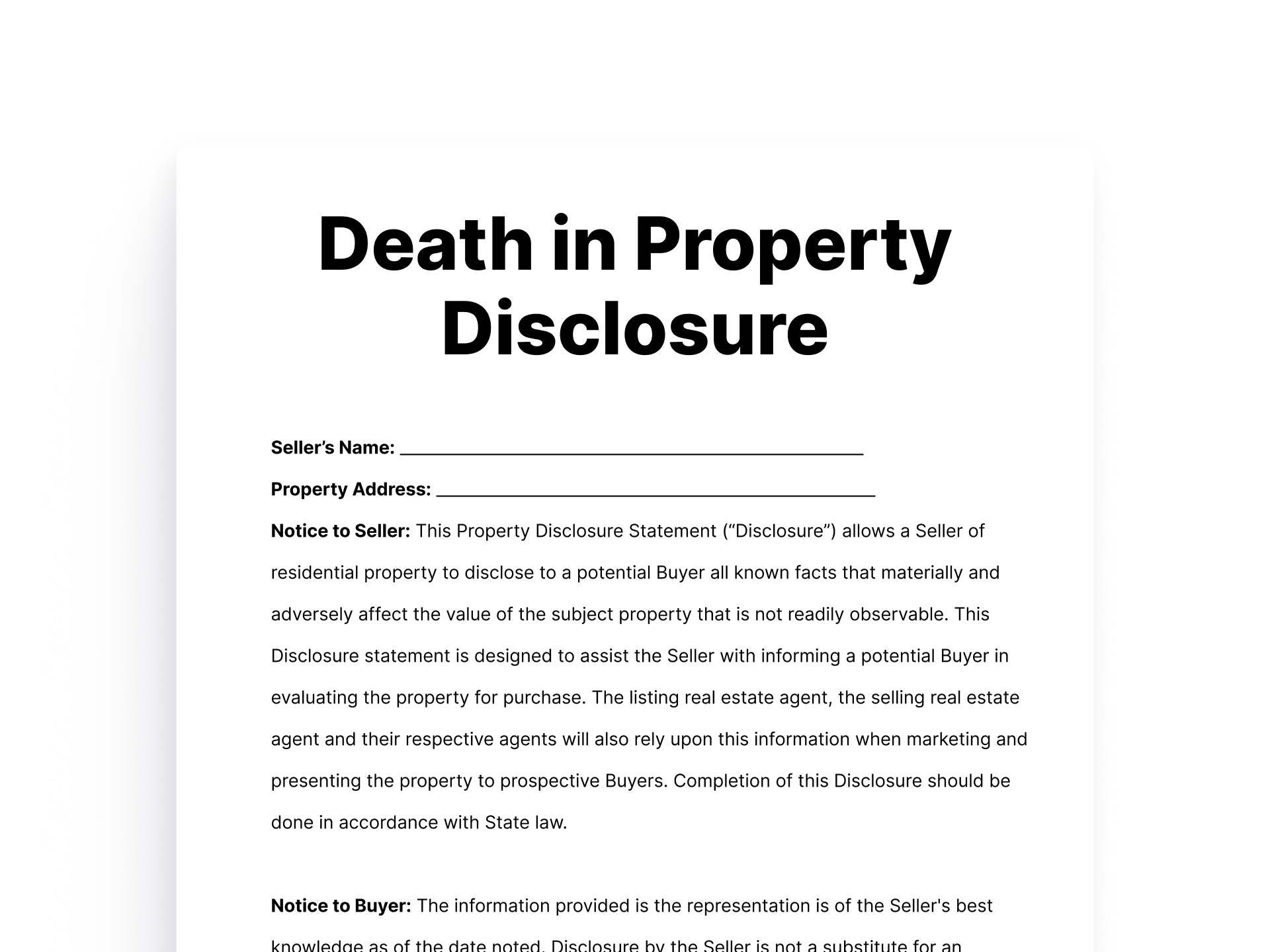
Download as PDF when complete
Death in Property Disclosure: Complete Guide for Property Owners
Whether you’re selling or renting a property where a death occurred, clear disclosure procedures prevent legal liability. Specifically, this guide covers:
- Disclosure requirements and state-specific laws
- Types of deaths requiring disclosure
- How to handle sensitive information professionally
Our guide helps you handle death disclosures with confidence while protecting your interests and respecting buyer concerns.
Understanding Death in Property Disclosure Laws
How State Laws Differ on Property Death Disclosure
Disclosure laws vary dramatically across states with no consistent federal requirements. Some states like California require disclosure of deaths occurring within three years. Other states have no requirements at all. Your obligations depend on your property location and state regulations. Additionally, even in states without mandatory disclosure, sellers must answer honestly if buyers directly ask about deaths on the property.
Natural Deaths vs. Violent Deaths in Disclosure Laws
Most disclosure laws distinguish between different types of deaths. Natural deaths from old age or illness typically don’t require disclosure in most states. However, violent deaths including homicides, suicides, and accidents often require disclosure for longer periods. Therefore, understanding your state’s specific requirements is essential before listing a property. Furthermore, some states consider properties where deaths occurred as “stigmatized properties” requiring special disclosure regardless of time elapsed.
State-Specific Death Disclosure Requirements
States With Mandatory Property Death Disclosure
State requirements vary widely. For example:
- California requires disclosure of deaths within the past three years from any cause, but does not require disclosure of deaths from AIDS or HIV status
- Alaska requires disclosure of deaths within the past one year
- South Dakota requires disclosure if deaths occurred within 12 months
States Without Specific Death Disclosure Laws
Many states including Texas, Florida, and New York have no specific requirements for natural deaths. However, these states may require disclosure of murders or violent crimes that materially affect property value. Therefore, consult a real estate attorney in your state to understand your exact obligations. Furthermore, even without legal requirements, ethical disclosure builds buyer trust and prevents future disputes. Moreover, real estate agents may have professional obligations to disclose known facts affecting property value regardless of state law.
Types of Deaths Requiring Disclosure
Violent and Unusual Deaths That Require Disclosure
Your disclosure typically needs to address violent or unusual deaths more than natural ones. Deaths that commonly require disclosure include:
- Homicides that significantly affect buyer perceptions and property value
- Suicides, particularly if they occurred recently
- Accidents like fires, carbon monoxide poisoning, or structural failures that may indicate property defects
Natural deaths from old age or illness generally don’t require disclosure in most states.
When Uncertain Whether Disclosure Is Required
Deaths from infectious diseases, drug overdoses, or criminal activity may need disclosure depending on state law and circumstances. Therefore, when uncertain, err on the side of disclosure or consult legal counsel. Furthermore, notorious deaths that received significant media coverage typically require disclosure even outside statutory time periods — buyers can easily find this information through internet searches.
How to Handle Death in Property Disclosure
What Information to Include in Your Disclosure
Approach death disclosure with honesty and sensitivity. When disclosure is required or requested, provide factual information without unnecessary graphic details. Your disclosure should include:
- That a death occurred on the property
- The approximate date of the death
- The general nature of death (natural, accident, homicide, or suicide) if required by law
Avoid sharing graphic details or speculating about circumstances unless they relate directly to property condition.
Documenting Buyer Acknowledgment of Death Disclosure
Include disclosure information in standard seller disclosure forms where states provide specific sections for this. In states without standard forms, provide written disclosure through separate letters or addendums. Therefore, always obtain signed receipts confirming buyers received and acknowledged the information. Furthermore, some sellers choose to disclose deaths voluntarily even when not legally required. Moreover, proactive disclosure demonstrates good faith and may protect you from claims that you intentionally hid material information.
Death Disclosure for Rental Properties
Landlord Obligations When Disclosing Deaths to Tenants
Landlords face different obligations than property sellers. Most states don’t require landlords to disclose previous deaths to new tenants unless deaths relate to property defects or ongoing safety issues. However, deaths from carbon monoxide leaks, fire hazards, or structural problems require disclosure since they indicate dangerous conditions. Additionally, if a death occurred due to property defects like faulty wiring or gas leaks, disclose this along with the repairs made to address the problems.
How Landlords Should Respond When Tenants Ask About Deaths
Some tenants specifically ask about deaths before signing leases. Therefore, answer honestly if asked directly — lying creates legal liability even without mandatory disclosure requirements. Furthermore, address any property damage or remediation needed after deaths, including professional cleaning or hazardous material removal. Moreover, if a property gained notoriety from a death, consider disclosing this proactively to avoid tenant disputes when they discover the history later.
Stigmatized Properties and Market Impact
How Deaths Affect Property Value
Properties where deaths occurred are often called “stigmatized properties.” These properties may face reduced market value due to buyer perceptions rather than physical defects. Your disclosure should acknowledge that some buyers may be uncomfortable with property history. Additionally, stigmatized properties often take longer to sell and may require price reductions to attract buyers.
How Market Impact Varies by Death Circumstances
Market impact depends heavily on the circumstances of the death. Specifically:
- Violent deaths typically affect value more than natural deaths
- Properties where notorious crimes occurred may experience significant value reductions
- Properties where elderly owners passed peacefully usually see minimal impact
Furthermore, cultural and religious beliefs influence how different buyers perceive this type of disclosure information. In addition, some buyers don’t mind death history while others refuse to consider such properties entirely.
Legal Consequences of Failing to Disclose
Buyer Rights When Death Disclosure Is Withheld
Failing to provide required disclosure creates serious legal liability. Buyers who discover undisclosed deaths after closing can sue for fraud, misrepresentation, and breach of contract. Additionally, buyers may seek:
- Rescission of the sale (unwinding the transaction)
- Damages for diminished property value
- Punitive damages for intentional concealment
- Reimbursement of legal fees
State fines and penalties also apply in jurisdictions with specific disclosure requirements.
Agent Liability for Failing to Disclose Property Death History
Real estate agents also face liability for failing to disclose known death information. Therefore, agents have professional obligations to disclose material facts affecting property value even when sellers are reluctant. Furthermore, the internet makes property history increasingly difficult to hide — websites track deaths, crimes, and other property events. Buyers who discover information you failed to disclose have strong legal grounds for claims regardless of whether disclosure was technically required.
Disclosing Deaths to Future Occupants
Ongoing Disclosure Obligations After a Property Death
Your disclosure responsibilities continue beyond the first sale after a death. In states requiring disclosure for specific time periods, each subsequent seller must continue disclosing until the statutory period expires. Therefore, if you purchase a property where a death occurred within the disclosure period, you must disclose this to your buyers. Additionally, keep documentation of any disclosure you received when purchasing so you can provide accurate information to future buyers.
Why Transparency Works Better Than Concealment
Some sellers worry that disclosure will prevent a sale. However, transparency often works better than concealment. Buyers frequently discover property history through internet searches or neighbors. Furthermore, many buyers don’t object to death history once informed, particularly if deaths were natural or occurred long ago. Moreover, being upfront about property history builds trust and demonstrates integrity that buyers appreciate.
Online Resources and Property History
How Buyers Research Property Death History Online
Modern buyers can easily research property history before making offers. Websites like DiedInHouse.com compile death records, crime data, and property history nationwide. Additionally, local news archives, police reports, and public records reveal property events that once remained private. Therefore, assuming buyers won’t discover undisclosed deaths is unrealistic in the digital age.
Addressing Public Property History in Your Disclosure
Some sellers include internet search results in disclosure packages showing what buyers will find online. Furthermore, addressing property history proactively prevents buyers from feeling deceived when they discover information independently. Moreover, buyers who learn about undisclosed deaths after closing have strong legal claims since they can prove the seller had knowledge that should have been disclosed. In short, honesty is always the safest and most professional approach.
Death in Property Disclosure Takeaways
Proper death disclosure practices protect property owners while respecting buyer and tenant rights. Understand your state’s specific requirements, provide honest factual information, and document buyer acknowledgment in writing. Additionally, recognize that internet resources make property history increasingly public and difficult to conceal. Overall, thorough disclosure prevents legal liability, demonstrates good faith, and helps buyers and tenants make informed decisions about property history.
FAQs
Requirements vary significantly by state — for example, California requires disclosure of deaths within the past three years, while many other states like Texas and Florida have no mandatory disclosure requirements for natural deaths.
Violent deaths such as homicides, suicides, and accidents usually require disclosure since they significantly affect buyer perceptions and property value, while natural deaths from old age or illness generally do not.
Most states don’t require landlords to disclose previous deaths unless they relate to property defects or ongoing safety issues, but landlords must answer honestly if tenants ask directly.
Buyers who discover an undisclosed death after closing can sue for fraud, misrepresentation, and breach of contract, and may seek rescission of the sale, damages, or punitive damages for intentional concealment.
Yes — websites like DiedInHouse.com, local news archives, police reports, and public records make property death history increasingly easy for buyers to discover independently.