
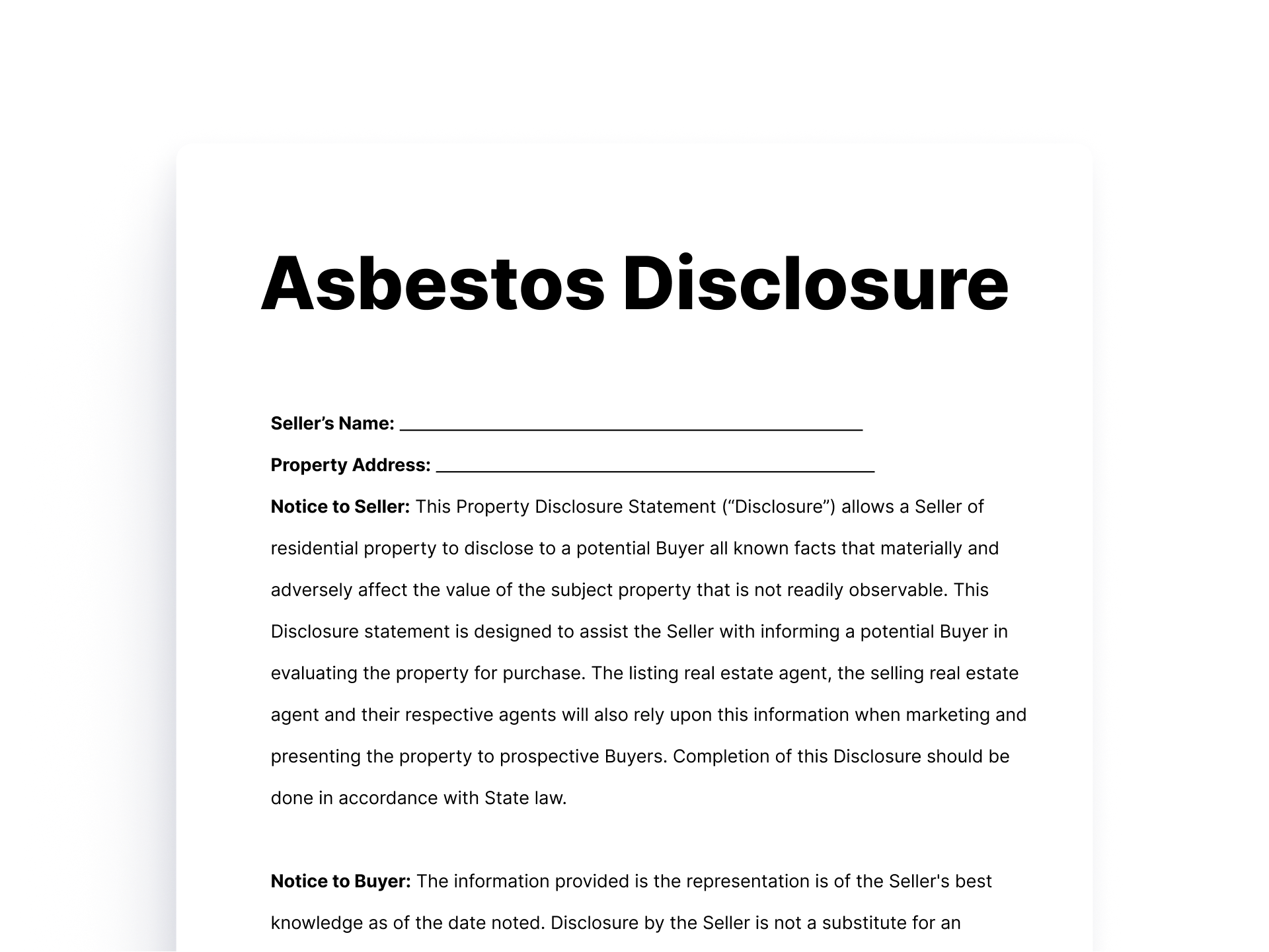
Asbestos Disclosure


(1)
A clear asbestos disclosure alerts buyers and tenants to known asbestos in a property. It protects both property owners and occupants from health and legal risks. In short, proper disclosure practices ensure you meet legal requirements while helping buyers and tenants make informed decisions about property safety.
Download as PDF when complete
Asbestos Disclosure: Complete Guide for Property Owners
Whether you’re selling or renting a property built before 1980, clear disclosure procedures prevent legal liability. Specifically, this guide covers:
- Disclosure requirements and common asbestos locations
- Testing procedures and legal obligations
- Rental and sale-specific disclosure practices
Our guide helps you handle asbestos disclosure with confidence while protecting your interests and occupant health.
Understanding Asbestos Disclosure Requirements
Federal and State Asbestos Disclosure Requirements
Asbestos disclosure requirements protect public health and inform property occupants about potential hazards. Federal law requires sellers of residential properties built before 1978 to disclose known asbestos-containing materials. Some states extend this requirement to properties built through the 1980s. Your disclosure must:
- Reveal any known asbestos presence
- Provide available inspection reports or assessments
- Give buyers time to conduct their own asbestos inspections
Additionally, landlords must disclose known asbestos in rental properties and maintain safe conditions for tenants.
Why Proper Asbestos Disclosure Protects Property Owners
Proper disclosure protects you from legal liability while demonstrating good faith transparency. Buyers and tenants have the right to know about hazardous materials in properties they occupy. Therefore, your disclosure creates legal documentation that you provided required information. Furthermore, failing to disclose known asbestos can result in lawsuits, fines, and liability for remediation costs discovered after closing.
What Is Asbestos and Why It Matters
Health Risks Associated With Asbestos Exposure
Asbestos is a naturally occurring mineral fiber that builders used extensively from the 1940s through the 1980s. They valued it for heat resistance, strength, and insulating properties. However, when asbestos materials deteriorate or suffer disturbance, microscopic fibers become airborne. Inhaling these fibers can cause serious health problems including:
- Asbestosis (lung scarring)
- Lung cancer
- Mesothelioma (a rare cancer affecting lung and abdomen linings)
These diseases often take 10 to 40 years to appear after exposure.
When Asbestos Poses a Risk to Occupants
Your disclosure must explain these health risks to buyers and tenants. Undisturbed asbestos in good condition generally poses no immediate health risk. Therefore, many properties contain asbestos materials that remain safe as long as nobody damages or disturbs them. However, renovation, demolition, or deterioration can release dangerous fibers requiring professional remediation. Moreover, buyers need this information to make informed decisions about purchase, renovation plans, and long-term health risks.
Common Locations of Asbestos in Older Properties
Where Asbestos Appears in Building Materials
Your disclosure should identify areas where asbestos commonly appears. Insulation materials often contain asbestos, including:
- Pipe, boiler, and duct insulation
- Attic, wall, and furnace insulation
Flooring materials frequently contain asbestos such as:
- Vinyl floor tiles and sheet flooring
- Adhesives, mastics, and vinyl flooring backing
Additionally, roofing and siding materials may include asbestos cement shingles, roofing felt, and siding shingles.
Other Common Asbestos Locations in Properties
Other locations where asbestos commonly appears include:
- Textured paints and patching compounds
- Popcorn ceilings and textured walls
- Cement products like transite panels
- Fire-resistant materials around furnaces and wood stoves
- Acoustic ceiling tiles
Therefore, treat properties built before 1980 as containing asbestos until testing proves otherwise. Furthermore, your disclosure should note that many building materials may contain asbestos even if they show no visible signs. Only professional inspection can confirm presence or absence definitively.
Asbestos Testing and Inspection
How Professional Asbestos Testing Works
Your disclosure should include results from any asbestos testing previously conducted on the property. Professional asbestos inspectors collect samples of suspect materials and send them to certified laboratories for analysis. Testing typically costs $400 to $800 depending on property size and number of samples. Additionally, inspectors examine accessible areas and identify materials likely to contain asbestos based on age and appearance.
Never collect asbestos samples yourself — disturbing materials releases dangerous fibers. Therefore, always hire certified asbestos inspectors with proper training and equipment. Some states require specific licensing for asbestos inspectors.
Using Previous Inspection Reports in Your Disclosure
If previous owners conducted asbestos testing, request copies of inspection reports for your disclosure documentation. These reports detail where inspectors found asbestos, the condition of materials, and recommendations for management or removal. Moreover, buyers often conduct their own asbestos inspections during due diligence, especially for properties built before 1980. Furthermore, having existing reports ready speeds up the process and demonstrates transparency.
Asbestos Disclosure for Home Sales
Legal Requirements for Seller Asbestos Disclosure
Home sale disclosure follows specific legal requirements that vary by state. Federal regulations require sellers to complete disclosure forms indicating whether they have knowledge of asbestos-containing materials. Your disclosure must be honest about what you know, even if that knowledge is limited. Additionally, provide any available records including:
- Previous inspection reports and testing results
- Abatement or encapsulation documentation
- Maintenance records for asbestos-containing materials
Giving Buyers Time to Inspect for Asbestos
Most states require sellers to give buyers at least 10 days to conduct asbestos inspections before finalizing purchases. Buyers can waive this period, but sellers must still provide disclosure forms and available documentation. Therefore, prepare your disclosure early in the listing process. Furthermore, some sellers conduct pre-listing asbestos inspections to identify issues before buyers discover them. This proactive approach demonstrates transparency and gives you more control over timing and negotiations.
Asbestos Disclosure for Rental Properties
What Landlords Must Disclose to Tenants
Landlord disclosure requirements protect tenant health and safety. Federal law requires landlords to disclose known asbestos in rental properties built before 1978. Your rental disclosure should include:
- Written notice of known asbestos locations
- Copies of any inspection or testing reports
- Information about the condition of asbestos materials
- Details of any encapsulation or removal work completed
- Tenant obligations regarding asbestos, such as reporting damage
Additionally, landlords must maintain asbestos-containing materials in good condition and monitor them regularly for deterioration.
Keeping Rental Asbestos Disclosure Records Current
Include asbestos disclosure information in lease agreements or separate forms that tenants sign. Moreover, provide updated disclosure if new asbestos surfaces or if remediation work occurs during tenancy. Therefore, always address damaged asbestos promptly through professional remediation. Furthermore, some states require landlords to post notices in common areas of multi-family buildings alerting all residents to asbestos presence and locations.
What to Disclose When Asbestos Is Present
Describing Asbestos Location and Condition
Your disclosure must provide specific information when asbestos is present. Identify the location of asbestos-containing materials as clearly as possible — for example, “popcorn ceiling in living room” or “pipe insulation in basement.” Describe the condition of materials using terms like:
- “Good condition and intact”
- “Showing wear or damage”
- “Deteriorating and potentially releasing fibers”
Additionally, explain any management actions taken, including encapsulation, enclosure, or professional removal and disposal.
Including Professional Recommendations and Documentation
Include professional recommendations from inspectors or abatement contractors. Therefore, provide copies of all inspection reports, lab test results, contractor invoices, and clearance testing showing successful removal. Furthermore, explain any ongoing monitoring required for asbestos materials still in place. Moreover, note any areas that the inspector did not test or inspect so buyers understand the full scope of known and unknown information.
Legal Consequences of Failing to Disclose Asbestos
Penalties for Non-Disclosure of Asbestos
Failing to provide proper disclosure creates serious legal liability. Sellers who knowingly hide asbestos presence face lawsuits for fraud, breach of contract, and negligent misrepresentation. Buyers can seek damages including:
- Remediation costs and diminished property value
- Medical monitoring expenses
- Punitive damages for intentional concealment
Civil penalties for violations can reach $16,000 per violation under federal regulations.
What Sellers Must Know About Asbestos Liability
Criminal penalties may apply for intentional violations involving significant health risks. Therefore, always disclose known asbestos honestly, even if you worry it will affect your sale price. Furthermore, “I don’t know” is an acceptable answer if you genuinely lack knowledge. However, you must disclose suspicions and give buyers the opportunity to investigate. Moreover, sellers bear responsibility for asbestos they know about or should reasonably know about through property ownership.
Managing Asbestos in Your Property
Options for Managing Known Asbestos
Your disclosure may need to address how you manage known asbestos. Undisturbed asbestos in good condition often requires no immediate removal. Therefore, many property owners leave materials in place with regular monitoring. This approach costs less than removal while remaining safe when materials stay intact. Additionally, encapsulation involves sealing asbestos materials with special coatings that prevent fiber release — a good option for materials in good condition.
Professional Asbestos Removal and Documentation
Professional removal eliminates asbestos completely but costs significantly more. Certified abatement contractors handle removal using:
- Special containment procedures
- Proper disposal at approved facilities
- Clearance testing to verify complete removal
Removal costs typically range from $1,500 to $3,000 for small projects and up to $15,000 or more for whole-house abatement. Furthermore, document any management approach in your disclosure, including contractor names, work dates, methods, and results. Moreover, keep all records permanently for future disclosure to subsequent buyers or tenants.
Asbestos Disclosure Takeaways
Proper asbestos disclosure protects property owners while ensuring buyer and tenant safety. Understand federal and state requirements for your property’s age and transaction type. Identify common asbestos locations, conduct professional testing when needed, and provide honest, complete disclosure. Additionally, include all available inspection reports, testing results, and remediation documentation. Overall, thorough disclosure prevents legal liability, demonstrates good faith, and helps buyers and tenants make informed decisions about property safety.
FAQs
An asbestos disclosure is a legal document that informs buyers and tenants of known asbestos presence in a property, and it is required for most residential properties built before 1978 under federal law.
Asbestos is commonly found in pipe insulation, vinyl floor tiles, popcorn ceilings, roofing materials, textured paints, and cement products in properties built before 1980.
Yes — most states require sellers to give buyers at least 10 days to conduct their own asbestos inspections before finalizing the purchase, though buyers can waive this period.
Sellers who hide known asbestos can face lawsuits for fraud and negligent misrepresentation, with civil penalties reaching up to $16,000 per violation under federal regulations.
Not always — undisturbed asbestos in good condition can safely remain in place with regular monitoring, though professional removal or encapsulation may be necessary if materials are damaged or deteriorating.