
Appliance Disclosure


(1)
A clear appliance disclosure protects property owners and helps buyers or tenants understand exactly what’s included. It also prevents disputes over which items stay with the property, their condition, and who owns them.
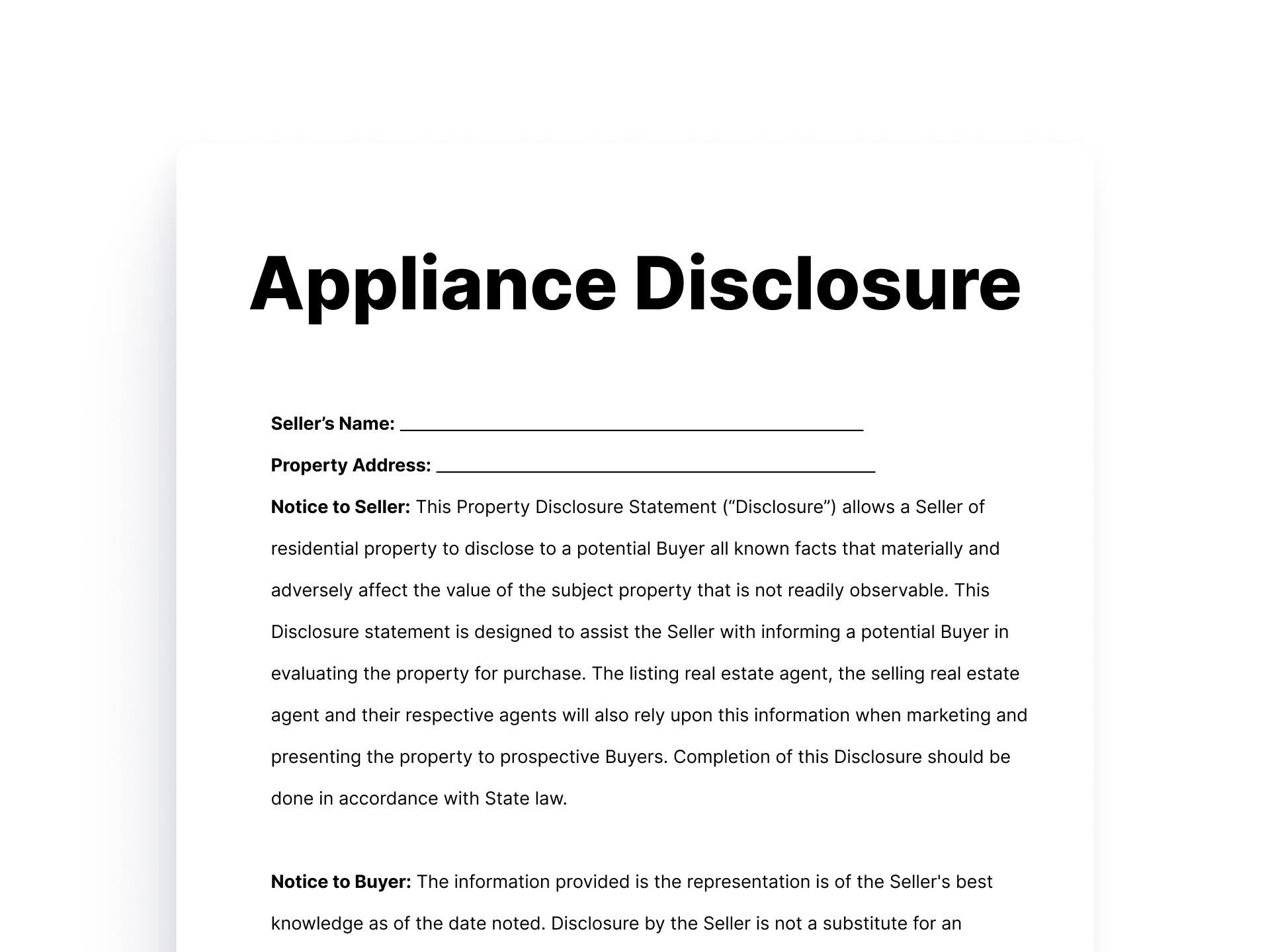
Download as PDF when complete
Appliance Disclosure: Complete Guide for Property Owners
Whether you’re selling a home, renting a property, or transferring ownership, a clear disclosure process prevents misunderstandings. Specifically, this guide covers:
- Disclosure requirements and included appliances
- Condition documentation and ownership verification
- Rental and sale-specific disclosure practices
Our guide helps you handle disclosures with confidence and protect your interests throughout the transaction.
Understanding Appliance Disclosure Requirements
State Requirements for Property Appliance Disclosure
Disclosure requirements vary by state and transaction type. Most states require sellers to disclose which appliances come with the home and any known condition issues. Your disclosure should clarify whether each appliance is:
- Included in the sale
- Sold “as-is” without warranties
- Excluded from the transaction
Additionally, rental properties need clear disclosure in lease agreements about which appliances the landlord provides and who handles repairs.
Why Proper Disclosure Protects Property Owners
Proper disclosure protects you from legal disputes and warranty claims after closing or move-in. Buyers and tenants have the right to know what appliances they receive and their condition. Therefore, your disclosure creates a clear record that both parties acknowledge during the transaction. Furthermore, complete disclosure demonstrates good faith and professional property management.
What Appliances to Include in Your Property Disclosure
Major Appliances to List in Every Disclosure
Your disclosure should cover all major appliances that may convey with the property. Common items include:
- Refrigerator, stove, and oven
- Dishwasher and built-in microwave
- Garbage disposal and trash compactor
- Washer and dryer if provided
- HVAC systems and water heater
Specify whether each appliance is included, excluded, or negotiable. For example, some sellers take refrigerators while others leave them. Your disclosure should clearly state the status of each item to prevent assumptions and disputes.
Documenting Appliance Details and Model Information
Include model numbers, brand names, and approximate ages when possible. In addition, this information helps buyers and tenants understand exactly what they’re getting. Moreover, detailed records support warranty claims and future repairs.
Documenting Appliance Condition in Your Disclosure
How to Describe Appliance Condition Accurately
Document the condition of all included appliances honestly. Use clear terms like “excellent,” “good,” “fair,” or “poor” based on age, appearance, and functionality. Note any known defects such as:
- Appliances not working properly
- Missing parts or accessories
- Cosmetic damage like dents or scratches
- Unusual noises or performance issues
Also, disclose if you have never tested an appliance or are uncertain about its working condition.
Testing and Photographing Appliances Before Disclosure
Take photos of all included appliances showing their overall condition and any visible damage. Visual documentation prevents disputes over pre-existing conditions. Furthermore, test all appliances before completing your disclosure:
- Run the dishwasher through a full cycle
- Check that oven and stove burners heat properly
- Verify the refrigerator cools adequately
- Test the garbage disposal
Therefore, accurate condition disclosure protects you from repair demands after the transaction closes.
Appliance Ownership and Warranty Documentation
Clarifying Ownership Status in Your Disclosure
Your disclosure must clarify appliance ownership. Some appliances the owner holds outright, while others may be leased or financed. Disclose any leased appliances — such as water heaters or water softeners — that require ongoing payments or return at lease end. Additionally, note financed appliances with outstanding balances that buyers must pay off or assume.
Providing Warranty Information to Buyers and Tenants
Provide available warranty information for all included appliances. Your disclosure should include:
- Manufacturer warranty documents showing coverage and expiration dates
- Extended warranty details if purchased
- Service contract information if applicable
- Receipts for recent repairs or maintenance
Moreover, some warranties transfer to new owners while others do not. Therefore, clarify warranty transfer eligibility so buyers understand their coverage after closing.
Appliance Disclosure for Rental Properties
What Landlords Must Disclose to Tenants
Rental property disclosure serves different purposes than sale disclosures. Lease agreements should list all landlord-provided appliances, including:
- Refrigerator, stove, and dishwasher
- Microwave and garbage disposal
- Washer and dryer if included
Additionally, specify landlord responsibilities for appliance repairs and replacements. Some landlords repair or replace broken appliances, while others provide them “as-is” with no repair obligations.
Move-In Documentation for Rental Appliance Disclosure
Document appliance condition at move-in using inspection reports and photos. Note any existing damage or defects clearly. Furthermore, have tenants sign an acknowledgment confirming they received and reviewed the appliance list. This protects you from disputes over whether appliances worked at move-in or whether damage occurred during the tenancy.
Appliance Disclosure for Home Sales
Seller Disclosure Requirements for Home Appliances
Home sale disclosure typically requires more detail than rental disclosures. Most states include specific appliance questions on seller property disclosure forms. Your disclosure should answer:
- Whether appliances are included in the sale
- Known defects or problems with any appliance
- Age of major appliances if known
- Any repairs or replacements in recent years
Being Honest About Appliance Conditions in Home Sales
Be truthful about appliance conditions even if issues affect negotiations. Buyers can sue sellers who hide known defects or make false statements. Therefore, disclose problems honestly and let buyers decide whether to accept conditions, request repairs, or negotiate price adjustments. Additionally, some sellers offer home warranties covering appliances for the first year, which gives buyers peace of mind and protects sellers from post-closing repair demands.
Special Considerations for Built-In Appliances
Which Built-In Appliances Stay With the Property
Built-in appliances create unique considerations. Built-in microwaves, dishwashers, and trash compactors typically stay with the property since removing them damages cabinetry. Additionally, built-in range hoods, cooktops, and wall ovens are usually fixtures that convey with the home. Your disclosure should clearly identify all built-in appliances and confirm their included status.
Disclosing High-Value Built-In Appliances
Custom or high-end built-in appliances may significantly affect property value. Therefore, document these items carefully, including:
- Brand names and model numbers
- Special features and approximate replacement values
Furthermore, some buyers specifically seek properties with luxury appliances like Sub-Zero refrigerators or Wolf ranges. Highlighting these features in your disclosure attracts the right buyers while setting clear expectations.
Handling Appliance Negotiations
Common Appliance Negotiation Scenarios
Your disclosure facilitates negotiations between buyers and sellers or landlords and tenants. Buyers may request appliances the seller planned to remove. Alternatively, they might ask for price reductions or repairs for items in poor condition. Common negotiation scenarios include:
- Sellers agreeing to leave appliances they planned to take
- Buyers requesting repairs or replacements for broken items
- Price adjustments reflecting appliance condition or absence
- Credits for buyers to purchase their own appliances
Documenting Agreed Appliance Terms in Writing
Document all negotiated agreements in writing through contract addendums or lease amendments. Moreover, this prevents misunderstandings about what parties agreed to regarding appliances and their condition. In short, written agreements protect everyone involved in the transaction.
Appliance Disclosure Takeaways
A complete appliance disclosure protects property owners and sets clear expectations for buyers and tenants. Document all major appliances, describe conditions honestly, clarify ownership status, and provide warranty information. Overall, thorough documentation prevents disputes, demonstrates good faith, and protects you from legal liability after closing or move-in.
FAQs
An appliance disclosure is a document that clarifies which appliances are included with a property, their condition, and ownership status, protecting both parties from disputes after closing or move-in.
Your disclosure should cover all major appliances including the refrigerator, stove, oven, dishwasher, built-in microwave, garbage disposal, washer, dryer, HVAC systems, and water heater.
Generally yes — built-in appliances like dishwashers, microwaves, wall ovens, and range hoods are considered fixtures that stay with the property since removing them would damage the cabinetry.
Buyers can sue sellers who intentionally conceal known appliance defects or make false statements on disclosure forms, so it is always safer to disclose problems honestly and let buyers negotiate accordingly.
Landlords should list all provided appliances in the lease agreement, document their condition with photos at move-in, and have tenants sign an acknowledgment to prevent disputes over damage or condition during tenancy.