A Landlord’s Guide To Eviction (Summary Process)
To evict a tenant in Connecticut, landlords must follow a very specific legal process called “Summary Process” to regain possession of their property. The State of Connecticut Judicial Branch’s guide, “A Landlord’s Guide to Eviction,” explains this procedure in clear terms. Below is an overview of the main steps every landlord should understand before initiating an eviction.
1. The Notice to Quit
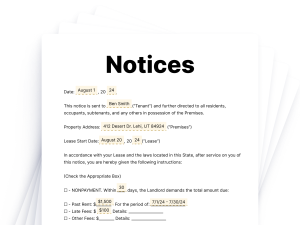
The eviction process begins with serving a Notice to Quit (form JD-HM-7) — an official document informing the tenant that they must move out by a certain date.
- The notice must list the tenant’s full name and address, including apartment or floor numbers.
- It must state at least one valid reason for eviction, such as nonpayment of rent or lease expiration.
- The tenant must be given at least three full days to vacate after the notice is served.
- In month-to-month or week-to-week tenancies, there are additional timing rules about when the notice may be served.
A state marshal usually delivers this notice, and landlords should keep the original with proof of service for the court.
2. Filing the Summons and Complaint
If the tenant does not leave by the date stated in the Notice to Quit, the landlord can proceed with a Summons (JD-HM-32) and Complaint (JD-HM-8). These documents must be reviewed and signed by the court clerk and include a Right to Counsel (RTC) notice informing tenants of free legal help options.
After service by a state marshal, the landlord must file the paperwork with the court at least four days before the return date, along with the required filing fee.
3. Default Judgments
If the tenant does not file an Appearance within two days after the return date, the landlord can request a Default Judgment for Failure to Appear (JD-HM-9) and submit a Military Affidavit and CARES Act Affidavit of Compliance. If the tenant appears but does not respond to the complaint, the landlord can file a Default Judgment for Failure to Plead (JD-HM-10).
4. Trials and Mediation
When tenants file an Answer or Special Defense, the case moves to trial. Before trial, both parties usually meet with a Housing Mediator to explore settlement options. If no agreement is reached, the case proceeds to trial, where the judge reviews evidence and testimony before making a decision.
Landlords are encouraged to bring all relevant documents, receipts, and witnesses. Subpoenas can be issued for witnesses who refuse to appear, but must be served at least 18 hours before the hearing.
5. Execution of Judgment
If the court rules in favor of the landlord, the tenant has five days to vacate or request additional time. If the tenant fails to move out, the landlord can request a Summary Process Execution (JD-HM-2) — authorizing a state marshal to remove the tenant and their belongings within at least 24 hours. If a tenant violates a payment agreement from a stipulated judgment, the landlord must file an Affidavit of Non-Compliance (JD-HM-22).
6. Legal Assistance and Resources
The guide emphasizes that clerks can assist self-represented landlords with procedural questions, but they cannot provide legal advice. For legal help, landlords and tenants can contact a Lawyer Referral Service or explore resources such as:
- CT Right to Counsel (CT-RTC) – provides free legal representation for income-eligible tenants facing eviction. Website: evictionhelpct.org
- Online legal help: ctlawhelp.org/eviction
- Eviction form assistance: cteviction.guide
- 2-1-1 Helpline: Offers referrals for housing, utilities, and food support.
- UniteCT Eviction Prevention Fund: Helps tenants apply for rental assistance.
Eviction is a serious legal process that requires strict compliance with Connecticut’s summary process laws. The Connecticut Judicial Branch’s guide provides landlords with the roadmap to navigate this process properly, but whenever possible, consulting an attorney remains the best course of action to ensure the eviction is handled lawfully and efficiently.
Official Connecticut Rental Forms