
Kansas Real Estate Purchase Agreement
A Kansas real estate purchase agreement creates a legally binding contract that outlines comprehensive terms and conditions for real property sales from sellers to buyers. Key components of this Kansas real estate purchase agreement include sales prices, financing options, and closing dates essential for transactions. Moreover, once both parties sign the document, the agreement becomes fully enforceable under Kansas law.
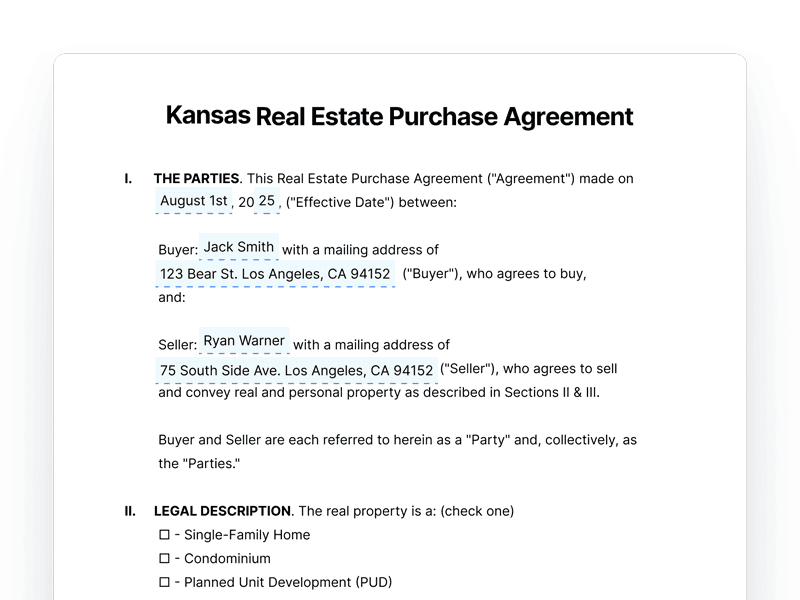
Download as PDF when complete


(No Ratings Yet)


Understanding Kansas Real Estate Purchase Agreement Requirements
Kansas maintains comprehensive disclosure requirements and specific contract standards for residential real estate transactions throughout the state. Therefore, buyers and sellers must understand these extensive obligations when completing a Kansas real estate purchase agreement. Additionally, Kansas enforces mandatory seller disclosure requirements that contrast with caveat emptor principles found in other states.
Kansas Seller Disclosure Requirements
Material Defect Disclosure Obligations
Mandatory Disclosure Standards Kansas requires sellers to disclose any material defects in properties throughout real estate transactions comprehensively. This requirement contrasts with some states where caveat emptor principles apply, placing responsibility on buyers to discover defects through inspection. Furthermore, Kansas places primary disclosure responsibility on sellers to protect buyer interests effectively.
Comprehensive Disclosure Framework Kansas disclosure requirements provide extensive buyer protection by mandating seller disclosure of property conditions and defects. This framework ensures buyers receive essential property information before making purchase commitments. Moreover, comprehensive disclosure standards support informed decision-making throughout Kansas real estate purchase agreement processes.
Required Kansas Purchase Agreement Disclosures
Federal Safety Requirements
Lead-Based Paint Disclosure Standards Federal law requires Kansas sellers to provide lead-based paint disclosures for homes built before 1978. These disclosures must provide information about any lead-based paint used on premises comprehensively. Moreover, lead-based paint disclosures protect families from potential health hazards throughout transactions.
Lead Disclosure Components
Presence Information Requirements Kansas sellers must document any known lead-based paint presence within properties for buyer safety effectively. This documentation must accompany purchase agreement processes throughout transactions. Furthermore, comprehensive lead information helps buyers make informed decisions about property safety and remediation needs.
Comprehensive Property Condition Documentation
Seller Property Condition Disclosure Statement Kansas real estate purchase agreements must include comprehensive Seller Property Condition Disclosure Statements covering multiple property aspects. These detailed statements provide buyers with essential information about property conditions and potential issues. Additionally, comprehensive disclosure statements support informed decision-making throughout Kansas transactions.
Physical Condition Assessment
Property Condition Documentation Kansas disclosure statements must address the physical condition of properties including structural, mechanical, and systems information. These comprehensive assessments help buyers understand property maintenance needs and potential issues. Moreover, physical condition documentation supports accurate property valuation and buyer preparation.
Material Defect Identification Kansas sellers must disclose any material defects that could affect property values or buyer safety throughout transactions. Material defect disclosure includes structural problems, system failures, and safety hazards affecting properties. Furthermore, comprehensive defect identification protects buyers from unexpected issues after closing.
Performance and Title Disclosures
Seller Performance Limitations Kansas disclosure statements must address any material limitations in sellers’ ability to perform according to agreement terms. These limitations help buyers understand potential transaction complications or delays throughout processes. Additionally, performance limitation disclosure supports realistic transaction planning and expectation management.
Title Defect Documentation Kansas requires disclosure of any material defects in property titles that could affect ownership rights or transfer processes. Title defect disclosure protects buyers from ownership complications after closing completion. Moreover, comprehensive title information supports clear property transfer throughout transactions.
Environmental and Safety Disclosures
Environmental Hazard Documentation Kansas real estate purchase agreements must include disclosure of any environmental hazards affecting properties throughout transactions. Environmental hazard information helps buyers understand potential health risks and remediation needs effectively. Furthermore, comprehensive environmental disclosure supports family safety planning and property evaluation.
Radon Disclosure Statement Requirements Kansas requires Radon Disclosure Statements that address dangers associated with radon gas exposure throughout properties. These statements help buyers understand radon risks and testing procedures for property safety. Moreover, radon disclosure supports informed decision-making about health protection and mitigation needs.
Radon Risk Communication
Health Risk Information Kansas radon disclosures must communicate health risks associated with radon gas exposure clearly to buyers throughout transactions. This information helps buyers understand potential dangers and protective measures available for family safety. Additionally, health risk communication supports comprehensive property safety evaluation.
Neighborhood and Assessment Disclosures
Proximity to Convicts Disclosure Kansas requires Proximity to Convicts Disclosure that informs buyers about convicted persons near properties throughout transactions. This disclosure helps buyers understand neighborhood safety considerations and make informed decisions about property suitability. Moreover, proximity information supports comprehensive area evaluation for families.
Special Assessment Disclosure Requirements When applicable, Kansas real estate purchase agreements must include Special Assessment Disclosures detailing any special assessments or fees related to properties. These disclosures help buyers understand additional financial obligations beyond standard property costs. Furthermore, special assessment information supports accurate budgeting and financial planning.
Assessment Documentation Standards
Fee Structure Information Kansas special assessment disclosures must provide detailed information about assessment amounts, payment schedules, and purposes throughout transactions. This comprehensive information helps buyers understand complete property-related expenses effectively. Additionally, fee structure documentation supports accurate cost analysis and budget planning.
Kansas Contract Development Standards
Essential Contract Elements
Terms and Conditions Documentation Kansas real estate purchase agreements must outline comprehensive terms and conditions for real property sales including all essential transaction elements. Sales prices, financing options, and closing dates require precise specification throughout agreements. Moreover, clear contract terms prevent disputes and support successful transaction completion.
Party Information Requirements Kansas contracts must include accurate identification of all parties involved in transactions with complete contact information. Proper party documentation establishes contract validity and enforceability throughout processes. Furthermore, accurate party information prevents confusion and supports smooth transaction processing.
Contract Preparation Standards
Template Utilization Benefits Real estate professionals recommend using standardized Kansas real estate purchase agreement templates for transaction efficiency and completeness. These templates ensure contracts include all required legal elements and state-specific disclosure provisions. Moreover, proper templates help prevent omissions that could invalidate agreements throughout Kansas.
Professional Oversight Advantages Experienced parties should seek professional legal guidance when preparing Kansas contracts to ensure compliance with state requirements. Attorney review helps identify potential issues and ensures proper documentation throughout processes. Additionally, professional involvement provides comprehensive protection for complex transactions.
Kansas Purchase Agreement Legal Framework
Enforceability Standards
Contract Binding Requirements Kansas real estate purchase agreements become enforceable once both parties sign documents completely, establishing mutual legal obligations. Proper execution creates binding commitments that both buyers and sellers must fulfill according to agreed terms. Furthermore, enforceable agreements provide legal protection for both parties throughout transactions.
Legal Compliance Standards Kansas contracts must comply with specific state statutes governing real estate transactions and disclosure requirements comprehensively. These compliance standards protect both parties from potential legal disputes throughout processes. Moreover, legal adherence ensures valid agreement creation within Kansas regulatory framework.
Professional Support and Best Practices
Real Estate Professional Guidance
Agent Support Benefits Licensed Kansas real estate agents understand state-specific disclosure requirements and can guide parties through complex transaction processes effectively. Professional agents help ensure comprehensive disclosure compliance while managing transaction timelines efficiently. Therefore, agent involvement often leads to smoother processes and better outcomes.
Market Knowledge Advantages Kansas real estate professionals provide valuable local market insights that support informed decision-making throughout transactions. Professional market analysis helps parties understand pricing trends and neighborhood conditions effectively. Moreover, local expertise enhances negotiation strategies and transaction success rates.
Legal Counsel Integration
Attorney Review Benefits Complex Kansas real estate purchase agreement transactions benefit from attorney review to ensure complete legal compliance and protection. Legal counsel helps identify potential issues before they become expensive problems after closing. Furthermore, attorney involvement provides comprehensive protection for high-value or complex transactions throughout Kansas.
Disclosure Compliance Verification Legal professionals ensure Kansas real estate purchase agreements include all required disclosures and meet state regulatory standards. Attorney review verifies comprehensive disclosure integration and contract terms throughout transactions. Additionally, legal verification protects party interests and ensures enforceable agreement creation.
Due Diligence and Transaction Management
Buyer Protection Standards
Comprehensive Property Investigation Kansas buyers benefit from thorough property investigations beyond required seller disclosures to identify potential issues comprehensively. Professional inspections help verify seller disclosure accuracy and identify additional concerns effectively. Moreover, comprehensive due diligence supports informed decision-making about property suitability and value.
Disclosure Verification Procedures Kansas buyers should verify seller disclosures through independent inspections and professional evaluations when possible. Verification procedures help confirm property conditions and identify potential issues requiring attention. Furthermore, disclosure verification provides additional buyer protection throughout transaction processes.
Documentation and Record Keeping
Comprehensive Documentation Standards Both buyers and sellers should maintain organized records of all Kansas real estate purchase agreement documents and disclosures throughout processes. Complete documentation supports transaction success and provides future reference materials effectively. Additionally, organized records demonstrate professional accountability and regulatory compliance.
Professional Communication Management Effective communication between all parties supports successful Kansas real estate purchase agreement completion and closing processes. Clear communication about disclosures, timelines, and requirements prevents misunderstandings throughout transactions. Moreover, professional communication demonstrates accountability and commitment to transaction success.
Understanding Kansas comprehensive real estate purchase agreement requirements and extensive disclosure obligations empowers buyers and sellers to navigate transactions confidently while protecting their interests throughout the property ownership transfer process in this agricultural and growing metropolitan state.
Statutes
- Kan. Stat. § 58-2505 – Termination of tenancy from year-to-year; notice
- Kan. Stat. § 58-2507 – Termination of lease for three months or longer; notice; effect of payment of rent
- Kan. Stat. § 58-2508 – Termination of tenancy of less than three months for nonpayment of rent; notice
- Kan. Stat. § 58-2509 – Notice to quit not necessary, when
- Kan. Stat. § 58-2542 – Jurisdiction of courts; procedure
- Kan. Stat. § 58-2545 – Rental agreement; terms and conditions in absence thereof
- Kan. Stat. § 58-2546 – Same; agreement not signed and delivered given effect by certain actions; limitation on term
- Kan. Stat. § 58-2547 – Same; prohibited terms and conditions; damages
- Kan. Stat. § 58-2550 – Security deposits; amounts; retention; return; damages for noncompliance
- Kan. Stat. § 58-2551 – Disclosures required of landlord or person authorized to enter rental agreement; person failing to comply becomes landlord’s agent for certain purposes
- Kan. Stat. § 58-2553 – Duties of landlord; agreement that tenant perform landlord’s duties; limitations
- Kan. Stat. § 58-2555 – Duties of Tenant
- Kan. Stat. § 58-2557 – Landlord’s right to enter; limitations
- Kan. Stat. § 58-2558 – Use of premises; extended absence of tenant
- Kan. Stat. § 58-2559 – Material noncompliance by landlord; notice; termination of rental agreement; limitations; remedies; security deposit
- Kan. Stat. § 58-2563 – Unlawful removal or exclusion of tenant; diminished services; damages; security deposit
- Kan. Stat. § 58-2564 – Material noncompliance by tenant; notice; termination of rental agreement; limitations; nonpayment of rent; remedies
- Kan. Stat. § 58-2565(c) – Extended absence of tenant; damages; entry by landlord; abandonment by tenant, when; reasonable effort to rent required; termination of rental agreement, when; personal property of tenant; disposition, procedure; proceeds; rights of person receiving property
- Kan. Stat. § 58-2565(d) – Extended absence of tenant; damages; entry by landlord; abandonment by tenant, when; reasonable effort to rent required; termination of rental agreement, when; personal property of tenant; disposition, procedure; proceeds; rights of person receiving property
- Kan. Stat. § 58-2570(a) – Termination of tenancy; notice; holdover by tenant; remedies; notice obligating tenant beyond terms of lease agreement, form
- Kan. Stat. § 58-2570(b) – Termination of tenancy; notice; holdover by tenant; remedies; notice obligating tenant beyond terms of lease agreement, form
- Kan. Stat. § 58-2572 – Certain retaliatory actions by landlord prohibited; remedies; increased rent, when; action for possession, when
- Kan. Stat. § 60-511 – Actions limited to five years
- Kan. Stat. § 60-512 – Actions limited to three years
- Kan. Stat. § 60-2610(a)(1)(2) – Returned Check Fees
- Kan. Stat. § 58-2548 – Notice of date/time of Move-Out Inspection
- K.S.A. § 58-2511 – Subleasing
Sample
FAQs
A Kansas residential purchase agreement includes the sales price, financing options, closing date, and outlines the rights and responsibilities of both the seller and buyer. Once signed, it becomes a legally binding contract.
Sellers in Kansas must provide several disclosures, including the Seller Property Condition Disclosure Statement, Lead-Based Paint Disclosure for homes built before 1978, Radon Disclosure Statement, and Convicted Persons Disclosure Statement. They must also disclose any material defects and environmental hazards.
Yes, Kansas law requires sellers to disclose any material defects in the property. This is different from some states where buyers assume responsibility for identifying defects.
The effective date of a real estate contract in Kansas is the date when both the buyer and seller agree to the terms and execute the contract. All obligations become binding on this date.
A seller can cancel a real estate contract in Kansas if the buyer fails to meet agreed-upon contingencies, such as financial, appraisal, or inspection contingencies. Unique situations, like estate sales, may also provide additional cancellation options.
The Lead-Based Paint Disclosure is required for homes built before 1978 and informs buyers about the presence of lead-based paint and associated risks. It must include relevant data and educational materials regarding lead exposure.
To fill out a real estate contract in Kansas, download a customizable template and complete the necessary information, including the names of the parties, property address, purchase price, and payment terms. Ensure all details are accurate and clear.
The Seller Property Condition Disclosure Statement must include the physical condition of the property, any material defects, limitations in the seller’s ability to perform, defects in the title, and any environmental hazards.