
Alaska Rea Estate Purchase Agreement
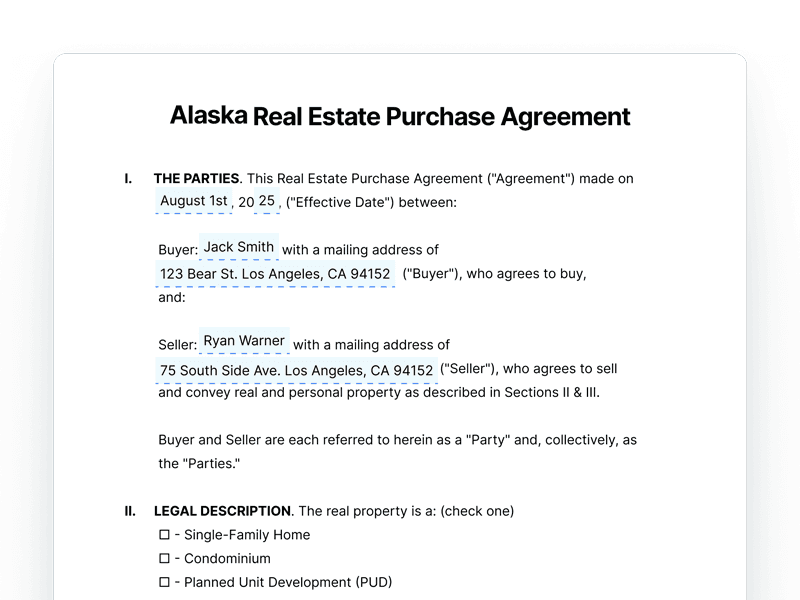
An Alaska Real Estate Purchase Agreement, commonly known as a “Contract for Sale and Purchase of Real Estate,” creates a legally binding contract that allows buyers to submit formal offers for purchasing real estate. This comprehensive offer transforms into a binding agreement once sellers sign the document, thereby indicating their acceptance of all proposed terms. Therefore, both parties must understand their obligations before executing this critical legal commitment.
Download as PDF when complete


(No Ratings Yet)


Alaska’s Comprehensive Seller Disclosure Requirements
Alaska maintains robust seller disclosure requirements that provide significant buyer protection throughout real estate transactions. Consequently, sellers must understand their legal obligations to avoid potential liability after closing.
Mandatory Property Defect Disclosure
Legal Obligation Standards Alaska law requires sellers to disclose any material defects within properties to potential buyers. Furthermore, this comprehensive obligation protects buyers by ensuring they receive essential information about property conditions before making purchase decisions.
Standardized Disclosure Process Sellers typically fulfill disclosure obligations through standardized forms mandated by Alaska state law. However, buyers and sellers can mutually agree to waive disclosure requirements, although sellers remain legally obligated to disclose all known property defects regardless of waiver agreements.
Ongoing Disclosure Responsibilities
Amendment Requirements When sellers discover defects after delivering initial disclosure forms, they must provide amendments specifying newly discovered issues. Nevertheless, sellers do not need to issue completely new disclosure forms when providing additional defect information.
Continuous Obligation Sellers maintain ongoing disclosure obligations throughout transaction periods until closing completion. Therefore, prompt communication about newly discovered issues protects sellers from future liability claims.
Required Disclosure Documentation
Residential Real Property Transfer Disclosure Statement
Mandatory Completion Alaska sellers must complete Residential Real Property Transfer Disclosure Statements before agreeing to buyer offers. Moreover, these comprehensive statements provide detailed property condition information that buyers need for informed decision-making.
Proper Delivery Standards
Delivery Requirements Property disclosure statements become properly delivered when provided to buyers or their spouses directly. Additionally, specific agreements may establish alternative delivery methods that parties negotiate during transaction processes.
Timing Considerations Sellers must provide disclosure statements before offer acceptance to ensure buyers receive essential property information. Therefore, early disclosure delivery protects both parties by preventing disputes after agreement execution.
Federal Lead-Based Paint Requirements
Pre-1978 Construction Mandate Federal law requires Alaska sellers to provide lead-based paint disclosures for homes constructed before 1978. Furthermore, these comprehensive disclosures must include specific information about lead presence and educational materials explaining associated health risks.
Lead Disclosure Components
Presence Documentation Sellers must document any known lead-based paint presence within properties and provide this information to buyers. Moreover, previous lead inspection reports or testing results should accompany disclosures when available.
Educational Materials Lead-based paint disclosures must include EPA-approved educational materials that explain health risks associated with lead exposure. Therefore, buyers receive essential safety information for protecting their families appropriately.
Real Estate Agent Disclosure Requirements
Transaction Participant Obligations When real estate agents participate in Alaska transactions, both sellers and buyers must complete agent disclosure forms. Additionally, these disclosures ensure all parties understand agency relationships and potential conflicts of interest.
Drafting Real Estate Contracts in Alaska
Essential Contract Elements
Term Documentation Process Buyers and sellers must identify and document all terms and conditions governing their Alaska real estate sale agreement. Moreover, comprehensive term documentation protects both parties by establishing clear expectations throughout transaction processes.
Party Identification Requirements Alaska real estate contracts must include complete legal names for all parties involved in transactions. Furthermore, contracts should specify accurate legal property addresses and parcel identification information for precise property identification.
Contract Development Approaches
Template Utilization Benefits Real estate professionals often recommend using customizable Alaska-specific templates that ensure contracts include all required legal elements. Additionally, these templates help prevent omissions that could invalidate agreements or create expensive legal disputes.
Independent Contract Drafting Experienced parties may choose to draft contracts independently, but professional review remains advisable for complex transactions. Therefore, attorney involvement helps ensure compliance with Alaska-specific requirements and regulations.
Contract Termination Rights in Alaska
Buyer Termination Protections
Three-Day Right Period Alaska law (AS 34.70.020) grants buyers specific termination rights after receiving Residential Real Property Transfer Disclosure Statements. Moreover, buyers may terminate residential real estate contracts by delivering written termination notices within three days of disclosure receipt.
Termination Procedure Requirements
Written Notice Standards Buyers must provide written termination notices to sellers to exercise their three-day termination rights effectively. Additionally, proper notice delivery ensures buyers can exit contracts without penalty during the specified timeframe.
Timeline Compliance The three-day termination period begins when buyers receive required disclosure statements from sellers. Therefore, buyers must act promptly to preserve their termination rights under Alaska law.
Seller Cancellation Rights
Contingency Failure Options Alaska sellers can cancel real estate contracts when buyers fail to meet specified contingencies or breach agreement terms. Furthermore, common contingency failures include financing, appraisal, inspection, insurance, or home sale contingencies that buyers cannot satisfy.
Special Circumstances
Estate Sale Provisions Unique situations such as estate sales may provide Alaska sellers with additional contract cancellation options beyond standard contingency failures. Moreover, these special circumstances require careful legal review to ensure proper cancellation procedures.
Contract Effective Dates and Obligations
Binding Agreement Creation
Execution Requirements Real estate contracts become effective in Alaska on the date when both buyers and sellers agree to terms and execute agreements. Moreover, all contractual obligations become binding and enforceable from this specific execution date forward.
Obligation Activation Once contracts become effective, both parties must fulfill all specified obligations according to established timelines and procedures. Therefore, prompt performance becomes essential for successful transaction completion and closing.
Contract Completion Process in Alaska
Template Selection and Usage
Document Preparation Real estate professionals recommend downloading customizable Alaska real estate contract templates that include state-specific requirements and provisions. Furthermore, these templates ensure compliance with local regulations while streamlining document preparation processes.
Required Information Elements
Party Details Documentation Alaska contracts must include comprehensive information for each party, including full legal names, current addresses, and appropriate contact information. Additionally, party type designation helps clarify each participant’s role throughout transaction processes.
Transaction Terms Specification
Financial Arrangements Contracts must specify purchase prices, earnest money deposits, and financing arrangements with precise documentation to prevent disputes. Moreover, clear financial terms support successful transaction completion and smooth closing procedures.
Timeline Establishment Comprehensive contracts include specific timelines for contingency completion, inspections, appraisals, and closing dates. Therefore, established timelines help all parties coordinate their obligations effectively throughout transaction periods.
Legal Compliance and Professional Guidance
Alaska-Specific Requirements
State Statute Adherence Alaska real estate purchase agreements must comply with specific state statutes governing property transactions and contract requirements. Furthermore, legal compliance protects both parties from potential disputes and ensures enforceable agreement creation.
Regulatory Compliance Alaska’s unique disclosure requirements and termination rights create specific obligations that parties must understand and fulfill. Moreover, proper compliance prevents legal disputes and protects transaction integrity throughout the process.
Professional Support Benefits
Attorney Review Advantages Complex Alaska real estate transactions benefit significantly from attorney review to ensure compliance with state laws and regulations. Additionally, legal counsel helps identify potential issues before they become expensive problems after closing.
Real Estate Professional Guidance Licensed Alaska real estate agents understand state-specific requirements and can guide parties through contract preparation and negotiation processes effectively. Therefore, professional support often leads to smoother transactions and better outcomes for all participants.
Understanding Alaska’s comprehensive real estate purchase agreement requirements and disclosure obligations empowers buyers and sellers to navigate transactions confidently while protecting their interests throughout the property ownership transfer process in this unique legal environment.
Statutes
- Alaska Stat. §§ 09.10.010 – Limitations of Actions
- Alaska Stat. §§ 34.03.070(a) – Security Deposit Maximum
- Alaska Stat. §§ 34.03.020(c) – Rent Due Date
- Alaska Stat. §§ 34.03.180 – Tenant Allowed to Withhold Rent for Failure to Provide Essential Services
- Alaska Stat. §§ 34.03.350 – Landlord Allowed to Recover Court and Attorney Fees
- Alaska Stat. §§ 34.03.320 – Landlord Duty to Mitigate Damages
- Alaska Stat. §§ 34.03.230(c) – Tenant Abandonment
- Alaska Stat. §§ 34.03.290(b) – Notice to Terminate Tenancy – Month-to-Month Lease
- Alaska Stat. §§ 34.03.220(a)(1) – Termination of Tenancy with 24 Hours Notice
- Alaska Stat. §§ 34.03.140(c) – Required Notice before Entry
- Alaska Stat. §§ 34.03.150 – Entry Allowed During Tenant’s Extended Absence
- Alaska Stat. §§ 34.03.280 – Prohibition on Lockouts
- Alaska Stat. §§ 34.03.210 – Prohibition on Utility Shut-offs
- Alaska Stat. §§ 34.03.100 – Landlord’s Duties
- Alaska Stat. §§ 34.03.120 – Tenant’s Duties
- Alaska Stat. §§ 18.70.095 – Smoke Detectors and Carbon Monoxide Detectors
- Alaska Stat. §§ 29.35.125 – Municipal Fees for Police Response
- Alaska Stat. §§ 34.03.060 – Subleasing
- Alaska Stat. §§ 34.03.310 – Retaliation
- Alaska Stat. §§ 09.10.053 – Statute of Limitations for Written and Oral Contracts
- Alaska Stat. §§ 09.10.050 – Statute of Limitations for Real Property Damage
- Alaska Stat. § 34.03.080 – Disclosures
- The Alaska Landlord and Tenant Act Page 21
- The Alaska Landlord and Tenant Act Page 4
Sample
FAQs
In Alaska, sellers must disclose any material defects in the property using a standardized disclosure form. This includes completing a Residential Real Property Transfer Disclosure Statement, providing a Lead-Based Paint Disclosure for homes built before 1978, and filling out a Real Estate Agent Disclosure if an agent is involved.
A buyer in Alaska can terminate a residential real estate contract by delivering a written notice of termination to the seller within three days of receiving the Residential Real Property Transfer Disclosure Statement.
The effective date of a real estate contract in Alaska is the date when both the buyer and seller agree to the terms and execute the contract. All obligations become binding and enforceable from this date.
Yes, a seller can cancel a real estate contract in Alaska if the buyer fails to meet specific contingencies outlined in the contract, such as financial, appraisal, inspection, insurance, or home sale contingencies.
For homes constructed before 1978, sellers must provide a Lead-Based Paint Disclosure, which includes information about the presence of lead on the premises and educational materials about the health risks associated with lead exposure.
To write a real estate contract in Alaska, you need to document the terms and conditions of the sale, including the names of the parties and the legal property address. You can use a customizable template or create your own contract.
If a seller discovers defects after delivering the initial disclosure form, they are not required to issue a new form but must provide an amendment that specifies the newly discovered defects.
The Real Estate Commission Consumer Pamphlet is required to be provided when a real estate agent is involved in a transaction, ensuring that consumers receive important information about real estate practices and regulations.